

Vahanas — When the Gods Learned to Walk
Stone remembers what doctrine forgets.
Across Angkor, the gods rarely arrive alone. Beneath their thrones, at the base of their pedestals, or crouched in patient vigilance before the sanctuaries, an animal waits—alert, charged, attentive. These are the vahanas: not servants, not symbols, but extensions of divine will, the means by which the unseen enters the world of weight and movement.
In Sanskrit, vahana means “that which carries.” The word suggests transport, but this is misleading. A vahana is not a conveyance in the mundane sense. It is a translation—the god rendered legible to the world through an animal form. Where the deity is abstract, cosmic, and ungraspable, the vahana grounds that force into muscle, claw, wing, or hoof. The god does not merely ride the animal. The god acts through it.
This is why vahanas matter so deeply at Angkor. Khmer divine figures are often deliberately restrained in their individuality: calm faces, idealised bodies, royal but anonymous. The animal below, however, speaks clearly. Even when the head is lost and the hands broken, the mount remains, and with it, identity. The vahana becomes the determinant—the final, reliable witness to who stands before us.
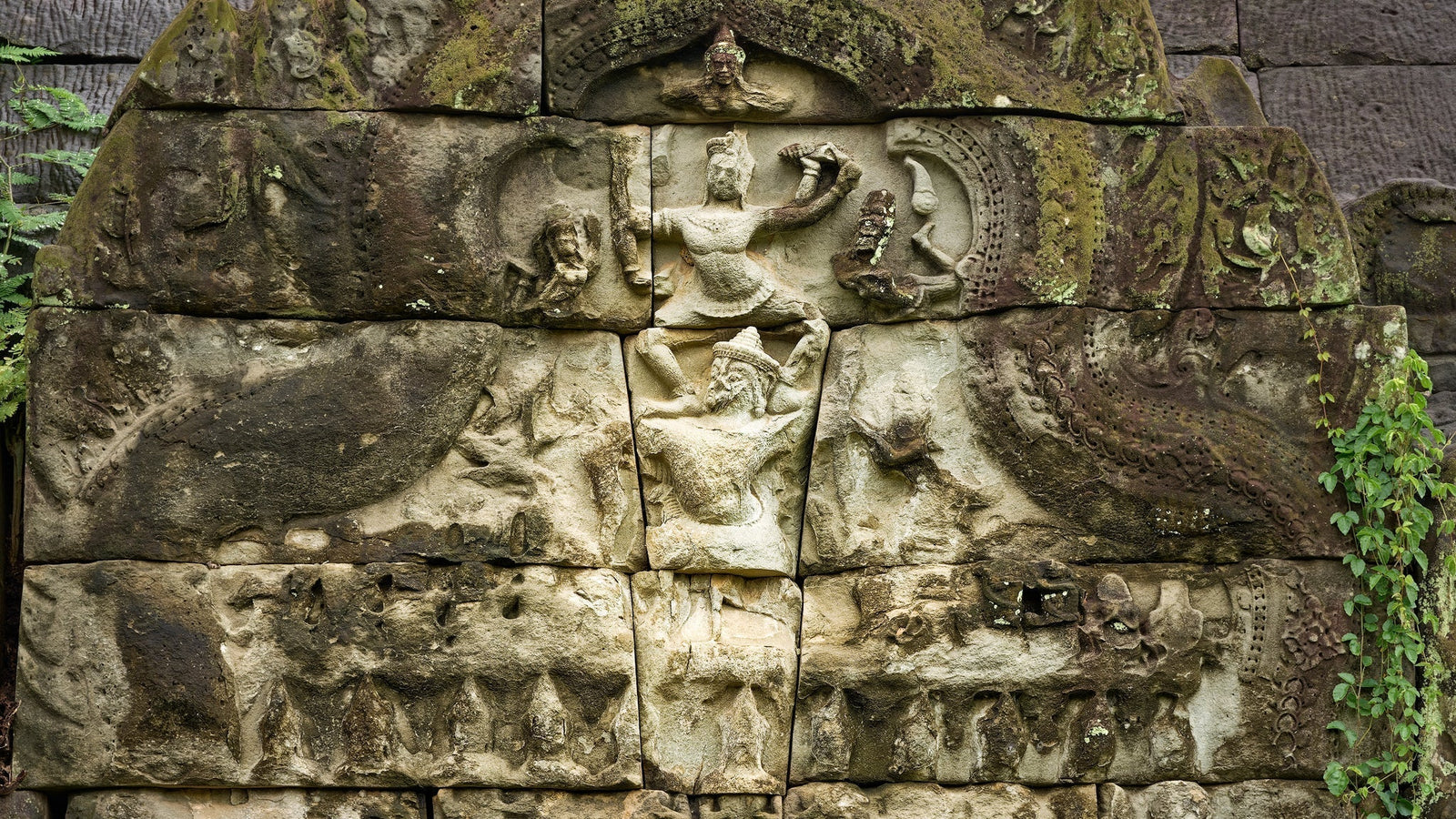
A bird with talons locked in combat tells us we are in the presence of Vishnu, whose power moves through Garuda, the devourer of serpents, the enemy of stagnation. A calm bull, immovable and facing the sanctuary, announces Shiva, whose stillness is not inertia but absolute control. A great elephant, heavy with rain and sovereignty, bears Indra, lord of storms and measured power.
These animals are not decorative. They act. In myth, they fight alongside their gods, intercept demons, break sieges, cross thresholds that the divine alone cannot. Garuda does not simply carry Vishnu; he clears the way, tearing through chaos with beak and wing. Nandi does not wander; he guards, absorbs, and stabilises. Airavata does not rush; he advances like weather made obedient.
At Angkor, this theology of movement and restraint finds architectural expression. Nandi is almost always placed facing the central sanctuary, never turning away. The bull’s body forms a moral axis: patience aligned toward presence. Garuda, by contrast, erupts across lintels and towers, grasping nagas in violent symmetry. Here, Vishnu’s cosmological role is made visible—not through serenity, but through struggle held in perfect balance.
The Khmer imagination understood something precise: divine power must be measured to remain beneficent. A god without a vahana would be uncontained, too vast, too abstract. The animal form limits, disciplines, and focuses the force. This is why even terrifying deities require mounts. Even wrath must be grounded.
This logic extends beyond identification into the deeper Khmer practice of sacred embodiment. In the vrah rupa system, statues were never portraits of flesh. They were vessels—conceptual bodies—through which human souls, royal merit, and divine presence could coexist. The god provided the form. The vahana provided the orientation. Together, they created a stable bridge between worlds.
To kneel before a vahana, then, is not to admire an accessory. It is to encounter the point at which transcendence agrees to walk, to breathe, to stand on stone. The animal waits, eternally poised, holding still the moment when power becomes legible.
The gods learned to walk here.
And they did so by borrowing the bodies of animals who knew the earth better than they ever could.
—
Receive the next work
Subscribe free to receive new work from the Lucas Varro Library by email.
More from the Library


See Also
A concise and impartial dictionary of absence, promises, quarrels, ordinary objects, and the troublesome instability of words.

The City of Service
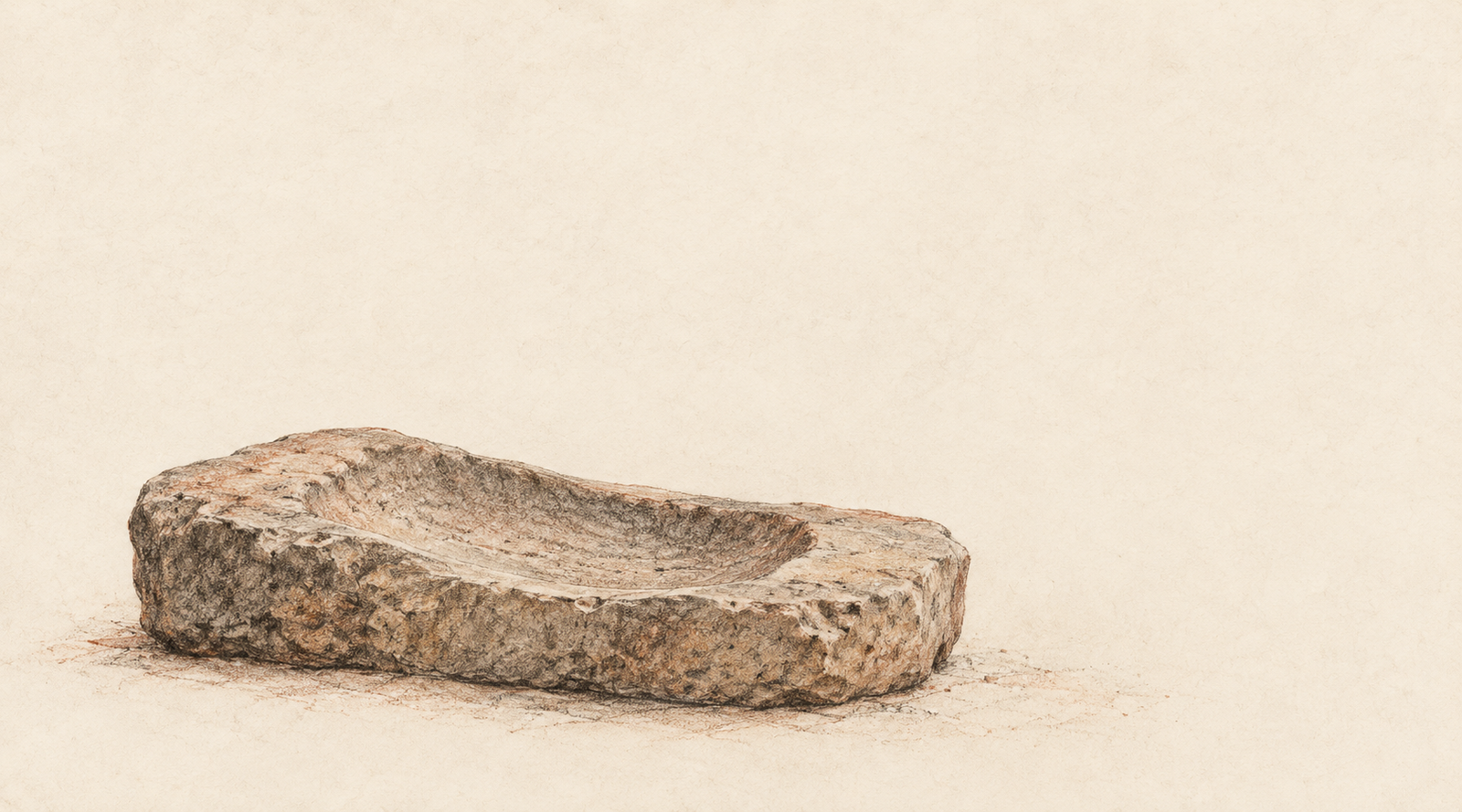
The temple we inherit is a building from which almost all necessity has been removed. Nothing must be brought for it to continue being what we call a temple. The sanctuary asks nothing of us. Stone is good at this kind of independence.
A living temple was otherwise.
Water had to come in. So did grain, cloth, oil, aromatic substances, fuel. The things required for worship arrived because someone carried them across a threshold.

Houses of Wood, Light, and Smoke
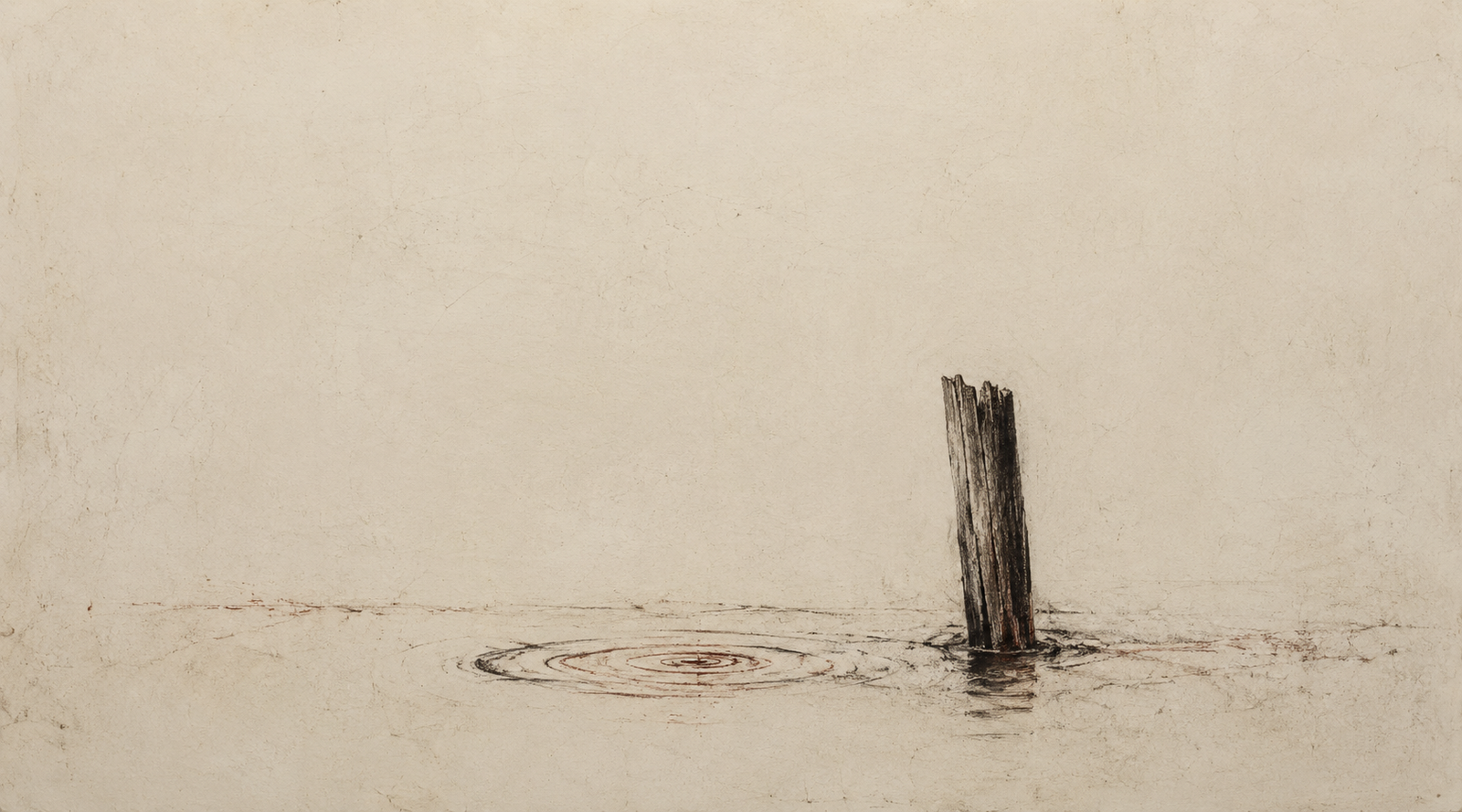
Some of Angkor’s most intimate ruins do not rise above the ground at all. They are postholes, low mounds, hearths and ponds: durable traces of a domestic city built largely from things that decay. To restore that city is to see Angkor not only as stone, but as wood, smoke, water, repair, and people living within calling distance.