
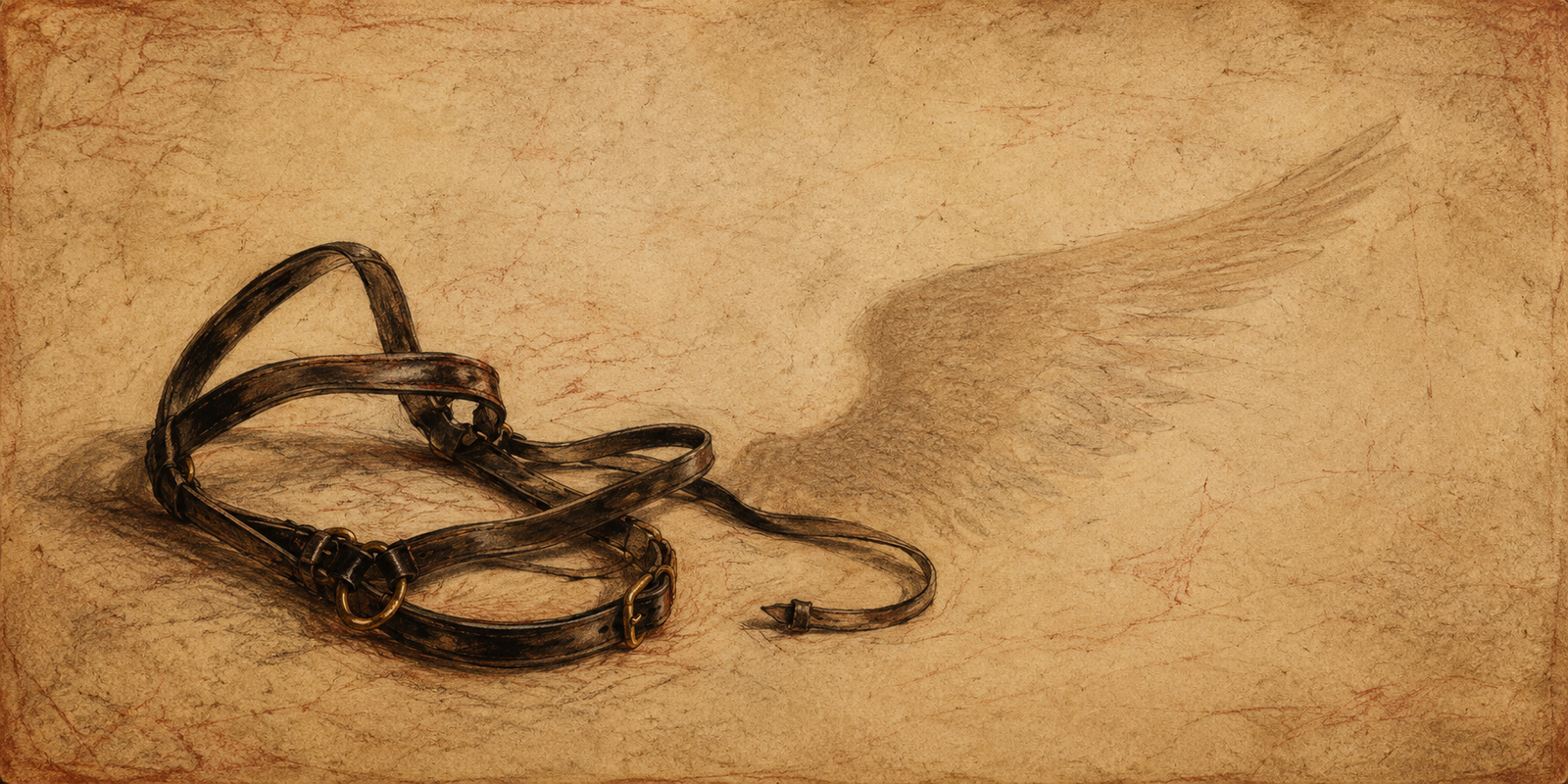

Bellerophon — The Bridle and the Fall
A myth of divine aid, heroic height, misremembered grace, and the loneliness after overreach.
Before he rode the winged horse, before the fire-breathing beast, before the fall that made men speak his name softly, Bellerophon stood in a courtyard with a bridle in his hands.
It was not large. That was one of the strange things about it.
A man expects divine gifts to announce themselves by size. A shield broad as a door. A spear that no ordinary shoulder could lift. A cup worked in gold so heavily that even drinking from it would seem like labour. But the bridle was small enough to hold against his chest. Its leather was dark and supple. Its bronze rings had been polished until they caught the morning light in thin, red flashes. The bit was plain. The reins were long. There was no jewel on it, no writing, no sign stamped upon the metal to say that a goddess had touched it.
Only the workmanship told the truth.
No mortal hand had made this thing.
Bellerophon knew that before anyone told him. He knew it the way a thirsty man knows water, the way a horse knows thunder before it breaks. He held the bridle and felt the world around it grow quieter.
The courtyard belonged to the house of Proetus, king of Tiryns, though Bellerophon had not come there as a son, nor as a guest who could sleep easily under another man’s roof. He had come carrying the old trouble that follows a man who has done something that cannot be undone.
There are stories about why he left Corinth. Some say he killed a man in anger. Some say by accident. Some say the dead man was kin to him, which makes even an accident sit more heavily in the room. The old tales do not agree on this point, and perhaps that is because shame has a way of blurring the lamp. It is enough to say that Bellerophon had blood behind him and uncertainty ahead of him, and that a young man may be very brave and still not know what to do with the thing he has already done.
Proetus received him because kings knew the law of the stranger. A man who came stained with trouble could not always be turned away. He might need cleansing. He might need judgement. He might be dangerous. He might be under the notice of the gods. Often he was all four.
So Bellerophon ate in the king’s hall. He slept beneath the king’s roof. He spoke with restraint and kept his eyes lowered when restraint was required. He was young, beautiful, strong, and silent in the way men are silent when they have learned that speech can make a wound larger.
This would have been enough trouble for one house.
But houses are seldom content with the trouble they already have.
The queen looked at Bellerophon and wanted from him what he would not give. It is best not to make the matter more decorative than it was. She wanted him to betray the house that had received him. He refused her. That refusal should have protected him, but virtue does not always protect a man quickly enough to be useful.
The queen was ashamed, and shame, when it cannot become repentance, often becomes accusation.
She went to Proetus and told him that Bellerophon had wronged her.
The king believed his wife, or chose to believe her, which can look very much the same from the outside. But there was the law of hospitality to consider. Proetus had eaten with this man. He had received him into his house. He could not kill him beneath his own roof without making the roof itself unclean.
So he did what cowardly men often do when they are still careful with rules.
He sent the danger elsewhere.
He wrote a letter to Iobates, king of Lycia, the queen’s father. The letter was folded and sealed. Bellerophon was told to carry it across the sea. He was not told what it said.
Bellerophon took the letter. He did not break the seal. One may say many things against him later, and some of them will be true, but he was not yet the kind of man who opens another man’s message in the dark.
He crossed into Lycia and came to the house of Iobates, where he was received again as a guest.
Nine days he feasted there.
Nine days he was given meat and wine, a place at the table, a bed, water for washing, all the honour due to a stranger whose name had not yet been turned against him. If you are young, you may think this is merely delay. If you have lived longer, you may understand that the old stories are always watching houses. A house reveals itself before it knows the test has begun.
On the tenth day, Iobates opened the letter.
His face changed.
Not much. Kings learn young how to keep their faces from telling the whole truth. But Bellerophon saw enough. He had learned to watch men who held his future in their hands.
Iobates folded the letter again.
He, too, did not want to kill a guest under his own roof. The law stood there between them, older than both men, quiet and inconvenient. So Iobates looked for a cleaner way to do a dirty thing.
In the mountains of Lycia, he said, there was a creature called the Chimera.
Even in a country full of hard hills and old gods, men did not speak of it lightly. The Chimera was lion in the forepart, goat in the middle, serpent behind, and fire in the throat. It burned the fields. It drove shepherds from the slopes. It left the hills black behind it. No man could come near enough to strike it and live. No man could flee fast enough once it had turned its heads toward him.
“Go,” said Iobates, “and free my land.”
Bellerophon understood.
He was young, but not foolish. He bowed. He went out from the king’s hall and stood in the white light of Lycia with death assigned to him as if it were an errand.
That night he did not sleep.
He walked beyond the houses, beyond the last pens where the goats muttered in their sleep, beyond the smell of bread and ash and human breath. He climbed until the city lights were below him and the dark opened wide. He came to a spring where horses were said to drink, though no horse stood there now.
Only the water moved.
Bellerophon knelt beside it.
A man may be brave and still be very tired. He may face death and still feel, beneath courage, the small childlike wish that someone would say, No, not this. Not yet. The tales do not often pause there, because they are impatient for monsters. But the monster is not the first thing a man faces when he is sent to die. First he faces the silence before it.
Bellerophon lowered his hands into the spring.
“Help me,” he said.
It was not an elaborate prayer. Elaborate prayers have their place, especially in temples where priests are listening. But there are moments when a man has no room left for ceremony.
Help me.
The water darkened around his fingers.
Then, on the far side of the spring, where the rock rose silver under the moon, a horse stepped out of the night.
Pegasus.
He did not come like an animal entering a field. He came like something the world had been remembering in secret and had finally allowed to become visible. His body was pale, not white exactly, but the colour of cloud before sunrise. His wings folded against his sides with a strength that made the air seem too small for them. His mane moved though there was no wind. His hooves touched the stone so lightly that the sound arrived late, as if the earth itself needed a moment to believe in him.
Bellerophon did not move.
This was wise. There are forms of beauty that punish haste.
Pegasus lowered his head to drink. The spring accepted him without ripple. Bellerophon watched the long neck bend, the wings shift, the dark eye turn once in his direction and away again.
No man can seize a creature like that.
A man may try, of course. Men have tried worse things. But there are powers in the world that do not become yours because you desire them with both hands.
Bellerophon sat until dawn.
When the first light came, he found the bridle.
It lay on a stone beside the spring, where no bridle had been before. No hand offered it. No goddess appeared in gold and glory to explain herself. That was not necessary. Athena, who understood both craft and danger, had placed the answer where he could find it.
Bellerophon picked it up.
That was the moment from which everything followed.
Not the Chimera. Not the victories. Not the high ride toward Olympus. This. The leather in his hands. The divine thing made practical. The gift that felt like permission.
He approached Pegasus slowly.
The horse lifted his head. The wings stirred. For a moment the whole hillside seemed to hold its breath.
Bellerophon spoke to him. Not loudly. Not as a master speaks to an animal he owns. More as a man speaks when he stands before a door and knows that what lies beyond it may change him.
Pegasus looked at the bridle.
Then he bowed his head.
That was all.
The bit slid into place. The leather passed behind the ears. The bronze rings caught the morning. Bellerophon’s hands trembled once and then steadied.
He placed his foot, gathered the reins, and mounted.
The first rise into the air nearly broke his courage.
The ground fell away too quickly. The spring became a shining eye. The stones became small. The city and its roofs, its pens and fires and sleeping quarrels, folded into the earth below. Bellerophon leaned forward against Pegasus’s neck, and the mane struck his cheek, and the wind opened around him like a second world.
He did not laugh. That would have been too easy, and he was not yet easy with height.
He learned.
That was one of his gifts. He could learn with his whole body. He learned how Pegasus turned before the rein moved. He learned how the wings gathered air. He learned that one did not command such a horse so much as ask at exactly the right moment. He learned the difference between holding and clinging, between balance and fear, between trust and the foolishness that pretends to be trust because it does not want to admit terror.
By the time the sun cleared the hills, Bellerophon was no longer the same man who had knelt at the spring.
That is another danger of divine help.
It works.
He found the Chimera where the hills had been burned black.
No birds sang there. No insects moved in the grass. The stones were cracked by heat, and the air carried a smell like metal and scorched wool. Bellerophon saw bones scattered near the ridge and the remains of a shepherd’s staff, its crook charred into a black hook.
Then the creature came out.
It was worse than rumour, as true things often are. The lion head opened its jaws. The goat head bleated horribly from the back, not with fear but with rage, and the serpent tail lifted and tasted the air. Fire moved in the throat before it came, a glow like a furnace behind teeth.
Pegasus rose.
The flame passed beneath them and struck the hillside. Stones split. Bushes vanished in red. Heat slapped Bellerophon’s face even from above. He pulled the reins too sharply, and Pegasus shook his head once, offended, which was a useful correction.
“Forgive me,” Bellerophon said, though he was not sure whether he said it to the horse, the goddess, or the life he had very nearly lost.
Then he began to fight properly.
Not as a man on foot fights. Not even as a man on horseback fights. He fought from the air, and the air was both mercy and difficulty. He could not come too close. He could not stay too far. The Chimera twisted below him, turning all its heads, fire tearing open the slopes, claws striking sparks from stone. Pegasus climbed, dropped, turned, rose again. Bellerophon leaned with him, learned him, trusted him.
Three times he failed to make the strike.
The fourth time, he did not think of glory.
He thought of distance, angle, breath, heat, the opening beneath the lion’s jaw, the beat of wings, the moment when fire had been spent and the next flame had not yet gathered.
He drove his spear down.
The Chimera fell among the black stones.
The hills did not become green again because a monster died. That is not how the world repairs itself. But the burning stopped. Smoke thinned. Far away, though Bellerophon could not hear them yet, men and women came out from behind their doors and looked toward the mountain.
When he returned to Iobates, the king stared at him as a man stares at a messenger who has come back from the grave with the original letter still in his hand.
There should have been joy. There was fear first.
This, too, Bellerophon saw.
Iobates had sent him to die, and Bellerophon had returned not only alive but shining with the impossible. A man who survives an execution becomes difficult to manage. A man who survives it on a winged horse becomes something else entirely.
So the king sent him again.
There were warriors to fight. There were enemies in the hills. There were ambushes arranged in narrow places where men waited with spears and the confidence of numbers.
Bellerophon survived them all.
He became, for a time, exactly what men want heroes to be. He appeared where the danger was greatest. He came down from the sky like an answer. He struck and vanished. He carried fear away from villages that had learned to sleep lightly. Children looked up when they heard wings. Old men who had stopped believing in clean victories allowed themselves one more.
Even Iobates changed.
Kings are practical creatures. When the man you meant to kill keeps delivering your kingdom, it becomes awkward to continue calling him an enemy. Iobates honoured him. He gave him land. He gave him his daughter in marriage. He gave him a place not beside the door but near the centre of the hall.
For a while, the house could hold him.
That is not a small thing. There was a chair for him. There were fields that knew his name. There was a wife who placed cups before him without trembling. At evening, when the lamps were lit, people came into the hall and looked at him with the softened awe men reserve for a danger that has agreed, for now, to sit indoors.
One winter night, a singer came.
He was an old man with a cracked voice and careful hands. He had not seen the Chimera. He had not seen Pegasus drink at the spring. But songs do not wait for witnesses. They enter the hall as soon as a deed is large enough to carry them.
The singer stood beside the hearth and began.
He sang of Bellerophon as if the young man had never been afraid. He sang of the Chimera as if it had existed only to be defeated. He sang of Pegasus as if the horse had been broken to Bellerophon’s will, brought under him by strength, conquered in the air.
At that, Bellerophon lifted his head.
His wife saw it.
The correction was there. It came to the edge of his mouth. No. Not broken. Not conquered. The horse had bowed. The bridle had been given. The first thing he had said in the dark was not command, but help.
He could have said it.
The hall would have listened. Perhaps they would have loved him more for it. Perhaps not. Men prefer a hero whose greatness needs no assistance.
The singer’s voice rose. The hall warmed to the story. Cups lifted. Someone laughed in pleasure at the line where Pegasus was made to submit to human mastery. A boy near the fire, too young to remember the burned hills, stared at Bellerophon as if waiting for the song to be confirmed by the man himself.
Bellerophon looked at the boy.
Then he looked at the bridle hanging on the wall.
It had been placed there only that morning. He had told himself it was proper. A thing given by a goddess should not lie among tack and straw. It deserved a cleaner place, a higher place, where smoke would not dull the bronze and stable-hands would not handle it with ordinary fingers.
The rings shone in the lamplight.
Bellerophon did not correct the song.
The boy smiled.
That was the beginning of the next height.
Not a mountain. Not Olympus. Only a silence in a warm room, while another man told his story wrongly and he allowed the wrongness to honour him.
After that, the bridle hung in his chamber. Not in a stable. Not beside the trough or among the ordinary things of horse and leather and care. It hung where visitors could see it.
That was not wrong in itself. A man may honour the object that saved him. But there are two ways to hang such a thing.
One is in gratitude.
The other is as proof.
Slowly, without one clear day of change, the bridle became proof.
When men praised him, he did not correct them. When they said no mortal had ever ridden so high, he allowed the words to remain in the air. When they said the gods must love him beyond other men, he did not say that the gods may use a man without explaining their affection. When they said Pegasus was his, he did not say no.
He had once known the difference.
That was the sorrow of it.
He had once known.
The ground began to disappoint him. Not openly. He did not wake one morning and despise fields, cups, doors, meals, servants carrying bread, children running in courtyards, the ordinary good weight of a human day. It happened more quietly.
He would sit among men and feel the roof too low.
He would listen to petitions and think of wind.
He would hear praise and feel, not gratitude, but irritation that praise had become small. What is a kingdom after the sky? What is honour from men who have never left the dust? What is a table to someone who has eaten with height in his mouth?
Pegasus still came to him.
This is important.
The horse had not abandoned him. The divine gift had not been withdrawn. Bellerophon could still ride. He could still climb through dawn and cross the valleys while the rivers lay below like loosened threads.
But now, when he rose, he looked higher.
There are mountains in the world that tell a man where he stands. There are clouds that advise humility without speaking. There is a height at which the air itself becomes a warning. Bellerophon passed all these and stored the warnings as if they were compliments.
He began to think of Olympus.
Not as a place of worship. Not as the unseen height toward which smoke rises from sacrifice. Not as the home of gods, which is already a dangerous enough thought for a mortal mind.
He thought of it as a destination.
Perhaps he told himself he wished only to see it. Many fatal wishes begin with only. Only to see. Only to know. Only to stand once where no man has stood. But the heart is less modest than the mouth. By the time a man says only, he has often already asked for more.
The day he tried to ride there, the morning was clear.
That seems unfair, but the world is not obliged to provide storms when men make ruinous decisions. Sometimes the weather is perfect.
Bellerophon took down the bridle from the wall.
His wife watched him. She did not ask the question at first, because wives often know the answer before the question is safe.
“You are going far,” she said.
He tightened one of the straps.
“I have gone far before.”
“Not like this.”
He looked at her then, and for a moment the old Bellerophon might have returned. The man beside the spring. The man who knew the taste of fear. The man who understood that a gift can be held only by gratitude.
But old selves do not return merely because they are needed.
“I was not made to remain below,” he said.
There it was.
Not shouted. Not grand. Not even cruel. Only a sentence, spoken quietly, and large enough to break a life.
His wife did not weep. At least, not where he could see. She only looked at the bridle in his hands.
“That was given to help you live,” she said.
Bellerophon smiled a little. There was sadness in the smile, though he did not know it.
“It was given because I could use it.”
He went to Pegasus.
The horse stood in the courtyard, wings folded, bright and terrible as ever. Bellerophon approached with the bridle. For the first time, Pegasus did not bow at once.
A lesser man would not have noticed.
Bellerophon noticed and resented it.
He lifted the bridle.
Pegasus lowered his head.
So the last warning passed unused.
They rose.
At first, the flight was as it had always been: the leap, the gathering air, the beautiful violence of leaving earth. The city narrowed beneath them. The roads thinned. Fields became patches of colour. Rivers bent like metal. Bellerophon felt the old joy enter him, and because joy is innocent at the beginning, he mistook it for blessing.
Higher.
The mountains fell behind. The clouds came near, then opened. Moisture gathered on his face and vanished. Pegasus beat upward, powerful and obedient beneath him.
Higher.
The air thinned. Sound changed. The world lost its ordinary edges. There were no cooking fires now, no voices, no goats complaining in their pens, no hand lifting a cup to a mouth, no human thing by which a human being might remember his size.
This was where Bellerophon should have turned back.
A man does not always fall because he lacks warning. Sometimes he falls because he has trained himself to hear warning as envy.
He drew the reins.
“Up,” he said.
Pegasus climbed.
And somewhere above the height meant for men, Zeus noticed.
The king of the gods did not need to rise from his throne in anger. He did not need to shout. It is possible that he was not even surprised. The gods have seen mortals mistake nearness for equality many times, and the repetition does not make the error less dangerous.
A small thing was sent.
Not a thunderbolt. Not a storm. Not a flaming sign across the sky.
A gadfly.
Remember that, if you can. The end of a man’s great pride may begin as a small irritation near the flank of a horse.
The fly struck Pegasus.
The horse convulsed in the air. Not from fear. From pain, sudden and sharp. His wings broke rhythm. His body twisted. Bellerophon pulled the reins hard, too hard, as a frightened man pulls when he has forgotten the difference between asking and command.
Pegasus reared.
The world turned.
For a moment Bellerophon saw everything: the pale arch of the horse’s neck, the flash of bronze rings, the sky below him where the earth should have been, his own hand closing around a rein that could not save him.
Then he fell.
The tale does not need to follow every part of that descent. It is enough to say that the sky gave him back.
He did not die.
That was almost worse.
Pegasus did not fall. The winged horse righted himself, shook the pain from his body, and rose beyond Bellerophon’s reach. Some say he went on to Olympus and stood thereafter among the horses of Zeus. That may be true. Pegasus had never belonged to the man who rode him. Not really. The bridle had made an agreement for a while, not an ownership.
Bellerophon struck the earth far from the road.
Men found him later, or perhaps he found his own way down from the place of falling. The old stories differ. They agree on this: he did not return as he had gone. His body was damaged. His pride was not cured, exactly, because pride is not always so merciful as to leave when it has ruined everything. But it had lost its height.
He wandered.
That is the word the tales give him.
He wandered alone, avoiding the paths of men, eating what he could, speaking little. The hero who had once come down from the sky like deliverance now kept away from doorways. He had been praised in halls. Now he passed below them. He had been given land. Now the earth itself seemed to have too much claim on him.
There are punishments louder than loneliness, but not many that last so long.
Sometimes, when the wind moved over the grass in long pale waves, he felt again the first lift from the spring, the impossible kindness of the morning when Pegasus had lowered his head.
That memory did not comfort him.
It was too clean.
Sometimes a bird crossed high above him and his body answered before his mind could stop it. His face lifted. His eyes followed. Then the bird passed into ordinary distance, and he lowered his head again.
He had not begun wickedly. That was part of the grief. He had been helped. He had been brave. He had saved people who needed saving. He had known gratitude once, real gratitude, the kind that makes a man careful with his hands.
Then height entered him.
The old tales are not generous with his ending. They leave him walking, and perhaps that is right. Some falls continue after the body has reached the ground.
Once, near evening, he heard a horse in a field beyond the road.
It was only a small sound: hoof against dry earth, breath in the grass, the soft tear of teeth pulling at the last of the day’s green. Bellerophon stopped where he was. For a moment he did not move. The field lay half in shadow. The animal stood beyond the low wall, its shape pale in the failing light.
He could not tell whether it was white.
He turned away before he knew.
—
For paid subscribers, I have added a Workroom note on the making of this tale: the bridle that became the centre, the singer scene that changed the moral architecture, and the ending that had to stop before certainty.
—
Receive the next work
Subscribe free to receive new work from the The Hospitable Dark Library by email.
More from the Library

See Also
A concise and impartial dictionary of absence, promises, quarrels, ordinary objects, and the troublesome instability of words.

The City of Service
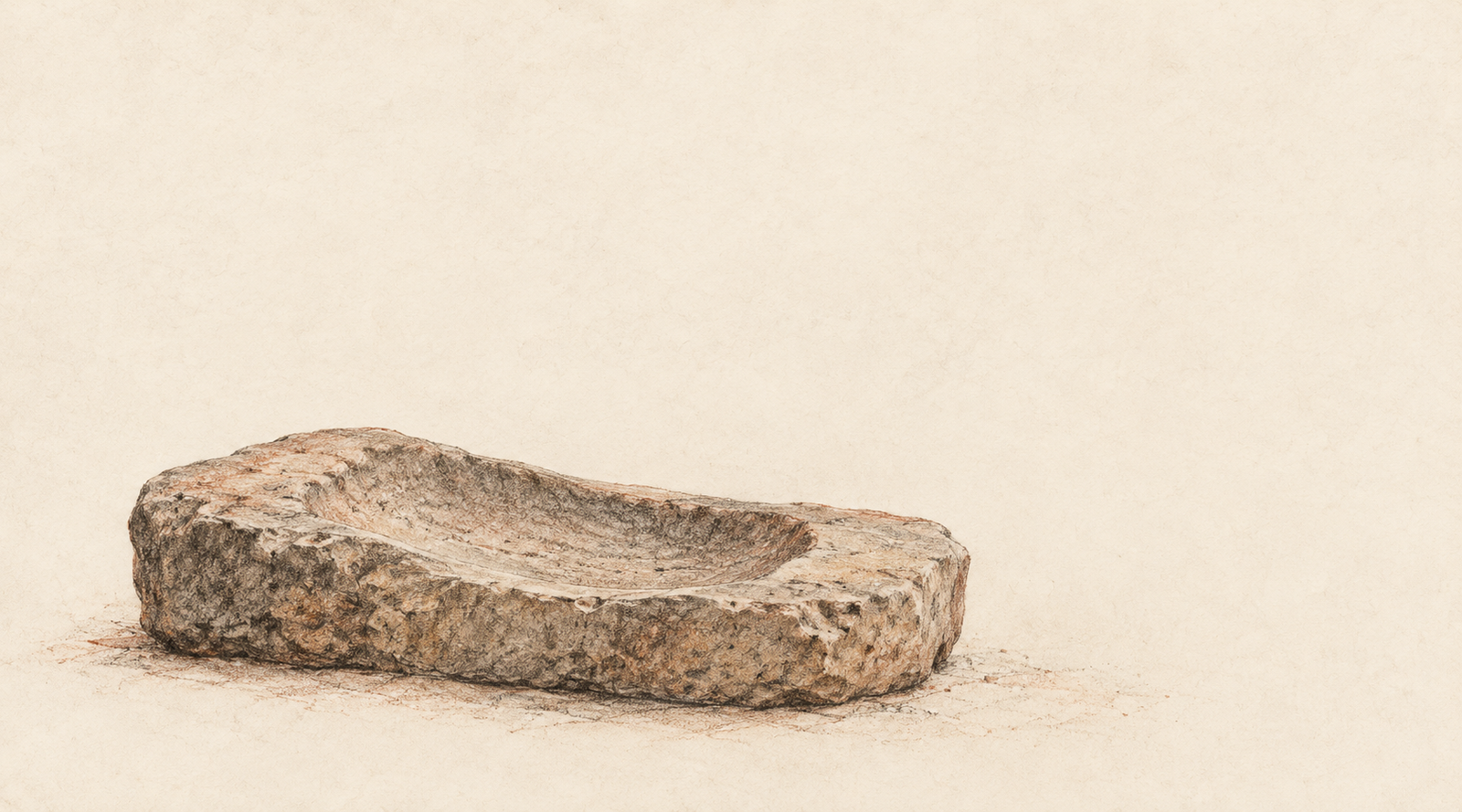
The temple we inherit is a building from which almost all necessity has been removed. Nothing must be brought for it to continue being what we call a temple. The sanctuary asks nothing of us. Stone is good at this kind of independence.
A living temple was otherwise.
Water had to come in. So did grain, cloth, oil, aromatic substances, fuel. The things required for worship arrived because someone carried them across a threshold.

Houses of Wood, Light, and Smoke
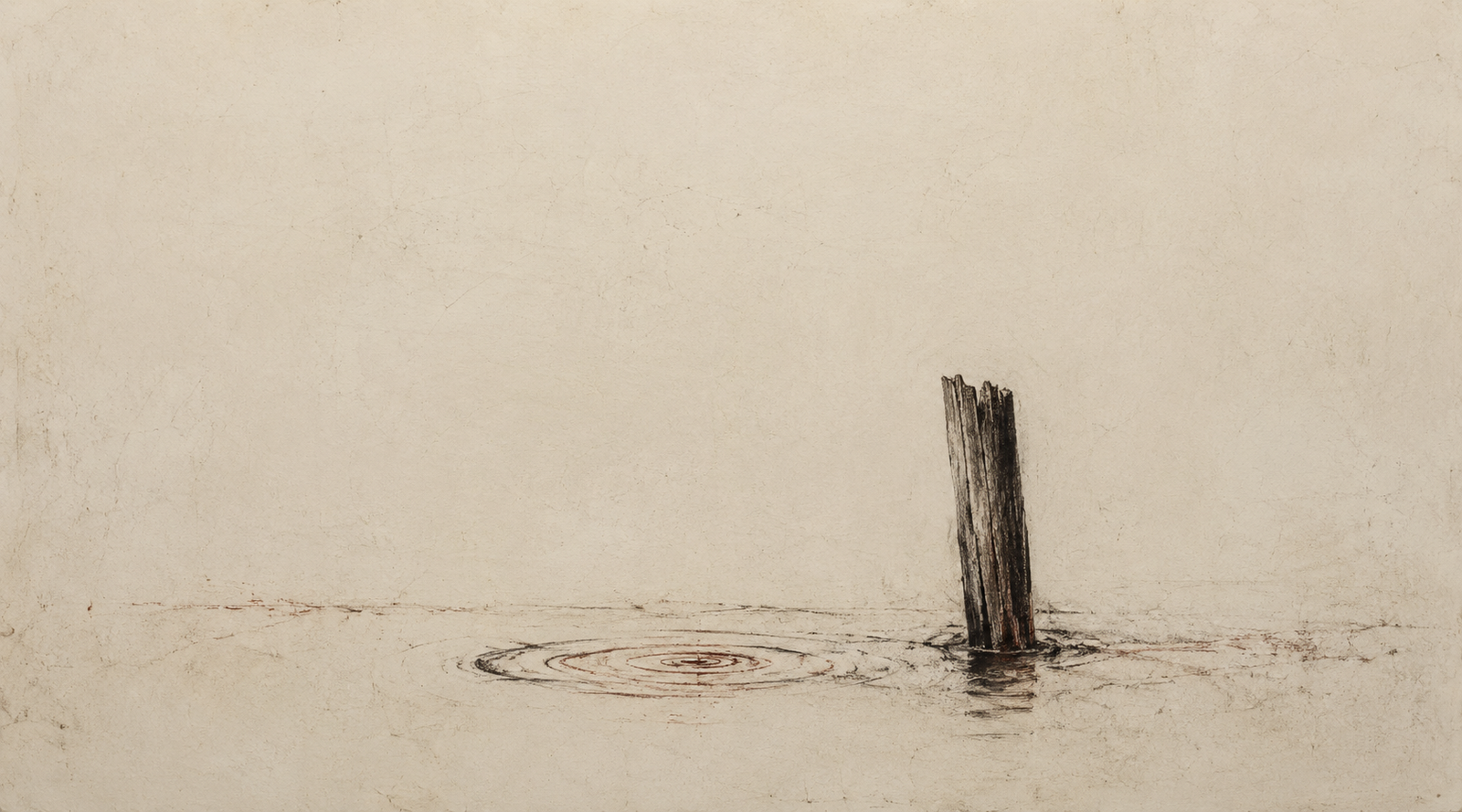
Some of Angkor’s most intimate ruins do not rise above the ground at all. They are postholes, low mounds, hearths and ponds: durable traces of a domestic city built largely from things that decay. To restore that city is to see Angkor not only as stone, but as wood, smoke, water, repair, and people living within calling distance.