

The Astonishment of Being
On cosmic indifference, human tenderness, and the brief miracle of being awake.
The universe does not know your name.
It never has. It will not notice when you are gone. By every cosmic measure, you are almost nothing: a brief arrangement of matter on a small wet planet, circling an ordinary star, in one galaxy among hundreds of billions. Your fears, your loves, your private shames, the promises you kept and the ones you failed to keep — none of them register beyond the fragile weather of this world.
And yet here you are.
Awake.
Reading these words with something moving in you that no instrument has ever fully explained.
Isn’t that the strangest thing?
The universe is about 13.8 billion years old. At the edge of what physics can describe, language begins to fail. “Before the beginning” may not be a place words can enter. What we can say is that from conditions we barely understand, space opened, particles scattered, and gravity began its patient work: dust to cloud, cloud to star, star to ash, ash to planet.
No intention.
No audience.
No occasion.
Our Earth formed about 4.5 billion years ago, one body among incalculable others, most of which will never be named. Life stirred here, for reasons still not fully understood, and did not stop. It pressed through extinction, ice, darkness, accident, hunger, mutation, and time, until at last there were creatures capable not only of surviving, but of grieving, singing, fearing death, and asking what any of it meant.
Compress all of this into a single day. On that scale, everything we call human history — every war, every poem, every empire, every act of mercy — occurs in the final fraction of the final second. Your own life, even if you are granted many years, lasts less than a flicker within that fraction.
A blink within a blink.
In the far future, after durations that defeat human meaning, the last stars will cool and go dark. Black holes will consume what remains, then spend unimaginable eons evaporating into silence. Eventually, even the final traces of structure will vanish. Everything that ever happened will be, so far as anything remains to know it, indistinguishable from never having happened at all.
This should make everything meaningless.
Strangely, it does the opposite.
The universe’s indifference does not cancel meaning. It strips away false meaning — which is a different thing entirely, and perhaps a mercy.
Under this scale, certain things begin to look strangely small: the appetite for recognition, the rehearsal of old grievances, the fear of being misunderstood by people who barely understand themselves, the years spent performing a version of your life for an audience that was never truly watching. The argument kept alive long after its truth had died. The ambition inherited from someone else’s hunger. The resentment tended like a household flame.
None of these survives the cosmic view with its weight intact.
They become, beneath the light of four hundred billion galaxies, a little provincial.
But other things do not shrink.
The hand held at the hospital bed does not shrink. The apology made before it is too late does not shrink. The child asleep in the next room, the friend who stayed, the ordinary morning when light entered the room at an angle you have never forgotten — these do not become less real because the stars will die.
They become more real because they are passing.
This is the hinge on which the whole question turns. Meaning is not made false because it is temporary. It may become more urgent, more tender, more exact, precisely because it is temporary. A piece of music does not become worthless because it ends. A life is not wasted because it concludes. What we love, we love in time — and time, it turns out, is the only medium in which love has ever existed.
Not everything deserves the weight we give it. Not every humiliation is worth preserving. Not every slight requires a monument. But the people in front of us — the living, breathing, finite people who will one day be as gone as we will be — deserve something more than our distraction, our performance, our perpetual preparation for a more important moment that keeps failing to arrive.
The universe will continue without us. The stars will proceed indifferently. The mathematics of expansion will go on whether or not we made peace with our mothers, whether or not we said the thing we were afraid to say, whether or not we spent our brief awareness looking at what was actually in front of us.
What scale tells us is not that nothing matters.
It tells us to become more exact about what does.
The work done honestly when no one was watching. The mercy given when there was no advantage in giving it. The attention paid to someone who needed to be seen. The small fidelity repeated day after day until it became a life. These things do not become smaller against deep time. They become almost unbearably precious.
Because they happened.
Because someone was there.
Because for one brief interval in the dark, matter became conscious enough to love.
· · ·
Of all the things that could have existed,
of all the arrangements of matter that never opened into awareness,
of all the silence that came before us
and all the silence that will follow —
here you are.
Briefly alive.
Briefly awake.
Placed, for a moment, among other passing lives.
Do not spend this carelessly.
—
Receive the next work
Subscribe free to receive new work from the Lucas Varro Library by email.
More from the Library

See Also
A concise and impartial dictionary of absence, promises, quarrels, ordinary objects, and the troublesome instability of words.
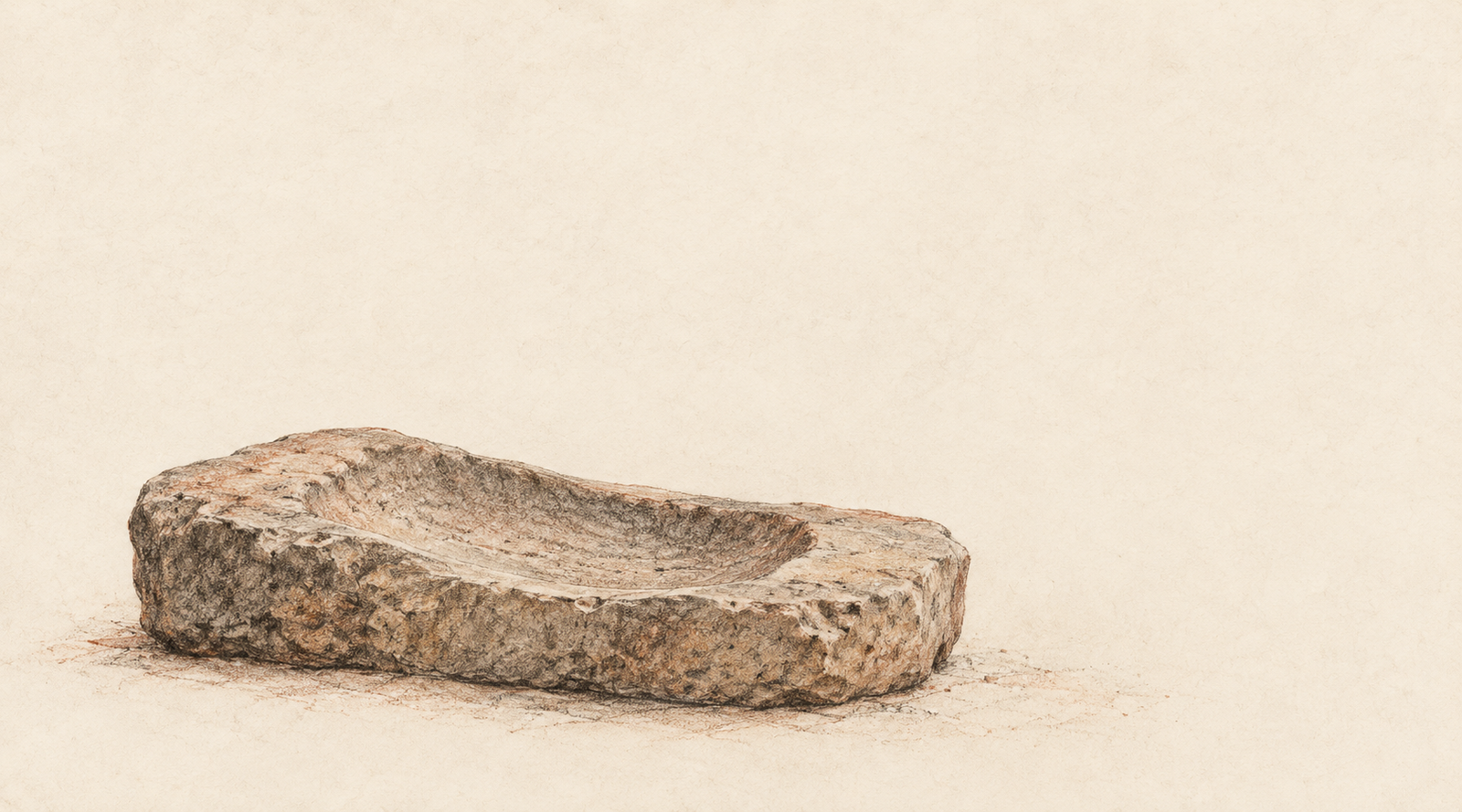

The City of Service
The temple we inherit is a building from which almost all necessity has been removed. Nothing must be brought for it to continue being what we call a temple. The sanctuary asks nothing of us. Stone is good at this kind of independence.
A living temple was otherwise.
Water had to come in. So did grain, cloth, oil, aromatic substances, fuel. The things required for worship arrived because someone carried them across a threshold.
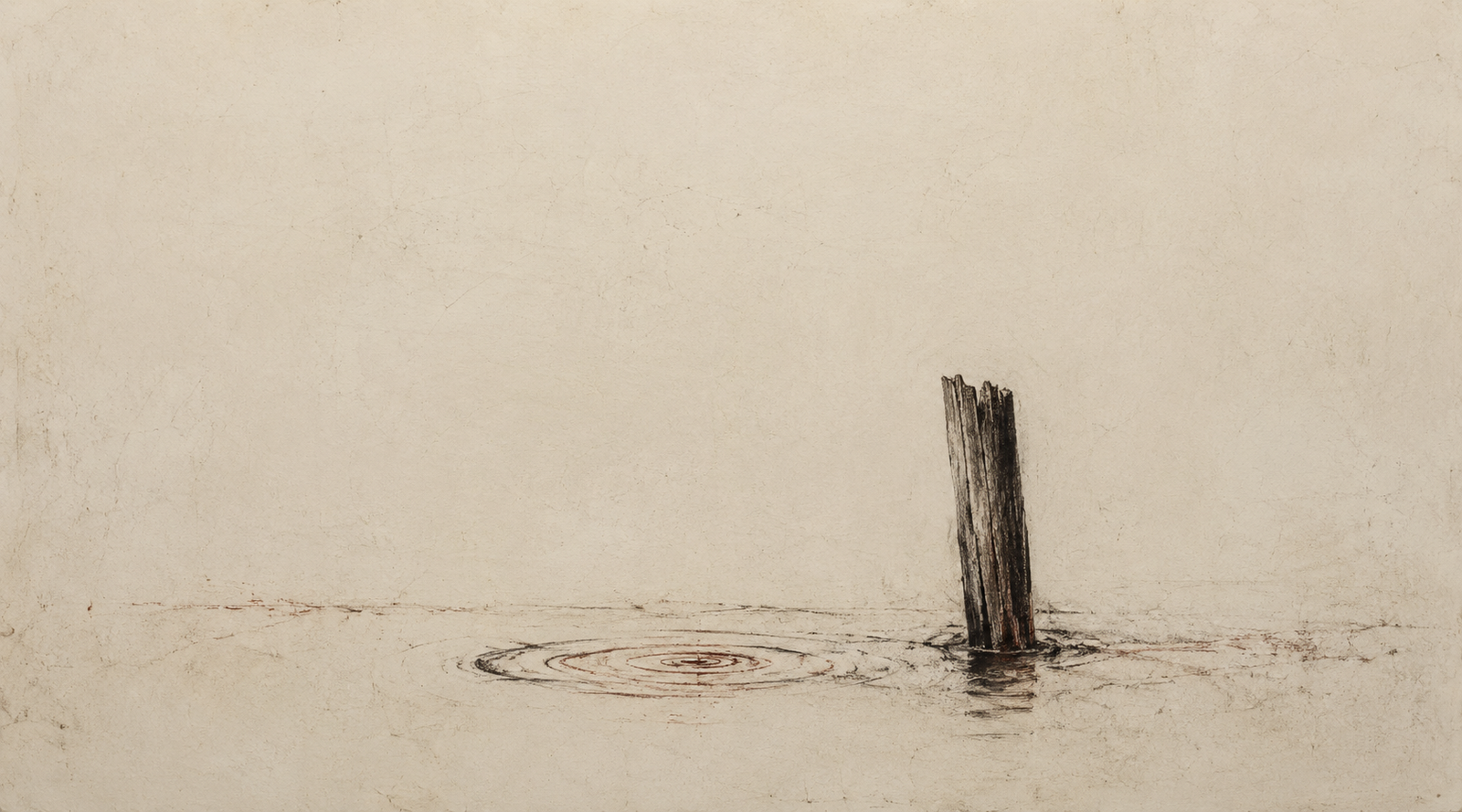

Houses of Wood, Light, and Smoke
Some of Angkor’s most intimate ruins do not rise above the ground at all. They are postholes, low mounds, hearths and ponds: durable traces of a domestic city built largely from things that decay. To restore that city is to see Angkor not only as stone, but as wood, smoke, water, repair, and people living within calling distance.