
The Library gathers the written works of Lucas Varro — journals of the temples, mythic retellings, contemplative essays, poems, and volumes shaped by shadow, silence, and wonder. Here, words stand beside images as offerings: field notes from Angkor, meditations on sacred stone, old stories rekindled, and reflections carried beyond the visible world.
Within these shelves you will find many rooms: Angkor journals, myth and legend, apsara meditations, contemplative essays, poems, children’s mythic wonder, literary retellings, and quieter devotions of the page. Wander chronologically, enter by theme, or pass through one of the dedicated publication houses now gathered within the wider Library.
For those who wish to follow these paths further, several of these writings continue on Substack and in dedicated archive blogs: The Lantern Chronicles , where myth, legend, contemplative essays, poetry, and other imaginative works are carried onward; The House of Cadmus , where Greek myth and tragedy are reopened through inheritance, violence, fate, and recurrence; The Mytharium , where myth, Tolkien, fairy stories, and old literature are read and retold with seriousness; The Alexander Series , where A. M. Sharp retells Greek myths for children who want to be trusted by stories; and The Hospitable Dark , where A. M. Sharp offers literary myth retellings shaped by darkness, shelter, endurance, and return.

What the Hand Knows
When does effort become interference? This contemplative essay from The Living Way explores wu wei, attention and the human compulsion to force—whether in work, conversation, ambition or the private demand that reality unfold according to plan.

The Beauty Time Is Allowed to Make
A literary-philosophical essay on wabi-sabi, handmade kozo paper, and the modern demand for seamlessness. Beginning with red chalk meeting a resistant surface, Lucas Varro asks whether value must arrive untouched—and whether care becomes destructive when it begins erasing the visible history of objects and human lives.

The Stranger Is Where Inheritance Is Weighed
A Living Way essay on faith, inheritance, empire, and moral humility. The Stranger Is Where Inheritance Is Weighed asks how the stories that form us can become either mercy or contempt — and why the true test of any tradition is whether it can still see the stranger.

The Story Is Not Finished Yet
A Living Way essay on the old parable of fortune and misfortune: the lost horse, the returned horse, the injured son, and the wisdom of refusing to give the present a final name. This is not consolation, but a meditation on judgement, uncertainty, and the discipline of not closing life too soon.

The Consolation of Not Being Separate
There are moments when the world refuses to become personal. The rain falls on the day you needed sun. The illness does not pause because someone is loved. The sea does not soften because a child is afraid. And when the thing prayed against happens anyway, it can feel as if the world has abandoned us. But perhaps what has failed is not the world’s care. Perhaps what has failed is our idea of care.

The Kindness That Continues
A Living Way companion essay on everyday kindness, altruism, and the moral temperature of ordinary encounters. This piece asks why one act of kindness is never enough, yet still may alter the next human moment — not by replacing justice, but by teaching justice how to remain human.

The Society That Does Not Turn Away
A Living Way essay on hospitality, refuge, immigration, and the moral architecture of civilisation. Beginning with the image of the door, this piece asks what a society reveals about itself when the vulnerable arrive before its systems, and whether mercy can become durable enough to be built into the road.

The Difference Between a Concept and a Door
A Living Way essay on sacred language, attention, and self-deception. Moving through God, Brahman, Plotinus, Hindu form, Krishnamurti, and the image of the hut, this piece asks whether our highest words clarify reality — or become beautiful furniture for the defended self.
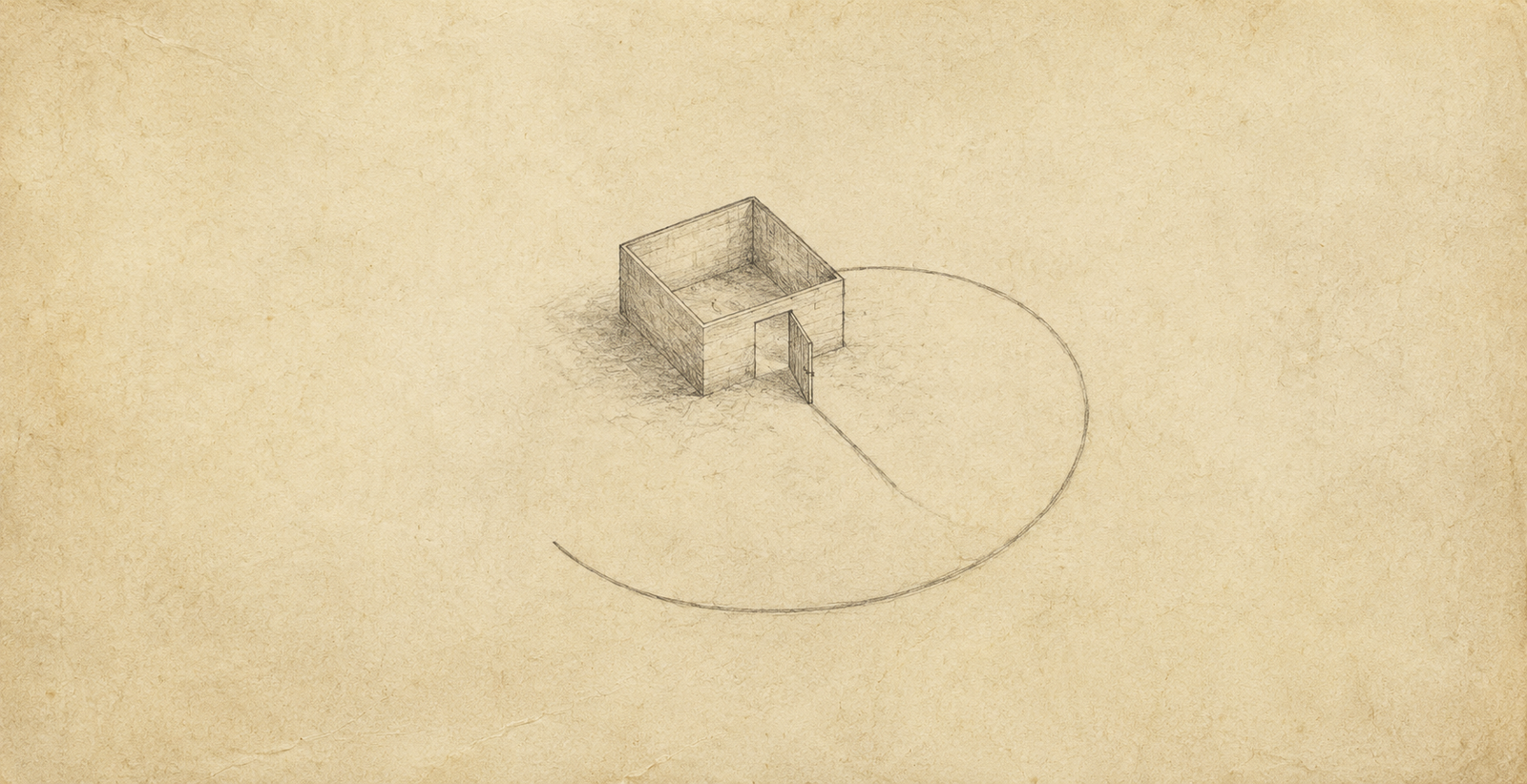

The Hut We Carry With Us
A Living Way essay on Kamo no Chomei, Hojoki, solitude, refuge, and the danger of becoming attached to the very life that saved us. The hut may shelter the soul from the noise of the world — but it may also become another possession.

The Astonishment of Being
A foundational Living Way essay on existence, cosmic indifference, mortality, and human tenderness. Lucas Varro asks why the brevity of life does not make meaning false, but more urgent — and why, for one brief interval in the dark, matter becoming conscious enough to love is cause for astonishment.

The Courage to Stand Alone
A meditation on courage, solitude, and the modern crowd: this Living Way essay asks what it means to stand inwardly apart when public life rewards speed, certainty, and imitation — and why one must learn to stand alone in order to belong truthfully.
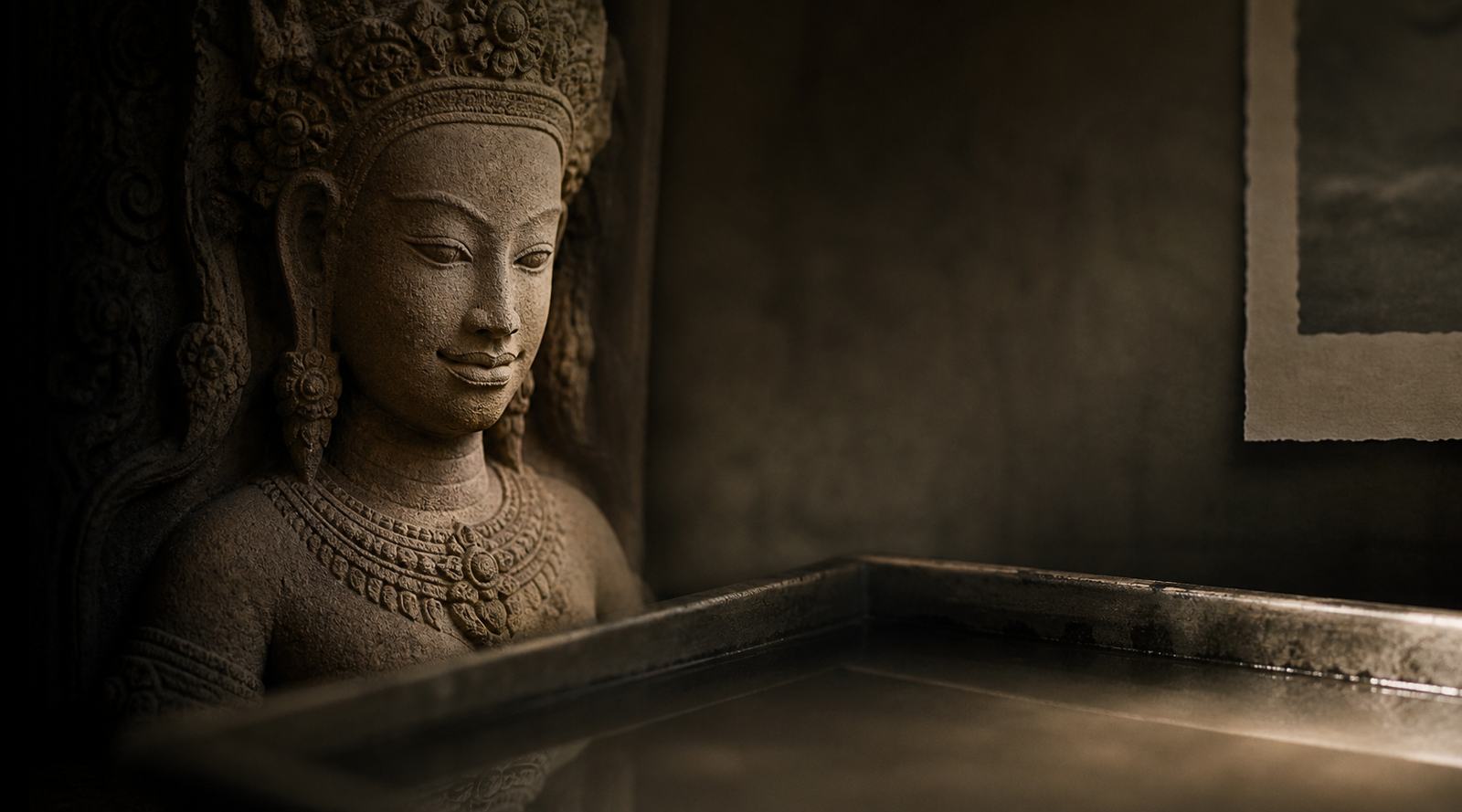

The Apsara Against the Assembly Line
In the darkroom, the print rises slowly from the tray: silver darkening into shadow, stone gathering itself from blankness. At Angkor, the apsaras offer the same lesson. Though repeated in their thousands, each waits to be seen. Against the assembly line of speed and sameness, slowness restores the soul’s signature.
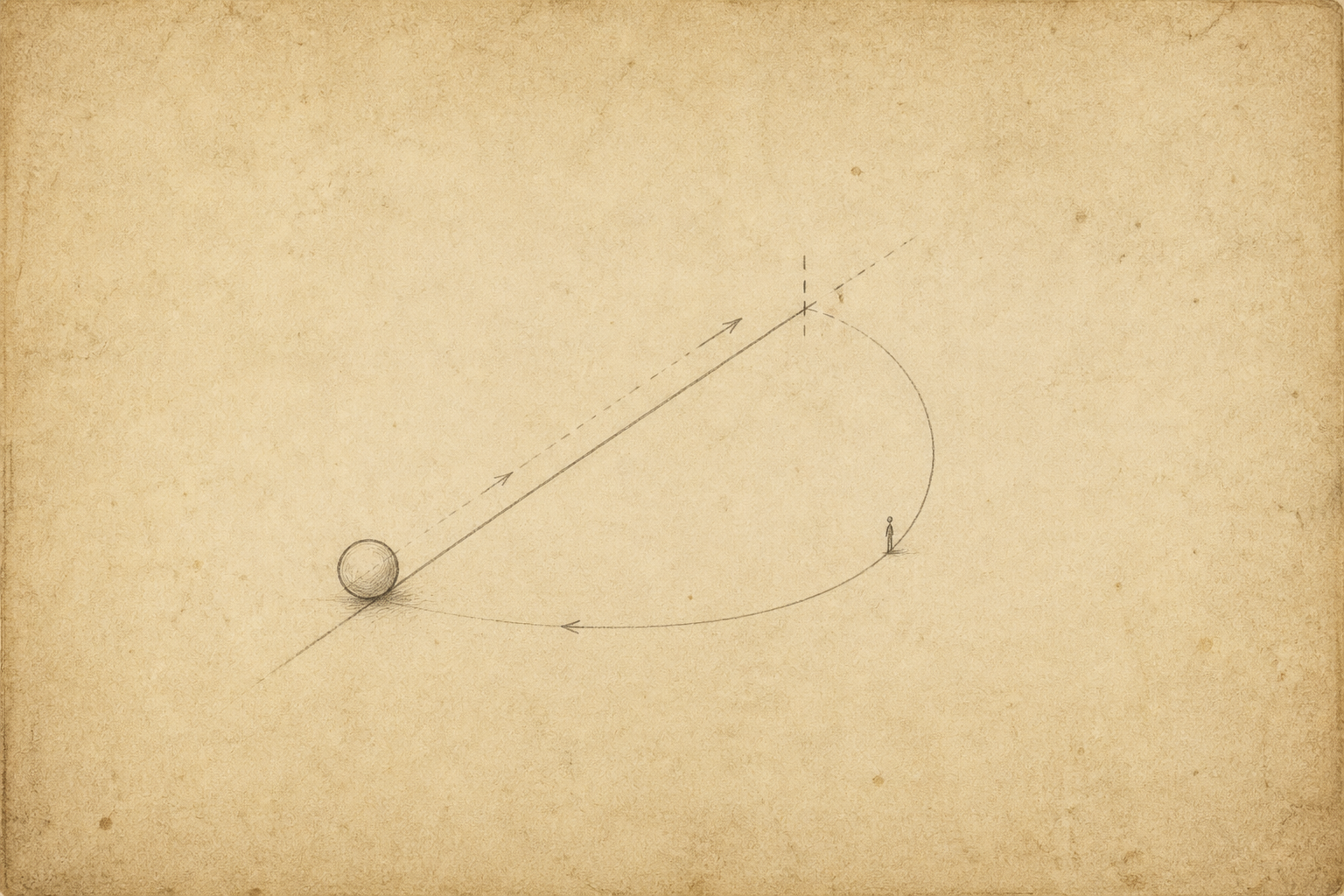

One Must Imagine Sisyphus Present
A Living Way essay on Camus, Sisyphus, absurdism, acceptance, and presence. Lucas Varro asks whether the deeper task is not to imagine Sisyphus happy, but present: awake within repetition, faithful to chosen values, and unwilling to abandon the soul before the stone.

Now in The Living Way: The Question No One Asks Correctly
A Living Way book announcement for The Question No One Asks Correctly: On Liberation and the End of Misidentification. Lucas Varro introduces a complete philosophical work on liberation, the false centre, Jainism, Buddhism, Vedanta, and the prior question beneath spiritual striving: what is it that is doing the living?

What Cannot Be Finished
A Living Way essay on maintenance, fidelity, recurrence, and the life that must be tended. Lucas Varro asks why the most important things — love, attention, character, grief, understanding — cannot be completed once and for all, but must be returned to with care.

What It Means to Be Equal to a Place
A Living Way essay on Angkor, reverence, proportion, and inward formation. Lucas Varro asks what it means to be equal to a place: not to master or decode it, but to become capable of receiving its greatness without reducing it to one’s own scale.

The Beautiful Foolishness of Things
A Living Way essay on imperfection, tenderness, repair, and the humble dignity of ordinary things. Lucas Varro asks what worn objects reveal about care, fidelity, and the fragile beauty of a world that does not need to be flawless before it can be held.

The Discipline of Letting a Thing Appear
A Living Way essay on Angkor, attention, patience, and the discipline of perception. Lucas Varro asks what it means to let reality appear without forcing it into immediate use — and why some truths, places, and presences become available only to restraint.

Why We No Longer Know How to Approach Great Things
A Living Way essay on Angkor, reverence, attention, and the modern inability to receive what exceeds us. Lucas Varro asks why arrival is not the same as approach, and how the inward manners required for beauty, truth, and greatness might still be relearned.

The Architect and the River
A Living Way essay on Confucius and Laozi, form and flow, discipline and release. Lucas Varro asks why human life needs both the architect and the river: structures strong enough to prevent drift, and mercy spacious enough to prevent the soul from hardening.

The Mercy of the Unfinished
A Living Way essay on imperfection, repair, beauty, and worth. Lucas Varro asks whether perfection is not fullness but untouchability, and why the unfinished may carry a deeper mercy than the flawless in lives shaped by time, pressure, and use.

Come Waste Your Time With Me
A Living Way essay on love, presence, and the quiet redemption of so-called wasted time. Lucas Varro asks what makes an hour feel spent or given back, and why some forms of human nearness release us from the pressure to make every moment useful.

The Desecration of Ordinary Happiness
A Living Way essay on social media, cruelty, nationalism, and the defence of ordinary happiness. Lucas Varro asks why innocent joy so quickly becomes material for grievance, and what must be protected when the crowd learns to wound what it cannot bless.

The Machine and the Human Image
A Living Way essay on social media, inwardness, and the hidden image of the human person built into the machine. Lucas Varro argues that the deepest damage is not distraction alone, but the training of the self to live as reactor, performer, and surface for stimulation.

The Wager for This Life
There is an old temptation to treat this life as rehearsal: a threshold, a test, a waiting room for something truer beyond it. But what if the better wager is to love this life fully, without guarantee—to make meaning here, in the brief and difficult world we actually have?

Tantra and the Refusal of Purity
A Living Way essay on Tantra, wholeness, purity, desire, fear, and transformation. This piece asks whether freedom begins not by escaping the body, grief, contradiction, and mortality, but by meeting them without disguise.

The Spark and the Weight of Being Human
A Living Way essay on self-awareness, mortality, conscience, and the burden of being human. This meditation asks how a fragile creature can know its own fragility and still create meaning, love, art, responsibility, and grace beneath the pressure of finitude.

A Manifesto for Modern Living
A foundational Living Way manifesto on modern life, freedom, responsibility, and the creation of meaning after inherited certainty has weakened. This essay asks what it means to live deliberately when no external authority can finally decide what one’s life must become.
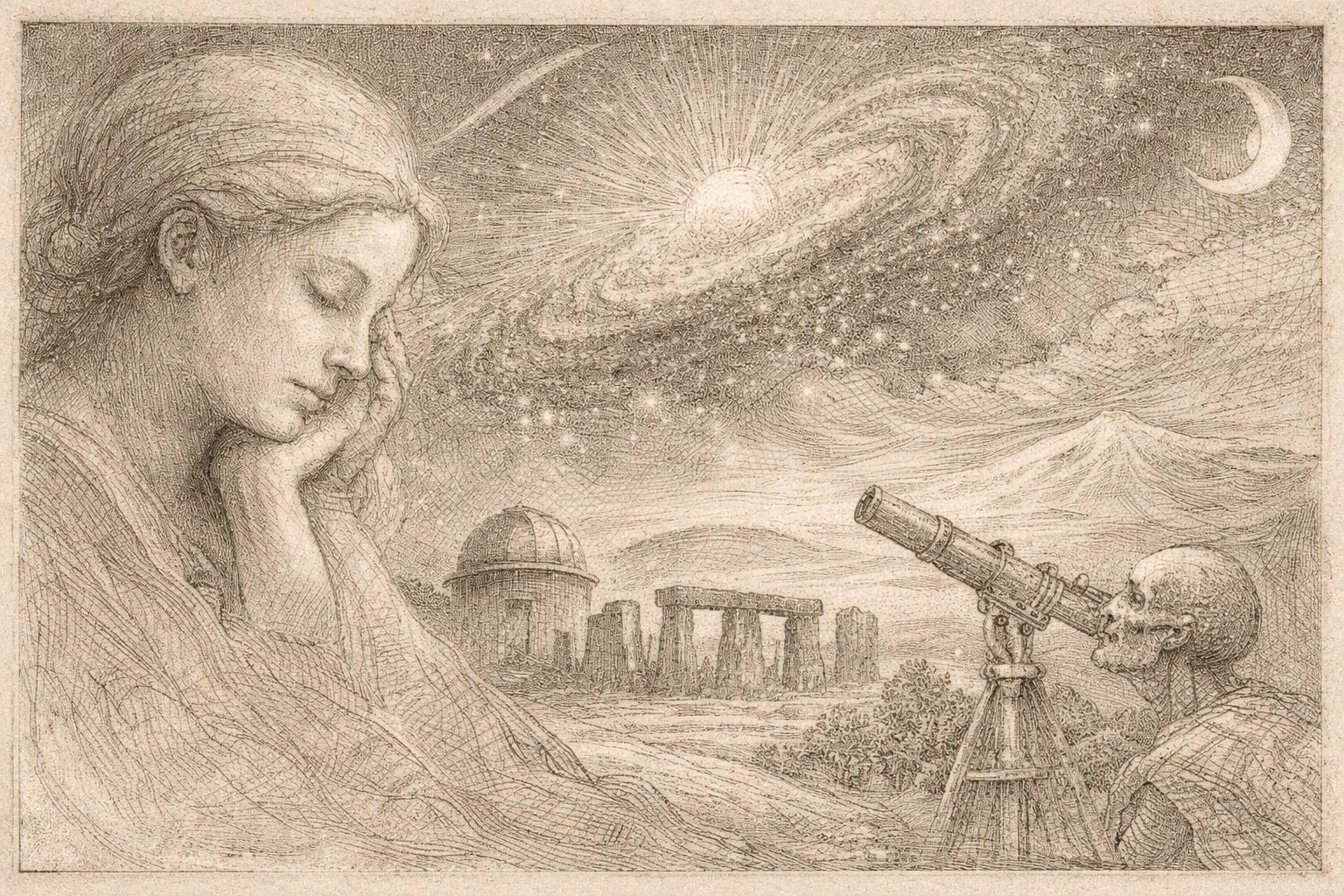

Awe Without Make-Believe
A true spirituality does not demand answers. It demands integrity. In a world starving for depth, Woo sells comfort disguised as wisdom — replacing reverence with invention. But the sacred is not built from claims. It is built from attention, restraint, and the courage to say, with clean humility: we don’t know for sure.
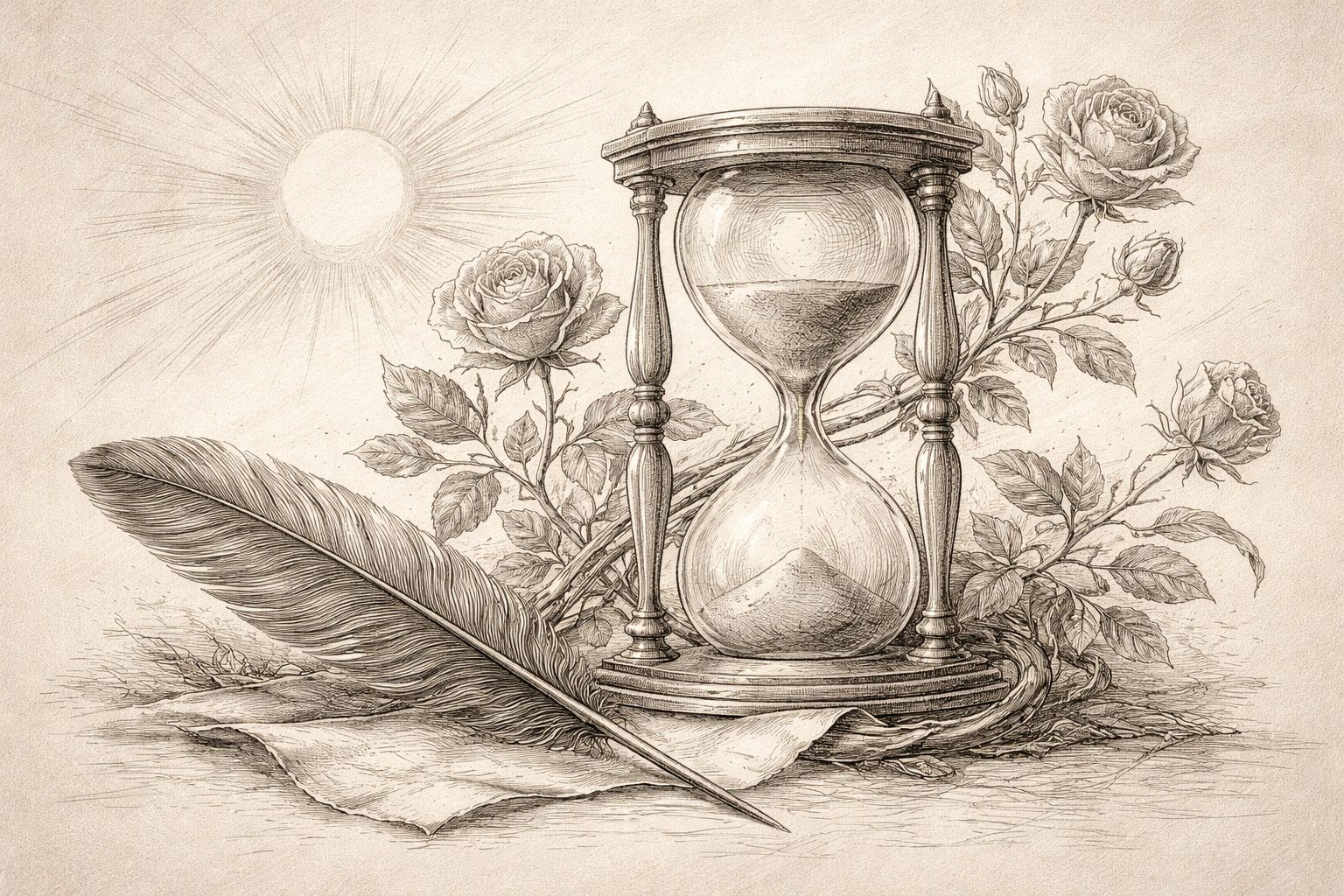

The Meaning of Life Is a Vow
Most lives do not collapse. They thin. They become functional, organised, reasonable—until the soul forgets what a life is for. Meaning is not granted. It is built: through illness, through love, through art, through grief—through the slow discipline of fidelity, and the choice of a centre that will not be betrayed.
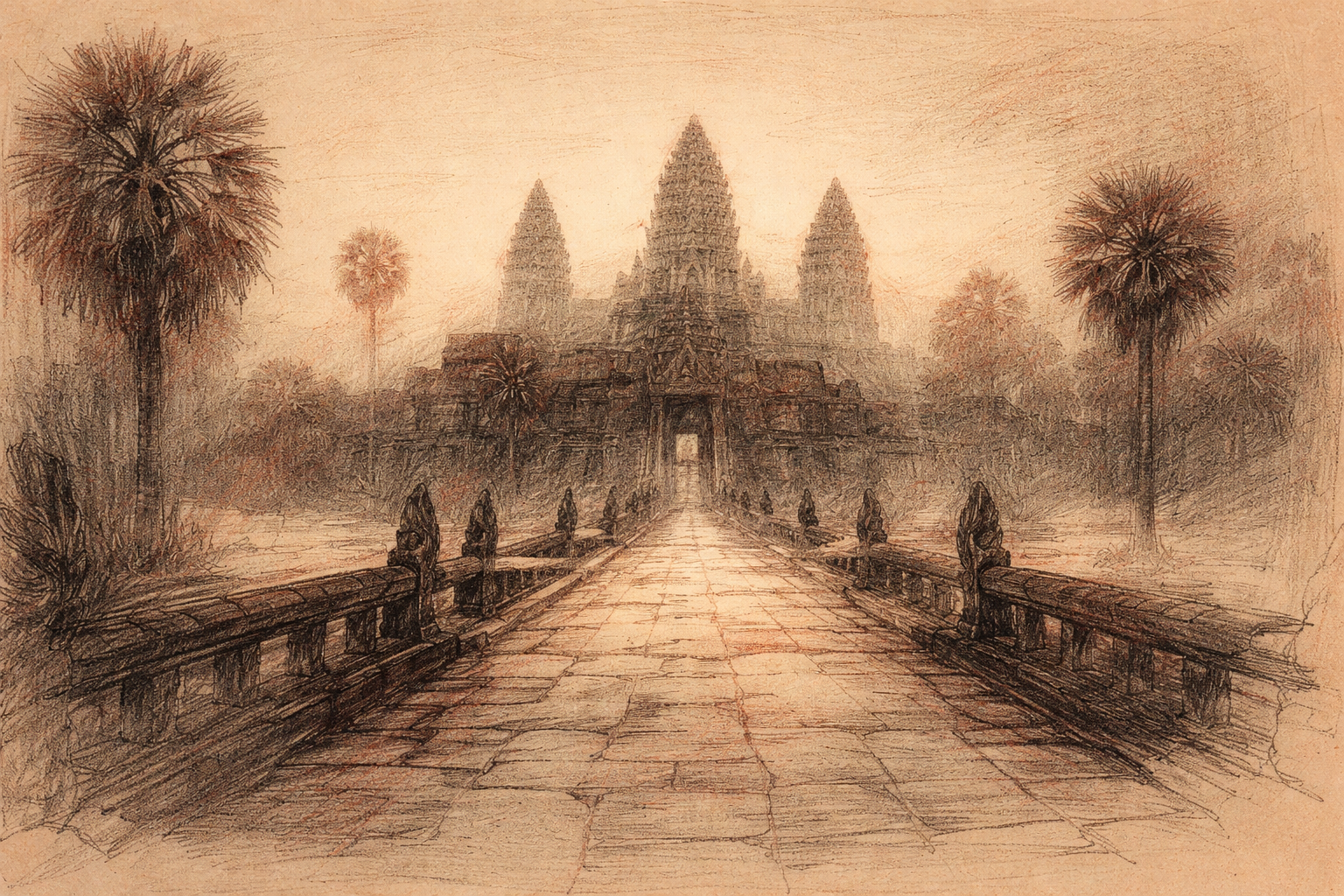

Axes of Inquiry
The Sanctuary of Meaning is not organised by topic, but by attention. Its essays move along distinct Axes of Inquiry—directions of thought that shape how meaning is encountered, held, and tested. This page offers a quiet orientation: not a menu to browse, but a map for those who wish to enter slowly.
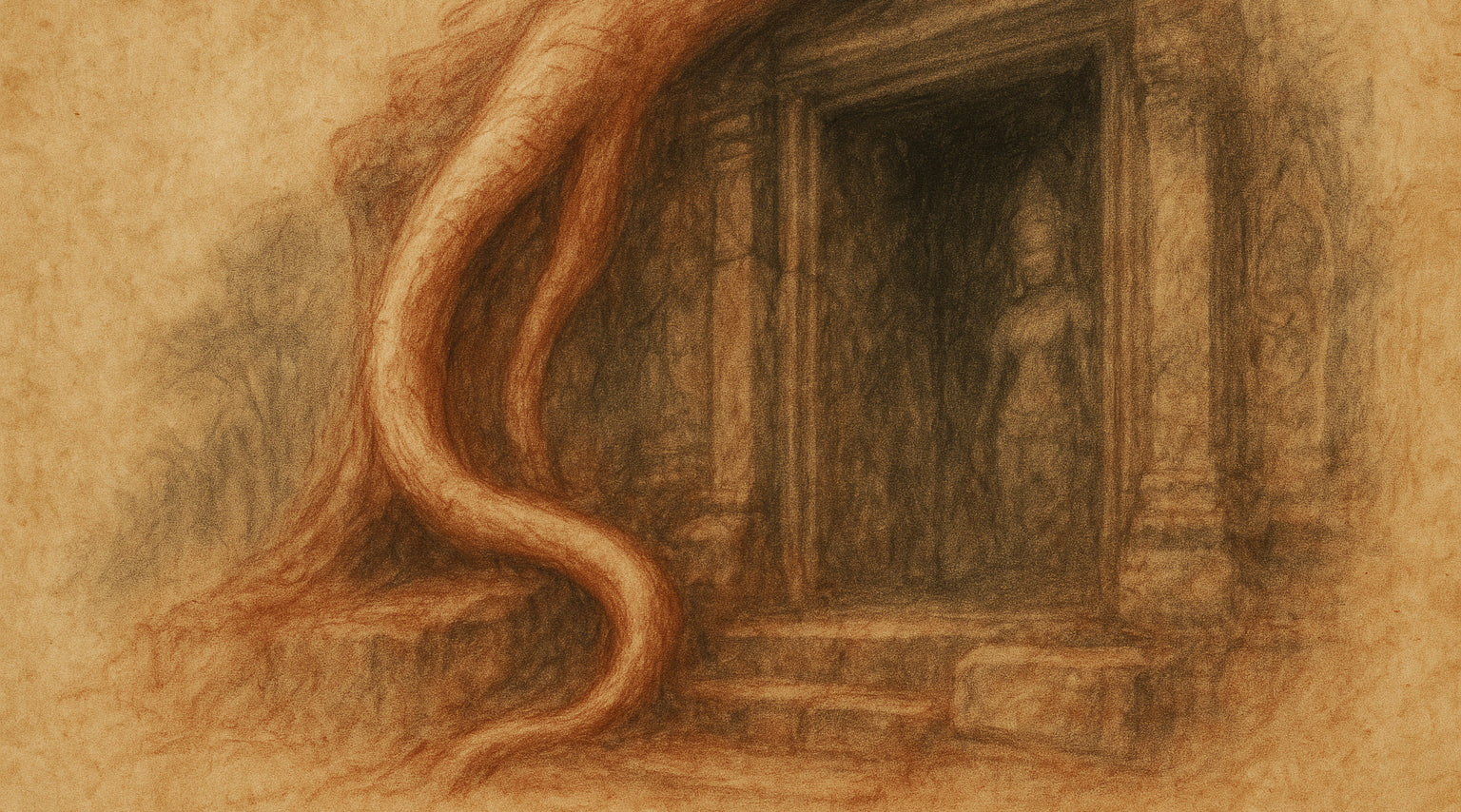

The Beauty That Time Reveals
What if the worn were more sacred than the new? Step through the softened stone of Angkor into a meditation on impermanence, quiet grace, and the beauty that reveals itself only through time.
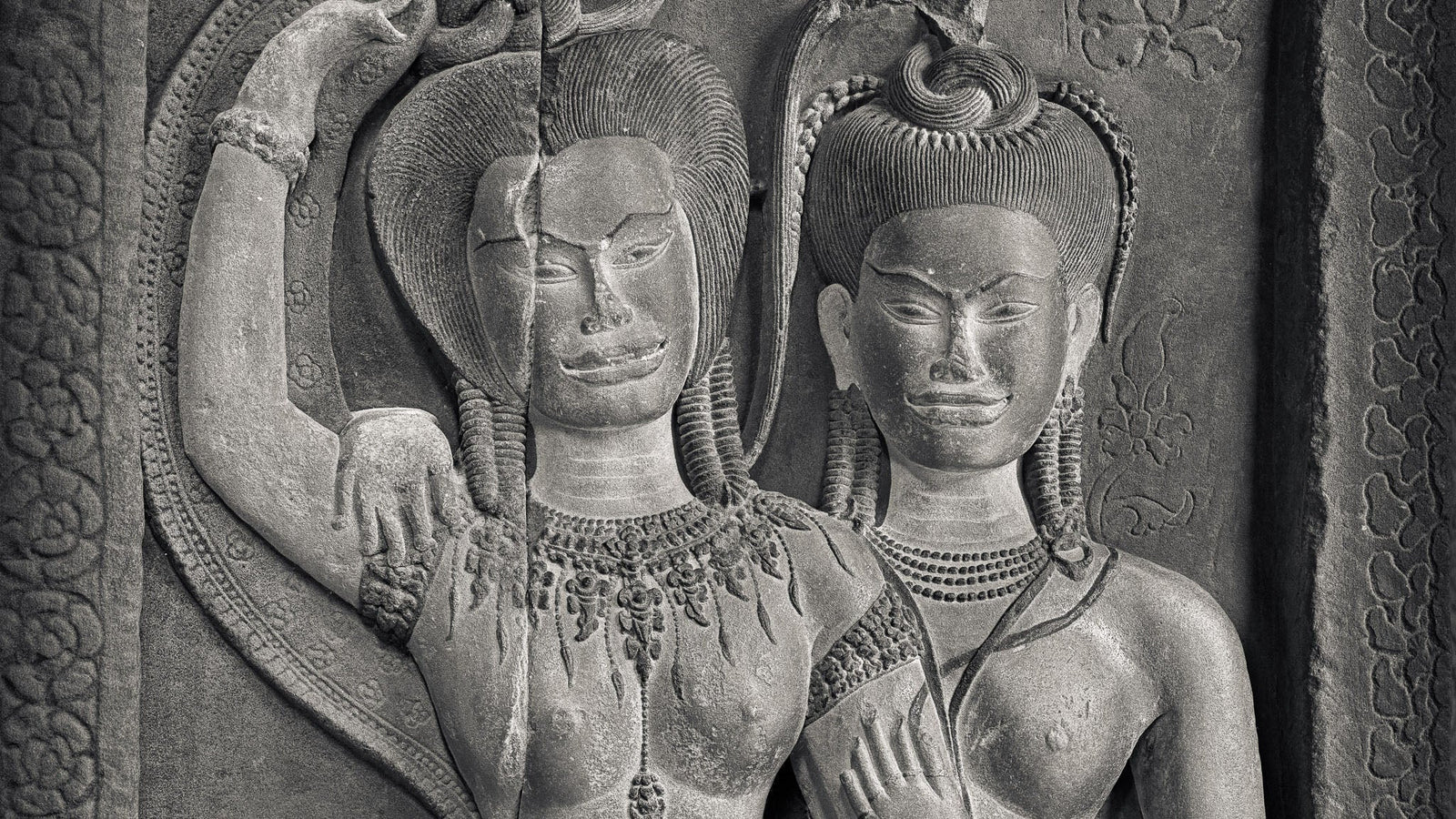

The Gaze and the Sacred Women of Angkor
To look at the apsaras of Angkor is to discover how deeply one’s own habits of seeing are trained. This essay examines the Western concept of the gaze, and how it collapses when brought before Khmer sacred art—where the female form is not an object, but a bearer of auspicious power and cosmological order.