

The Desecration of Ordinary Happiness
This essay began with a small act of celebration that should never have required defending. What followed was ugly, but not unfamiliar. I wanted to understand what kind of moral climate makes ordinary happiness so easy to desecrate.
—
A restaurant announces that it will be closed for the day because a member of staff is getting married. There are words of congratulations. There are photographs of the happy couple in traditional dress. It is not a manifesto. It is not an argument. It is simply one modest act of communal joy entering public view.
By the next morning, the view has curdled.
The photographs are no longer being seen as photographs. They are treated as material for grievance. The comments fill with mockery, accusation, nationalist spite, and the coarse excitement of people who have discovered that another person’s happiness can be used as a stage for their own resentment. What was posted in honour becomes, almost at once, something to be defended against. The person who made the post spends the morning deleting filth, blocking strangers, shutting down comments, trying to protect a moment that should never have required protection in the first place.
There is a particular nausea in this. Not only because the comments are vile, but because of the disproportion. One expects to find a little shared gladness and finds instead that a simple human gesture has been turned overnight into a sewer. The scale feels wrong. The world feels slightly wrong with it. For a moment one sees how exposed ordinary goodness has become, how quickly the crowd can find it, how little innocence now protects anything once it has been handed to the machine.
One can describe this as trolling, and at one level that is what it is. But the word is too small. It names the behaviour without touching the insult. Something more serious has happened. A harmless human good has been dragged under the machinery of public malice and forced to serve ends alien to it. Joy has been made to kneel before grievance.
Why does this happen so easily now?
Why are so many people willing, even eager, to defile what is innocent?
The first answer is the oldest and least sufficient one: because human beings contain cruelty. Envy, resentment, tribal pride, hunger for humiliation, the desire to wound what one cannot bear to bless — none of this is new. There has never been a golden age in which the human heart was free from ugliness. Anyone who expects innocence from the species has not yet looked at it steadily enough.
But to say that cruelty belongs to the human condition is not yet to explain what happened here. Human beings have always been capable of malice. They have not always had the same permissions, incentives, and amplifiers. A vice changes its force when a civilisation builds channels for it.
Social media is one of those channels.
It does not create hatred from nothing. It does something more consequential. It organises hatred. It gives it speed, audience, repetition, and reward. It lowers the cost of expression while increasing the social payoff. It takes fleeting irritation, wounded pride, tribal reflex, and borrowed indignation and turns them into a participatory spectacle. The person who might once have muttered something ugly to himself now performs that ugliness before a crowd, and the crowd teaches him that ugliness can be exhilarating.
This is why digital cruelty feels different from older forms of spite. It is not merely private vice made visible. It is private vice made social.
And once cruelty becomes social, it changes character. It is no longer only an impulse. It becomes a mode of belonging.
Many people imagine online hatred as the work of a few unusually bad individuals. Sometimes it is. More often it is the work of ordinary people entering a moral climate in which contempt has become ambient. They arrive already carrying some resentment, some insecurity, some diffuse anger, some need to feel enlarged. Then the platform offers them an object and a crowd. Suddenly they are not merely irritated. They are participants. Their hostility has somewhere to go. Their aggression acquires witnesses. Their nastiness becomes, in their own minds, a contribution.
This is why anonymity matters, though not in the simplest way. It is true that people are crueler when they feel protected from consequence. But the deeper damage is not only the removal of consequence. It is the removal of friction. In person, another human face remains stubbornly present. Tone, hesitation, embarrassment, the possibility of shame — these things place some drag on hostility. They do not abolish cruelty. But they make it work harder.
Online, much of that friction disappears. The target ceases to be fully real. He becomes symbolic before he remains human. She becomes a placeholder for a tribe, a nation, an argument, an enemy. Once that happens, ordinary restraints weaken. A person who might hesitate to wound a living individual finds little hesitation in attacking an abstraction.
The wedding photograph ceases to be a wedding photograph. It becomes territory.
This is where nationalism enters, and with it another layer of pathos.
There are moments of real conflict in the world. Borders matter. Nations matter. History matters. Governments know this, and exploit it. Where there is military tension, injury, death, displacement, humiliation, and fear, nationalist feeling will rise. This should surprise no one. What is striking is how quickly such feeling migrates downward into places where it does not belong. It enters domestic life, ordinary social encounters, harmless images, celebrations that have nothing to do with the dispute except that they are visible at the wrong moment.
Why?
Because nationalism offers something many people are starving for: borrowed magnitude.
A person may feel small in his actual life. Economically insecure. Politically powerless. Culturally disoriented. Privately humiliated. Or simply unimportant. He may not know what to do with his anger. The nation offers enlargement. Through it he becomes bigger than himself. He inherits grandeur, injury, memory, entitlement. He can feel offended on a larger scale than his own life would permit. He can feel righteous without first having to become good. He can feel significant without having to create significance.
This is why nationalism, in its fevered form, can be so intoxicating. It grants emotional amplitude to inwardly unstable selves.
And social media, which thrives on emotional amplitude, is its ideal companion.
The platform and the passion belong together. One supplies grievance, identity, and simplification. The other supplies speed, visibility, imitation, and crowd heat. Together they create the conditions in which a photograph of two people in ceremonial dress can be treated as though it were an act of aggression. The absurdity of the claim does not weaken its force. On the contrary, absurdity is often part of the thrill. The point is not truth. The point is participation in outrage.
This is why asking why people are so angry is both necessary and slightly incomplete.
The anger is real. But anger is not always the deepest thing present. Often it is only the most public form of something else: humiliation, confusion, loneliness, envy, impotence, inherited fear, or the dull ache of a life that does not feel large enough. Social media is full of displaced misery looking for an object. It is crowded with people who do not know what to do with their own inward disorder and are therefore highly susceptible to invitations to condemn.
Condemnation offers several pleasures at once. It grants moral excitement. It grants belonging. It grants temporary relief from passivity. Best of all, it permits a person to feel full while emptying himself into cruelty.
That is one of the darkest truths about public malice: it can feel like vitality to the person enacting it.
This does not excuse anything. But it does help explain why so much online behaviour seems at once vicious and curiously hungry. The trolls are not merely expressing beliefs. Many of them are feeding on the event. Another person’s joy has appeared before them, and they have found in it a chance to feel something hot and collective and enlarging. The wedding becomes raw material for self-intoxication.
This is why the desecration feels so precise. The mob does not merely attack at random. It is drawn toward innocence because innocence throws its own condition into relief. Ordinary happiness can be strangely offensive to those who have lost the capacity to bless it. A quiet human good — a wedding, a meal, a friendship, a family gathering, a local act of care — stands there in its small sufficiency, asking nothing from the crowd, and that very sufficiency can provoke hostility. It reminds the disordered person of a kind of meaning he cannot enter except by vandalising it.
There is an old human pattern here. Envy has always wanted to spoil what it cannot create. Resentment has always taken pleasure in lowering what it cannot bear to honour. But social media gives these impulses a habitat.
More precisely, it acts as a moral solvent. It loosens context, scale, consequence, and the felt reality of the other. It loosens the disciplines by which anger is ordinarily tested before expression. And once these things have been loosened, it binds people back together in the coarsest way available: as a crowd.
The digital crowd rarely gathers to think. It gathers to intensify.
That is why it is not enough to ask people to be nicer online. Niceness is too frail a virtue for structures built to reward aggression. The problem is not only that people fail morally. It is that they are repeatedly placed inside systems that make moral failure easier, quicker, and more socially rewarding than restraint.
What, then, should one do with this recognition?
One temptation is fatalism. Human beings are vile. The crowd is rotten. This is simply what people are. There is something truthful in the bleakness, but not enough. It collapses too much into nature. It mistakes universal capacity for fixed destiny. Human beings are capable of meanness, yes. They are also capable of tenderness, loyalty, gentleness, and forms of honour that still seem almost miraculous under modern conditions. The same species that produces the anonymous mob also produces the friend who rises early to prepare a wedding meal, the employer who closes her doors for the sake of a staff member’s joy, the neighbour who brings flowers, the old aunt who adjusts the collar, the child who stares in wonder at the clothes. To say “this is human nature” and stop there is a way of refusing discrimination.
The real question is not whether human beings are capable of cruelty. Of course they are. The question is what conditions make cruelty easier, more contagious, more performative, more likely to fasten upon innocent things.
That question leads back, again, to the machine.
It also leads to the defence of fragile human goods before the crowd learns of them.
To delete. To block. To close the gate. To refuse strangers the right to trample what they have not earned the right to touch. There is no shame in that. Boundaries are not cowardice. They are part of moral care.
But the deeper defence must be inward. One must resist becoming like the thing one condemns. Resist the invitation to live in permanent reaction. Resist the temptation to treat every public ugliness as proof that blessing is naïve. Resist the slow corrosion by which repeated exposure to filth makes goodness itself seem sentimental.
That may be the deepest danger of all. Not that the crowd exists, but that the crowd teaches us to distrust innocence.
Much online hatred is the behaviour of people who no longer know how to encounter a good without trying to reduce it to an instrument of grievance.
—
Receive the next work
Subscribe free to receive new work from the Lucas Varro Library by email.
More from the Library

See Also
A concise and impartial dictionary of absence, promises, quarrels, ordinary objects, and the troublesome instability of words.
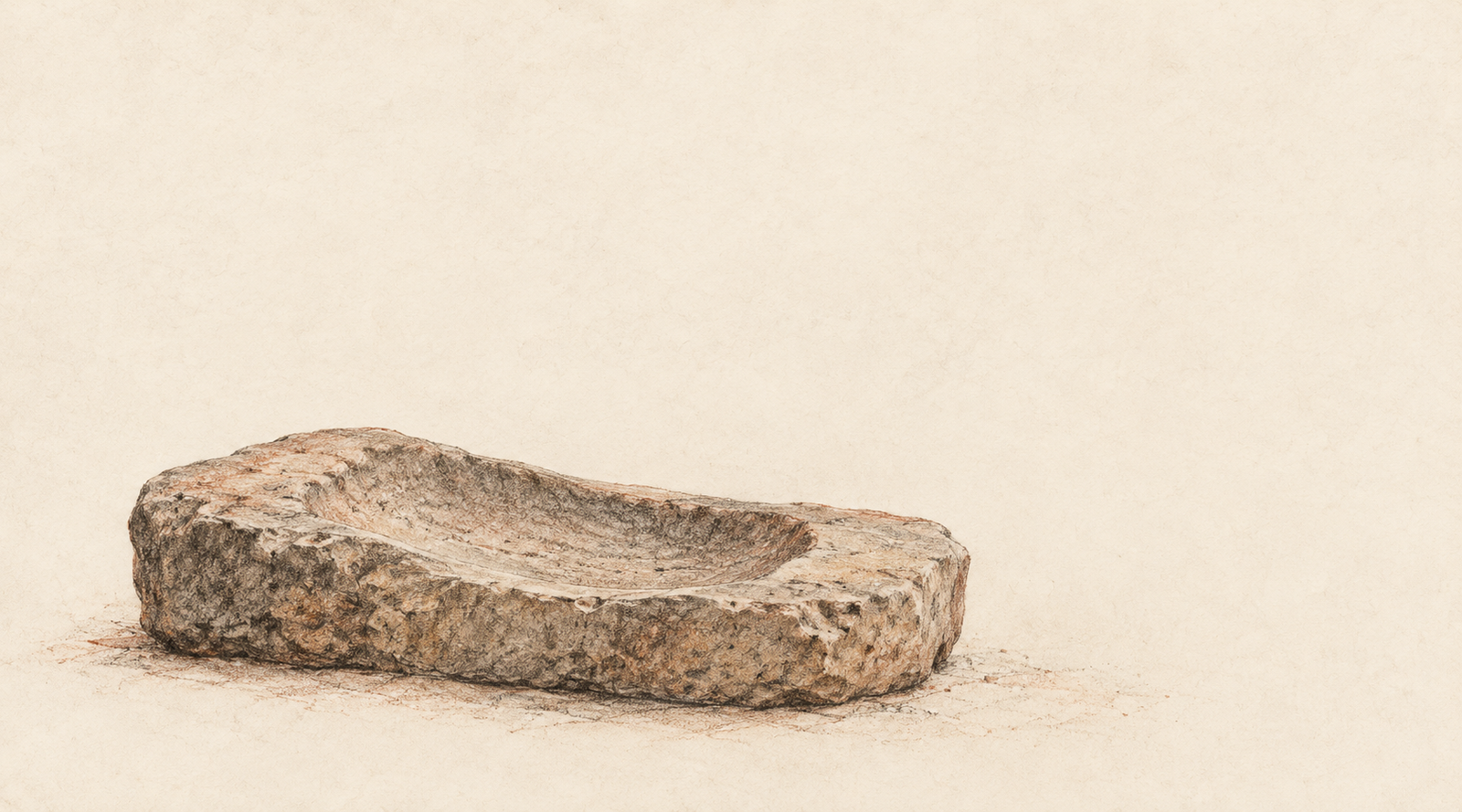

The City of Service
The temple we inherit is a building from which almost all necessity has been removed. Nothing must be brought for it to continue being what we call a temple. The sanctuary asks nothing of us. Stone is good at this kind of independence.
A living temple was otherwise.
Water had to come in. So did grain, cloth, oil, aromatic substances, fuel. The things required for worship arrived because someone carried them across a threshold.
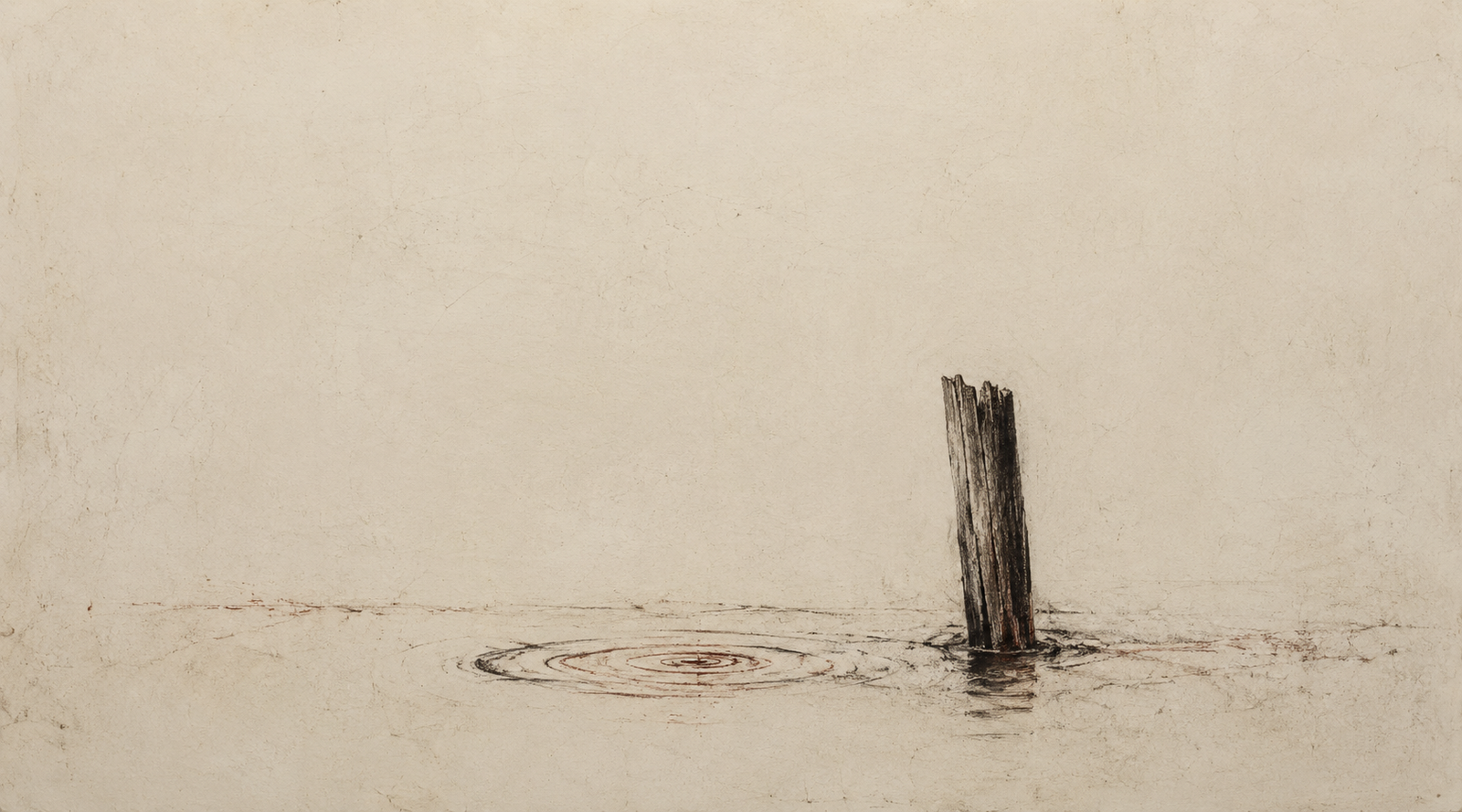

Houses of Wood, Light, and Smoke
Some of Angkor’s most intimate ruins do not rise above the ground at all. They are postholes, low mounds, hearths and ponds: durable traces of a domestic city built largely from things that decay. To restore that city is to see Angkor not only as stone, but as wood, smoke, water, repair, and people living within calling distance.