

The Machine and the Human Image
We speak often about what social media does to politics, to public discourse, to attention. Less often do we ask what idea of the human person it quietly trains us to accept. This essay begins there.
Most people now begin the day with a small surrender.
Before the body has properly entered morning, the hand reaches for the phone. The gesture is so common it escapes notice. It can even look harmless. But it is rarely innocent. Something in it is already bent outward, already expectant, already faintly afraid. Has something happened? Has one been summoned, accused, overtaken, forgotten? Many of us no longer wake first into a room, a body, a patch of light, the heaviness or lightness of our own mind. We wake into the possibility of demand.
That demand has been normal for so long that its violence has become difficult to feel.
A machine waits beside the bed. It is sold as a convenience, a link, an instrument. In practice it is often a customs gate through which the whole agitated empire of public feeling enters the mind before breakfast. Panic, humiliation, spectacle, grievance, flirtation, accusation, war, performance, emergency, opinion, derangement: all of it can pass into consciousness before one has looked properly at the sky.
Then, sometimes, one does look up. Light on the wall. A cup still warm. The muffled sounds of a house. A neighbour dragging a broom through dust. The ordinary world continuing with an almost insulting indifference to the fever of the feed.
That contrast is not trivial. It names one of the central fractures of modern consciousness. We now live between reality as lived and reality as circulated. The first comes through bodies, weather, labour, friendship, grief, touch, obligation, place. The second comes through salience. What matters there is not what is truest, or wisest, or most deserving of care, but what can seize attention and hold it long enough to be sold.
Much has already been said about the political and psychological harms of this arrangement, and rightly. It inflames division. It rewards deceit. It shortens attention. It produces anxiety. All true. But these descriptions, though accurate, still do not reach the bottom of the matter. They describe effects without quite touching the deeper insult.
For social media does not merely distract human beings. It trains them in a false idea of what a human being is.
That is why its damage runs so deep. Every durable order rests on some image of the person. A school does. A church does. A prison does. A market does. Each assumes something about what in us is highest, what in us is weakest, what can be cultivated, what can be exploited. Social media is no different. Its anthropology is simply hidden in its architecture.
And what does that architecture assume?
That a human being is, above all, a reactor.
A bundle of sensitivities waiting to be triggered. An appetite to be targeted. A profile to be refined. A nervous system to be stimulated. A social animal to be kept scanning for approval, novelty, exclusion, threat. A creature whose loneliness can be monetised, whose vanity can be harnessed, whose moral impulses can be converted into circulation, whose need for meaning can be fed back to him in the form of engagement.
This is not rhetoric. It is description. The system does not need to despise human beings in order to degrade them. It needs only to discover which parts of them are most profitable to inflame.
That is why the old defence sounds so tired now. The platforms are neutral; the problem lies only in how we use them. No. A casino is not neutral because someone may walk through it without gambling. An architecture designed to maximise compulsion, inflame feeling, reward display, and monetise outrage is not neutral because a botanist can occasionally post a fern. The structure already leans. It already selects. It already answers, in practice, the question of what sort of being stands before it.
A being to be captured.
A being to be measured by responsiveness.
A being whose worth can be inferred from visibility.
A being whose relation to reality is mediated by stimulus.
Once that image enters deeply enough, the damage does not remain at the level of habit. It moves inward. One begins, almost without noticing, to feel oneself from the outside.
A thought forms and, before it has properly ripened, another part of the mind is already framing it for display.
A walk becomes material.
A mood becomes language before it has become understanding.
A meal feels faintly incomplete when unshared.
One is not only living. One is half-watching oneself live.
This is exhausting in a way that is difficult to name, because the exhaustion does not come only from excess information. It comes from self-division. Part of the soul is always stepping out of experience in order to imagine its public legibility. Even solitude is no longer simple. It is crowded with the possibility of witness. One can be alone in a room and still feel observed, available, not yet quite real until rendered outward.
Silence starts to feel like absence rather than presence.
That is a serious injury.
This is what I mean by the deformation of the soul.
The phrase is large because the matter is large. By soul I do not mean anything misty or ornamental. I mean the inward form of a life: the seat of attention, desire, love, judgement, conscience, memory, concentration, secrecy, prayer, if one prays, fidelity, if one is faithful to anything. The soul is that in us which must learn what to love, how to dwell, what to ignore, what to endure, and how to remain answerable to realities deeper than appetite or applause.
A soul is deformed when it loses the shape required for reality.
When it cannot stay with one thing for long.
When it begins to confuse being stimulated with being awake.
When it feels the itch to display before it has even felt the thing it wishes to display.
When care seems unreal unless enacted before witnesses.
When suffering is half-experienced as future signal.
When obscurity starts to feel like diminishment.
When one’s own life begins to seem strangely weightless unless answered by reaction.
There is a particular hollowness that follows this condition. Many people know it, though they may not name it. One posts, receives the little shower of response, and for a moment the self tightens into legibility. Then the sensation fades with embarrassing speed. What returns is not fullness but a new need to refresh, to check, to see whether the self still exists in the reflected light of other minds. This is one reason the machine is so powerful: it alternates stimulation with vacancy. It creates the lack to which it then offers itself as answer.
But a human being cannot live well in that rhythm. He becomes too porous, too dependent, too easy to move from a distance. More importantly, he begins to lose the taste for any good that ripens slowly and privately. The unobserved hour grows thin. The unfinished thought becomes intolerable. Affection not translated into signal can start to feel almost wasted.
That may be the bleakest achievement of the system. It does not merely interrupt inward life. It makes inward life less desirable.
One begins to see, then, why the usual remedies sound so slight. Take a walk. Read more books. Look at the sky. None of this is false. Some of it may help. But it does not yet meet the pressure of the problem. It treats capture as though it were merely a scheduling issue. It prescribes healthy counter-habits for what is, at bottom, a crisis of formation.
For social media is not just a technology. It is a rival way of imagining the self.
Against its reactive self, one has to defend another image: the person as a being capable of inwardness, of ripening, of secrecy, of concentration, of unperformed love, of fidelity to what does not trend, of action whose worth is not guaranteed by applause.
That may sound austere beside the machine’s offer. The machine offers immediacy, witness, stimulation, reinforcement, scale. It promises that one need never disappear into one’s own unanswered life. It promises that every feeling may at once be externalised, ratified, joined to a crowd. It promises, in short, relief from obscurity.
And obscurity is hard for us. Harder than many educated people admit. We want to matter. We want our experience confirmed. We want our solitude interrupted by signs that we exist for others. There is nothing contemptible in this. It is recognisably human. Which is why the machine has such power over decent people, not only vain ones. It seizes not only on weakness, but on longing.
That is why the positive case cannot be made only in the language of discipline. It must also be made in the language of desire. One must say what is good about a formed soul, not only what is wrong with a deformed one.
What is good about it is not purity. Not serenity. Not some bloodless superiority to the age.
It is density.
It is the feeling of being fully present to one thing at a time.
It is the relief of not splitting one’s experience between living and displaying.
It is the strange increase of affection when it is no longer quietly auditioning for an audience.
It is the deep, almost old-fashioned pleasure of doing something well that no one may ever praise.
It is the return of proportion.
Most people have known some fragment of this, which is why the machine never fully wins. Perhaps one is cooking for someone one loves and, for half an hour, forgets oneself completely. Or reading with such absorption that the mind stops reaching outward. Or walking without narrating the walk. Or sitting beside a sick friend and discovering that presence has its own gravity, and that gravity has nothing to do with display. In such moments one is not less real for being unseen. One is more real. The self thickens. Experience regains weight. Time becomes inhabitable again.
This is what the machine cannot offer, however brightly it glitters. It can offer stimulation, witness, friction, status, symbolic intimacy. It cannot offer depth. Depth comes only where attention is not being continually harvested.
At this point a fair objection appears. What is this essay doing? Does it not also seek attention? Does it not also hope to circulate, perhaps through the very channels it condemns? Does it not ask for time, seriousness, response? And if so, by what right does it speak as though standing outside the contamination it describes?
By very little right.
That should be admitted plainly. No writer working now is pure in this matter. To publish at all is to enter the weather of visibility. To place sentences into public life is, in some measure, to submit them to circulation. There is no clean hilltop from which to denounce the valley.
But entanglement does not erase every distinction. There remains a difference, imperfect but real, between speech that tries to deepen a person’s relation to reality and speech that tries only to keep him inside the loop; between forms that demand compulsion and forms that ask for attention; between writing that leaves the reader more agitated and writing that returns him, however briefly, to some inner margin from which he can think again. The essay is not outside the age. It is using compromised means against one of the age’s central degradations.
That too is precarious. Critique can become performance like anything else. One can denounce the machine in order to win distinction inside it. One can turn freedom itself into a brand of legibility. Even refusal can become theatre. Which is why the struggle is not finally between online and offline. It is between two understandings of what a self is for.
The question is which of these selves we are training.
That question has public consequences, but it is first a personal one. Not in the therapeutic sense. In the older sense. What kind of person am I becoming when no one is asking the question for me? What in me grows strong, and what in me grows weak, under these conditions? What becomes harder to desire? What becomes impossible to notice? What goods begin to feel unreal because they do not circulate?
Those are not minor questions. They touch everything that matters.
A person who can no longer bear an unobserved life is easier to govern badly. Easier to flatter. Easier to terrify. Easier to sort into tribes of reaction. Friendship becomes thinner under such conditions, because performance seeps into intimacy. Love becomes thinner, because love asks for presence rather than circulation. Thought becomes thinner, because thinking requires intervals in which nothing is demanded of it. Even grief becomes thinner, because the temptation to stylise it arrives too soon.
This is why resistance must mean more than abstinence. One may delete every app and still carry the machine in one’s nerves. Logging off is sometimes necessary. It is never sufficient.
What is required is re-formation: the slow rebuilding of those capacities by which a person can bear reality without immediately converting it into display.
That rebuilding will look ordinary from the outside. It may mean protecting some parts of life from witness. Letting thought remain unspoken until it has earned speech. Learning again to do good that no one sees. Recovering forms of attention deep enough for reading, prayer, craft, friendship, work, grief, or care. Keeping company with people before whom one need not perform. Returning, where one can, to tasks that answer back with reality rather than metrics.
None of this is glamorous. That is part of its dignity.
From there public action becomes more trustworthy, not less. One can oppose real evil without becoming addicted to indignation. One can remain politically alert without volunteering one’s mind as a transit corridor for every manufactured urgency. One can help where help is possible, refuse where refusal matters, and still remain answerable to a deeper rhythm than the churn of stimulation.
This is not purity. It is not escape. It is simply a decision not to be had so cheaply.
Perhaps that is the plainest moral statement the age requires. Not that one should know nothing, or care less, or retreat into private comfort. But that one should refuse to hand over the structure of one’s consciousness to systems designed to profit from its agitation. That one should defend in oneself the powers on which love, judgement, and freedom depend.
Such resistance will not trend. It will not dazzle. It may feel obscure, even anticlimactic. But obscurity is not failure. There are forms of hiddenness in which a person becomes substantial to himself again.
That may be the nearest thing to victory available here. Not victory over technology. That battle is too large for one soul. But victory over the false suggestion that one is merely a surface for stimulation, a creature whose highest purpose is to react, display, and remain available.
A human being is more inward, more difficult, more real than that.
The task is to live from that truth before the habit of denying it becomes our nature.
—
Receive the next work
Subscribe free to receive new work from the Lucas Varro Library by email.
More from the Library

See Also
A concise and impartial dictionary of absence, promises, quarrels, ordinary objects, and the troublesome instability of words.
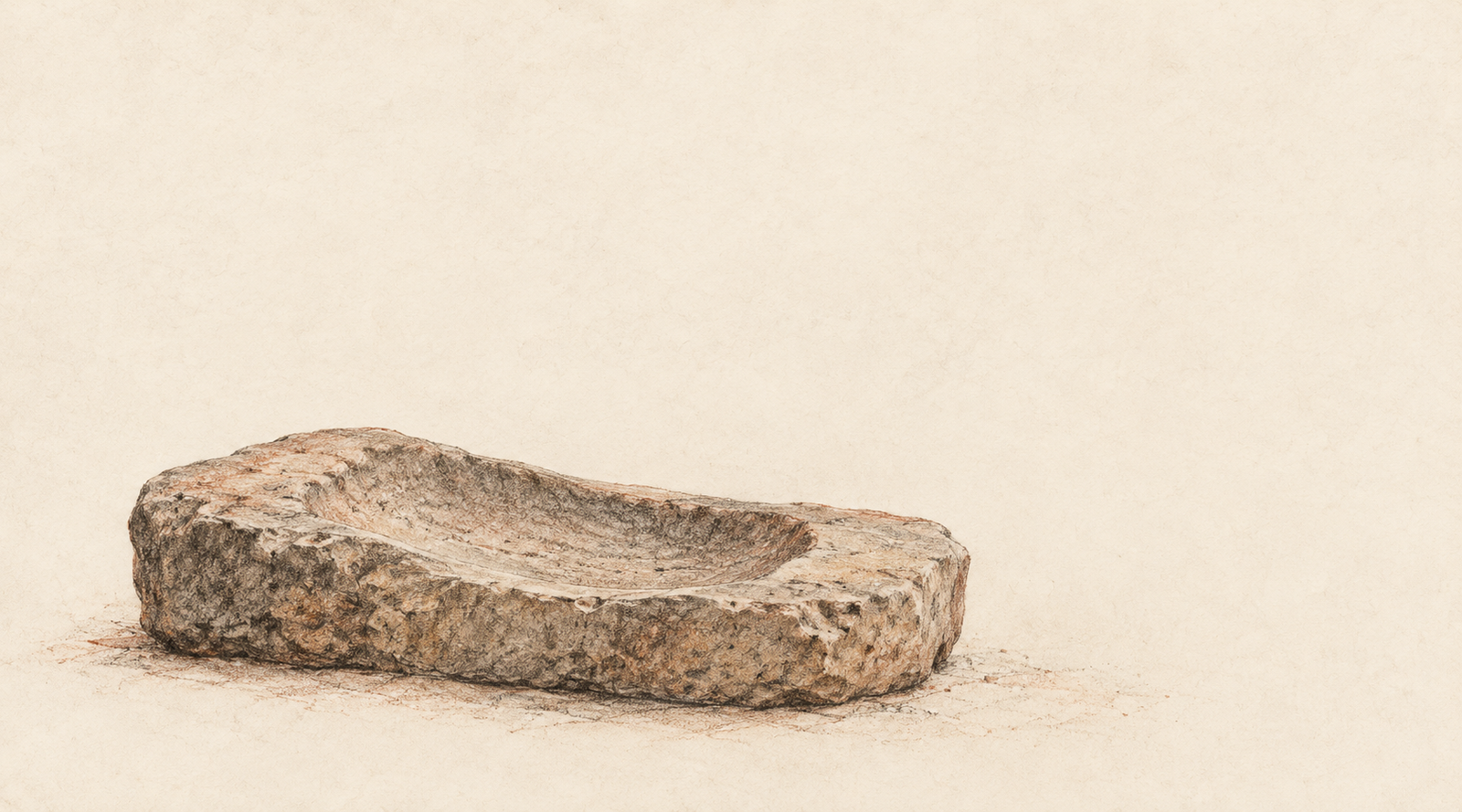

The City of Service
The temple we inherit is a building from which almost all necessity has been removed. Nothing must be brought for it to continue being what we call a temple. The sanctuary asks nothing of us. Stone is good at this kind of independence.
A living temple was otherwise.
Water had to come in. So did grain, cloth, oil, aromatic substances, fuel. The things required for worship arrived because someone carried them across a threshold.
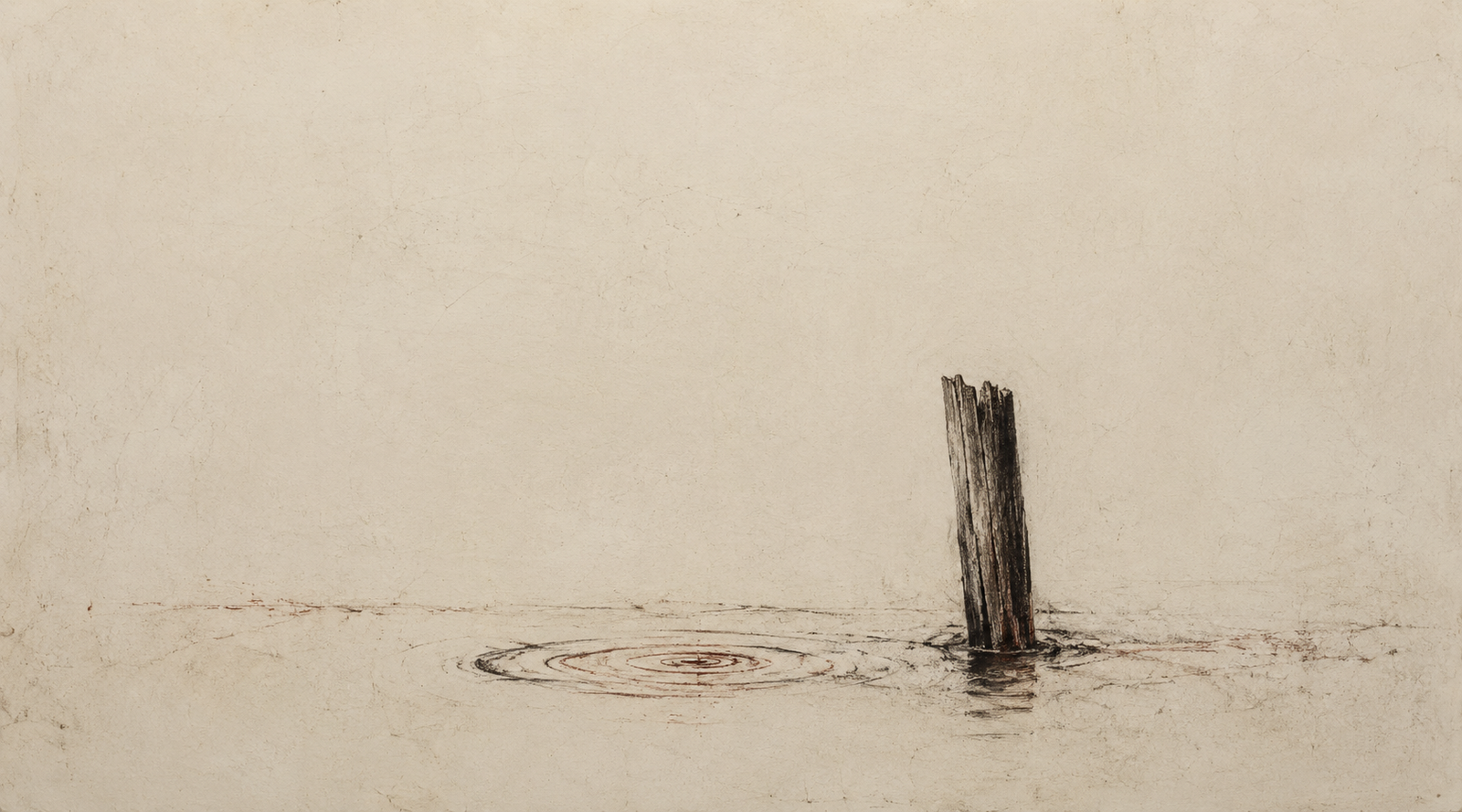

Houses of Wood, Light, and Smoke
Some of Angkor’s most intimate ruins do not rise above the ground at all. They are postholes, low mounds, hearths and ponds: durable traces of a domestic city built largely from things that decay. To restore that city is to see Angkor not only as stone, but as wood, smoke, water, repair, and people living within calling distance.