

The Wager for This Life
On Meaning, Mortality, and Loving This Life Well
There is an old temptation to treat this life as though it were not quite the real one. A threshold. A test. A waiting room. Meaning lies elsewhere, we are told. Fulfilment lies elsewhere. Justice lies elsewhere. Whatever is highest, truest, most worth trusting has been placed beyond the visible world, beyond the body, beyond the hour in which we stand.
Even where religion loosens its hold, the habit remains. If not heaven, then “the universe”. If not salvation, then alignment. If not providence, then destiny, manifestation, hidden energies, cosmic assurances whispering that the visible world is only the surface of some deeper and kinder design. The language changes. The gesture does not. This life is subtly demoted. Reality is deferred.
And yet something in us resists this postponement.
Not always confidently. Not always clearly. But stubbornly. Tenderly. We go on searching for meaning, making beauty, offering comfort, building forms of worth inside a world that gives us no final guarantee. Even disillusioned, we continue the labour. We try, again and again, to make life liveable from within life itself.
This is where another wager becomes possible.
Pascal’s Wager is usually remembered as a practical argument for belief in God: if God exists, belief promises infinite gain; if God does not, little is lost. Whatever one makes of the argument, its lasting force lies deeper than that calculation. It confronts a permanent human difficulty. Certainty is unavailable, yet life must still be lived. One must still stake oneself somewhere.
That is why Pascal remains worth taking seriously. He understood that the human being is not only rational but exposed: finite, unstable, hungry for meaning, incapable of resting easily in uncertainty. He saw how readily we flee ourselves through diversion, fantasy, and noise. He saw grandeur and misery together. In that sense, he is closer to this essay than a simple opposition would suggest. He looks into the same wound. He feels the same disproportion. Where we differ is not in the diagnosis, but in the direction of fidelity.
Pascal turns from uncertainty towards God. But the structure he reveals can be turned elsewhere.
Suppose we cannot know with final confidence whether there is an afterlife, a hidden guarantee, a benevolent script beneath events, or some final compensation waiting behind the disorder of things. Suppose such claims remain what they have largely always been for finite creatures: hopes, intuitions, doctrines, symbols, consolations, perhaps even glimpses, but never knowledge enough to spare us the burden of living here. What then?
Then perhaps the better wager is this: to live as though this life is meaningful, valuable, and good in itself. To love it not as a corridor, but as a room. Not as a waiting area for eternity, but as the field in which value must become real. To refuse disdain. To refuse postponement. To refuse the glamour of elsewhere. To withhold neither reverence nor affection from the only world that has undeniably been placed in our hands.
If this life is all there is, nothing could be more important.
To say this is not to indulge in easy optimism. It is not to decorate ruin with slogans. Any love worthy of life must begin by seeing life clearly. It must include mortality, grief, panic, loneliness, futility, ageing, moral failure, and the knowledge that much remains unresolved and may remain so forever. The wager for this life does not begin in innocence. It begins after innocence.
It begins with the recognition that everything is not and will not be all right. That some losses are not repaired. That death is not a metaphor but a limit. That our species is capable of tenderness and barbarity in the same breath. That consciousness is both splendour and affliction: the power not only to live, but to know that we live; not only to suffer, but to anticipate suffering; not only to desire meaning, but to understand that no final explanation may come.
Pascal saw much of this with unsparing force. He saw the human creature suspended between grandeur and misery, a thinking reed capable of reflection and self-deception at once. He meant to drive us towards God by revealing how unstable our condition is without Him. Yet one feels, reading him, how near he comes to another possibility: that the very beings who can grasp their own frailty, and even the possibility of cosmic silence, are also beings capable of answering it without appeal to certainty.
This, perhaps, is where he recoils.
For what Pascal reveals, whether he intended to or not, is not merely how desperate our condition is, but how extraordinary it is that beings such as we are can bear this knowledge at all. We are not merely frail creatures. We are creatures who interpret frailty. We are not merely mortal. We are mortals who know it. We are not merely wounded by existence. We build songs around the wound, philosophies in its shadow, rituals beside it, acts of love despite it. We bury our dead and continue speaking. We lose certainty and continue searching. We discover that there is no guarantee of consolation, and still we remain capable of beauty, repair, tenderness, and truth.
That fact matters.
It does not prove that life is meaningful. But it helps show where meaning enters. Human beings do not merely endure existence; they answer it. They make forms, promises, memories, obligations, works, and gestures that render the world more inhabitable than it would otherwise have been. Every civilisation bears witness to this. Every mythology. Every philosophy. Every serious art. Again and again, finite creatures confront a world that does not explain itself, and still attempt to make shelter, order, and significance within it.
This is why the wager for this life is not an argument against religion as such, nor merely an argument against woo. It is an argument against every tendency — religious, spiritual, or philosophical — that teaches us to devalue the given world by locating its true significance somewhere else.
The temptation is older than any one creed. It is the temptation to look past life in order to bear life.
This does not mean that all religion expresses that temptation in the same way, or with the same force. There are religious traditions and communities that deepen ethical presence, intensify compassion, and call human beings more fully into responsibility for the world they actually share. They need not be denied in order to criticise another, more dangerous pattern: the pattern by which earthly life is treated as secondary, provisional, fallen, or merely preparatory beside some higher order to come.
That pattern matters because it is not always harmless. At times it has licensed resignation. At times it has sanctified domination. At times it has turned suffering into submission, history into prophecy, and the shared world into material for the fulfilment of sacred certainty. Nor is this danger confined to obvious fanatics. Whenever conviction about a higher order weakens responsibility to the visible one, something human is lost.
And the temptation is understandable. The world is difficult. It hurts. It disappoints. It ages. It dies. Of course we are drawn to visions that promise compensation elsewhere. Of course we want to believe that all our losses are held in reserve by some higher order, that our hunger corresponds to a feast already prepared, that the visible world is only a rough draft of a kinder one.
But the intelligibility of that longing does not settle the question. Nor does the possibility of mystery exempt us from the life we have. No honest person can claim to know the whole. There may be more than we understand. There almost certainly is. But ignorance of the whole is not reason enough to neglect the part. The possibility of more is not licence to love less what is here.
To wager on this life is not to deny mystery. It is to refuse to use mystery as an alibi against presence.
It is to say: whatever may or may not lie beyond this world, this world is not thereby reduced to rehearsal. Whatever may await the dead, the living must still answer for how they inhabited the day. Whatever powers may exist behind appearances, appearances themselves still ask something of us: care, attention, witness, gratitude, thought, decency, love.
And if there is more? If consciousness survives? If some order greater than our current understanding receives us?
Then nothing essential changes about our present obligation. This life remains the only field in which choice, attention, love, responsibility, and suffering are directly given to us. The possibility of another order does not cancel the claims of this one. It simply reminds us that we do not know enough to justify withholding ourselves from the life we are actually living.
That is the hinge. The wager does not depend on proving that any hypothetical beyond would approve of our values. It depends only on this: that uncertainty about what lies beyond is not a sufficient reason to defer fidelity to what lies here. Whatever transcendence may be, it cannot relieve us of the work of inhabiting the mortal world with honesty. The question is not whether there may be more. The question is whether the suspicion of more entitles us to stand half-absent from our own days.
It does not.
Under uncertainty, it is better to affirm the worth of life than to suspend affection until the cosmos explains itself. Better to cultivate wonder here than to mortgage one’s deepest loyalty to elsewhere. Better to become answerable to the mortal world than to seek refuge in consoling vagueness. Better to live so that meaning is practised rather than postponed.
This does not mean pretending that life arrives already stamped with obvious value. Much in life is brutal, banal, unjust, degrading. Many days do not feel meaningful. Many lives are crushed under conditions they did not choose. Any serious affirmation must be stern enough to look directly at these facts. Otherwise it is not wisdom but anaesthetic.
The deeper claim is harder, and more beautiful: meaning is neither simply found nor simply invented. It is realised. It emerges where finite beings answer life with enough honesty, labour, love, memory, sacrifice, thought, and care that value takes form between them. Meaning does not descend intact from heaven or shimmer automatically through the air. It becomes real in the meeting between consciousness and world, between vulnerability and devotion, between what is given and what is done with it.
This is why the wager persuades. Or at least why it persuades me. To live as though life matters often makes life more inhabitable, more lucid, more worthy of effort. It calls us back from abstraction to the difficult holiness of the actual: the meal prepared, the hand held, the work completed with integrity, the friend listened to fully, the beauty noticed before it vanishes, the grief borne without theatrics, the truth spoken in a room arranged to prevent it.
These are not minor things. They are the substance of a life.
A leaf moving in the wind. Rain on stone. The face across the table. A child asleep. A page that says what had almost remained unsayable. A morning in which despair lifts for no grand reason except that light has entered the room differently. None of these things becomes less sacred because they are finite. Finitude may be what sharpens their radiance. A mortal thing can be holy precisely because it does not last.
And this is why the wager stands against woo as much as against dogma. Woo flatters us with the suggestion that value is guaranteed by hidden patterns we need only intuit, channel, manifest, align with, or decode. It offers reassurance without adulthood. It replaces the hard work of making a life with the fantasy that life has already been cosmically curated on our behalf.
But there is greater dignity in refusing such consolation.
There is a harder, cleaner beauty in saying: perhaps no secret architecture guarantees that our suffering will be redeemed. Perhaps no benevolent force has arranged the hour to suit our emotional needs. Perhaps the universe is deeper than we can know, but not tailored to our comfort. And yet the task remains. To love. To build. To notice. To think. To console. To protect. To praise. To mourn. To remain decent in the dark.
This is not despair. I think it is maturity.
It is liberation from the need to be cosmically reassured before one consents to live. It is the discovery that earthly existence does not need to be perfect in order to be worthy, eternal in order to be profound, or guaranteed in order to be embraced. It need only be real. It need only be here. It need only be the place where love, suffering, beauty, and responsibility actually occur.
What changes when we accept this wager is not that the world becomes softer. It is that we become more faithful to it. We stop speaking of life as though its real significance were always pending. We become less enchanted by escape. We cease flattering ourselves with stories that make us feel chosen while keeping us absent from our own days. We become more answerable to one another, to time, to suffering, to beauty, to history, and to the fragile, perishable things that depend upon our presence now and not in some imagined elsewhere.
For perhaps the deepest question is not whether life comes preloaded with a meaning we can merely inspect, but whether beings such as we are can answer existence with sufficient honesty and love that meaning appears in the answer. I think we can. Not always. Not cleanly. Not without failure, collapse, cruelty, and repetition. But often enough to justify the wager.
History, for all its blood and absurdity, is also the record of this strange endurance. Hope keeps being reinvented. Meaning keeps being rebuilt. Sometimes mythologically. Sometimes technologically. Sometimes philosophically. Sometimes in acts too small for history to record at all: one person refusing bitterness, another tending the sick, another making bread, another making music, another telling the truth at personal cost. We are forever losing the world and reconstituting it. Questioning, answering, building, destroying. Then, somehow, building again.
For the deepest human strength may not lie in certainty, but in the capacity to go on without it. To love without guarantee. To create value under conditions that do not promise success. To shape forms of redemption from partial knowledge and wounded material. To affirm life not because the universe has already justified it beyond appeal, but because something within us remains capable of recognising worth before proof is complete.
That, perhaps, is our grandeur.
Not that everything will be all right. Not that suffering is secretly unreal. Not that death is a misunderstanding. But that in full view of these things, we still seek what is worth loving, what is worth repairing, what is worth praising, what is worth becoming.
And so the wager is simple, though not easy.
Live as though this life matters.
Live as though its beauty is not cancelled by its brevity, but sharpened by it.
Live as though love is not made foolish by death, but urgent by it.
Live as though meaning is not waiting elsewhere, but asking to be made here.
Whatever lies beyond, this life is not made nobler by our withholding love from it.
If there is more, let it find us faithful to what was first placed in our hands.
And if there is not, then this brief, difficult, luminous life was never a lesser thing for being all we had.
—
Receive the next work
Subscribe free to receive new work from the Lucas Varro Library by email.
More from the Library

See Also
A concise and impartial dictionary of absence, promises, quarrels, ordinary objects, and the troublesome instability of words.

The City of Service
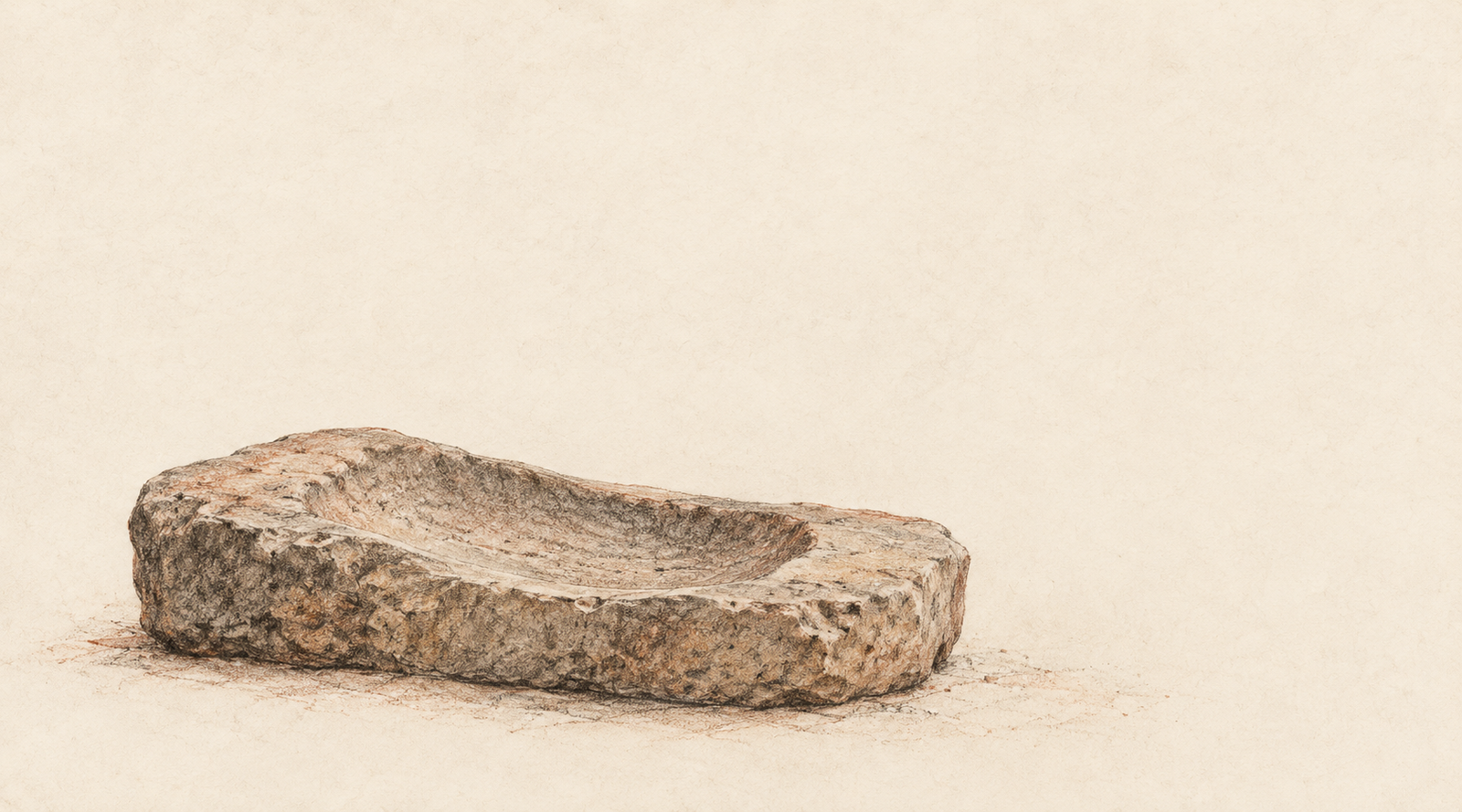
The temple we inherit is a building from which almost all necessity has been removed. Nothing must be brought for it to continue being what we call a temple. The sanctuary asks nothing of us. Stone is good at this kind of independence.
A living temple was otherwise.
Water had to come in. So did grain, cloth, oil, aromatic substances, fuel. The things required for worship arrived because someone carried them across a threshold.

Houses of Wood, Light, and Smoke
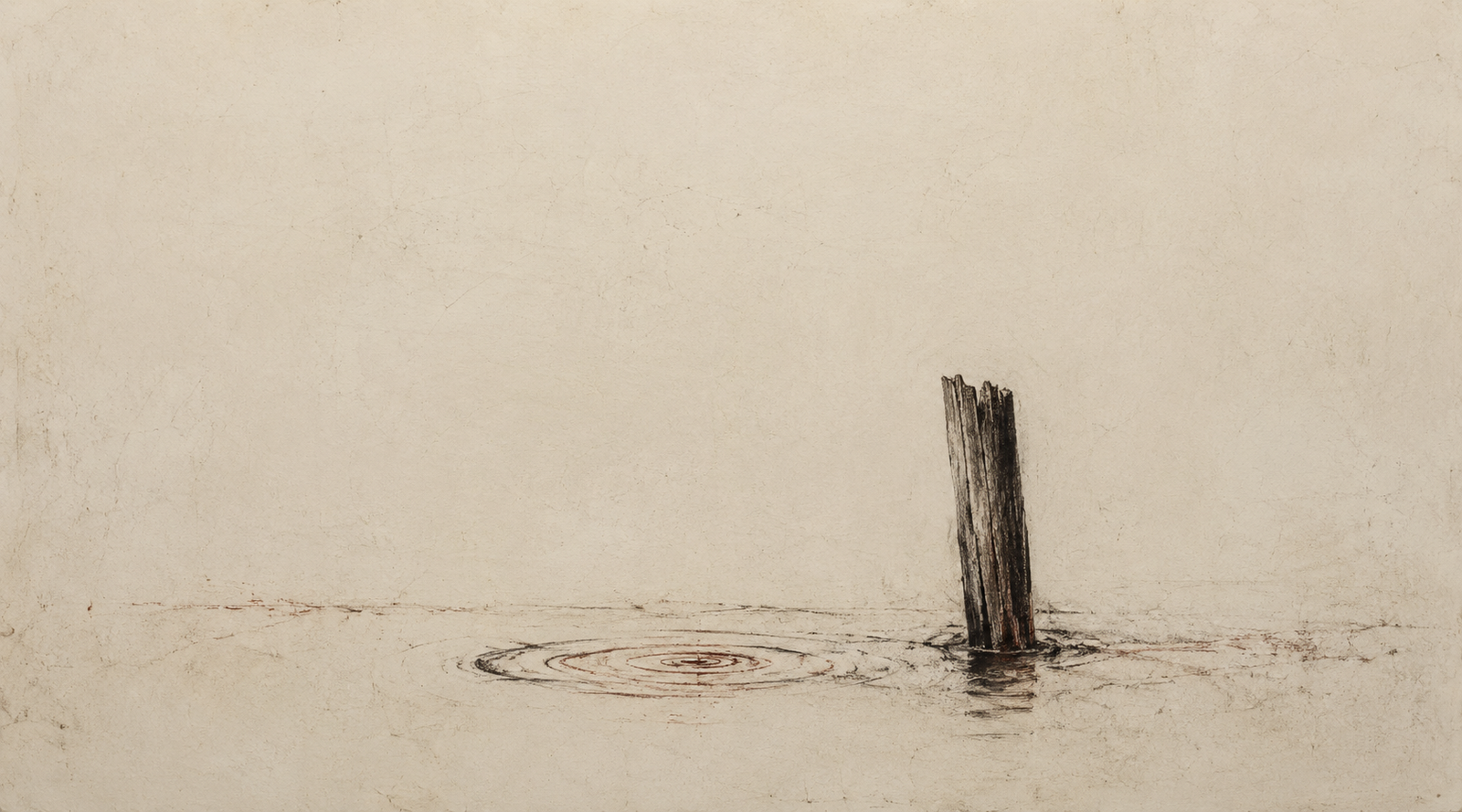
Some of Angkor’s most intimate ruins do not rise above the ground at all. They are postholes, low mounds, hearths and ponds: durable traces of a domestic city built largely from things that decay. To restore that city is to see Angkor not only as stone, but as wood, smoke, water, repair, and people living within calling distance.