

Come Waste Your Time With Me
There are people with whom an hour feels spent, and people with whom it feels given back.
The distinction is not moral. It does not separate the worthy from the frivolous, or the ambitious from the idle. It is stranger than that. Some company leaves behind the faint sensation of life having been converted into use. Even pleasure can do this. The evening was enjoyable, perhaps even memorable, but it has entered the ledger. It became an occasion, an outing, a thing one did. Other company alters the texture of time itself. The hour does not seem consumed. It seems released.
Perhaps that is why the phrase wasting time with you can sound, in the right voice, like one of the most tender things a person can say.
On paper it ought to fail. “Waste” is an ugly word, managerial and faintly accusatory. It belongs to reprimand, not devotion. It suggests misuse, drift, a lapse in seriousness. Yet love has a way of taking the hard words of the world and loosening them until they tell the truth. What would be an insult elsewhere becomes, here, a form of reverence. I would waste my time with you. I would let it go. I would stop asking it to defend itself. I would allow the afternoon to pass without forcing it to become anything more than an afternoon in your presence.
This is not laziness disguised as romance. It touches something deeper. Most of us live under an unspoken pressure to make our hours answerable. Even rest now arrives with a brief. Recover. Reset. Return stronger. It is hard to find a corner of life that has not been asked, gently or otherwise, to explain what it is for.
Under that pressure, one begins to feel that a good day is a day that can account for itself. It moved something forward. It produced, clarified, advanced, improved. Even happiness is easier to respect when it leaves evidence. A photograph. A milestone. A finished plan. We trust what can be shown.
So much of what is most necessary cannot be shown in that way.
Late afternoon. Two cups on the table. Nothing unresolved, and nothing achieved. A patch of light moving slowly across the floorboards. One of you says something trivial. The other answers. Then neither speaks for a while. The kettle has long since gone quiet. Outside, a motorbike passes, then another. A dog barks somewhere further off. The room does not deepen into revelation. No great confession arrives. Nothing happens except that the hour keeps going, and neither of you asks anything more of it.
What is this kind of time?
It does not announce itself as important. It would make poor material for the world’s summaries. Yet many lives, examined honestly, are held together less by their dramatic moments than by these small clearings in which the demand to become someone briefly falls away. Not ecstasy. Not accomplishment. Just the soft suspension of the need to turn living into something legible.
That may be one of love’s least discussed mercies.
We speak easily of passion, fidelity, desire, sacrifice, compatibility. Less often do we speak of this: that to love and be loved is sometimes to be released, for an hour or two, from the labour of self-explanation. Not because the beloved has ceased to care who we are, but because care has taken a form deeper than evaluation. One need not always be presenting a case.
This is why some forms of loneliness survive even inside crowded, admired, connected lives. One may be seen constantly and scarcely felt at all. To be noticed is not the same as being received. A person can be tracked, assessed, interpreted, desired, depended upon, even praised, while remaining curiously untouched by rest. The self stays braced. Something in it never sits down.
Then, somewhere in life, if one is fortunate, there appears a person before whom the bracing eases.
Not all at once. Perhaps not completely. But enough that one notices a difference in the body. Speech becomes less strategic. Silence loses its embarrassment. Thought no longer feels obliged to arrive already shaped. One can say something half-formed and let it remain half-formed. One can spend an evening without the obscure sense that the evening ought to become material. Time, in such company, ceases to press so hard on its own edges.
To be chosen for that is no small thing.
It means one has been invited below the performed self. Not into some grand authenticity—people remain partial, shy, difficult, various—but into a region of lesser strain, where the soul need not hold itself so upright. There is a kind of love that does not chiefly intensify life. It unfastens it.
And yet even now the language resists. We still reach for “waste”, because our speech has been trained by usefulness. We have more dignified names for achievement than for presence. More serious vocabularies for progress than for peace. We know how to honour the life that builds. We are less sure how to honour the life that abides.
But perhaps abiding is closer to the heart of things than we allow.
Human beings still require form, labour, difficulty, effort. But a life composed entirely of justified hours would be, in the end, unliveable. Something in us would starve. Not the ambitious part. The older part. The part that wants, now and then, to lay down its tools without having to make even that gesture useful.
We do not only need purpose. We need reprieve.
And perhaps love is one of the places reprieve becomes shareable. Not merely private relief, but mutual permission. I do not need anything from you right now beyond your presence. You do not need to make this hour worthwhile. Let it remain apparently worthless. Let it be squandered on weather, on half-thoughts, on glances out the window, on the sound the spoon makes against the cup. Let it leave no monument. Let it fail every test except the one that matters: that while it passed, something in us was less alone.
I think many people know this before they can say it. They know there are conversations after which the world looks fractionally less hard. They know there are walks that seem to go nowhere and yet return one to themselves. They know the odd calm of being with someone before whom one’s existence does not feel under review. They know, too, how rare this is.
Rare enough that one might build a life around recognising it when it appears.
Not by idolising romance, and not by pretending every cherished hour is free of irritation, fatigue, or the ordinary abrasions of human nearness. But by understanding that some of the best parts of being alive arrive without spectacle. They take place under low light. They resist summary. They would sound unimpressive if described badly. Their greatness lies partly in their refusal to look great.
An hour. A table. The fading heat in the cups. The sense that nowhere else is required.
We call such hours wasted because we have forgotten how else to praise them.
Yet when they are gone, and many other things are gone with them, these are often the hours that remain lit. Not because they led anywhere. Because, for a while, nothing had to.
—
Receive the next work
Subscribe free to receive new work from the Lucas Varro Library by email.
More from the Library

See Also
A concise and impartial dictionary of absence, promises, quarrels, ordinary objects, and the troublesome instability of words.

The City of Service
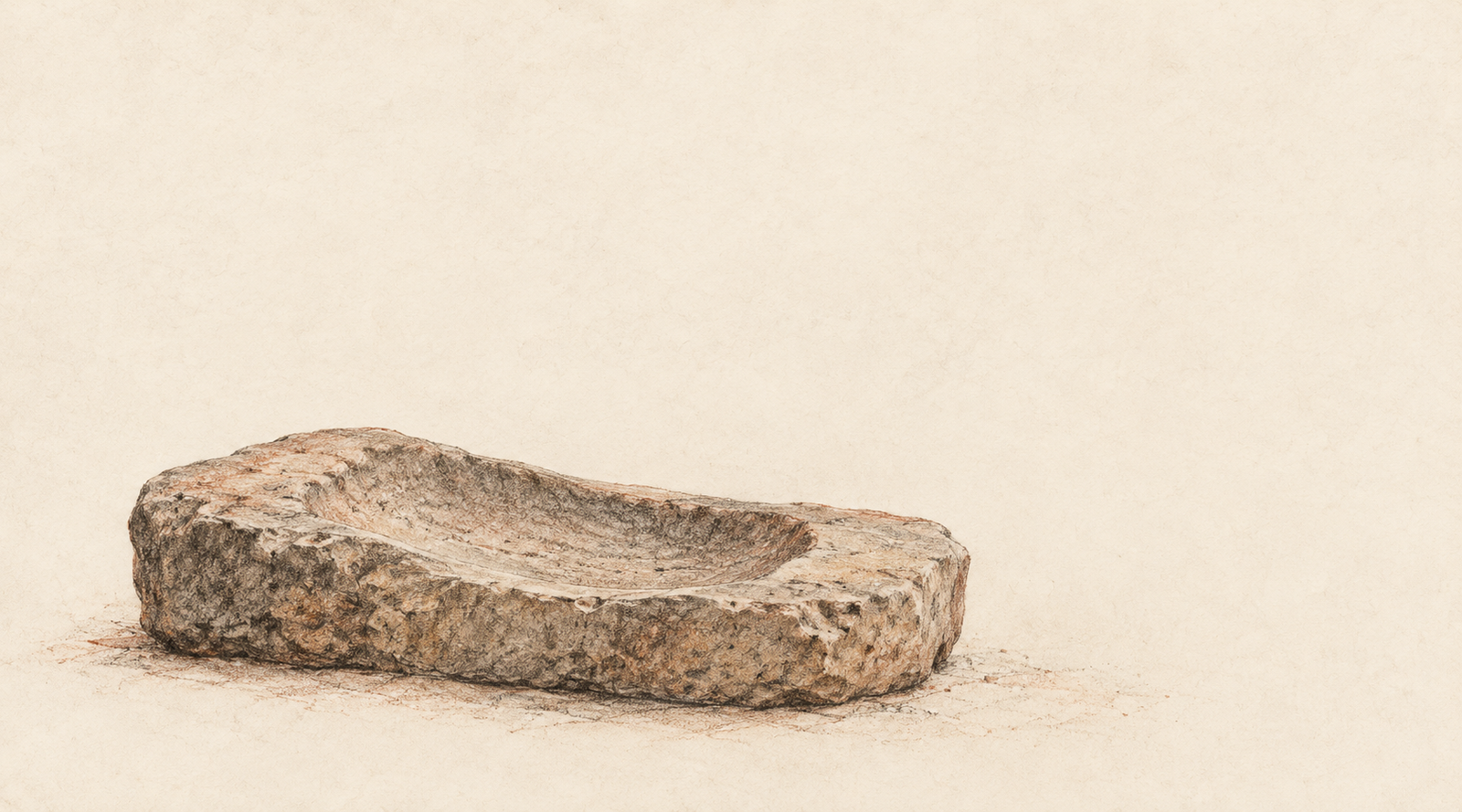
The temple we inherit is a building from which almost all necessity has been removed. Nothing must be brought for it to continue being what we call a temple. The sanctuary asks nothing of us. Stone is good at this kind of independence.
A living temple was otherwise.
Water had to come in. So did grain, cloth, oil, aromatic substances, fuel. The things required for worship arrived because someone carried them across a threshold.

Houses of Wood, Light, and Smoke
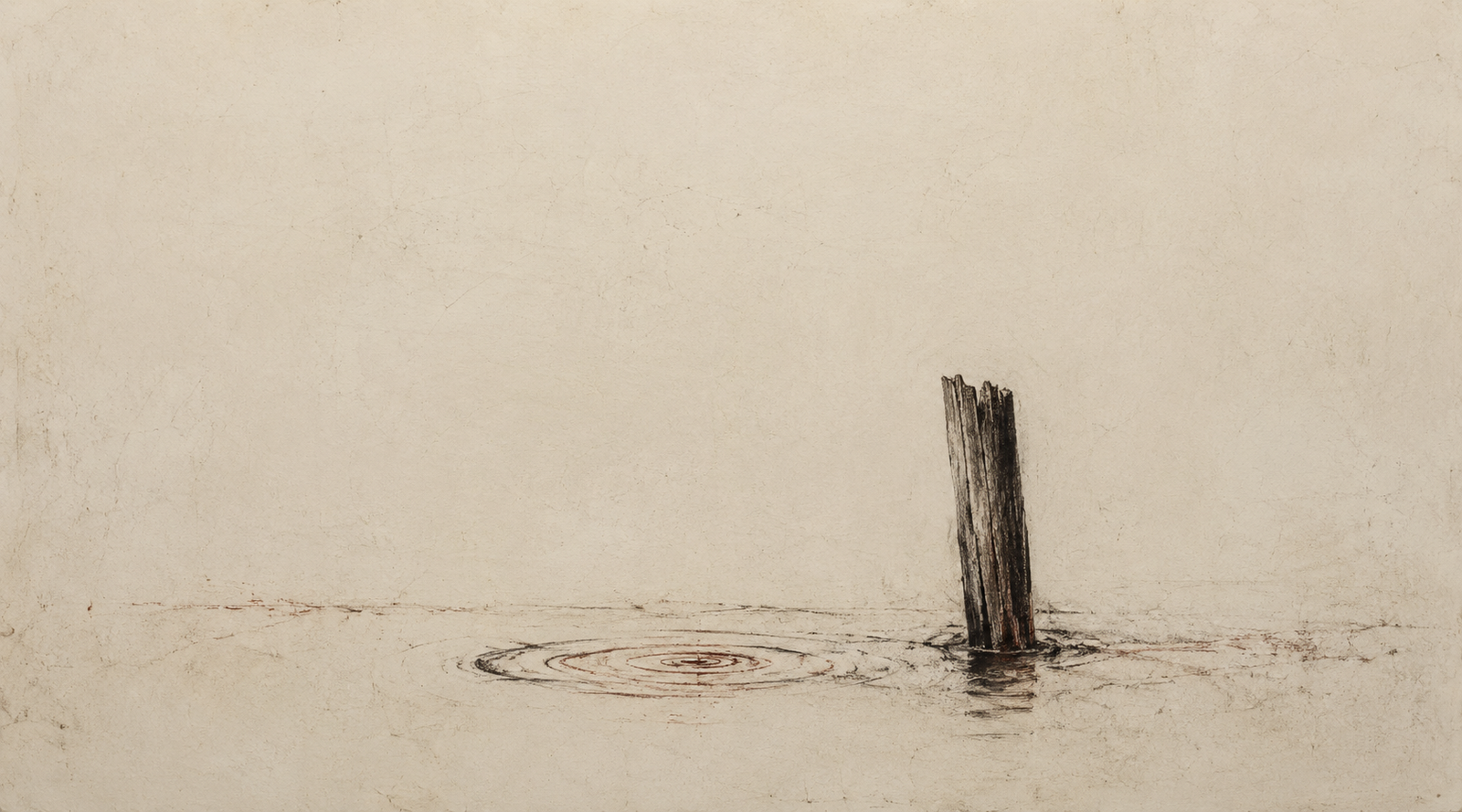
Some of Angkor’s most intimate ruins do not rise above the ground at all. They are postholes, low mounds, hearths and ponds: durable traces of a domestic city built largely from things that decay. To restore that city is to see Angkor not only as stone, but as wood, smoke, water, repair, and people living within calling distance.