
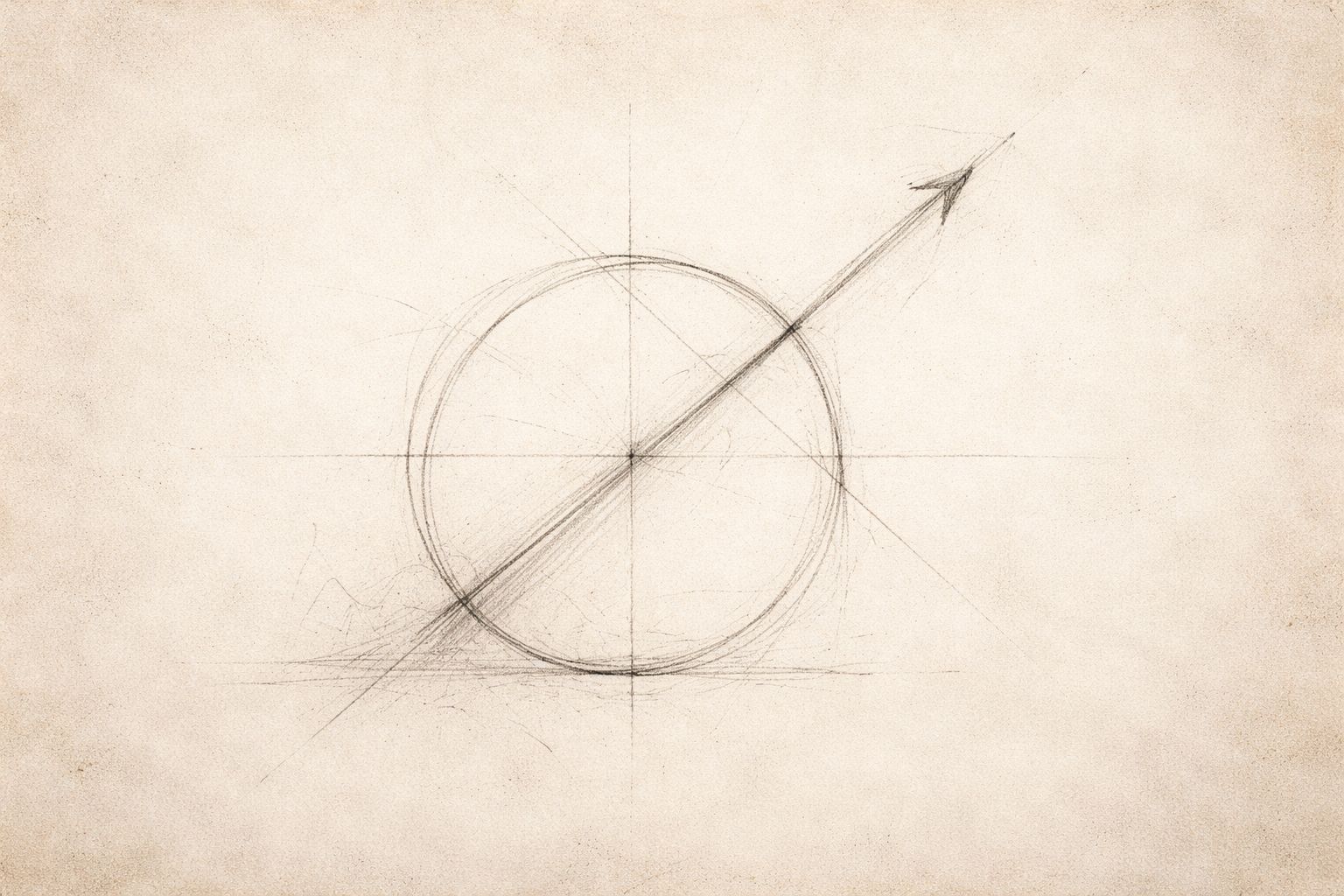

The Mercy of the Unfinished
Perfection is usually imagined as a higher form of order. But much of what is most valuable in human life acquires its shape through use, pressure, revision, and repair. This essay asks what changes when we stop treating flawlessness as the measure of worth.
—
One of the quieter humiliations of modern life is that so many people have come to experience themselves not as living beings, but as things on display. They do not merely want to grow. They want to arrive. They want their faces, homes, work, bodies, even their inner lives to bear the finished look of something resolved.
This seems, at first, like a matter of pressure or vanity. It is more than that. It rests on a false idea of value, and a still deeper falsehood about perfection itself.
When most people imagine perfection, they imagine smoothness: a life without visible strain, a face untroubled by time, a room without discord, a self at last integrated and clear. Perfection appears as completion without remainder. Nothing protrudes. Nothing jars. Nothing betrays the weather of becoming.
But nearly everything we truly value in human life takes form under precisely those conditions perfection excludes. Friendship deepens through awkwardness, misunderstanding, repair. Love becomes real not when it escapes disappointment, but when it survives it. Thought ripens by discovering where it has been glib. A face acquires legibility through time. Much of what we call depth is simply the form given to difficulty once it has been borne long enough.
A harder truth follows. Perfection, in the strict sense, would require exemption from life.
A thing could remain perfect only if nothing happened to it that left a mark. It would need immunity to use, to accident, to time, to dependence, to pressure. It could not ripen, because ripening alters form. It could not deepen, because deepening implies strain. It could not become intimate, because intimacy always leaves traces. Perfection, then, is not fullness. It is untouchability.
That is why perfectionism, for all its glamour, so often feels sterile. It is not always a love of excellence. More often it is a fantasy of non-participation: the wish to remain unmarked by the conditions of being alive.
Seen from there, the attraction of imperfection ceases to be a taste and becomes a recognition. One begins to value the imperfect not because rough things are charming, but because only what has entered time can acquire the gravity of the real.
There is a difference between the flawless and the beautiful. The flawless is untouched. The beautiful has been touched, and has not been annulled by it.
A pristine bowl may be admired. A repaired bowl may be understood. That difference is not sentimental. The repaired thing now bears the history of its own vulnerability. It has passed through fracture without being cast out of the human world. It has not been restored to innocence. It has been given continuity.
This is why repair matters more than flaw. A flaw is merely a deviation from an ideal surface. Repair belongs to a history. It tells us that something happened, that the thing did not escape damage, and that someone chose not to discard it. We often speak as if the opposite of perfection were damage. It is not. Damage is only one way reality leaves its mark. The real opposite is participation: the condition of having been altered by contact with life.
At this point, the whole subject is easily vulgarised. One vulgarity is sentimental. It tells us that scars are beautiful, that suffering ennobles, that brokenness is depth. Another is fashionable. It gives us handmade ceramics, reclaimed wood, muted linen, deliberate asymmetry, the expensive performance of simplicity.
Both evade the truth.
The sentimental version flatters pain. But not all damage ripens into beauty. Some suffering merely diminishes. Some wounds narrow a life, harden it, waste it. There is no wisdom in pretending every fracture shines.
The fashionable version is subtler, and in some ways more revealing. It purchases the look of imperfection while preserving the metaphysics of control. The room says humility; the soul still demands mastery. The vessel looks weathered; the life around it cannot bear contradiction. This is not reconciliation with imperfection. It is perfectionism in earth tones.
And this matters, because it shows how easily even the imperfect can be conscripted into prestige. Once that happens, nothing essential has changed. We still imagine value as a form of exemption. We merely furnish the fantasy differently.
But nothing valuable in a human life is exempt. Love is not exempt from inconvenience. Character is not exempt from failure. Work is not exempt from incompletion. Thought is not exempt from revision. A life untouched by these things would not be enviable. It would scarcely be a life at all.
The philosophy of beauty in imperfection, at its best, does not ask us to lower standards or romanticise defects. It asks something sterner. It asks whether we can stop demanding innocence from the things we value. Whether we can esteem what bears the marks of time without treating those marks as disqualifications. Whether we can cease to confuse smoothness with truth.
That shift alters more than taste. It alters one’s stance towards existence.
For much of our misery comes from trying to live as though life were a matter of successful presentation. We bring this habit to our bodies, to our marriages, to our ambitions, to ageing, to our moral life. We imagine peace will come when the irregularities are finally removed. Yet those irregularities are often not intrusions upon reality, but the record of reality having occurred.
To see this is not resignation. It is a release from a false demand. One may still repair what can be repaired, refine what can be refined, discipline what has grown slack. But one no longer mistakes every sign of contingency for a failure of being. One ceases to hold living things to the standard of objects that have never been used.
And with that, a different kind of peace becomes possible. Not the peace of having escaped time, pressure, or contact, but of no longer asking such escape to be the price of worth.
The finished thing has its dignity. But the unfinished has mercy.
—
Receive the next work
Subscribe free to receive new work from the Lucas Varro Library by email.
More from the Library

See Also
A concise and impartial dictionary of absence, promises, quarrels, ordinary objects, and the troublesome instability of words.
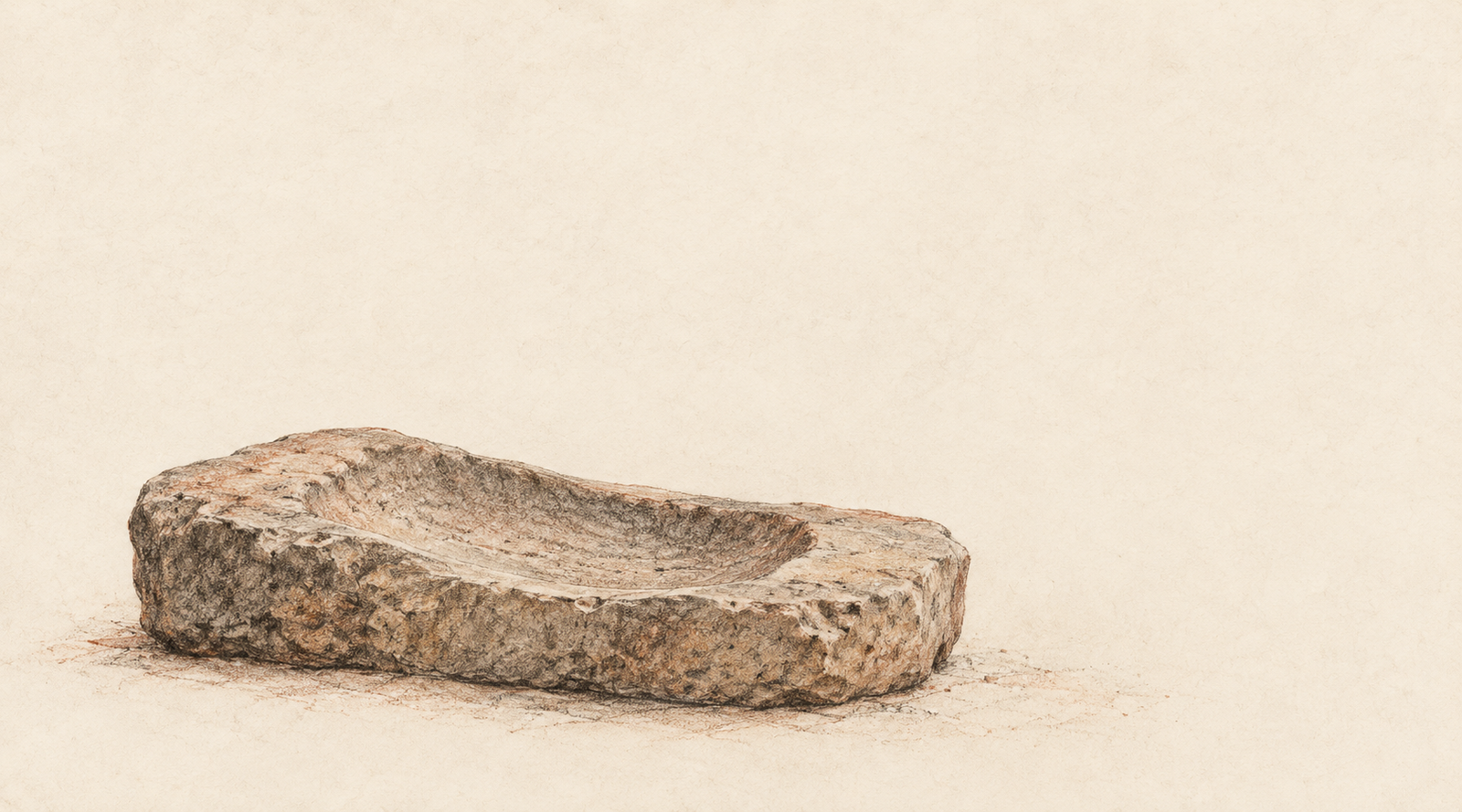

The City of Service
The temple we inherit is a building from which almost all necessity has been removed. Nothing must be brought for it to continue being what we call a temple. The sanctuary asks nothing of us. Stone is good at this kind of independence.
A living temple was otherwise.
Water had to come in. So did grain, cloth, oil, aromatic substances, fuel. The things required for worship arrived because someone carried them across a threshold.
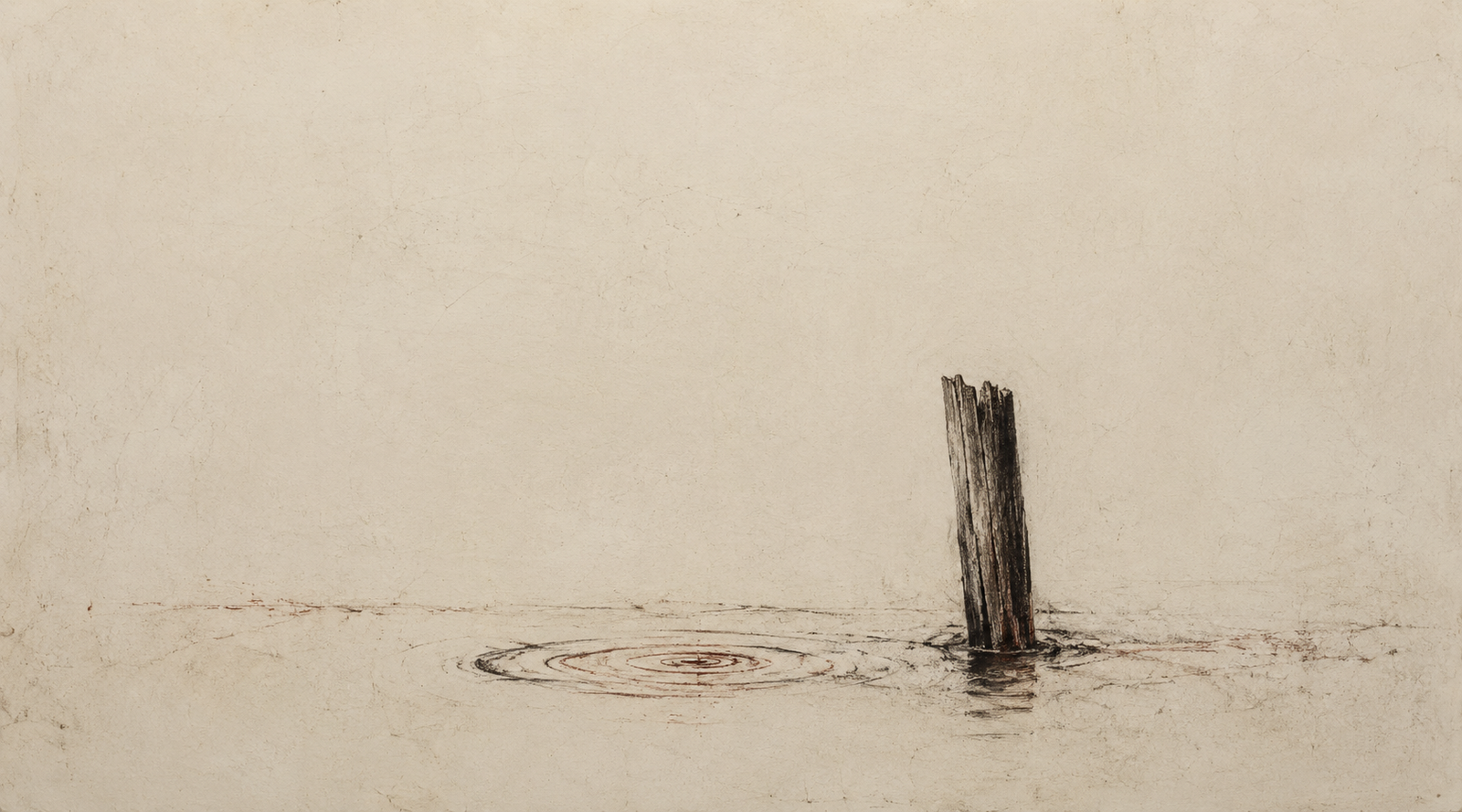

Houses of Wood, Light, and Smoke
Some of Angkor’s most intimate ruins do not rise above the ground at all. They are postholes, low mounds, hearths and ponds: durable traces of a domestic city built largely from things that decay. To restore that city is to see Angkor not only as stone, but as wood, smoke, water, repair, and people living within calling distance.