
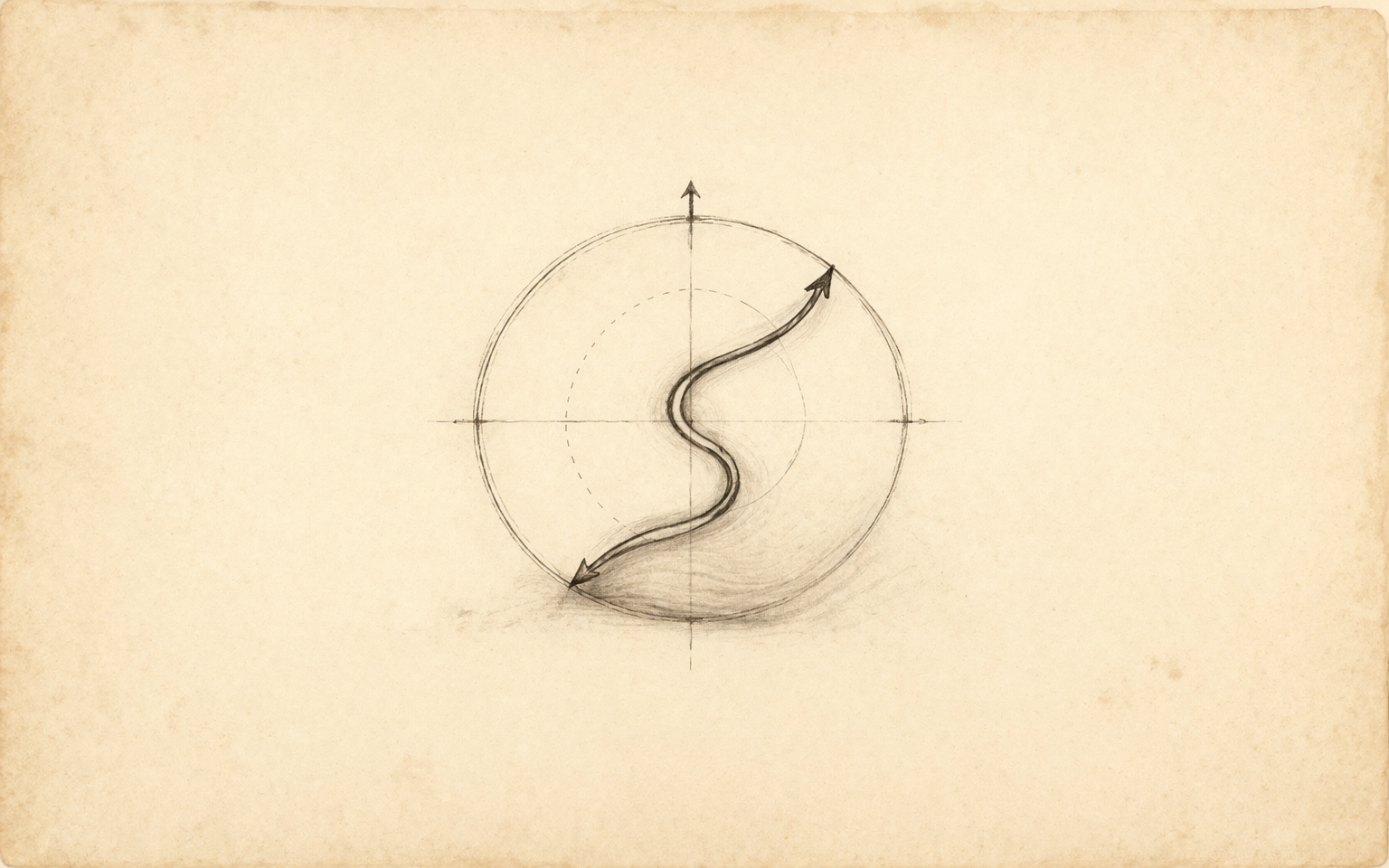

The Architect and the River
The stiff and unbending is the disciple of death.
The gentle and yielding is the disciple of life.
Some lives fail for lack of form. Others fail from an excess of effort.
That may be the deepest reason the old tension between the architect and the river still remains alive. It is not merely a disagreement between two philosophies. It is a wound in human nature. We are creatures who need shaping, yet are damaged by too much strain. We require discipline, and we require ease. We must be taught how to live, yet something in us begins to wither when life becomes nothing but management, correction, and performance.
When a world starts to lose its balance, this tension comes into view. One kind of person looks at disorder and longs for stronger beams: clearer duties, steadier speech, more faithful rituals, habits able to hold human beings upright when appetite and confusion begin to pull them apart. Another looks at the same disorder and suspects that the beams themselves have become part of the suffocation. He sees too much tightening of the hand, too much anxious design, too much moral display. He thinks the cure lies not in adding structure, but in relinquishing the kinds of effort that have made life dry, brittle, and false.
The old Chinese world gave these two instincts their most memorable figures. Confucius and Laozi remain so near one another in the mind because they seem to stand before the same civilisational crisis and turn towards it from opposite ends. Both seek harmony. Both refuse chaos. Both ask what it means for a human life to come into right relation with what is real. Yet one moves towards that end through form, the other through release; one through cultivation, the other through recovery; one by shaping life, the other by ceasing to over-shape it.
Confucius begins from a severe and lasting truth: human beings do not become trustworthy by accident. We are not saved by vague sincerity. We are formed by repetition, by example, by the small disciplines through which desire is educated and character slowly made durable. A society depends not only on good intentions, but on enacted recognitions: how one speaks, how one honours parents, how one bears responsibility, how one grieves, how one receives a guest, how one restrains the self before it becomes dangerous to others. Ritual, in this vision, is not dead theatre. It is one of the ways value takes bodily form.
There is nothing quaint about this. Every serious life knows it. Love that has no discipline becomes mood. Freedom that has no shape becomes drift. Public speech that has no standard becomes noise. A people do not decay only through spectacular evil. They decay when words lose weight, when roles become hollow, when no one knows any longer what is owed. Confucius understands that moral life needs vessels. Without form, much of what is finest in us runs out through the cracks.
Laozi begins from a different severity. He sees how quickly the attempt to improve life becomes another mode of estrangement. The more agitated a civilisation grows, the more rules it generates. The more it loses touch with what is simple, proportionate, and alive, the more compensation appears in the form of systems, declarations, moral effort, and force. Laozi distrusts this compensatory energy. He hears strain inside the rhetoric of virtue. He sees that a world obsessed with managing itself may already be far from the source of order.
His answer is not passivity, but unforcing. Not collapse, but attunement. Not the refusal to act, but the refusal to act from that inner violence which always wishes to impose, tighten, and master. Water becomes his master-image because it does not contend on the ego’s terms. It yields without surrendering its nature. It goes low without humiliation. It does not dominate, yet it endures. It wears away stone not by aggression, but by fidelity to its own manner of being.
This is why Laozi continues to feel not soft, but dangerous. He threatens the pride that hides inside improvement. He asks whether much of what we call wisdom is only elaborated anxiety. He asks whether virtue, when pursued too self-consciously, becomes a performance that drives us further from the thing itself. He asks whether the soul is healed by accumulation at all, or whether it is healed by subtraction: less display, less grasping, less coercion, less interference between life and its deeper rhythm.
Set beside one another, these two visions illuminate more than an old philosophical dispute. They illuminate the double risk of being human.
We go wrong by having too little discipline. We also go wrong by living under too much strain.
We fail by surrendering to appetite. We fail by trying to engineer the soul.
We become shapeless. We become rigid.
We neglect the vessel. We worship the vessel and forget the water.
Confucius fears the first set of failures. Laozi fears the second. Neither fear is misplaced.
That is why it is too easy to make them adversaries. Each protects a truth the other cannot be allowed to erase. Confucius knows that a life without formation does not become free; it becomes unreliable. A culture without reverence does not become humane; it becomes thin. A self without discipline does not become authentic; it becomes governed by whim, seduced by appetite, unable to carry weight. He knows that one must sometimes practise the good before one feels it naturally, and that this is not hypocrisy but apprenticeship.
Laozi knows, with equal clarity, that once form loses contact with living depth, it hardens into spiritual bureaucracy. Roles remain, but presence drains out of them. Morality becomes theatrical. Institutions multiply procedures as though procedure could compensate for inner depletion. People learn to look correct while growing inwardly exhausted, manipulative, or numb. He knows that there is a point at which effort ceases to refine life and begins merely to deform it.
So they may indeed be walking the same path in opposite directions. Both are after alignment. Both long for a human world no longer at war with the way things are. But Confucius approaches harmony by giving it shape, while Laozi approaches harmony by removing what obstructs it. One says: enact the right until it enters the bones. The other says: strip away the false until the right no longer needs to be enacted.
The difference is not small. It asks where healing begins.
For Confucius, a human being is restored through right relation: to family, to language, to custom, to obligation, to the patterns by which a civilisation remembers what it honours. The outer disciplines do not merely decorate the inner life. They school it.
For Laozi, the human being is restored through release from artificiality. The more we cling to mastery, status, knowledge, and moral self-consciousness, the more estranged we become. Wisdom lies not in adding further layers of cultivation, but in returning to a simplicity so deep that right action emerges without strain.
The question, then, is not which thinker wins. The more serious question is this: what kind of illness are we suffering from now?
There are eras in which people have become careless, unserious, severed from duty, unable to sustain trust, fidelity, or honour. In such a time, one longs for stronger forms—for speech that means something, for education that shapes the soul, for rituals that remind people they are not self-created beings. One longs for the architect.
And there are eras in which life becomes overbuilt: too procedural, too managerial, too crowded with systems, metrics, approved language, and ceaseless self-monitoring. In such a time, one longs for quiet, humility, scale, and the recovery of what cannot be manufactured by effort. One longs for the river.
What makes our own condition difficult is that we seem to need both remedies at once. We are under-formed and over-administered. We lack many of the old disciplines that once taught patience, fidelity, and restraint; yet we are also smothered by institutional abstractions, managerial vocabularies, and moral performances that often seem to replace reality rather than serve it. We drift, and we are exhausted. We indulge ourselves, and we live under systems that feel increasingly airless. We oscillate between chaos and bureaucracy, between impulse and procedure, between self-expression and self-surveillance.
That is why these two old figures remain so near. They name a permanent split in the human soul, but they also clarify a modern misery. We need forms strong enough to keep freedom from dissolving into drift, love into mood, justice into force. But we also need spaciousness enough to keep those forms from becoming idols. We need vows, and we need mercy. We need standards, and we need the humility to know that life exceeds every system we build to hold it.
Perhaps wisdom lies in learning which absence is destroying us. Some souls need a stricter shape. Others need a gentler hand. Some households need stronger vows. Others need less pressure. Some institutions need clearer duties. Others need fewer manuals. There are moments when one must build the fire brigade. There are moments when one must ask why everything has become so dry.
Confucius gives dignity to form. Laozi gives mercy to being.
One teaches that life must be tended.
The other teaches that it cannot be mastered.
To hold both truths without flattening either is difficult. It requires seriousness without hardness, freedom without drift, discipline without self-violence, humility without passivity. It asks us to become neither romantics of formlessness nor bureaucrats of virtue.
That, perhaps, is the enduring gift of keeping these two near one another. Each saves us from becoming too enchanted by the medicine he prefers. The architect is warned against rigidity. The mystic is warned against looseness. One remembers the vessel. The other remembers the water.
And human life, if it is to remain human, needs both.
—
Perhaps the task is not to choose once and for all between the vessel and the water, but to discern, with honesty, what our moment is lacking: a stronger shape, or a gentler hand.
—
Receive the next work
Subscribe free to receive new work from the Lucas Varro Library by email.
More from the Library

See Also
A concise and impartial dictionary of absence, promises, quarrels, ordinary objects, and the troublesome instability of words.
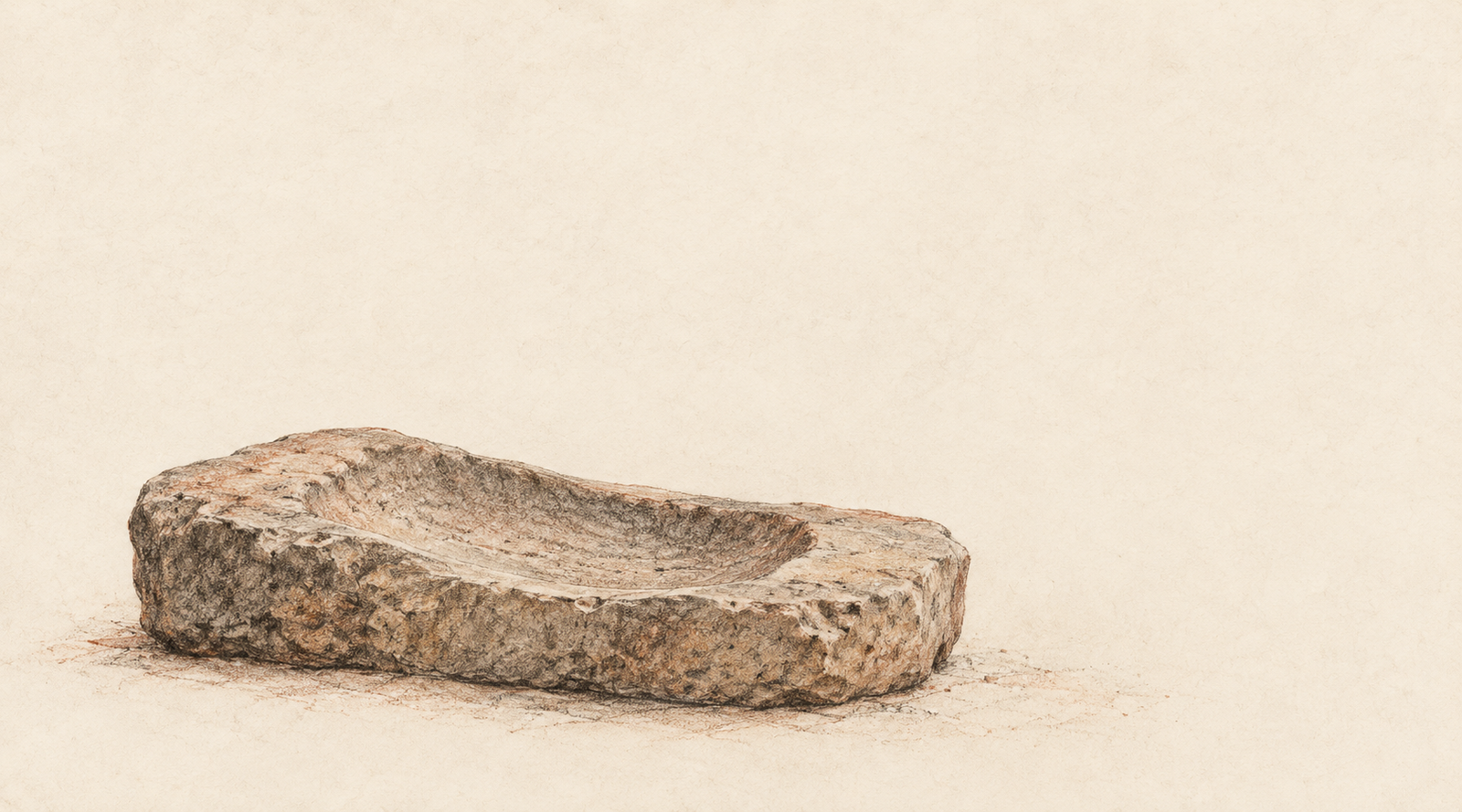

The City of Service
The temple we inherit is a building from which almost all necessity has been removed. Nothing must be brought for it to continue being what we call a temple. The sanctuary asks nothing of us. Stone is good at this kind of independence.
A living temple was otherwise.
Water had to come in. So did grain, cloth, oil, aromatic substances, fuel. The things required for worship arrived because someone carried them across a threshold.
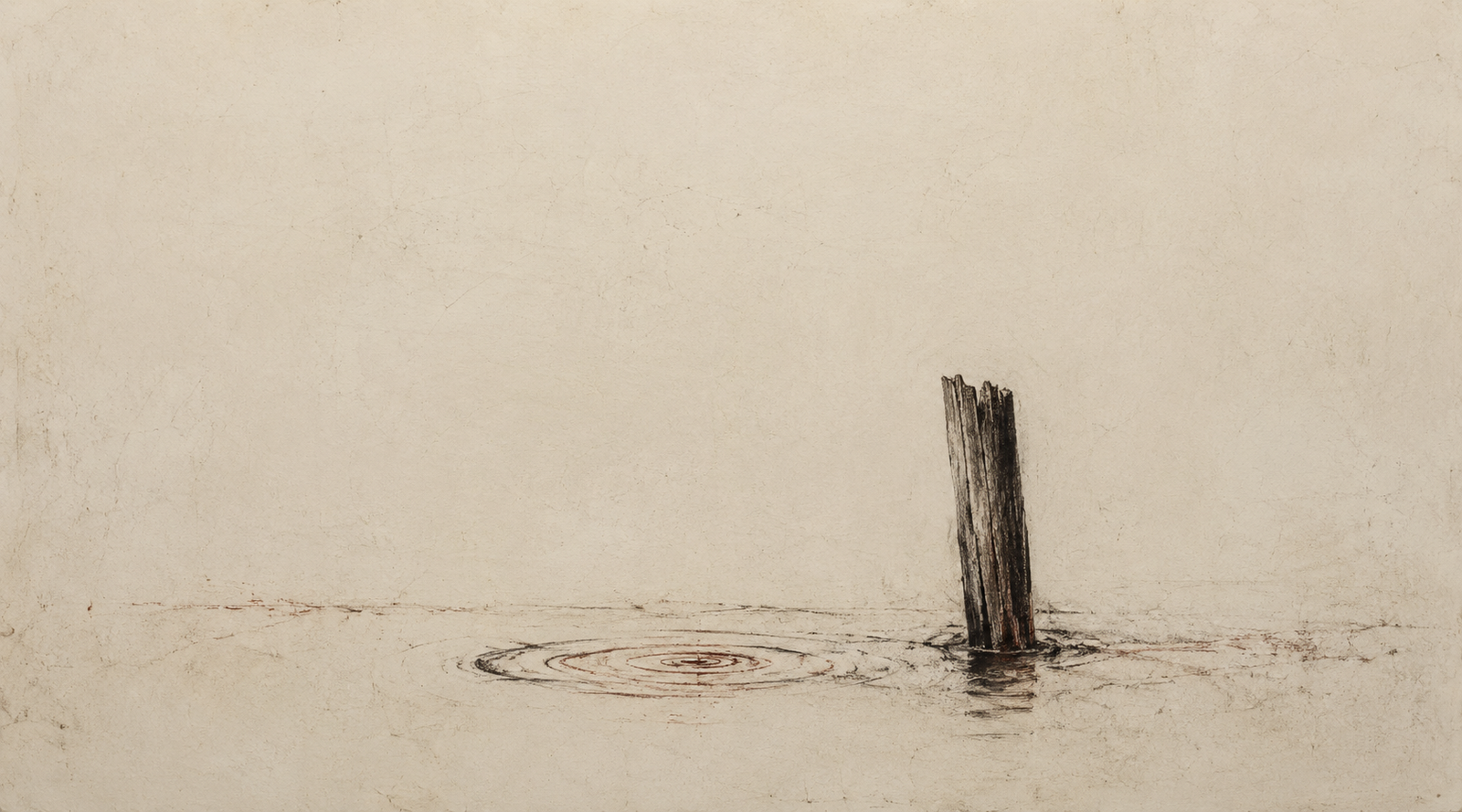

Houses of Wood, Light, and Smoke
Some of Angkor’s most intimate ruins do not rise above the ground at all. They are postholes, low mounds, hearths and ponds: durable traces of a domestic city built largely from things that decay. To restore that city is to see Angkor not only as stone, but as wood, smoke, water, repair, and people living within calling distance.