

Why We No Longer Know How to Approach Great Things
On the modern inability to receive
Just after dawn at Angkor, one sometimes sees the failure almost at once. The light is still soft. The stone has not yet yielded its full depth. The towers stand in that strange interval between outline and presence, when they seem less like objects than like something slowly entering visibility. And already the modern reflex is in motion: the crossing made briskly, the camera half-raised before the body has quite arrived, the eye moving ahead of itself, organising, selecting, preparing to have seen. No one need be crude for the diminishment to occur. These are often thoughtful, decent people. They are not mocking the place. They are simply meeting it with the habits their age has given them. They have reached the temple. But something in them has not yet approached it.
This distinction matters more than it first appears. Arrival is a fact of movement. Approach is a fact of posture. One can arrive somewhere without yet coming before it at all. One can stand in the presence of greatness while remaining, in the deeper sense, absent.
That is true not only of temples. It is true of almost everything in life that exceeds us. A person may stand before a great work of art, a piece of music, a sacred place, another human being, a grief, or a truth, and still fail to meet it. He may register it, interpret it, even admire it, while withholding the one thing by which it becomes truly available: a fitting mode of reception.
This, it seems to me, is one of the quietest and most consequential failures of modern life. The crisis is not merely that we value great things too little, though often we do. It is that we no longer know how to stand before them. We have lost the inward posture by which greatness can be met.
Our age has not simply made us distracted. It has made us badly formed in the act of approach itself. We have been trained to assume that what matters should yield quickly, confirm itself clearly, and become usable without too much cost to the self. We have learned to move toward things in the mode of acquisition. Even where our intentions are good, we are often secretly organised by the wish to secure the experience, complete the circuit, and remain sovereign over what is before us.
Great things do not behave like this.
A great thing is not merely something impressive. It is something before which our usual scale proves inadequate. It exceeds us in depth, dignity, or reality, and for that very reason cannot be rightly met through appetite alone. Appetite wants to have. Greatness asks that one first learn how to stand before.
That standing before is more demanding than we like to admit. It requires a peculiar kind of strength: the ability to endure a meaning not yet in one’s possession. That is what modern people increasingly struggle with. We can tolerate complexity when it can be processed, translated, and managed. What we find difficult is a reality that remains greater than our immediate grasp and refuses to become ours on schedule.
Receiving begins there.
To receive something deeply is not to lie passively beneath it. It is to remain present before it without rushing to reduce it. It is to let significance gather before one seizes it. It is to permit what is before us to remain, for a time, partly unmastered. This is hard not because it is mystical, but because it wounds the self’s preferred illusion: that understanding is something we take, rather than something for which we may have to become ready.
We now live amidst a strange contradiction. We have more access than any civilisation before us, and less encounter. We can reach almost anything. We can see, hear, read, visit, stream, archive, capture, and retrieve at a scale once unimaginable. Yet this endless nearness has not produced deeper relation. On the contrary, it has often produced the illusion that nearness is relation. We mistake exposure for encounter, information for understanding, and availability for inward contact.
What weakens under these conditions is not only attention. It is receptivity. For receptivity depends upon qualities our civilisation steadily discourages: patience, restraint, decentring, and the willingness not to finish too quickly. We are accustomed to interfaces that remove resistance, institutions that reward speed, and habits of mind that treat delayed yield as failure. If something does not disclose itself promptly, we begin to suspect that there is not much there.
But often the opposite is true.
Often what does not yield quickly is not empty, but deep. Its resistance is not a defect in the object. It is a demand upon the self.
This is why places like Angkor matter so much. Not because they flatter us with grandeur, but because they expose us. Angkor does not hurry toward the visitor. It does not shorten itself to meet our pace. Its galleries are not exhausted by a glance. Its reliefs do not surrender their life to passing attention. Its scale remains indifferent to our appetite for completion. The place stays what it is. In doing so, it quietly reveals the poverty of our usual way of coming before things.
The real tragedy, then, is not that great things have vanished. They have not. Beauty has not vanished. Silence has not vanished. Mystery has not vanished. Truth has not vanished. Love has not vanished. The world is still thick with realities greater than our convenience. The tragedy is that the self able to receive them has grown thin.
That thinness is not a minor aesthetic defect. It alters how one lives. A person who cannot receive will try, almost automatically, to reduce. He will convert places into content, persons into reassurance, art into material, truth into opinion. He will know many things in outline while remaining inwardly untouched by almost all of them. This is why so much contemporary life feels both crowded and insubstantial: we are surrounded by objects of possible reverence, and equipped with fewer and fewer inward manners by which reverence could arise. We know how to keep moving. We know how to remain connected. We know how to maintain access. What we do not know, increasingly, is how to stand still before what does not exist for our use.
Yet this loss, precisely because it is learned, is not beyond repair.
If our habits of approach have been formed, they can be re-formed. If we have been trained into haste, self-reference, and consumption, then perhaps we can also be trained into patience, decentring, and right reception. The answer is not nostalgia, nor contempt for the age, nor aesthetic superiority disguised as seriousness. It is apprenticeship: the slow recovery of the manners of soul by which greatness becomes available again.
Perhaps that recovery begins when the compulsion to seize weakens a little. Perhaps it begins when one can remain for a moment before what does not yield, without immediately converting delay into disappointment. Perhaps it begins when legibility ceases to be the measure of reality. For some things are not disclosed by pressure, or haste, or successful consumption. They appear only when appetite loosens its grip and something steadier takes its place.
Angkor remains there as witness to this possibility. The temple is not diminished by being poorly approached. It does not require our adequacy in order to remain immense. The diminishment is ours. Greatness is not harmed by our thinness; our thinness is merely revealed by greatness. And this revelation, if we can bear it, is merciful. It tells us that depth has not withdrawn from the world. It tells us that what is missing is not reality, but a way of coming before reality.
The art of approach may still be relearned. It may begin in something as simple, and as difficult, as consenting not to seize. It may begin in being slowed, corrected, and decentred by what refuses immediate yield. It may begin in discovering that the first task is not to extract meaning from reality, but to become present enough for reality to appear.
—
Receive the next work
Subscribe free to receive new work from the Lucas Varro Library by email.
More from the Library

See Also
A concise and impartial dictionary of absence, promises, quarrels, ordinary objects, and the troublesome instability of words.

The City of Service
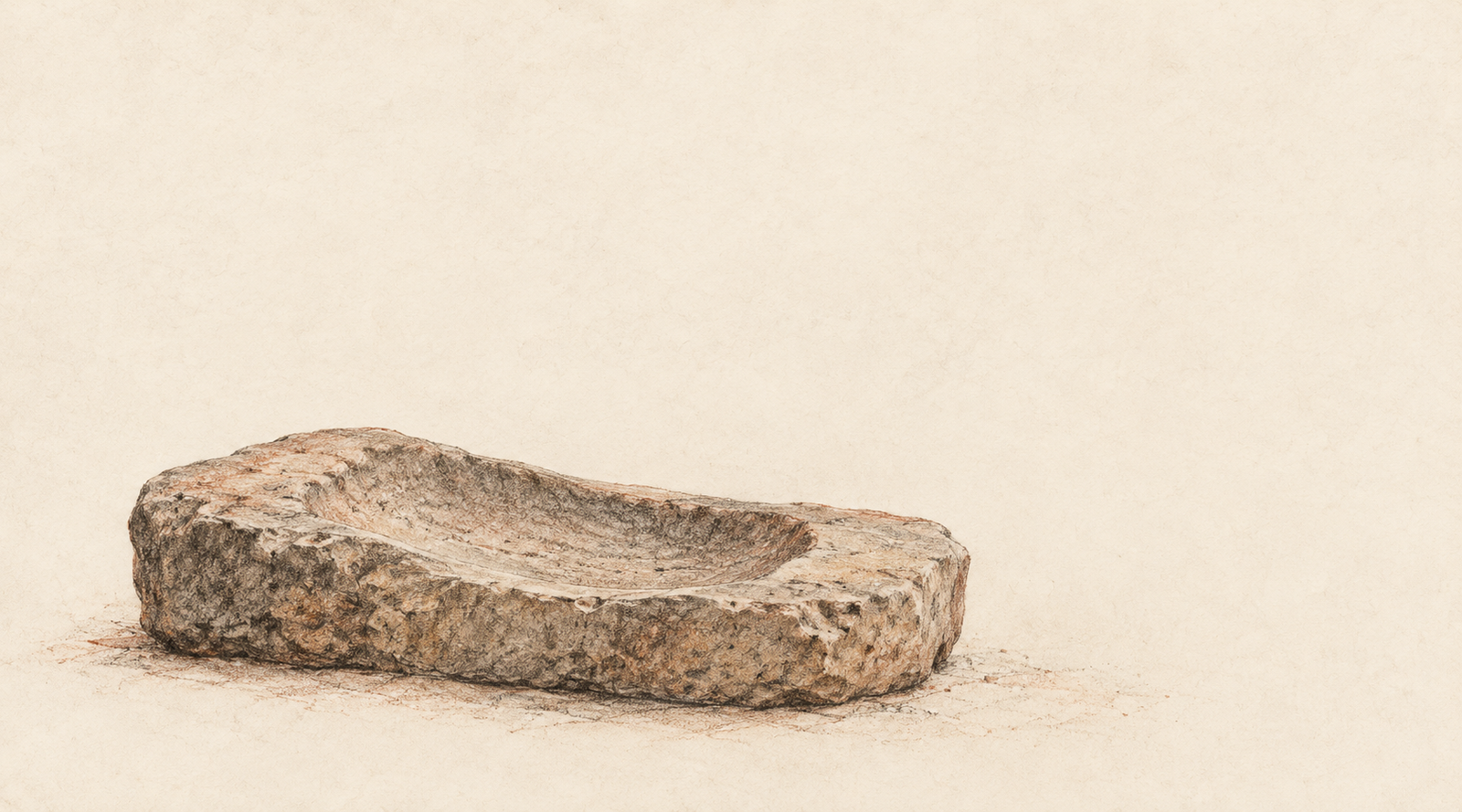
The temple we inherit is a building from which almost all necessity has been removed. Nothing must be brought for it to continue being what we call a temple. The sanctuary asks nothing of us. Stone is good at this kind of independence.
A living temple was otherwise.
Water had to come in. So did grain, cloth, oil, aromatic substances, fuel. The things required for worship arrived because someone carried them across a threshold.

Houses of Wood, Light, and Smoke
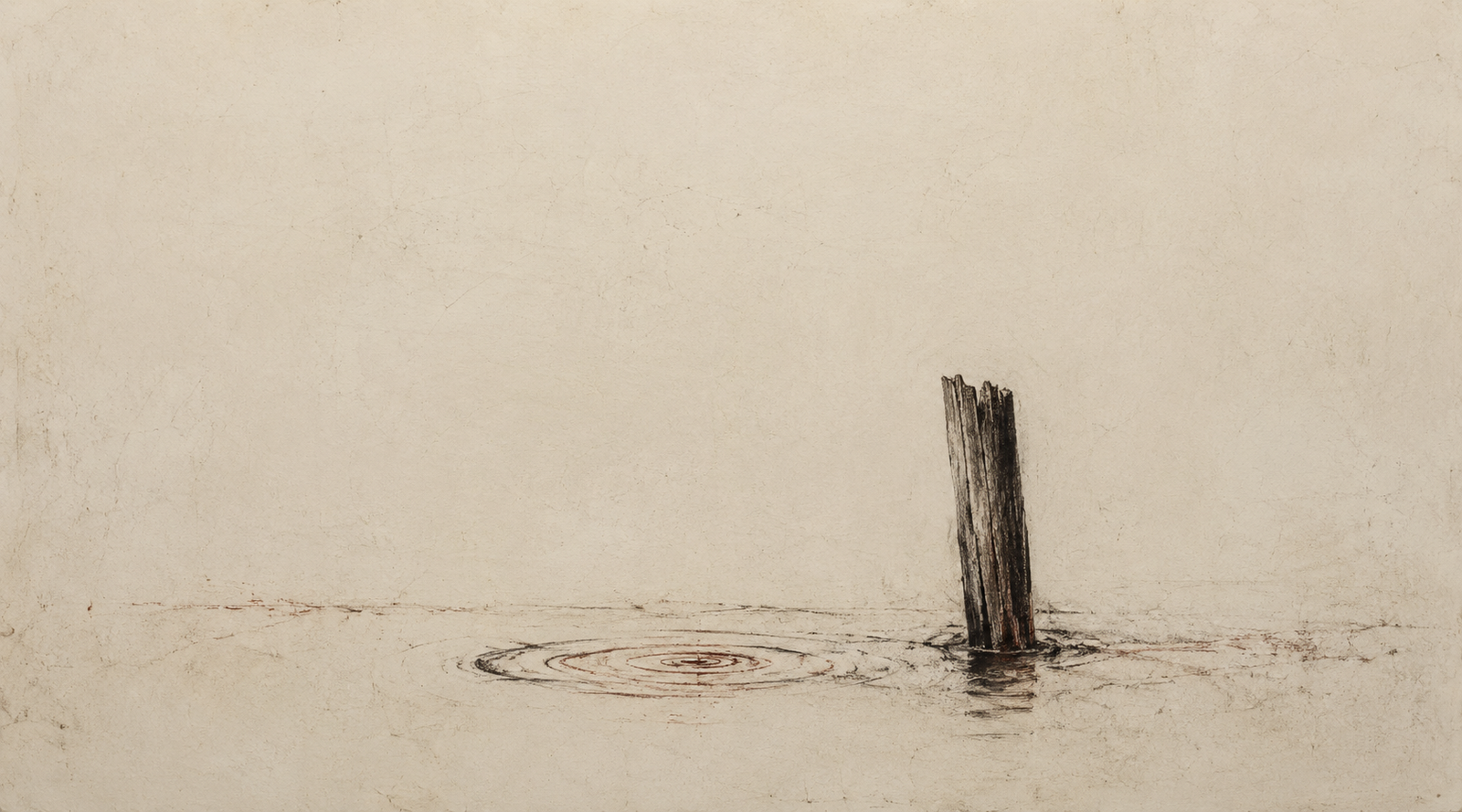
Some of Angkor’s most intimate ruins do not rise above the ground at all. They are postholes, low mounds, hearths and ponds: durable traces of a domestic city built largely from things that decay. To restore that city is to see Angkor not only as stone, but as wood, smoke, water, repair, and people living within calling distance.