
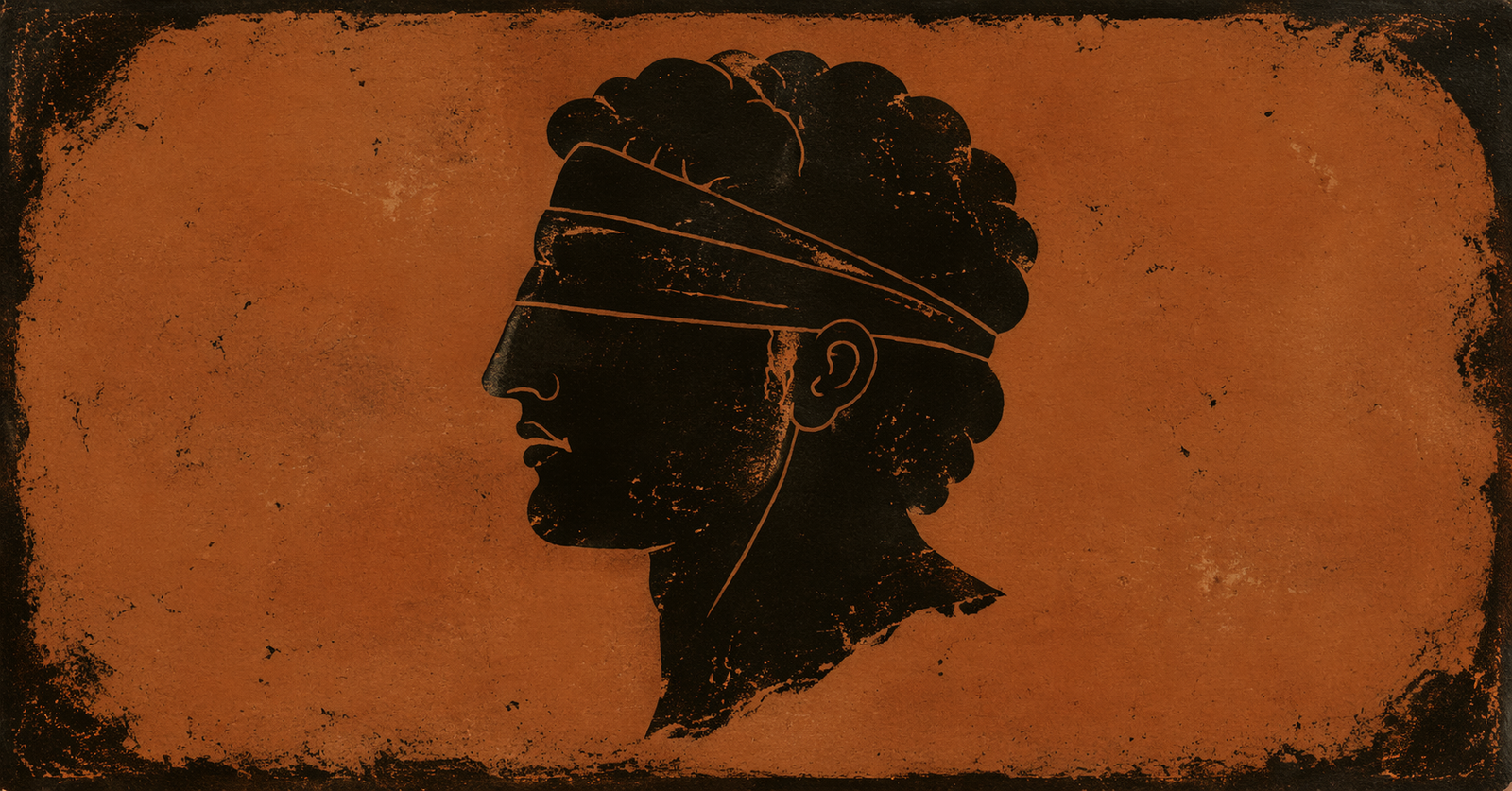

Persephone — The Divided Crown
On partition, law, and irreversible return
The meadow did not yet know division.
Grass leaned under a mild wind. Light lay evenly across the field. The flowers rose where they had risen before: crocus, violet, hyacinth, soft-headed and open to the day. Nothing in the air announced jurisdiction. Nothing declared that one ground might conceal another. A girl moved there among her companions and the world received her without remainder.
She was called Kore.
Not because she lacked a name beyond it, but because no other title had yet become necessary. Maiden: not merely young, but undivided. She belonged wholly to one order. What she touched remained in daylight. What she gathered entered her hands and stayed there. Her motion altered nothing beyond the measure of her passing. The field did not resist her. The earth did not answer.
She bent to the flowers with the concentration of one for whom nearness is simple. Stem, petal, fragrance, the brief sound of breaking as each bloom was taken into the hand. The basket at her arm grew heavy with colour. Around her the daughters of Oceanus moved in the same ease, their speech unweighted, their feet leaving no impression that mattered. Above them the sky held.
Then she saw the narcissus.
It stood a little apart from the others. Not brighter, precisely. Not larger by any law the eye could state. But the field had arranged itself around it in a way the body noticed before the mind did. Space had thinned there. The flower had opened at the point where invitation becomes command.
She moved toward it.
That movement was small. Later tellings would enlarge the meadow, adorn the bloom, lay omen upon omen through the scene as though warning had been absent only through carelessness. But the truth of such moments is narrower. The body goes where the world has made a place. She reached because reaching had not yet learned danger.
Her hand closed toward the stem.
The earth opened.
Not cracked. Not trembled. Opened.
The ground beneath the flower parted with a force too clean to resemble accident. Soil gave way to depth. Daylight broke against a new darkness and did not enter it. The chariot rose in that breach with the directness of a thing long waiting below the threshold of sight: black horses driven hard, the reins drawn in a hand that governed descent and ascent alike, wheels striking the torn edges of the world as though the world itself were no impediment.
Hades seized her before the field understood what had been taken. One hand at her waist, one motion sufficient. The flowers fell from her grasp. Their scattered heads lay across the grass in a pattern that would have looked ceremonial from above. She cried out once. Not with the later voice of queen or judge, but with the first sound made by a being who has discovered that the world contains another world beneath consent.
The companions fled backward. The field withdrew into witness. The chariot turned.
For a moment the upper air and the lower passage touched at the edges of the wound. Horses, dark flanks straining. Gold harness struck with light from a sun not meant for them. The driver’s face remained fixed in its own law. He did not look upward for permission. That had already been obtained elsewhere.
Then the breach took them.
The earth closed with the speed of obedience.
The meadow remained.
Grass resumed its leaning. The basket lay on its side. The gathered flowers had begun already to lose the tension they had carried in the hand. Nothing visible had altered enough to equal the subtraction. That is the cruelty of thresholds: they do not keep the shape of what they admit.
Below, motion changed.
The first fact of the descent was not darkness but enclosure. Air lost its width. Sound no longer dispersed. Each cry returned diminished, not by distance but by refusal, as if the passage accepted only what it could keep. Above, voice had travelled outward. Here, each sound curved back toward the mouth that made it.
She struggled. Not nobly. Not to memorable effect. Struggle is simply the body continuing to obey a law that has already failed it. Her hands pushed against the arm that held her. Her feet struck against the chariot floor, then against nothing she could use. The downward motion revised every instinct before she could learn a new one.
Hades said nothing.
He had not come to persuade. He had come to transfer a being from one jurisdiction to another. His silence was not tenderness. It was certainty.
At length the passage widened and became a place.
Stone established itself in all directions. Not cave, not palace, though it bore something of both. The realm below does not imitate the upper world. It receives what the upper world can no longer hold and orders it under another principle. Here things did not bloom. They endured. Surfaces had no generosity. Light existed, but not from any visible source, and touched nothing long enough to call it radiant.
She was set down.
Not gently. Not with violence beyond the seizure itself. Simply set down, as a possession is placed within the house that will contain it.
Only then did stillness begin its work.
She turned, perhaps to seek the way by which she had come, perhaps because the body cannot at once abandon the thought of return.
There was no way back.
The rupture had not left a door standing open in the wall of the world. What had conveyed her here had not promised recurrence. Only then did the deeper violence declare itself. Not the taking. The placement. A thing seized may still imagine recovery in the terms by which it was seized. A thing placed must contend with a new order that does not ask whether it was wanted.
Around her the Underworld did not exult. It did not menace. It recognised. That was worse. She had not merely entered a hostile place. She had entered a realm capable of making room for her.
Days do not pass below as they do above. Without sun, duration ceases to cast the same shadow. But alteration does not require calendars. It requires repetition: stone beneath the feet, enclosed air, the dim movement of shades at the margins, the presence of Hades not as constant gesture but as fixed axis, the one around whom the realm held its order.
She remained at first as the taken remain—tense, unreconciled, attentive to every possibility of breach. Yet tension cannot sustain itself indefinitely when the structure around it does not yield. The body begins, against loyalty, to learn its confinement.
This is not consent.
It is adaptation under law.
And there comes a moment, difficult to place because no witness can wholly perceive it from outside, when adaptation becomes more dangerous than resistance. Resistance declares allegiance to what was lost. Adaptation begins to produce competence. Competence, in an alien jurisdiction, is the first sign that singular belonging has been damaged.
There came a time when food was set before her.
Not feast. Not abundance staged to impress. What was brought bore the plain sufficiency of the place: fruit dark with inward colour, its skin tight, its weight a little strange for its size. She knew enough to refuse. Whether warned, or only governed by the instinct that one does not eat where one does not belong, she held back from it.
But refusal weakens under duration.
Hunger is not argument. It is pressure applied through the body to the law the body wishes to keep intact. Above, to eat is continuity. Below, to eat is relation. The difference is not tasted at first. It is lodged in consequence.
The pomegranate was opened.
Its seeds shone not like jewels, as lesser tellings prefer, but like units of enclosure: small, red, complete, each one a sealed portion of something already divided and counted. Their brightness in that dim place did not resemble delight. It resembled precision.
Whether he offered them with craft, or command, or a gesture made to appear casual; whether she took one in weariness, or thirst, or distraction; whether deceit arranged the moment more subtly than force could have done—it alters less than later minds desire. The act was small. The law it invoked was not.
The seed entered her mouth.
Bitter first. Then sweetness. Then the soft crush by which what is outside becomes internal and cannot, by any clean means, be restored to its former state.
She swallowed.
Nothing in the chamber announced the binding. No cry from the stones. No seal affixed in fire. The most irreversible acts often occur without spectacle. Law requires no theatre when the threshold crossed is real.
Afterward she knew.
Not by instruction, though instruction may later have followed. By alteration. A change in relation too slight for the eye and too total for denial. The realm no longer stood wholly outside her. Something of it had crossed the final boundary and been received where no mother’s grief, no god’s decree, could entirely extract it.
When Hermes came, he came under the pressure of failure above.
Demeter had withdrawn increase from the earth. Grain had not risen. Trees had held back their fruit. The human world, which depends upon continuance without ever mastering it, had begun to harden toward ruin. This was no private sorrow now, nor a quarrel that Olympus could contain within itself. The arrangement had passed outward into famine. Mortality was being made to bear the cost of a divine decision.
So Hermes descended bearing the will of Zeus, but the will of Zeus revised by necessity. What had been permitted in secret now had to be answered in public order. He did not come as rescuer. He came as adjustment: the swift intelligence sent when power discovers too late that its first design cannot stand.
Hades yielded what could no longer be wholly withheld without damage to the larger balance. But release after binding is not relinquishment. He did not contest the ascent because contest had become unnecessary.
She rose toward the upper world.
Here another tale would enlarge joy, let sunlight strike the returned face like absolution, stage reunion as though separation had been the whole wound. But return is crueler when what returns has changed.
The first air of the world above touched her skin and did not find her as it had left her. Light fell on her and revealed not the same figure delivered back into safety, but one who had acquired another depth the day could not dissolve. The meadow, the sky, the fields, the hands of her mother—none of these were false. None of them were enough.
Demeter took her back with the force of one who had spent grief as famine and won a daughter at the price of the earth’s barrenness. The embrace was real. It altered the world. Grain rose again from the ground. Trees remembered fruit. The broad fields loosened under warmth.
But mother and daughter had not been restored to the previous order. Restoration is the wish of those who have not yet understood partition.
For when the time came—and it came not as disaster now, but as requirement—Persephone felt the pull below.
Not temptation. Not desire. Obligation.
This is the true shape of the compromise. Not that she goes because she has come to love the dark more than the field, nor because the dead have taught her secret majesty she now prefers to innocence. Such softenings are indulgences of later taste. She goes because she has eaten, and what is eaten in a realm enters its jurisdiction. The body remembers by law what the mind may resist with all its remaining daylight.
So the year divided around her.
When she remained above, the world answered with increase because Demeter could at last consent again to continuation. When she descended, barrenness followed because the mother’s knowledge of division returned with the daughter’s absence. Men called this winter and spring, harvest and famine, and in this they were not wrong. But these names belong to the earth’s side of the arrangement. Beneath them lies the harder truth: a being once singular had become the hinge upon which incompatible worlds maintained their terms.
She was no longer Kore.
That title had named a condition, not merely an age. Maiden: the unpartitioned one, the daughter who belonged wholly to one order of life. That condition could not survive the seed. What stood in its place was not the erasure of the girl, nor the triumph of the queen over the child, but a more difficult thing: a sovereignty founded on irreversible division.
In time the dead would know her presence not as intrusion but as authority. She did not inherit the realm as a wife inherits a household. She became legible to it through what had passed into her and remained there. Hades ruled the Underworld by stable possession. Persephone ruled by divided claim. He belonged wholly below. She alone knew, in her very being, the pressure of both directions.
This gave her no peace.
Peace belongs to simpler constitutions.
But it gave her form.
That is the stern mercy of some myths: not healing, not rescue, not return, but the granting of shape sufficient to endure the wound that cannot be removed. The Underworld did not soften. The upper world did not cease to call her by the memory of what she had been. Demeter did not stop loving the daughter who could not remain. None of the terms were cancelled. They were held in tension and called order because no better word was available.
So she came to stand where descent ceases to be an event and becomes office.
Not smiling. Not terrible for ornament’s sake. Not the pale bride of sentimental darkness, nor the abducted child preserved forever in the instant of loss. Those are failures of nerve in the face of the old material. Persephone became something harder to name, and therefore worth naming properly: the one who cannot be returned to singular belonging and does not collapse.
Above, flowers open.
Below, stone receives.
Between them stands a queen whose crown is division, whose law is return without restoration, and whose existence teaches the world that some thresholds, once crossed, do not destroy a being outright.
They divide her.
And if she endures, it is not because the division healed, but because it became the form by which she would rule.
—
Receive the next work
Subscribe free to receive new work from the House of Cadmus Library by email.
More from the Library

See Also
A concise and impartial dictionary of absence, promises, quarrels, ordinary objects, and the troublesome instability of words.

The City of Service
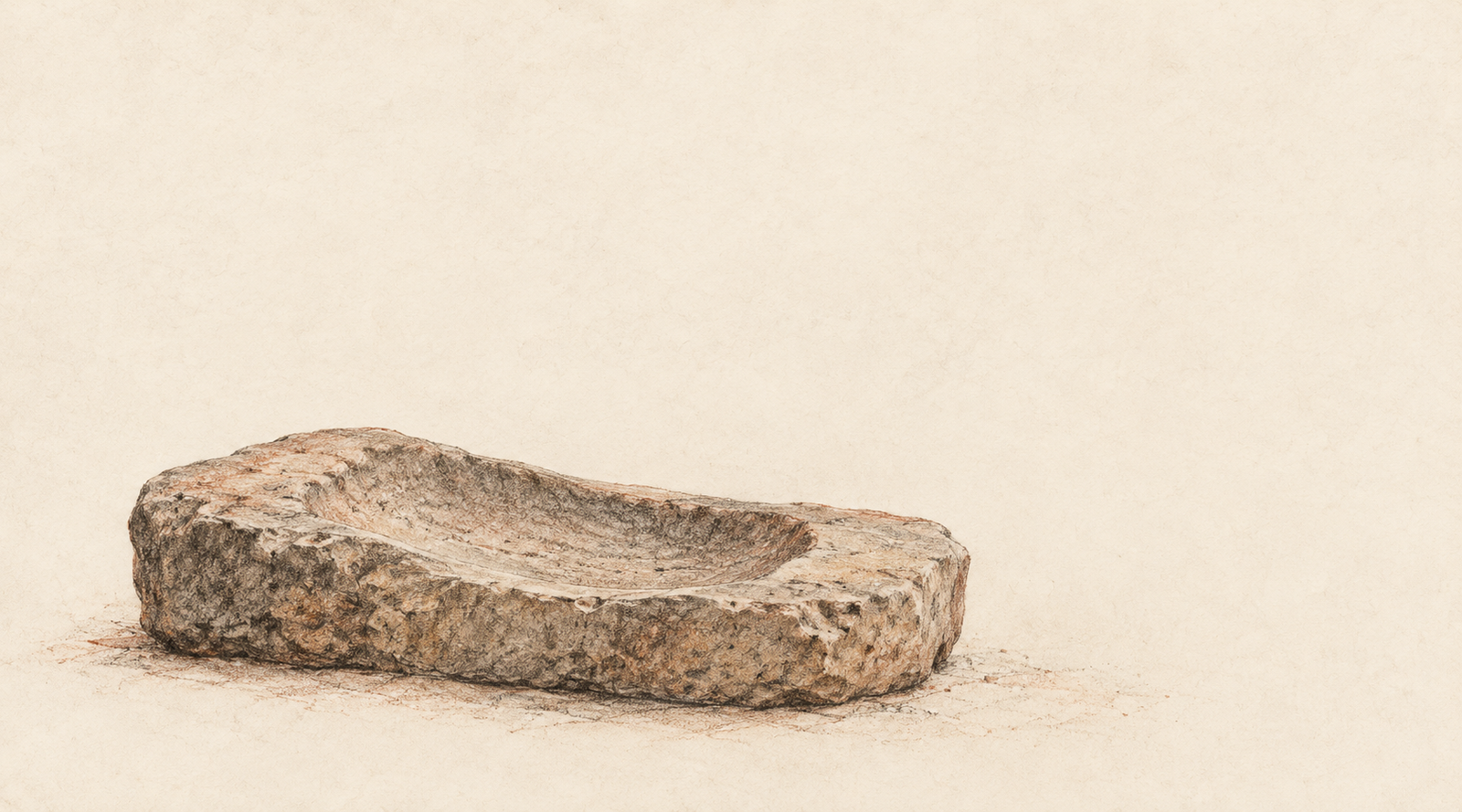
The temple we inherit is a building from which almost all necessity has been removed. Nothing must be brought for it to continue being what we call a temple. The sanctuary asks nothing of us. Stone is good at this kind of independence.
A living temple was otherwise.
Water had to come in. So did grain, cloth, oil, aromatic substances, fuel. The things required for worship arrived because someone carried them across a threshold.

Houses of Wood, Light, and Smoke
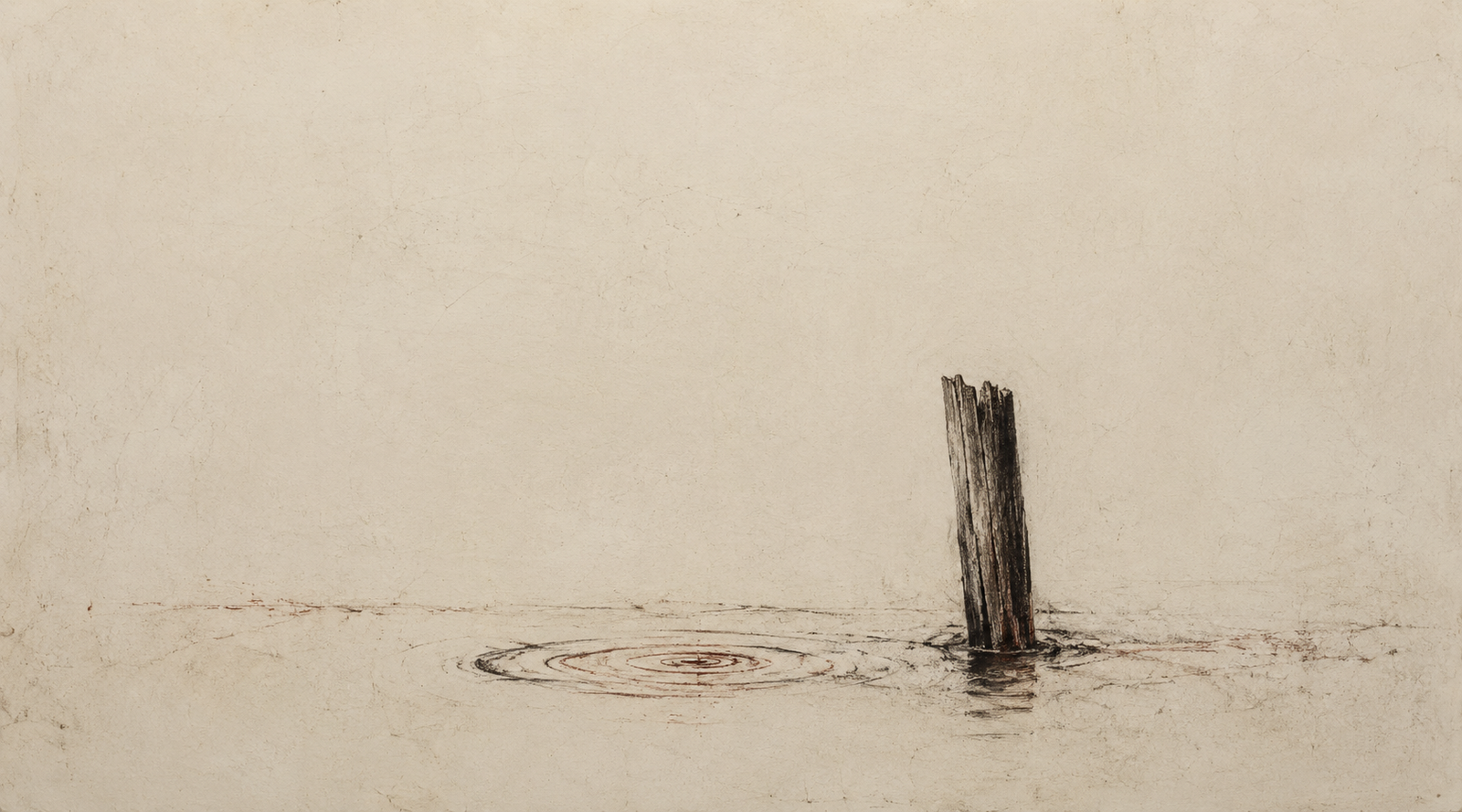
Some of Angkor’s most intimate ruins do not rise above the ground at all. They are postholes, low mounds, hearths and ponds: durable traces of a domestic city built largely from things that decay. To restore that city is to see Angkor not only as stone, but as wood, smoke, water, repair, and people living within calling distance.