
The Library gathers the written works of Lucas Varro — journals of the temples, mythic retellings, contemplative essays, poems, and volumes shaped by shadow, silence, and wonder. Here, words stand beside images as offerings: field notes from Angkor, meditations on sacred stone, old stories rekindled, and reflections carried beyond the visible world.
Within these shelves you will find many rooms: Angkor journals, myth and legend, apsara meditations, contemplative essays, poems, children’s mythic wonder, literary retellings, and quieter devotions of the page. Wander chronologically, enter by theme, or pass through one of the dedicated publication houses now gathered within the wider Library.
For those who wish to follow these paths further, several of these writings continue on Substack and in dedicated archive blogs: The Lantern Chronicles , where myth, legend, contemplative essays, poetry, and other imaginative works are carried onward; The House of Cadmus , where Greek myth and tragedy are reopened through inheritance, violence, fate, and recurrence; The Mytharium , where myth, Tolkien, fairy stories, and old literature are read and retold with seriousness; The Alexander Series , where A. M. Sharp retells Greek myths for children who want to be trusted by stories; and The Hospitable Dark , where A. M. Sharp offers literary myth retellings shaped by darkness, shelter, endurance, and return.
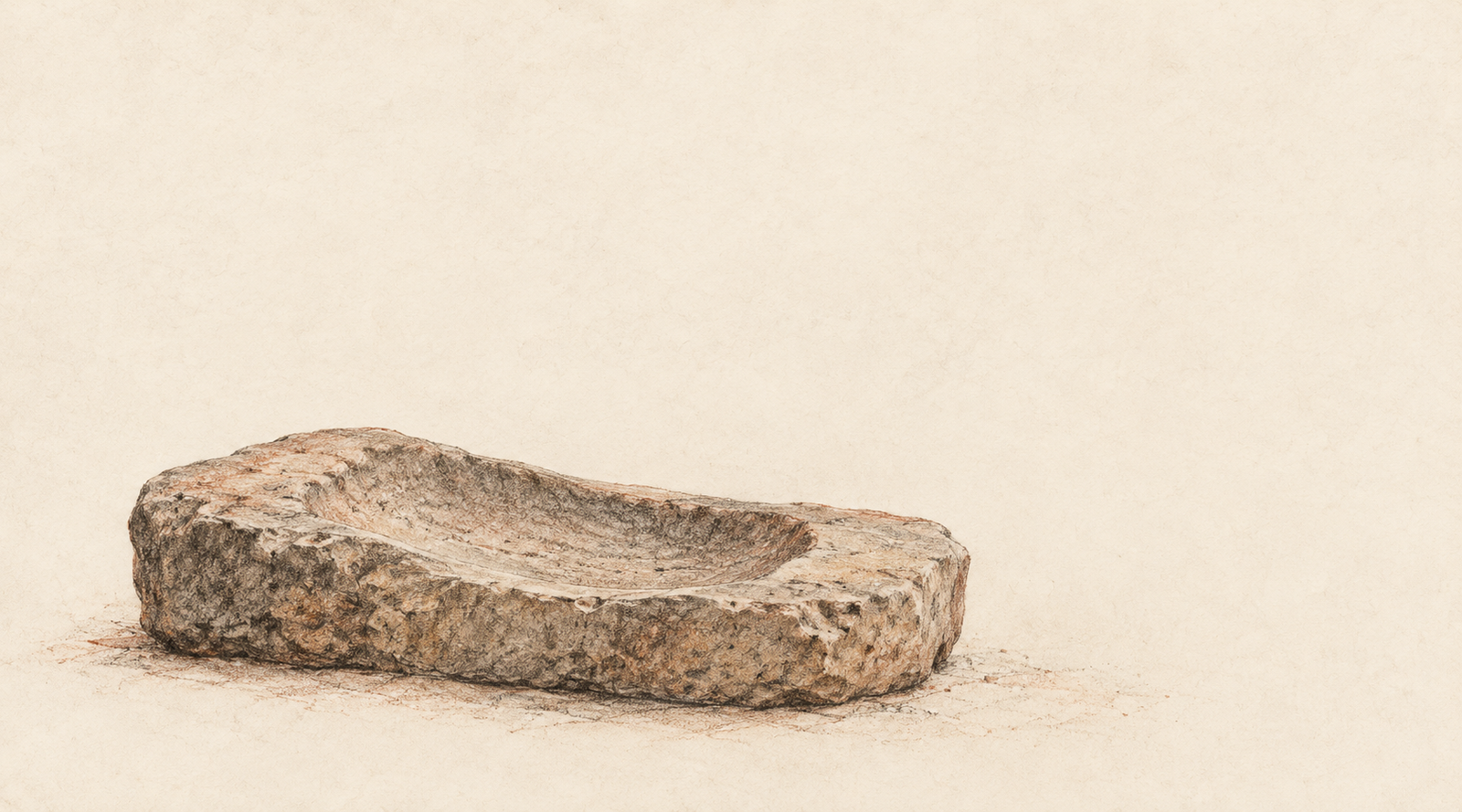

The City of Service
The temple we inherit is a building from which almost all necessity has been removed. Nothing must be brought for it to continue being what we call a temple. The sanctuary asks nothing of us. Stone is good at this kind of independence.
A living temple was otherwise.
Water had to come in. So did grain, cloth, oil, aromatic substances, fuel. The things required for worship arrived because someone carried them across a threshold.
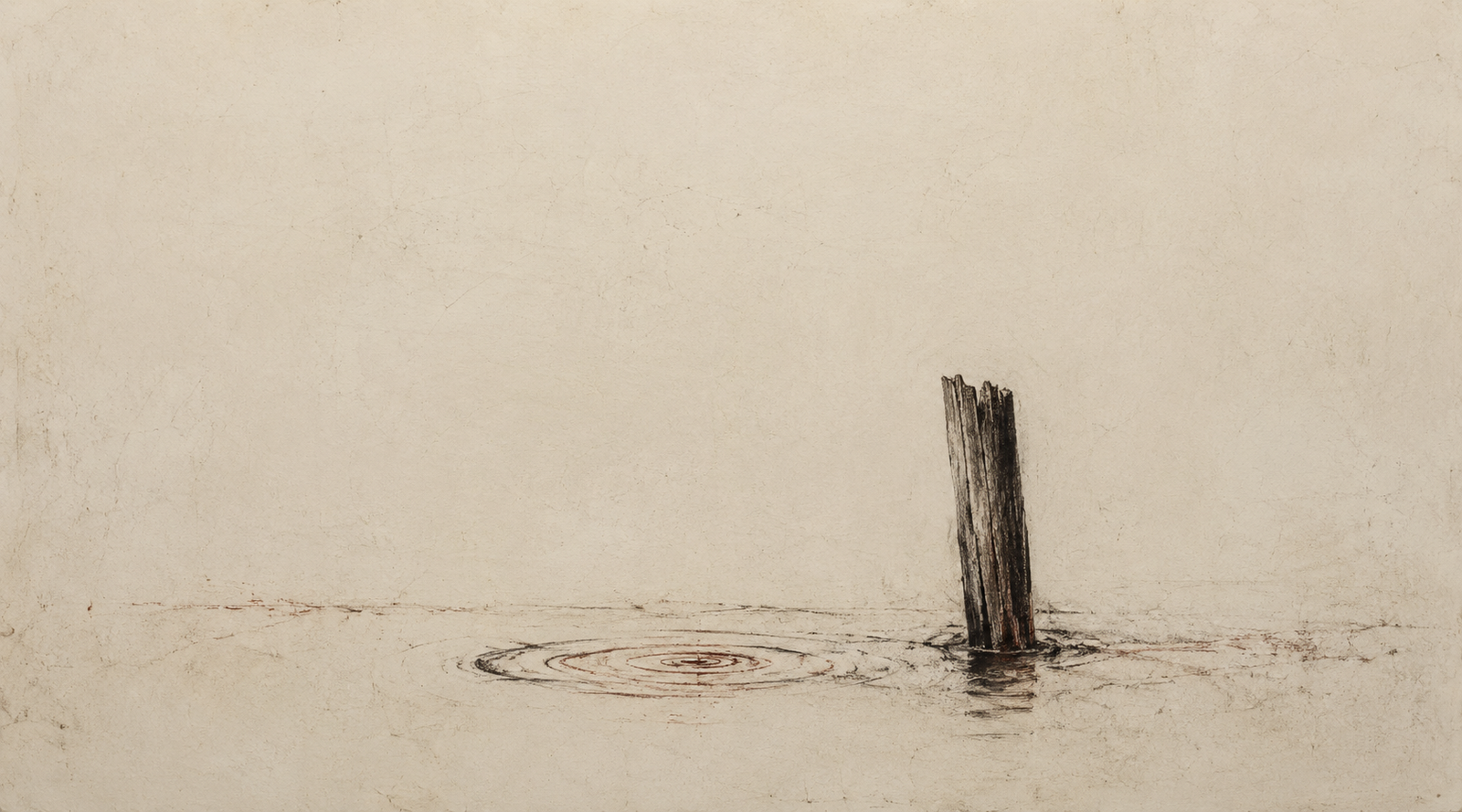

Houses of Wood, Light, and Smoke
Some of Angkor’s most intimate ruins do not rise above the ground at all. They are postholes, low mounds, hearths and ponds: durable traces of a domestic city built largely from things that decay. To restore that city is to see Angkor not only as stone, but as wood, smoke, water, repair, and people living within calling distance.
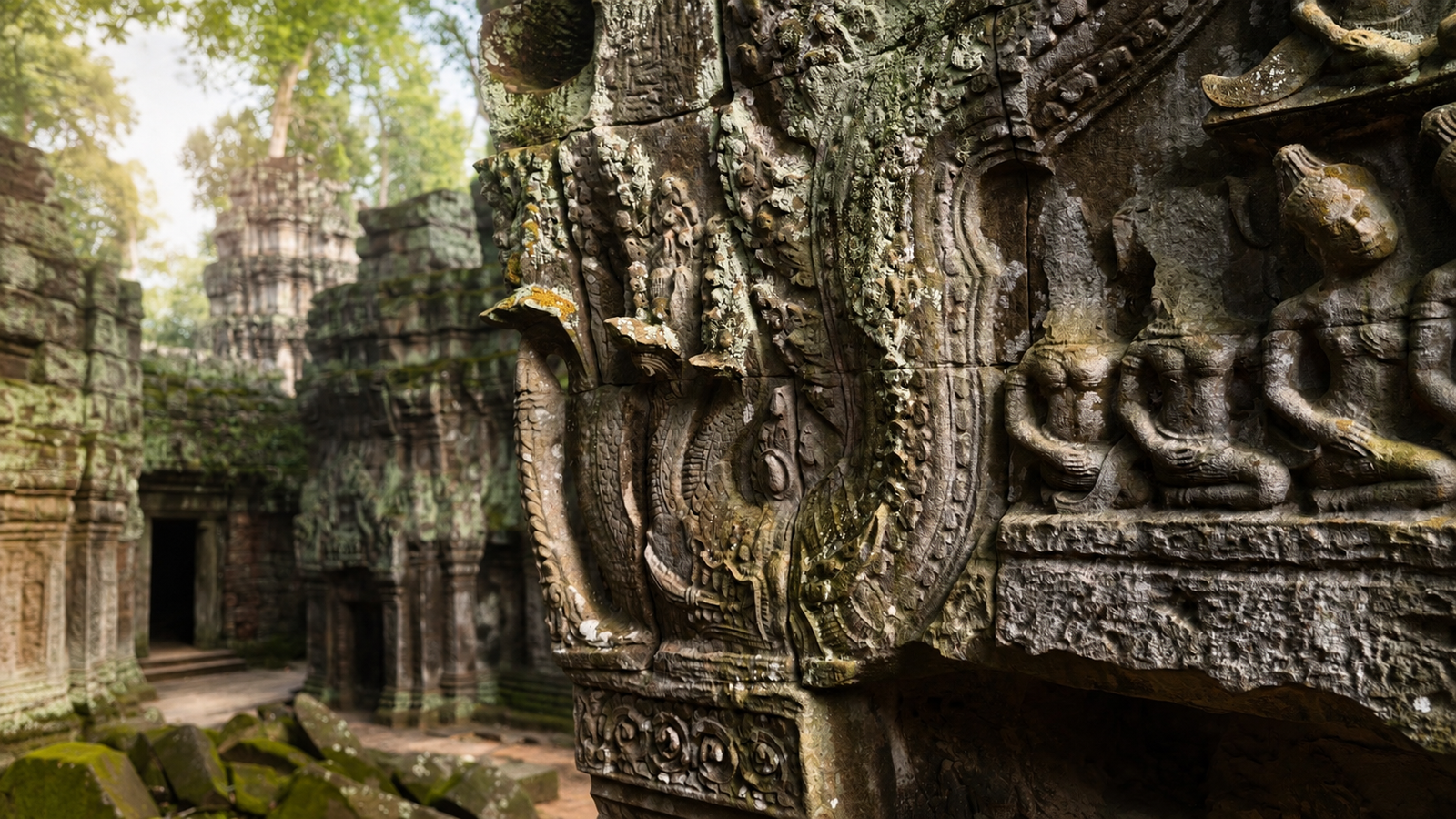

What Stone Brings Forth
I had mistaken a gift for something being expelled.
Beneath the nāga's mouth, a stone garland descended bead by bead. Nearby, a makara opened its jaws and another form emerged. Looking closer, the whole temple began to change: serpent became ornament, ornament became architecture, architecture became foliage.
The forest did not introduce this language.
It answered it.
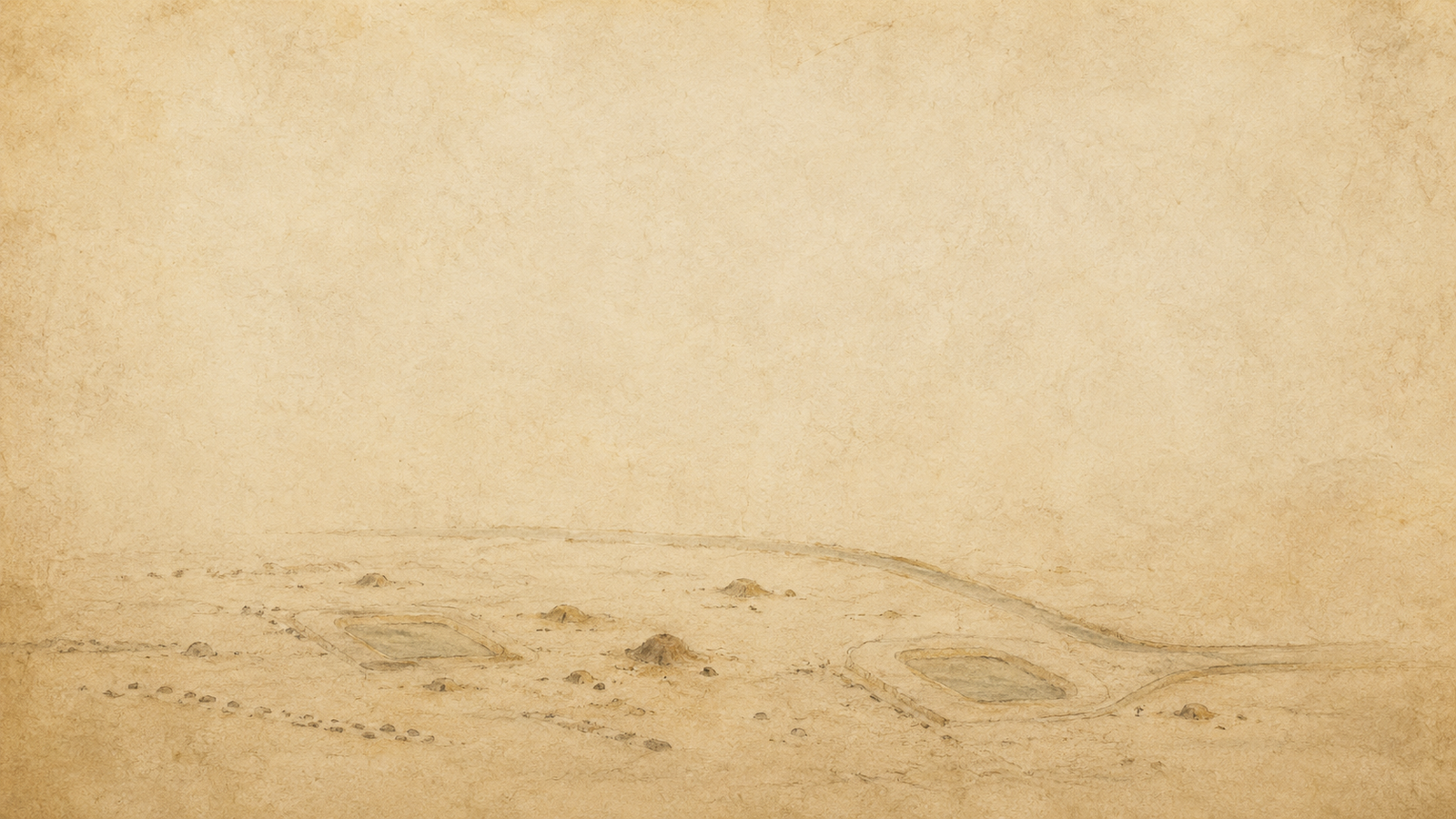

The City Behind the Temples
A contemplative Angkor essay on the empty-looking ground around the temples: mounds, ponds, roads, embankments, fields, water lines, and the vanished low-density city hidden behind the monument-centred imagination. After this piece, Angkor can no longer be seen as isolated monuments in emptiness.
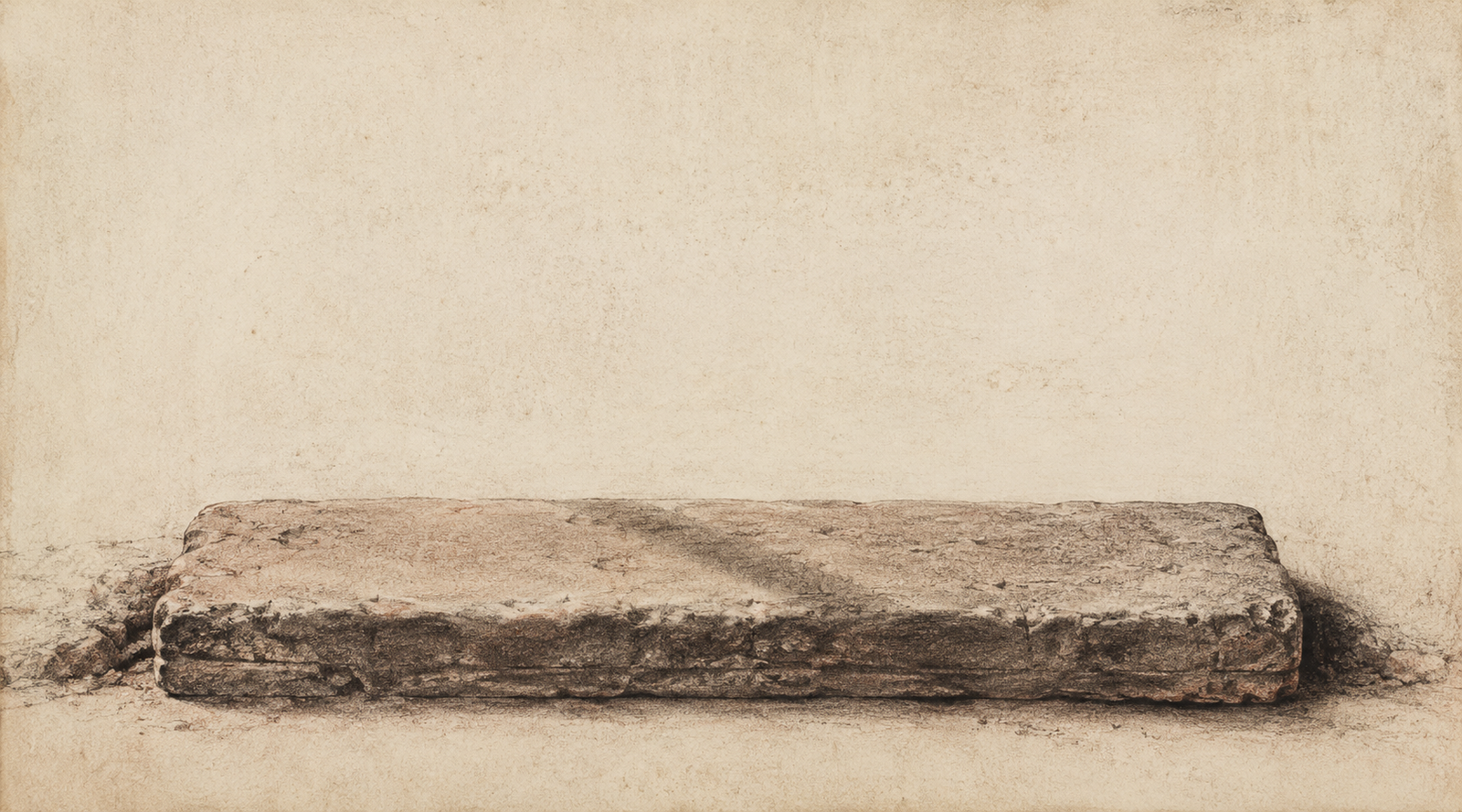

The Stone Is Not the World
A contemplative Angkor essay on how surviving stone has shaped the way Angkor is seen — and why the vanished world of wood, water, labour, smoke, roads, bodies, weather, and devotion must be allowed to return around the temples in What the Stone Hides.
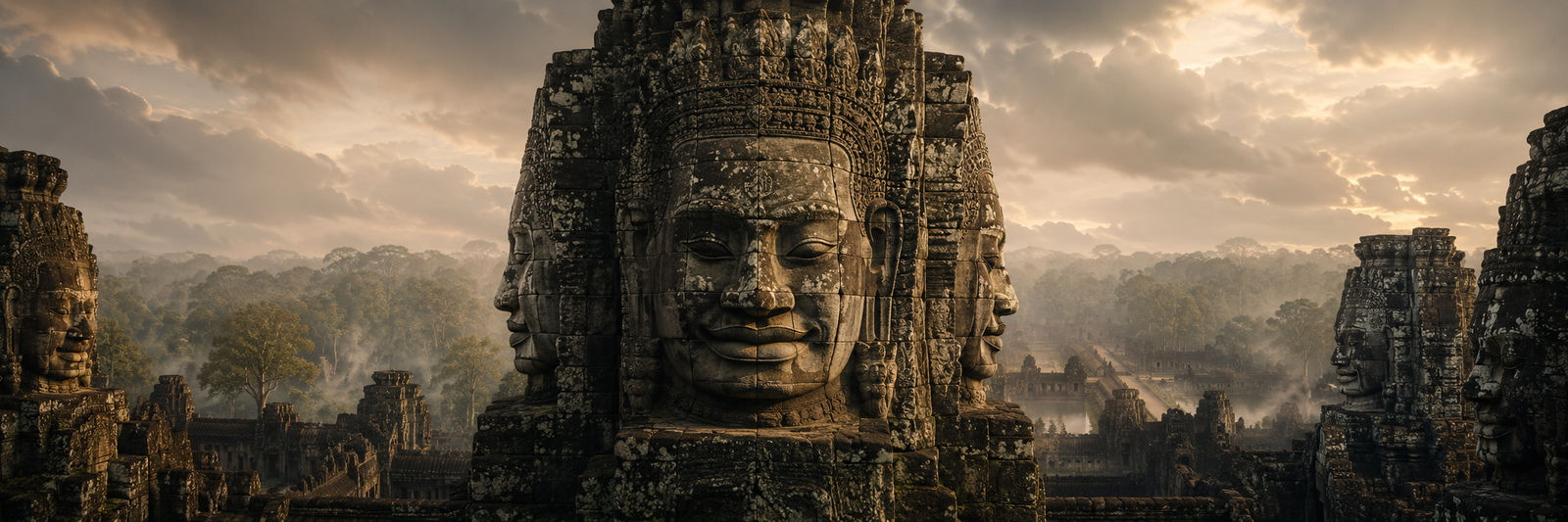

The Face That Looks Four Ways
The faces of the Bayon have been called Brahma, Lokeshvara, Jayavarman VII, and Vajrasattva. This essay examines the evidence behind each theory and argues that their deepest meaning may lie in a royal-Buddhist synthesis: compassion given the scale of empire.
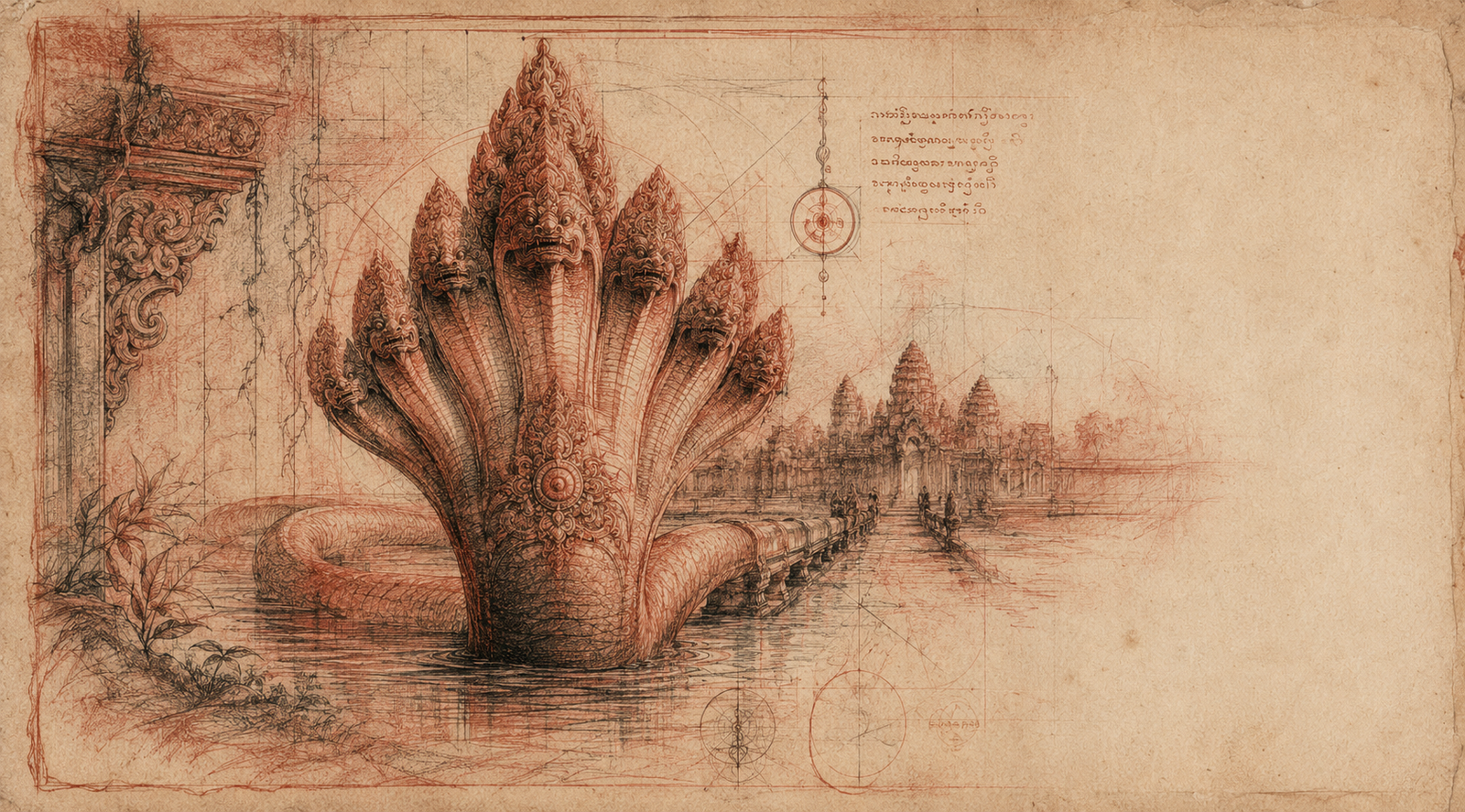

The Serpent Beneath the Kingdom
The Naga is one of the oldest truths Angkor kept in stone. It rises from balustrades, frames thresholds, shelters the Buddha, coils beneath Vishnu, and becomes the rope by which gods and demons churn the ocean of immortality. To understand the Naga is to understand that Angkor’s sacred imagination does not only rise. It descends.

May 2026 in the Varro Library: Wells, Gates, Rivers, and Wings
In May, the Varro Library moved through thresholds: underworld gates, wells of knowledge, Angkorian rivers, damaged houses, labyrinths, and old stories returning with new force. Across myth, essay, poem, and children’s retelling, the month asked what must be surrendered before anything can truly be seen.

Where a Name Could Not Follow
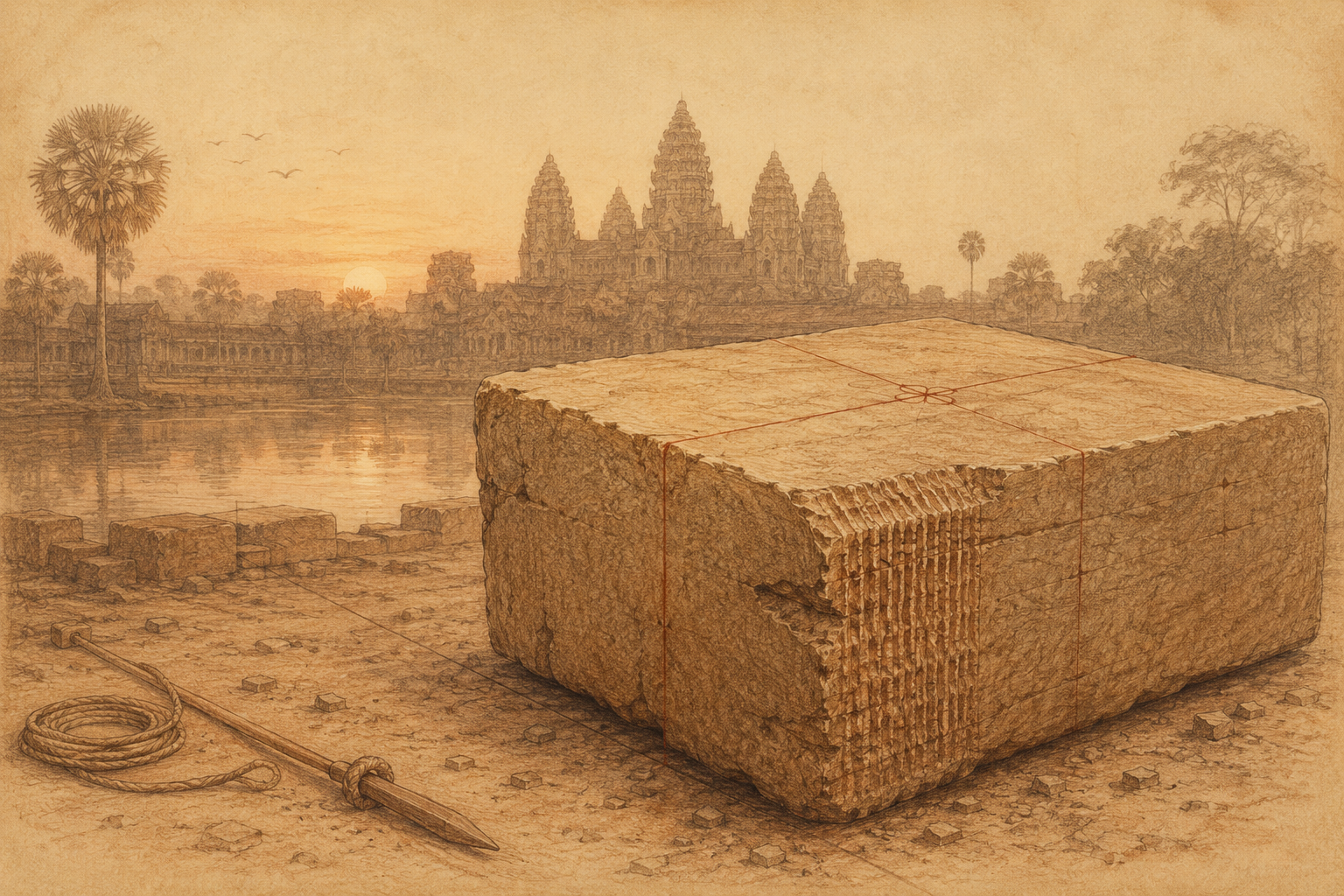
A boy in the sandstone quarries beneath Phnom Kulen learns the first law of sacred building: not strength, not speed, but attention. Where a Name Could Not Follow imagines the life of an unnamed Angkorean stone-master whose hands helped move mountain into temple — and whose name vanished where the stone endured.

The Apsara Against the Assembly Line
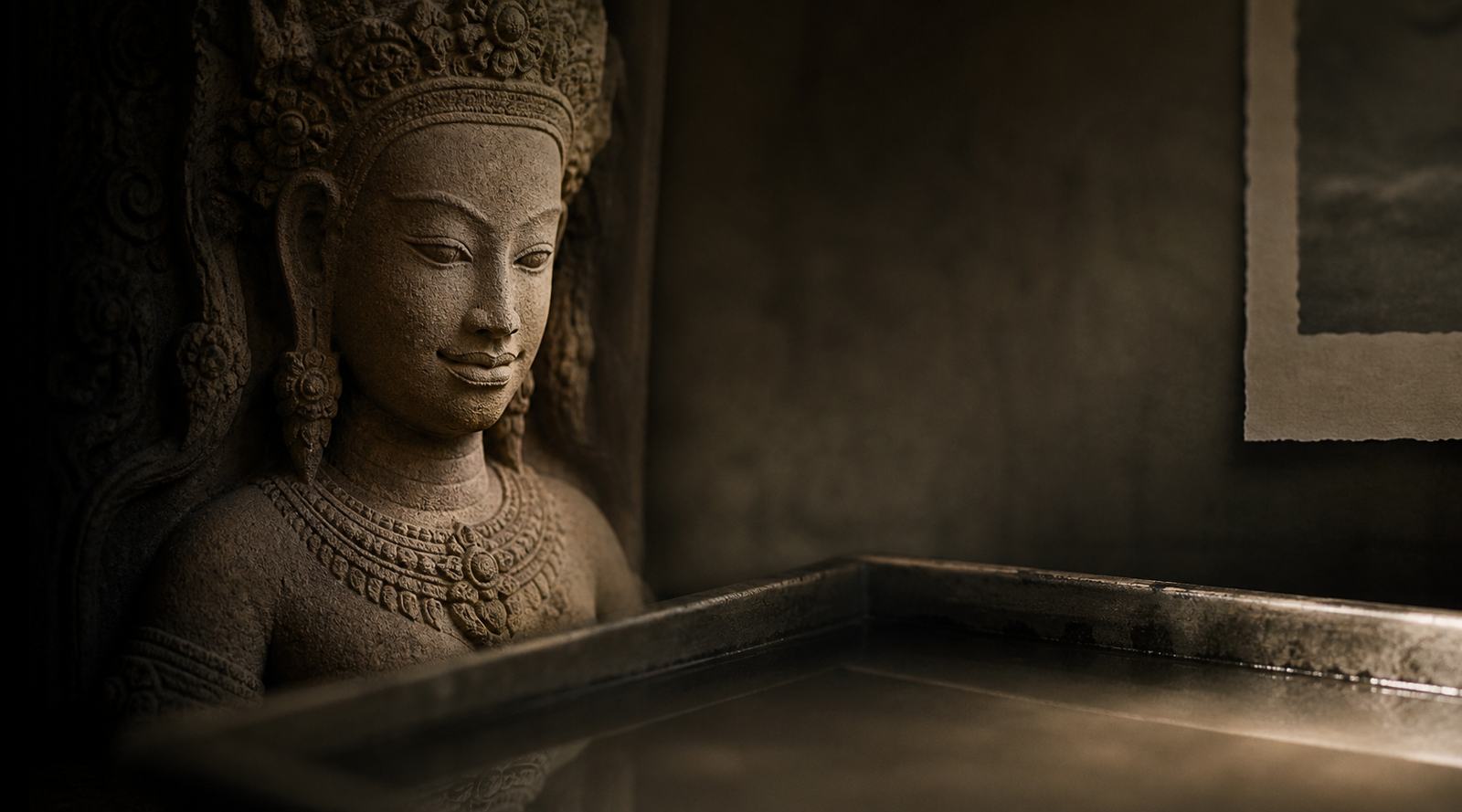
In the darkroom, the print rises slowly from the tray: silver darkening into shadow, stone gathering itself from blankness. At Angkor, the apsaras offer the same lesson. Though repeated in their thousands, each waits to be seen. Against the assembly line of speed and sameness, slowness restores the soul’s signature.

What It Means to Be Equal to a Place
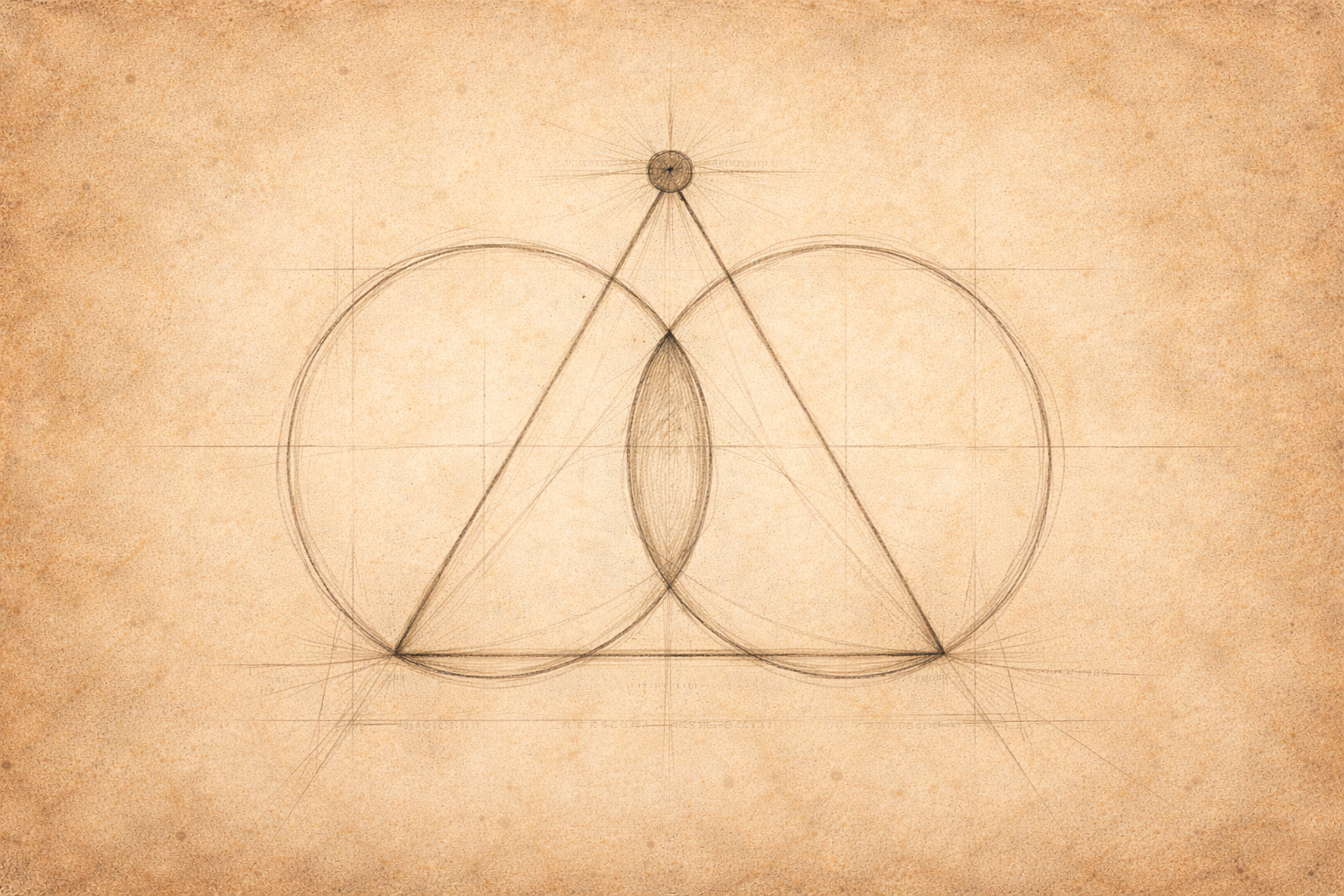
A Living Way essay on Angkor, reverence, proportion, and inward formation. Lucas Varro asks what it means to be equal to a place: not to master or decode it, but to become capable of receiving its greatness without reducing it to one’s own scale.

The Wall That Still Holds Them
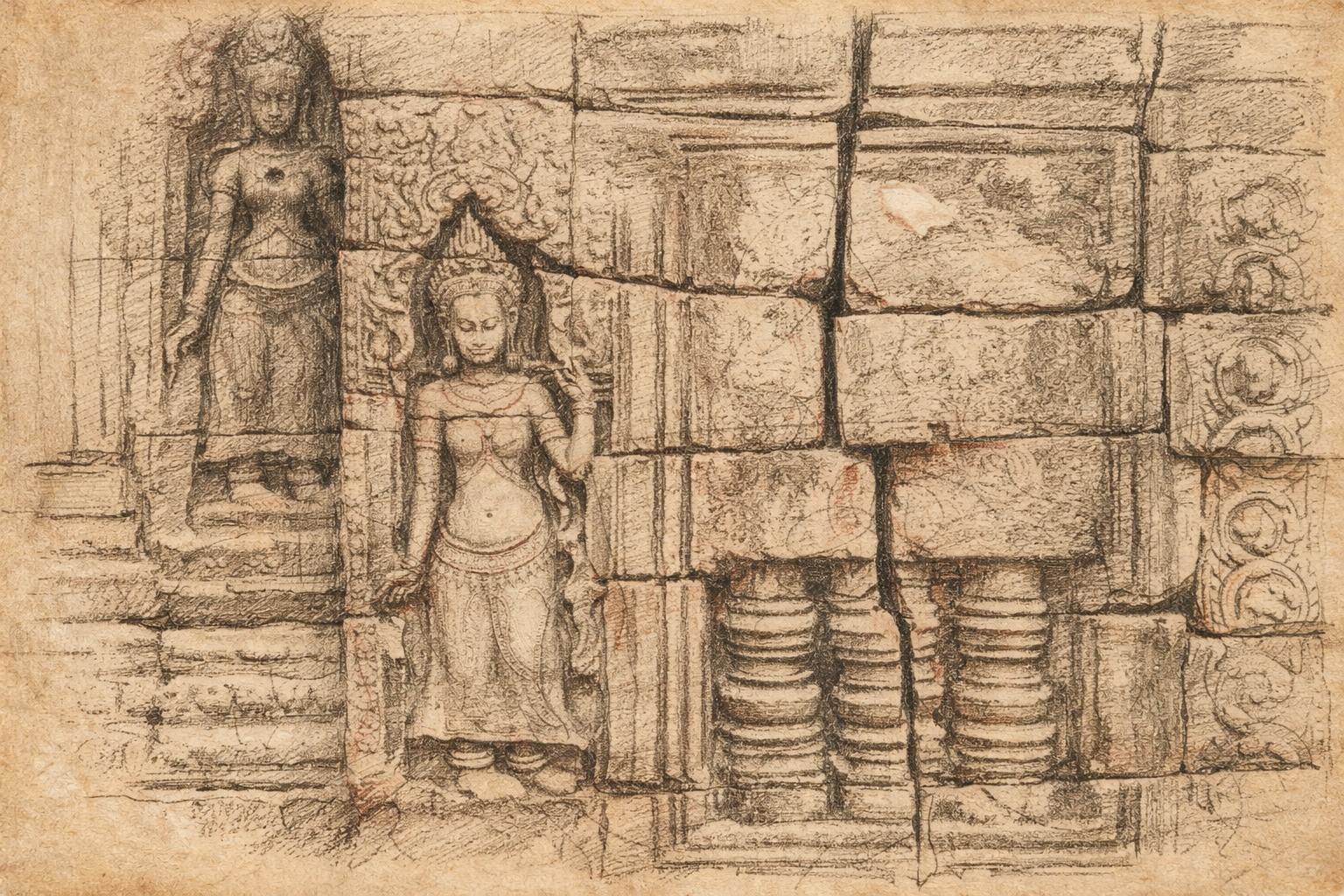
Two presences endure within a wall that no longer closes seamlessly around them. One withdraws into shadow; the other comes further into the light of legibility. Around them, fracture, erosion, and carved stone become a single field of custody, where grace survives within damage, not beyond it.

Why We No Longer Know How to Approach Great Things
A Living Way essay on Angkor, reverence, attention, and the modern inability to receive what exceeds us. Lucas Varro asks why arrival is not the same as approach, and how the inward manners required for beauty, truth, and greatness might still be relearned.


The Pact of the Silent Cut
In this harvest tale, the field does not punish. It withdraws legibility. A single broken form—the first cut made without silence—turns labour heavy, speech sour, and human effort strange to itself. The Pact of the Silent Cut enters a world where attention is devotion, and where the body must begin before the mouth can speak.

The Devata at First Light
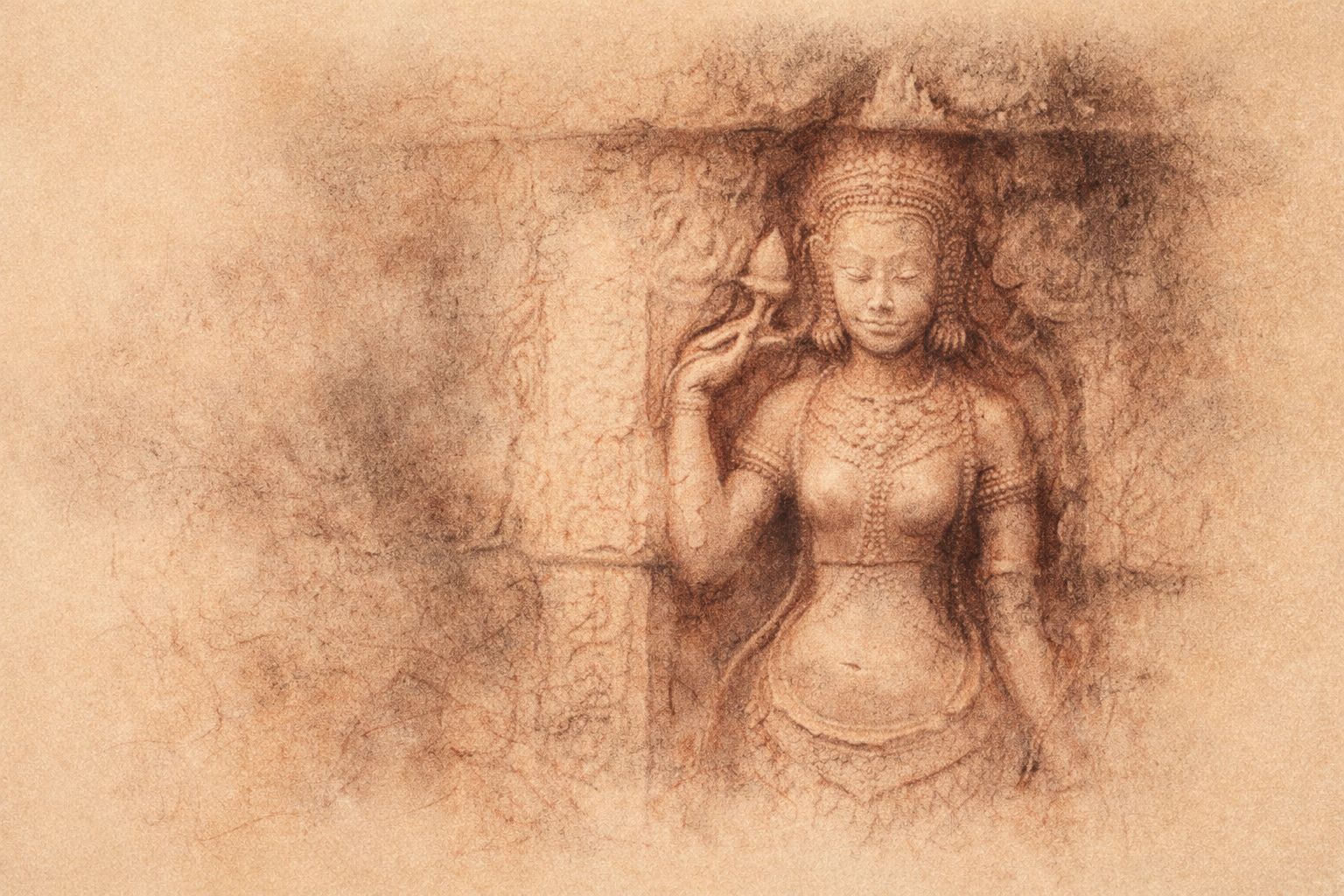
At first light in Banteay Kdei, a devata draws the eye into stillness. Through sanguine chalk, black shadow, and repeated returns to the page, sketch and prose slowly deepen into a single act of devotion—until the words, too, learn how to remain.

The Pact of the Uncounted Grain
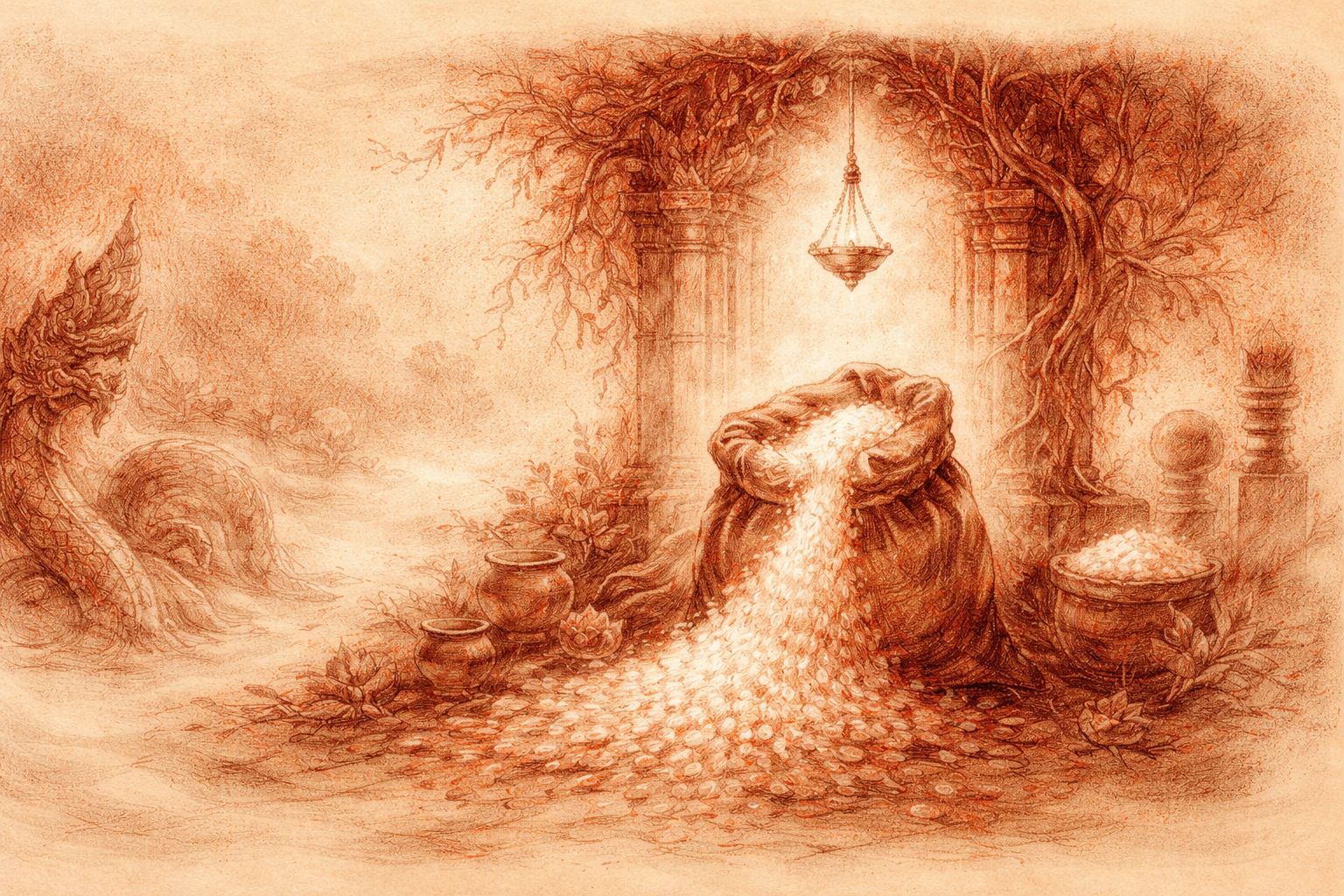
A village does not starve only when rice runs out. It begins to thin when everything is counted, explained, and held too tightly. The Pact of the Uncounted Grain remembers an older law: that once each season, abundance must pass through human hands without measure, or the world begins, quietly, to lose its meaning.

On Writing Angkor
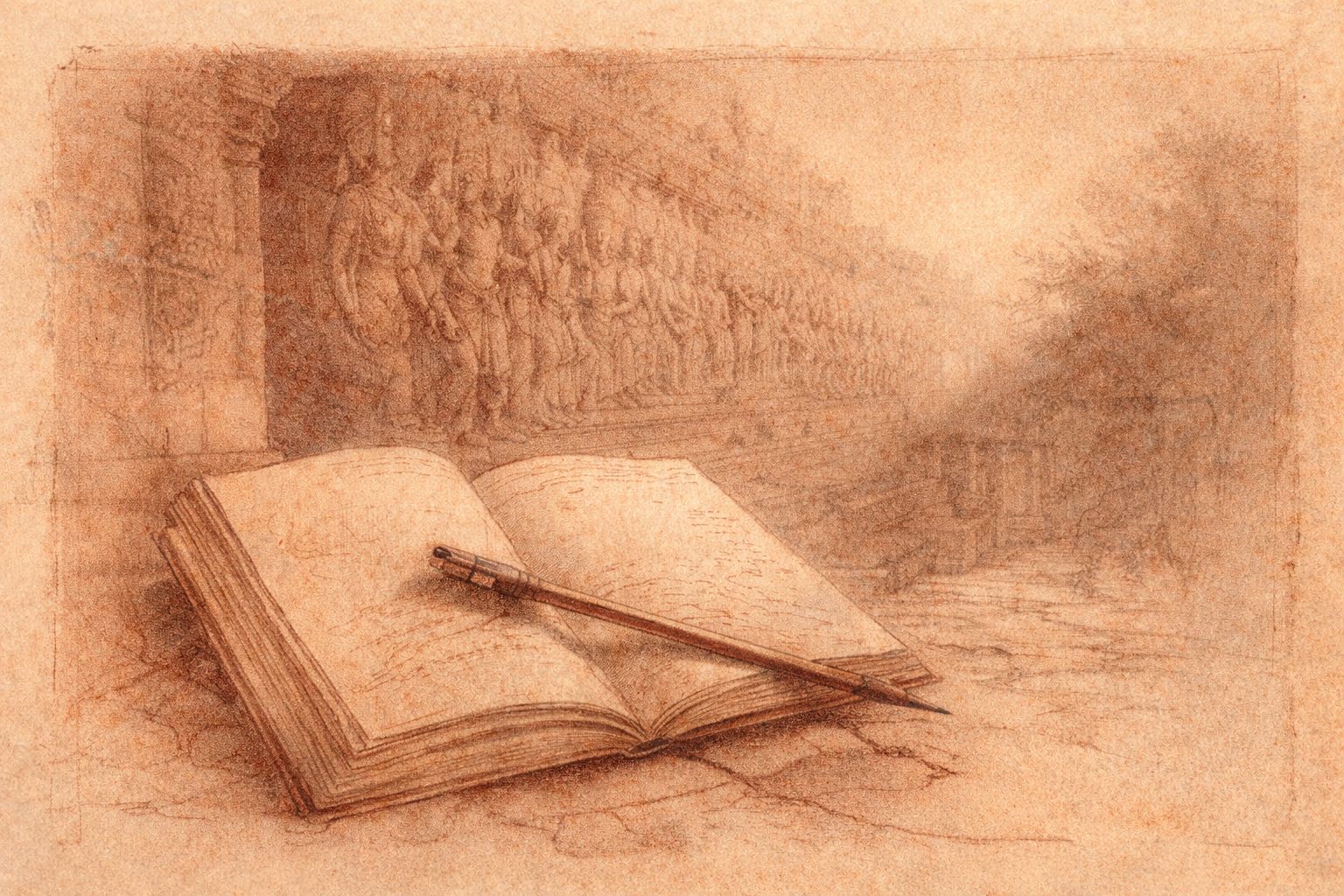
Leaving the temple is not the end of the pilgrimage. What was seen must pass through memory and language, and something inevitably changes along the way. Writing about Angkor becomes an act of translation—from stone and silence into sentences—where something is always lost, and something unexpectedly revealed.
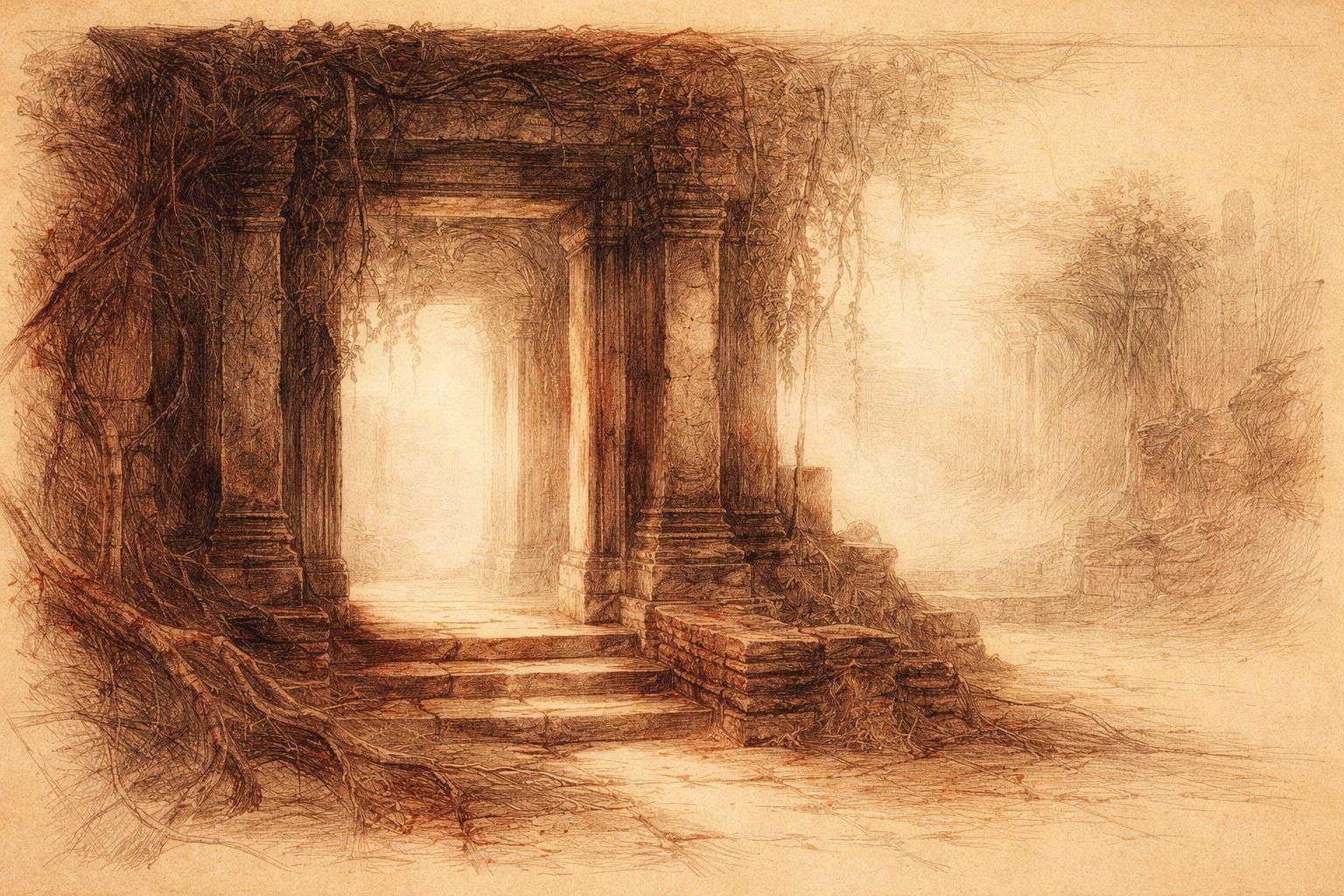

On Photographing Angkor
To photograph Angkor is not simply to make images of stone. It is a form of pilgrimage — a discipline of attention shaped by patience, silence, and light. One morning in a deserted gallery, I realised the most meaningful photograph I had encountered was the one I never took.
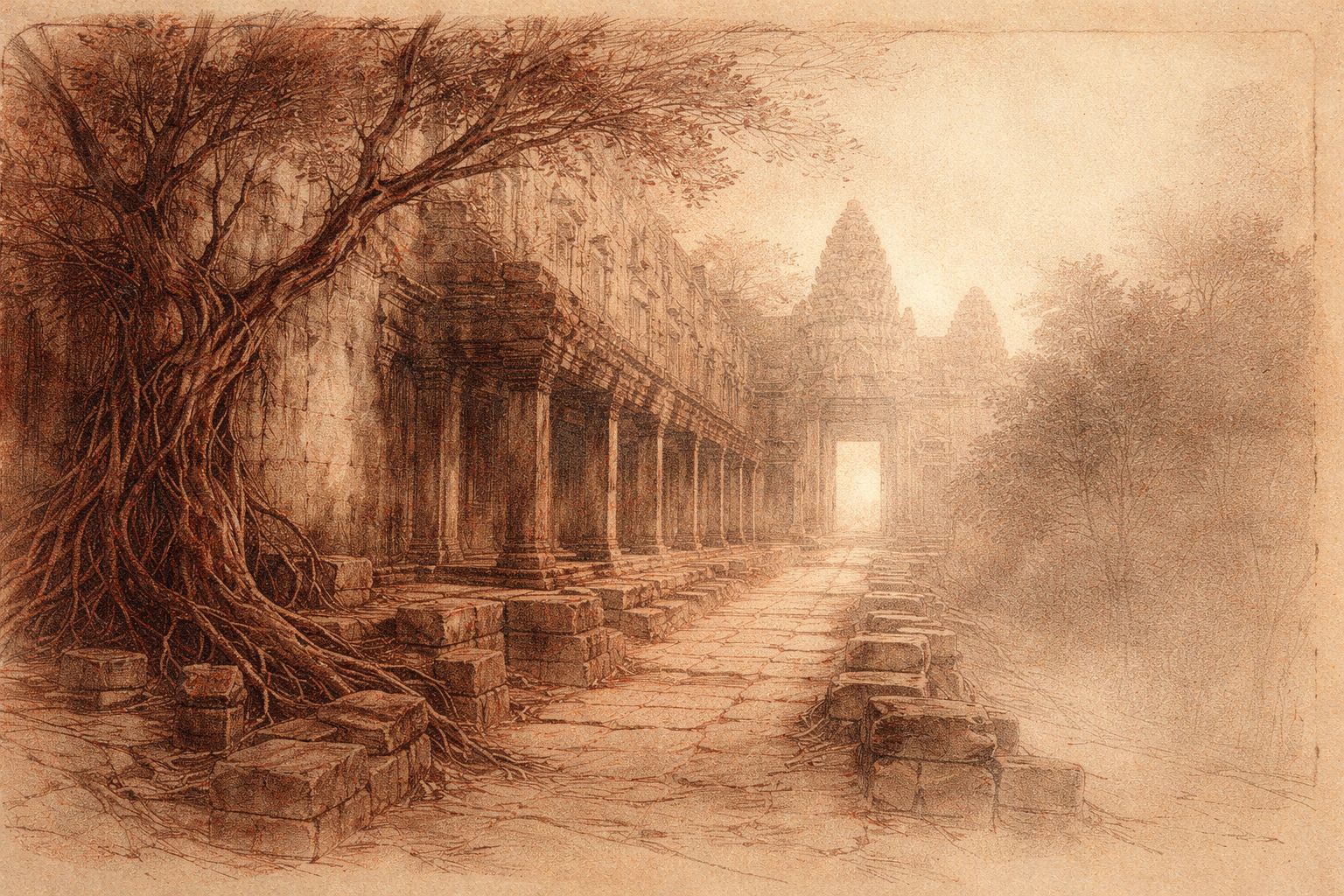

On Seeing Angkor
Most visitors believe they have seen Angkor the moment they arrive. The towers rise, the famous view appears, and recognition feels like understanding. Yet seeing begins only when expectation loosens its hold and attention slows. The temples reveal themselves gradually, rewarding those who linger long enough for perception to deepen.
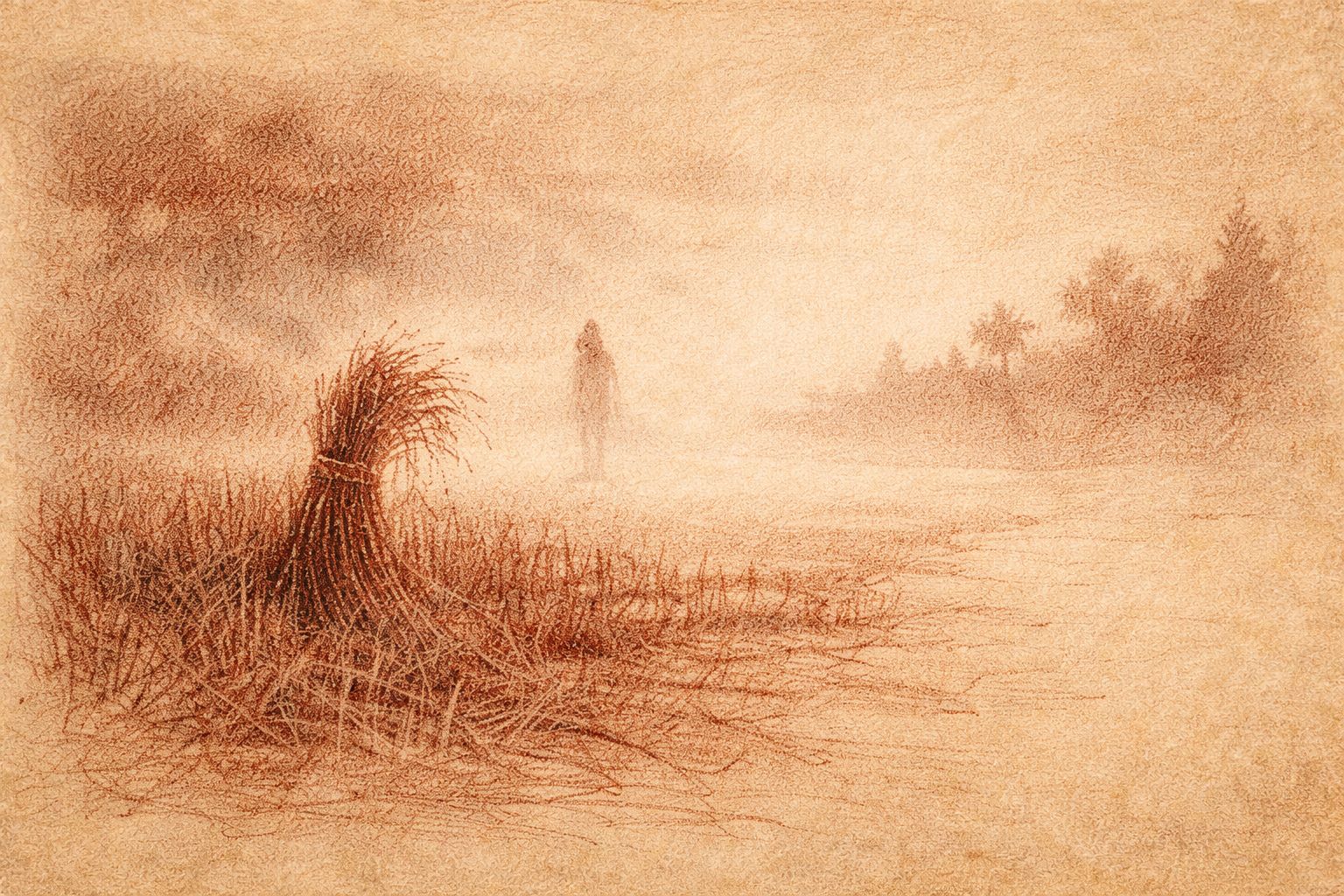

The Pact of the Last Sheaf
At the edge of the field where cut meets uncut, one sheaf stands listening. The jars are full, the bread is warm, yet something waits in the narrowing light. Not hunger, not blessing—only the hand that can pass by without closing.


The Robe and the Lotus
A monk and a girl do not touch.
The law speaks louder than breath.
Their names pass mouth to mouth, like prayer.
This bilingual poem is offered in the spirit of a Khmer tragic love story—where devotion survives prohibition, and grief becomes a form of listening.
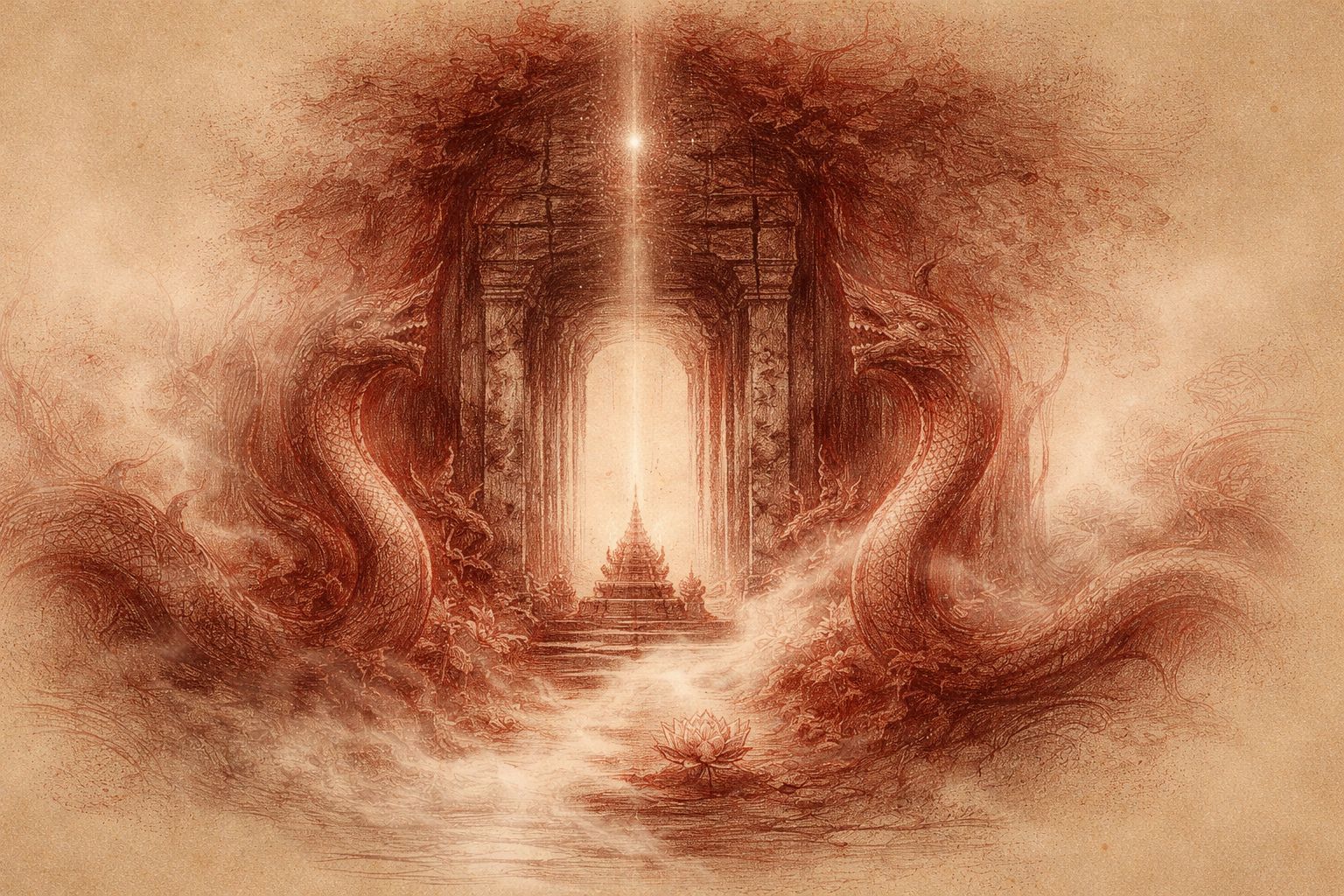

Stone That Remembers the Sky
This poem listens to Angkor not as ruin, but as grammar—where moss, shadow, and proportion carry devotion forward without spectacle. What endures here is not glory, but measure: a way of standing that no longer needs witnesses.
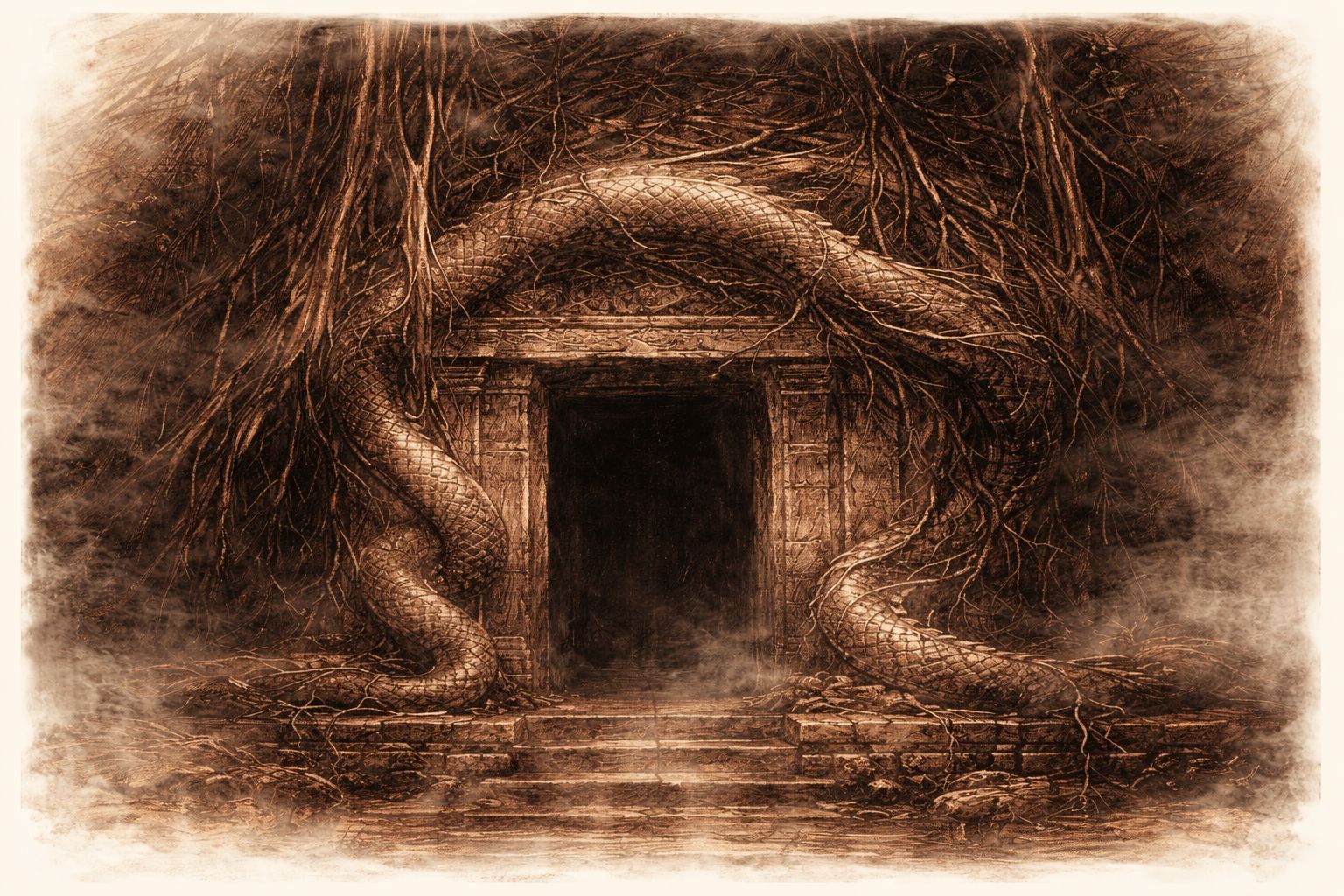

Naga Vow
A lost city sleeps in the jungle, its thresholds carved with serpents — not ornament, but law. This vow-poem enters love as sacred hunger: desire as guardianship, devotion as possession, the body speaking without language. A liturgy of heat, roots, rain, and the terrible tenderness of being claimed.
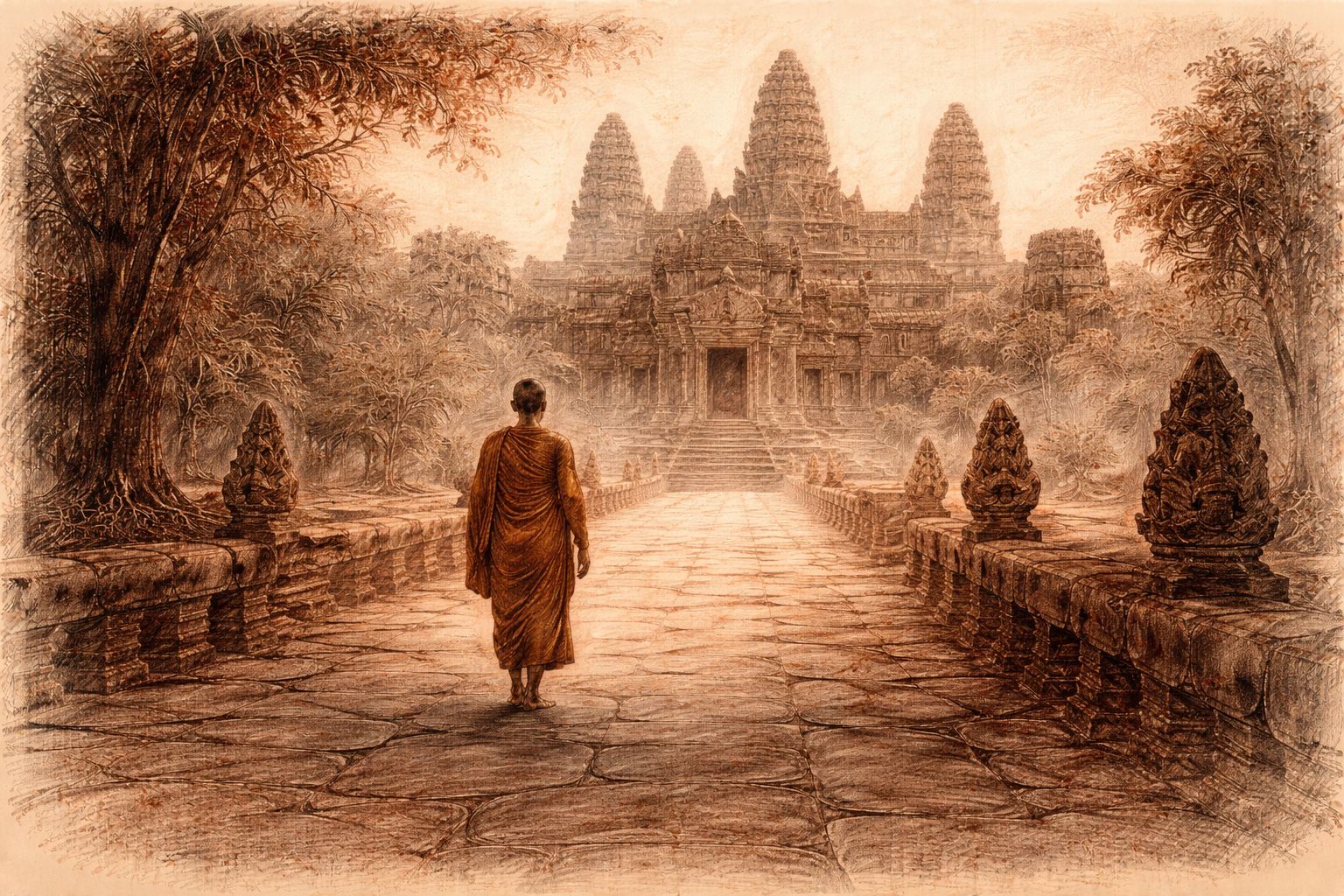

From Mountain to Monastery
Angkor Wat survived by learning to change its posture. Built as a summit for gods and kings, it became a place of dwelling for monks and pilgrims. As belief shifted from ascent to practice, stone yielded to routine—and the mountain learned how to remain inhabited.
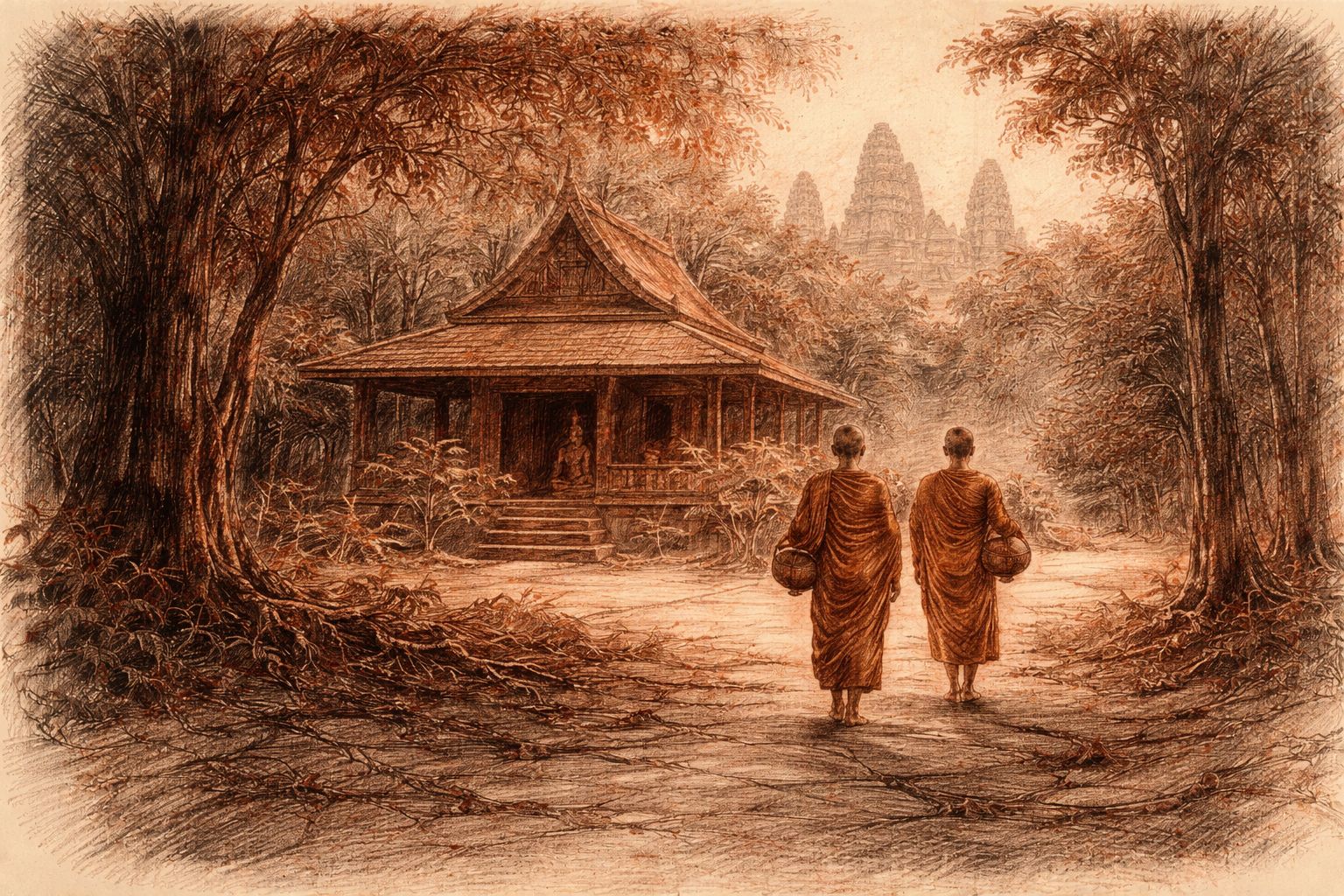

Why Theravada Could Outlast Stone
Theravada endured by refusing monumentality. It shifted belief from stone to practice, from kings to villages, from permanence to repetition. What it preserved was not form but rhythm—robes, bowls, chants, and lives lived close together—allowing faith to travel when capitals fell and temples emptied.

Axes of Inquiry
The Sanctuary of Meaning is not organised by topic, but by attention. Its essays move along distinct Axes of Inquiry—directions of thought that shape how meaning is encountered, held, and tested. This page offers a quiet orientation: not a menu to browse, but a map for those who wish to enter slowly.
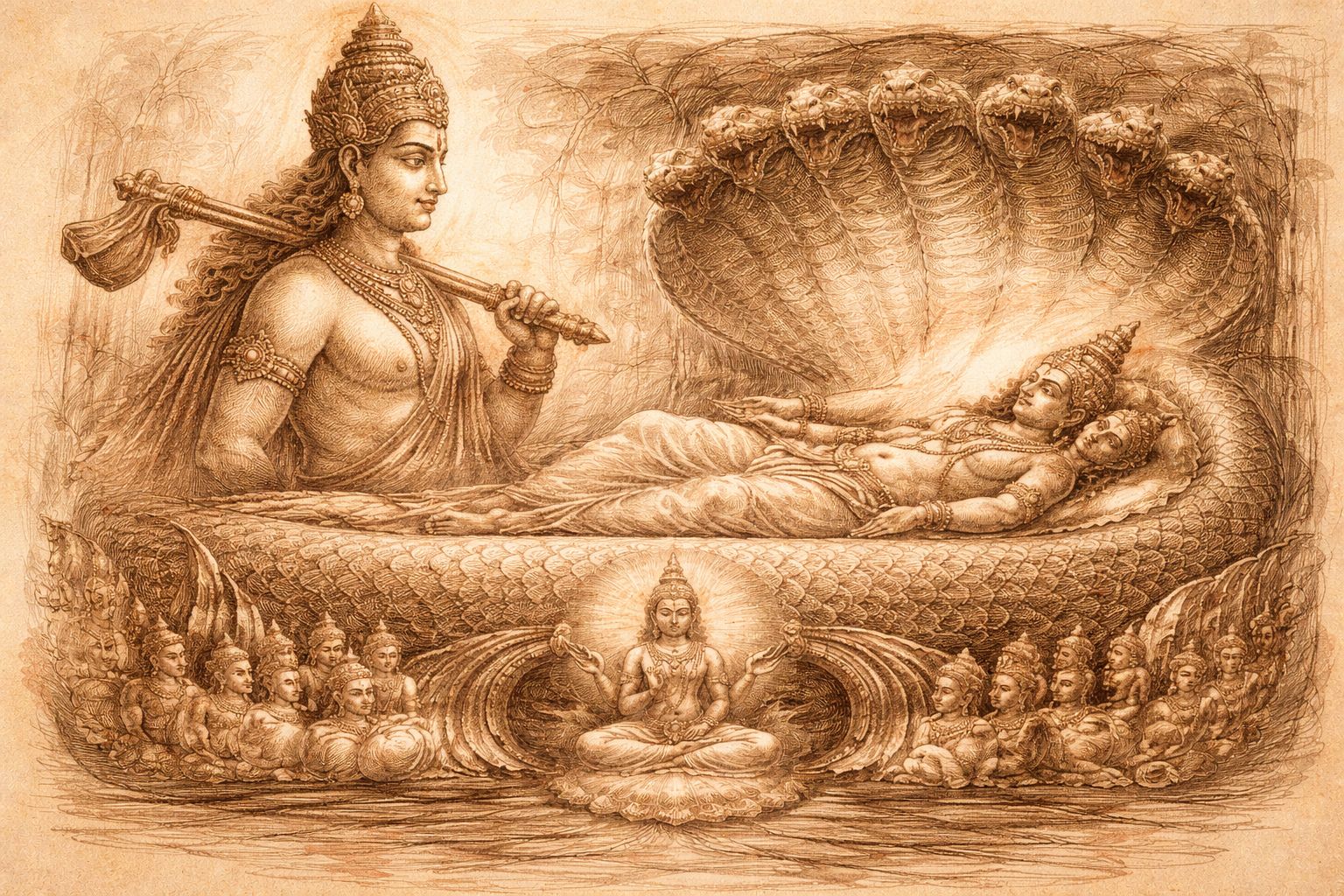

Balarama and the Serpent Beneath the God
In Angkorian reliefs, Balarama and Anantasayin are not separate figures but two states of the same force: action above, support below. What walks beside Krishna is what lies beneath Vishnu—the hidden weight that allows the cosmos, and the temple, to endure.
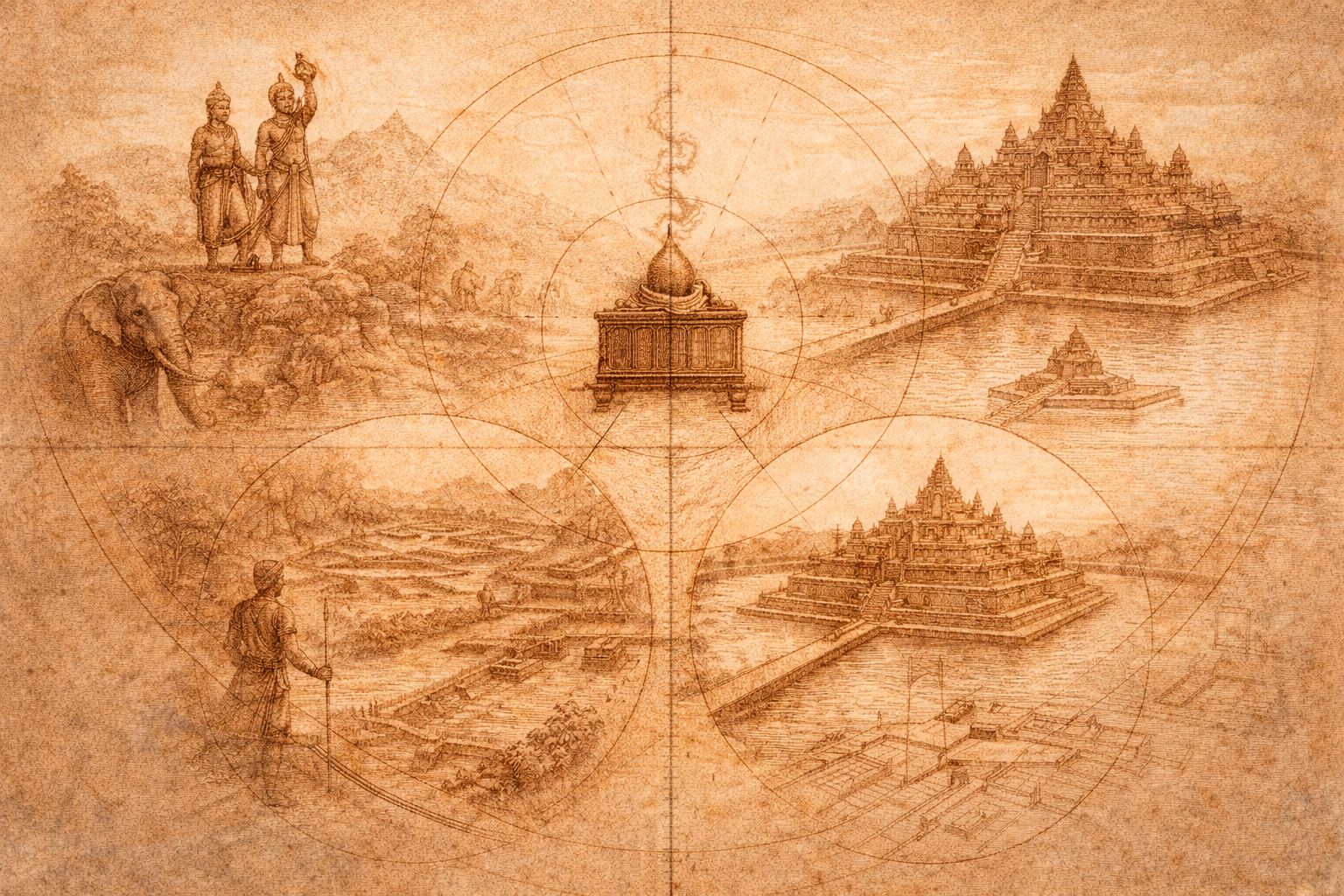

Declaration, Consolidation, Standardisation — The First Angkorian Sequence
Angkor’s first century unfolds as a triad: Jayavarman II declares the sacred centre, Jayavarman III holds it steady, and Indravarman I gives it scale. From ritual to restraint to standard, the Khmer world learned how to turn alignment into empire.
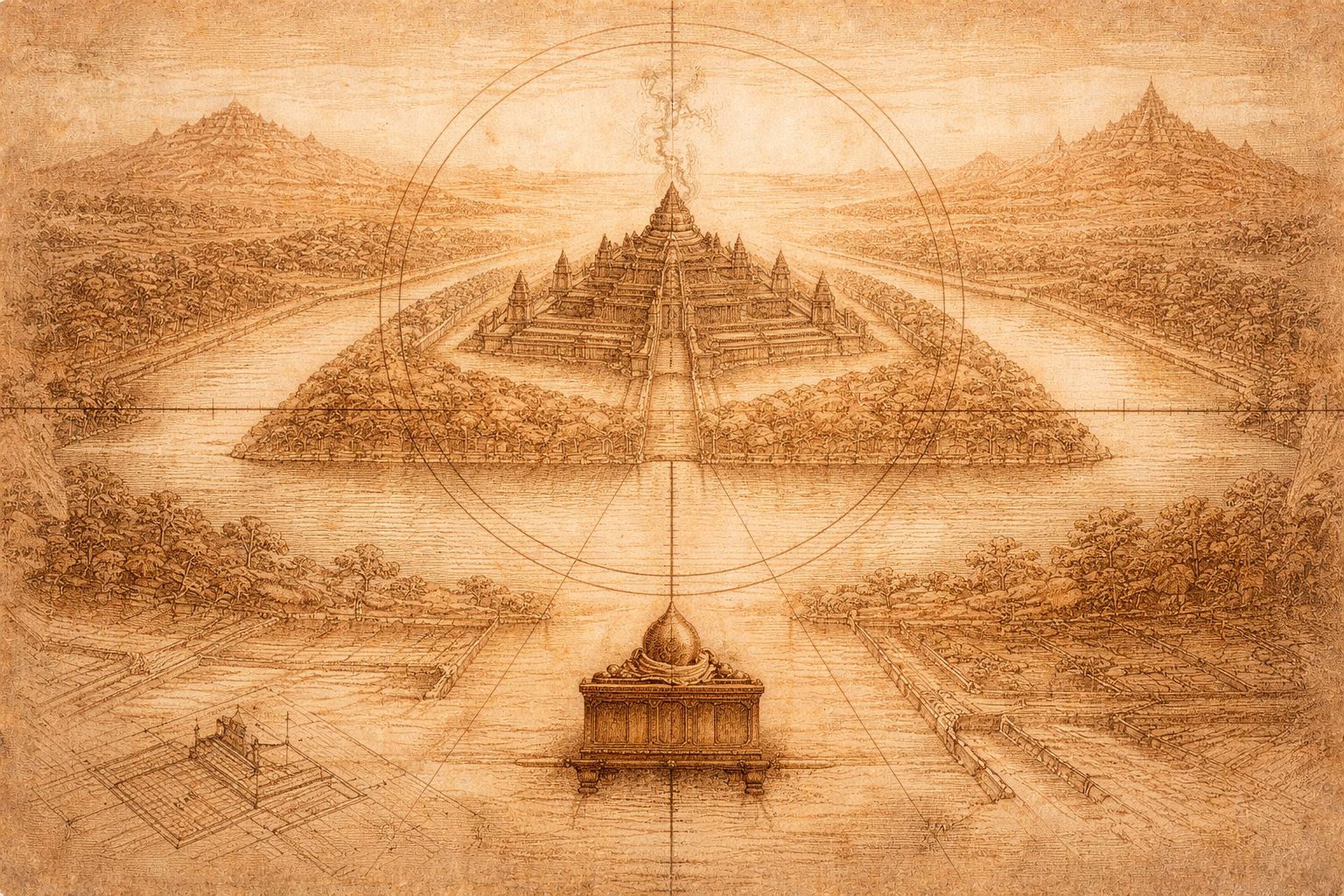

Axis, Mountain, Water — The Architecture That Held the World
At Angkor, sovereignty was built as a system. The Devarāja fixed the unseen centre, the temple-mountain raised the world’s axis in stone, and the baray extended that order into water and rice. Power endured because it was aligned—repeated, measured, and made legible to the land itself.
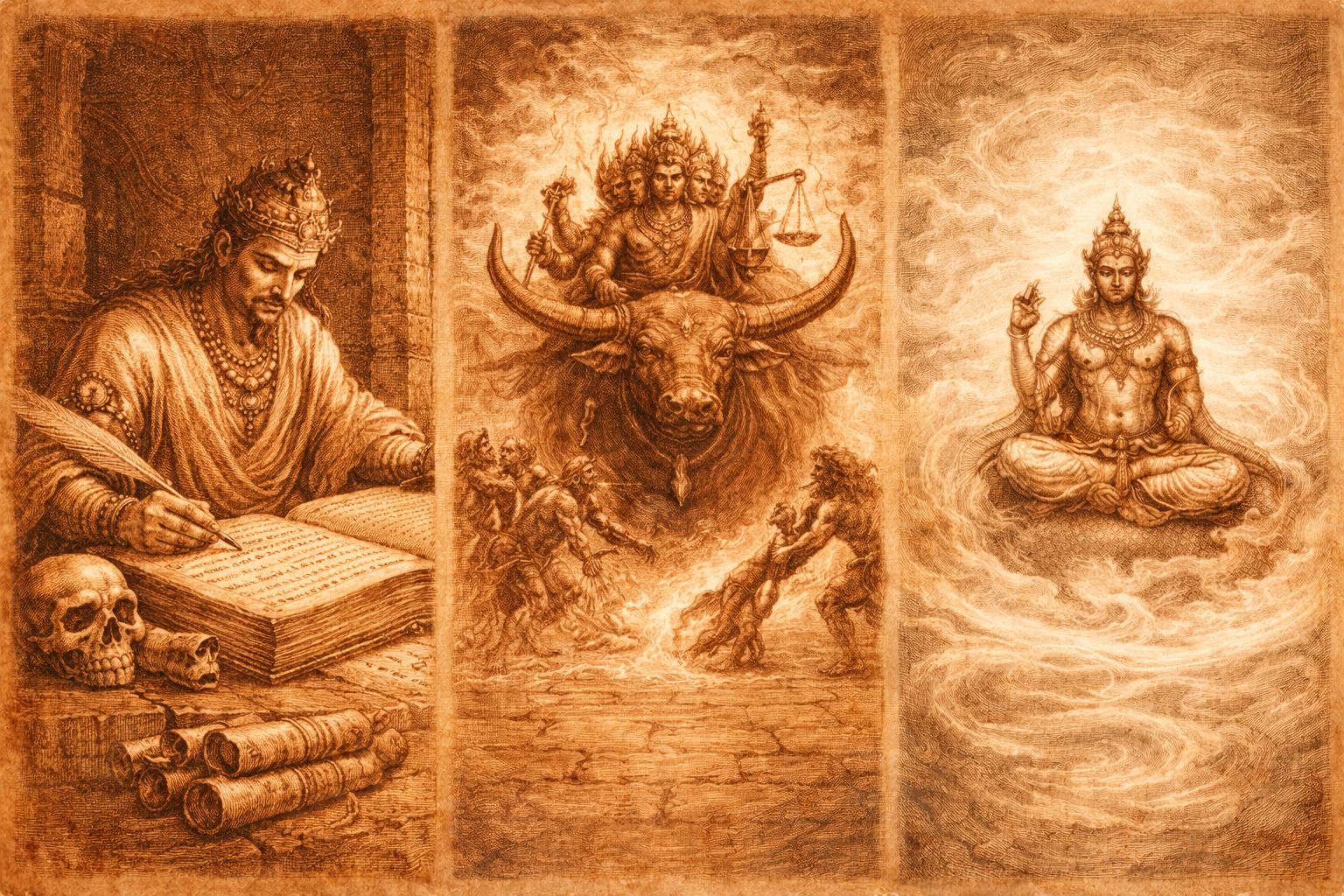

The Ledger, the Verdict, and the Breath
Every life is recorded.
Every record is read.
Every judgement ends in breath.
From Citragupta’s ledger, through Yama’s verdict, to the silent release of wind, this meditation traces the karmic arc to its final threshold—where consequence dissolves into stillness, and nothing remains to be held.
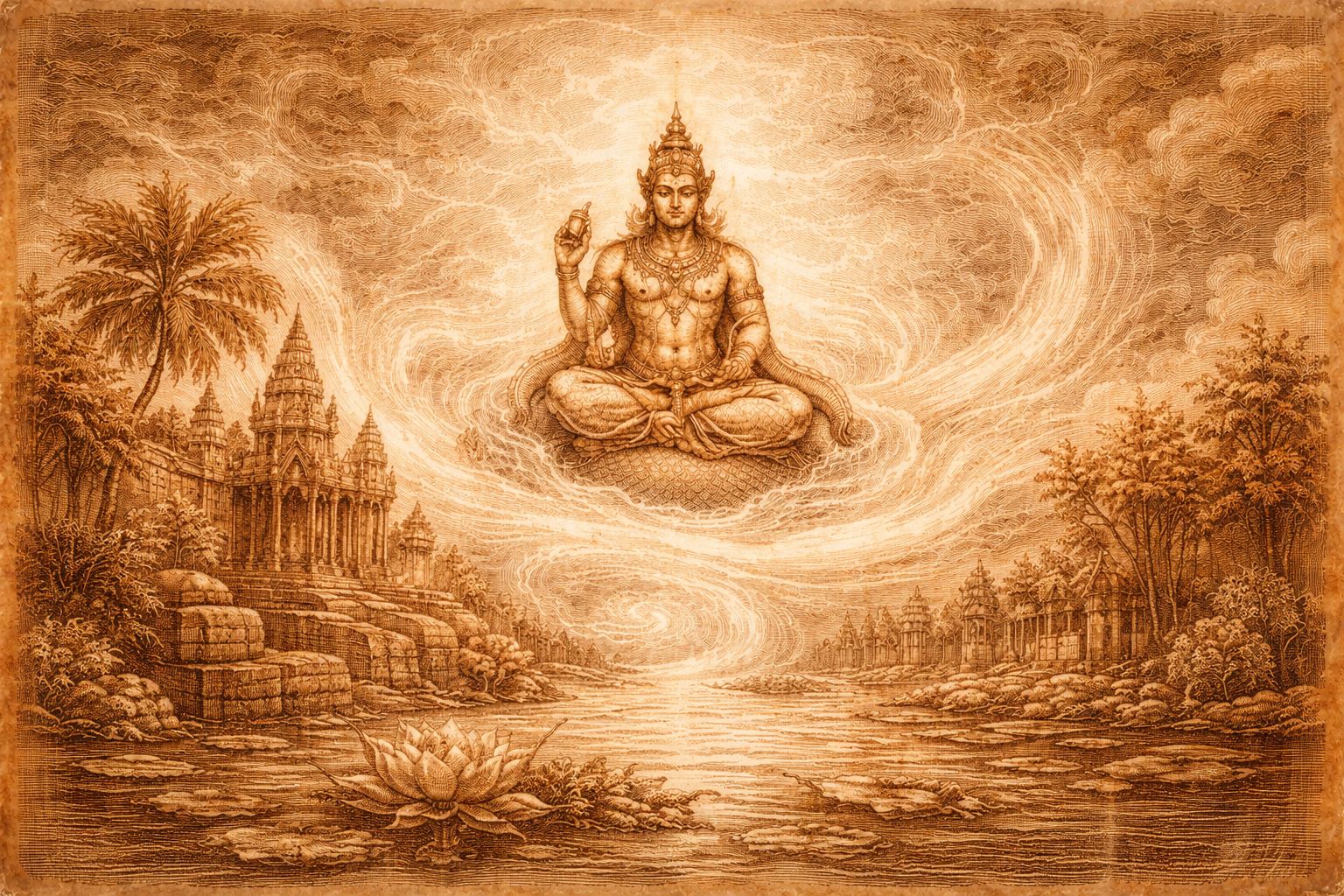

The Fifth Silence — Wind, Breath, Brahman
When fire, water, storm, and judgement withdraw, breath remains. Wind receives them all without resistance. In Khmer and Vedic thought, this silent element—Brahman—is not an ending, but the place of return, where every force is concealed until it is ready to breathe again.
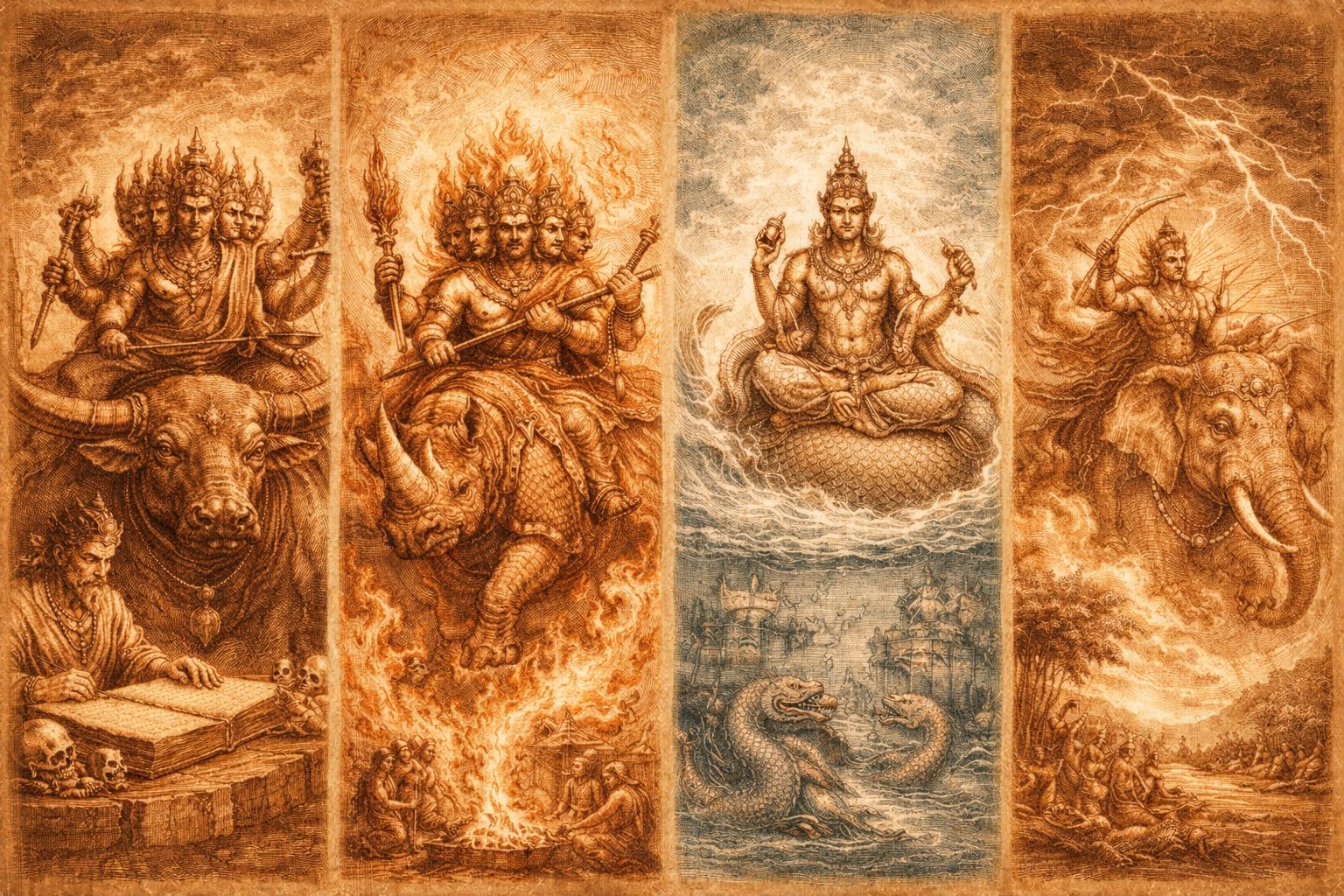

The Circle of Return — Yama, Agni, Varuna, Indra
At Angkor, death is not an ending but a withdrawal. Storm becomes rain, rain becomes fire, fire becomes breath, and breath conceals all things. Yama keeps the ledger; the elements keep their order. Nothing is lost. Everything returns, correctly placed.
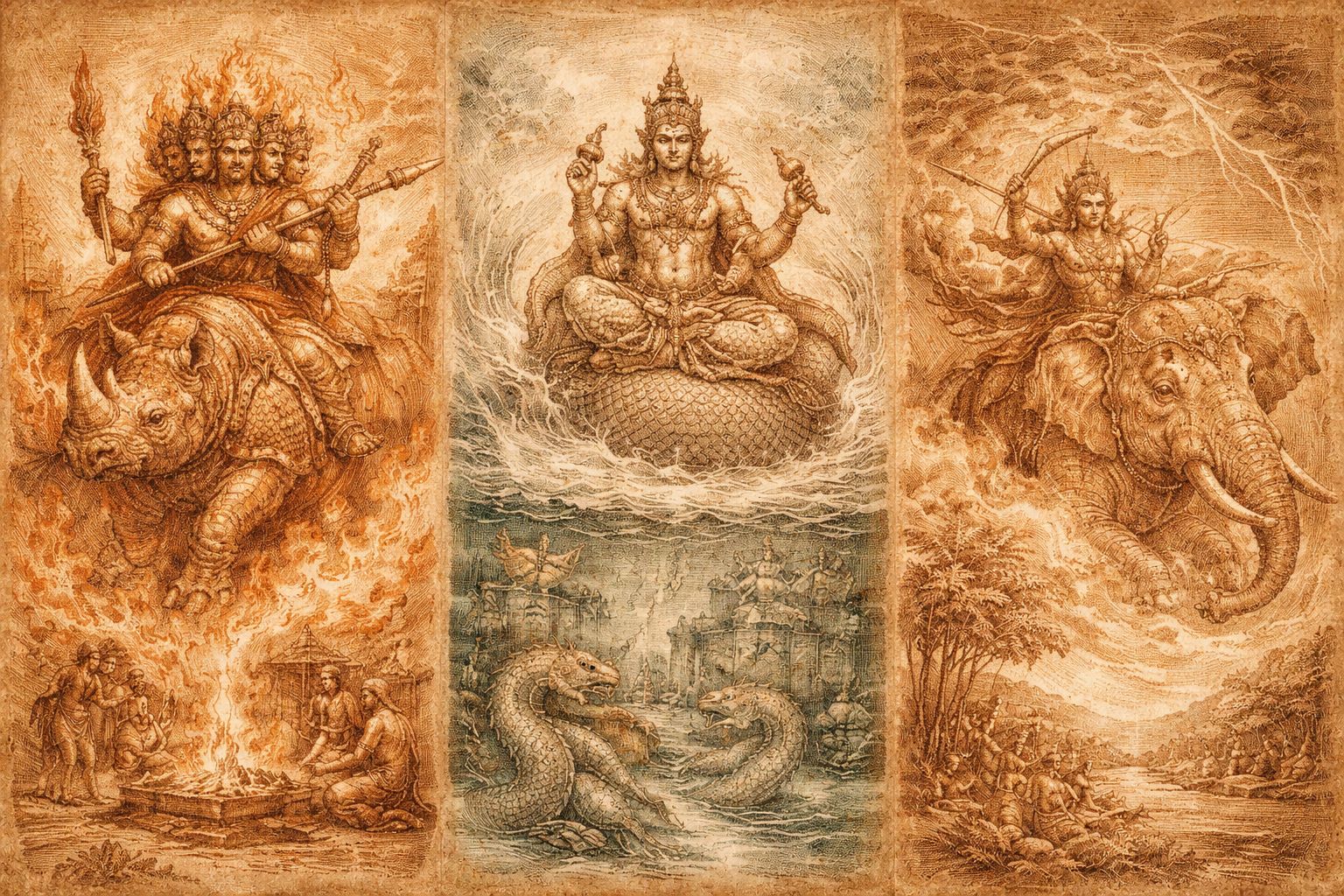

The Measured Powers — Agni, Varuna, and Indra
Angkor rests on a triad of restraint. Fire that transforms without excess. Water that binds without drowning. Storm that releases without ruin. Agni, Varuna, and Indra do not contend—they regulate. Between them, heat is housed, rain is timed, and the world is allowed to endure.
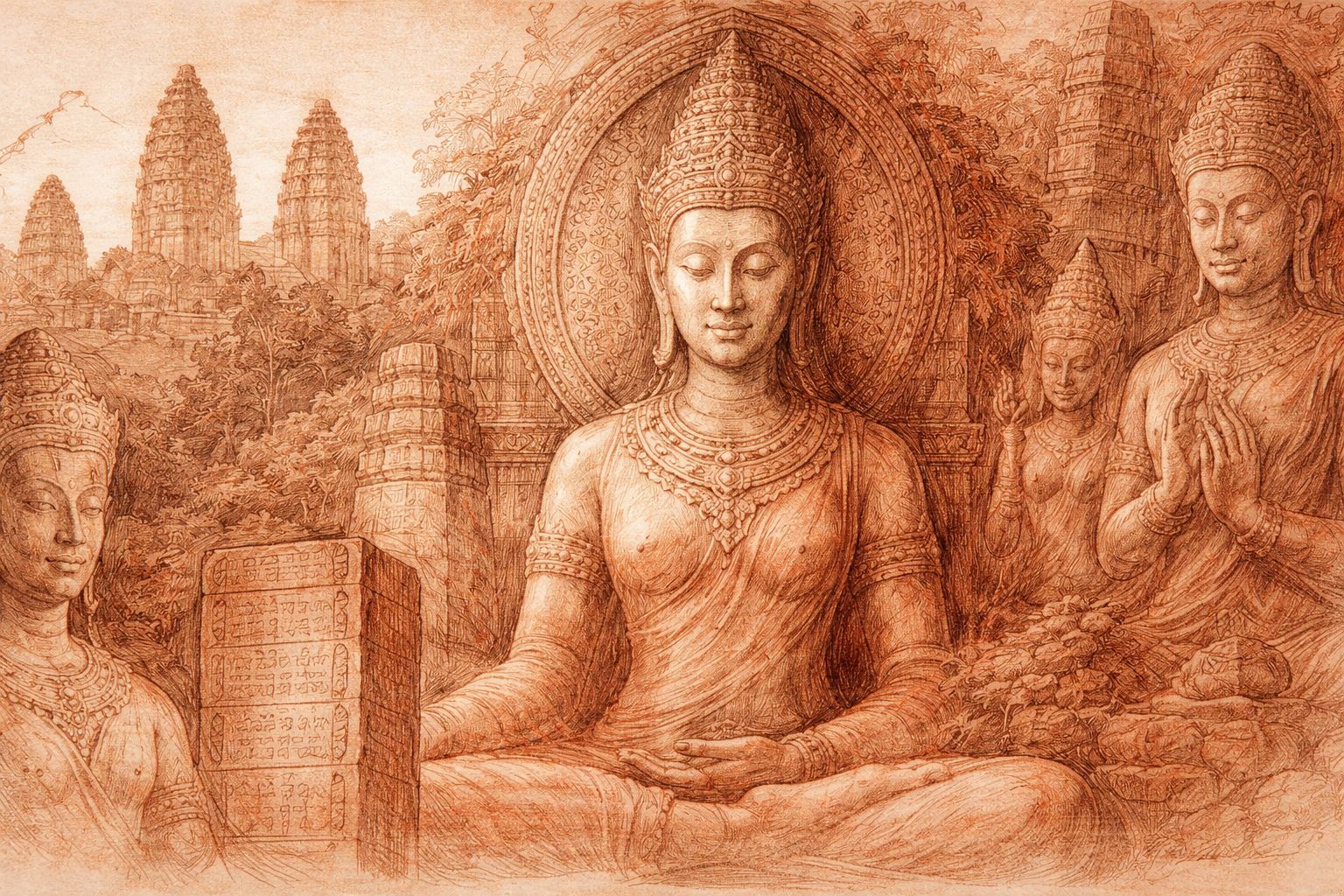

Vrah Rupa — Identity Without a Face
At Angkor, identity is not found in faces. The vrah rupa system replaced portraiture with essence, binding human souls to divine forms through ritual, name, and care. Calm, repeated statues are not anonymous—they are precise vessels, holding memory steady beyond death.
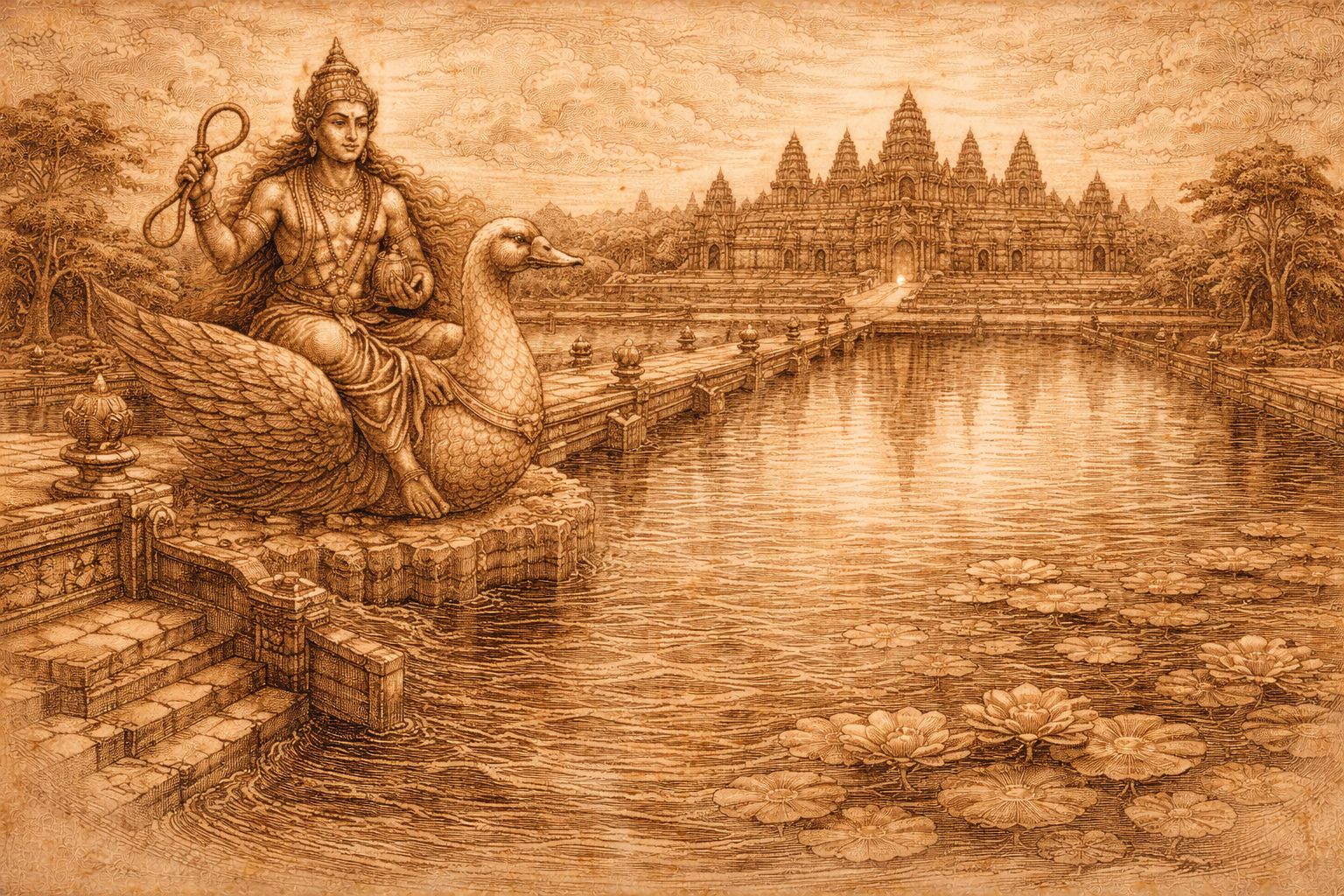

Water as Measure: Varuna and the Discipline of Flow
Angkor’s water was never about abundance. It was about restraint. This essay traces how moats, reservoirs, and reflections embody Varuna’s ethic of measured flow—where water becomes moral substance, time is held rather than spent, and hydraulic mastery reveals disciplined listening rather than control.
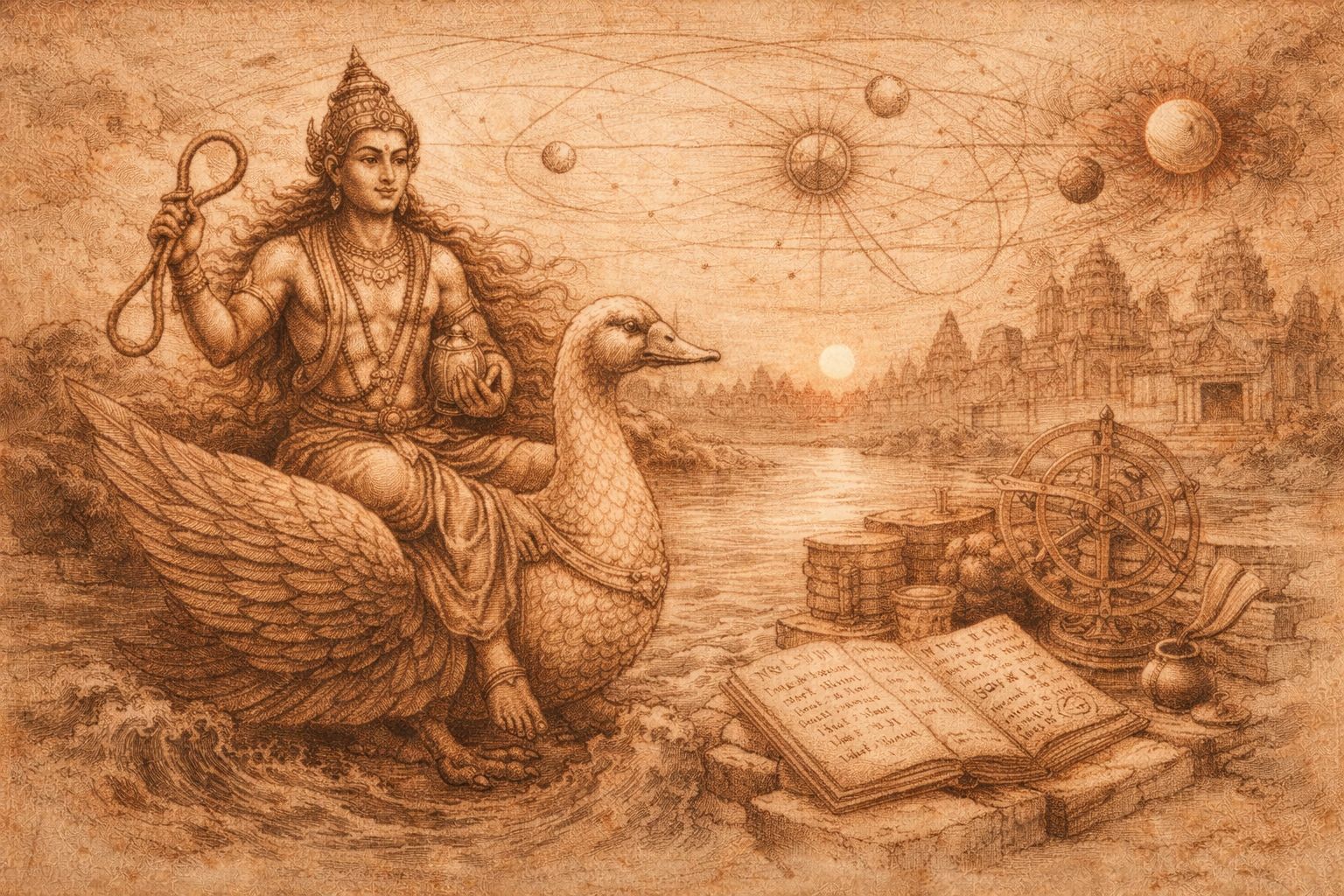

Varuna Within Planetary Order
Varuna’s role clarifies when placed within the Navagraha. Aligned with Mercury and the logic of passage, he governs flow, timing, and restraint—appearing wherever water, inscription, and consecration require careful calibration rather than mythic display.
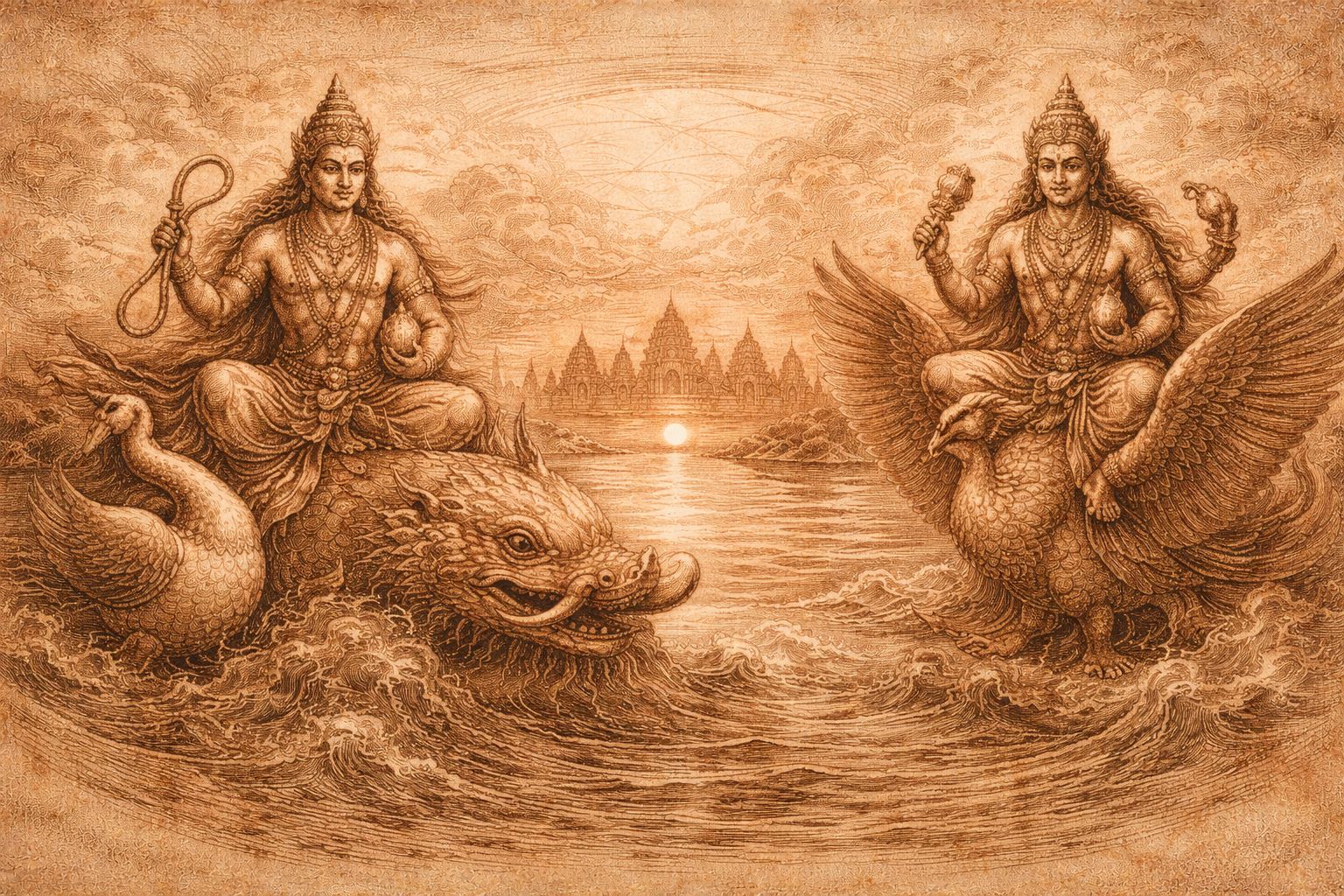

Varuna and Vishnu: The Western Guardians
This essay traces the quiet handover of the western quarter from Varuna to Vishnu—revealing how judgement became preservation, restraint became endurance, and Angkor’s westward temples embodied not rupture, but a continuous moral horizon carved into stone.
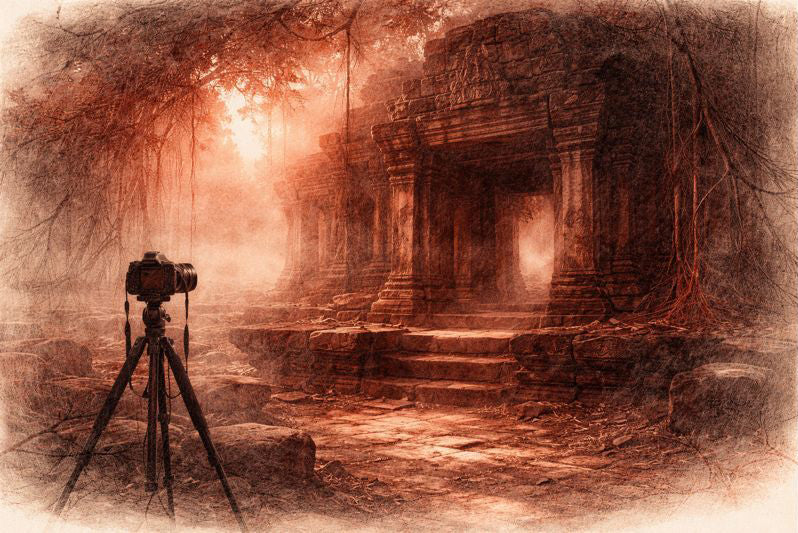

Before the Shutter Falls
Before the shutter falls, fear sharpens and doubt measures the cost of waiting. In the quiet hours before dawn, the act of not-yet-beginning becomes a discipline of attention. This essay reflects on patience, restraint, and the quiet mercy that arrives when outcome loosens its hold.
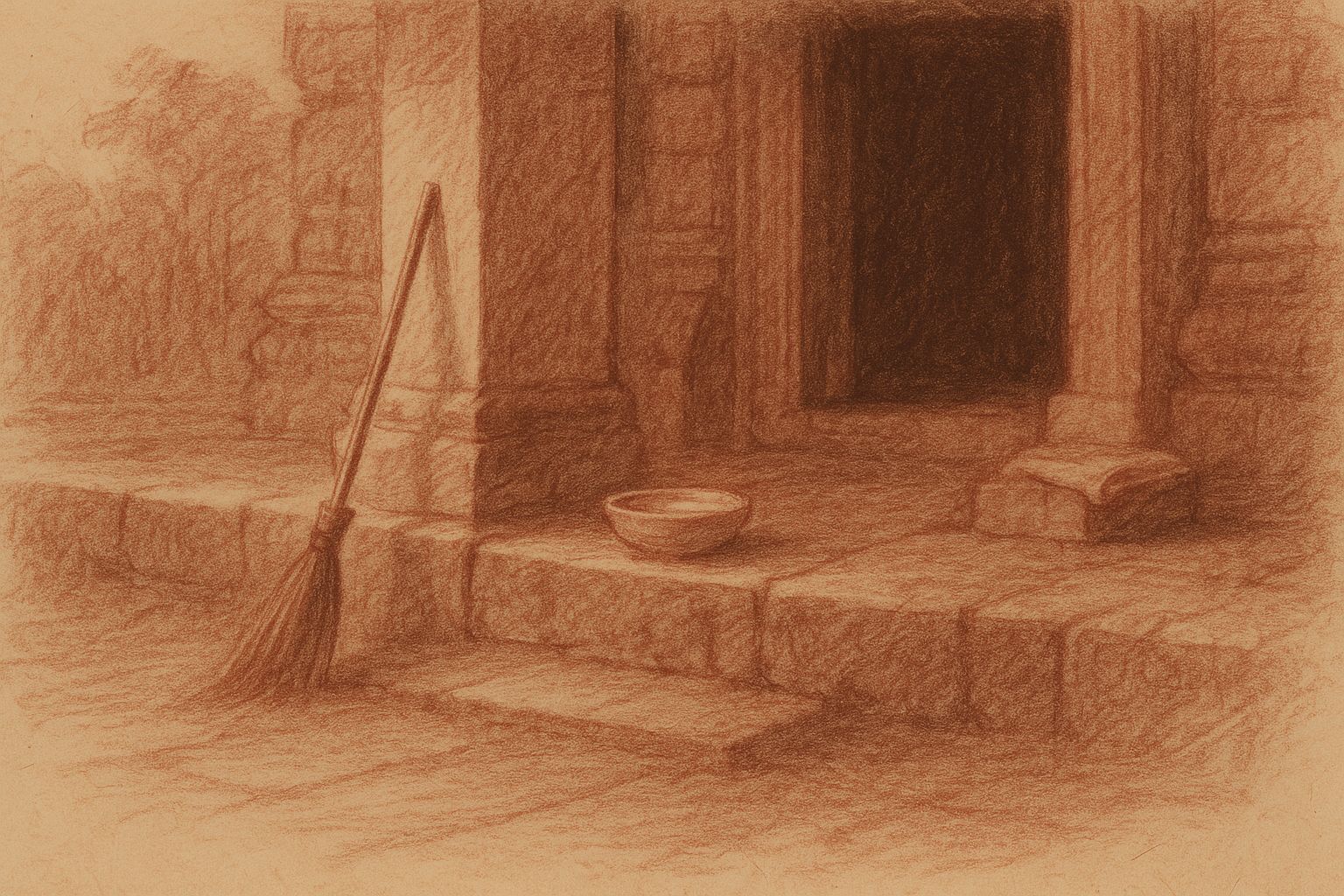

Those Who Keep the Way Open — On the Quiet Guardians of Angkor’s Thresholds
Quiet gestures shape the way into Angkor — a swept stone, a refilled bowl, a hand steadying a guardian lion. This essay reflects on the unseen custodians whose daily care keeps the thresholds open, revealing how sacredness endures not through stone alone, but through those who tend its meaning.
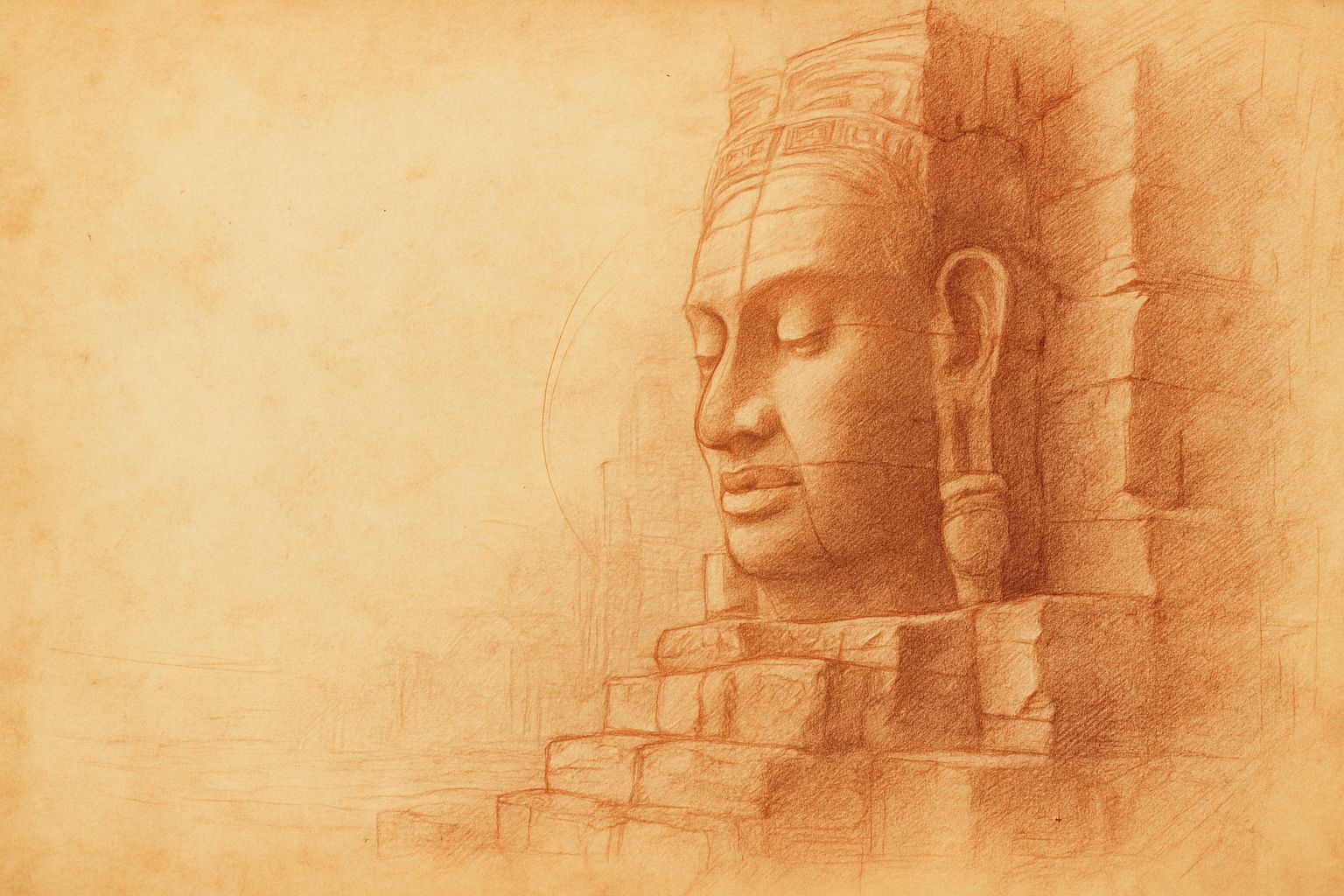

Multiplicity and Mercy — The Face Towers of Jayavarman VII
A new vision of kingship rises at the Bayon: serene faces turned to every horizon, shaping a world where authority is expressed as care. Moving through the terraces, one enters a field of steady, compassionate presence — a landscape where stone, light, and time teach through quiet attention.
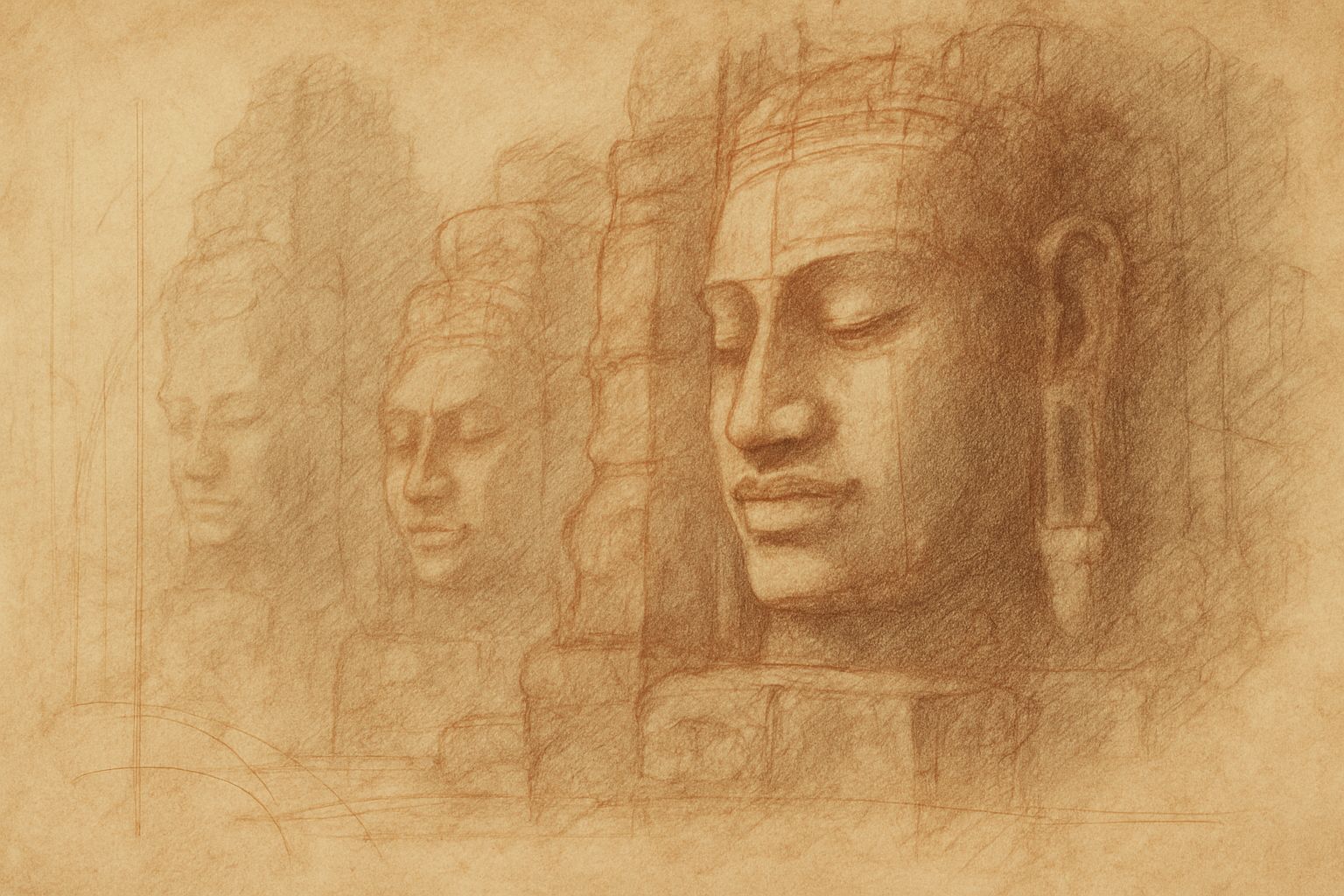

Stone That Dreams
Bayon wakes like a mind emerging from shadow. Its many faces shift with light and breath, teaching that perception—and the self—is never singular. In walking this forest of towers, the pilgrim discovers a quiet multiplicity within, held together by a calm that feels both ancient and newly understood.
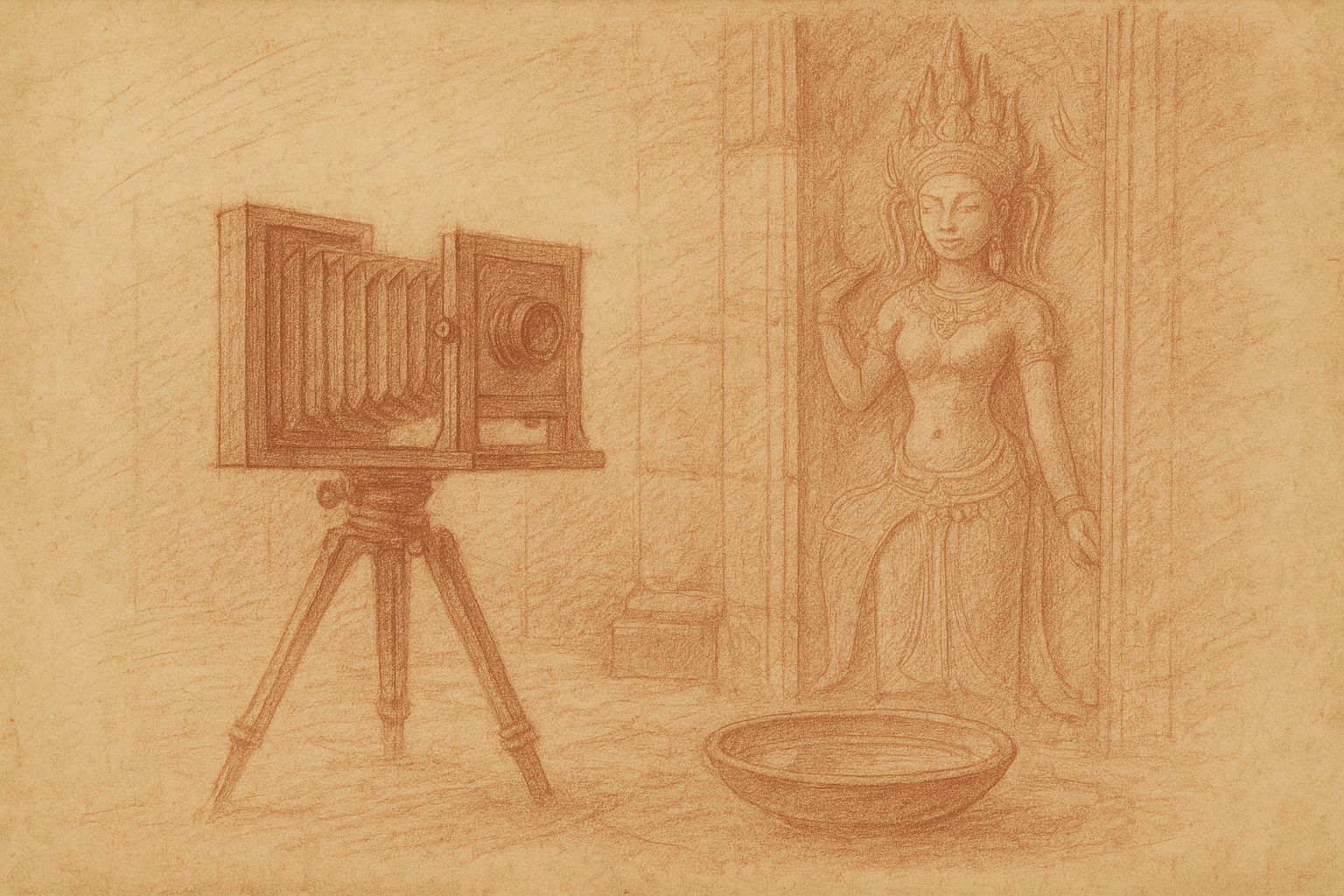

The Still Eye — Craft, Meditation, and the Listening Camera
In the darkroom, silver begins to breathe—and a morning at Bayon returns. The essay moves from tray to temple and back, tightening its centre around a single vow: consent, not capture. A butterfly’s tremor, a lintel at dawn, a print clearing in water. Craft becomes meditation; the camera, a quiet bowl for light.
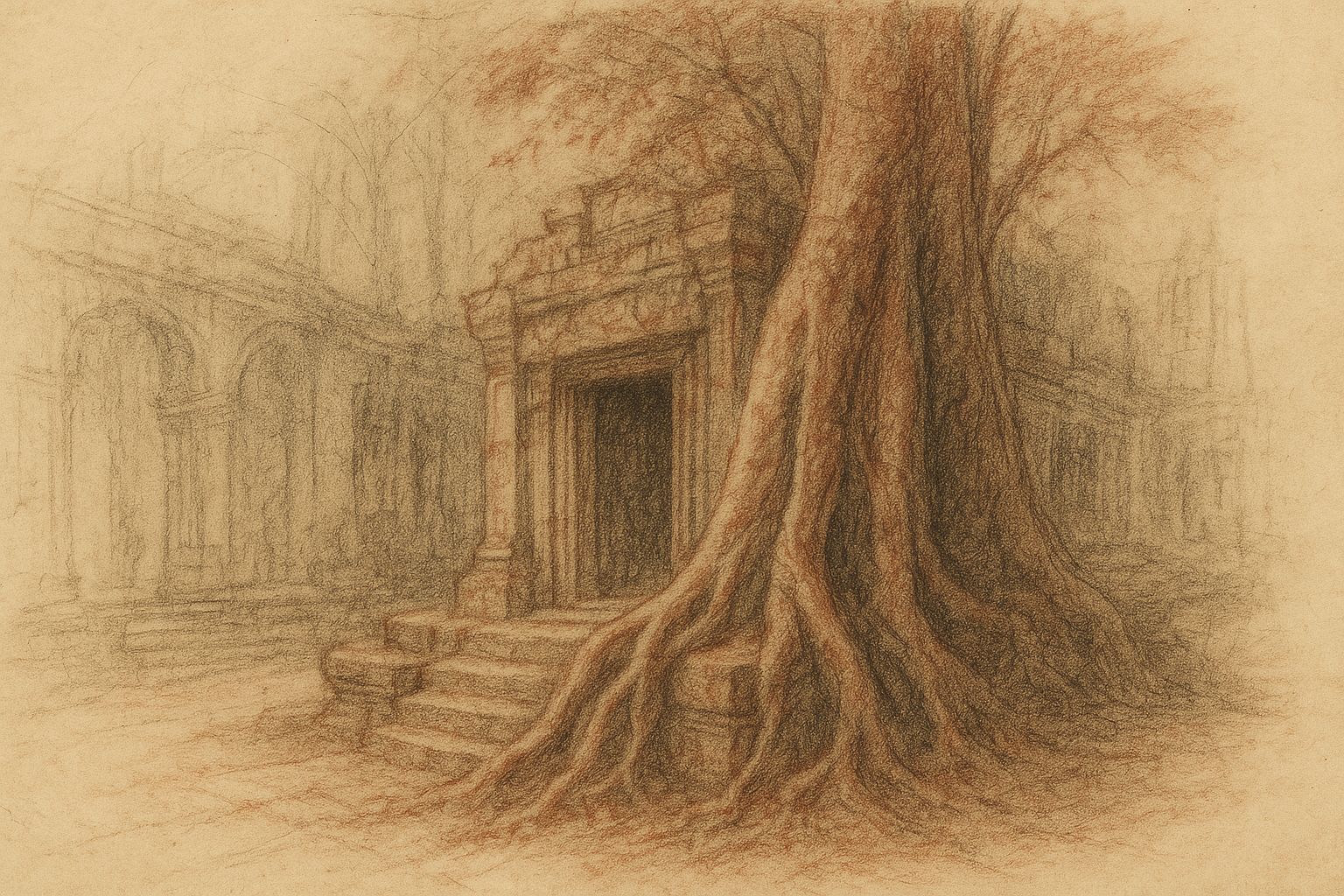

Roots That Remember — Ta Prohm and the Patience of Trees
Beneath the silk-cotton roots of Ta Prohm, stone and forest remember one another.
Here, patience is architecture — each root a gesture of mercy, each shadow a breath of memory.
Listen long enough, and the silence begins to bloom.
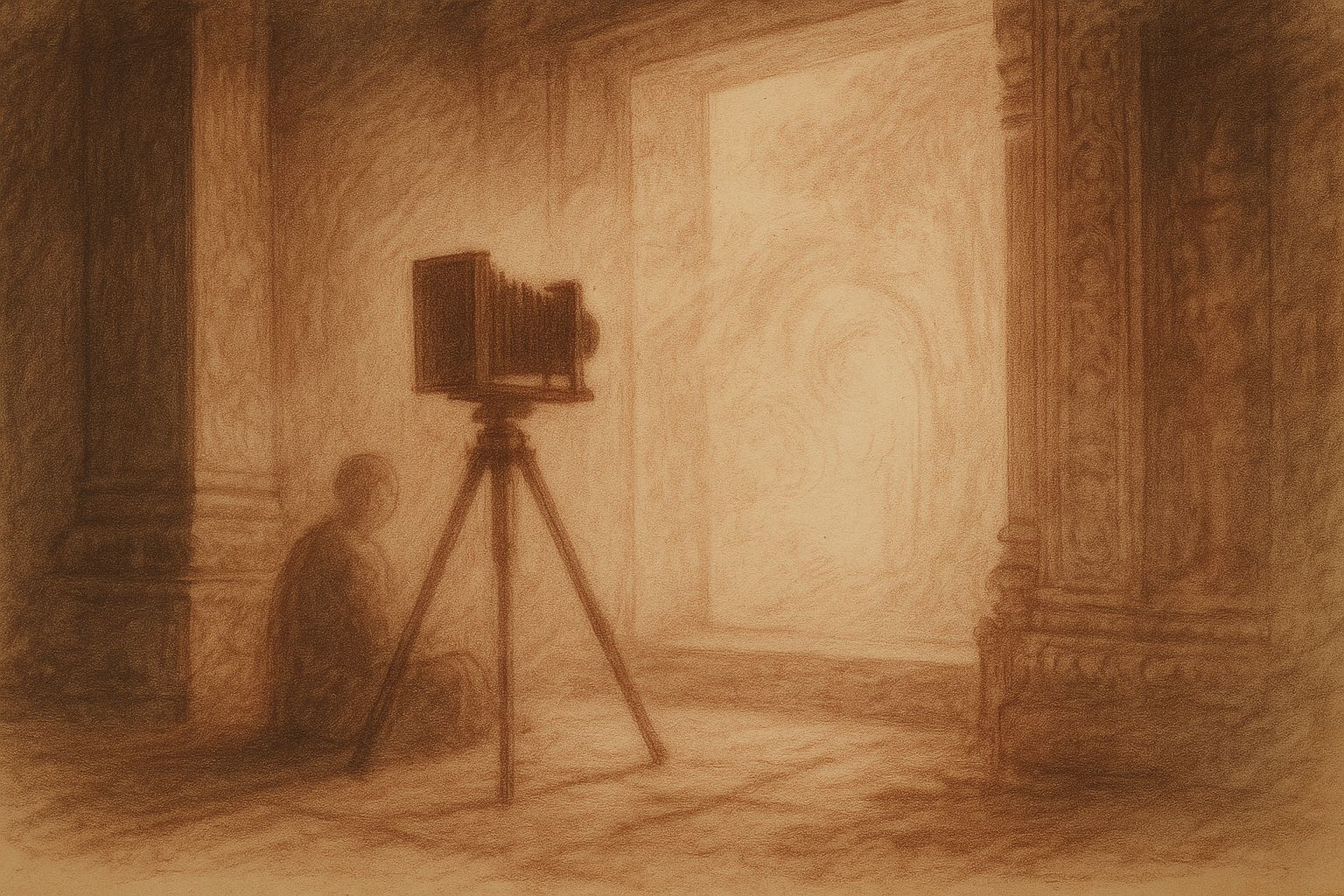

The Weight of Light
In the hush before dawn, light gathers until waiting becomes prayer.
Long exposure teaches surrender — to breathe with time, to let the unseen complete the image.
What remains on film is not possession, but trust made visible.
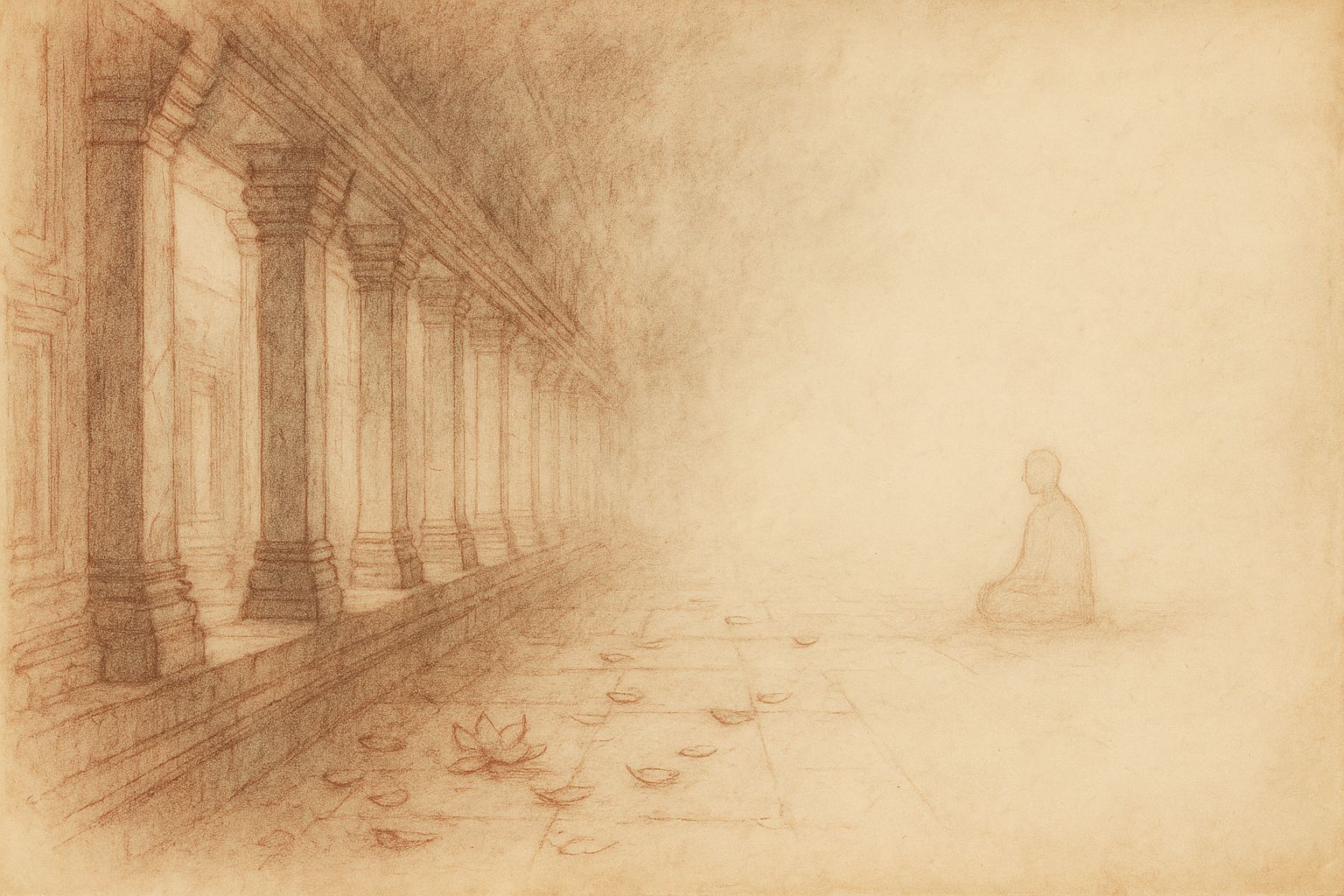

The Silence Between Temples
Between one breath and the next, the world holds its pulse in silence.
Here, between temples, devotion hums without voice—light becoming memory, memory becoming air.
Step softly into the space where sound has already bowed,
and feel the sacred linger in what remains unspoken.
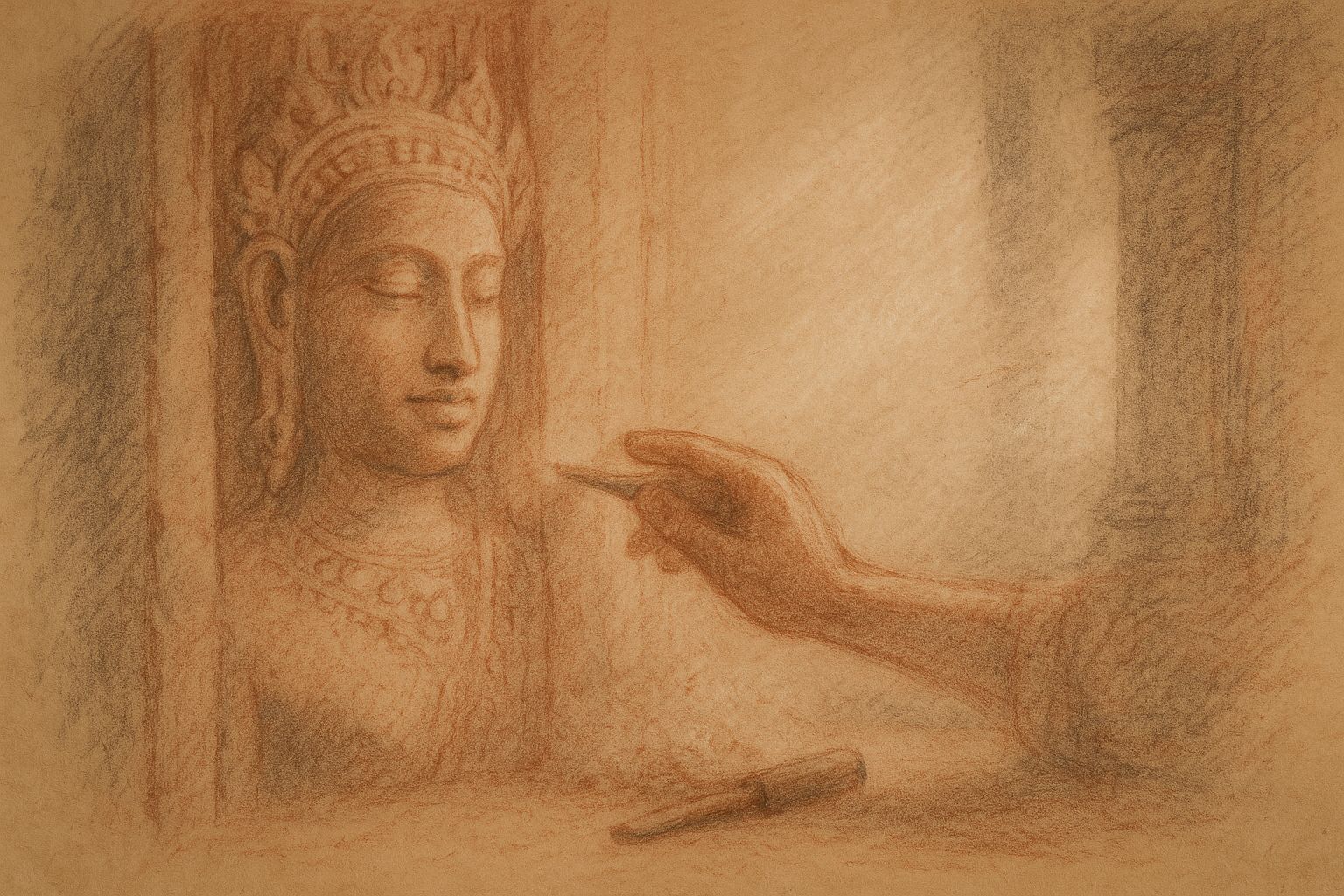

Hands of the Sculptor — The Craft as Meditation
In the hush of the galleries, the sculptor listens rather than strikes.
Each breath, each measured blow, opens silence a little further.
Unfinished reliefs reveal the moment when mastery becomes meditation—
when patience itself is carved into being,
and the dust that falls at a mason’s feet becomes the residue of prayer.
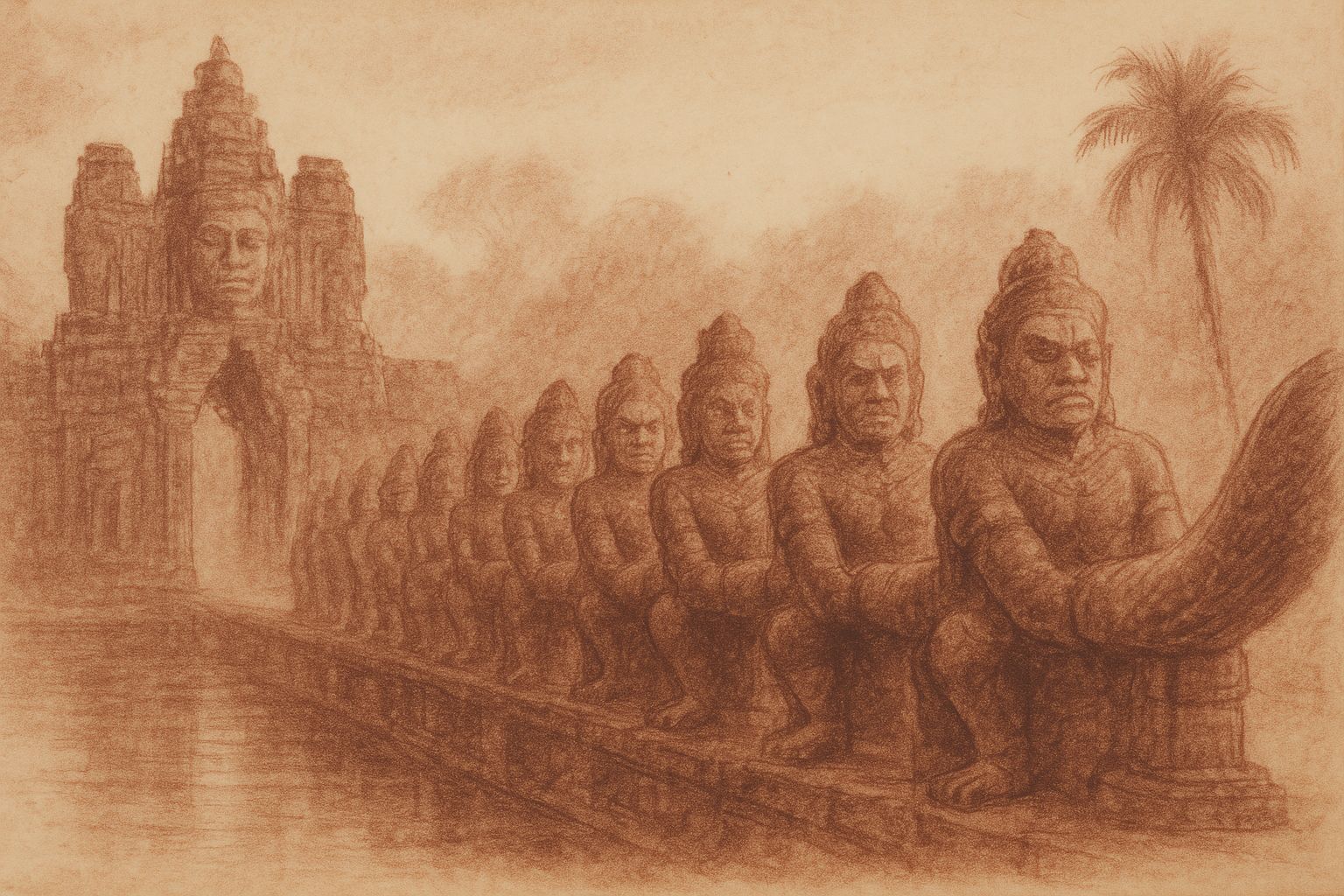

The Asura Within
At the gates of Angkor Thom, gods and demons share a single serpent.
Across this bridge of struggle the pilgrim learns that the asura is not evil but unfinished — the restless force within each of us still grasping for light.
To cross the naga is to balance passion with compassion, struggle with stillness, shadow with dawn.
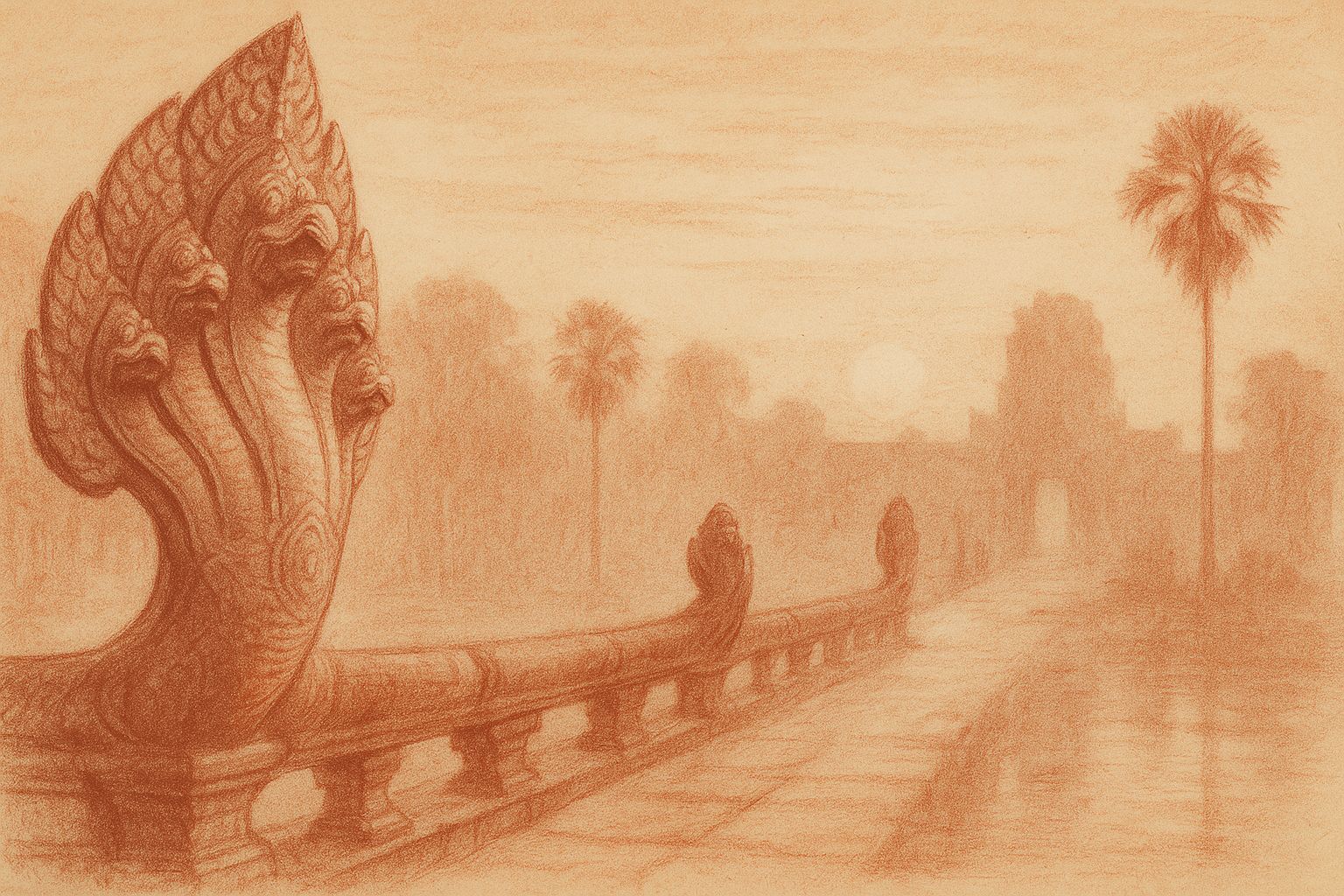

Garuda and the Serpent · Flight and Surrender
Between Garuda’s wings and the Nāga’s coils, Angkor breathes its oldest truth: flight and surrender are one motion. In the carvings where sky and water entwine, the pilgrim learns that freedom depends upon gravity, and that stillness itself is a kind of flight.
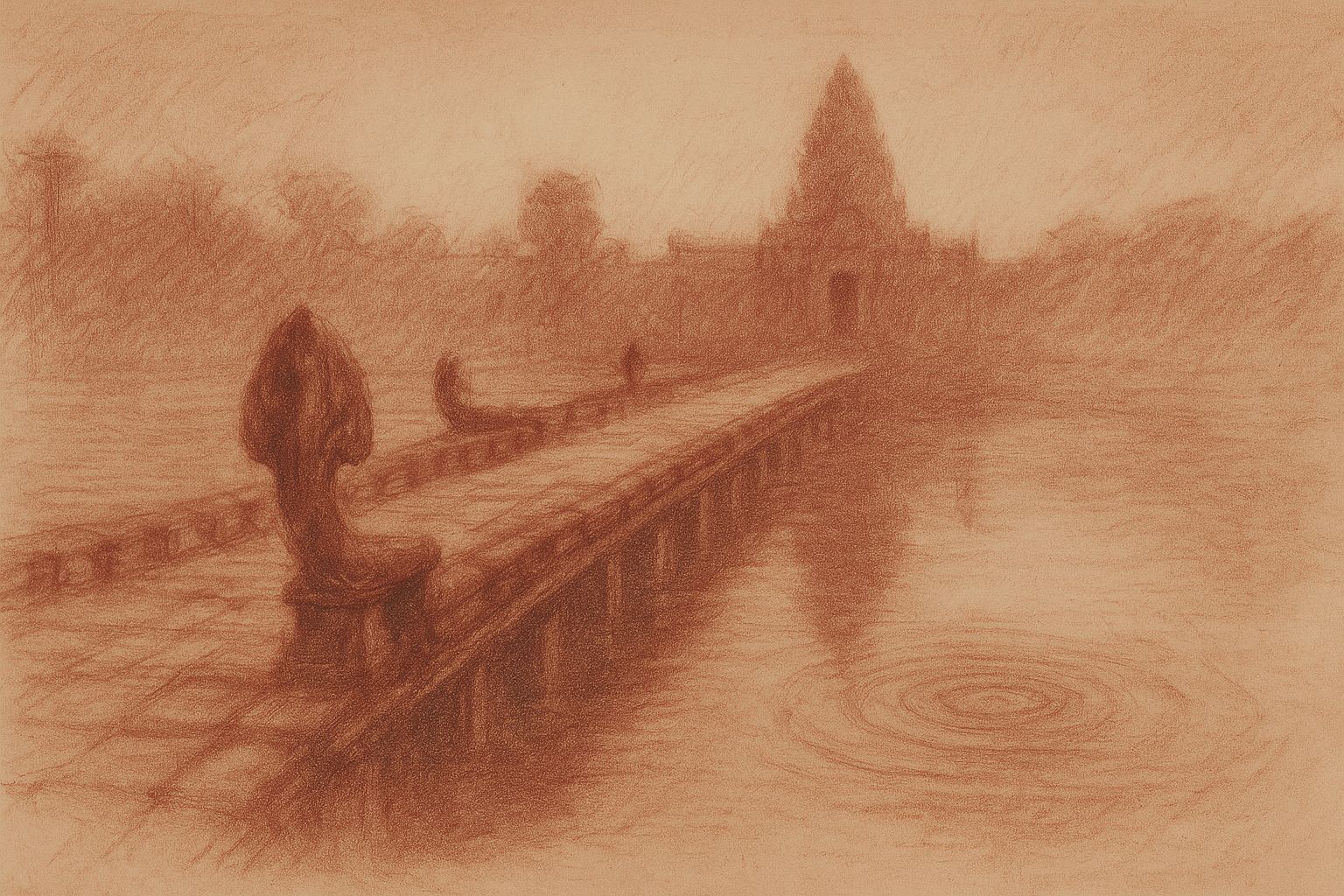

The Measure of Silence: A Pilgrim’s Reflection on Kingship at Angkor
Through the ruins of Angkor, a curatorial pilgrim traces the vanished geometry of divine rule. In the silence of the stones, kingship reveals itself as both devotion and decay—an empire of alignment turned elegy, where even ruin retains the measure of sacred order.
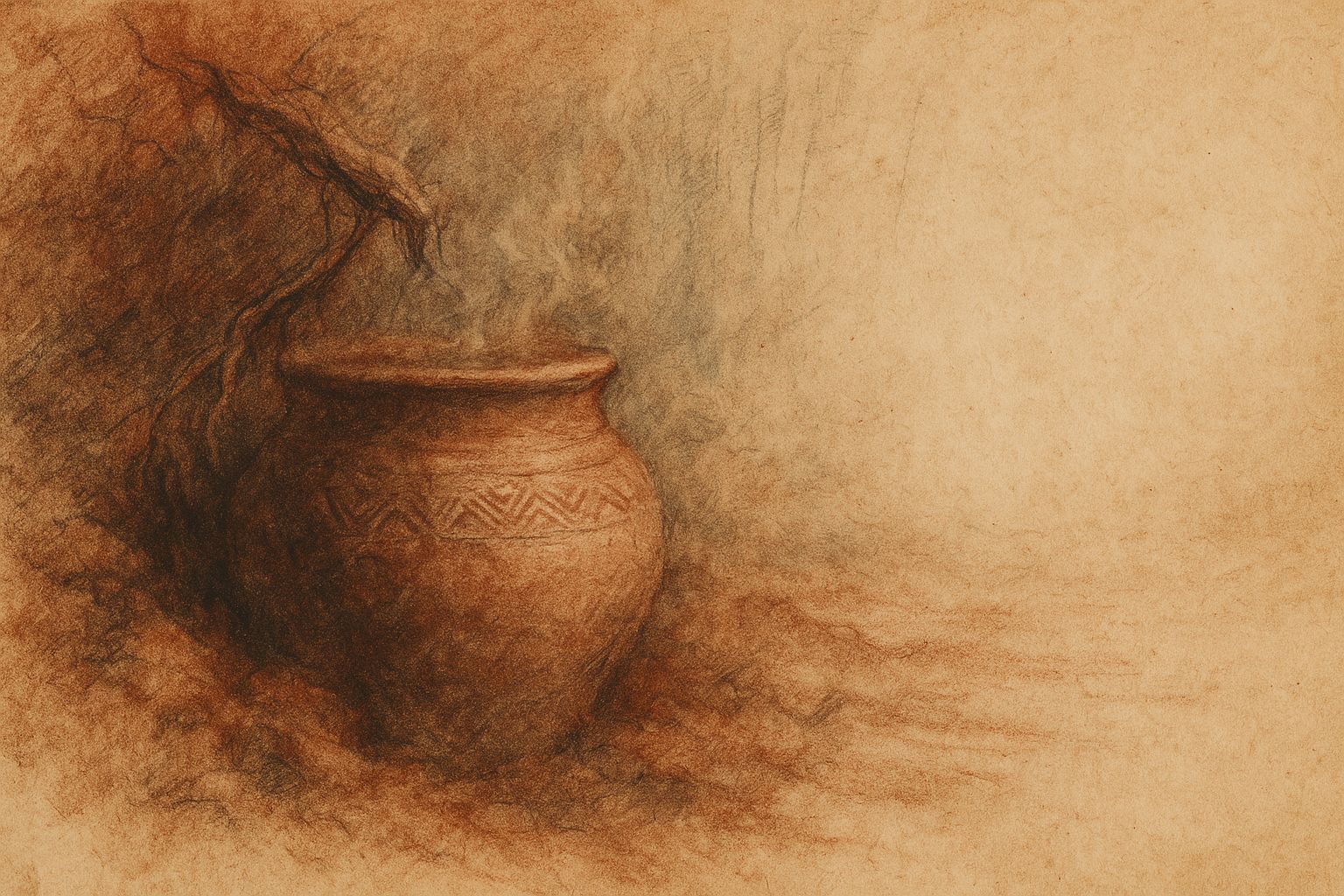

The Pilgrim’s Guide to Cambodia’s Beginnings
In the caves of Laang Spean, in the myth of a dragon princess, in the echoes of Funan and Chenla — Cambodia’s beginnings endure. This essay walks with ancestors through soil, stone, and water, tracing how the first Cambodians shaped rice, ritual, and memory into a living continuity that still breathes today.