
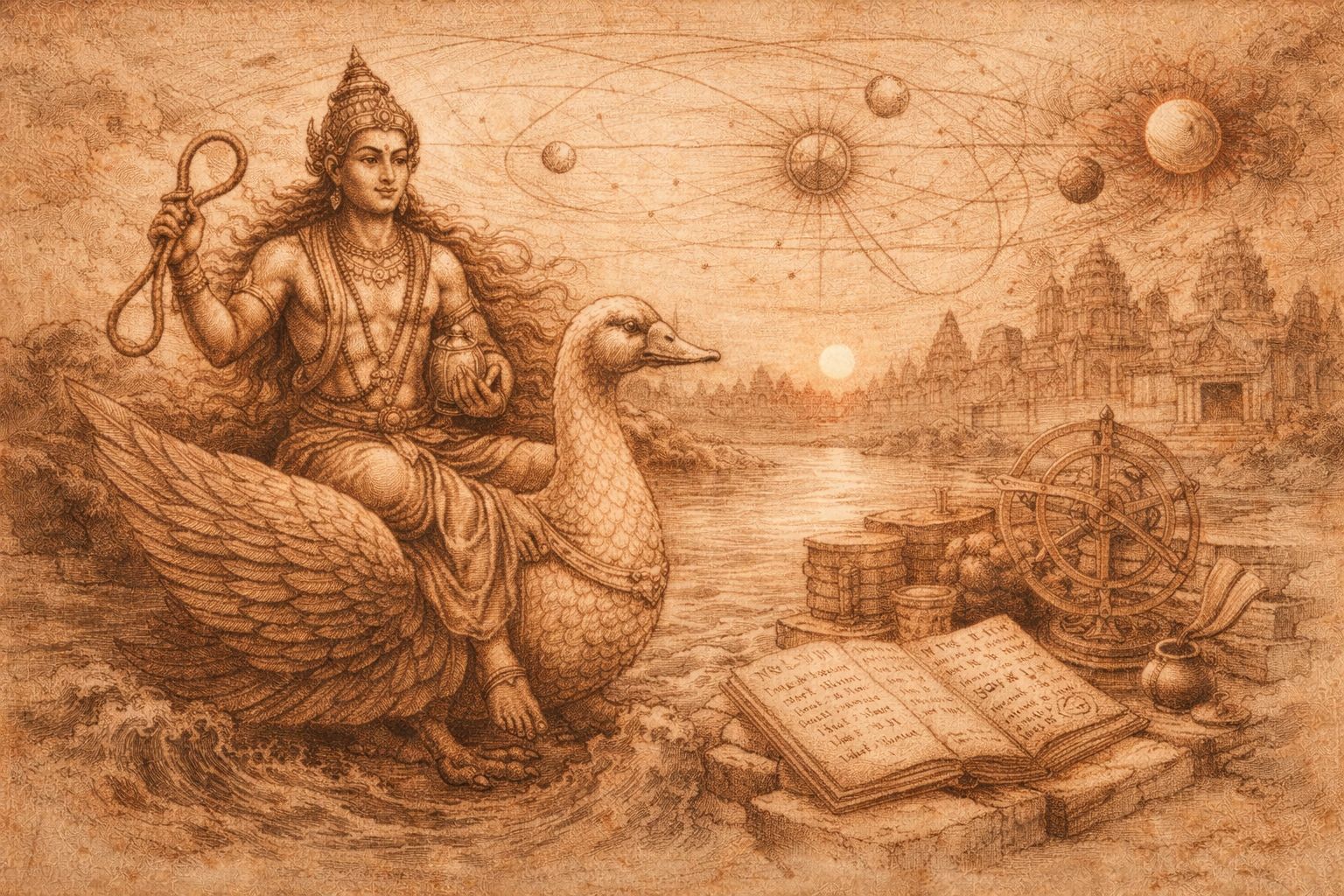

Varuna Within Planetary Order
Varuna is easiest to misunderstand when removed from time.
Read only through later mythology, he appears to narrow: a water god, a moral enforcer, a guardian displaced by more charismatic deities. Read within the Navagraha, his function sharpens. He becomes legible not as an isolated figure, but as part of a working system—one concerned with flow, measurement, and passage.
In Khmer cosmology, Varuna is aligned with Mercury and with Wednesday: the planet and day associated with movement between states. Mercury governs rivers, bridges, trade, writing, calculation, and communication. It is the planet of connection rather than dominance, of transmission rather than command. This association explains much that otherwise appears secondary or contradictory in Varuna’s character.
Water, in this context, is not elemental abundance. It is circulation. It moves through channels. It links reservoirs. It must be measured, released, restrained. Varuna’s authority is exercised not through force, but through calibration. His noose binds not to punish, but to prevent drift—ethical, temporal, or material.
This planetary placement also clarifies Varuna’s frequent appearance in architectural contexts associated with record, calculation, and timing. Navagraha slabs positioned in temple libraries are not decorative. They mark the point where inscription meets sky—where consecration dates are fixed, where cosmic order is consulted before stone is raised. Varuna’s presence here signals that water, time, and law are inseparable.
Mercury does not rule beginnings or endings. It governs transitions. Varuna’s guardianship of the West, inherited later by Vishnu, belongs to this same logic. The West is the quarter of return, accounting, and closure. What has flowed outward must be gathered. What has been initiated must be reconciled.
Seen this way, Varuna is not diminished by his placement within the Navagraha. He is specified. His role is to ensure that time does not fracture under its own movement—that passage remains intelligible, that flow remains accountable. He stands wherever the world must be timed rather than celebrated.
This is why Varuna persists across the Journal: in water systems, in boundary-making, in inscriptions that name exact moments. He is present wherever time is handled carefully—where the cosmos is not invoked symbolically, but consulted operationally.
To recognise Varuna within planetary order is to understand that Angkor did not treat time as abstraction. It treated it as infrastructure.
And Varuna, quietly, was one of its engineers.
—
Receive the next work
Subscribe free to receive new work from the Lucas Varro Library by email.
More from the Library

Houses of Wood, Light, and Smoke
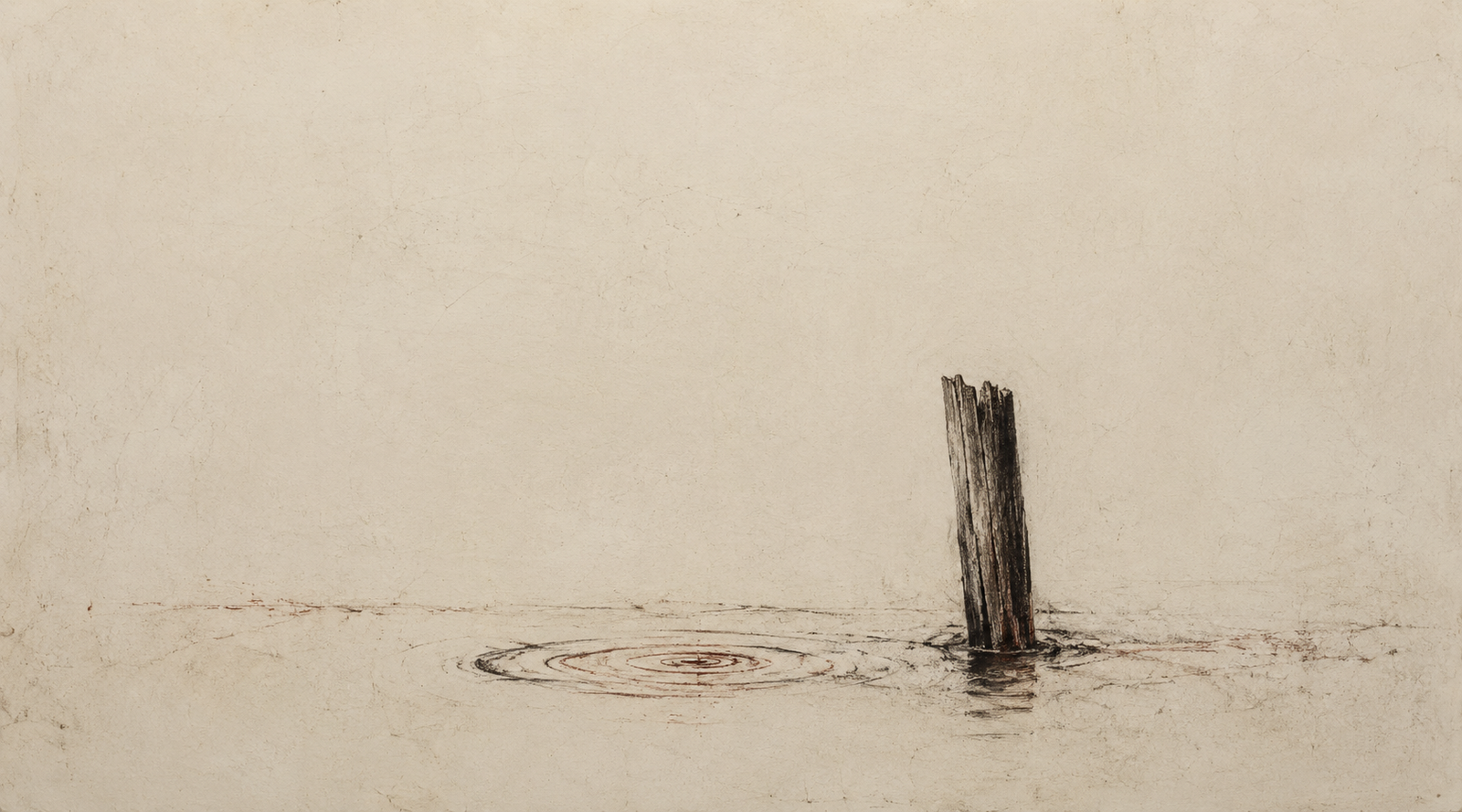
Some of Angkor’s most intimate ruins do not rise above the ground at all. They are postholes, low mounds, hearths and ponds: durable traces of a domestic city built largely from things that decay. To restore that city is to see Angkor not only as stone, but as wood, smoke, water, repair, and people living within calling distance.

What Stone Brings Forth
I had mistaken a gift for something being expelled.
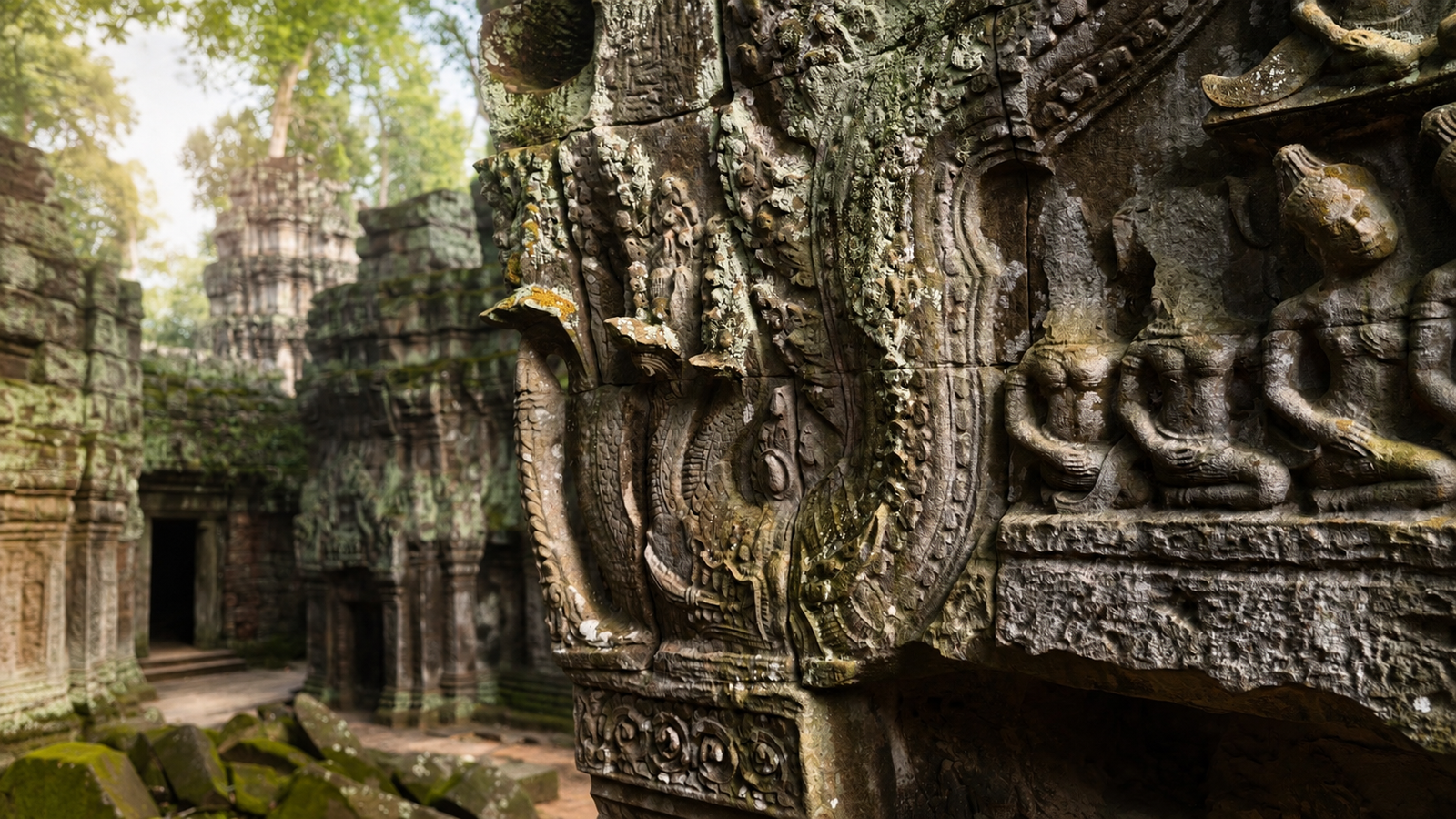
Beneath the nāga's mouth, a stone garland descended bead by bead. Nearby, a makara opened its jaws and another form emerged. Looking closer, the whole temple began to change: serpent became ornament, ornament became architecture, architecture became foliage.
The forest did not introduce this language.
It answered it.


The Eighth Daughter
Seven daughters have already been taken by Yamata-no-Orochi when Susanoo reaches the River Hi. Only Kushinada-hime remains. The Eighth Daughter retells the Kojiki episode through a family’s waiting, a girl transformed into a comb, and the patient preparation for the serpent’s return.