
The Library gathers the written works of Lucas Varro — journals of the temples, mythic retellings, contemplative essays, poems, and volumes shaped by shadow, silence, and wonder. Here, words stand beside images as offerings: field notes from Angkor, meditations on sacred stone, old stories rekindled, and reflections carried beyond the visible world.
Within these shelves you will find many rooms: Angkor journals, myth and legend, apsara meditations, contemplative essays, poems, children’s mythic wonder, literary retellings, and quieter devotions of the page. Wander chronologically, enter by theme, or pass through one of the dedicated publication houses now gathered within the wider Library.
For those who wish to follow these paths further, several of these writings continue on Substack and in dedicated archive blogs: The Lantern Chronicles , where myth, legend, contemplative essays, poetry, and other imaginative works are carried onward; The House of Cadmus , where Greek myth and tragedy are reopened through inheritance, violence, fate, and recurrence; The Mytharium , where myth, Tolkien, fairy stories, and old literature are read and retold with seriousness; The Alexander Series , where A. M. Sharp retells Greek myths for children who want to be trusted by stories; and The Hospitable Dark , where A. M. Sharp offers literary myth retellings shaped by darkness, shelter, endurance, and return.
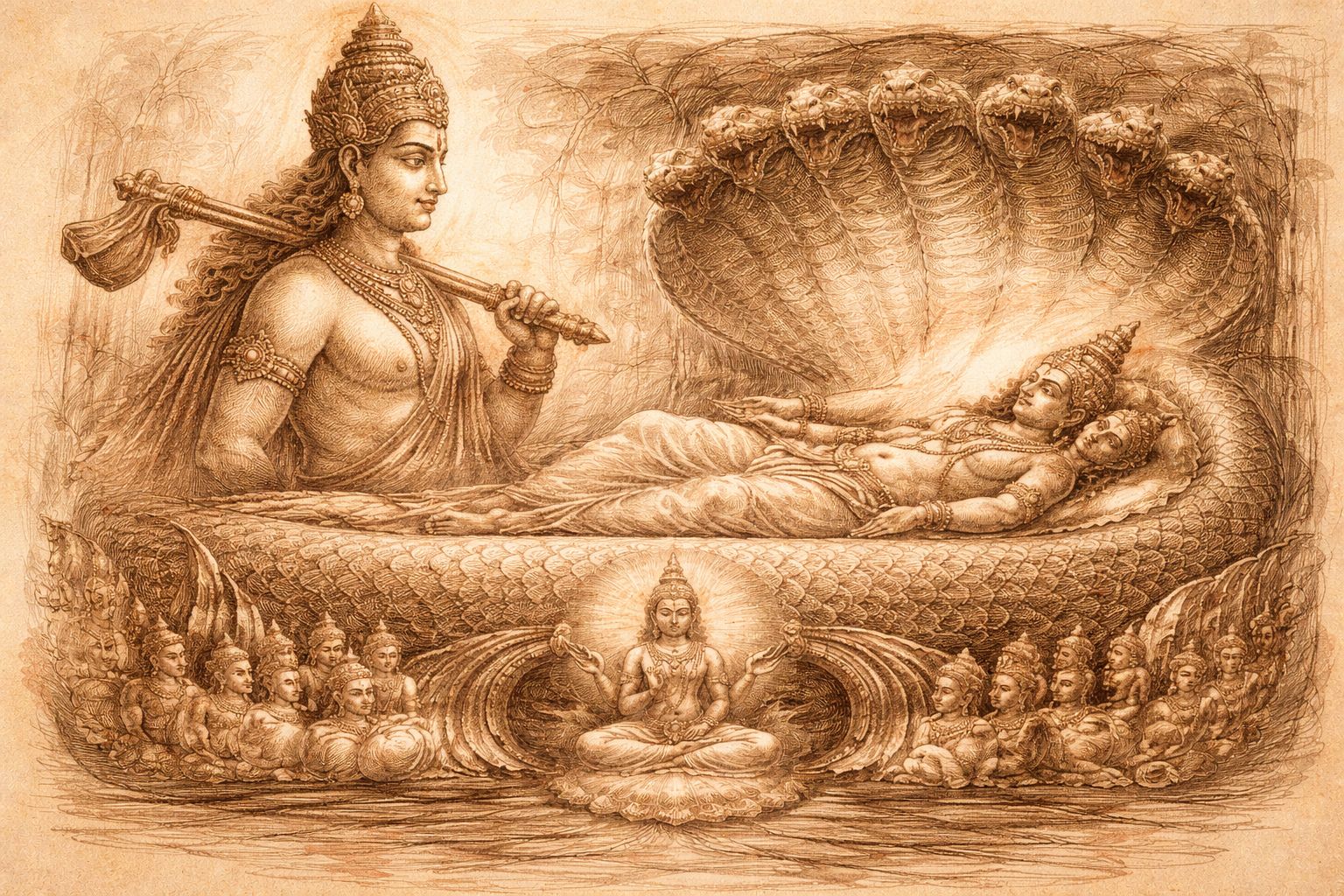

Balarama and the Serpent Beneath the God
In Angkorian reliefs, Balarama and Anantasayin are not separate figures but two states of the same force: action above, support below. What walks beside Krishna is what lies beneath Vishnu—the hidden weight that allows the cosmos, and the temple, to endure.
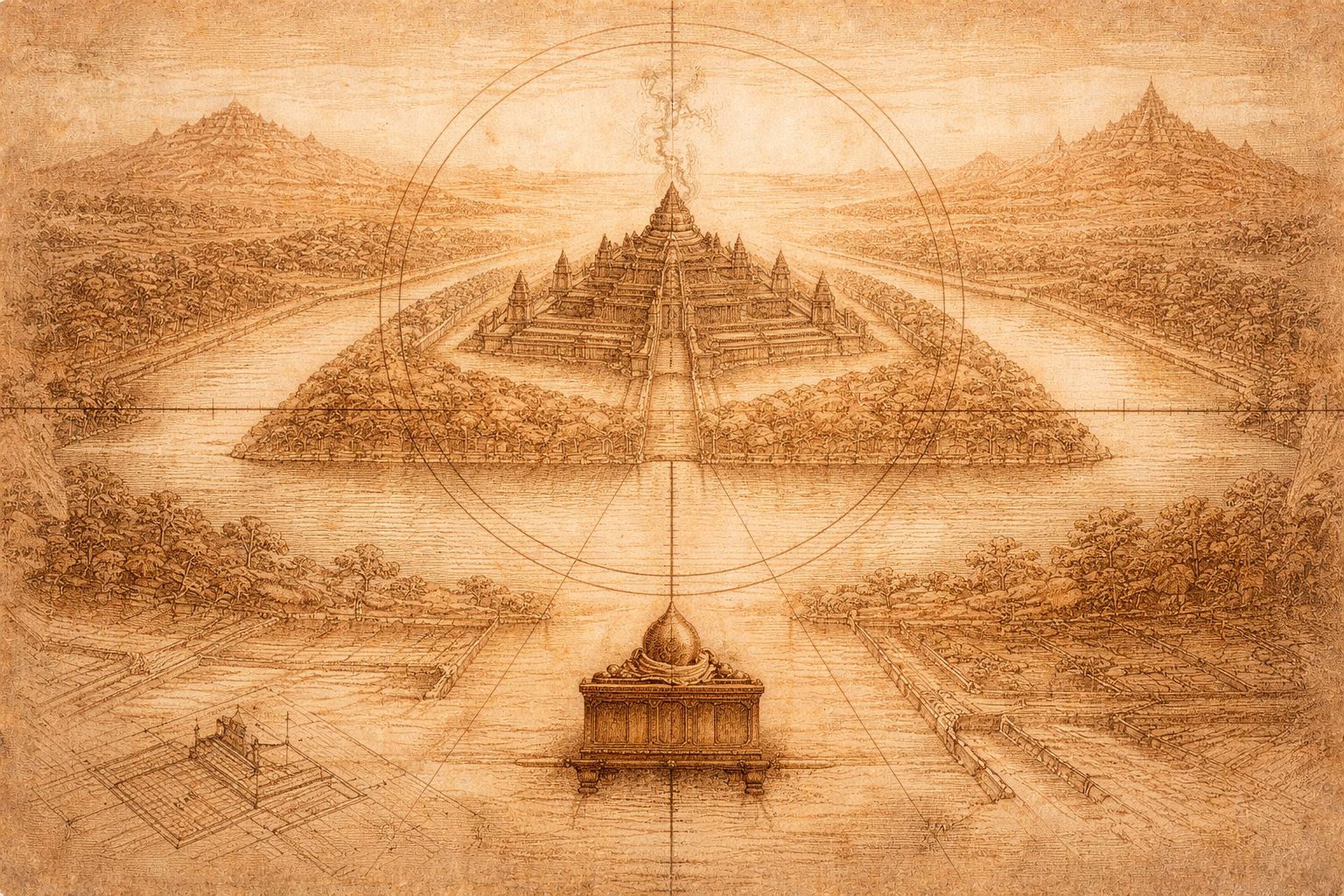

Axis, Mountain, Water — The Architecture That Held the World
At Angkor, sovereignty was built as a system. The Devarāja fixed the unseen centre, the temple-mountain raised the world’s axis in stone, and the baray extended that order into water and rice. Power endured because it was aligned—repeated, measured, and made legible to the land itself.
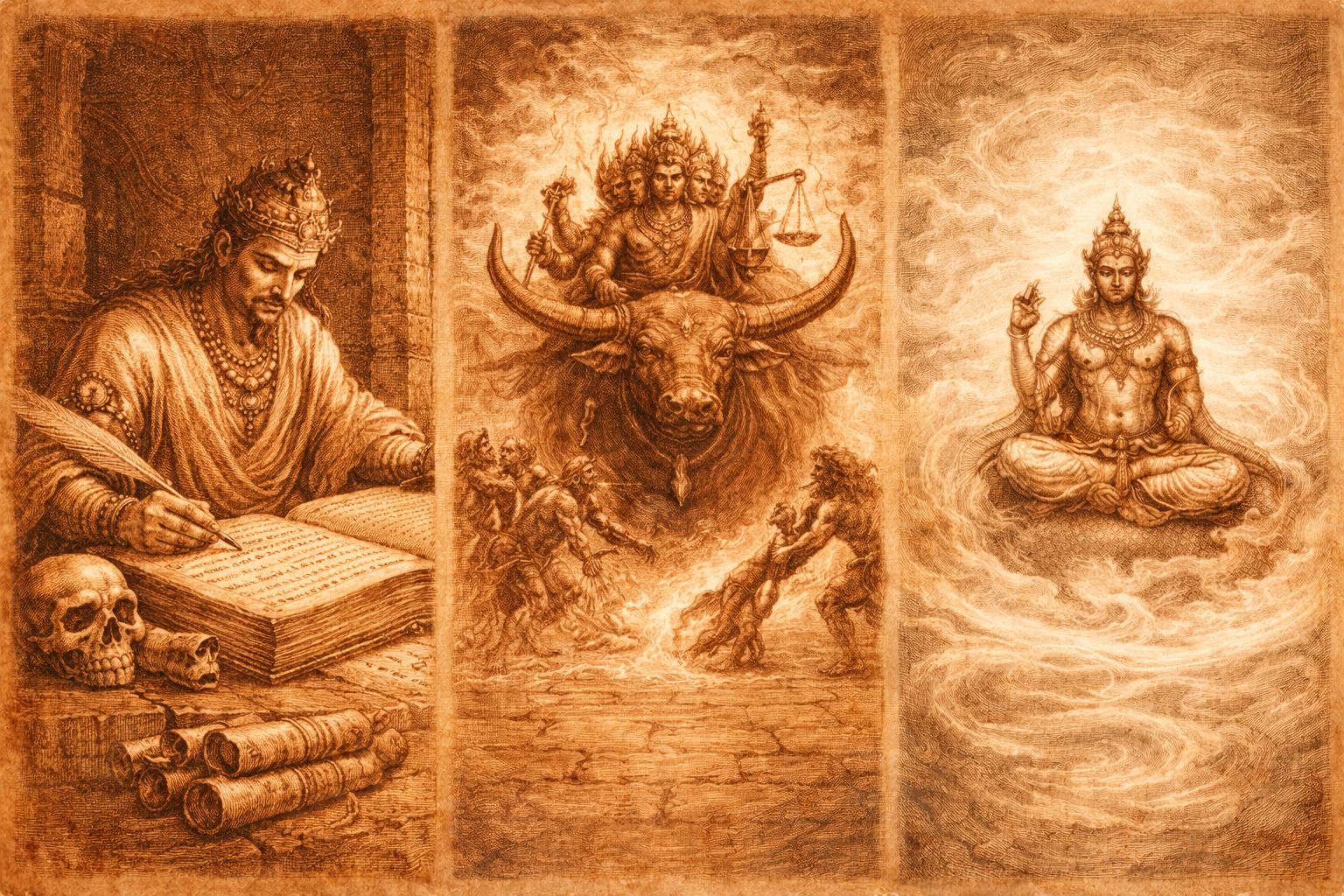

The Ledger, the Verdict, and the Breath
Every life is recorded.
Every record is read.
Every judgement ends in breath.
From Citragupta’s ledger, through Yama’s verdict, to the silent release of wind, this meditation traces the karmic arc to its final threshold—where consequence dissolves into stillness, and nothing remains to be held.
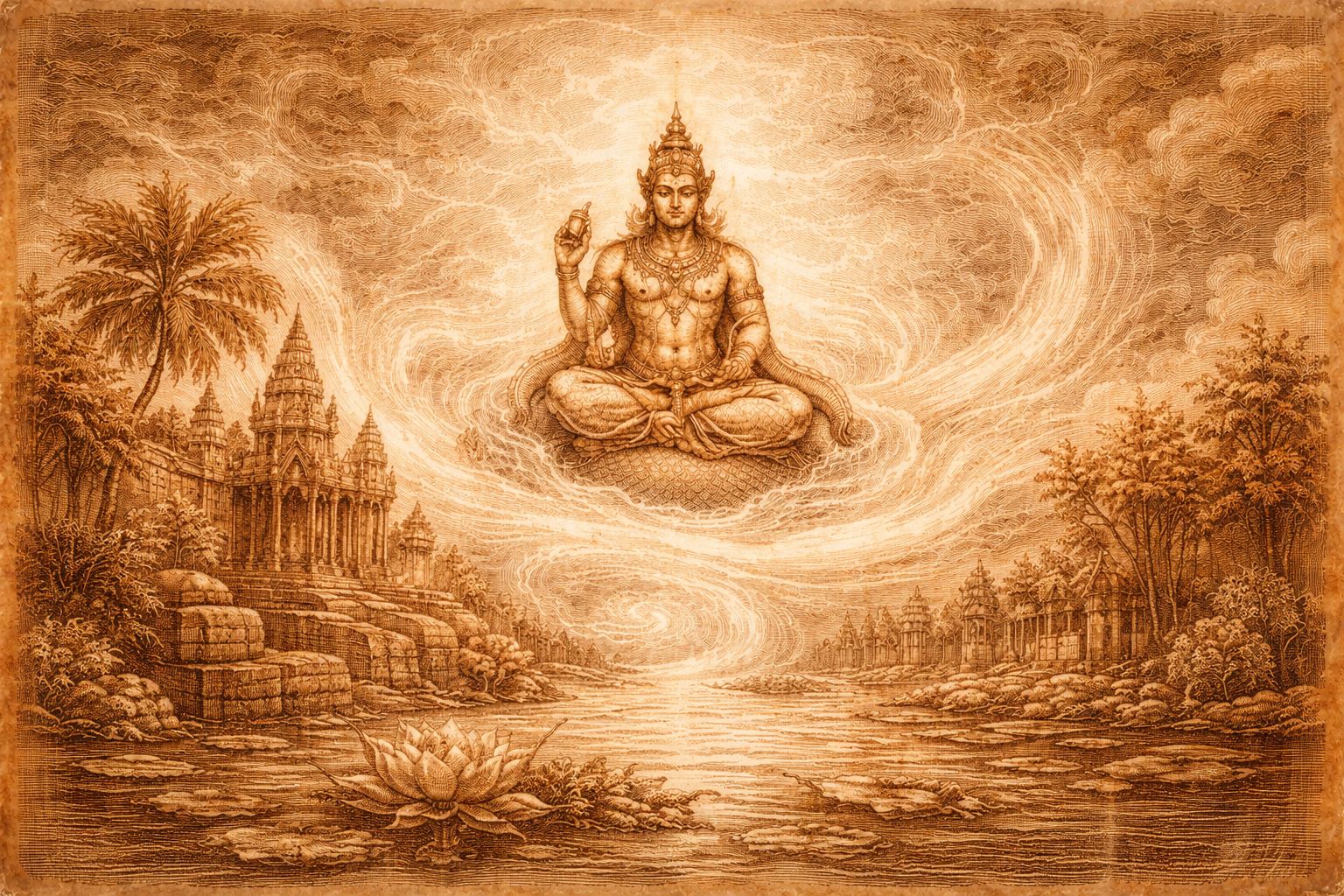

The Fifth Silence — Wind, Breath, Brahman
When fire, water, storm, and judgement withdraw, breath remains. Wind receives them all without resistance. In Khmer and Vedic thought, this silent element—Brahman—is not an ending, but the place of return, where every force is concealed until it is ready to breathe again.
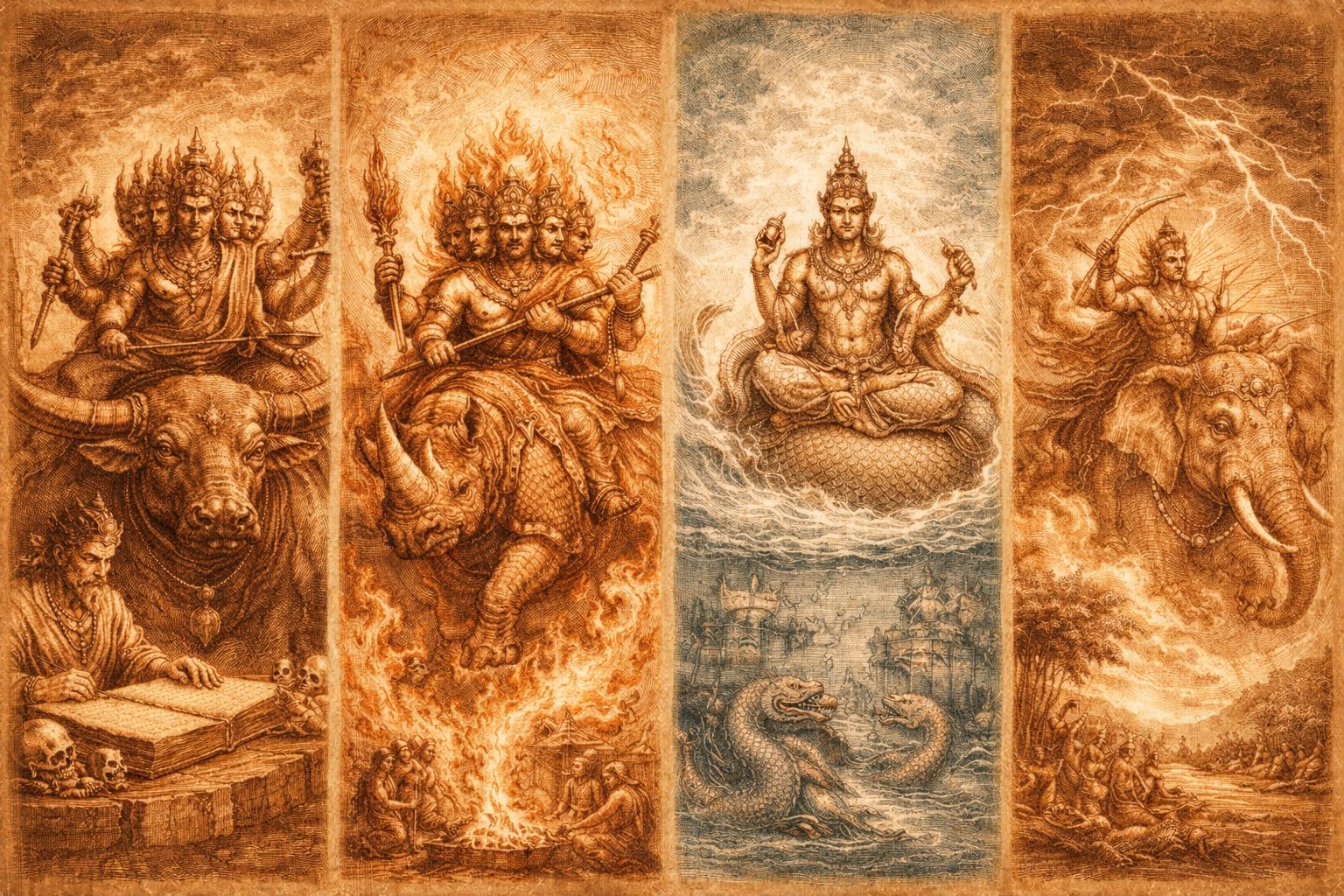

The Circle of Return — Yama, Agni, Varuna, Indra
At Angkor, death is not an ending but a withdrawal. Storm becomes rain, rain becomes fire, fire becomes breath, and breath conceals all things. Yama keeps the ledger; the elements keep their order. Nothing is lost. Everything returns, correctly placed.
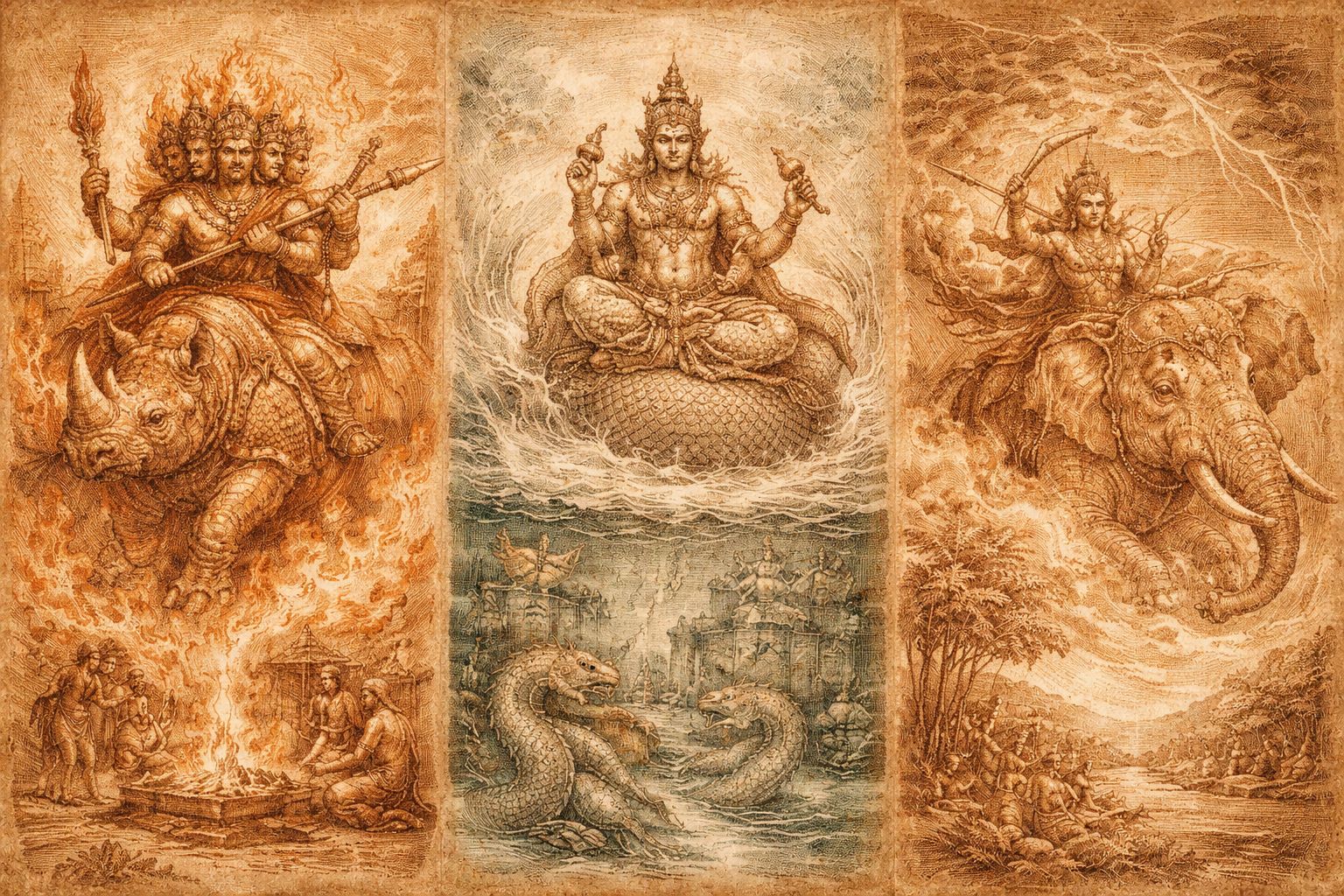

The Measured Powers — Agni, Varuna, and Indra
Angkor rests on a triad of restraint. Fire that transforms without excess. Water that binds without drowning. Storm that releases without ruin. Agni, Varuna, and Indra do not contend—they regulate. Between them, heat is housed, rain is timed, and the world is allowed to endure.
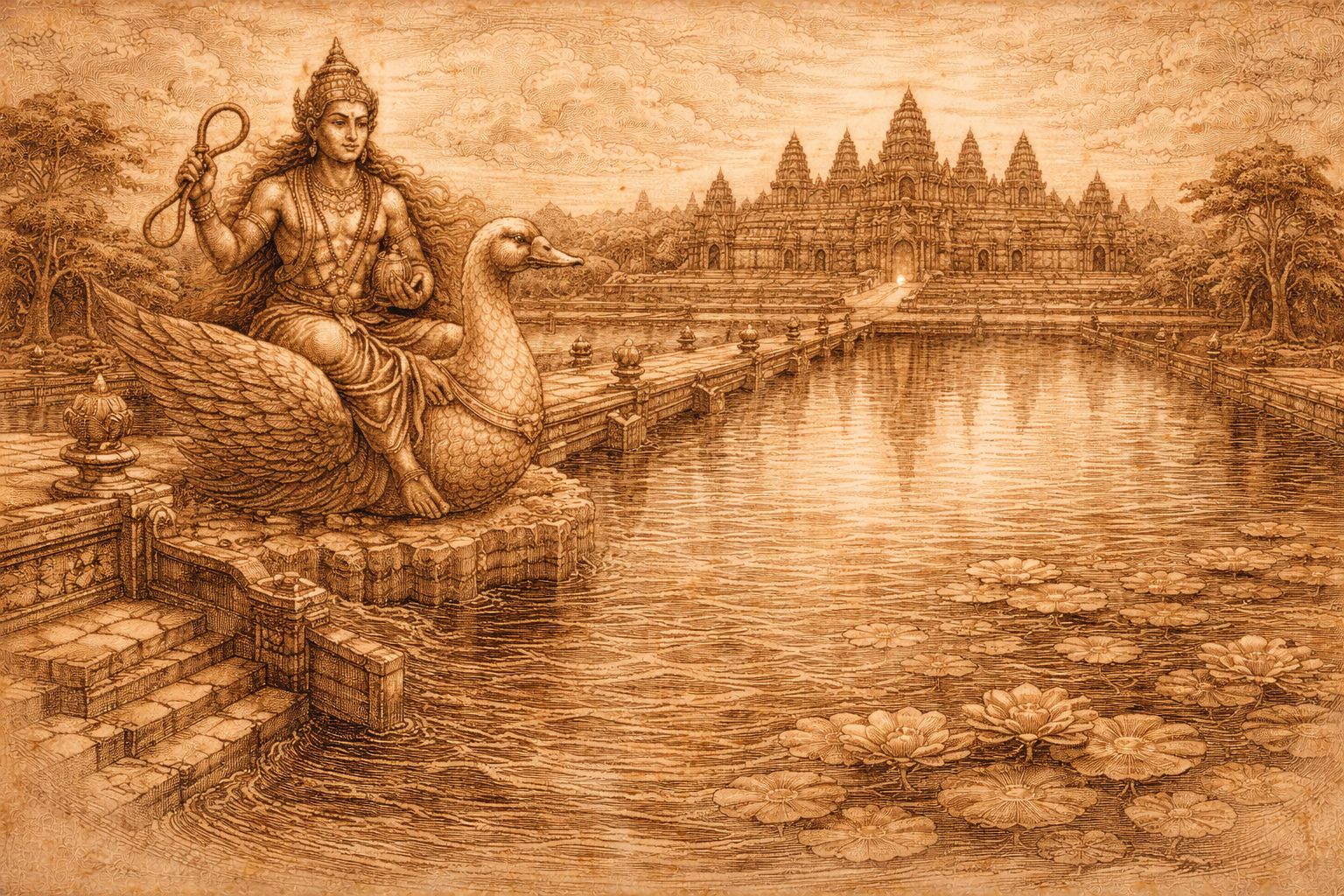

Water as Measure: Varuna and the Discipline of Flow
Angkor’s water was never about abundance. It was about restraint. This essay traces how moats, reservoirs, and reflections embody Varuna’s ethic of measured flow—where water becomes moral substance, time is held rather than spent, and hydraulic mastery reveals disciplined listening rather than control.
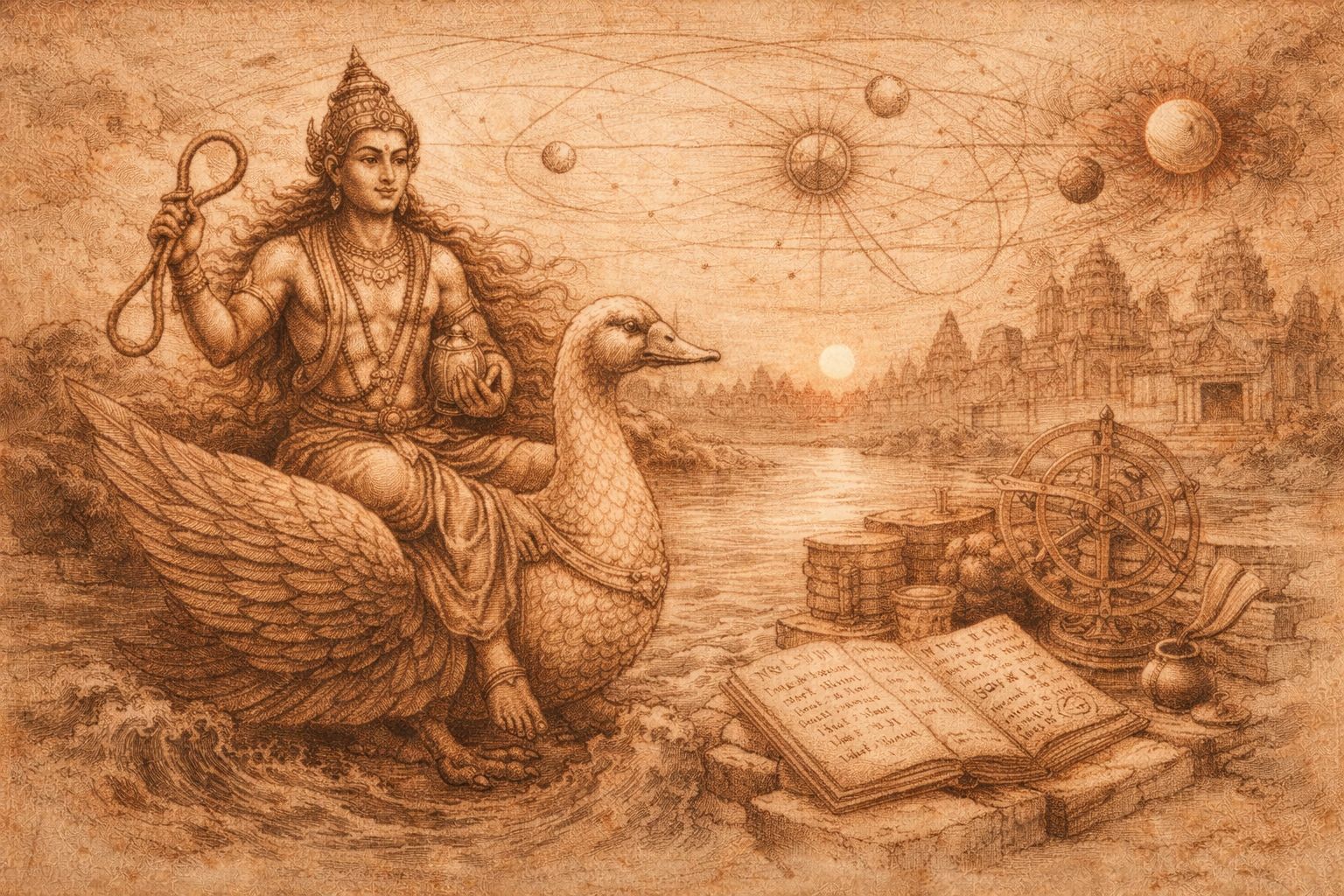

Varuna Within Planetary Order
Varuna’s role clarifies when placed within the Navagraha. Aligned with Mercury and the logic of passage, he governs flow, timing, and restraint—appearing wherever water, inscription, and consecration require careful calibration rather than mythic display.
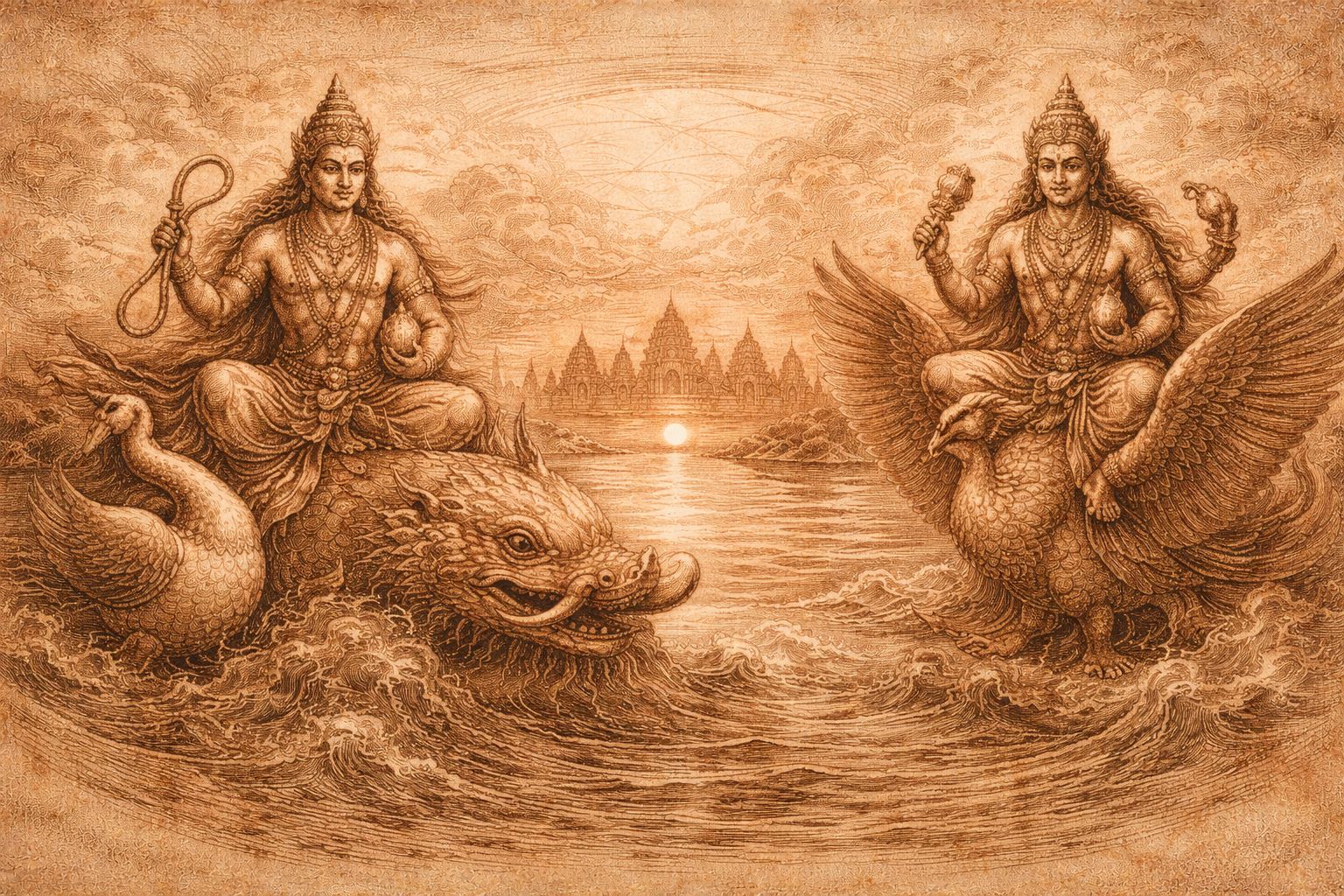

Varuna and Vishnu: The Western Guardians
This essay traces the quiet handover of the western quarter from Varuna to Vishnu—revealing how judgement became preservation, restraint became endurance, and Angkor’s westward temples embodied not rupture, but a continuous moral horizon carved into stone.
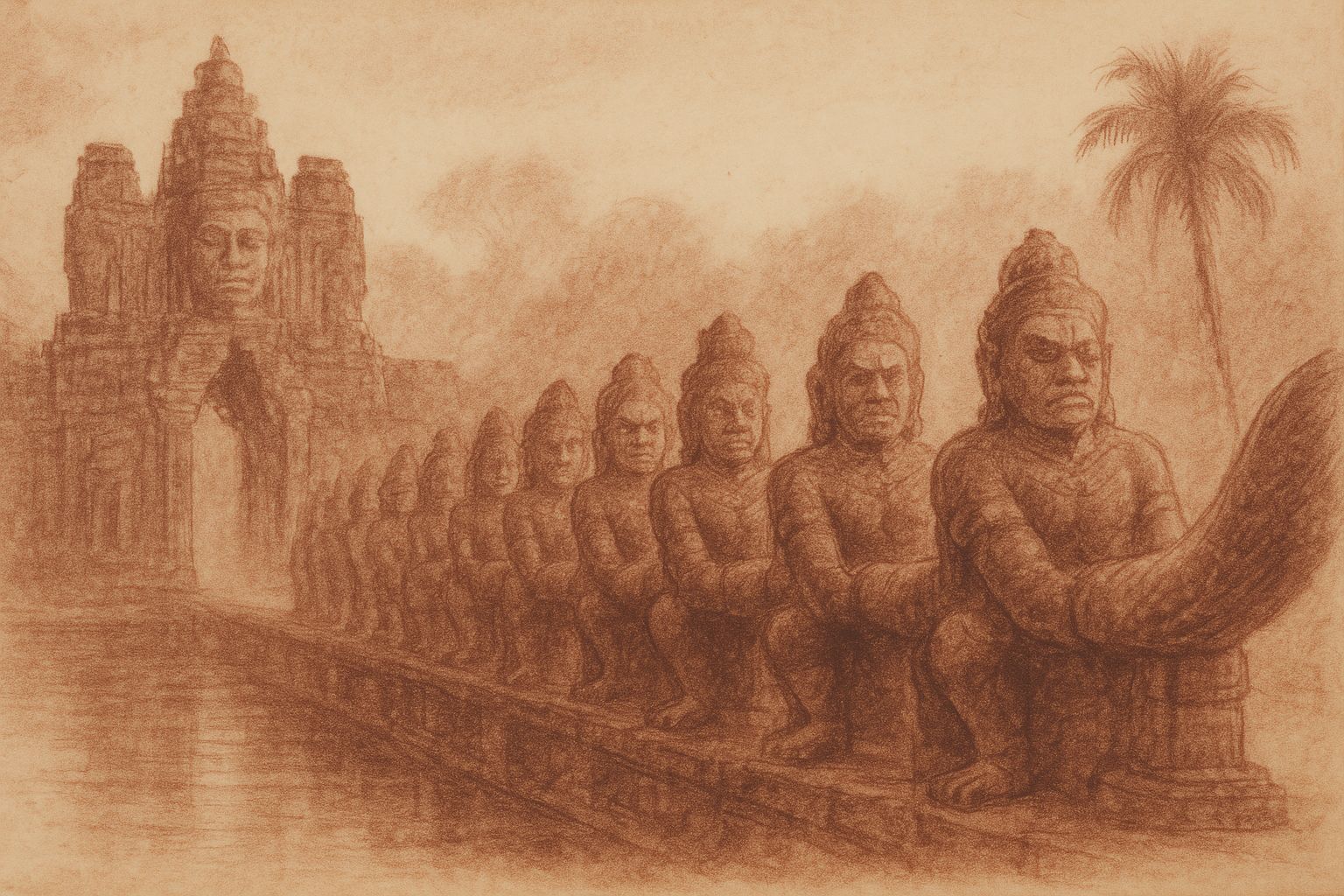

The Asura Within
At the gates of Angkor Thom, gods and demons share a single serpent.
Across this bridge of struggle the pilgrim learns that the asura is not evil but unfinished — the restless force within each of us still grasping for light.
To cross the naga is to balance passion with compassion, struggle with stillness, shadow with dawn.
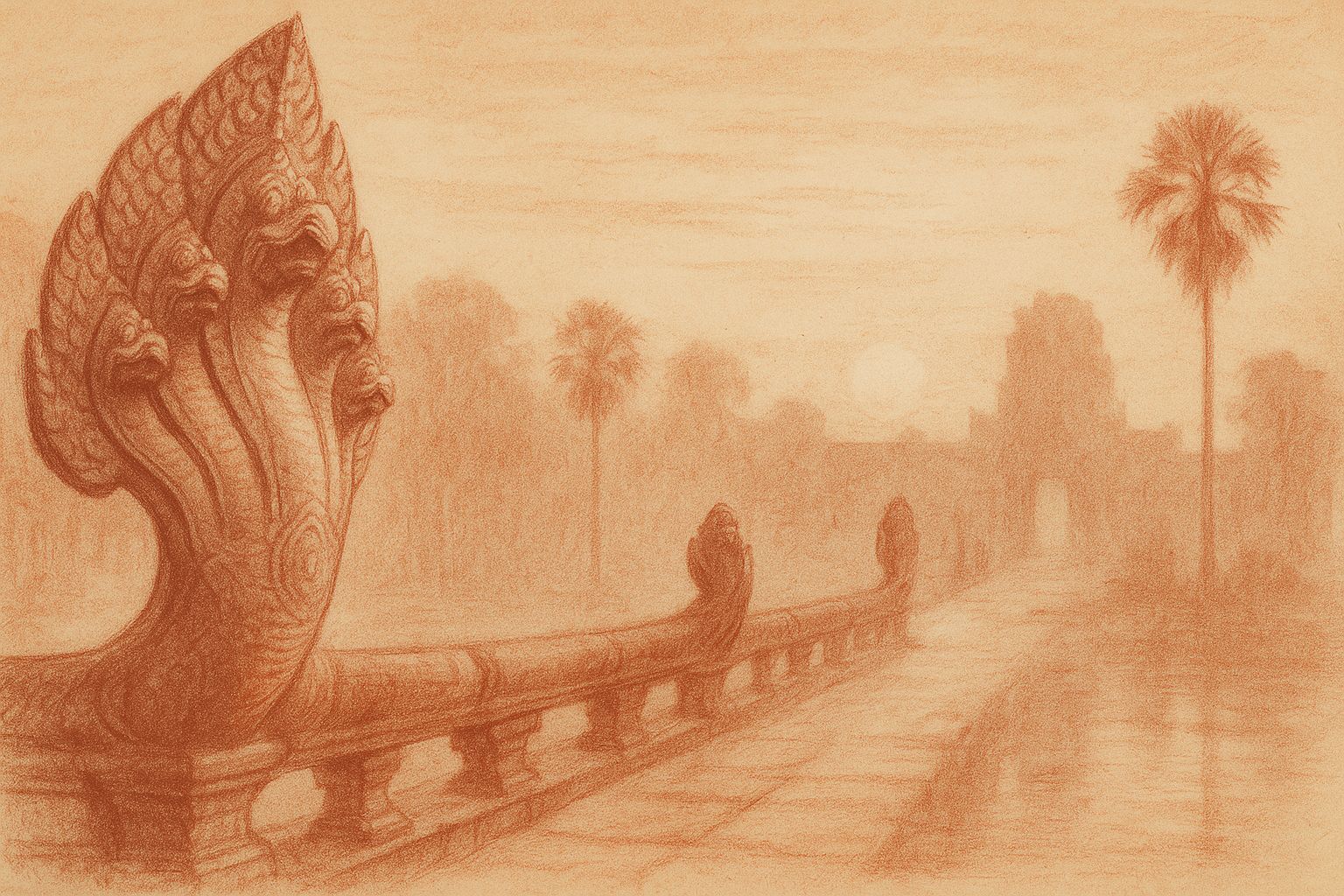

Garuda and the Serpent · Flight and Surrender
Between Garuda’s wings and the Nāga’s coils, Angkor breathes its oldest truth: flight and surrender are one motion. In the carvings where sky and water entwine, the pilgrim learns that freedom depends upon gravity, and that stillness itself is a kind of flight.
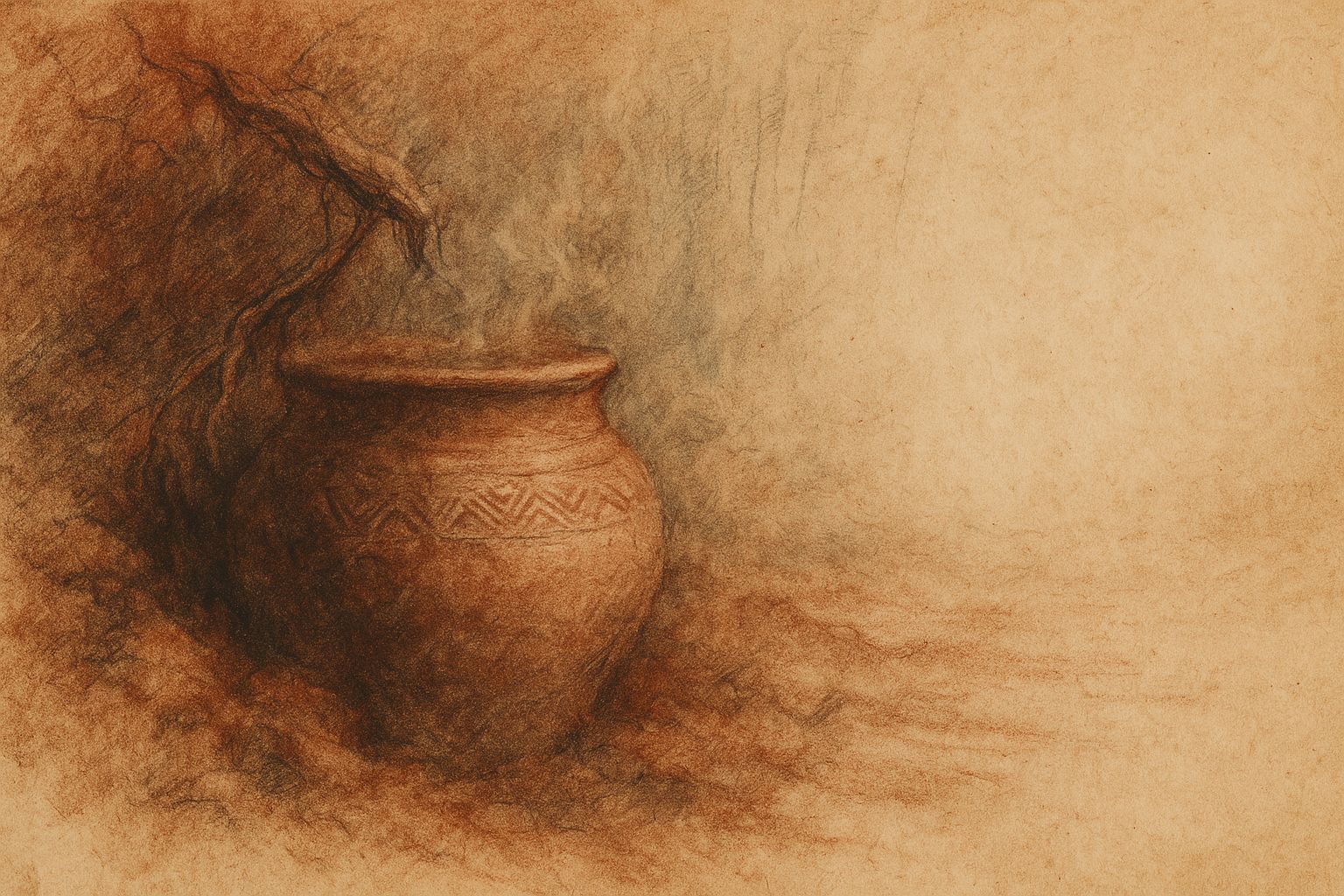

The Pilgrim’s Guide to Cambodia’s Beginnings
In the caves of Laang Spean, in the myth of a dragon princess, in the echoes of Funan and Chenla — Cambodia’s beginnings endure. This essay walks with ancestors through soil, stone, and water, tracing how the first Cambodians shaped rice, ritual, and memory into a living continuity that still breathes today.
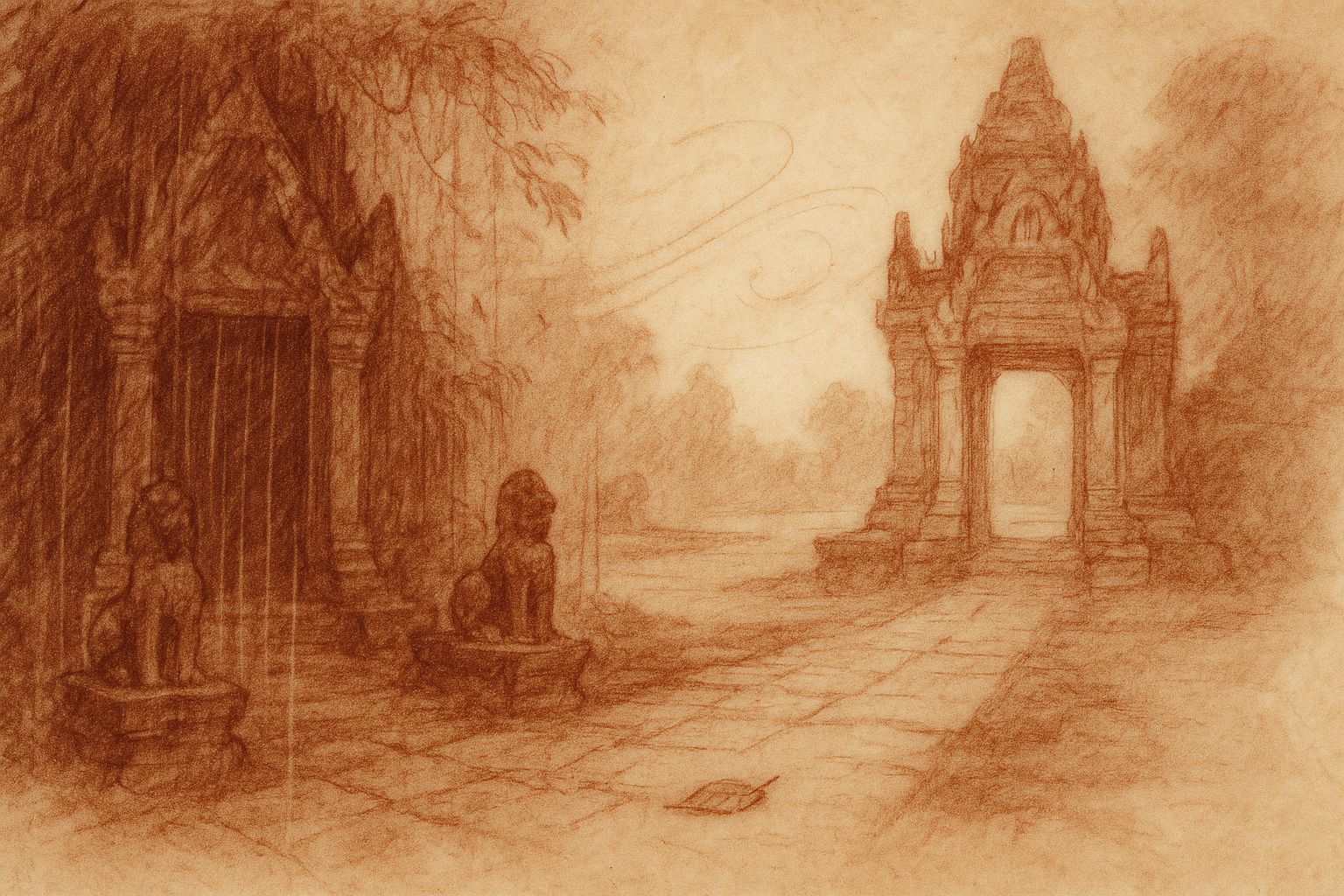

Two Winds, One Turning: The Monsoons of Cambodia
The year breathes in wind, not time. In this quiet meditation, Lucas Varro reflects on Cambodia’s two monsoons—their silence, their rhythm, their soul—and the way rain and light reveal different faces of the sacred.
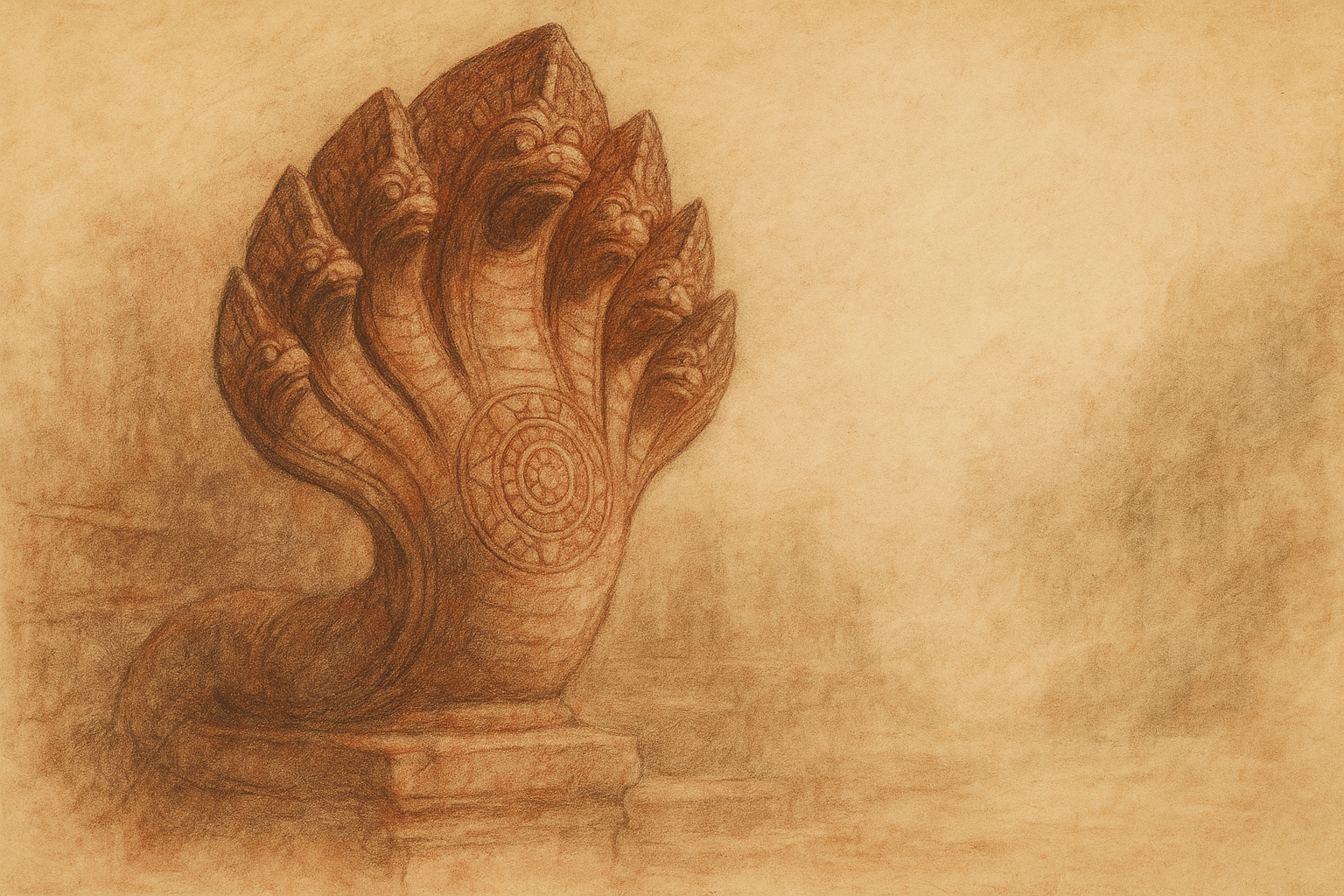

The Mandala at the Heart of the Serpent
Beneath the serpent’s sheltering heads lies a single sacred shape—etched not for the eyes, but for the spirit. Step quietly into this meditation on stone, stillness, and the forgotten centre that waits within.
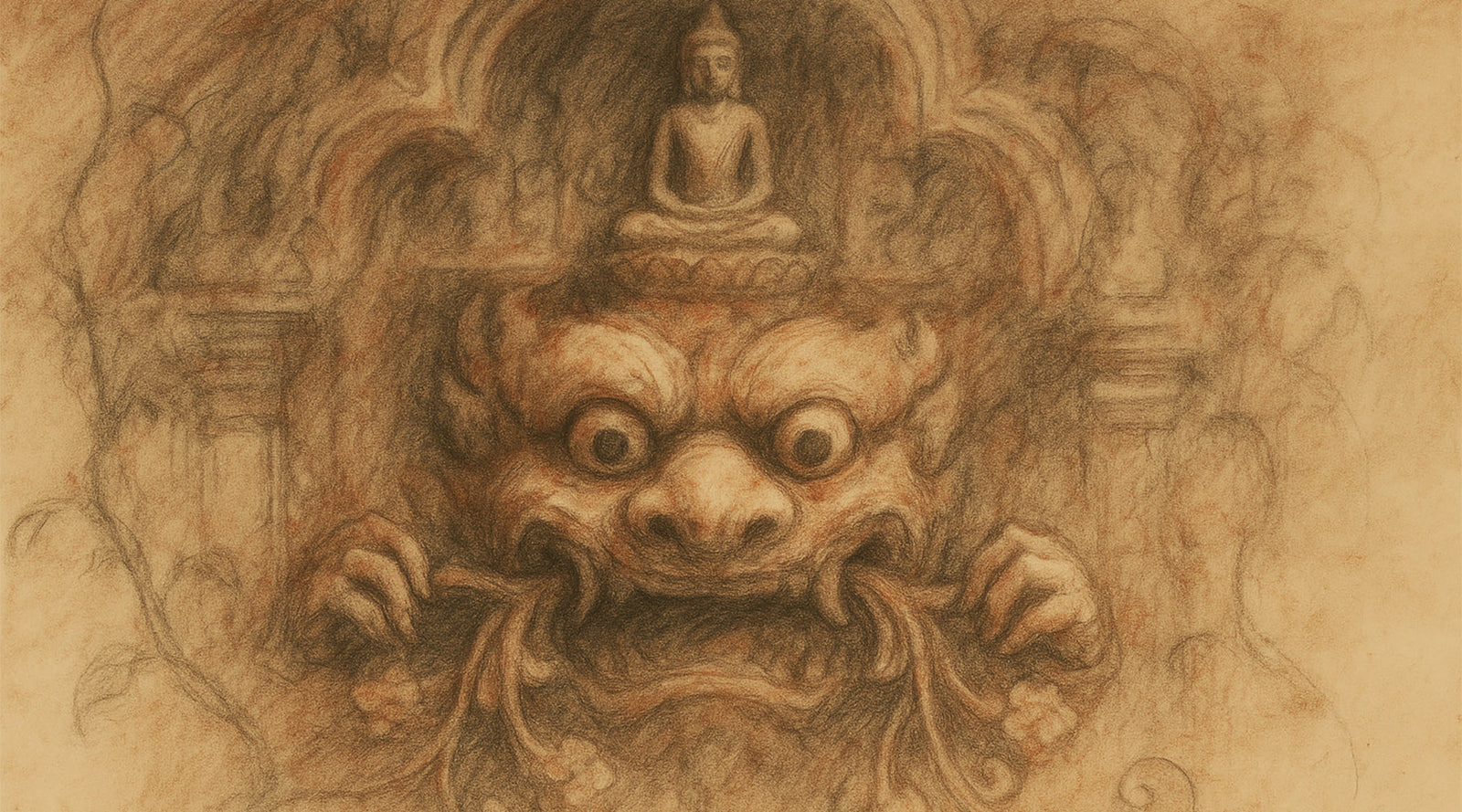

The Mouth of Time: On the Kala at Angkor
Above the temple thresholds of Angkor, the kala watches with round, unblinking eyes. Jawless, eternal, and fierce, this devouring guardian marks the passage into sacred space. In this luminous reflection, Lucas Varro explores the kala’s mythic presence, sculptural mystery, and its place as both protector and gate of transformation.
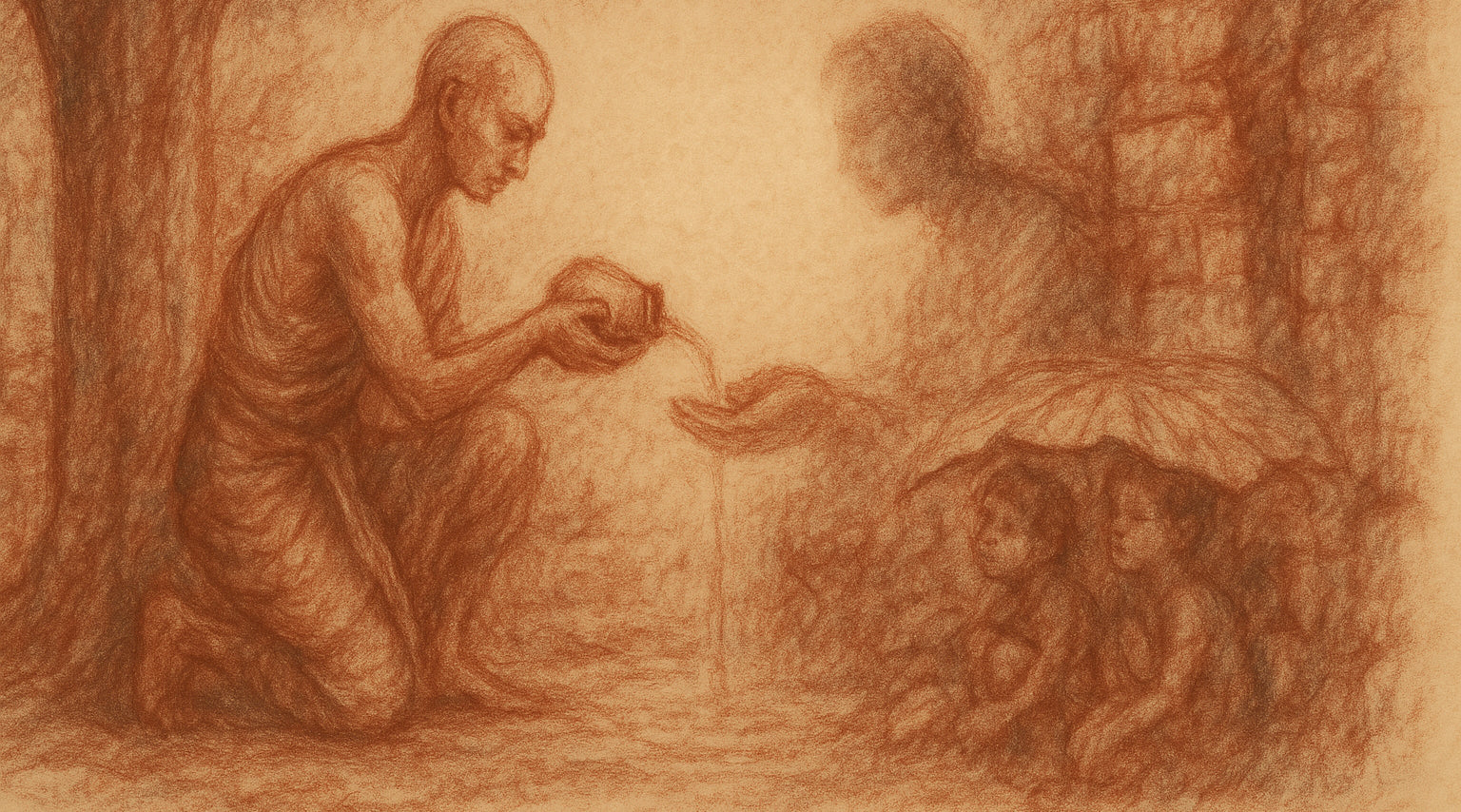

The Gift That Shook the Earth: Cambodia’s Sacred Tale of Giving
The Moha Chinok tells of a prince who gives away his children, his wife, and finally his silence—until even the gods bow. This sacred Cambodian tale is not one of perfection, but of a vow that burns through sorrow into compassion. A gift so complete, it shook the earth.
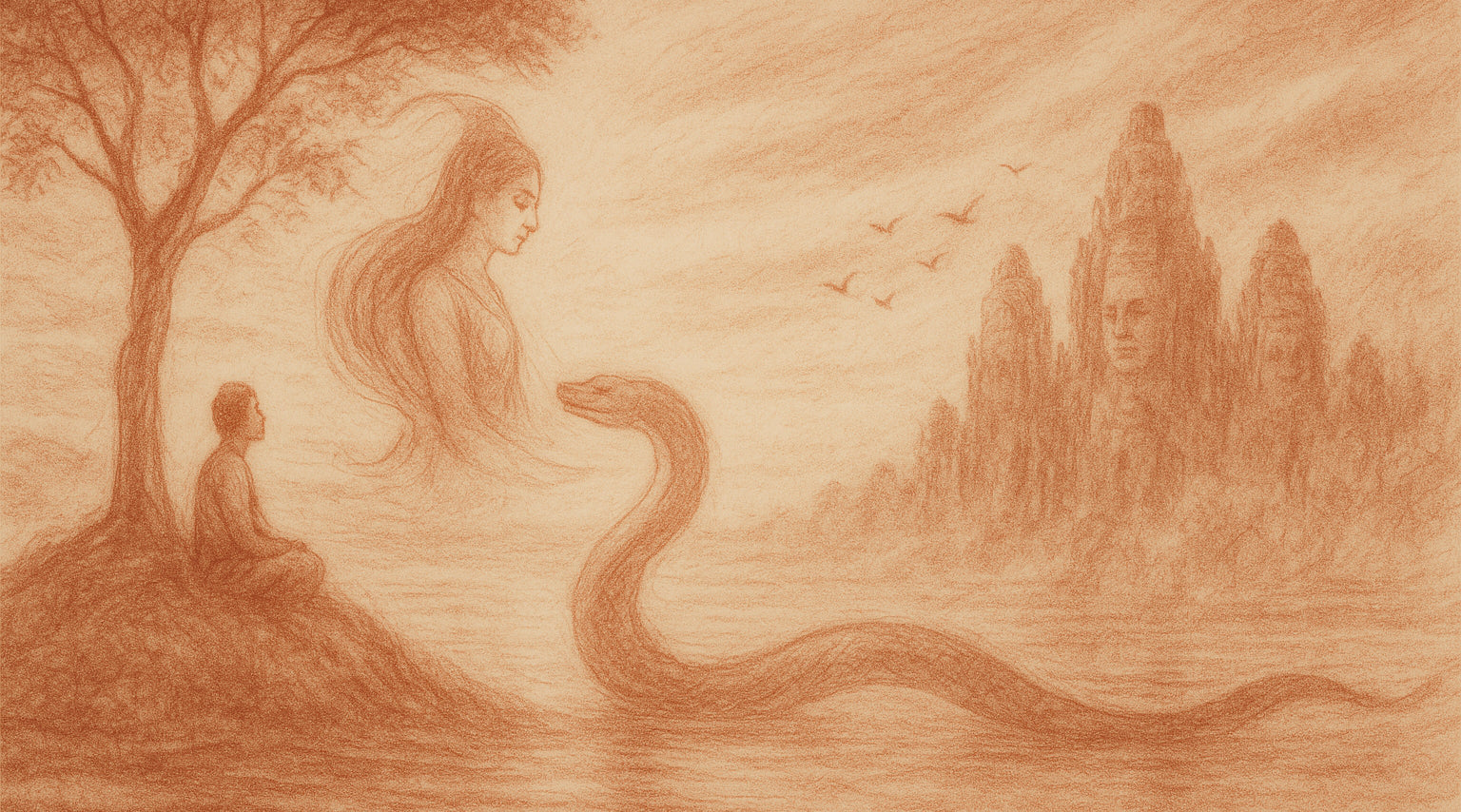

In the Beginning Was the Bayon
Beneath faces carved in ancient light, the Bayon dreams of oceans swallowed and kingdoms born. A whisper rises from the well of myth—calling not to be understood, but remembered. Step gently, where the world began in silence and stone.
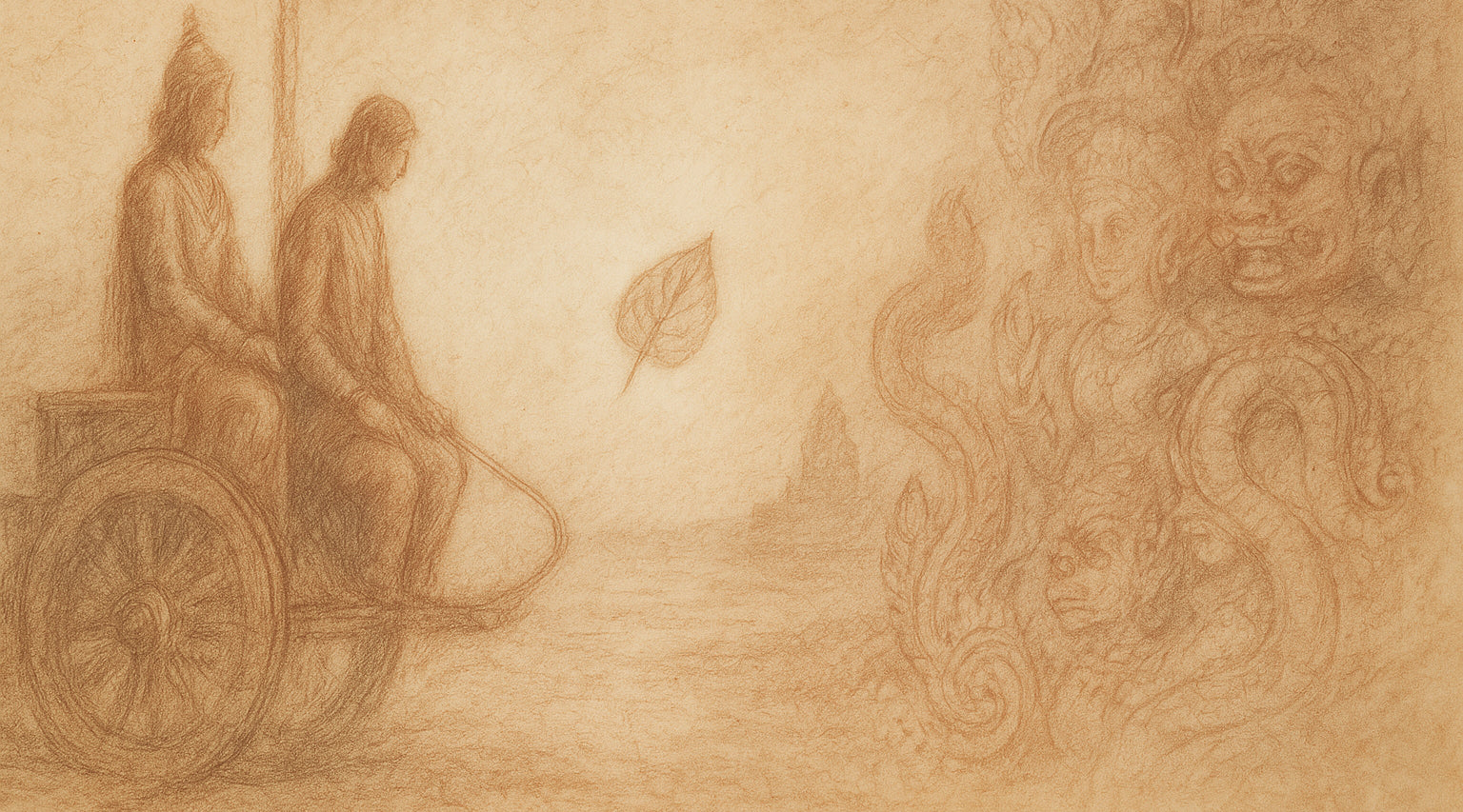

The Sacred Art of Abridgement: Khmer Myths in Stone
A single moment carved in stone may speak the whole.
Step where epics are distilled to breath and flame—
where gods whisper through fractured scenes,
and the soul of Angkor gathers in what was left unsaid.
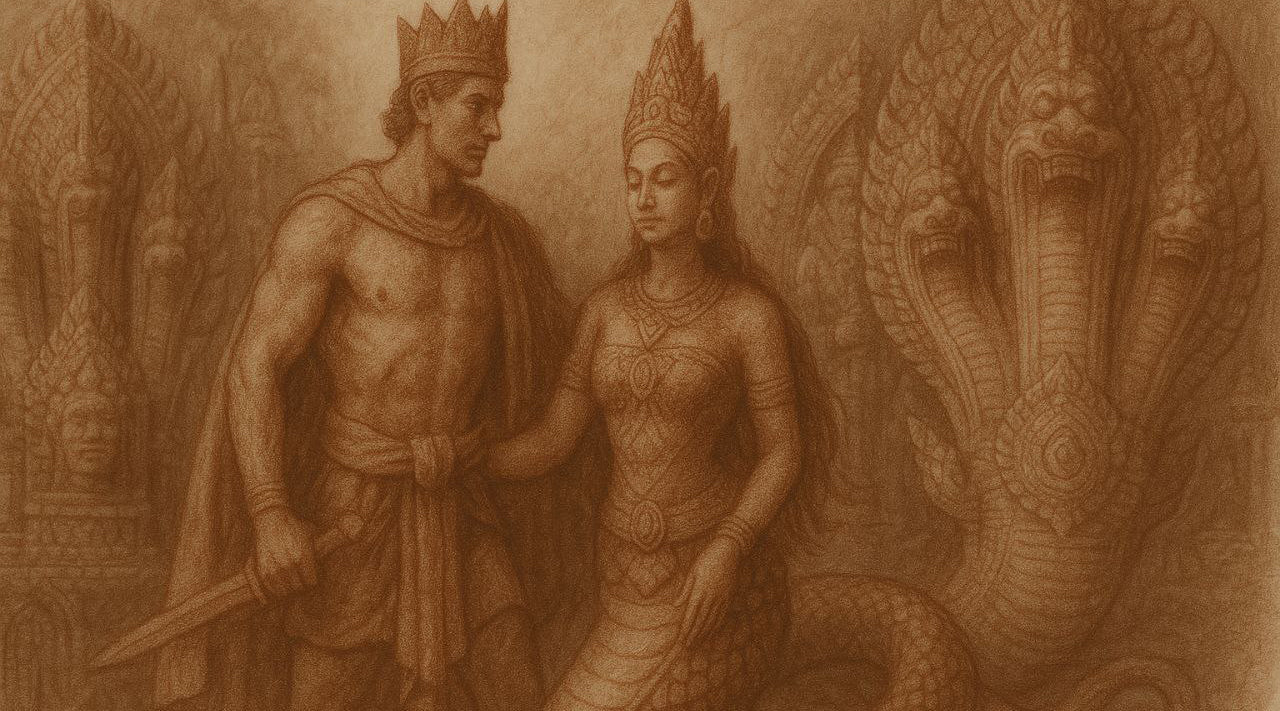

The Legend of Neang Neak and Preah Thong: The Birth of the Khmer Kingdom
A serpent princess and a wandering prince unite to shape the Khmer kingdom—where love births a dynasty, and the Nāga coils through stone and blood.
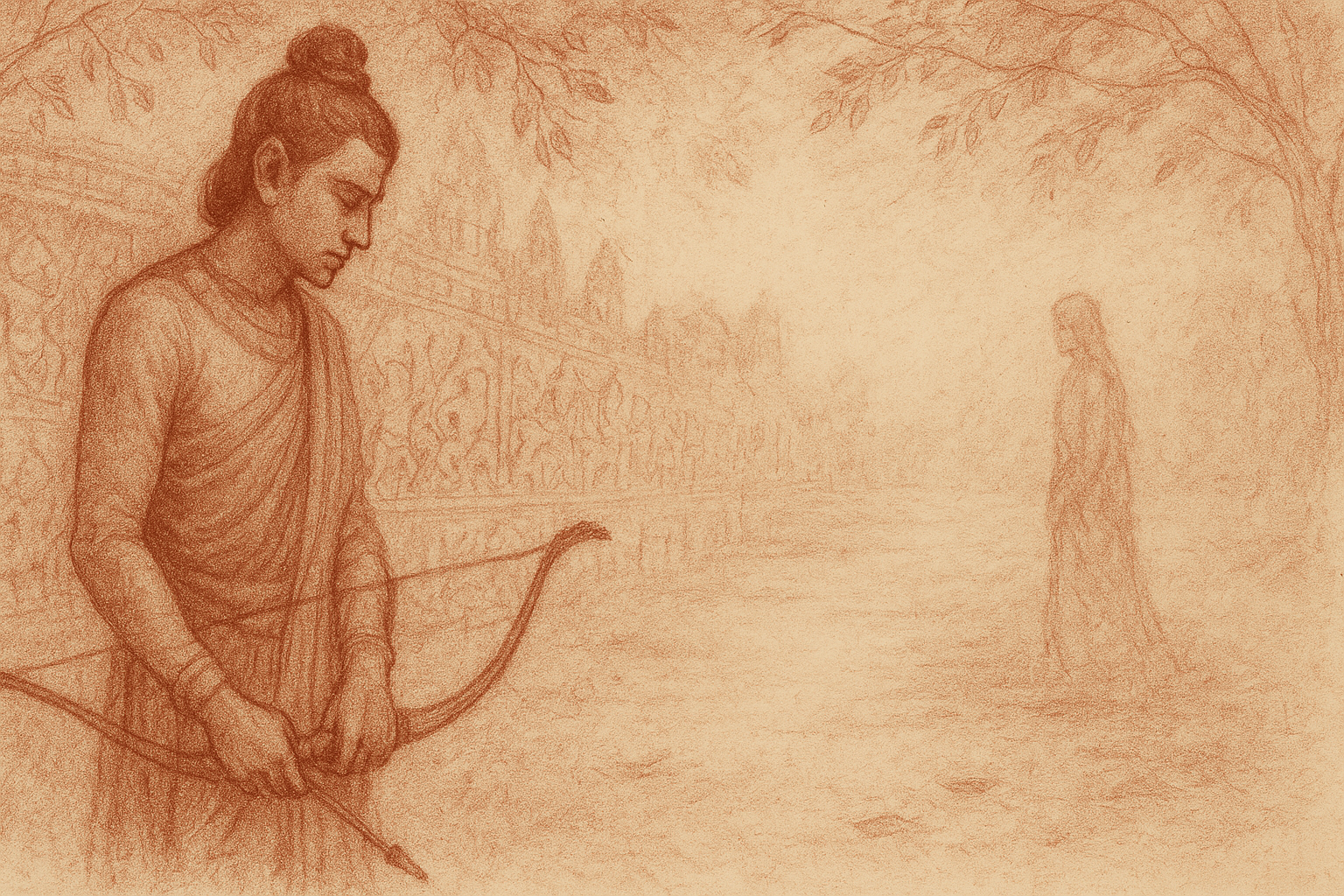

The God Who Walked Away: Rama in Sacred Stone
He stands in stone, composed—but beneath the bow and vow, a heart breaks quietly. Walk the galleries where gods falter, vows deepen, and silence bears the weight of love.
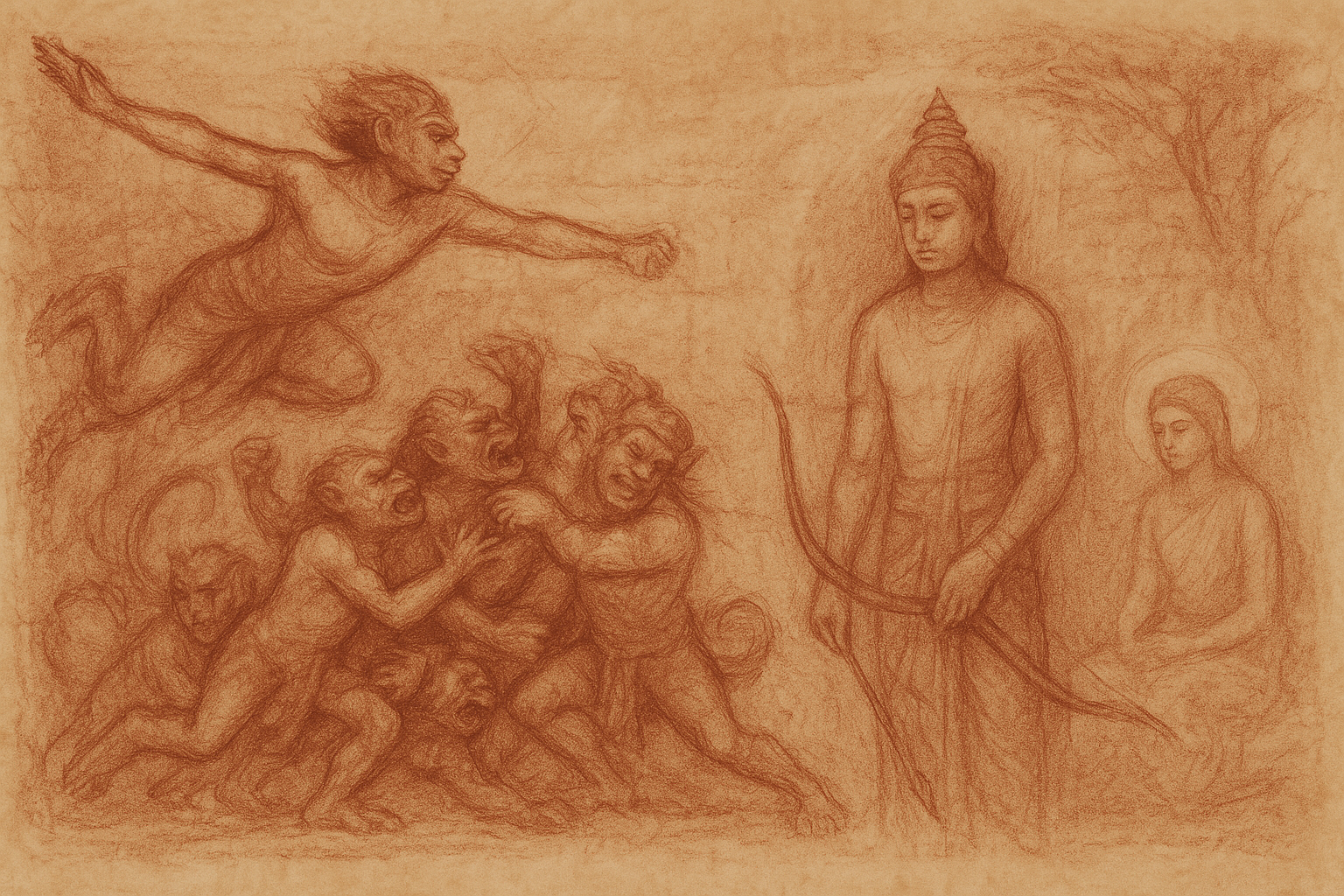

When the Ramayana Was Carved in Stone
The Ramayana unfolds in stone—where monkey warriors fly, Sita weeps beneath the acacia, and Rama returns not to triumph, but to restore cosmic order. In Angkor, these are not carvings. They are offerings—etched by sculptors who knew that mythology is not story, but the soul’s invisible design.
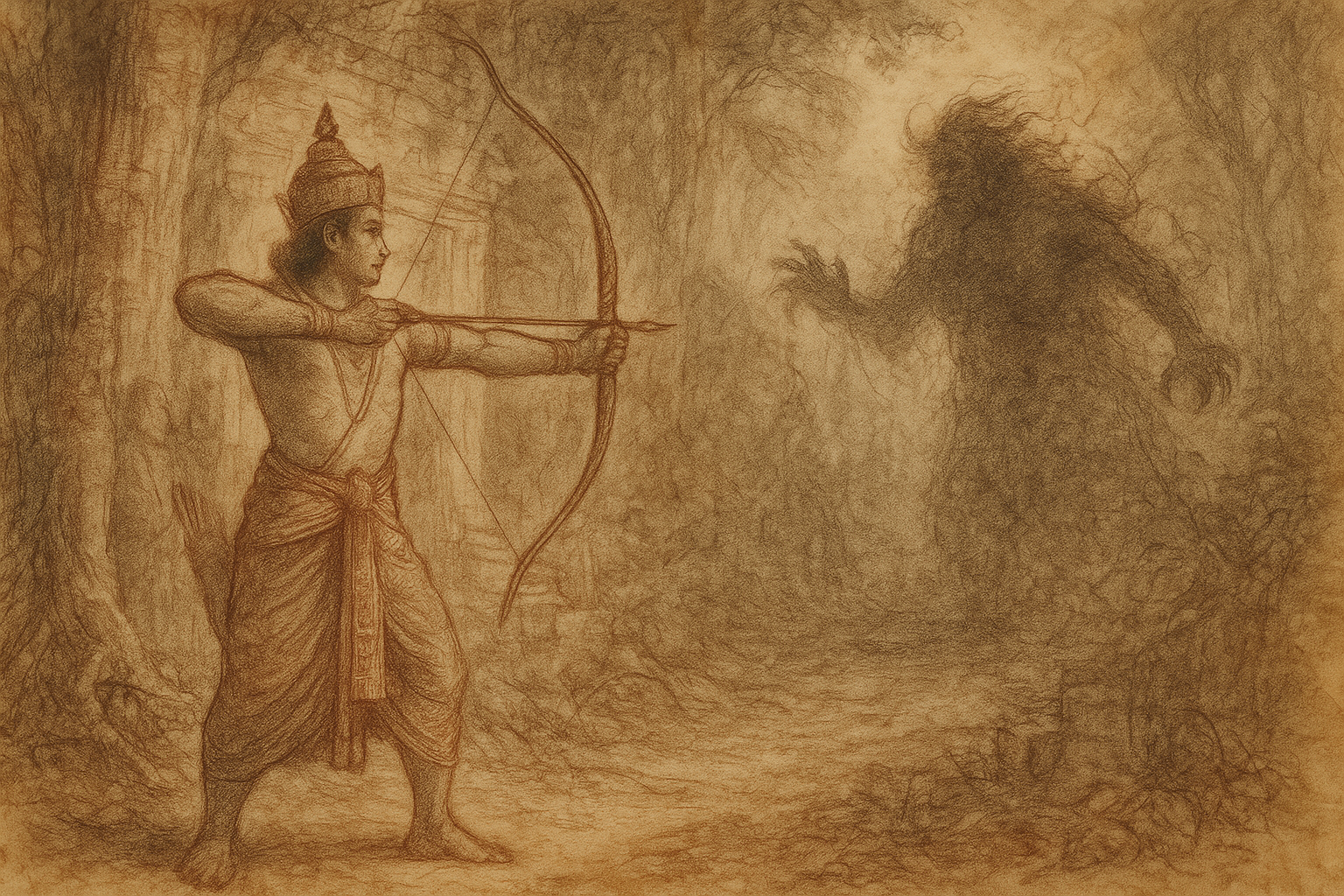

The First Arrow
In a forest haunted by fear, Rama’s first arrow pierced not only the demoness Tataka, but the sacred veil between boyhood and divine justice. Her death returned the stillness. The gods rejoiced. But Rama, we are told, was quiet.
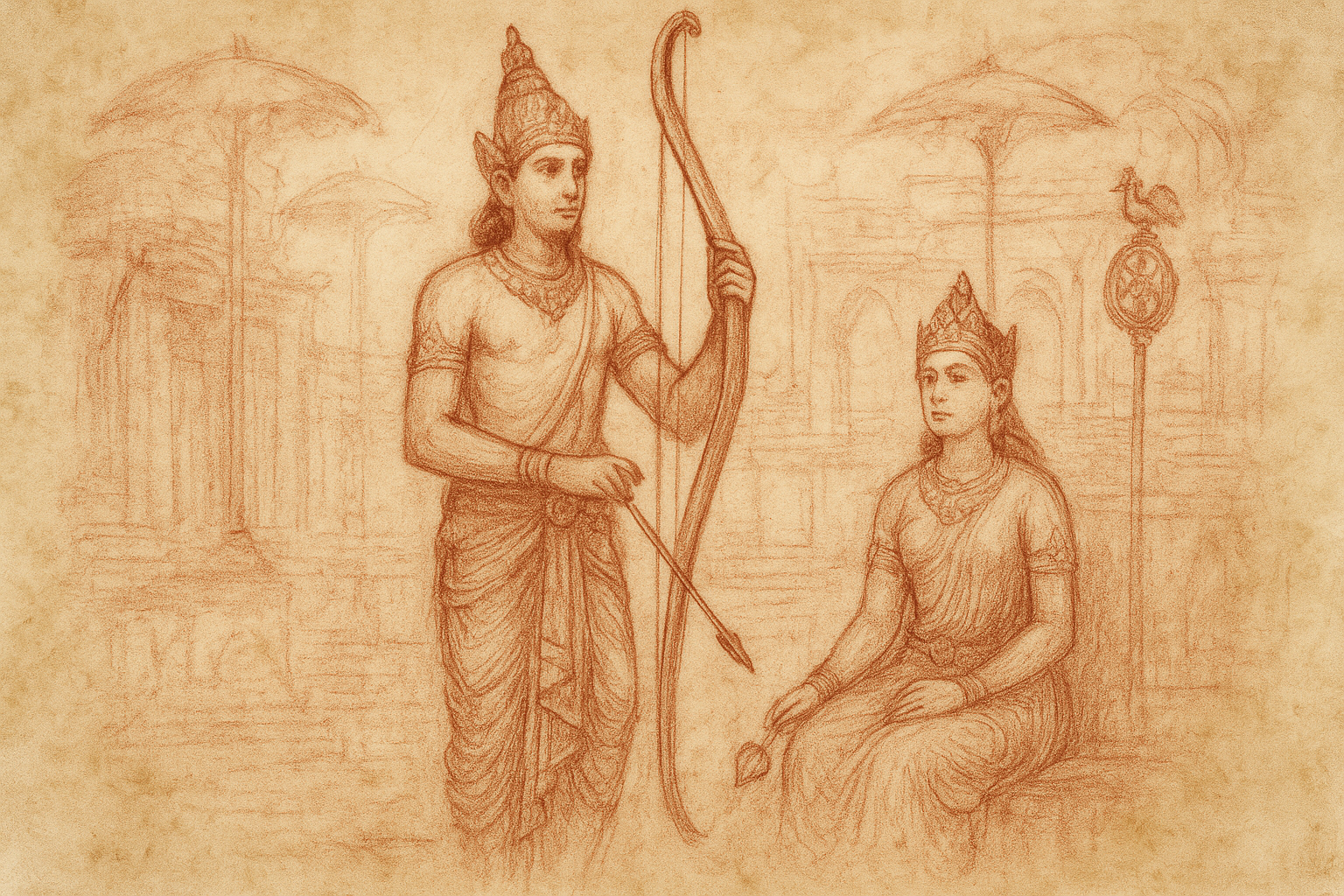

The Bow That Thundered
In the northwestern gallery of Angkor Wat, five tiers of sacred stillness recall the day a bow once thundered. Rama stands calm. Sita, composed. A svayamvara not of conquest, but of vow returned. In silence, the stone remembers what sound once revealed.
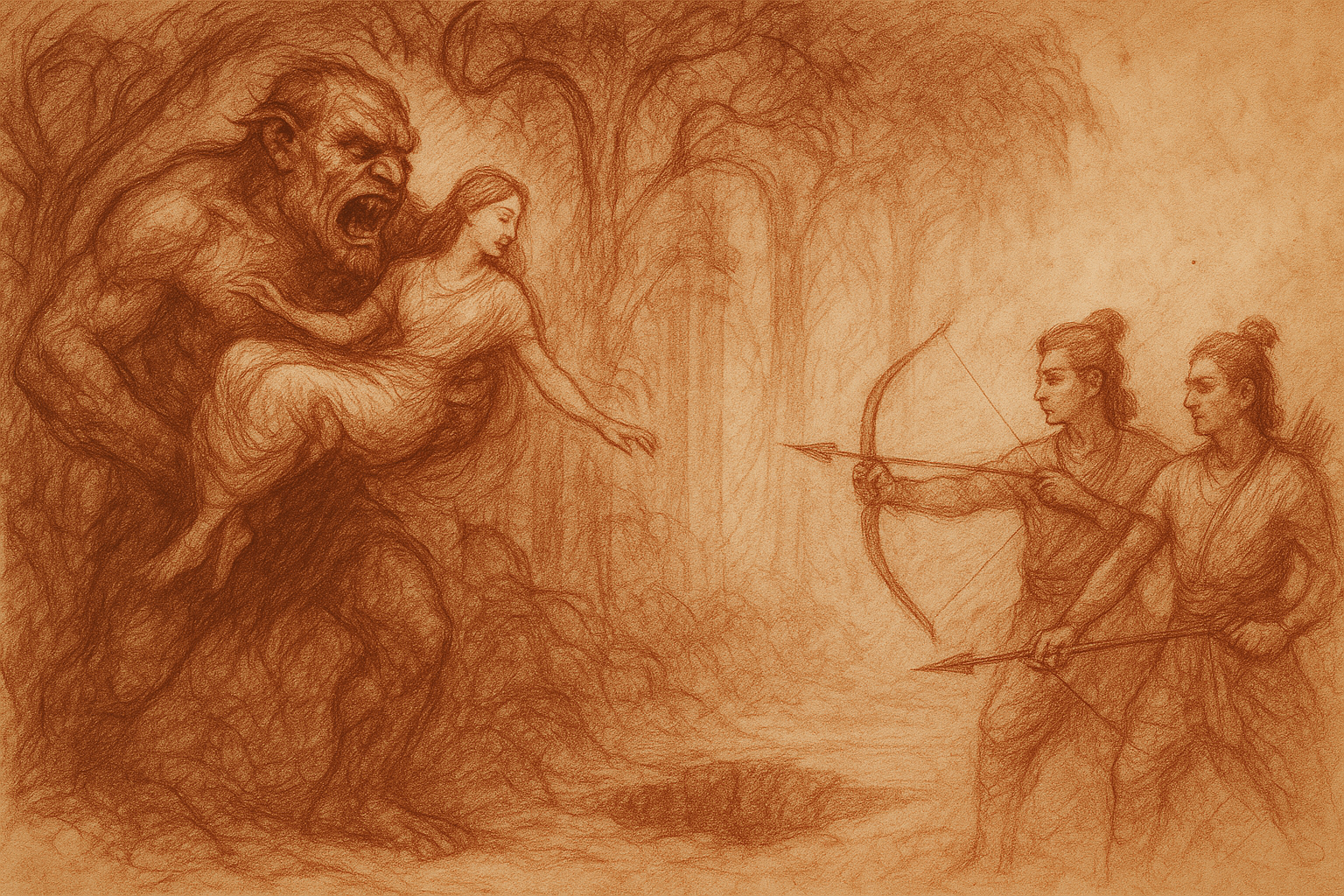

The Demon Who Could Not Devour Her
In the quiet stone of Banteay Srei and Angkor Wat, the tale of Viradha—Sita’s first abductor—still echoes. This luminous reflection traces his monstrous curse and hidden celestial origin, revealing a story not of conquest, but of release, as told through the sacred language of Khmer reliefs.
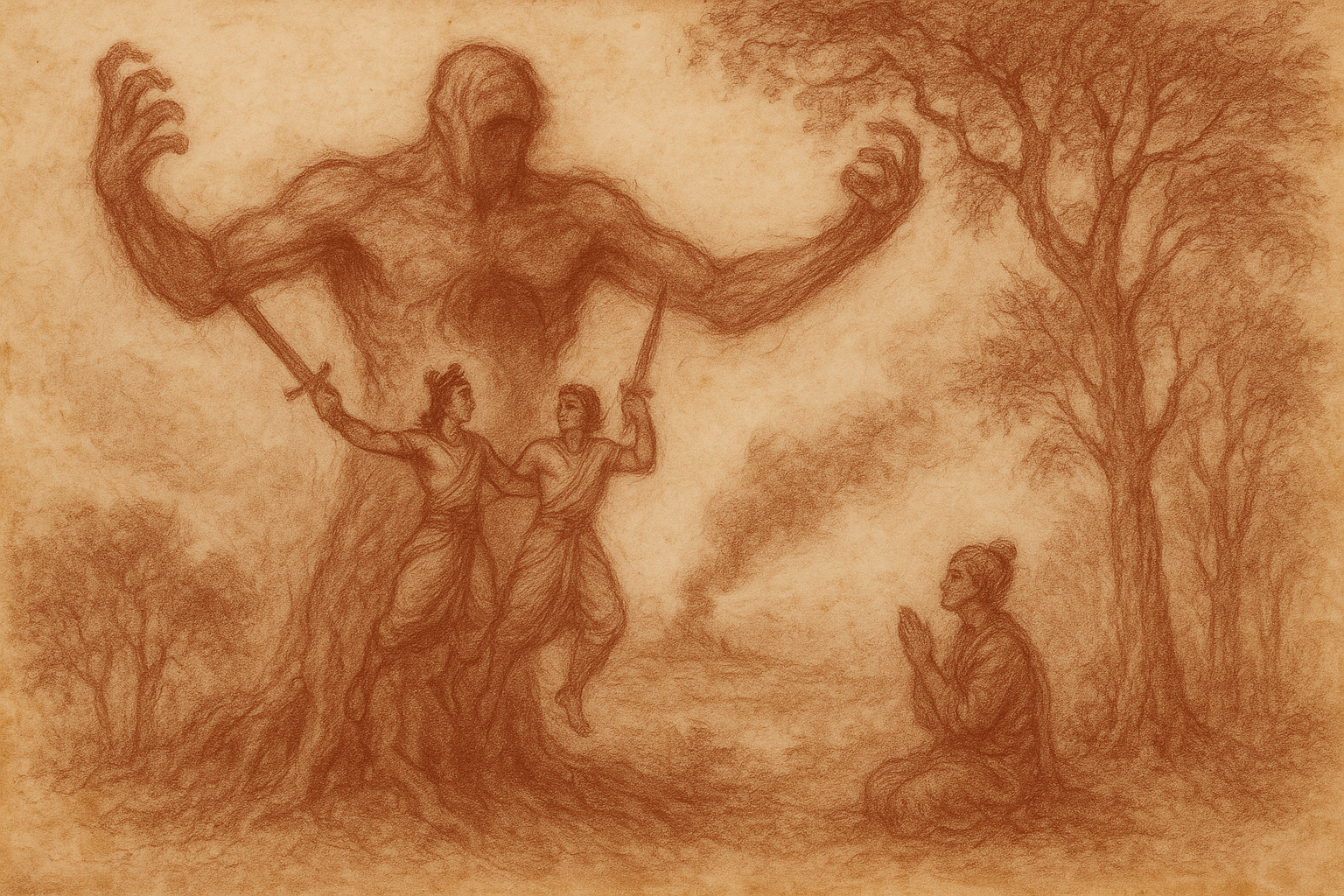

The Killing of Kabandha
In a forest where sorrow walks beside the divine, a monstrous form is not condemned but consecrated. The sword becomes a key. The flame, a passage. And the grotesque, once seen, reveals a radiance long hidden.
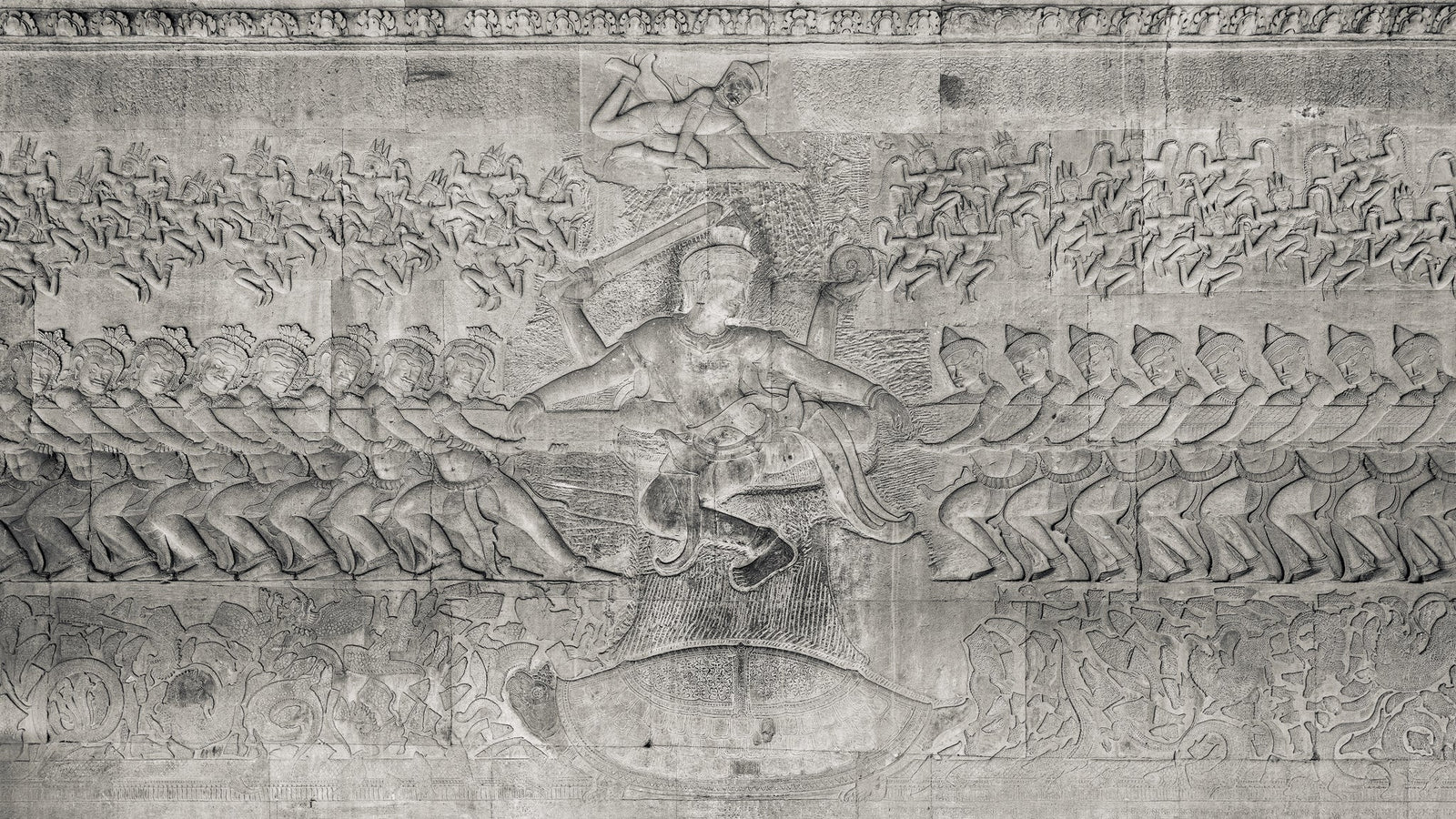

The Churning of the Ocean of Milk
Carved in stone yet unfinished in meaning, the Churning of the Ocean of Milk unfolds at Angkor Wat as a living cosmogram. Gods and adversaries pull against one another, the axis strains, sacrifice is renewed. This essay reads the great relief not as myth illustrated, but as creation continually held against collapse.
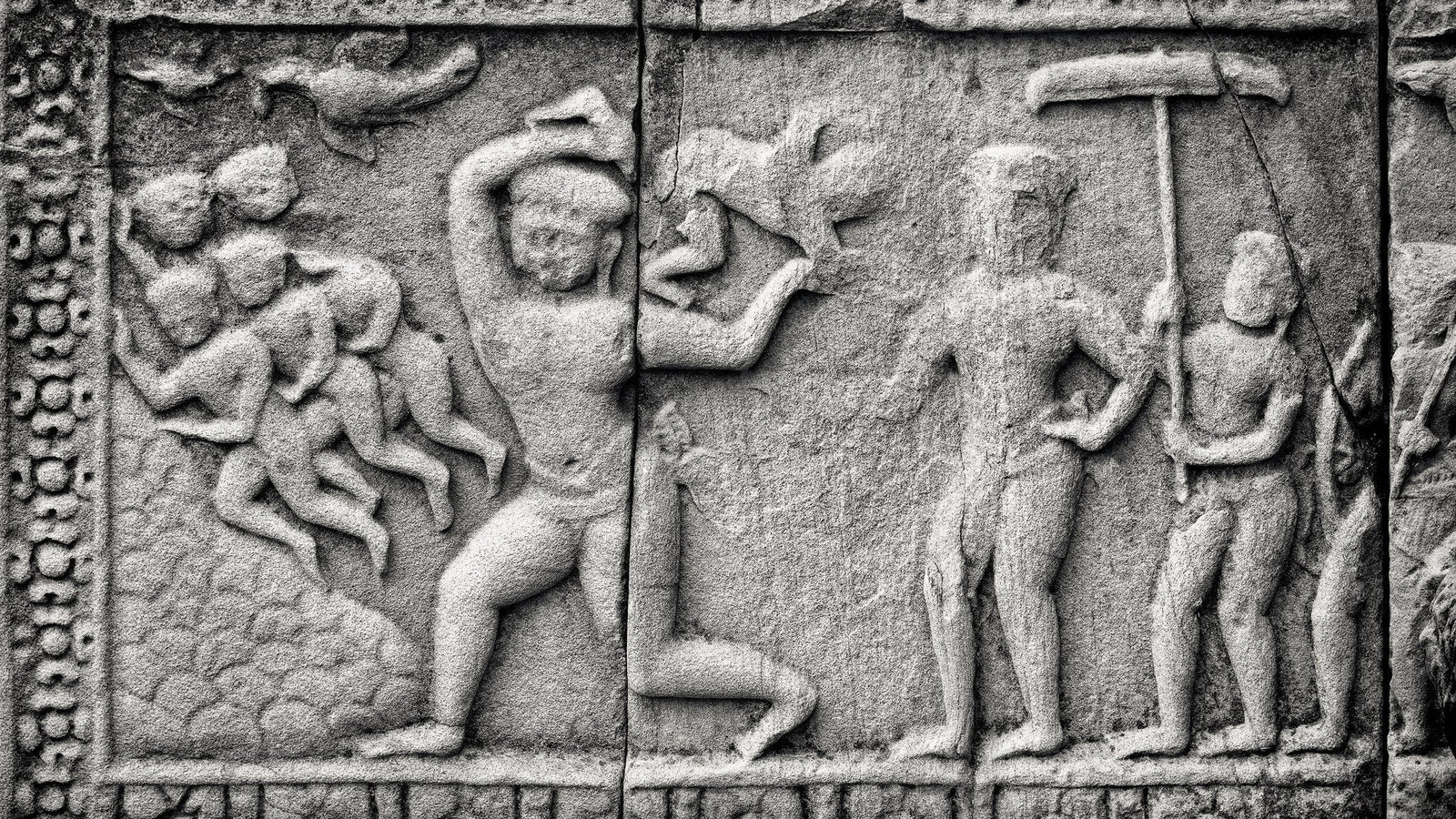

The God Who Was Nearly Broken
Before the god could smile, the world tried to break him.
In stone, the mother still prays, the child still falls—
and somewhere, the dark one waits to rise.
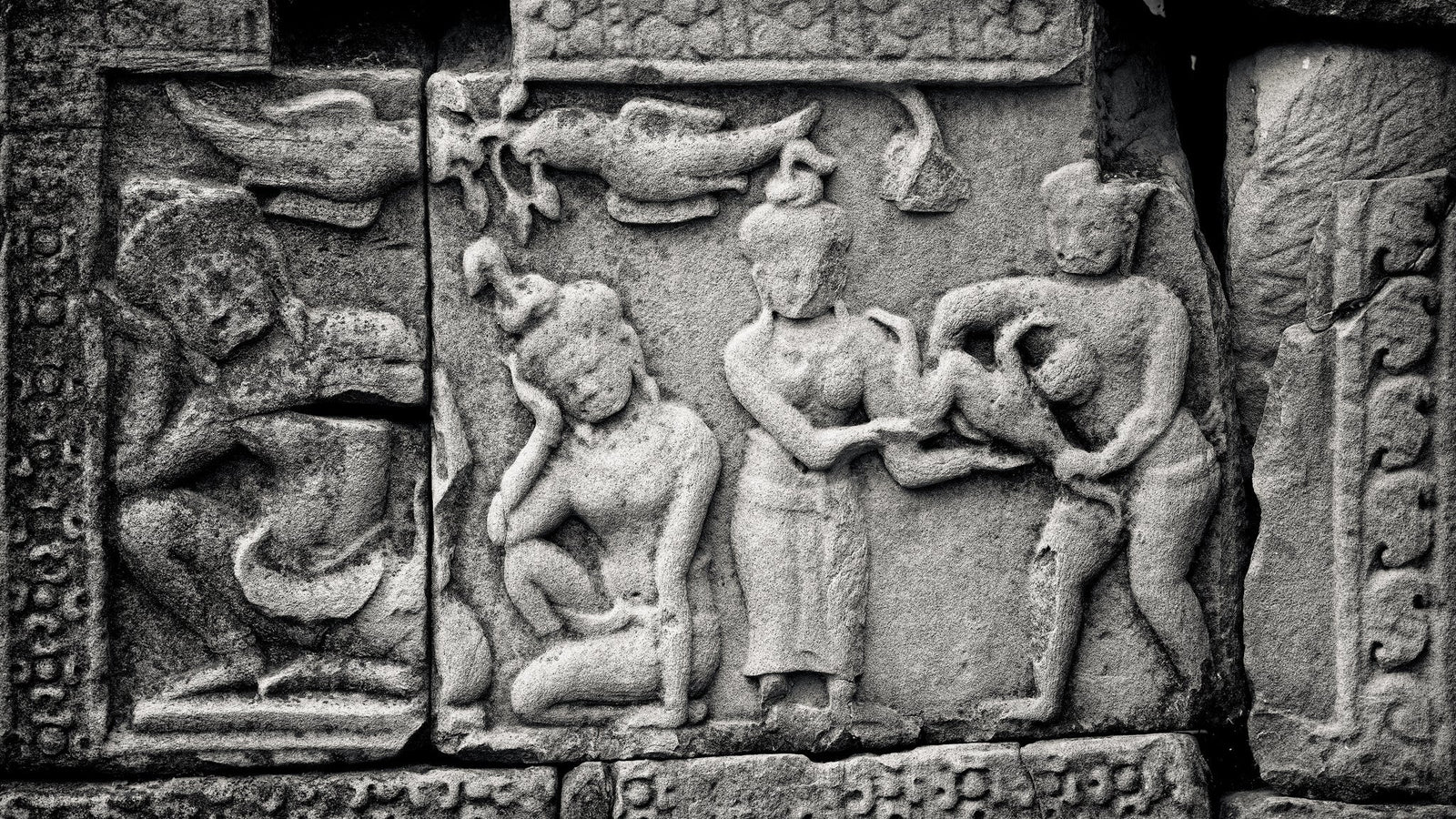

Krishna Beneath the Rain-God’s Cloak: A Tale in Stone
Beneath the hush of Baphuon’s southern gate, a child is carried through rain and prophecy. Step into the stone’s soft whisper, where the gods move unseen, and time shelters a hidden tenderness. Let your breath slow—and listen to what is almost remembered.
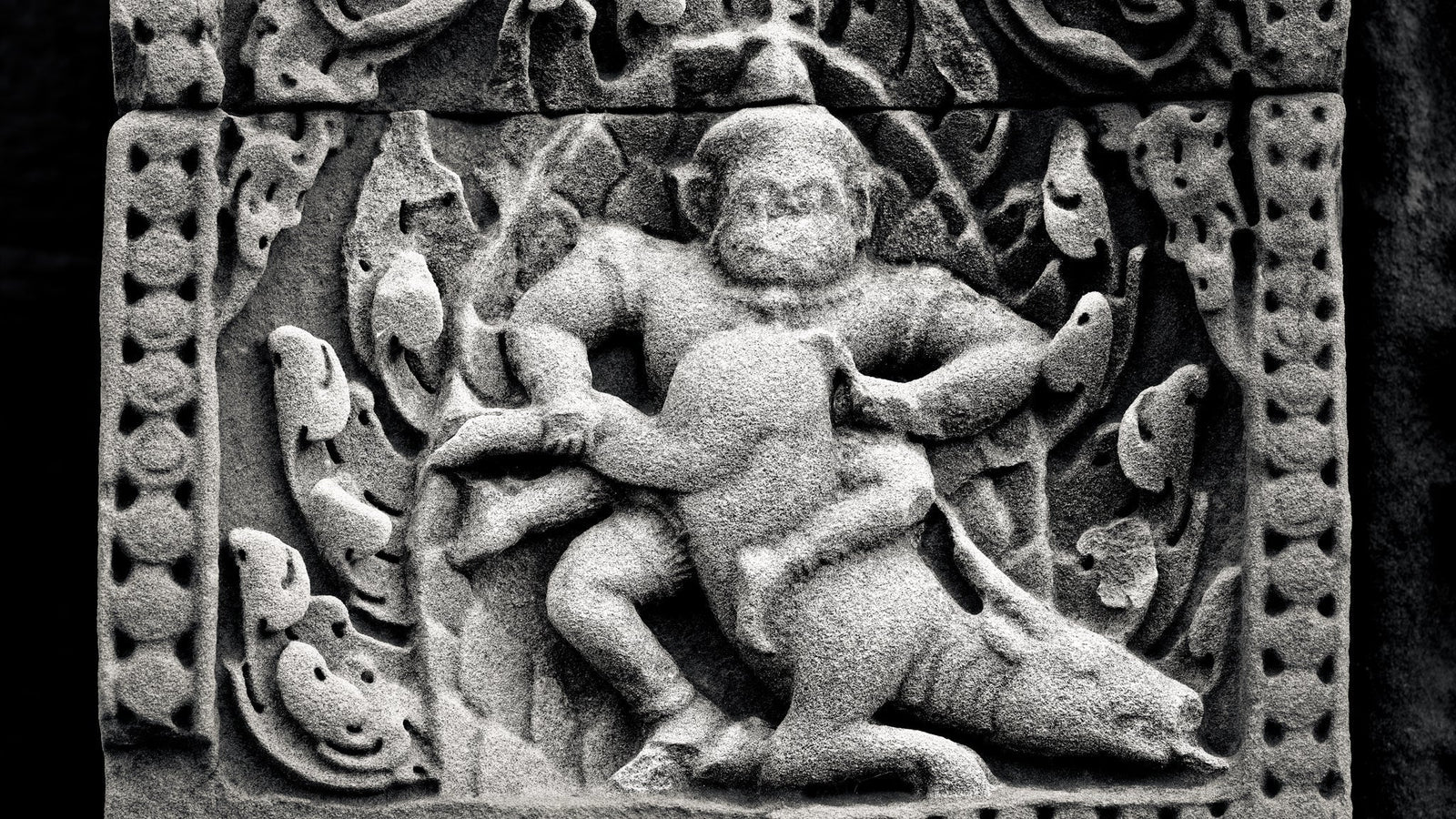

Valin Fighting Dubhi
Low on a pilaster at Banteay Samre, Valin bends the buffalo demon Dubhi toward the earth. The scene is intimate, almost comic, yet heavy with consequence. Strength here is not heroic display but physical labour—authority felt in the hands, close to the ground, before judgement arrives.
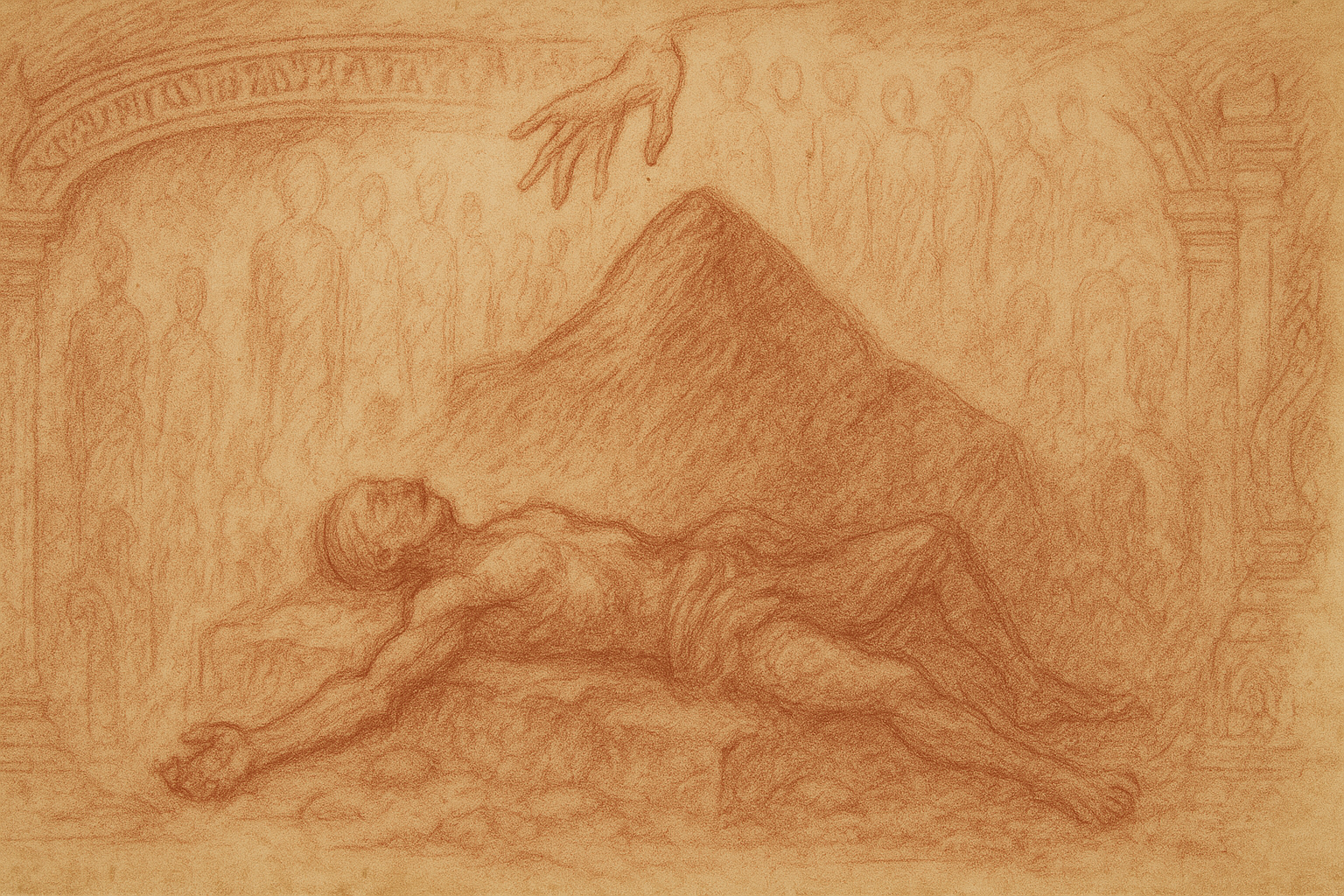

The Hell Without Rest: On the Avīci Realm at Angkor Wat
Beneath the stone cries of Angkor’s gallery, the condemned fall—not into eternal fire, but into memory and reckoning. Step into the shadows of Avīci, where judgement carves silence, and even the darkest soul still waits for light.
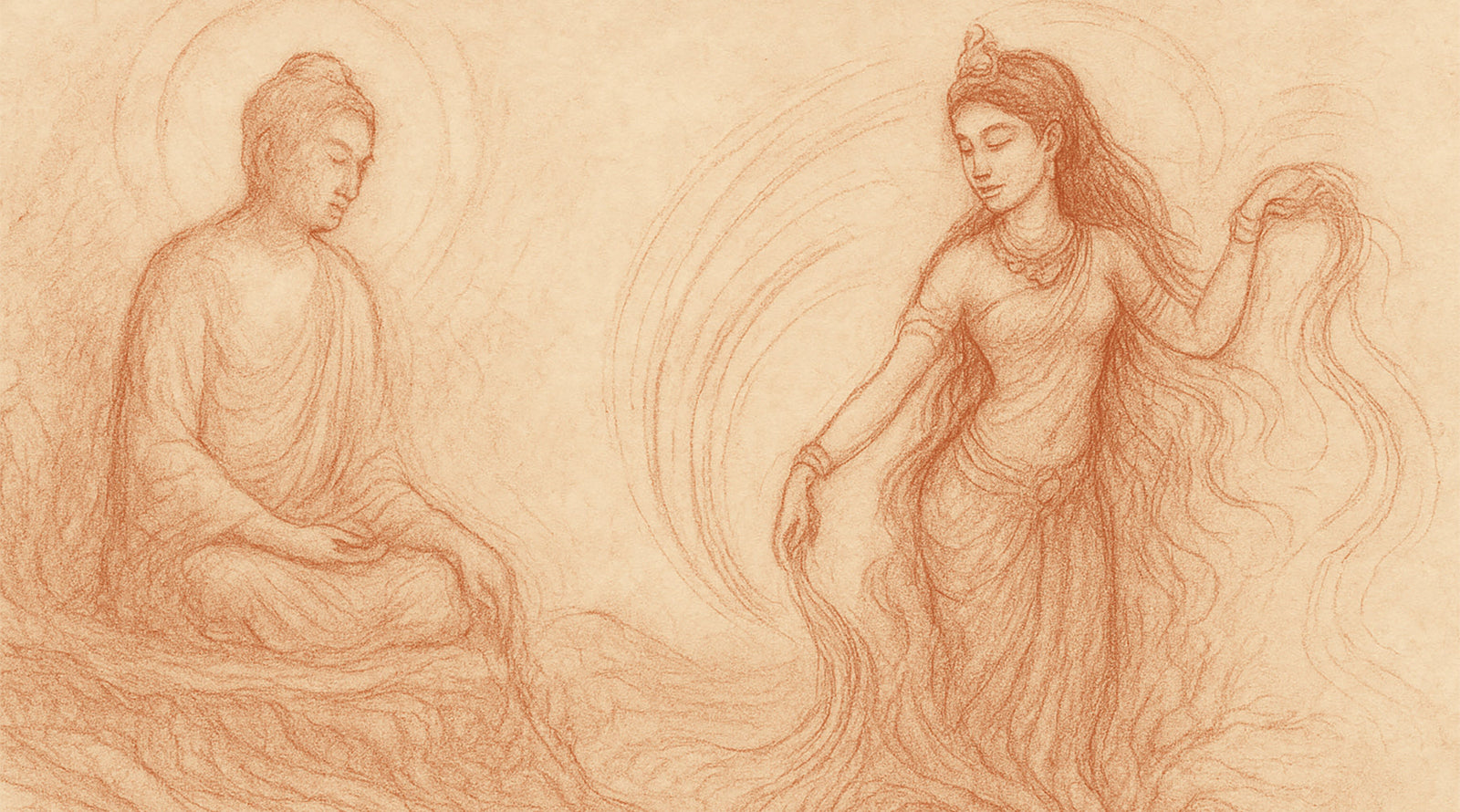

The Goddess Who Twisted Her Hair
Beneath the carvings of Ta Prohm, a goddess wrings her hair and the world is cleansed. Follow the silence where stone remembers, and the flood of truth flows not from force, but from presence. A meditation on earth, witness, and the sacred gesture that washed death away.
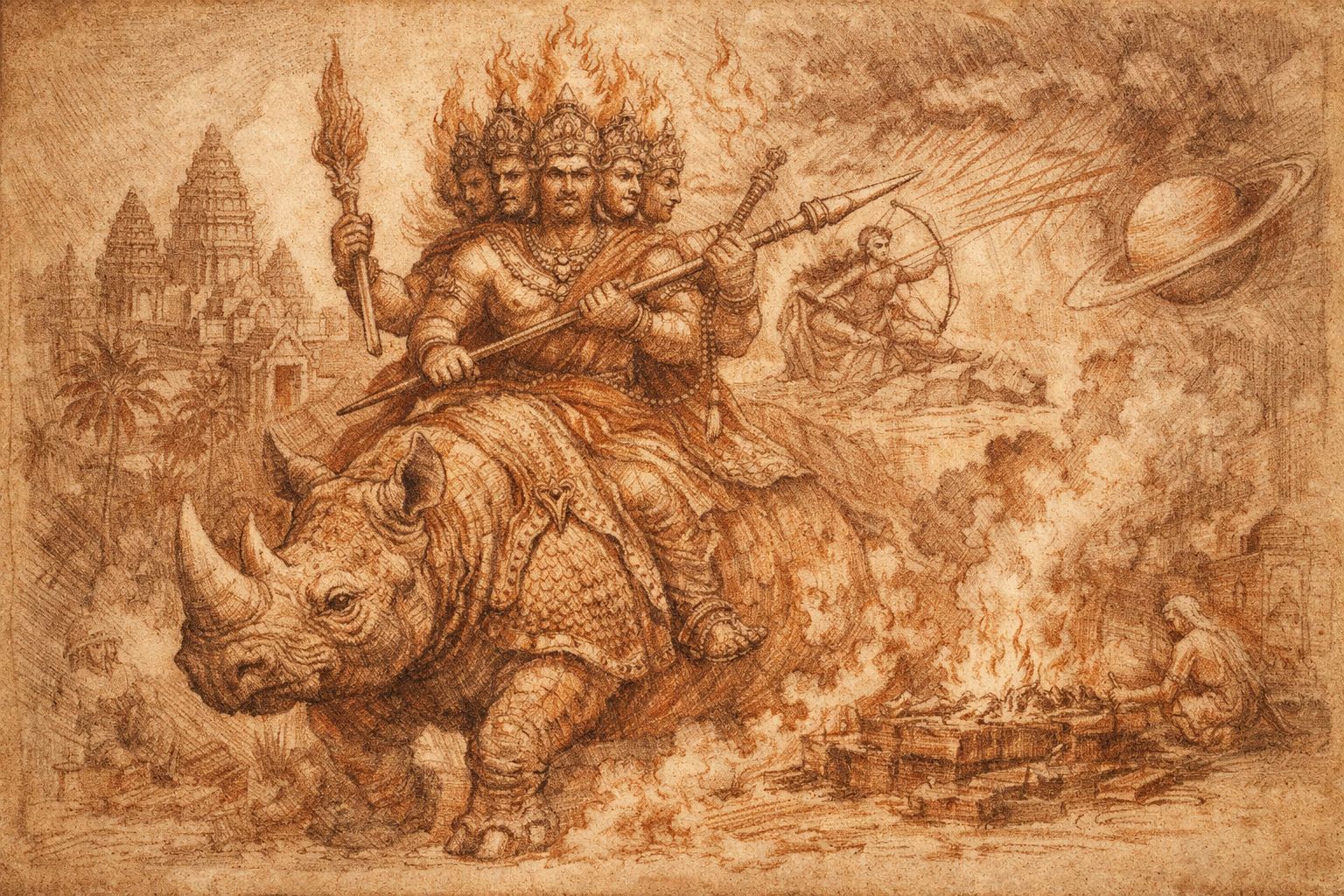

Agni — Keeper of the Living Flame
Fire at Angkor is never wild. It is housed, rekindled, disciplined. Agni rides not a swift ram but a rhinoceros—armoured, deliberate, unafraid. Here, flame does not destroy; it prepares. What burns is not lost, but translated—into ash, silence, and return.
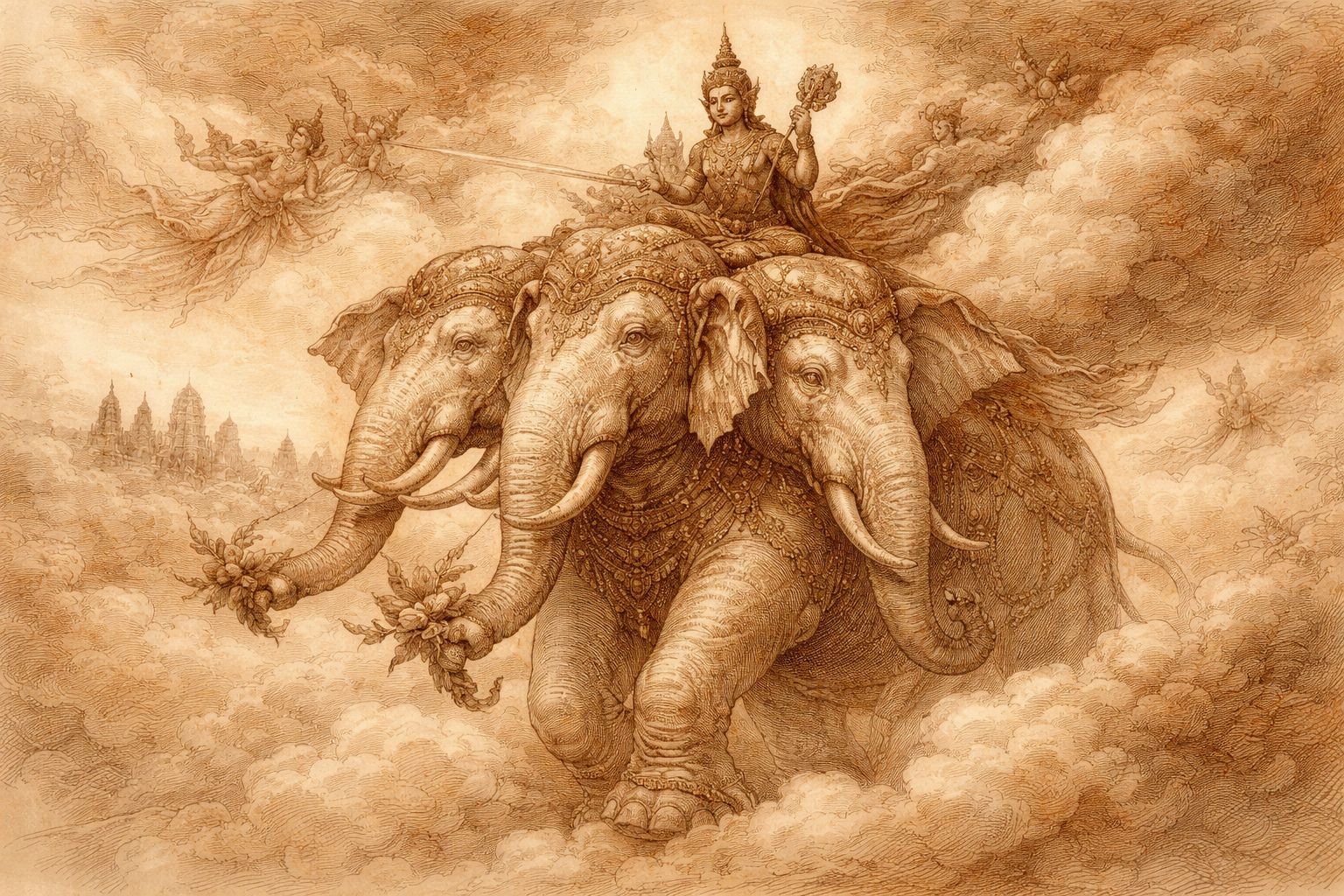

Airavata — The Cloud That Bears the King
Airavata is not merely Indra’s mount, but the sky made patient. In Angkor, he appears where rain is requested and authority restrained—three heads listening in different directions, white as gathered cloud. He teaches that power, like monsoon, must arrive slowly and depart without violence.
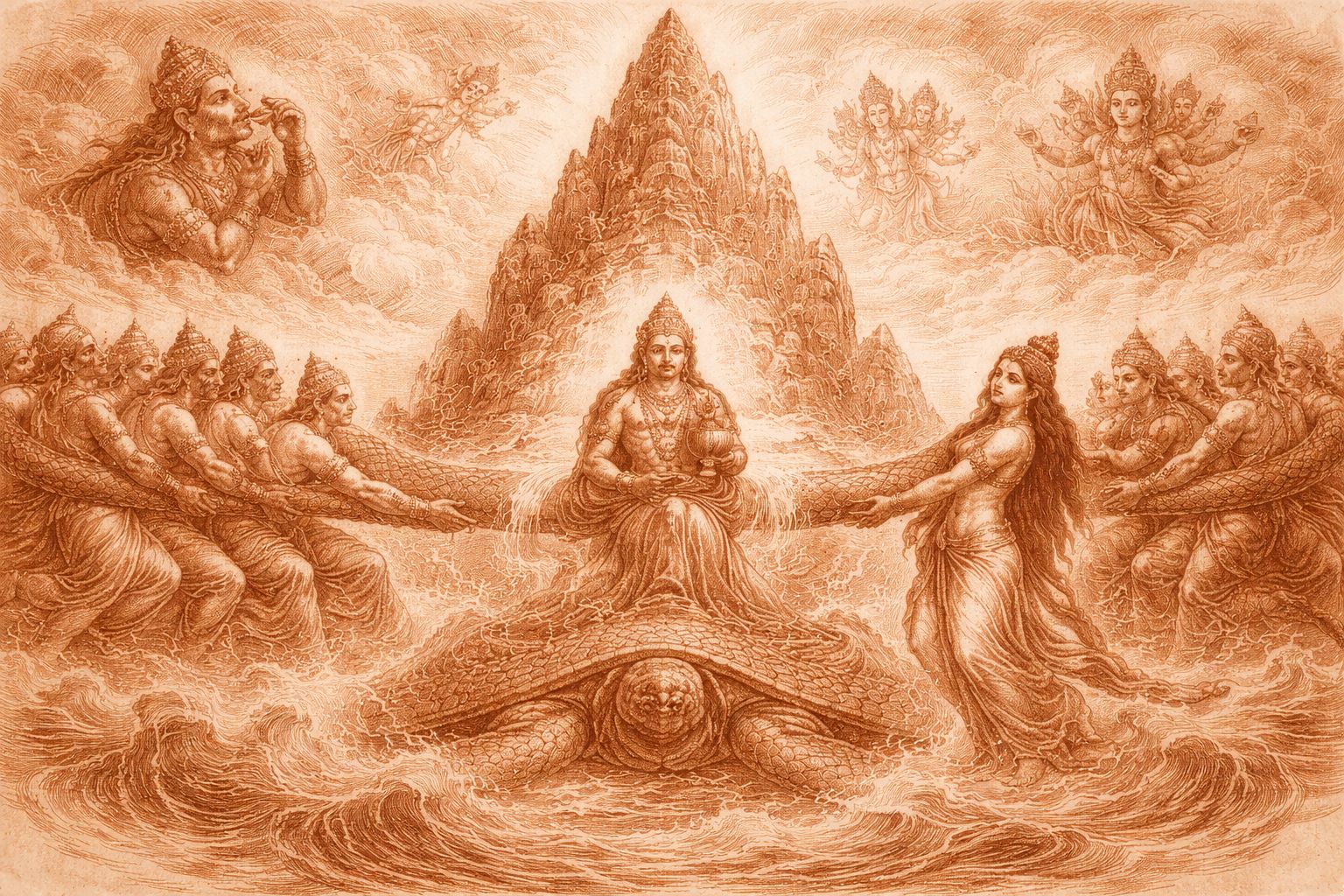

Amrita — The Nectar That Must Be Earned
Amrita is not a gift but a consequence. Drawn from the Ocean of Milk through strain, alliance, and risk, it grants immortality only to those aligned with cosmic order. Poison rises before nectar. The myth insists: vitality must be earned, stabilised, and rightly shared.
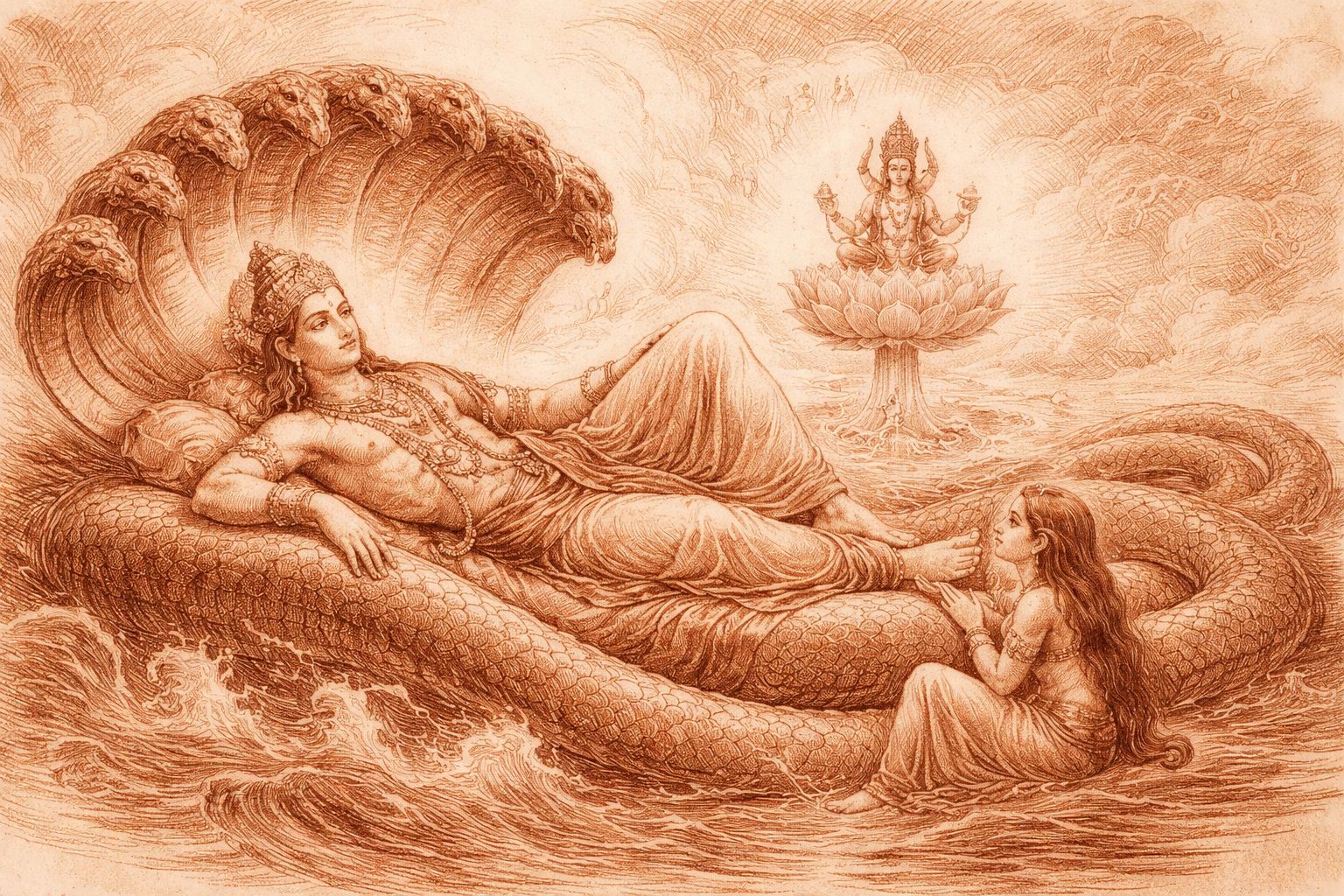

Ananta — The Serpent Who Remembers the World
Before creation takes form, something remains. Ananta, the Endless Serpent, floats upon the cosmic sea, carrying memory through dissolution. Upon his coils Vishnu sleeps, dreaming the next world into being. He is not power, but patience—the residue that ensures rebirth is always possible.
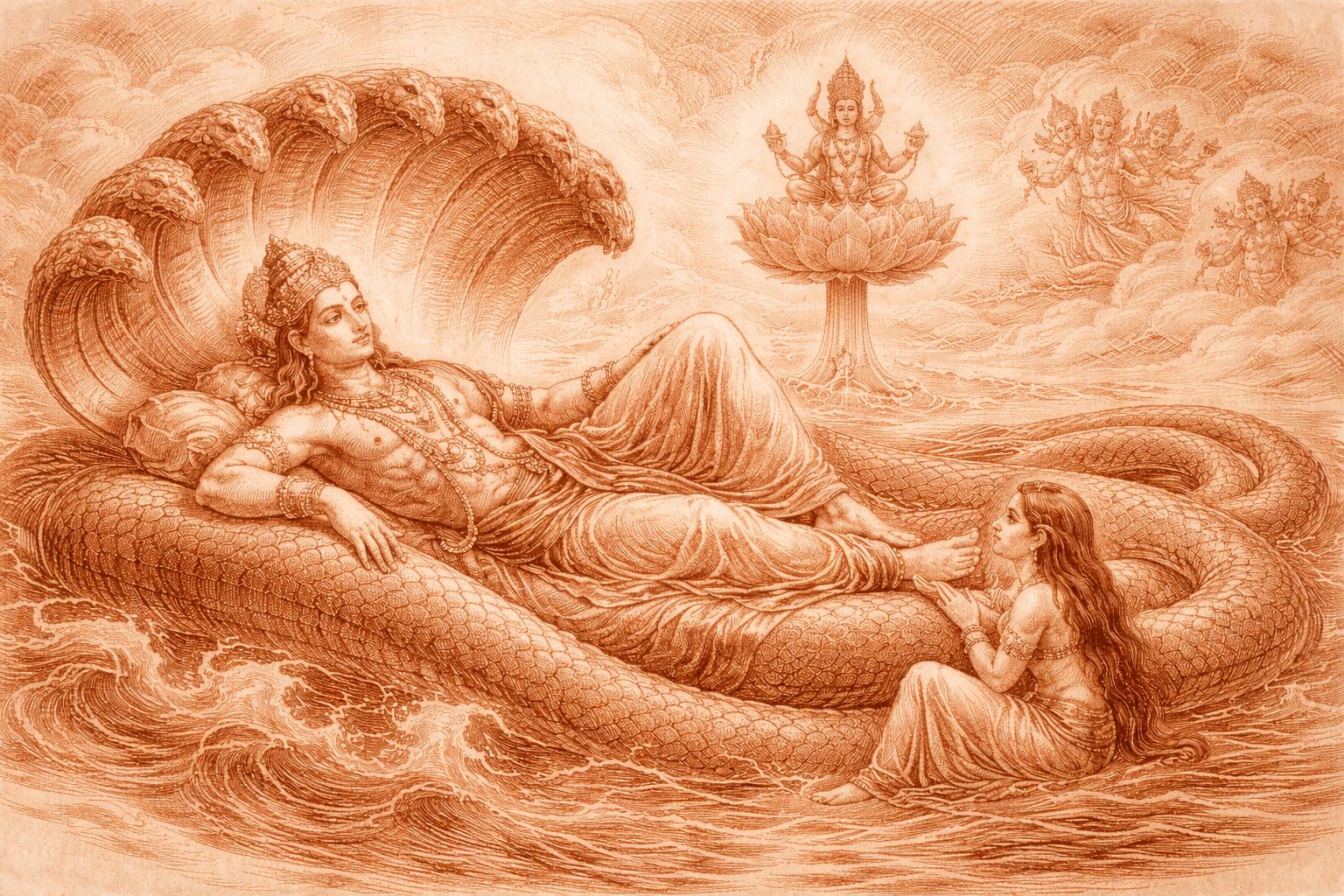

Anantasayin — Where the World Pauses to Be Remembered
Anantasayin depicts the universe at rest. Vishnu reclines upon the endless serpent Ananta, suspended on the Ocean of Milk between one world and the next. It is not sleep as absence, but as memory—creation held intact while time loosens and prepares to begin again.
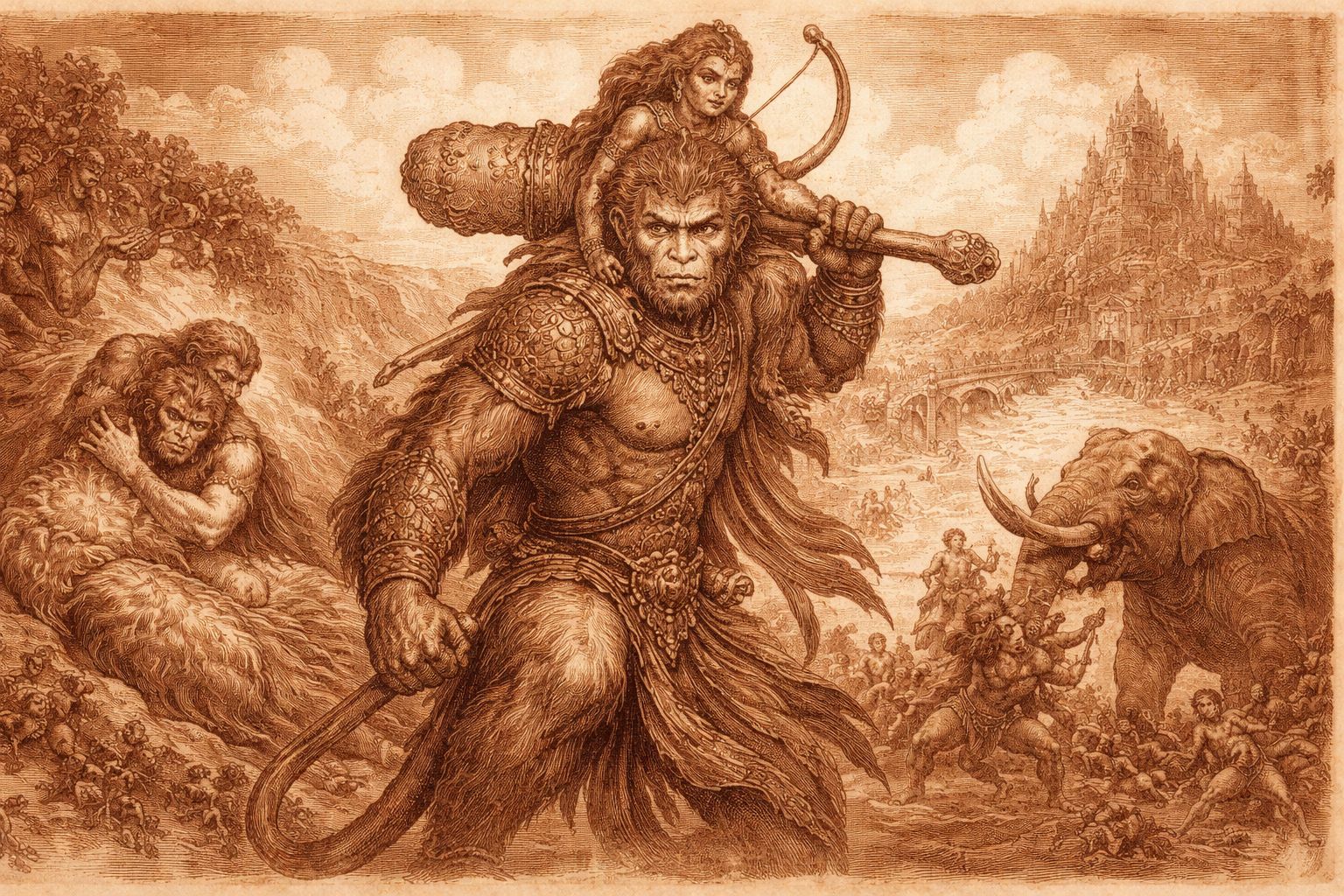

Angada — The Strength That Carries Forward
Angada does not claim the past; he carries it. Born into fracture, he becomes a living bridge—strength without resentment, loyalty without demand. In stone and story, he reminds us that the future often advances on the shoulders of those who ask nothing, yet bear everything.
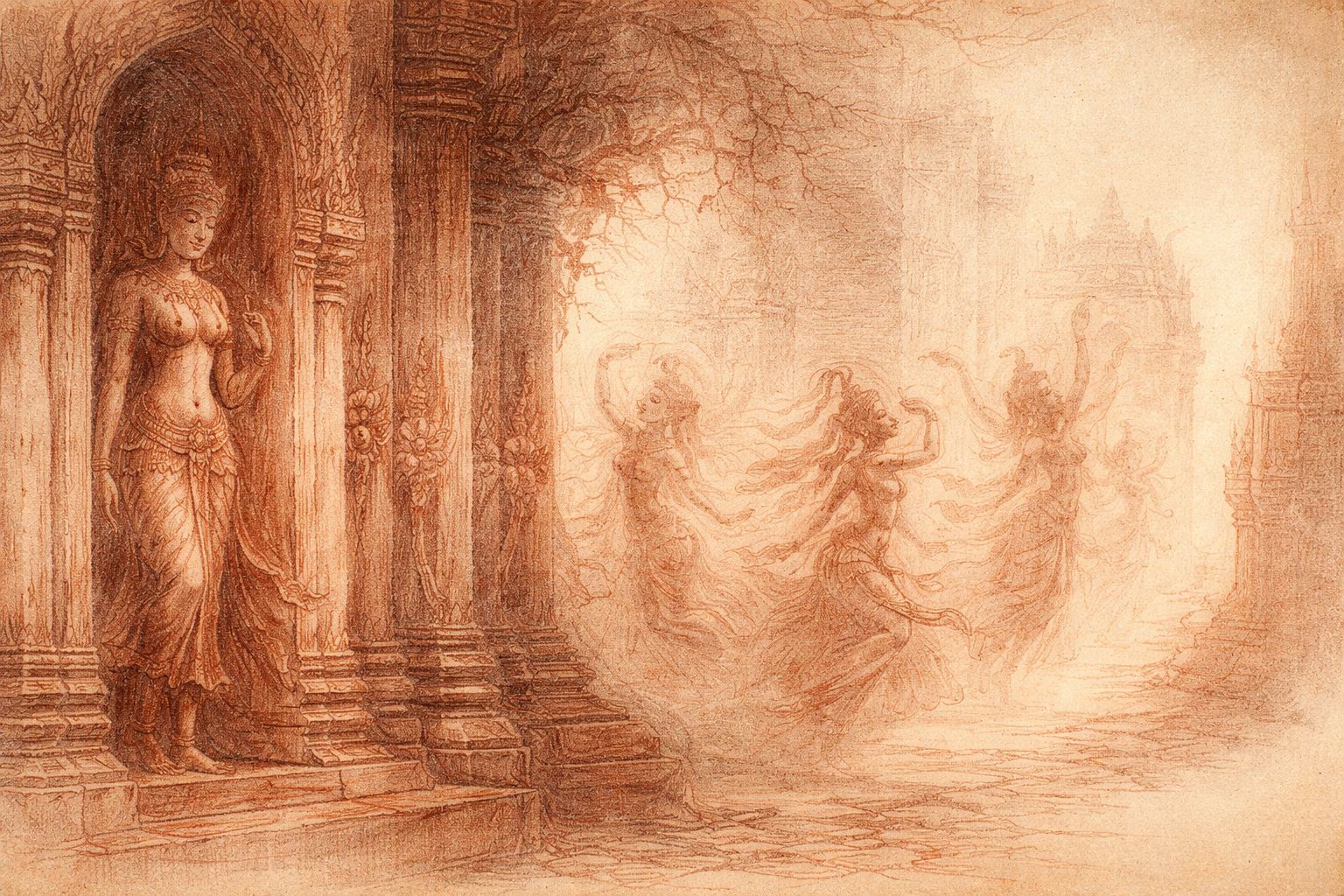

Apsaras & Devatas — The Stillness That Dances
Thousands of women in stone line the temples of Angkor, some standing, some forever mid-dance. They are not ornaments. They are structure, rhythm, and protection—stillness holding the walls, movement animating the heavens, each figure a prayer cut patiently into time.
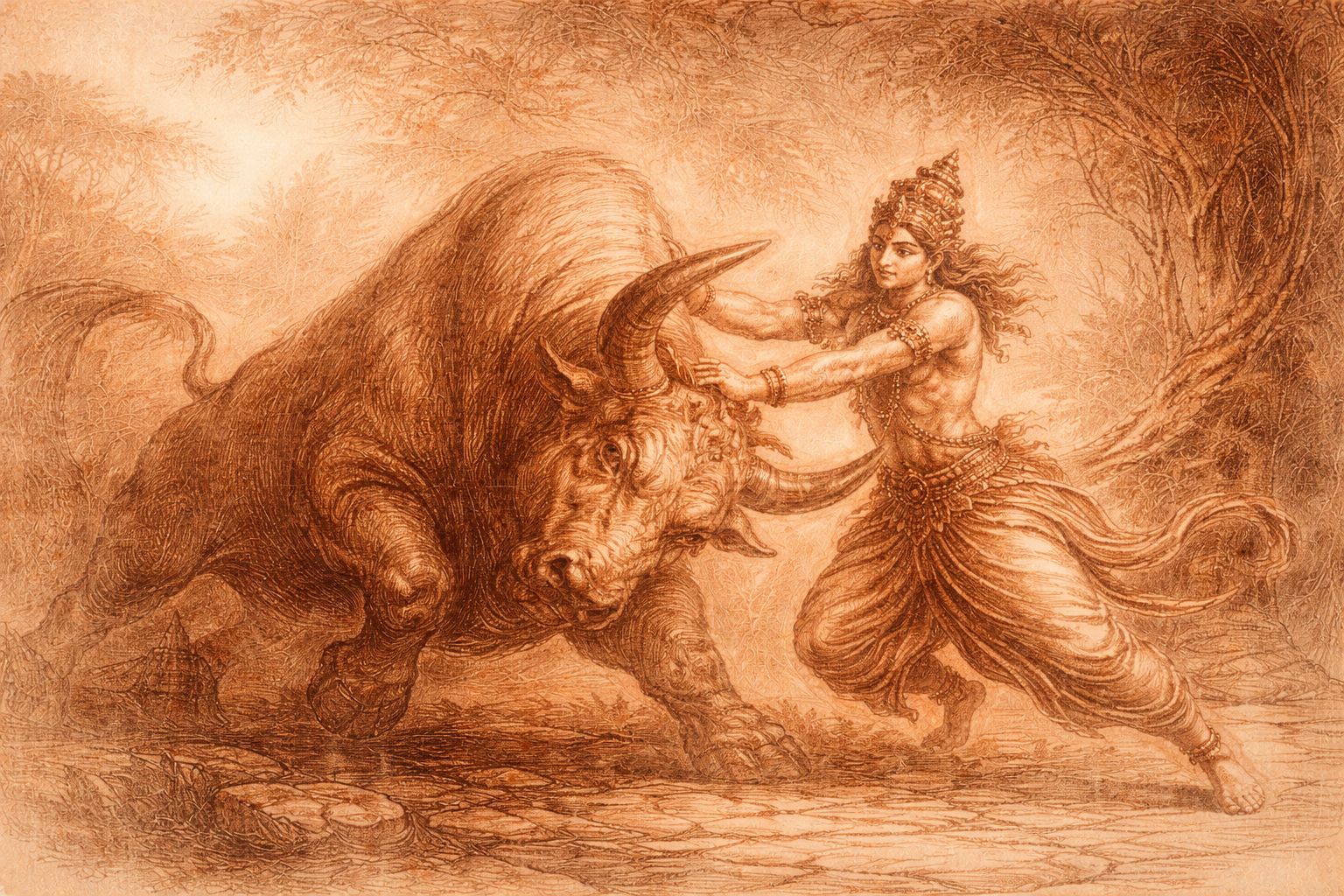

Arishta — When Disorder Wears the Shape of Strength
Arishta comes as a bull—strength untethered from season and care. His defeat by Krishna is not spectacle, but correction: power seized by its own horn and returned to proportion. A myth of restraint, where order is restored not by force alone, but by listening.
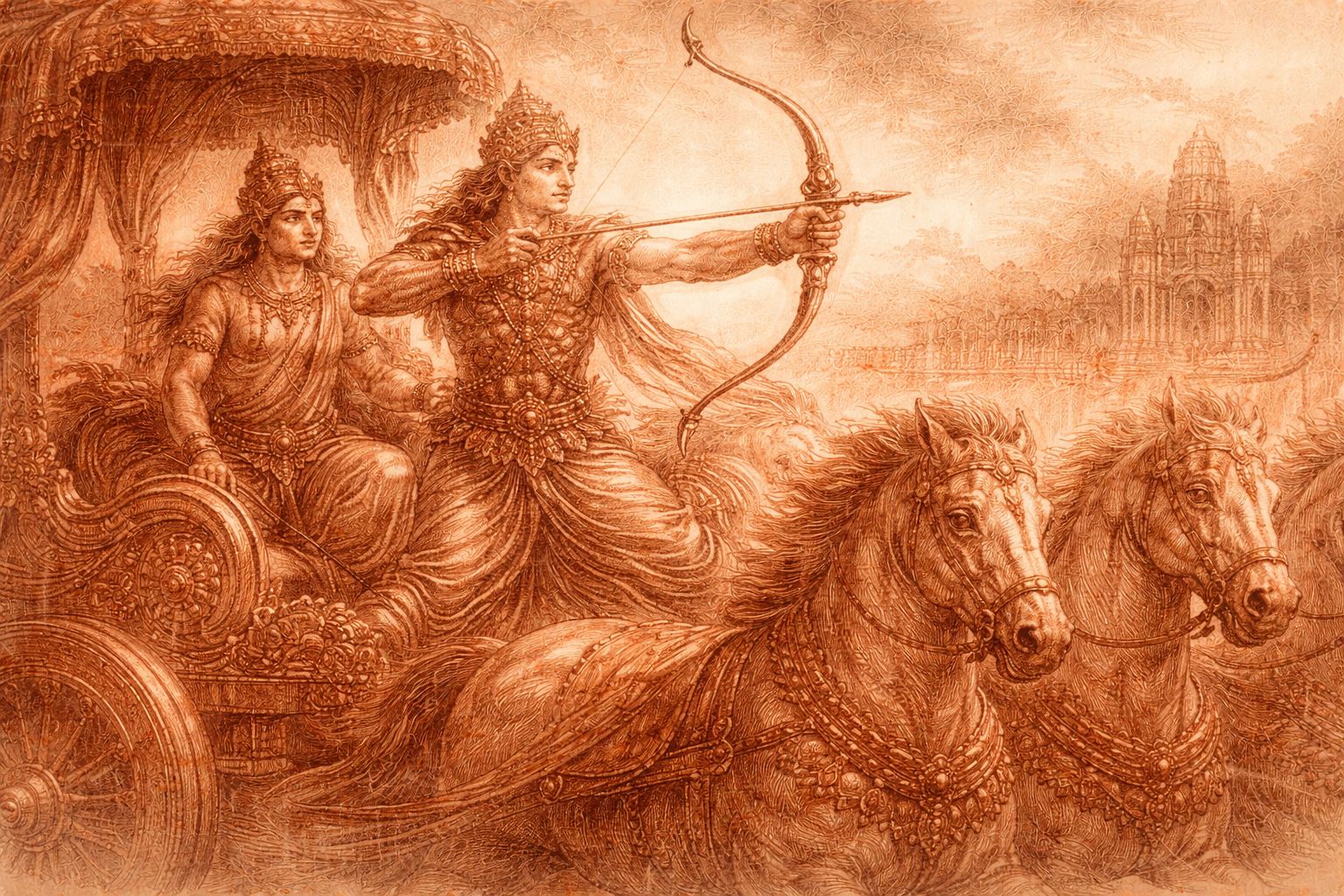

Arjuna — The Warrior Who Learned to Lower His Bow
Arjuna is the warrior who pauses. Faced with kinship and carnage, he lowers his bow and listens. Guided by Krishna, he learns that true action is alignment without attachment—a lesson carved into Angkor’s stone, where power waits upon wisdom.
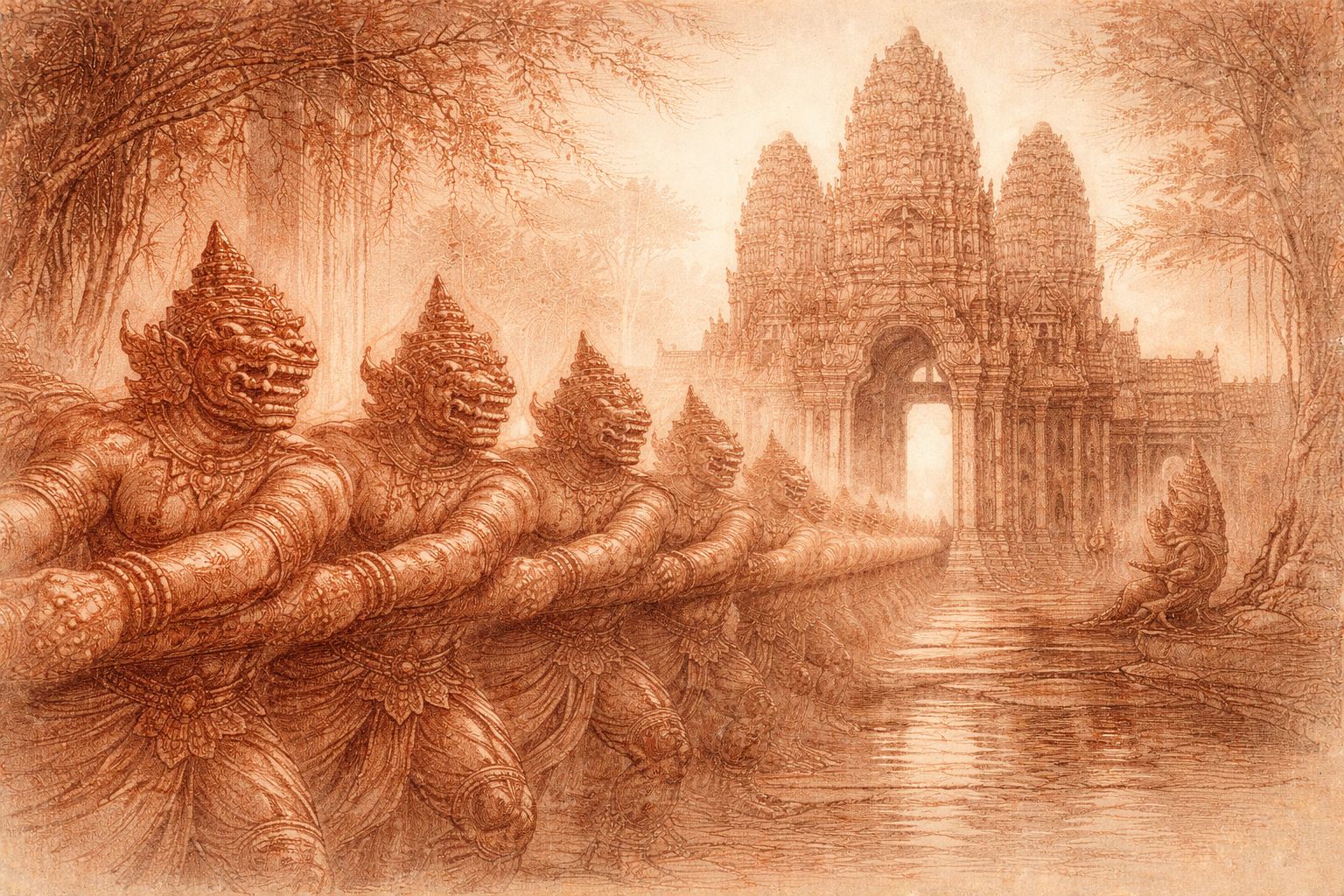

Asuras — The Necessary Shadow of the Gods
The asuras of Angkor are not merely demons but necessary shadows—figures of excess stationed at the threshold of order. Their struggle with the gods churns the cosmos itself, reminding us that balance is born not from purity, but from disciplined opposition.
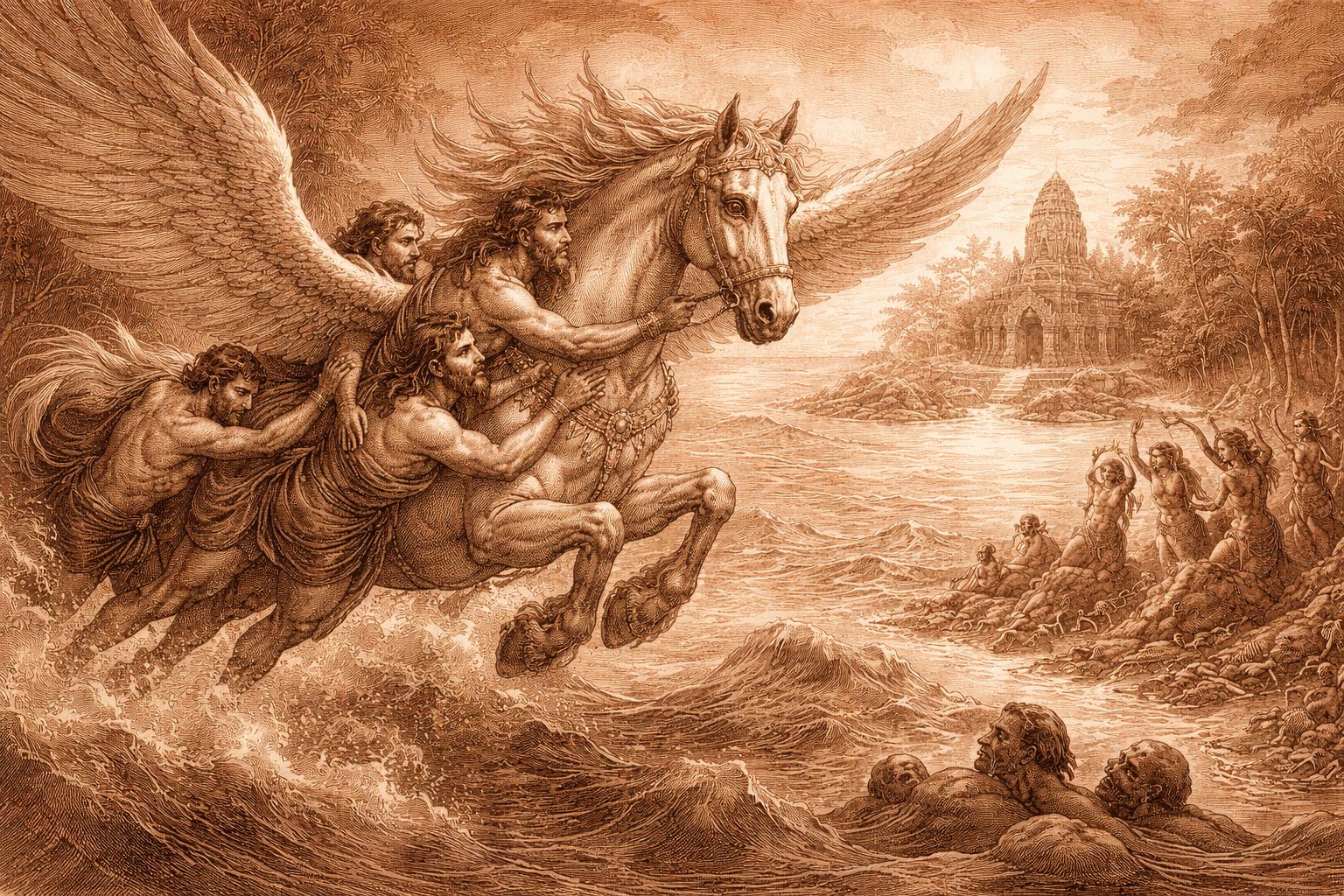

Balaha — The Horse Who Carries Across
Balaha is compassion in motion. Appearing as a flying horse, Lokeshvara becomes the vessel that carries beings across the ocean of existence. Rescue is offered—but only to those who do not look back. In Angkor, this vow was carved into water, stone, and flight.
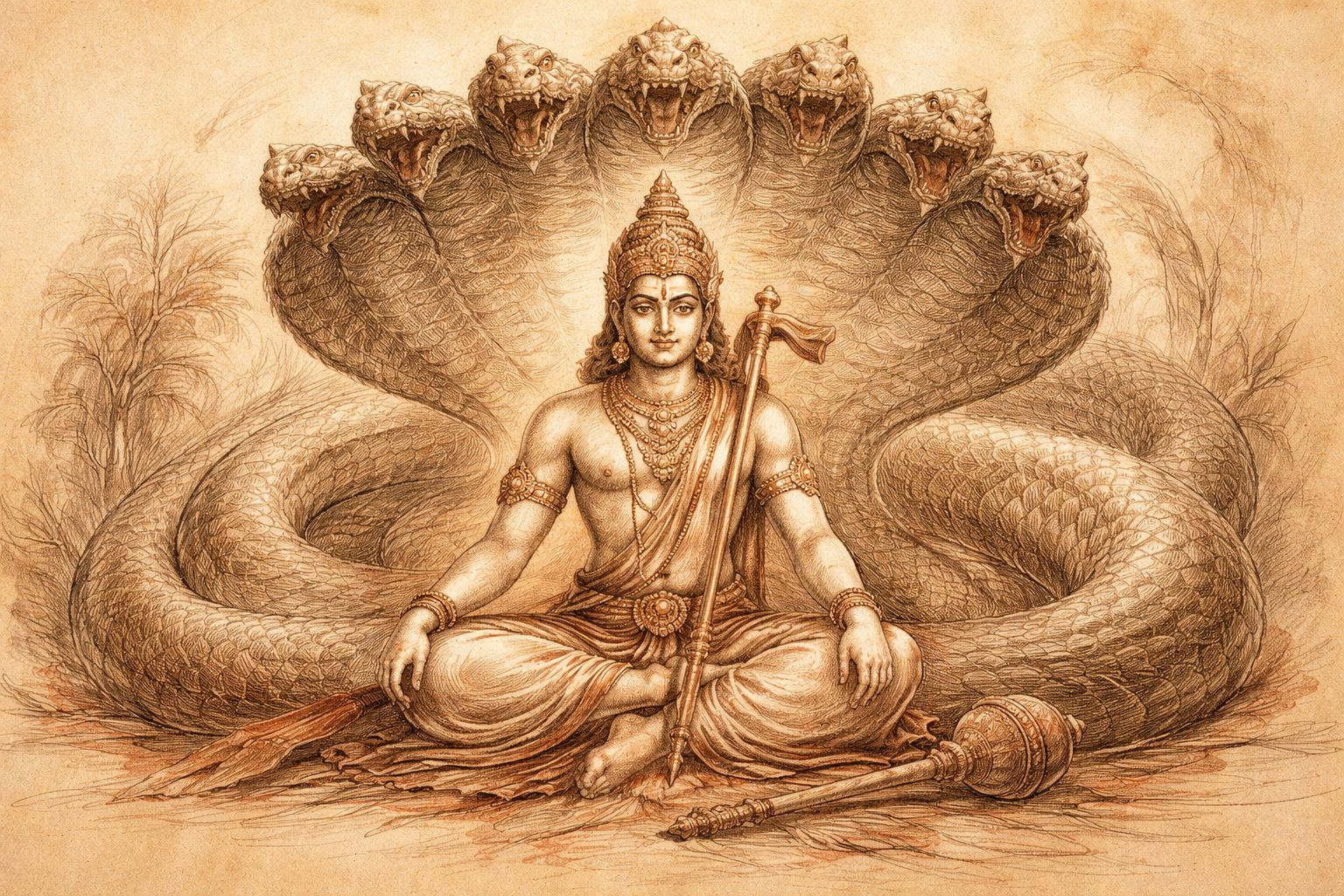

Balarama — The Weight That Holds
Balarama is the strength that does not seek attention—the pale force beneath colour, the foundation beneath play. As Ananta in human form, he teaches that true power is not spectacle, but weight borne in silence, allowing the world, and all its stories, to stand.
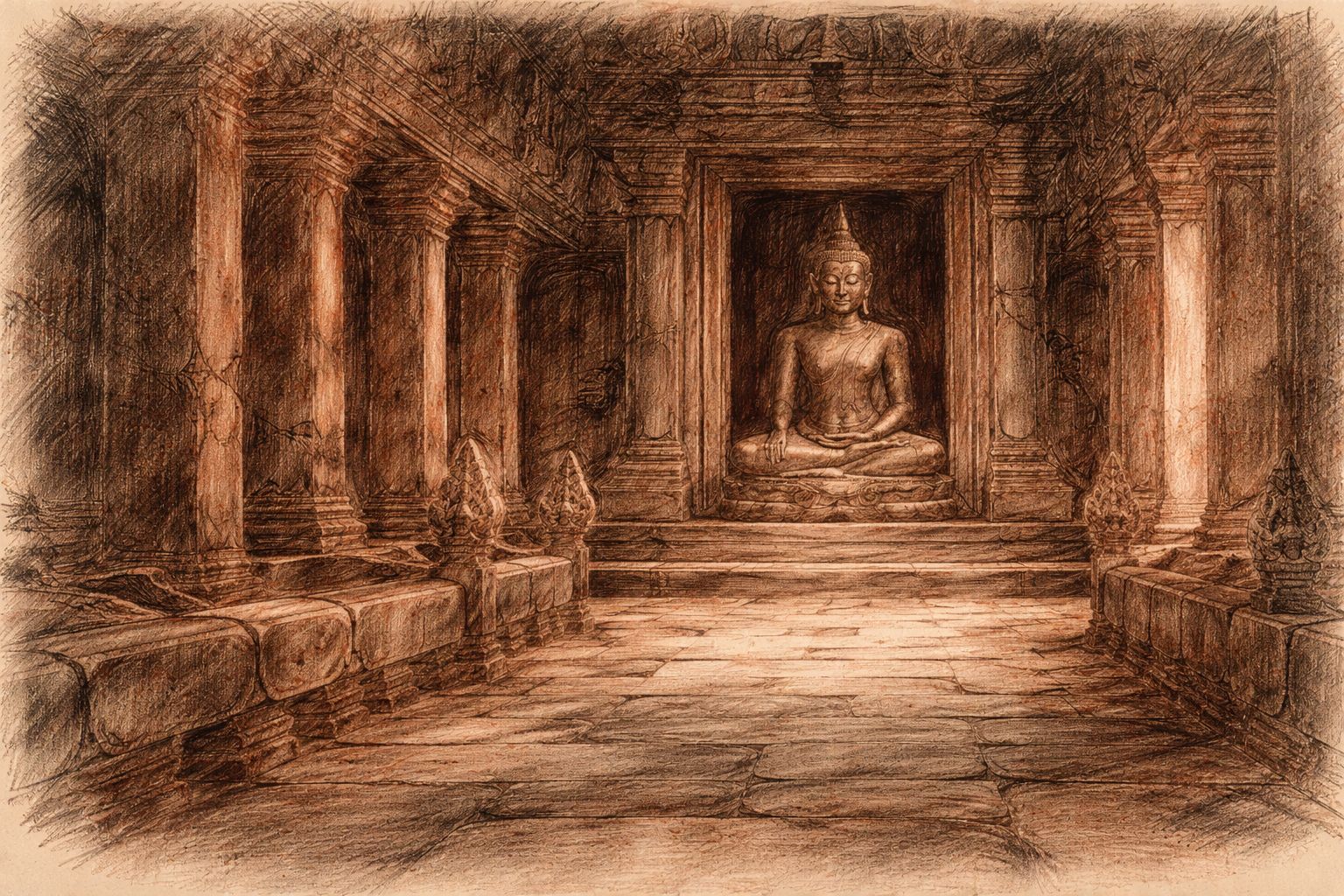

The Bodhisattva and the Discipline of Remaining
In Angkor, the Bodhisattva is recognised by what he refuses: final departure, private release, unshared clarity. He remains at the threshold, holding space rather than resolving it. His compassion is architectural, measured, and patient—an ethic of staying close without closing the world.
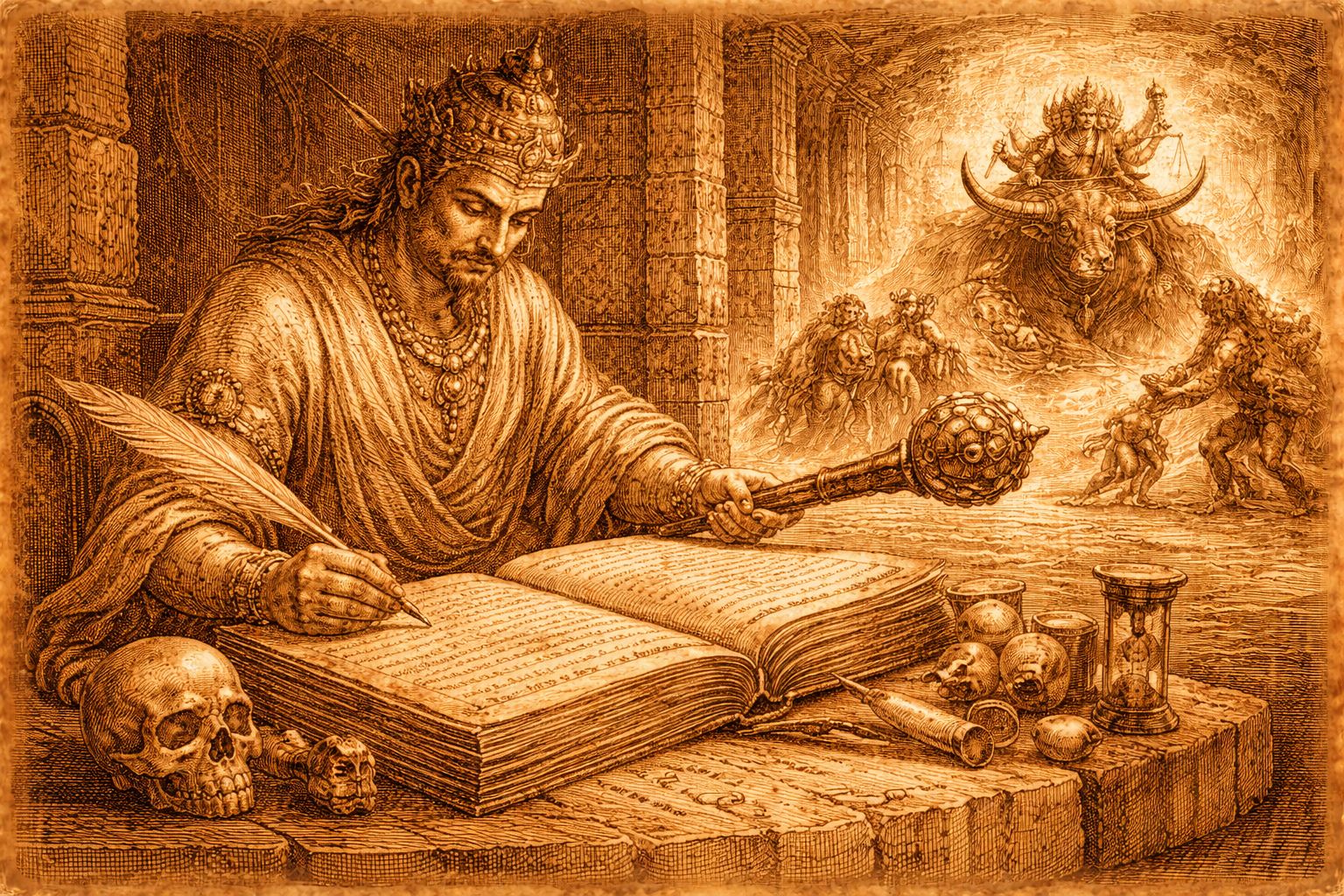

Citragupta — The Ledger That Does Not Forget
Citragupta does not judge; he reads. In his ledger, every life is already complete, every action accounted for. Before Yama speaks, the record is heard. Justice at Angkor is not fury or mercy—it is balance, rendered legible.
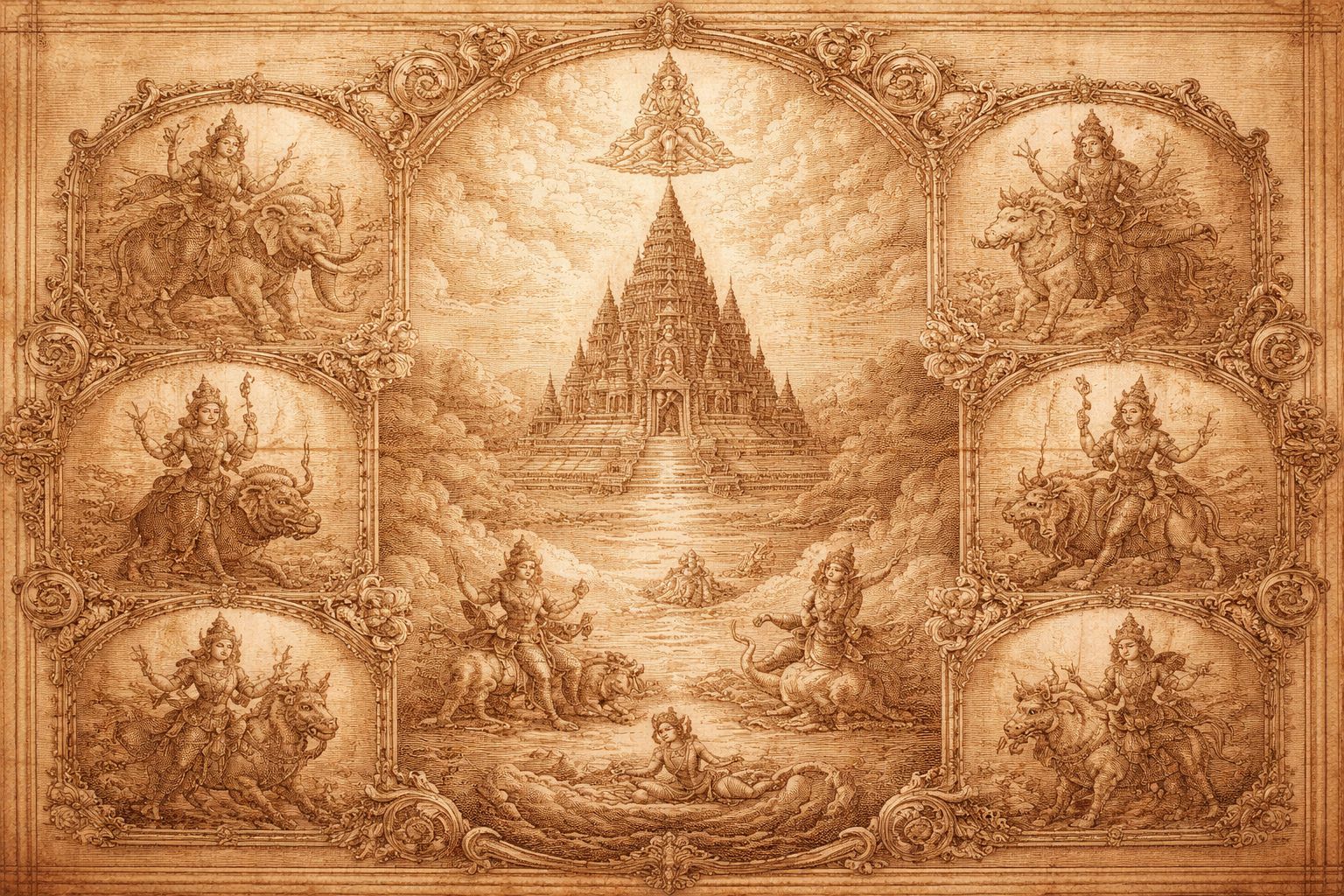

The Dikpalas — Holding the World in Place
The Dikpalas do not defend temples from enemies. They defend them from confusion. By fixing north, south, east, and west into stone, the Khmers ensured that power remained measured, water restrained, death contained, and wealth bounded. A temple endures only when the world around it is held in place.
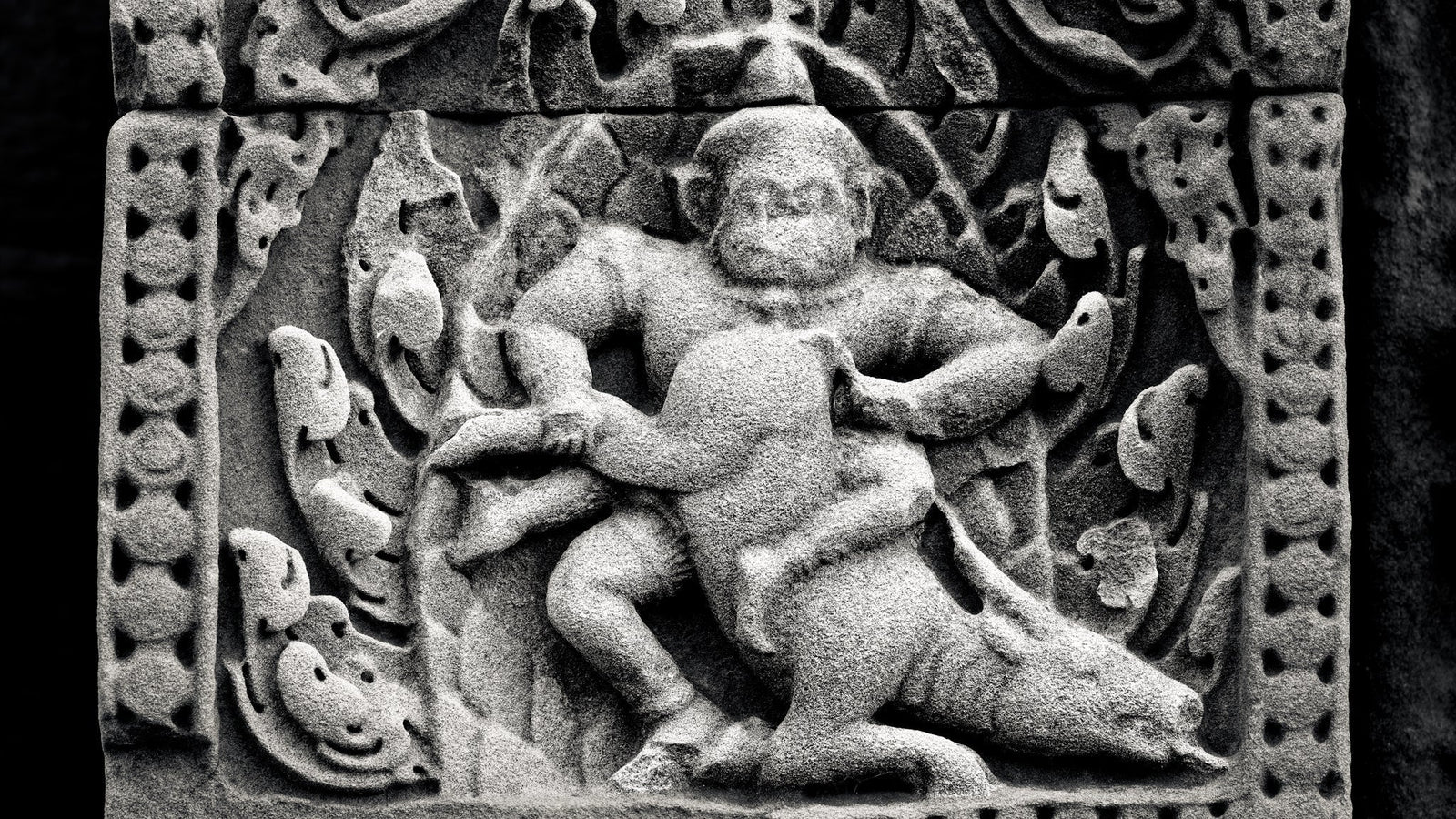

Dubhi and the Weight of Power in the Reamker
Dubhi appears as weight before meaning—strength without inheritance, power without direction. In stone and story, he is not erased but contained, his defeat leaving a trace that passes into the body of the world. A meditation on force, survival, and the cost of being unable to belong.
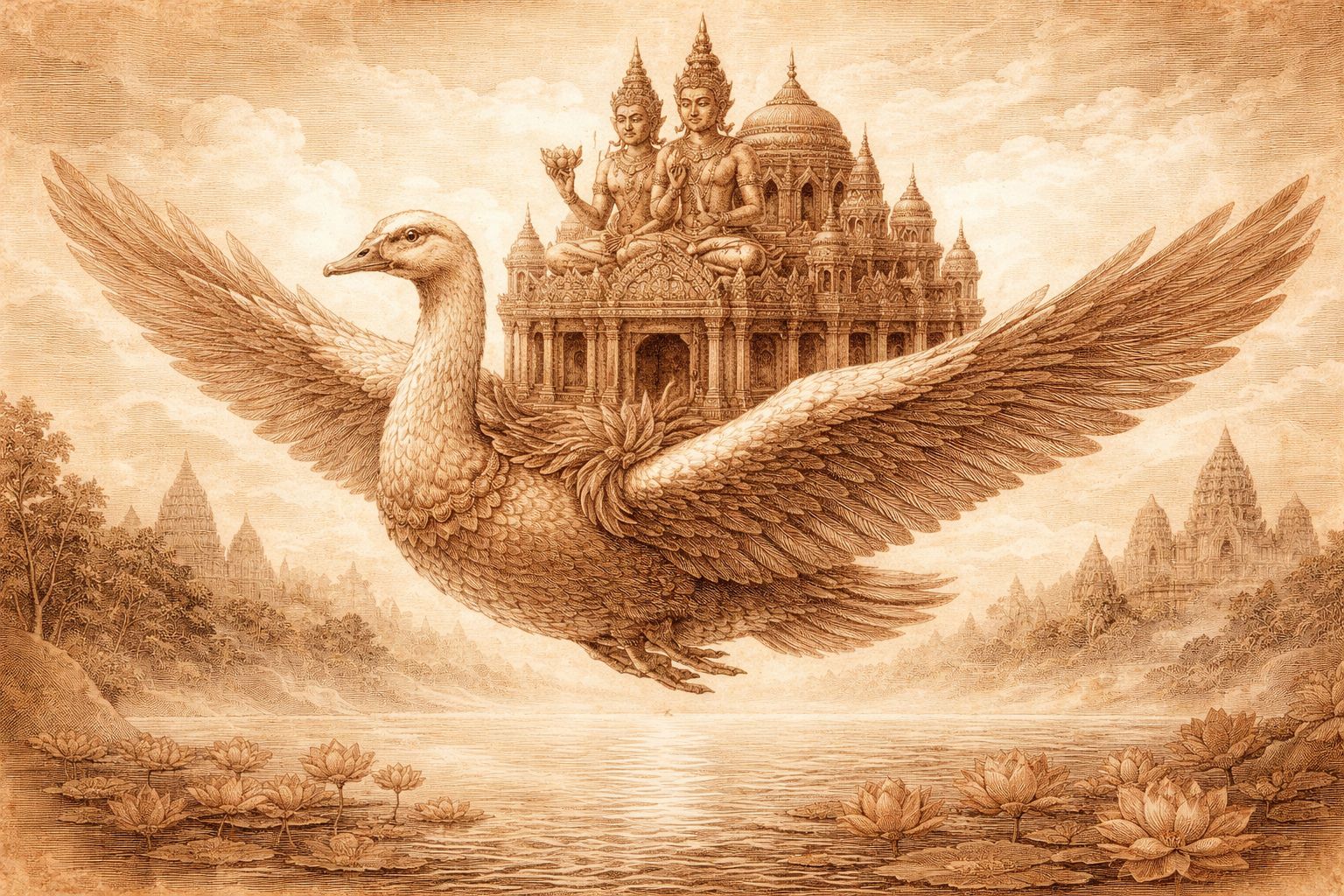

The Hamsa — The Bird That Knows Two Worlds
The hamsa does not flee the world, nor does it sink into it. It glides between water and sky with untroubled certainty, bearing gods, palaces, and breath itself. In its wings, Angkor teaches a quieter mastery: how to remain unstained while fully present.
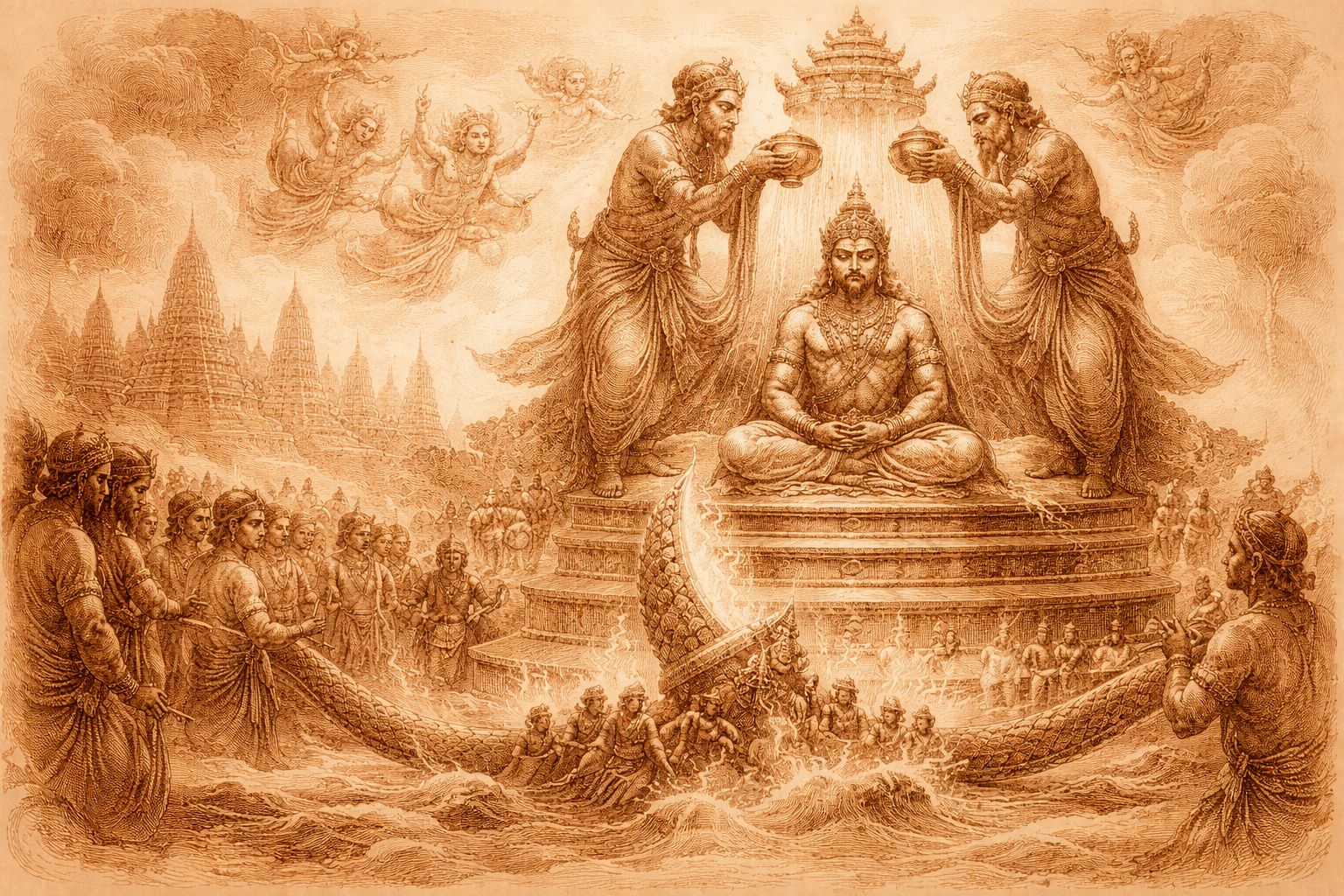

Indrābhiṣeka — The Rite That Restores the World
The Indrābhiṣeka was never merely a coronation. It was a ritual reset of the cosmos itself. By reenacting Indra’s return to power after chaos, Khmer kings submitted their authority to renewal, washing victory into legitimacy and binding sovereignty to balance, restraint, and cosmic order.
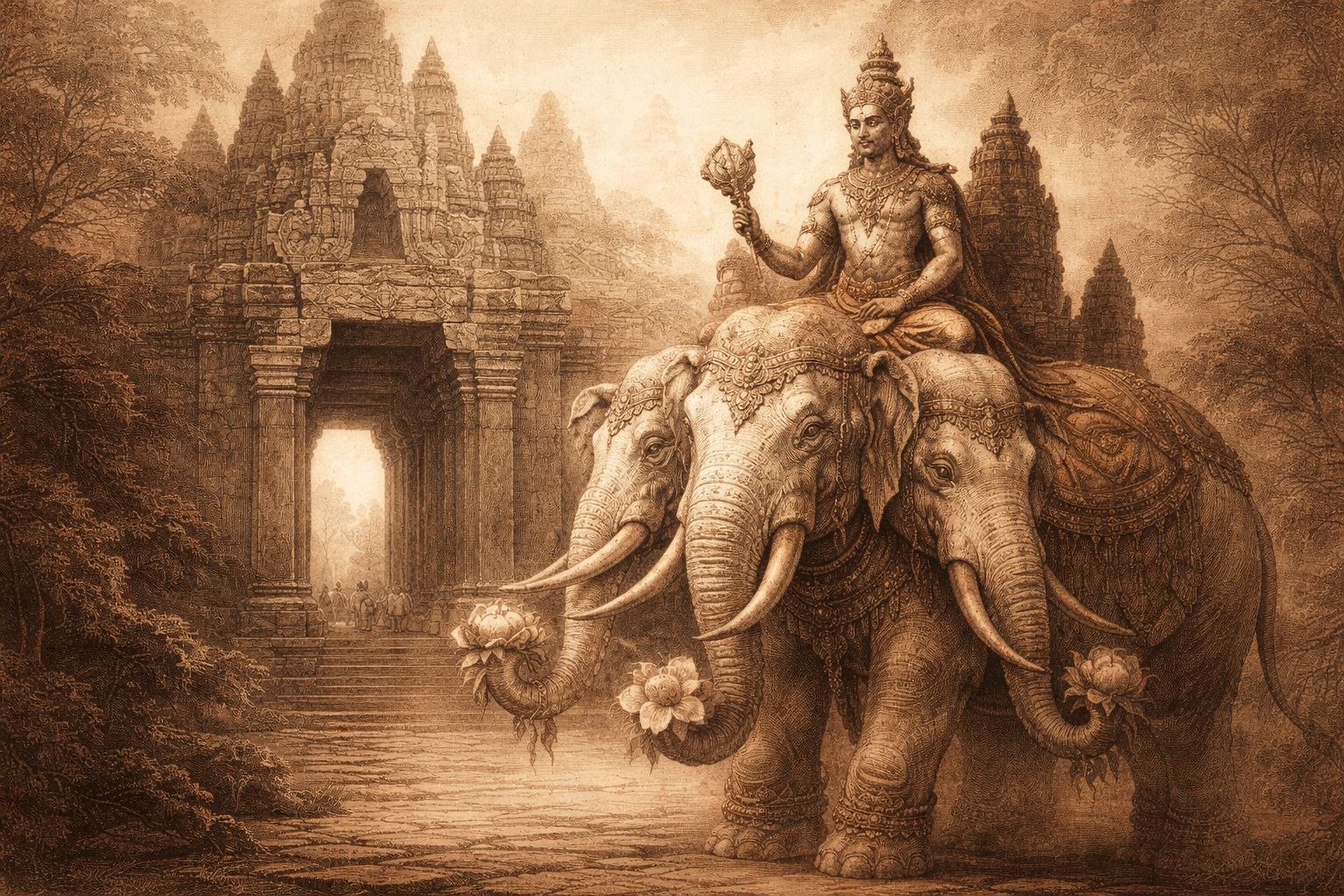

Indra — The East, the Storm, and the Fading Crown
Indra arrives as pressure before belief: cloud-thick air, withheld rain, the breath before release. At Angkor he remains at the eastern gates, mounted on the white elephant, guarding the threshold where force yields to law and storm learns restraint. Kings pass. The weather remembers.