
The Library gathers the written works of Lucas Varro — journals of the temples, mythic retellings, contemplative essays, poems, and volumes shaped by shadow, silence, and wonder. Here, words stand beside images as offerings: field notes from Angkor, meditations on sacred stone, old stories rekindled, and reflections carried beyond the visible world.
Within these shelves you will find many rooms: Angkor journals, myth and legend, apsara meditations, contemplative essays, poems, children’s mythic wonder, literary retellings, and quieter devotions of the page. Wander chronologically, enter by theme, or pass through one of the dedicated publication houses now gathered within the wider Library.
For those who wish to follow these paths further, several of these writings continue on Substack and in dedicated archive blogs: The Lantern Chronicles , where myth, legend, contemplative essays, poetry, and other imaginative works are carried onward; The House of Cadmus , where Greek myth and tragedy are reopened through inheritance, violence, fate, and recurrence; The Mytharium , where myth, Tolkien, fairy stories, and old literature are read and retold with seriousness; The Alexander Series , where A. M. Sharp retells Greek myths for children who want to be trusted by stories; and The Hospitable Dark , where A. M. Sharp offers literary myth retellings shaped by darkness, shelter, endurance, and return.
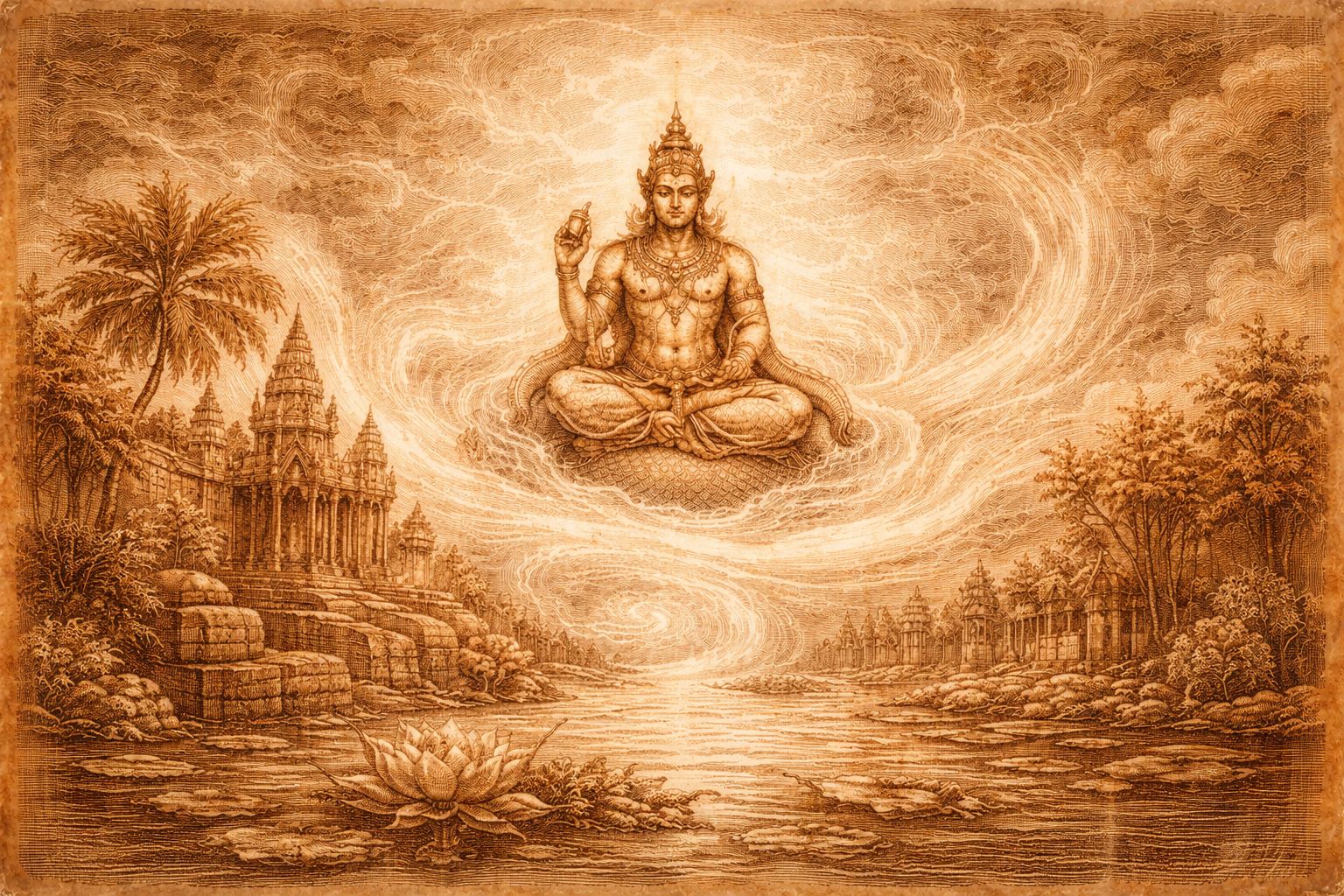

The Fifth Silence — Wind, Breath, Brahman
When fire, water, storm, and judgement withdraw, breath remains. Wind receives them all without resistance. In Khmer and Vedic thought, this silent element—Brahman—is not an ending, but the place of return, where every force is concealed until it is ready to breathe again.
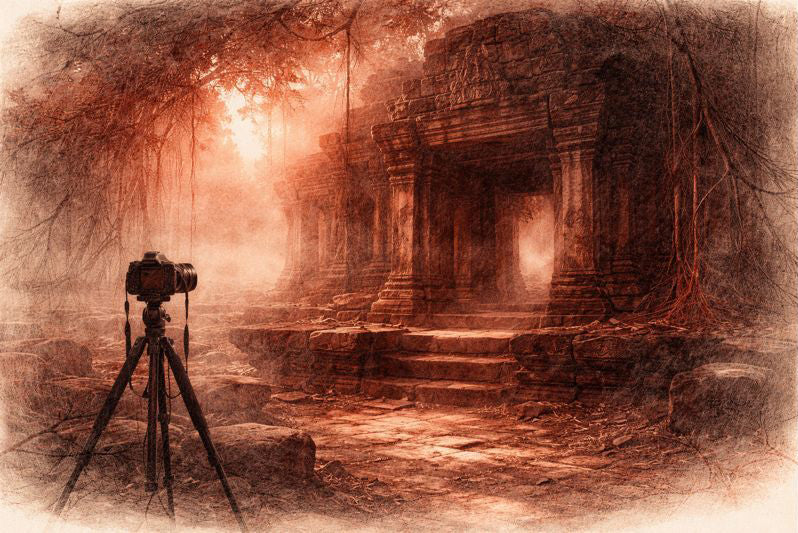

Before the Shutter Falls
Before the shutter falls, fear sharpens and doubt measures the cost of waiting. In the quiet hours before dawn, the act of not-yet-beginning becomes a discipline of attention. This essay reflects on patience, restraint, and the quiet mercy that arrives when outcome loosens its hold.
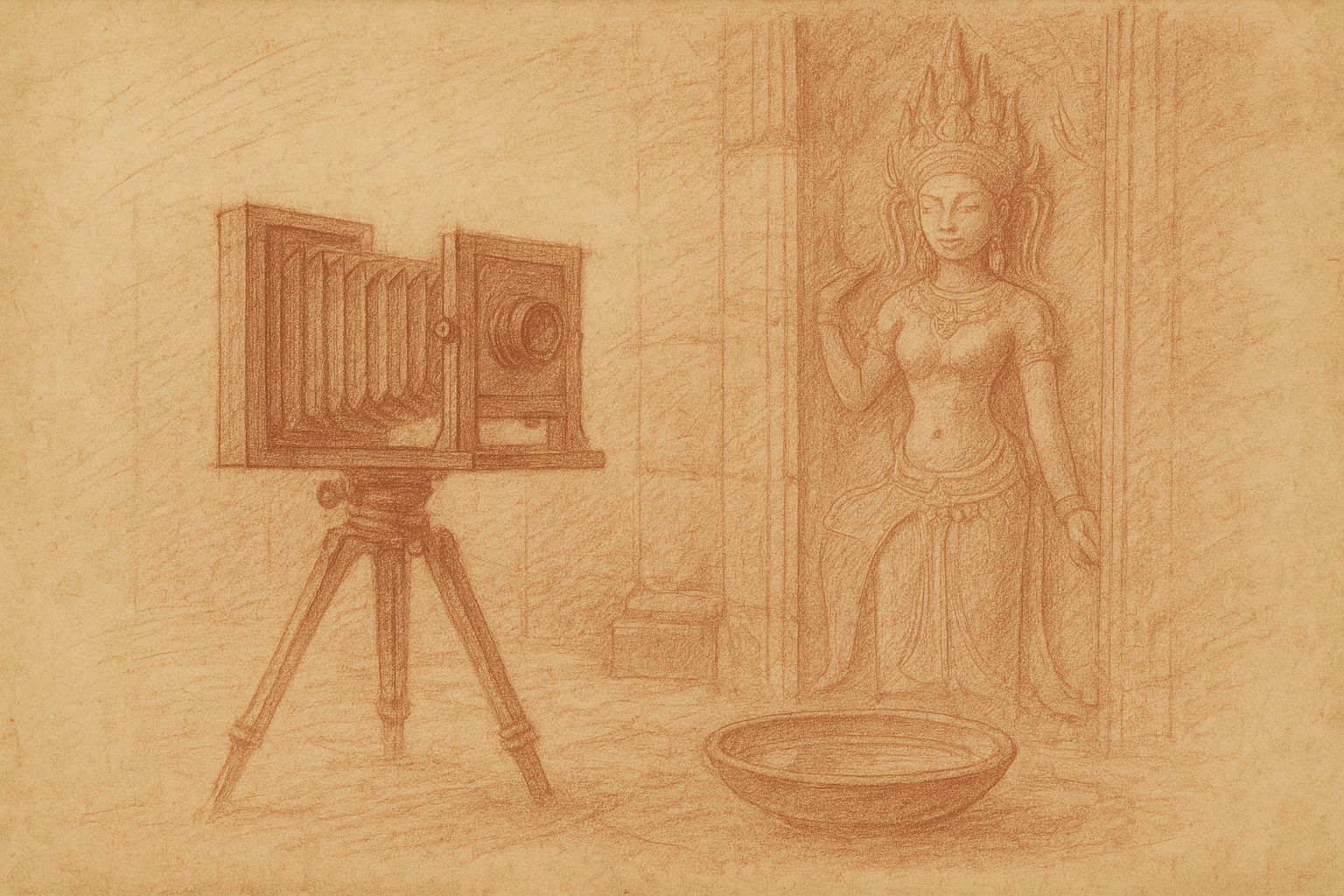

The Still Eye — Craft, Meditation, and the Listening Camera
In the darkroom, silver begins to breathe—and a morning at Bayon returns. The essay moves from tray to temple and back, tightening its centre around a single vow: consent, not capture. A butterfly’s tremor, a lintel at dawn, a print clearing in water. Craft becomes meditation; the camera, a quiet bowl for light.
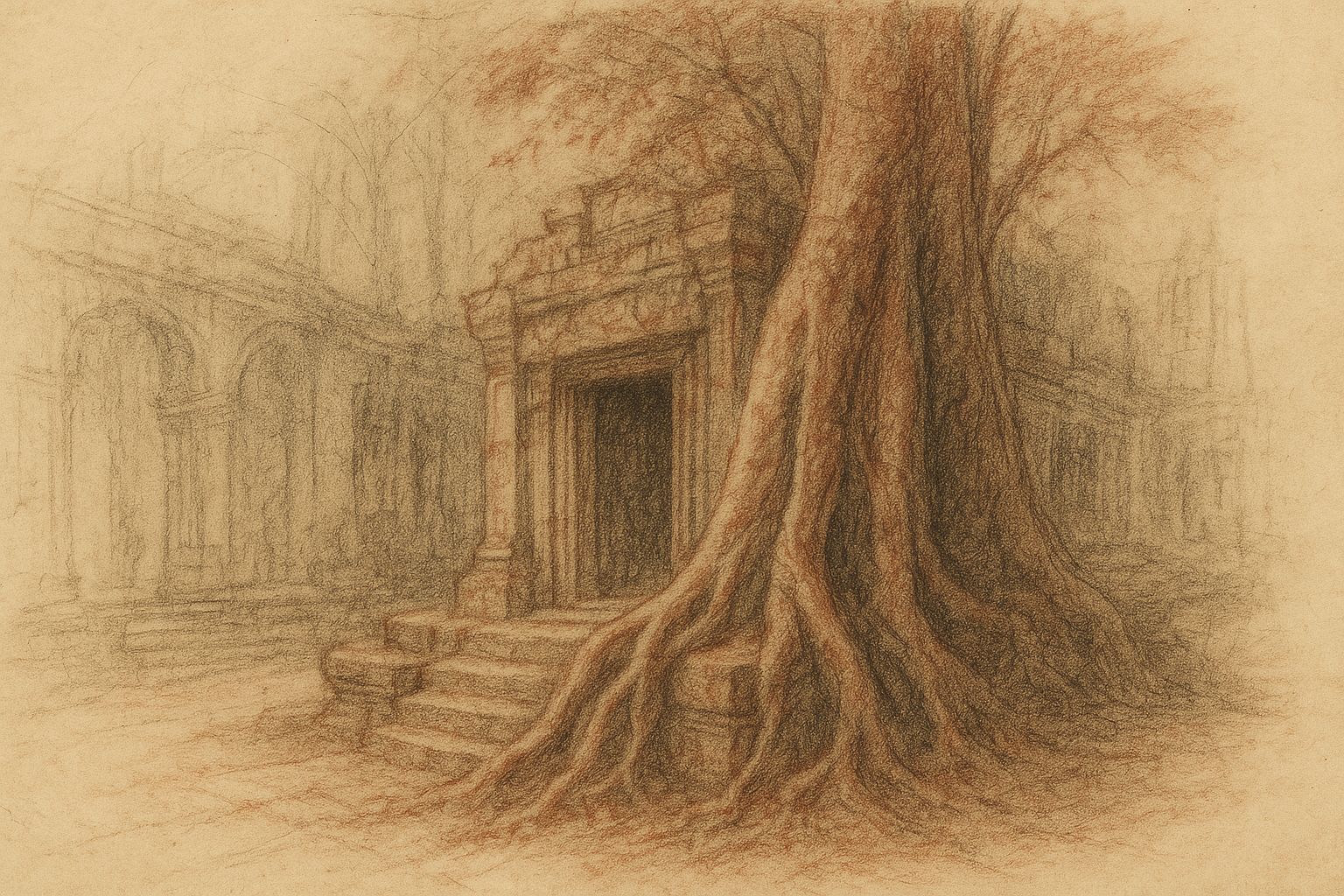

Roots That Remember — Ta Prohm and the Patience of Trees
Beneath the silk-cotton roots of Ta Prohm, stone and forest remember one another.
Here, patience is architecture — each root a gesture of mercy, each shadow a breath of memory.
Listen long enough, and the silence begins to bloom.
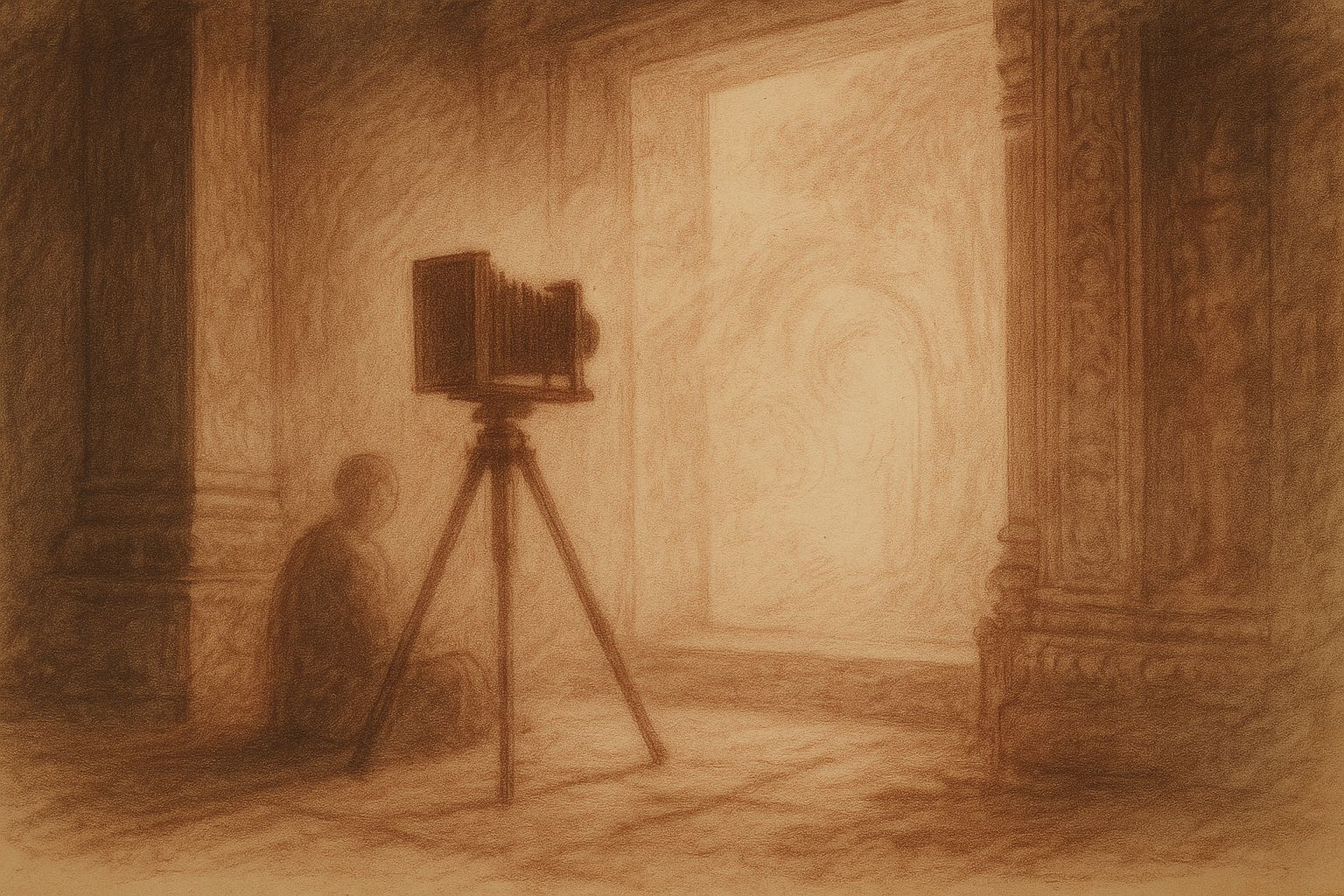

The Weight of Light
In the hush before dawn, light gathers until waiting becomes prayer.
Long exposure teaches surrender — to breathe with time, to let the unseen complete the image.
What remains on film is not possession, but trust made visible.
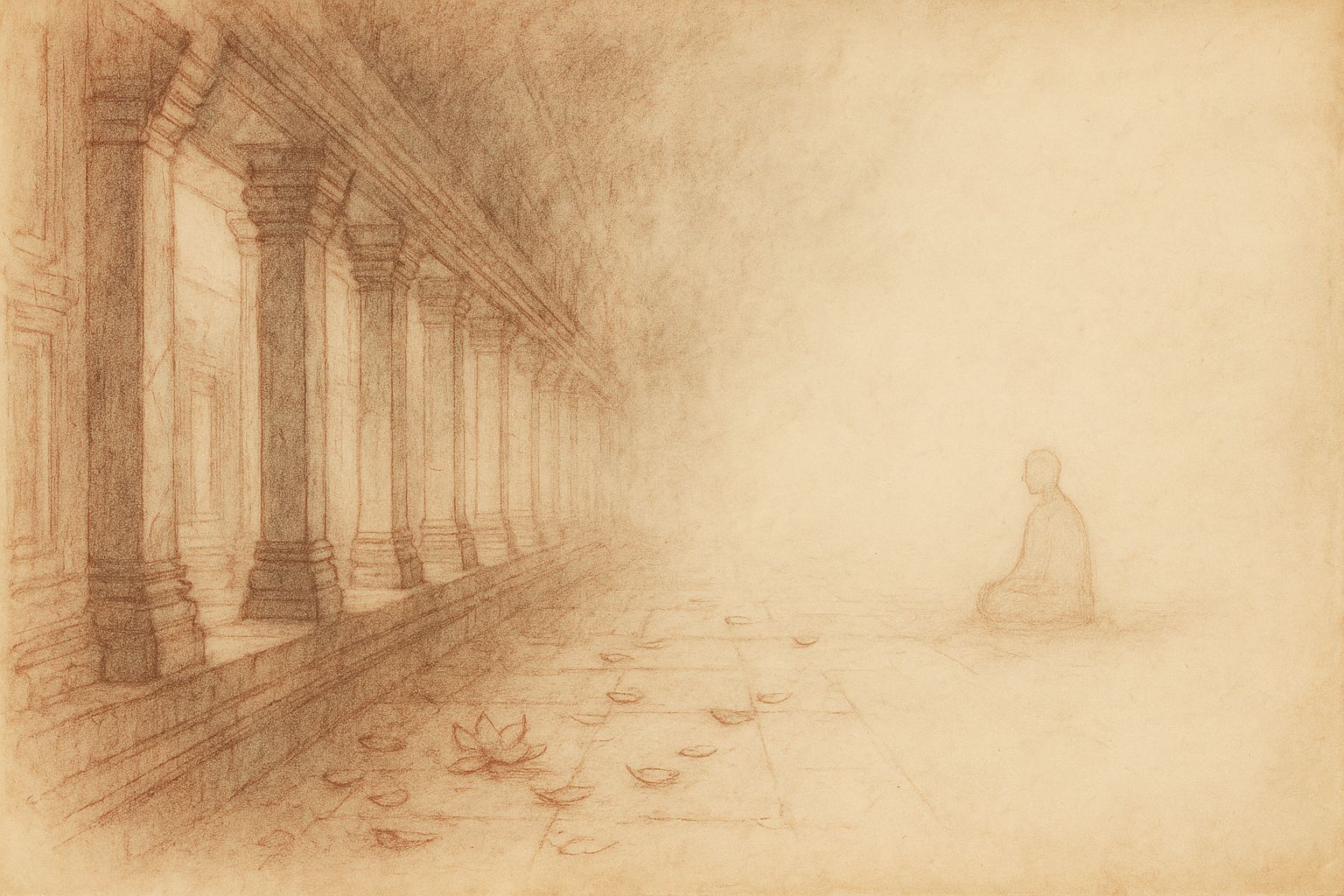

The Silence Between Temples
Between one breath and the next, the world holds its pulse in silence.
Here, between temples, devotion hums without voice—light becoming memory, memory becoming air.
Step softly into the space where sound has already bowed,
and feel the sacred linger in what remains unspoken.
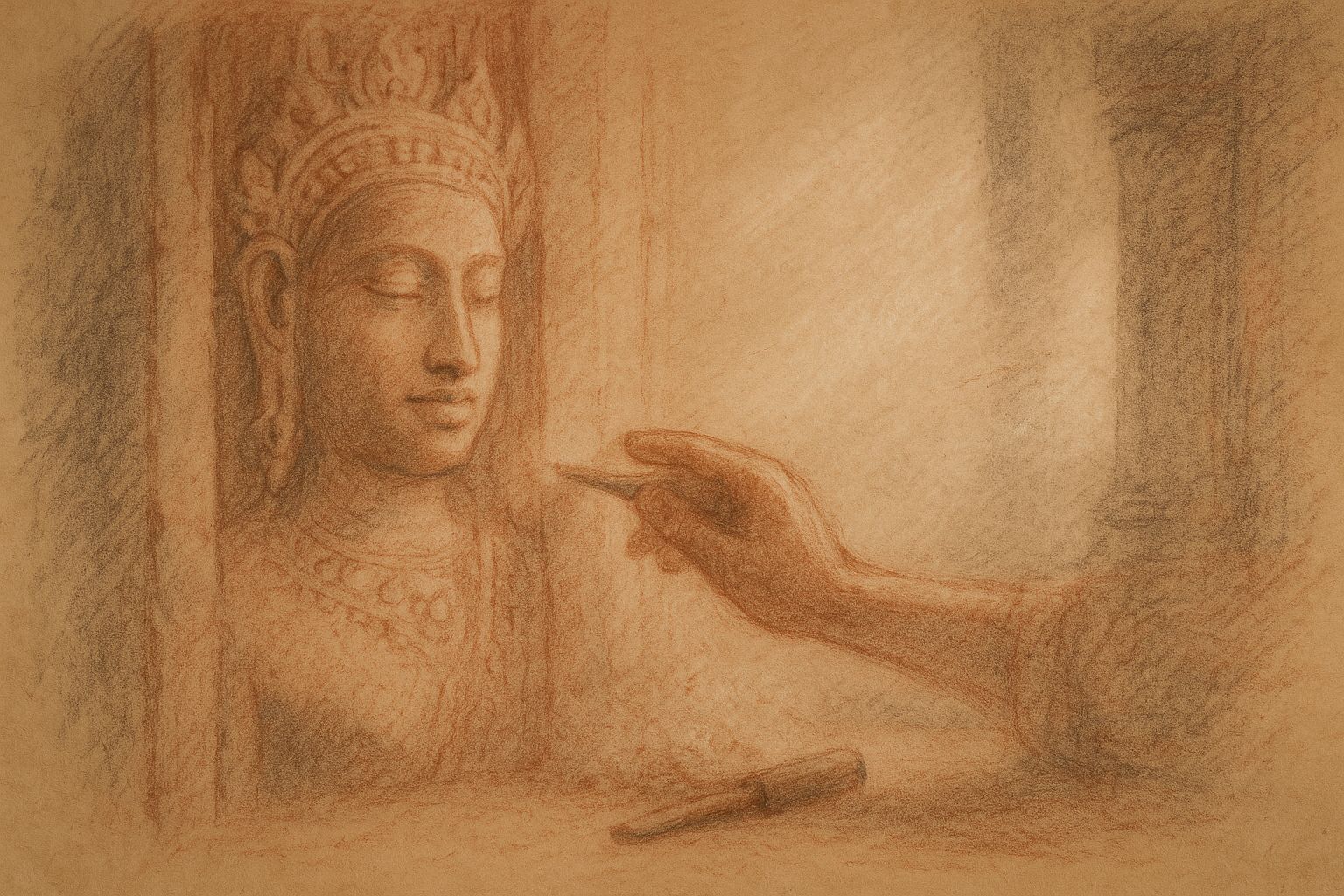

Hands of the Sculptor — The Craft as Meditation
In the hush of the galleries, the sculptor listens rather than strikes.
Each breath, each measured blow, opens silence a little further.
Unfinished reliefs reveal the moment when mastery becomes meditation—
when patience itself is carved into being,
and the dust that falls at a mason’s feet becomes the residue of prayer.
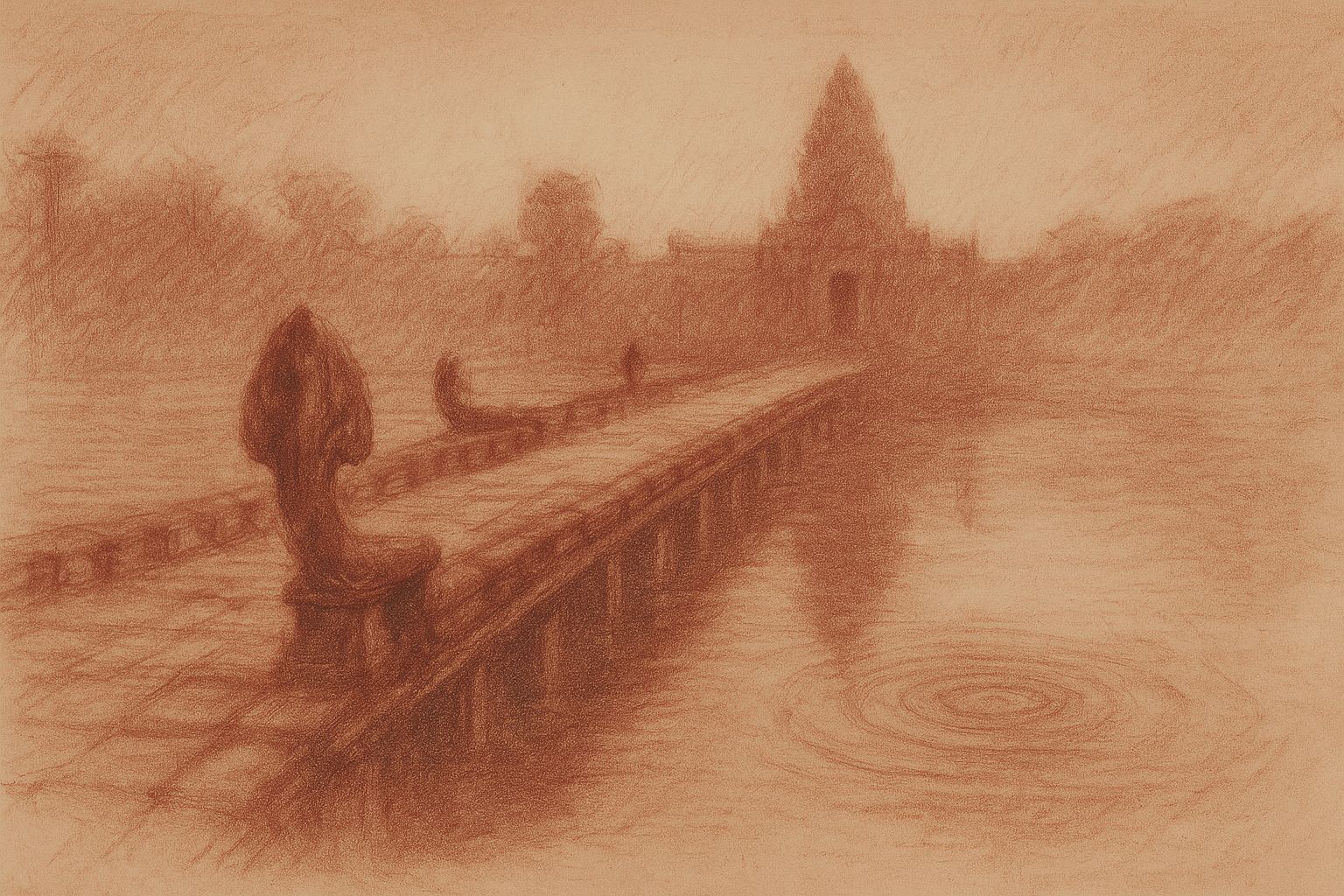

The Measure of Silence: A Pilgrim’s Reflection on Kingship at Angkor
Through the ruins of Angkor, a curatorial pilgrim traces the vanished geometry of divine rule. In the silence of the stones, kingship reveals itself as both devotion and decay—an empire of alignment turned elegy, where even ruin retains the measure of sacred order.
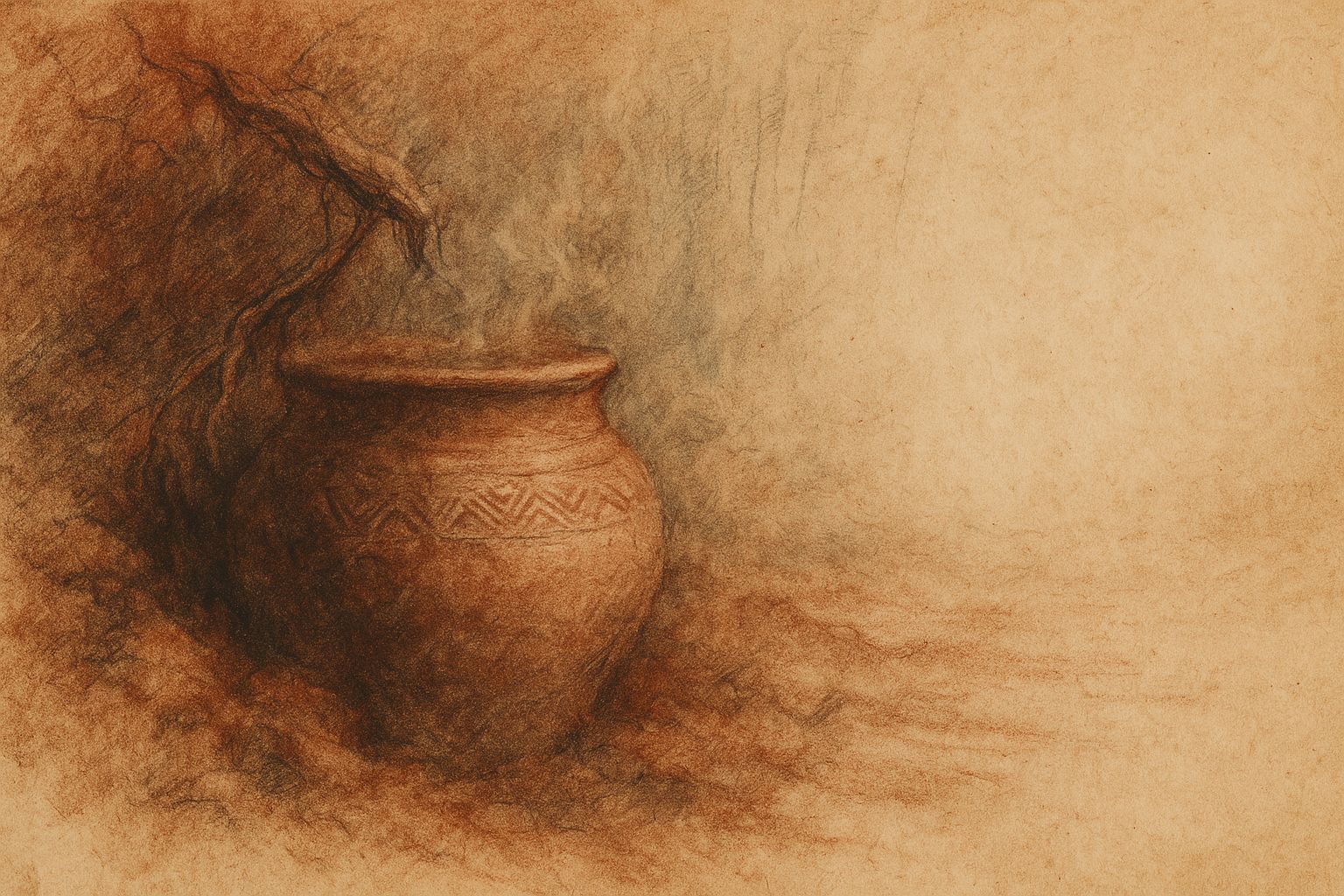

The Pilgrim’s Guide to Cambodia’s Beginnings
In the caves of Laang Spean, in the myth of a dragon princess, in the echoes of Funan and Chenla — Cambodia’s beginnings endure. This essay walks with ancestors through soil, stone, and water, tracing how the first Cambodians shaped rice, ritual, and memory into a living continuity that still breathes today.
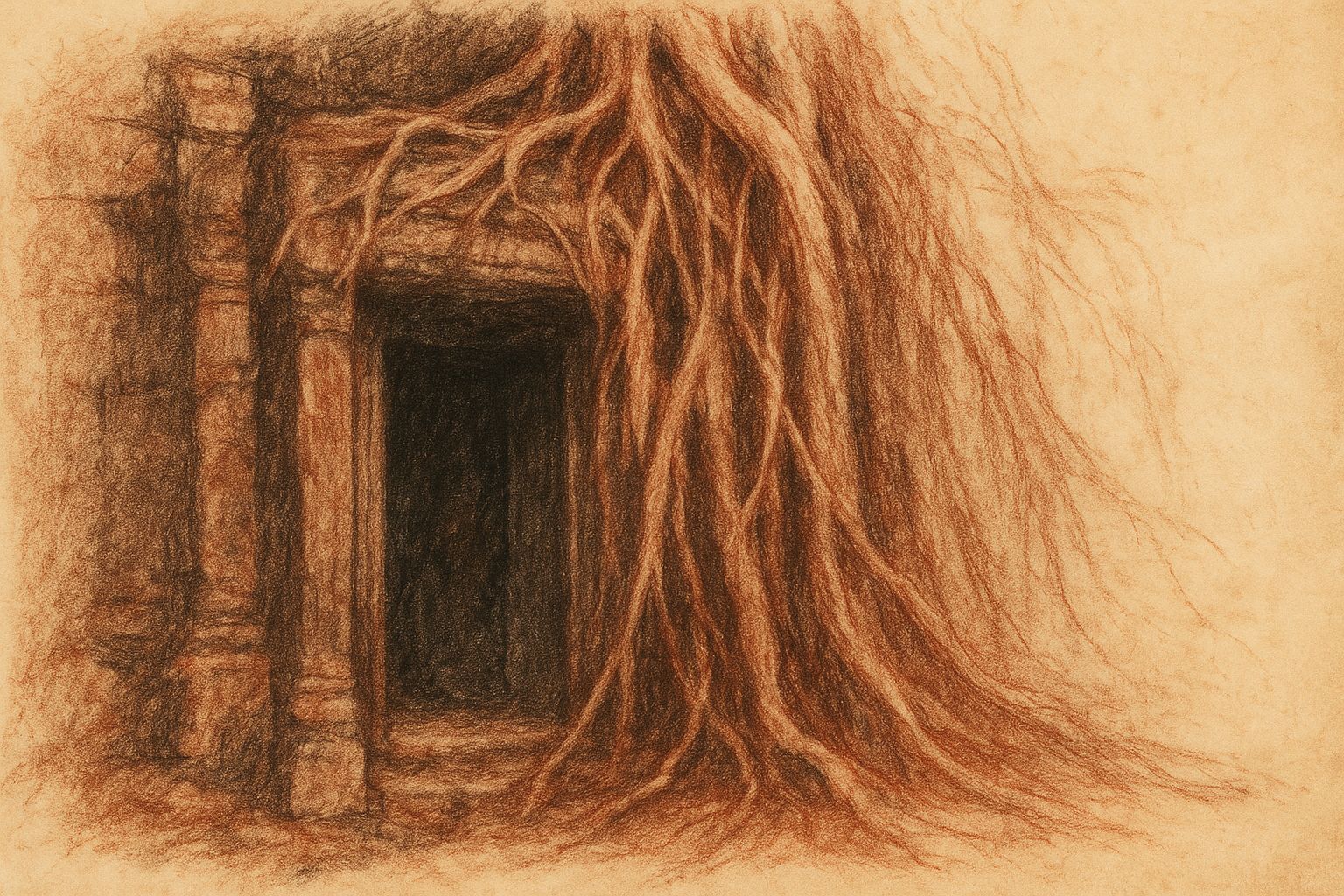

Roots Over Stone
At Ta Prohm, roots do not erase the temple but bind it, stone and tree locked in a covenant of endurance. What appears as ruin reveals itself as reciprocity — permanence carried through entanglement, silence carried through breath. To stand before these veils is to witness survival made sacred.
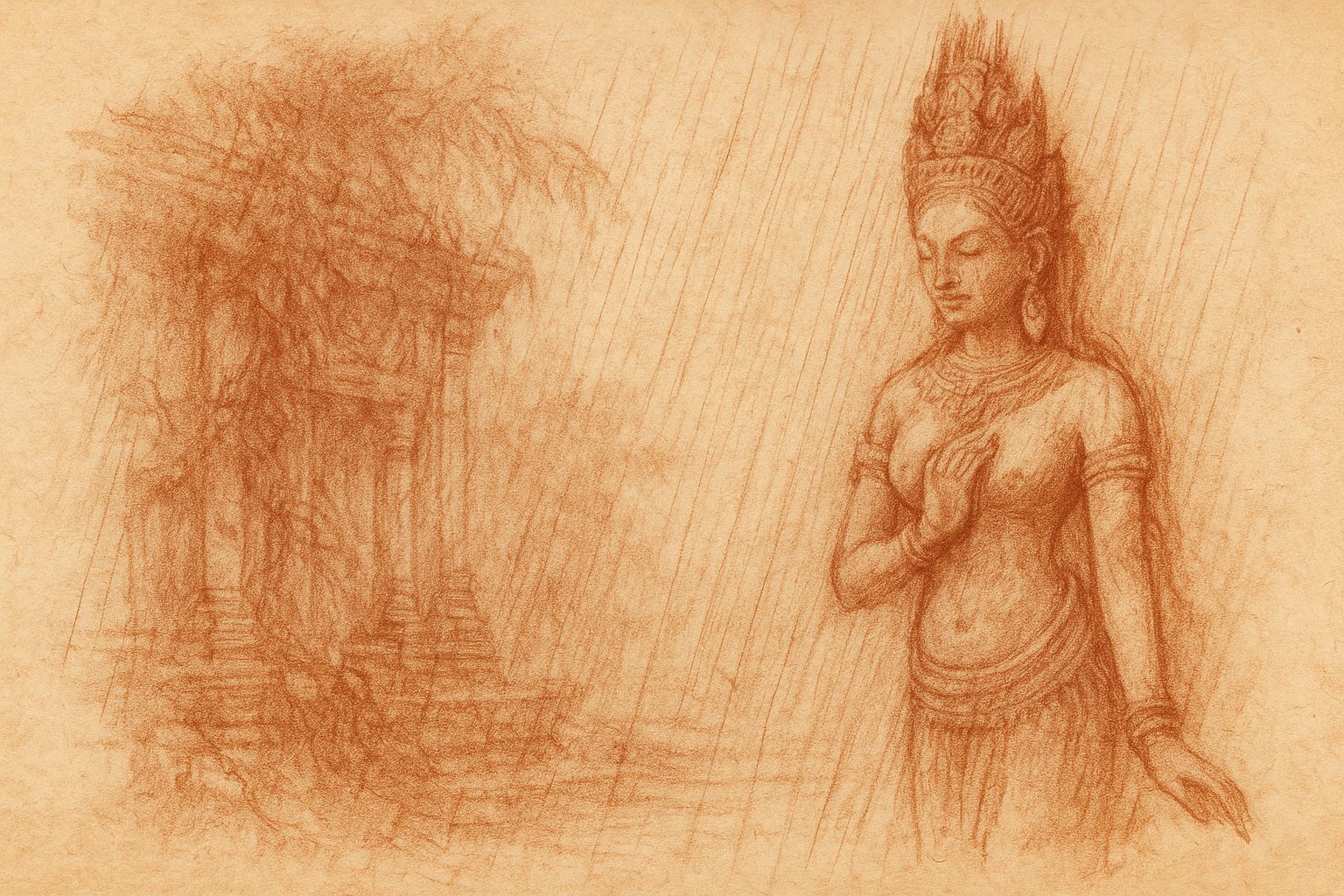

The Apsara in Rain
Rain softened the apsara’s face until her smile dissolved into shadow. What remained was not loss but transfiguration — stone and water shaping a new expression. To watch her through the veil of rain is to see beauty endure through erasure, the sacred revealed in the act of dissolving.
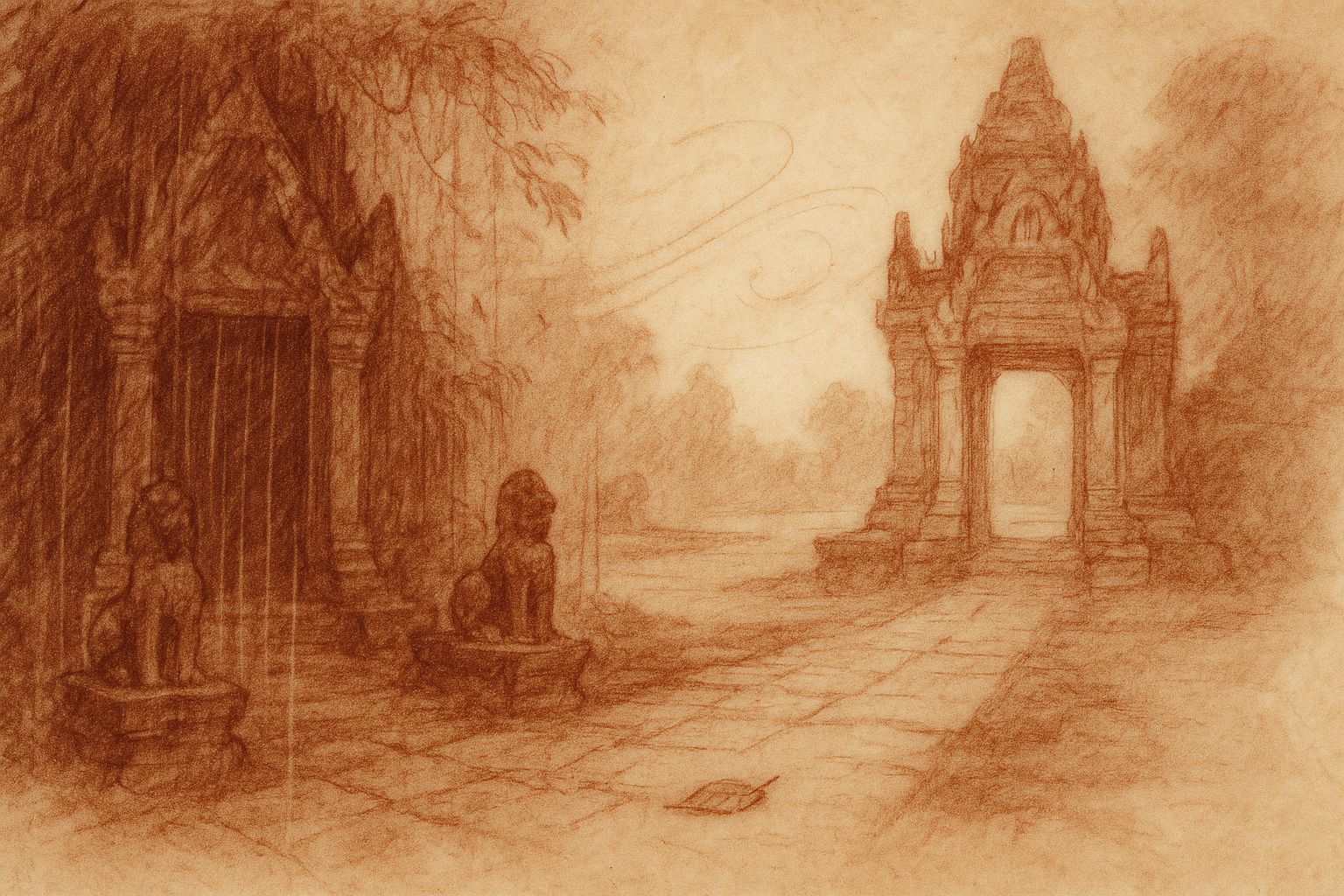

Two Winds, One Turning: The Monsoons of Cambodia
The year breathes in wind, not time. In this quiet meditation, Lucas Varro reflects on Cambodia’s two monsoons—their silence, their rhythm, their soul—and the way rain and light reveal different faces of the sacred.
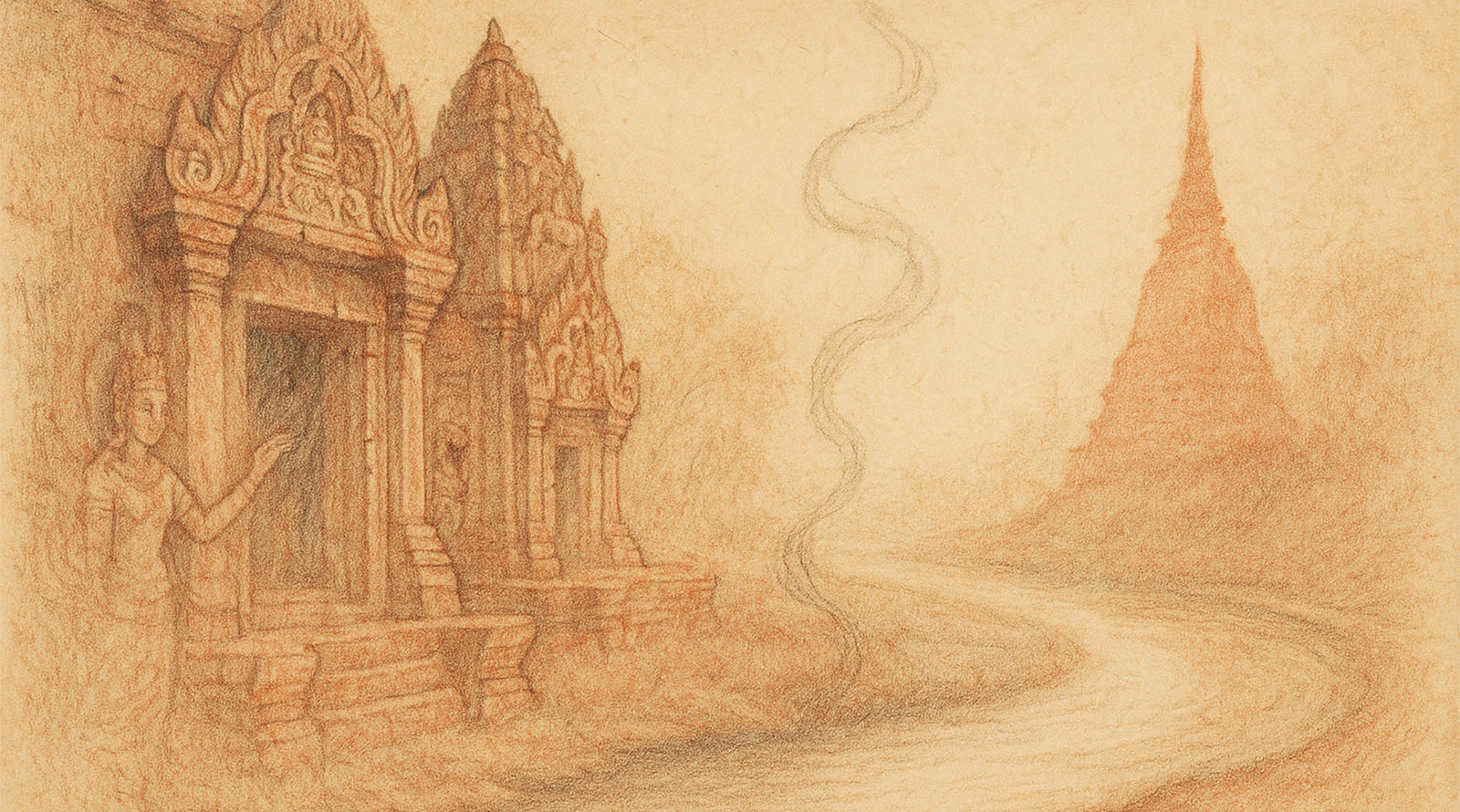

The Shape of a Vanishing Empire
The stones do not mourn.
They whisper the shape of what once was—
of constellations surrendered, of dharma reshaping a world.
Step into the hush between kingdoms,
where breath becomes lineage
and memory walks on river light.
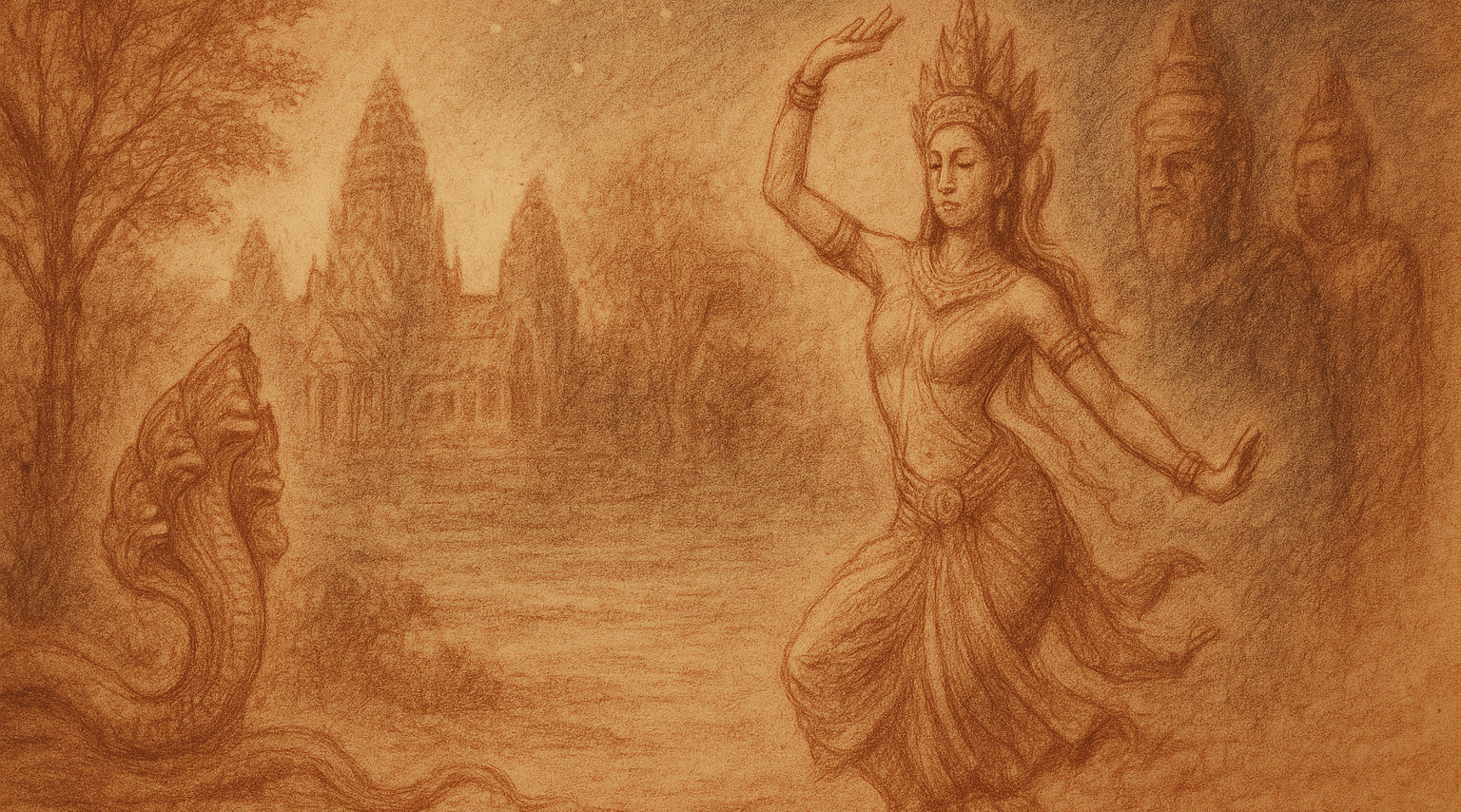

Where Gods and Stones Whisper as One
Step barefoot into the hush of Angkor, where carved stone remembers the shape of prayer, and the breath between gods and kings still lingers in the light. Here, myth and devotion flow like hidden rivers beneath the ancient ground, inviting the soul to listen where language ends.
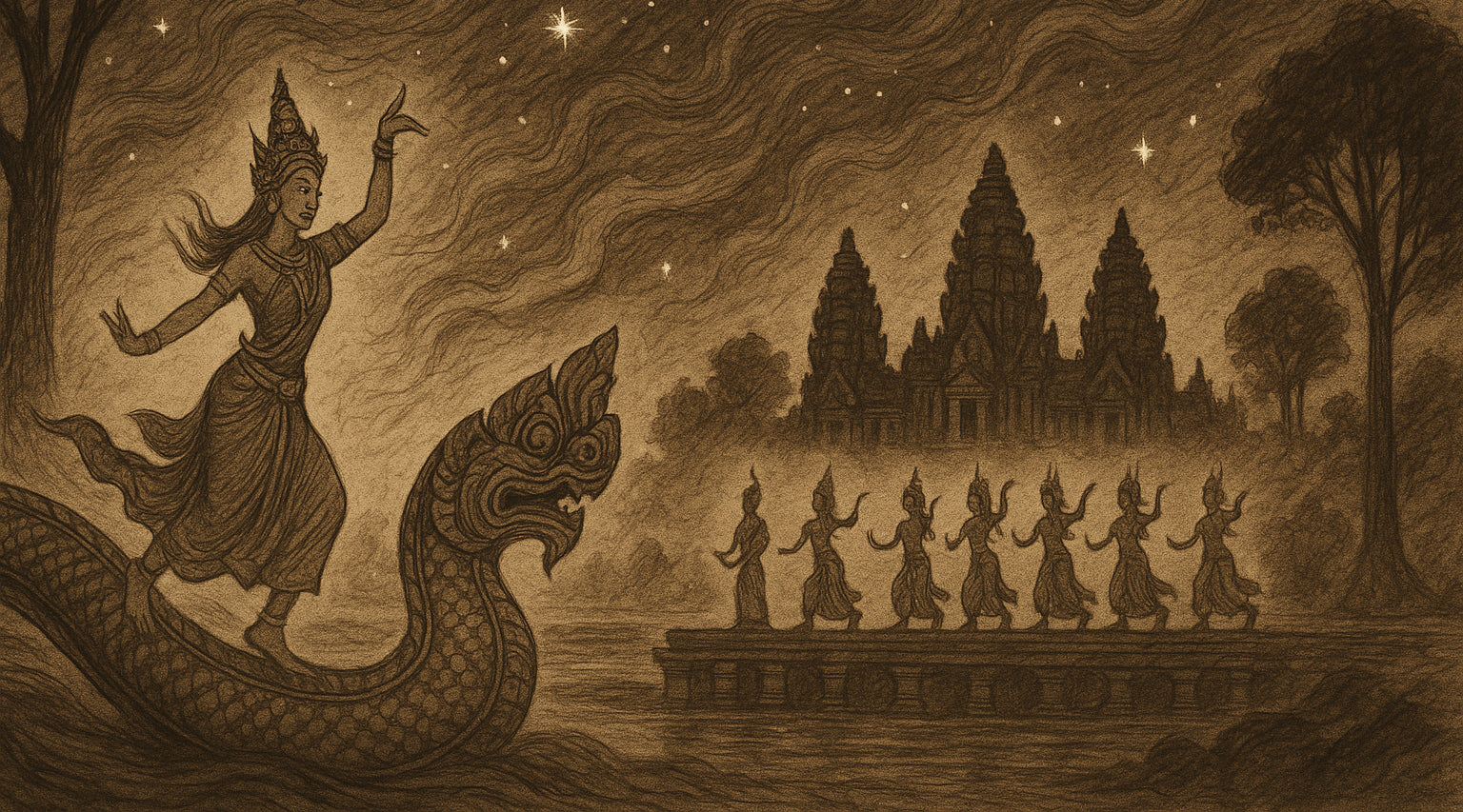

A Threshold of Stone and Soul: Entering the Sanctuary of Meaning
Some temples are not meant to be visited, but entered inwardly. Let these pages guide you across thresholds carved in shadow, into realms where stone and silence conspire to reveal what endures. Here, myth breathes, meaning ripens, and the soul remembers.
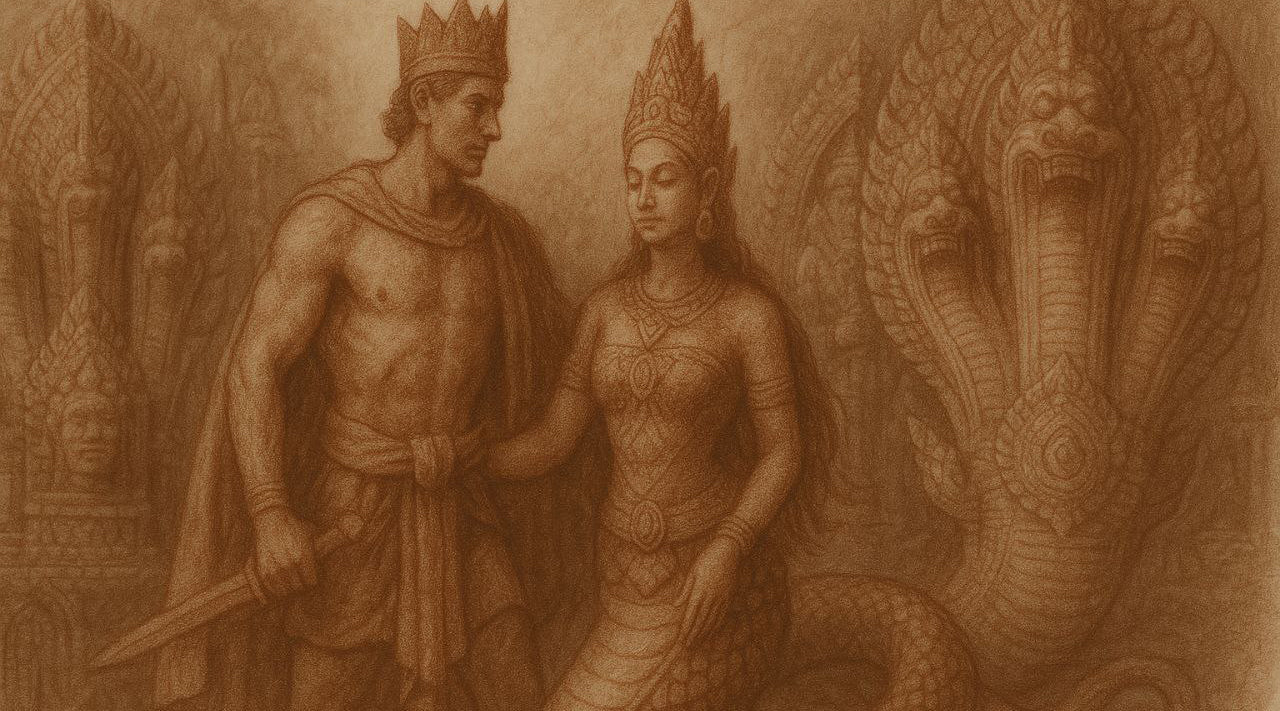

The Legend of Neang Neak and Preah Thong: The Birth of the Khmer Kingdom
A serpent princess and a wandering prince unite to shape the Khmer kingdom—where love births a dynasty, and the Nāga coils through stone and blood.
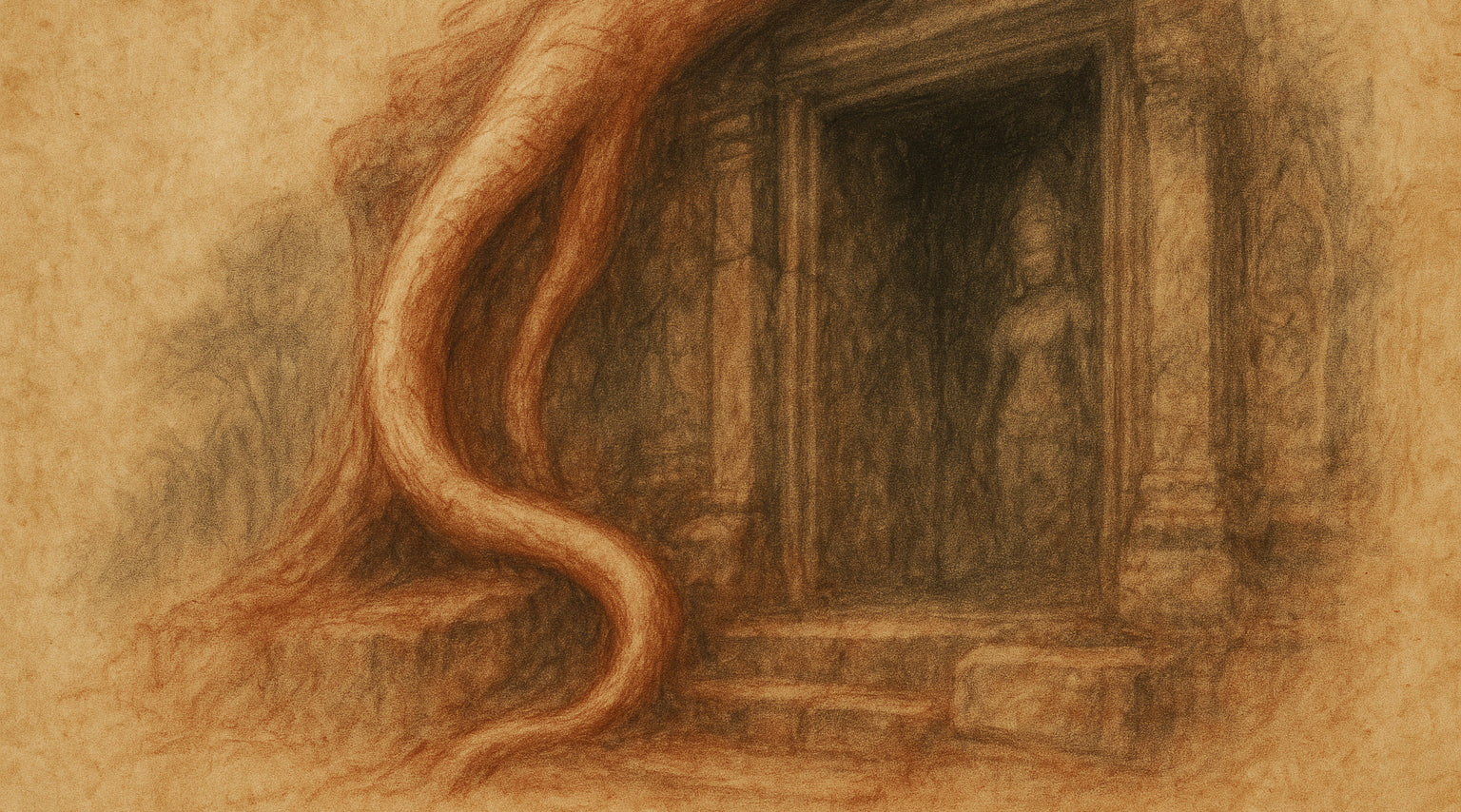

The Beauty That Time Reveals
What if the worn were more sacred than the new? Step through the softened stone of Angkor into a meditation on impermanence, quiet grace, and the beauty that reveals itself only through time.
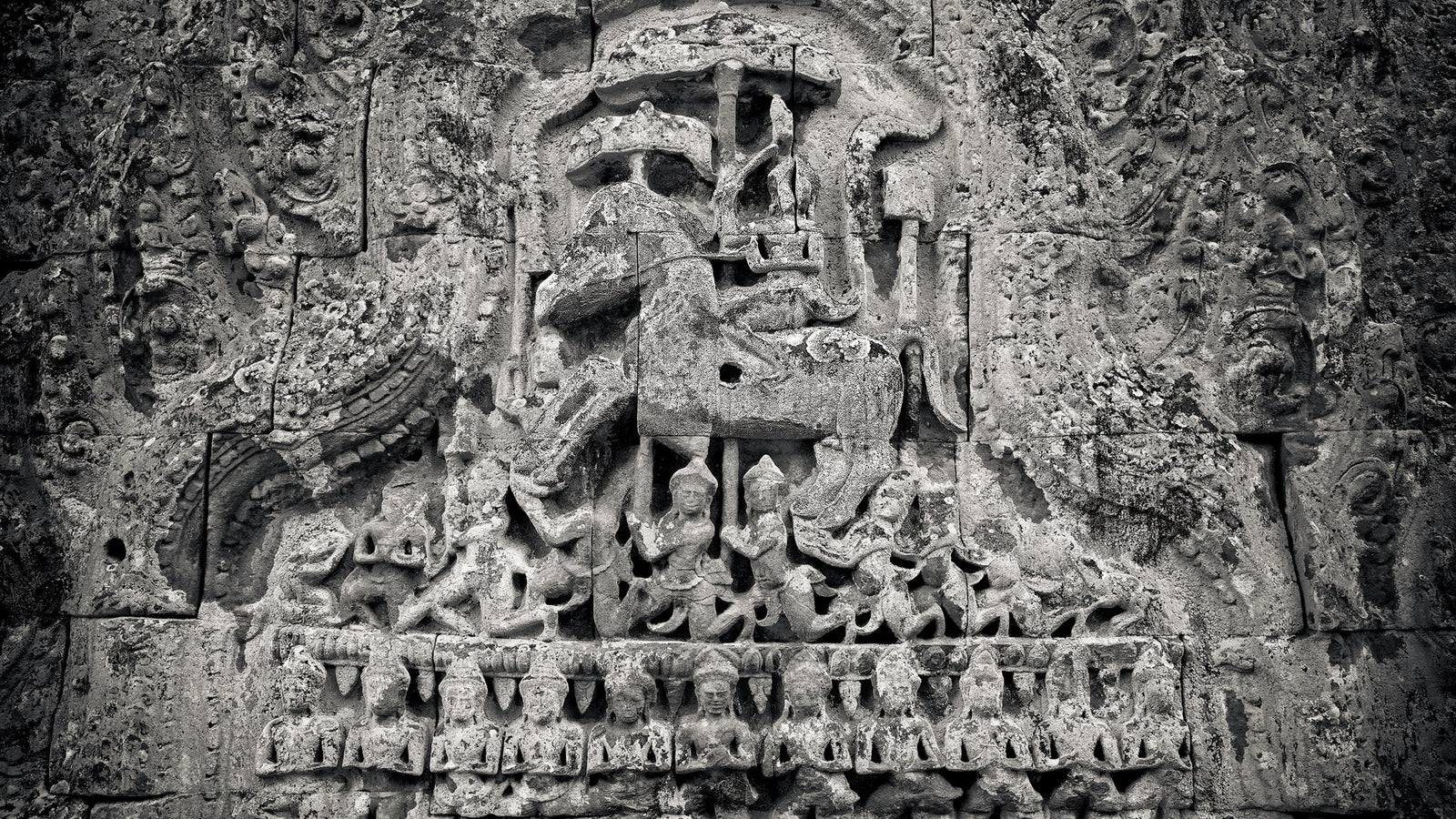

The Silent Gate of Awakening: The Buddha’s Great Departure
A prince steps into silence beneath the hands of gods.
Stone softens. Mist lingers. The world holds its breath.
At Ta Prohm, renunciation becomes a doorway—
not of loss, but of luminous becoming.
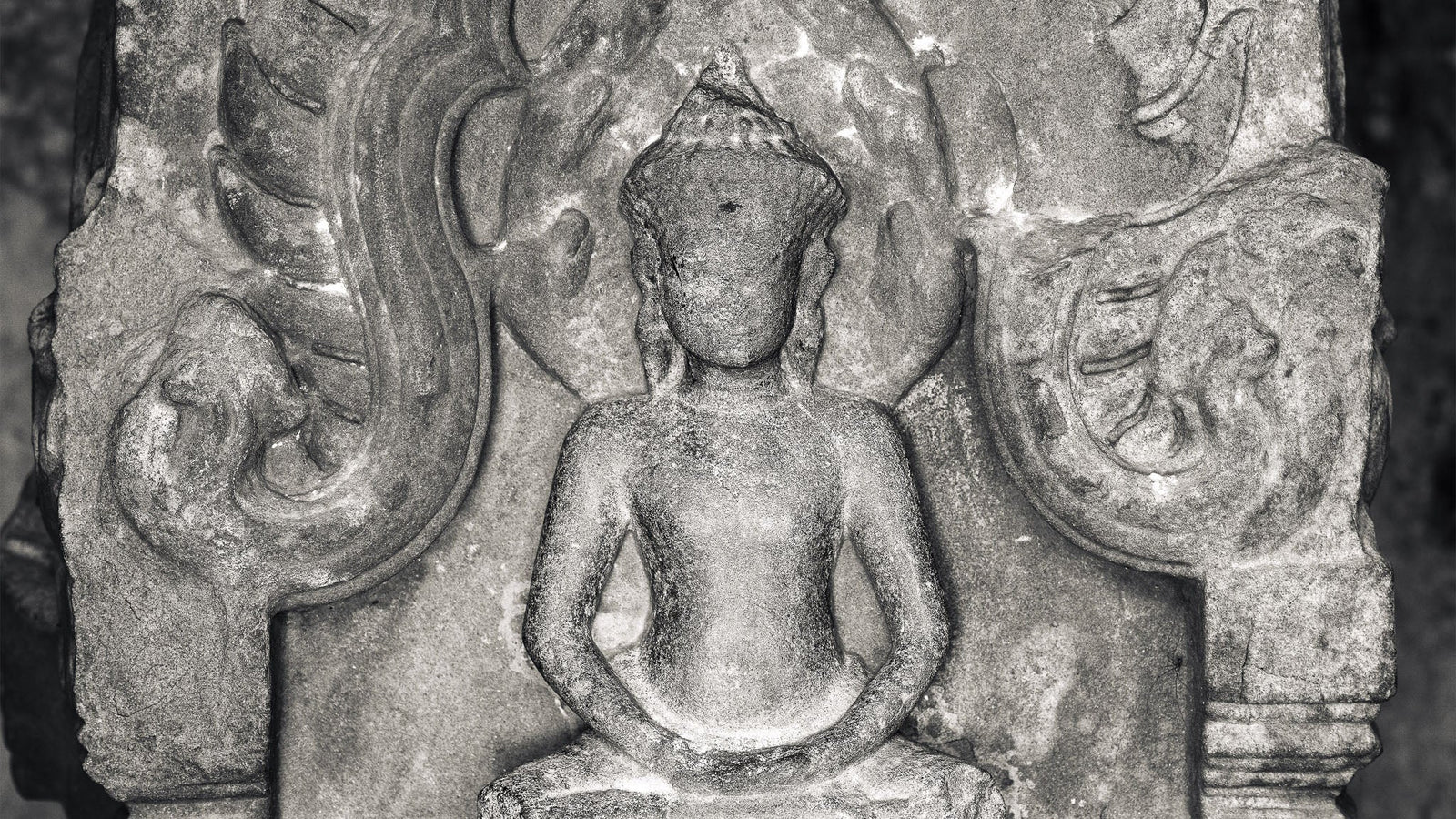

The Light Before the Path: Buddha’s Uncarved Beginnings
Walk the hush between stories—where lotus blooms unfurl, and the child who would awaken steps through heaven unseen. In the stillness of uncarved stone, memory glows.
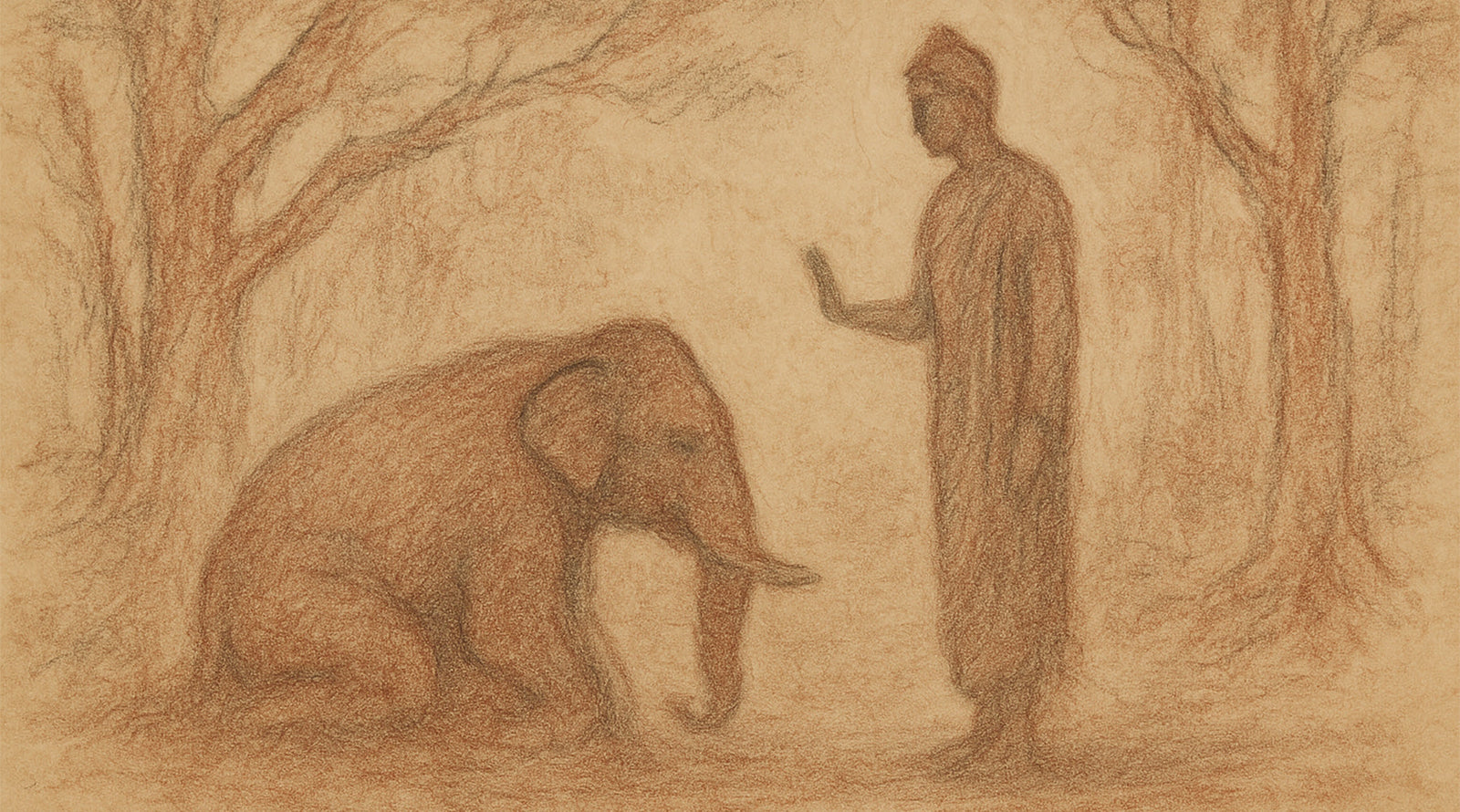

The Elephant Who Bowed to Silence
In a forest temple rarely visited, a fierce elephant kneels beneath the Buddha’s hand—carved in stone and veiled by time. This luminous meditation reflects on Theravāda resilience, the Hindu Reaction, and the miracle of wrath transfigured by stillness.
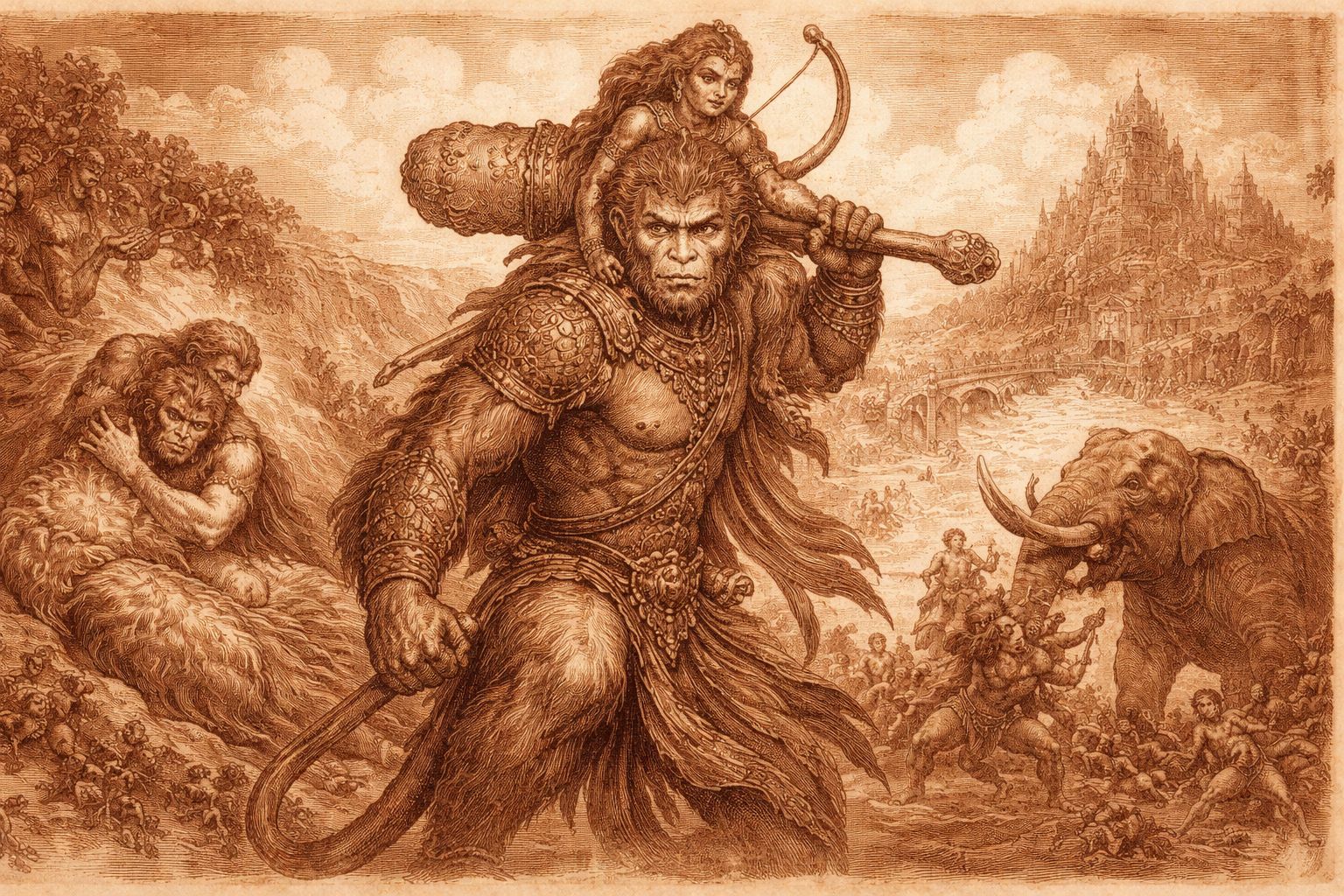

Angada — The Strength That Carries Forward
Angada does not claim the past; he carries it. Born into fracture, he becomes a living bridge—strength without resentment, loyalty without demand. In stone and story, he reminds us that the future often advances on the shoulders of those who ask nothing, yet bear everything.
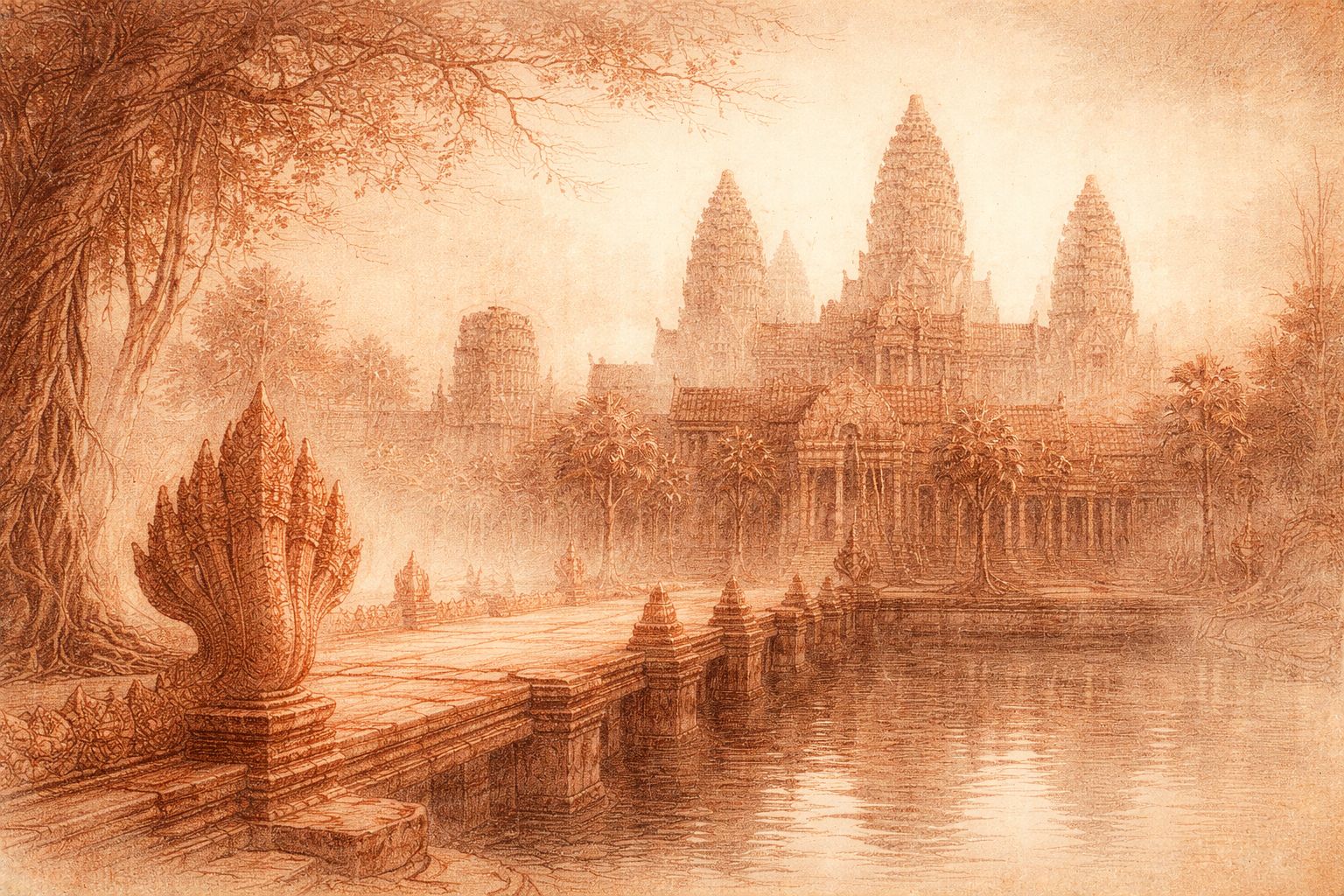

Angkor — A City That Learned to Listen
Angkor means city, but it grew into something rarer: a place where stone, water, and belief were tuned together for five centuries. Its temples are not ruins of power, but records of attention—an experiment in alignment that still listens, long after the court has gone.
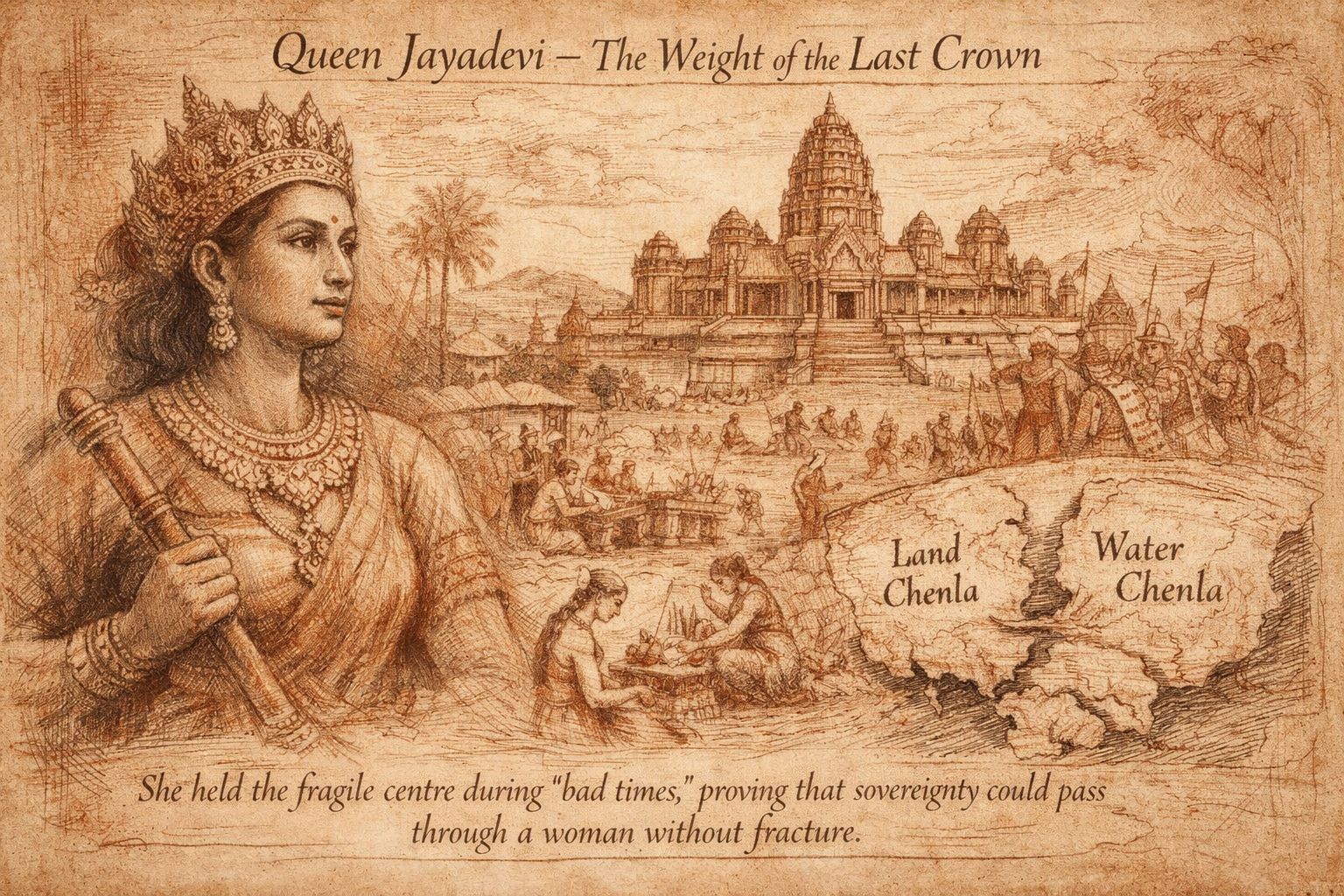

Queen Jayadevi — The Weight of the Last Crown
Queen Jayadevi ruled not in triumph, but in tension. Bearing the full title of Holy Lord, she held together a fragile centre during “bad times,” proving that sovereignty could pass through a woman without fracture. When her reign ended, the kingdom loosened—waiting, quietly, for Angkor to rise.
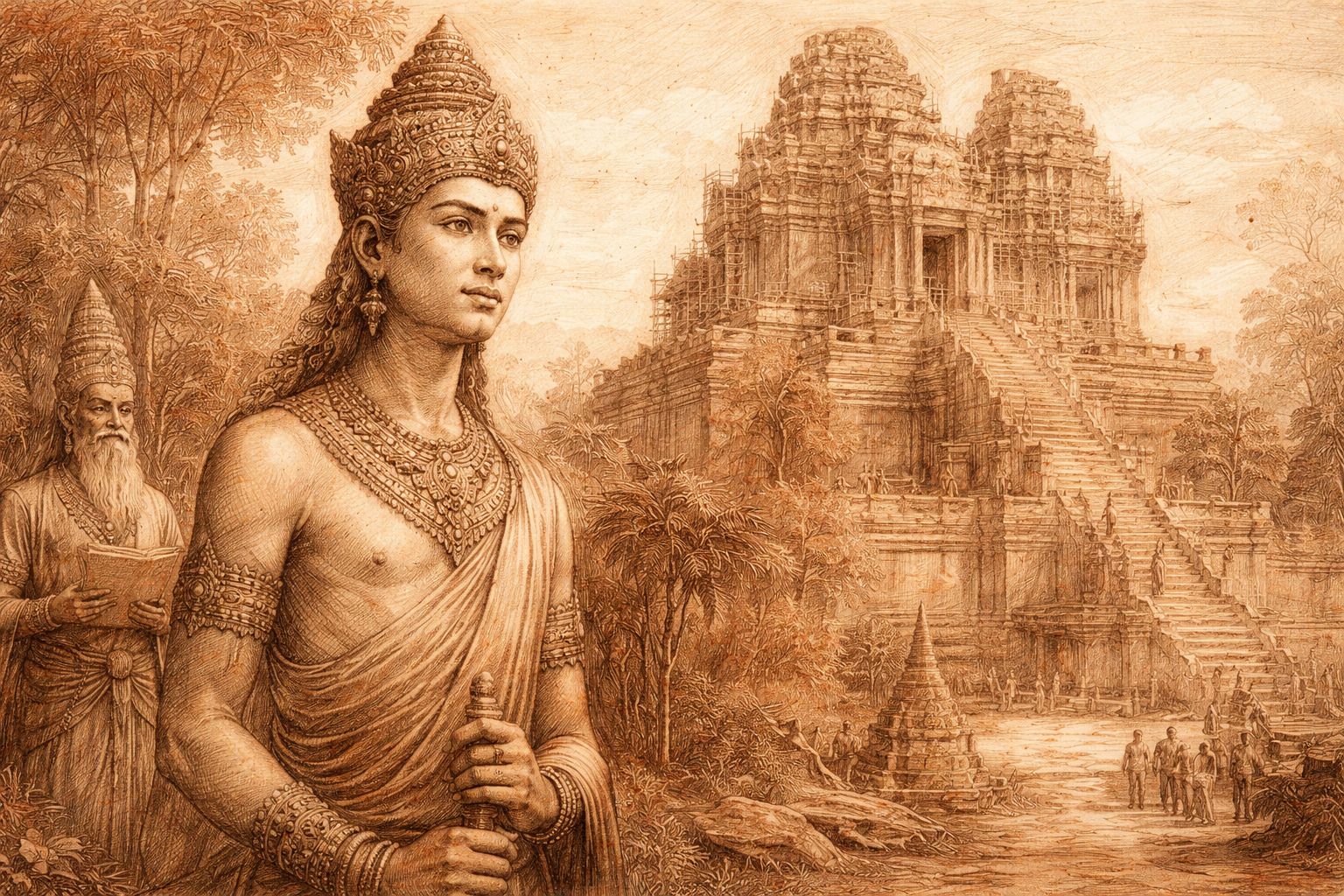

The Quiet Reign — Jayavarman V and the Discipline of Unfinished Stone
Jayavarman V did not rule through conquest or spectacle. He held Angkor steady while others taught, carved, and refined its vision. His unfinished mountain, Ta Keo, stands as a monument to restraint—a golden idea left in bare stone, awaiting a future that did not arrive.
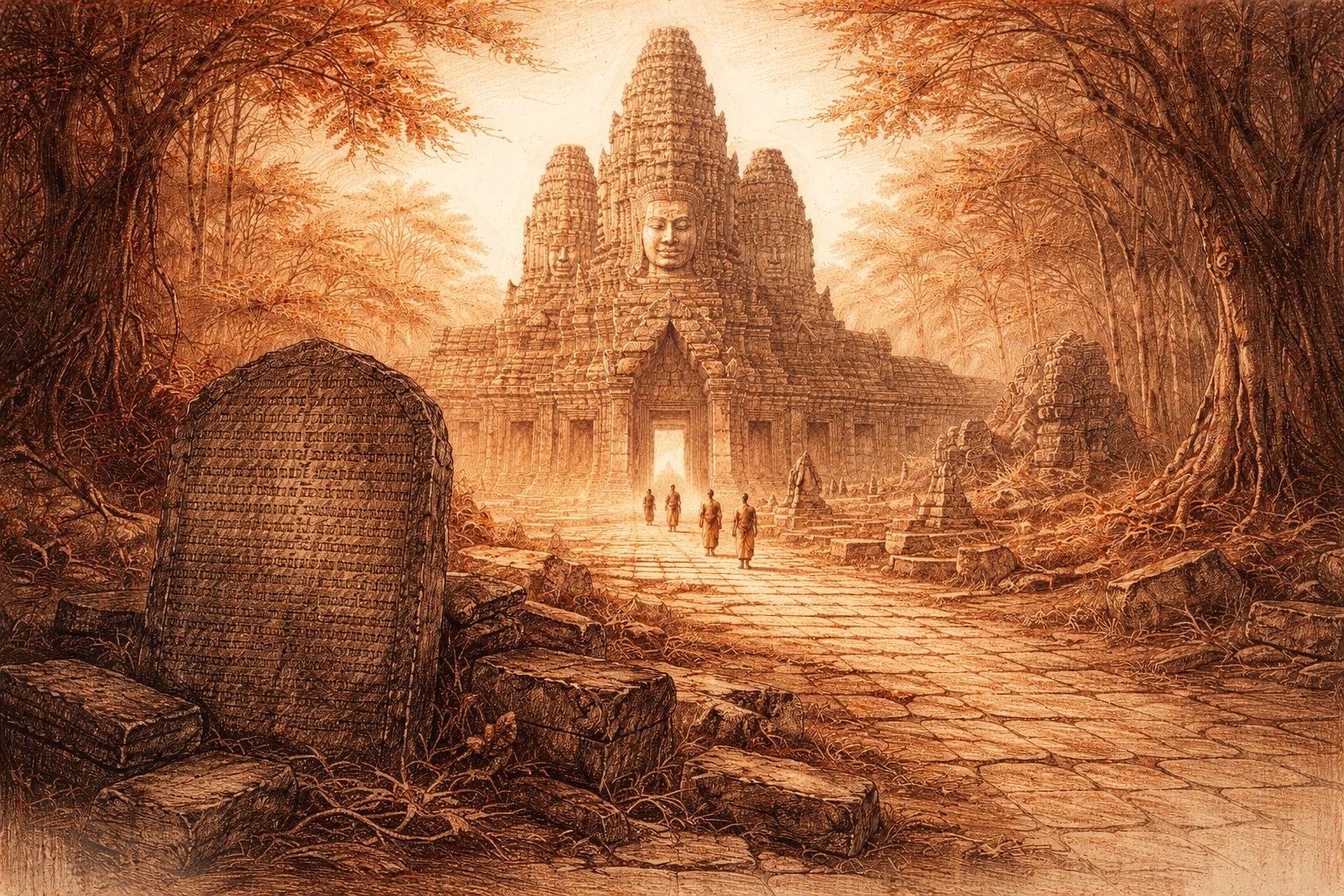

Jayavarman IX — The Last Inscription
Jayavarman IX rules at the edge of Angkor’s silence—the last king to speak in Sanskrit, the final voice cut into stone. His reign marks not collapse, but transition: from cosmic kingship to human continuity, from monument to monastery, from divine proclamation to quiet survival.