
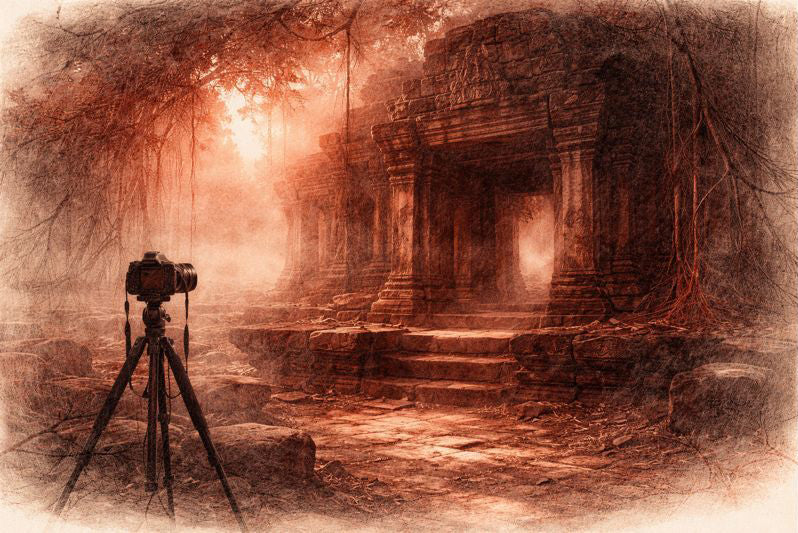

Before the Shutter Falls
The light hesitates longer than expected.
So do I.
I arrive before dawn carrying the familiar weight of equipment, and another weight that has nothing to do with cameras. The temple is a body half-asleep. Stone still holds the night in its joints. A thin mist drifts low and undecided, as though the day itself has not yet chosen to begin.
This is the hour when fear speaks most clearly—not loudly, but with precision. It names the hours already given, the uncertainty of the light, the chance that nothing will be offered in return. It asks whether waiting is devotion or delay. It asks whether today will justify the patience of yesterday.
I set the tripod and stop short of extending the legs fully. Even this feels like a promise not yet earned.
I have learned that doubt arrives before the shutter falls. Not after. Never after. Once the exposure begins, the mind quiets. Time becomes a vessel, and whatever enters it—cloud, birdcall, the slow drift of shadow—is accepted. But before that moment there is always this narrowing: the mind counting risk, the body seeking reassurance.
The temples offer none. They do not confirm intention. They stand, and in standing, they ask whether I can do the same.
Waiting here is not empty. It is dense with small calibrations: breath easing into the morning; insects lifting their first thin chorus; light testing the edges of stone without committing to form. I watch a line of moisture slide down a column, catching pale brightness for a heartbeat before dissolving into lichen.
Fear wants resolution. Waiting gives no such gift.
There are mornings when I stand for an hour without touching the camera. The light improves, then withdraws. Clouds pass like thoughts that refuse to settle. Doubt sharpens. It suggests movement—another angle, another site, another day. It insists that waiting is indulgence, that work requires action.
It also whispers a smaller, crueller thing: begin now, so you cannot be disappointed later.
And yet the temples themselves are composed of waiting. Stone laid upon stone over decades. Reliefs cut slowly, returned to, corrected. Even devotion here was not immediate; it accumulated.
I remind myself of this when impatience disguises itself as professionalism.
The mercy of waiting is not that it guarantees a photograph. It is that it asks nothing in exchange. To wait is to loosen the grip on outcome. It is to accept that attention, not achievement, is the offering.
At some point—there is never a signal, only a soft alignment—the fear recedes enough to become background noise. The light does not announce itself; it simply steadies. Shadow finds its balance. The space breathes.
I extend the tripod legs the final inches.
This is not triumph. It is permission.
Before the shutter falls, there is a stillness that feels almost contractual. I am not taking something; I am agreeing to remain. The exposure will be long. It may fail. A breeze could unsettle leaves. A cloud could arrive uninvited. None of this diminishes the waiting that came before.
The act is simple. The preparation was not.
As the exposure begins, time thickens. Minutes lose their edges. The mind, having exhausted its objections, grows quiet. I listen—not for sound, but for continuity. Stone, light, breath, film: each participating without urgency.
This is where fear dissolves—not because it was mistaken, but because it has been outlasted.
When the shutter closes, there is no rush of relief. Only a gentle release. The image will reveal itself later, in another room, under another kind of light. For now, there is only the knowledge that I stayed.
I pack slowly. The day has fully arrived, but it no longer concerns me. What mattered happened before it was visible.
Walking away, I recognise how often this pattern repeats beyond the camera. In writing. In faith. In any practice that asks for patience without proof. The fear before beginning. The doubt dressed as prudence. The quiet mercy that arrives only if one is willing to wait long enough to be changed by it.
I have come to trust this interval—the narrow bridge between intention and action. The work will carry its own integrity, regardless of outcome. The photograph may succeed or fail. The waiting does not.
And so I return, again and again, to this threshold. Not because it is comfortable, but because it is honest.
Before the shutter falls, there is always fear.
After, there is simply time—held, and then released.
—
Receive the next work
Subscribe free to receive new work from the Lucas Varro Library by email.
More from the Library

See Also
A concise and impartial dictionary of absence, promises, quarrels, ordinary objects, and the troublesome instability of words.
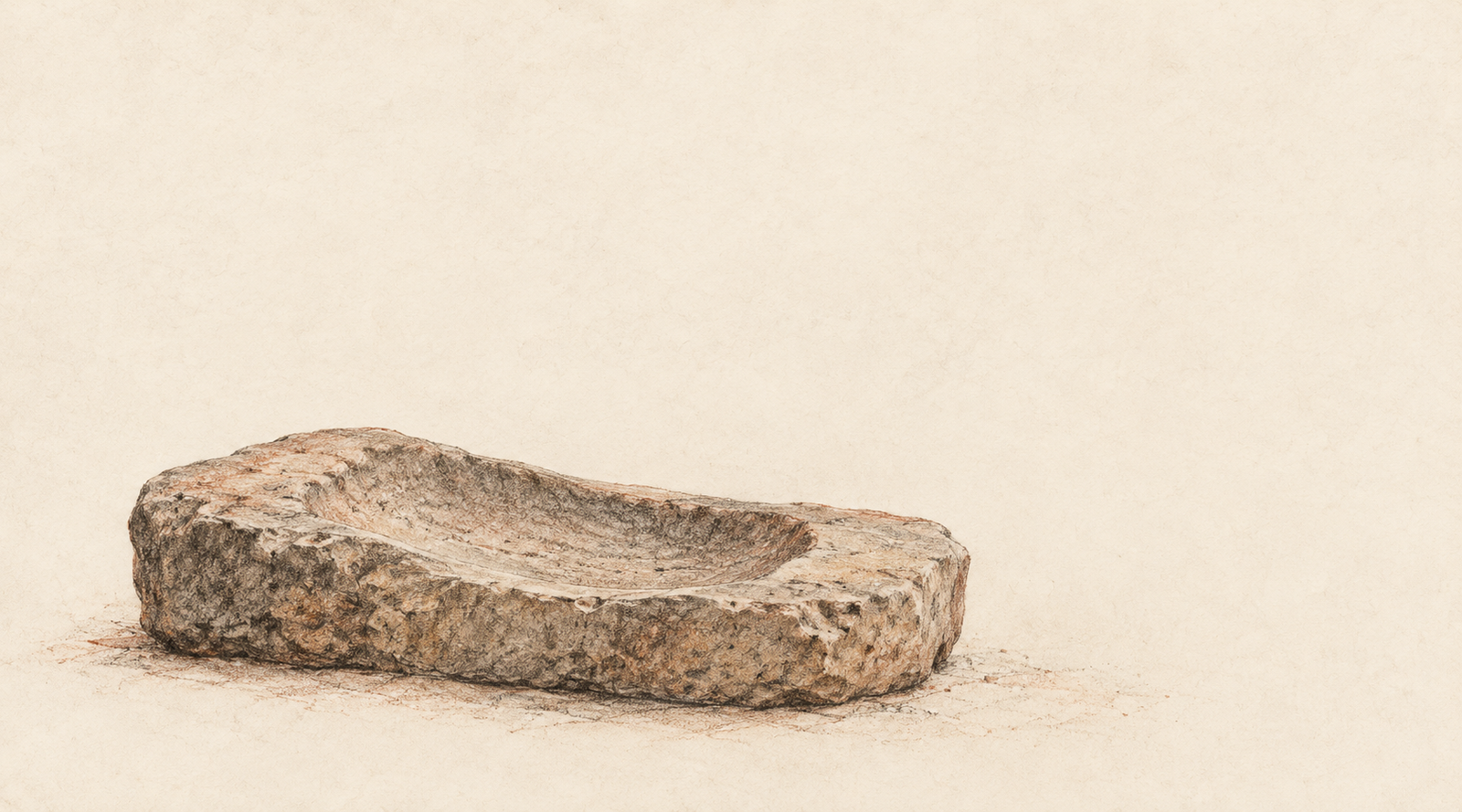

The City of Service
The temple we inherit is a building from which almost all necessity has been removed. Nothing must be brought for it to continue being what we call a temple. The sanctuary asks nothing of us. Stone is good at this kind of independence.
A living temple was otherwise.
Water had to come in. So did grain, cloth, oil, aromatic substances, fuel. The things required for worship arrived because someone carried them across a threshold.
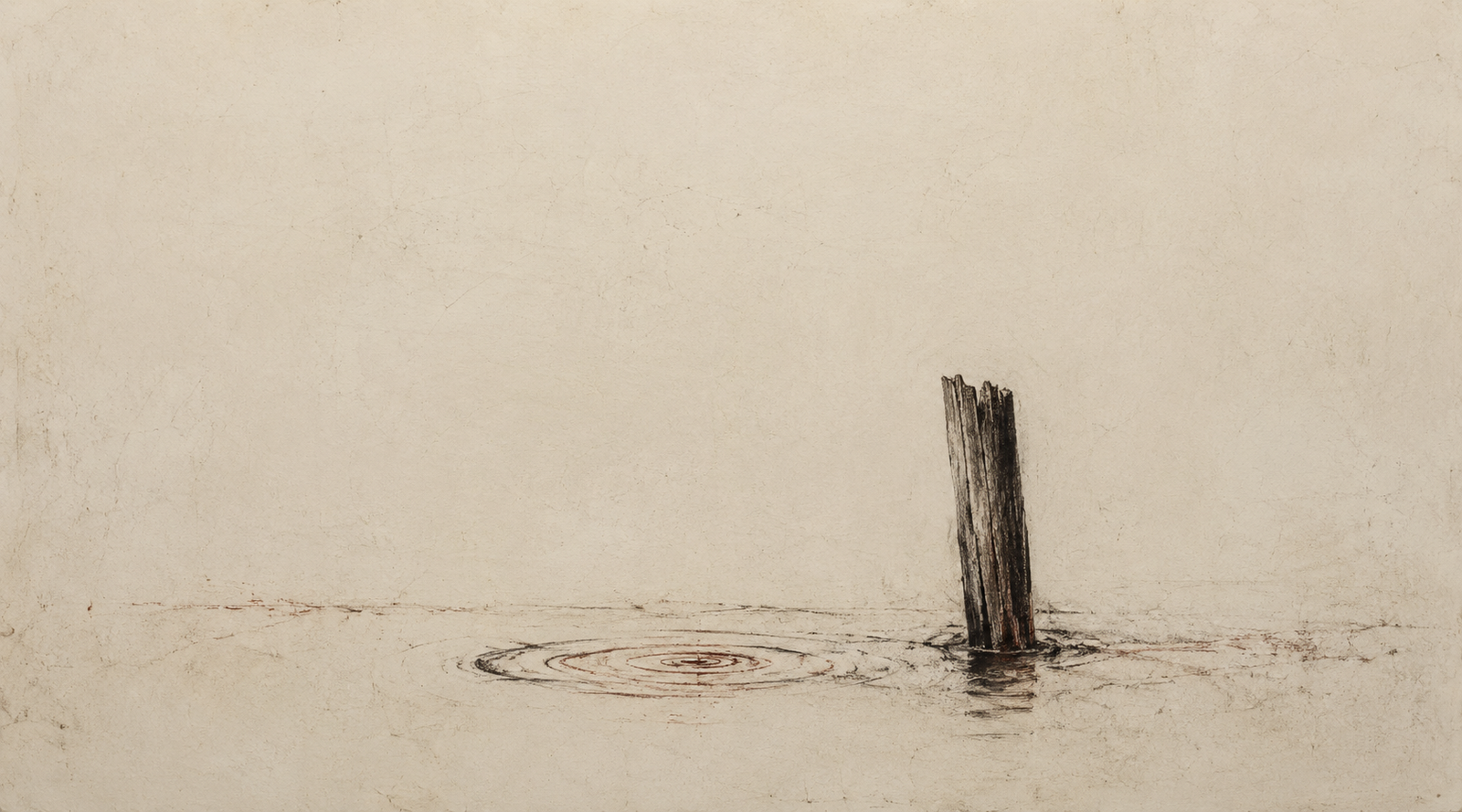

Houses of Wood, Light, and Smoke
Some of Angkor’s most intimate ruins do not rise above the ground at all. They are postholes, low mounds, hearths and ponds: durable traces of a domestic city built largely from things that decay. To restore that city is to see Angkor not only as stone, but as wood, smoke, water, repair, and people living within calling distance.