
The Library gathers the written works of Lucas Varro — journals of the temples, mythic retellings, contemplative essays, poems, and volumes shaped by shadow, silence, and wonder. Here, words stand beside images as offerings: field notes from Angkor, meditations on sacred stone, old stories rekindled, and reflections carried beyond the visible world.
Within these shelves you will find many rooms: Angkor journals, myth and legend, apsara meditations, contemplative essays, poems, children’s mythic wonder, literary retellings, and quieter devotions of the page. Wander chronologically, enter by theme, or pass through one of the dedicated publication houses now gathered within the wider Library.
For those who wish to follow these paths further, several of these writings continue on Substack and in dedicated archive blogs: The Lantern Chronicles , where myth, legend, contemplative essays, poetry, and other imaginative works are carried onward; The House of Cadmus , where Greek myth and tragedy are reopened through inheritance, violence, fate, and recurrence; The Mytharium , where myth, Tolkien, fairy stories, and old literature are read and retold with seriousness; The Alexander Series , where A. M. Sharp retells Greek myths for children who want to be trusted by stories; and The Hospitable Dark , where A. M. Sharp offers literary myth retellings shaped by darkness, shelter, endurance, and return.
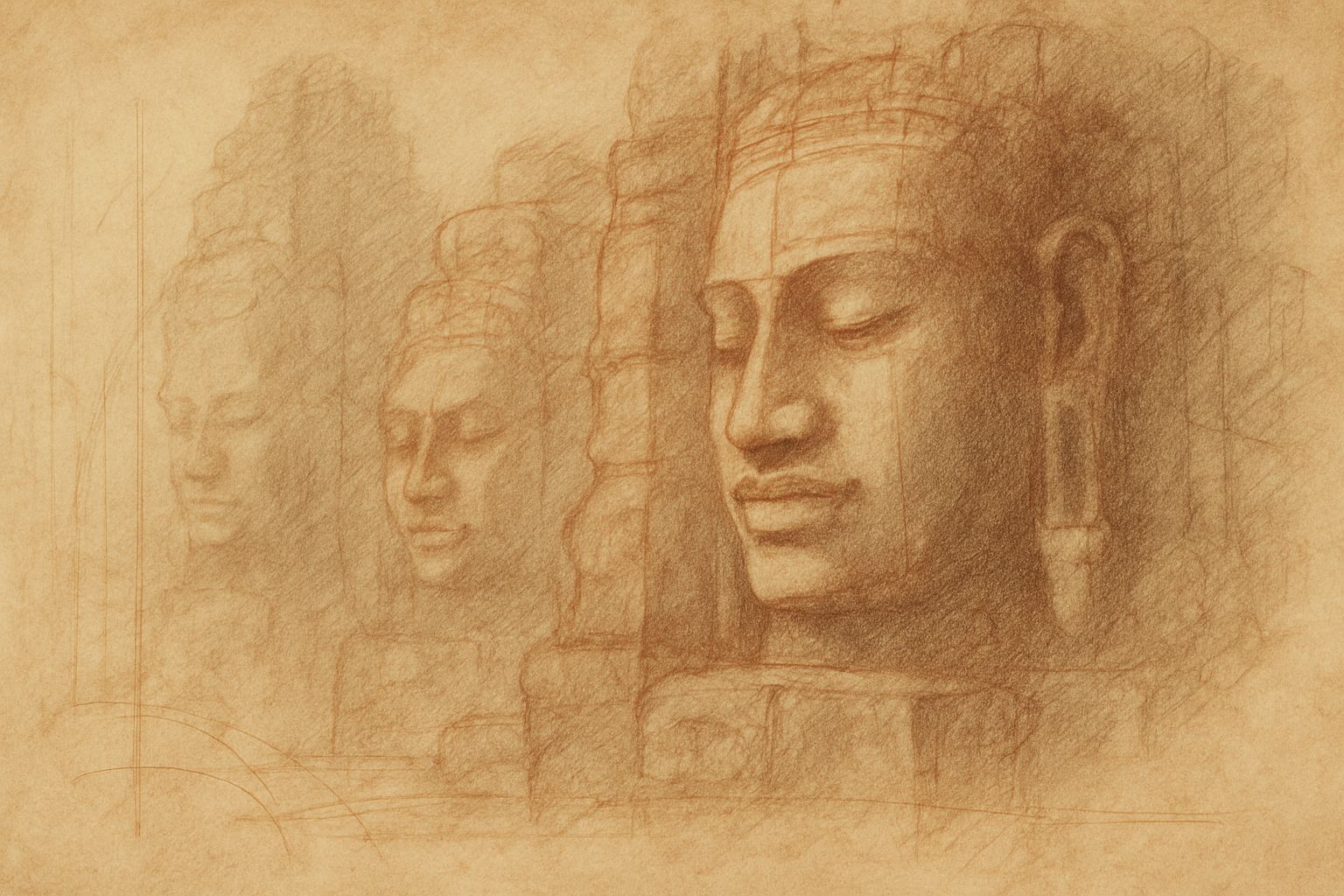

Stone That Dreams
Bayon wakes like a mind emerging from shadow. Its many faces shift with light and breath, teaching that perception—and the self—is never singular. In walking this forest of towers, the pilgrim discovers a quiet multiplicity within, held together by a calm that feels both ancient and newly understood.
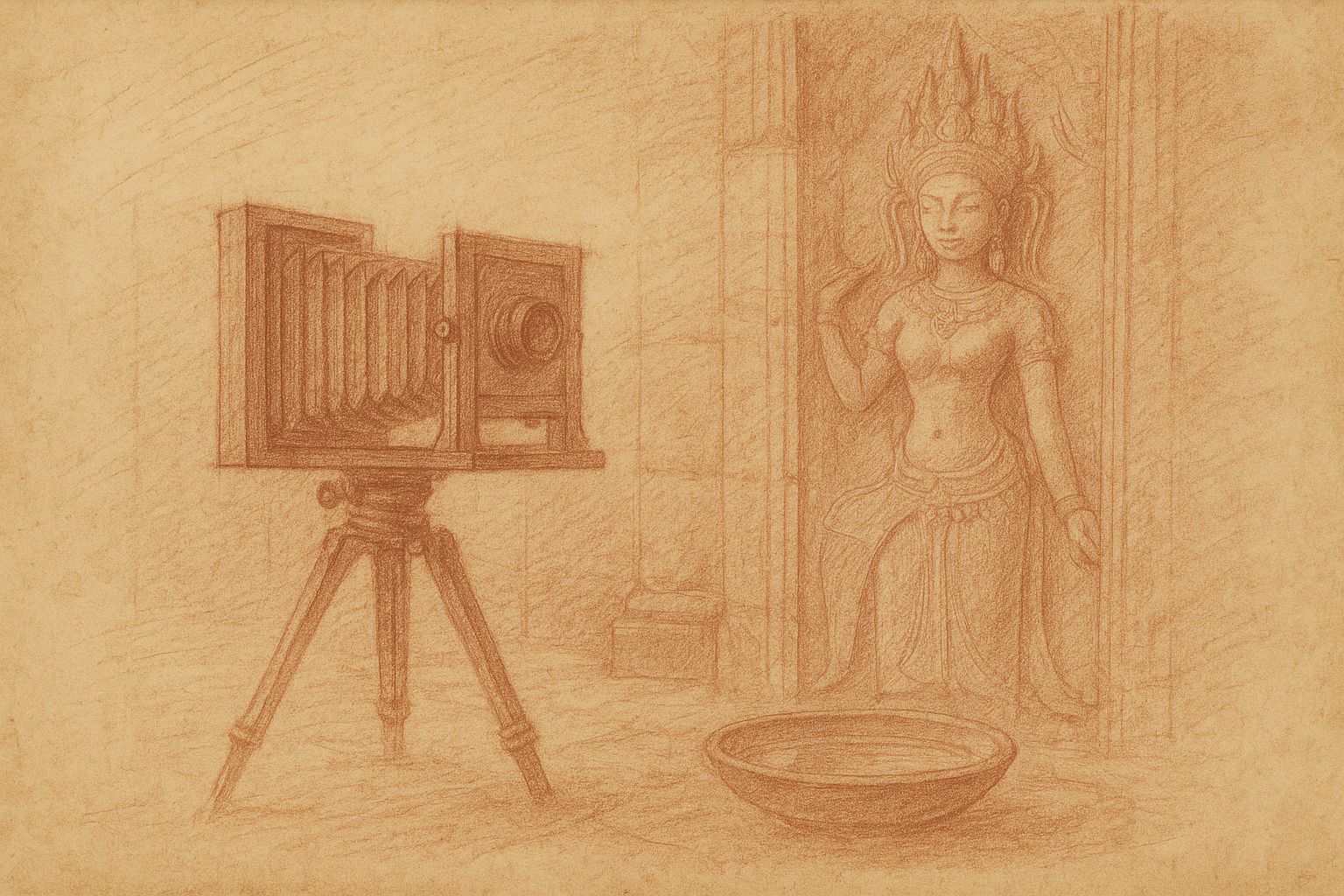

The Still Eye — Craft, Meditation, and the Listening Camera
In the darkroom, silver begins to breathe—and a morning at Bayon returns. The essay moves from tray to temple and back, tightening its centre around a single vow: consent, not capture. A butterfly’s tremor, a lintel at dawn, a print clearing in water. Craft becomes meditation; the camera, a quiet bowl for light.
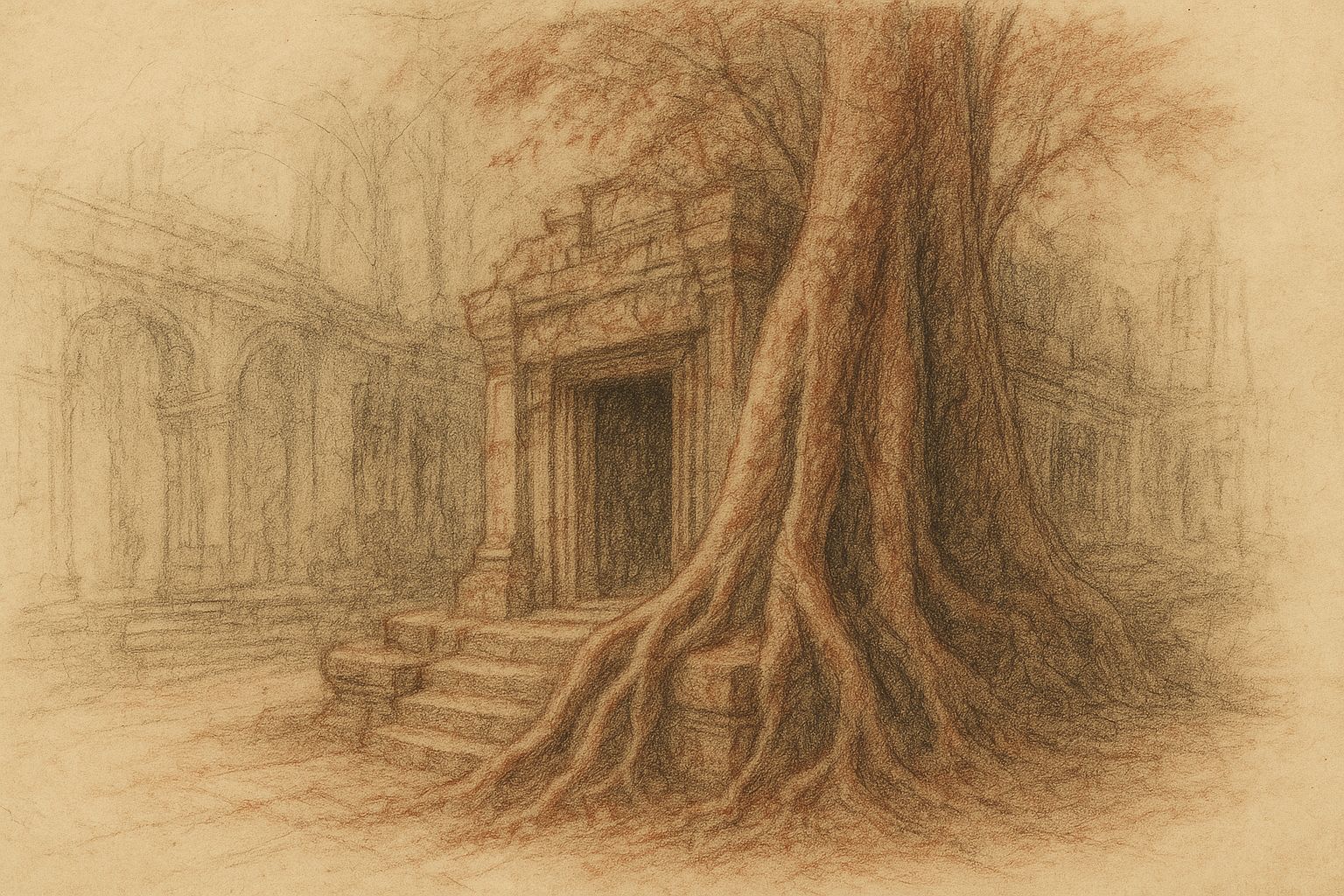

Roots That Remember — Ta Prohm and the Patience of Trees
Beneath the silk-cotton roots of Ta Prohm, stone and forest remember one another.
Here, patience is architecture — each root a gesture of mercy, each shadow a breath of memory.
Listen long enough, and the silence begins to bloom.
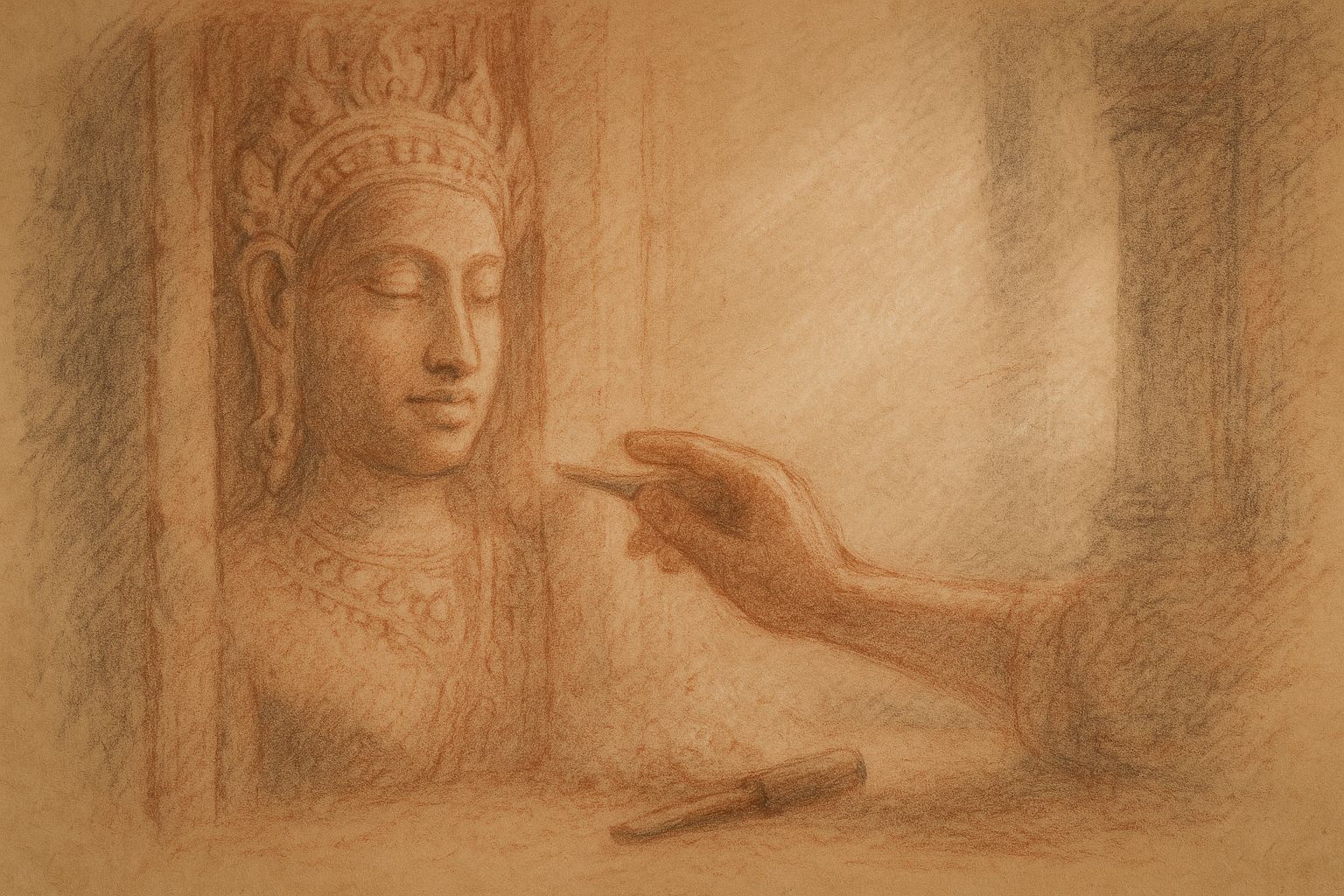

Hands of the Sculptor — The Craft as Meditation
In the hush of the galleries, the sculptor listens rather than strikes.
Each breath, each measured blow, opens silence a little further.
Unfinished reliefs reveal the moment when mastery becomes meditation—
when patience itself is carved into being,
and the dust that falls at a mason’s feet becomes the residue of prayer.
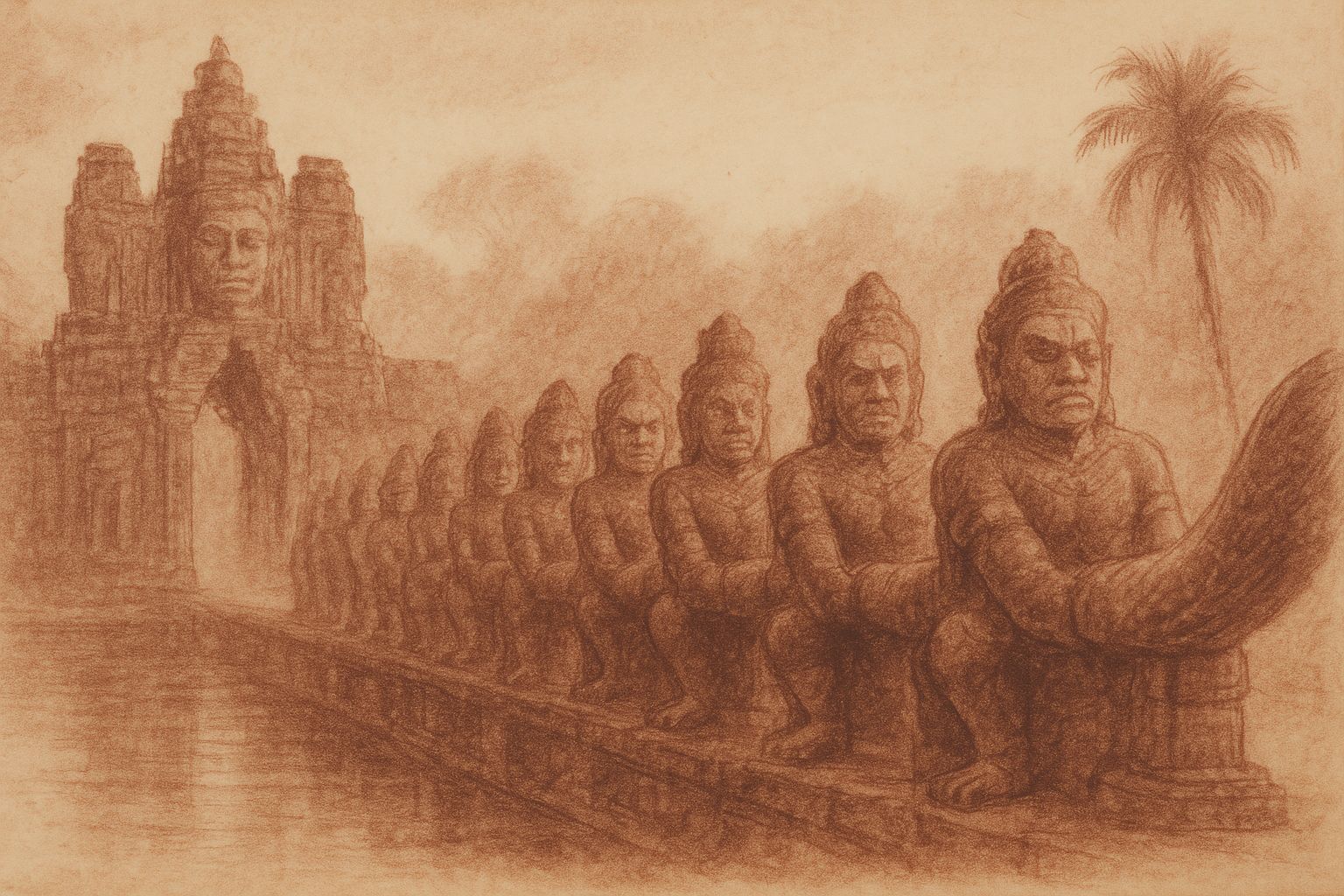

The Asura Within
At the gates of Angkor Thom, gods and demons share a single serpent.
Across this bridge of struggle the pilgrim learns that the asura is not evil but unfinished — the restless force within each of us still grasping for light.
To cross the naga is to balance passion with compassion, struggle with stillness, shadow with dawn.
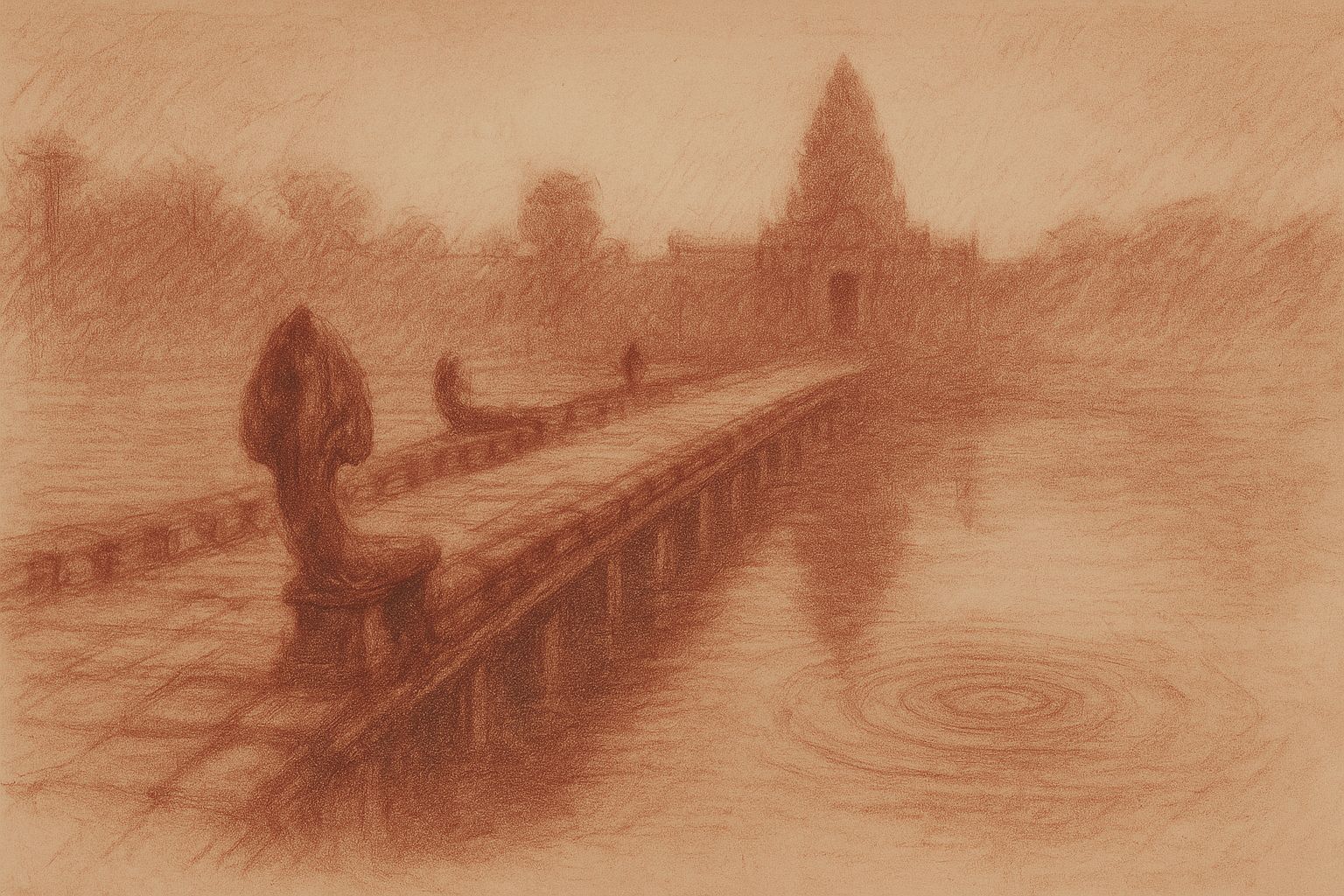

The Measure of Silence: A Pilgrim’s Reflection on Kingship at Angkor
Through the ruins of Angkor, a curatorial pilgrim traces the vanished geometry of divine rule. In the silence of the stones, kingship reveals itself as both devotion and decay—an empire of alignment turned elegy, where even ruin retains the measure of sacred order.
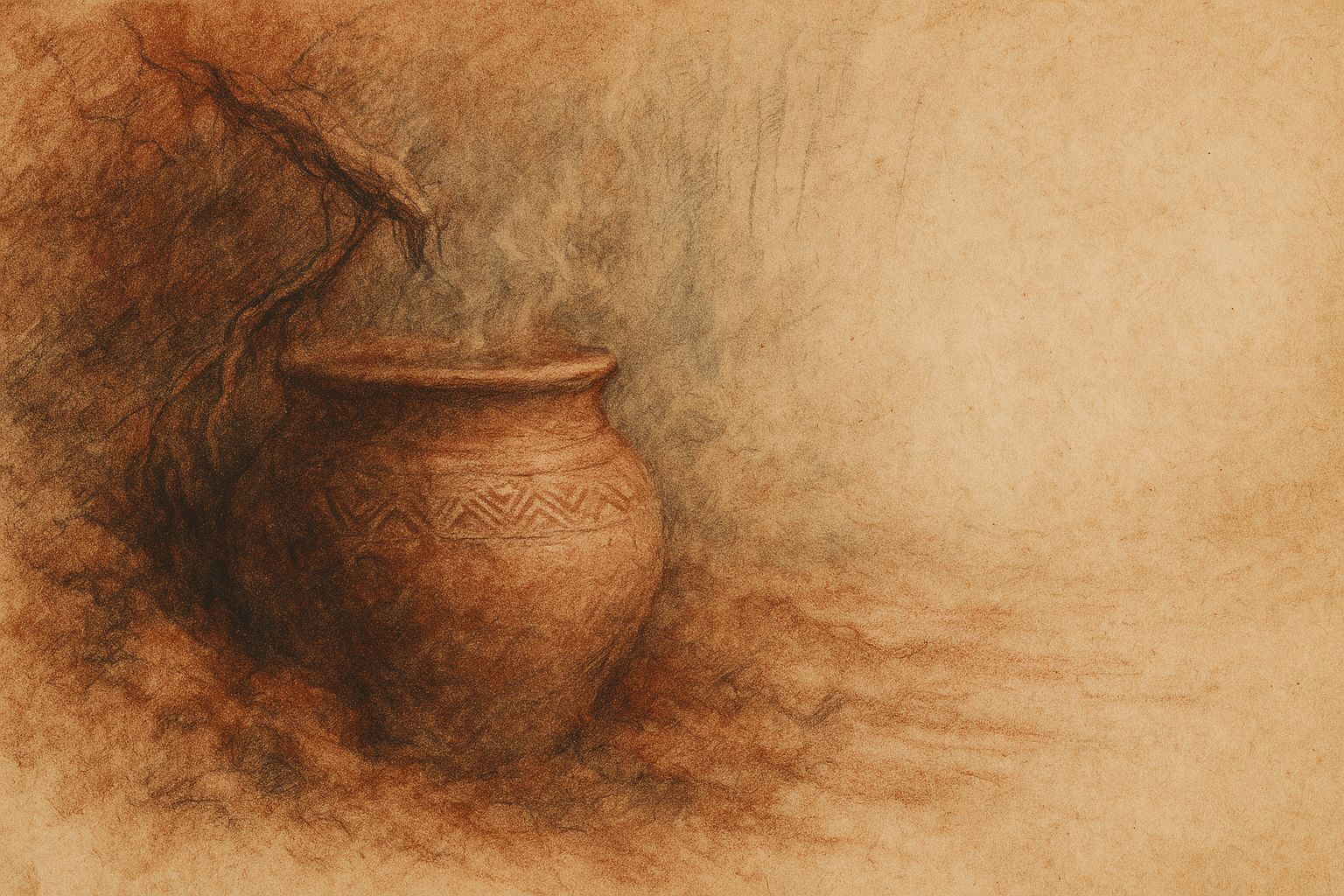

The Pilgrim’s Guide to Cambodia’s Beginnings
In the caves of Laang Spean, in the myth of a dragon princess, in the echoes of Funan and Chenla — Cambodia’s beginnings endure. This essay walks with ancestors through soil, stone, and water, tracing how the first Cambodians shaped rice, ritual, and memory into a living continuity that still breathes today.