
The House of Cadmus is a literary house for Greek myth retold with severity, beauty, and structural pressure. Here the old stories are not softened into ornament or simplified into lesson. They are reopened as living chambers of inheritance, violence, fate, recognition, refusal, and return.
This blog gathers excerpted thresholds from the wider House of Cadmus publication: tales, foundations, apparatus, author’s notes, dossiers, and other writings from the chamber behind the myths. Each piece offers an entrance into the work — a first pressure, a first image, a first opening of the door.
The full publication continues on Substack at The House of Cadmus, where Greek myth is retold and examined through the forces that made it necessary: bloodline, oath, exile, war, kinship, divine pressure, and the difficult knowledge carried by ancient stories.
For the broader constellation of Lucas Varro’s mythic, contemplative, and literary work, visit The Library.
House of Cadmus

No Man Comes Home X — The Hall Reveals Itself
Odysseus returns to Ithaca disguised as a beggar, but the first creature to recognise him is the neglected dog Argos. In this severe literary retelling of The Odyssey, the king enters his own hall as need, and every act of hospitality, contempt and blindness becomes part of the house’s final testimony.

No Man Comes Home IX — The Beggar at His Own Door
Odysseus reaches Ithaca at last, but return does not grant him recognition, reunion, or peace. Disguised by Athena as a beggar, he must enter his own kingdom without name or power and allow the house to reveal what it has become. The ninth canto of No Man Comes Home turns homecoming into a test of loyalty, restraint, and concealed violence.
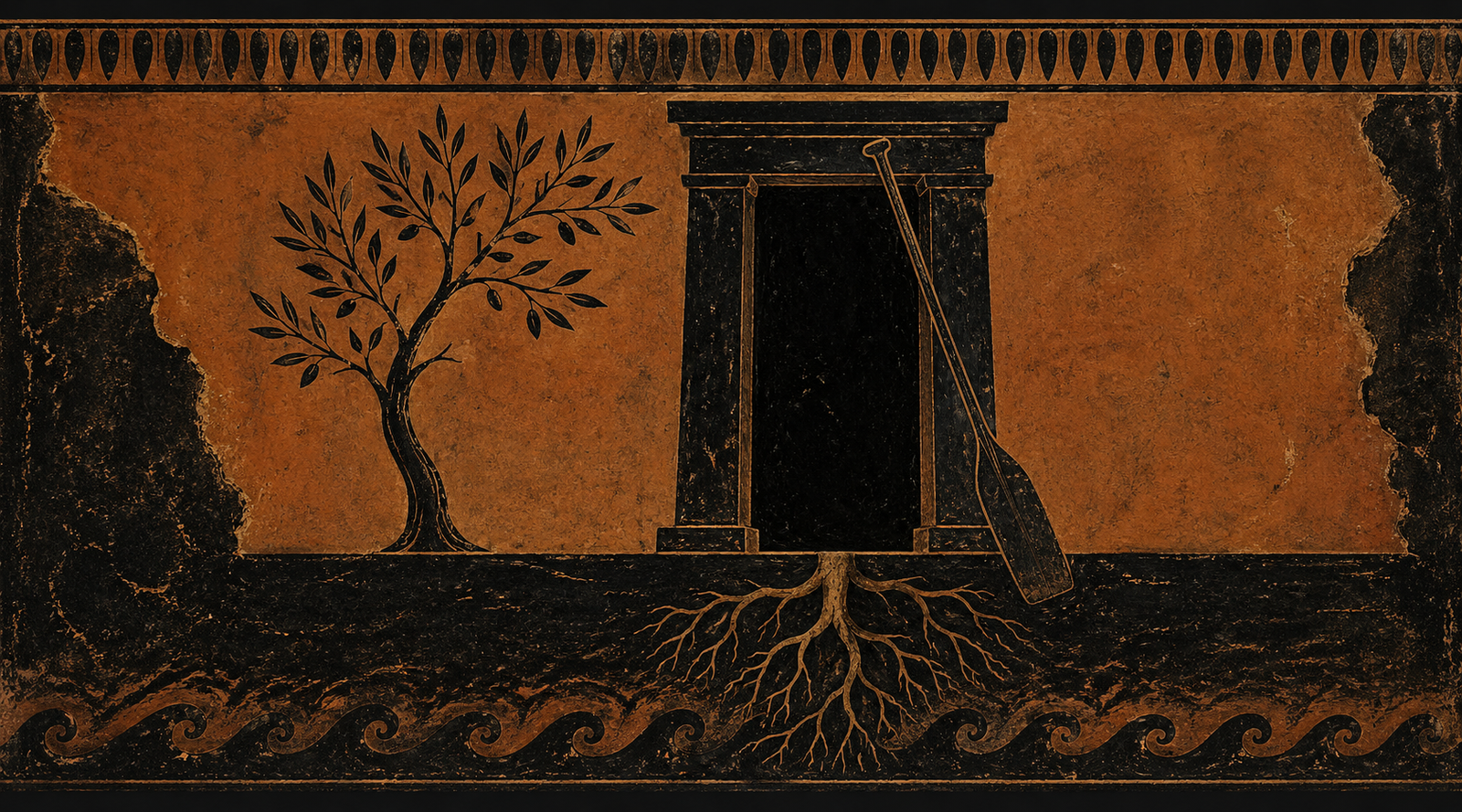

The Objects That Know Him
Name, oar, wax, scar, bow, bed, door: ordinary things carry a quieter authority beneath the marvels of The Odyssey. This House of Cadmus essay considers how objects recognise Odysseus, judge the concealments that preserved him, and make return more difficult than merely reaching Ithaca.

No Man Comes Home VIII — What the Oarsmen Did Not Hear
Odysseus seals his oarsmen’s ears with wax and orders them to bind him to the mast. In this severe literary retelling of the Sirens episode from The Odyssey, knowledge becomes privilege, obedience becomes rescue, and command begins to reveal its hidden cost. The men will row through what they cannot hear. Their captain must live with what he alone receives.

No Man Comes Home VII — The Dead Know the Way Home
Odysseus enters the underworld seeking the road to Ithaca. Before Tiresias can reveal the future, however, the dead confront him with an older obligation: the companion left unburied. A grave literary retelling of prophecy, memory, mortality, and the knowledge that every homecoming contains what cannot return.

No Man Comes Home VI — The Oar That Could Not Belong
A grave Odyssey retelling from No Man Comes Home: Tiresias gives Odysseus a prophecy stranger than return itself. After Ithaca, after the suitors, after the bed and the bow, he must carry an oar inland until the sea’s own instrument is mistaken for something else.

No Man Comes Home V — The Name Inside the Cave
In this fifth canto of No Man Comes Home, Odysseus enters the cave of Polyphemus with no need to be there. What follows is not only a famous Greek myth of cunning and escape, but a severe study of curiosity, leadership, hospitality, and the danger of needing one’s name to be known.

No Man Comes Home IV — The Stranger Washed Ashore
Odysseus has survived the sea, but survival is not yet return. Washed ashore on Scheria, naked and nameless, he must enter the human world again through restraint, supplication, Nausicaa’s courage, and the dangerous mercy of a house that does not yet know whom it has received.
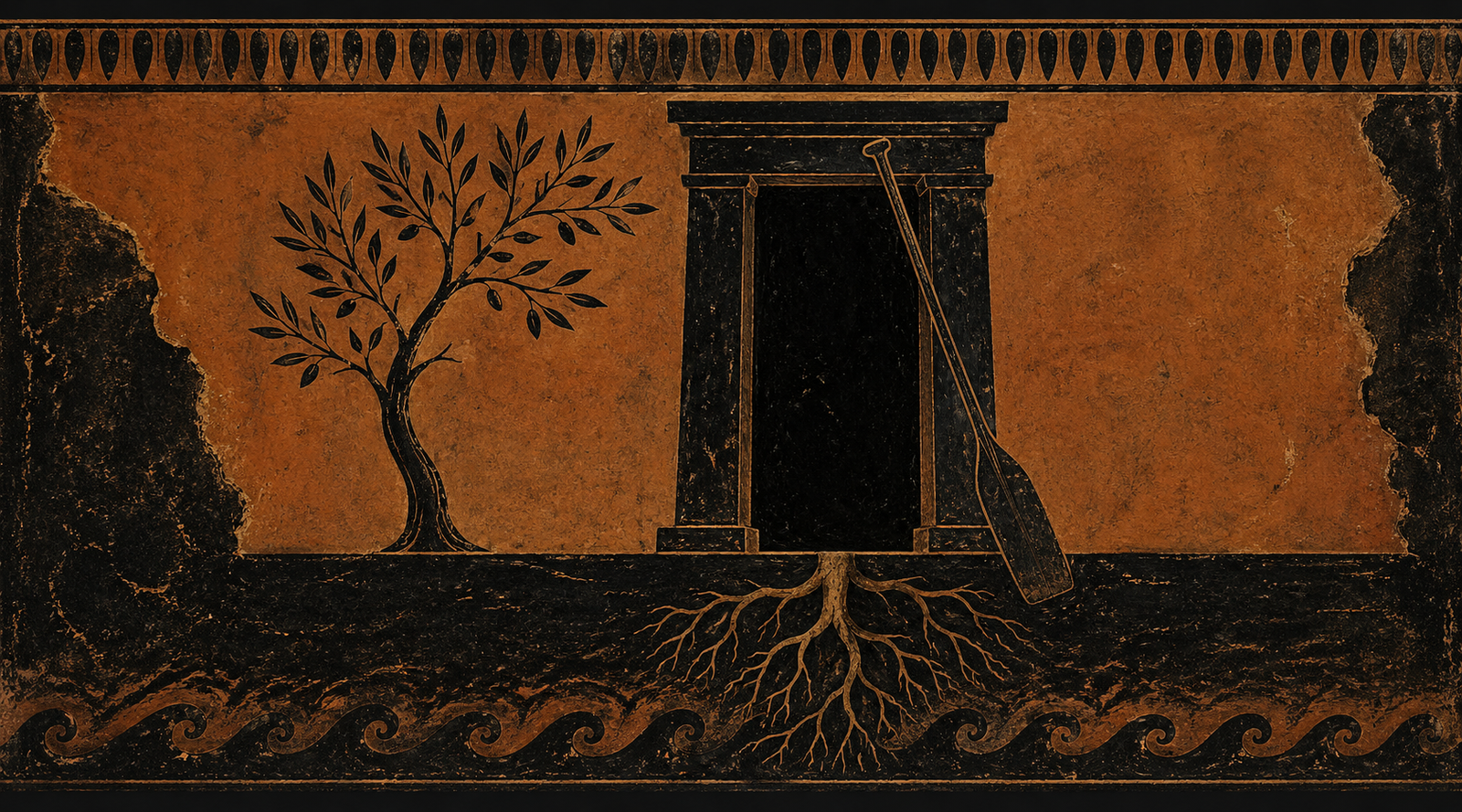

No Man Comes Home III — The Island of the Kept Man
Calypso’s island saves Odysseus, then begins to steal him. In the third canto of No Man Comes Home, immortality is not offered as thunder or command, but as tenderness becoming law. To return, Odysseus must choose mortality, consequence, and the road that may kill him.
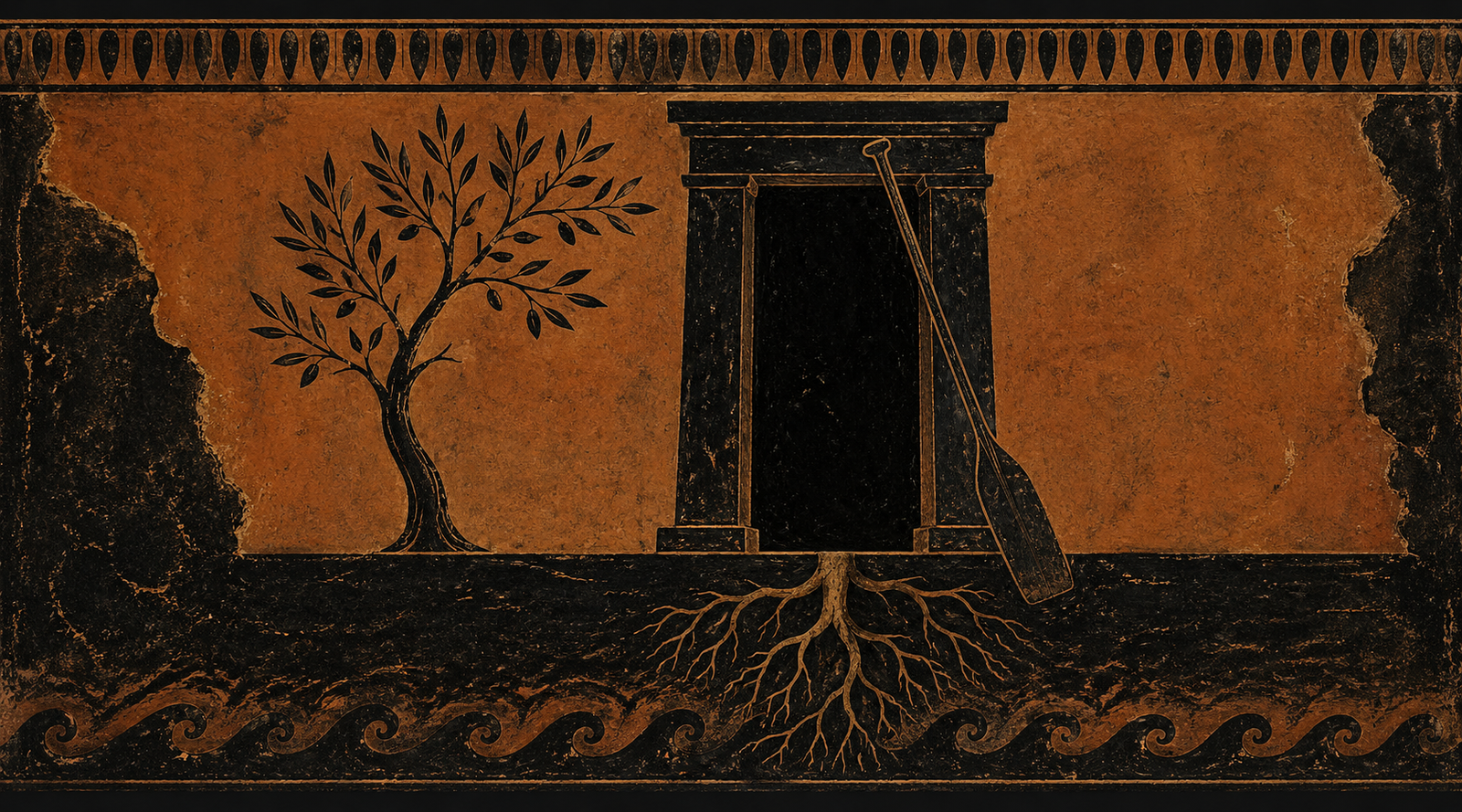

No Man Comes Home II — The Son Sent Out
Telemachus leaves Ithaca not as a hero, but as a son forced into motion by a house that will not correct itself. Seeking news of Odysseus, he discovers that a father’s absence can become larger in other men’s mouths than in the life of the child who has carried it. He wanted certainty. He received scale.
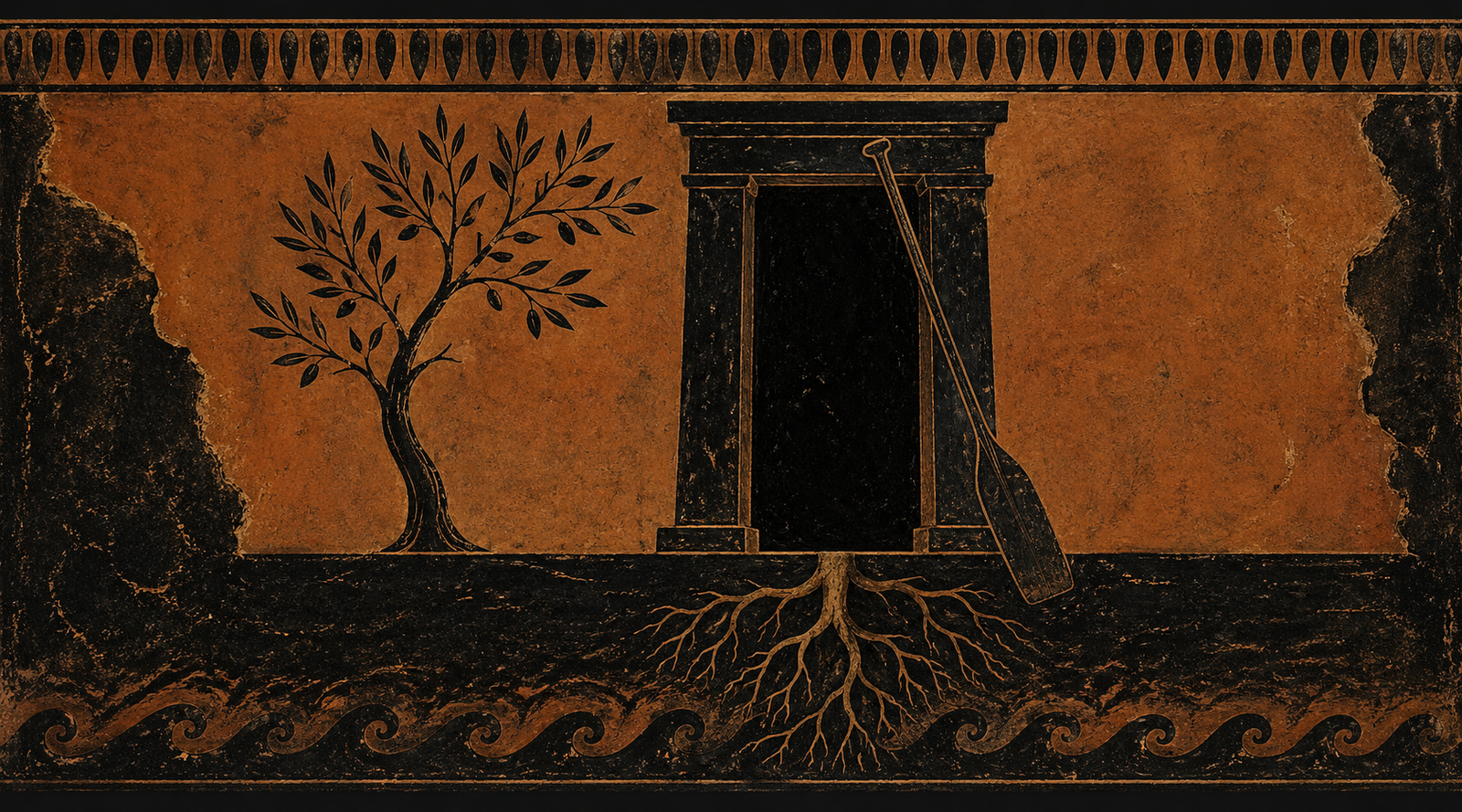

No Man Comes Home I — The House Without the Man
Before Odysseus returns, Ithaca has already become a battlefield. Penelope rules by delay, Telemachus grows beneath the weight of absence, and the suitors corrupt hospitality from within. The first canto of No Man Comes Home begins not with the hero, but with the damage made by his absence.


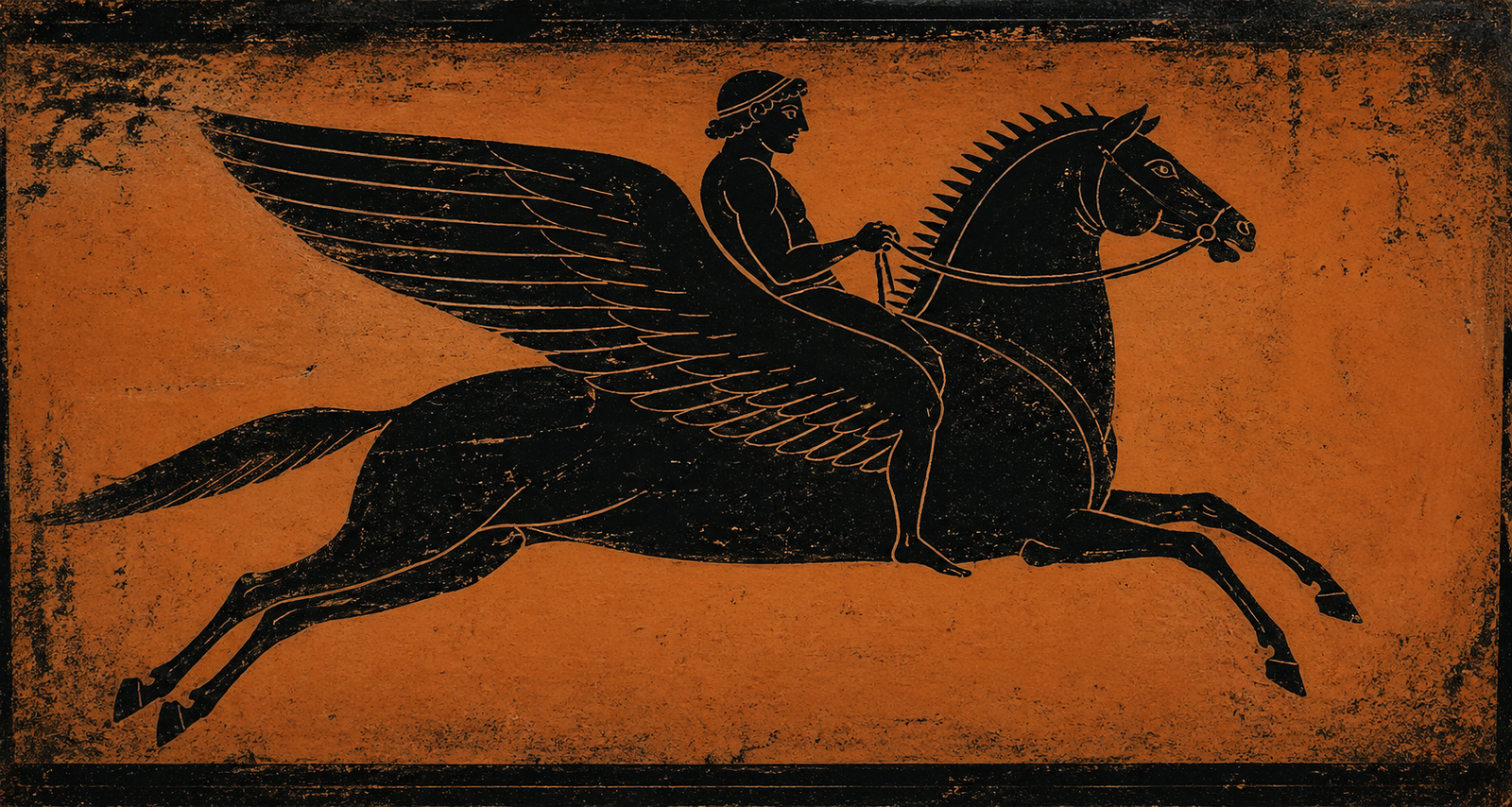

Bellerophon and the Borrowed Height
Bellerophon begins not in triumph, but under sentence: renamed by blood, purified beneath guest-law, and sent east carrying the sealed order for his own death. This House of Cadmus Greek myth retelling follows the man who rises by Pegasus — and mistakes borrowed height for possession.
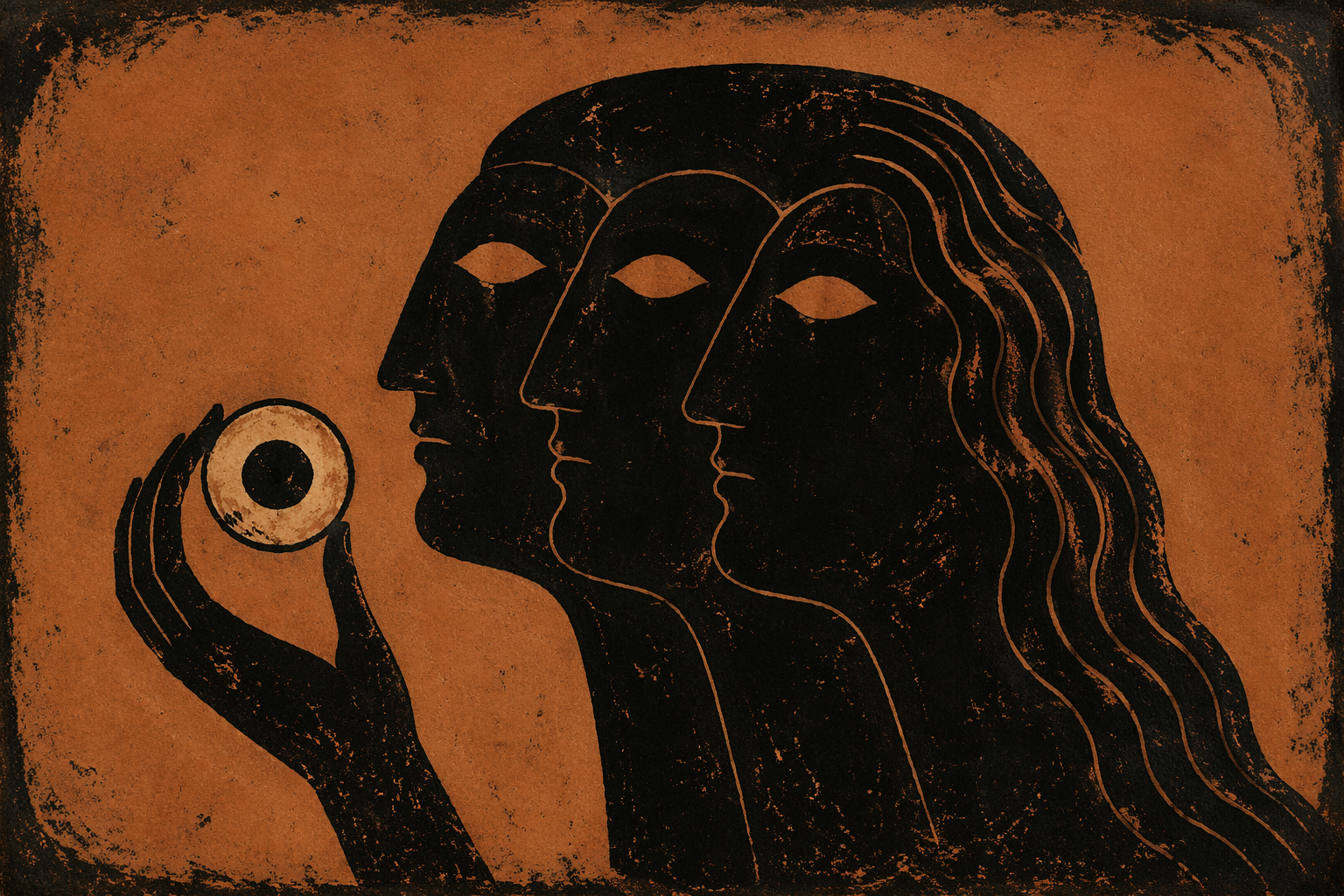

The Graeae — The Sharing of Sight
The Graeae possess one eye and one tooth between them. But this First World retelling is not about lack alone. It is about the law of passage: what must be shared, what must cross open space, and what becomes vulnerable when necessity moves from one hand to another.
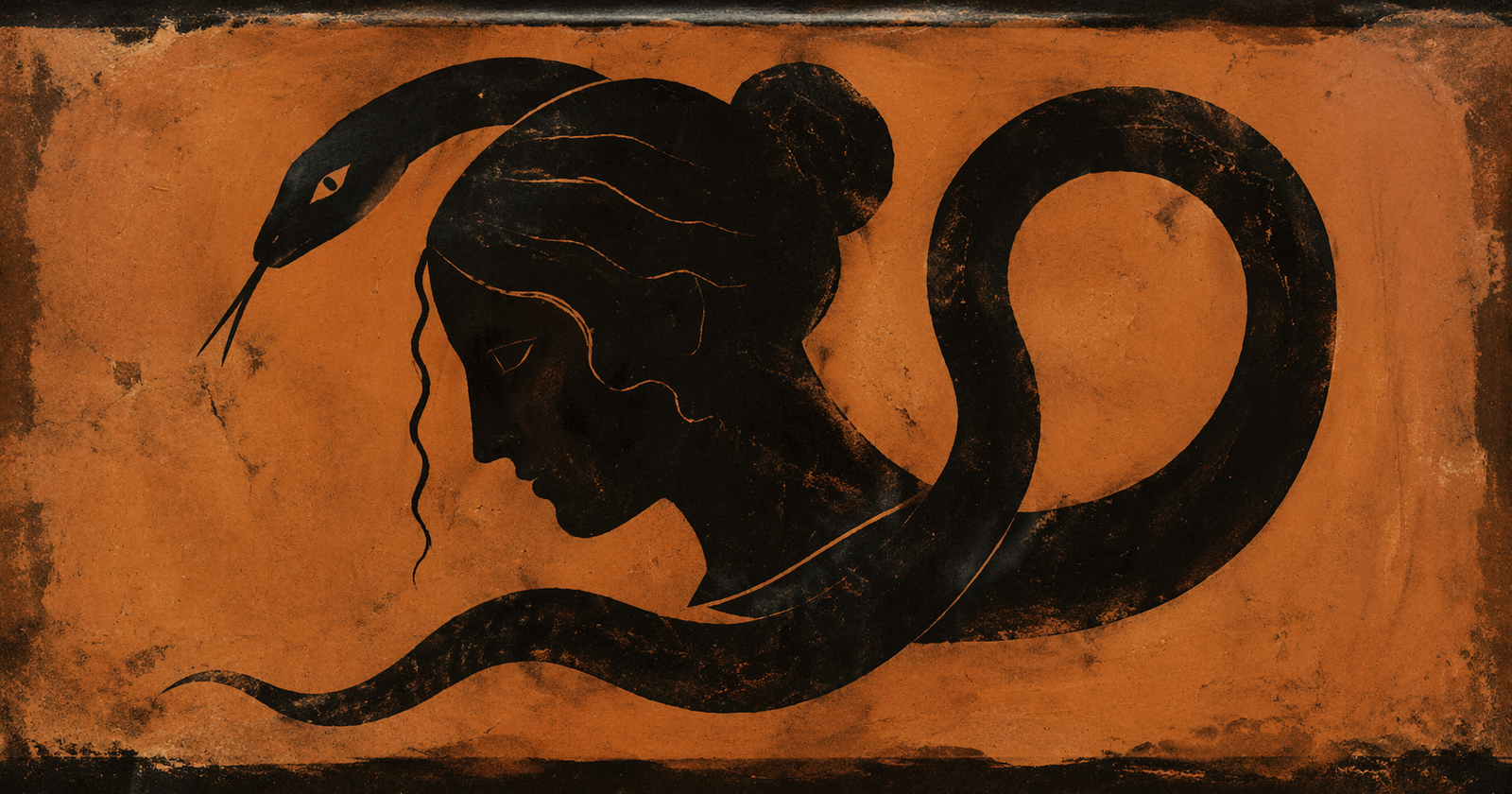

Prometheus — The Fire Under Penalty
Prometheus sees human incompletion hardening into order. To leave fire withheld would also be an act. This First World retelling follows the theft of fire not as sentimental gift, but as passage taken under penalty — an alteration of the mortal world paid for in bound flesh.
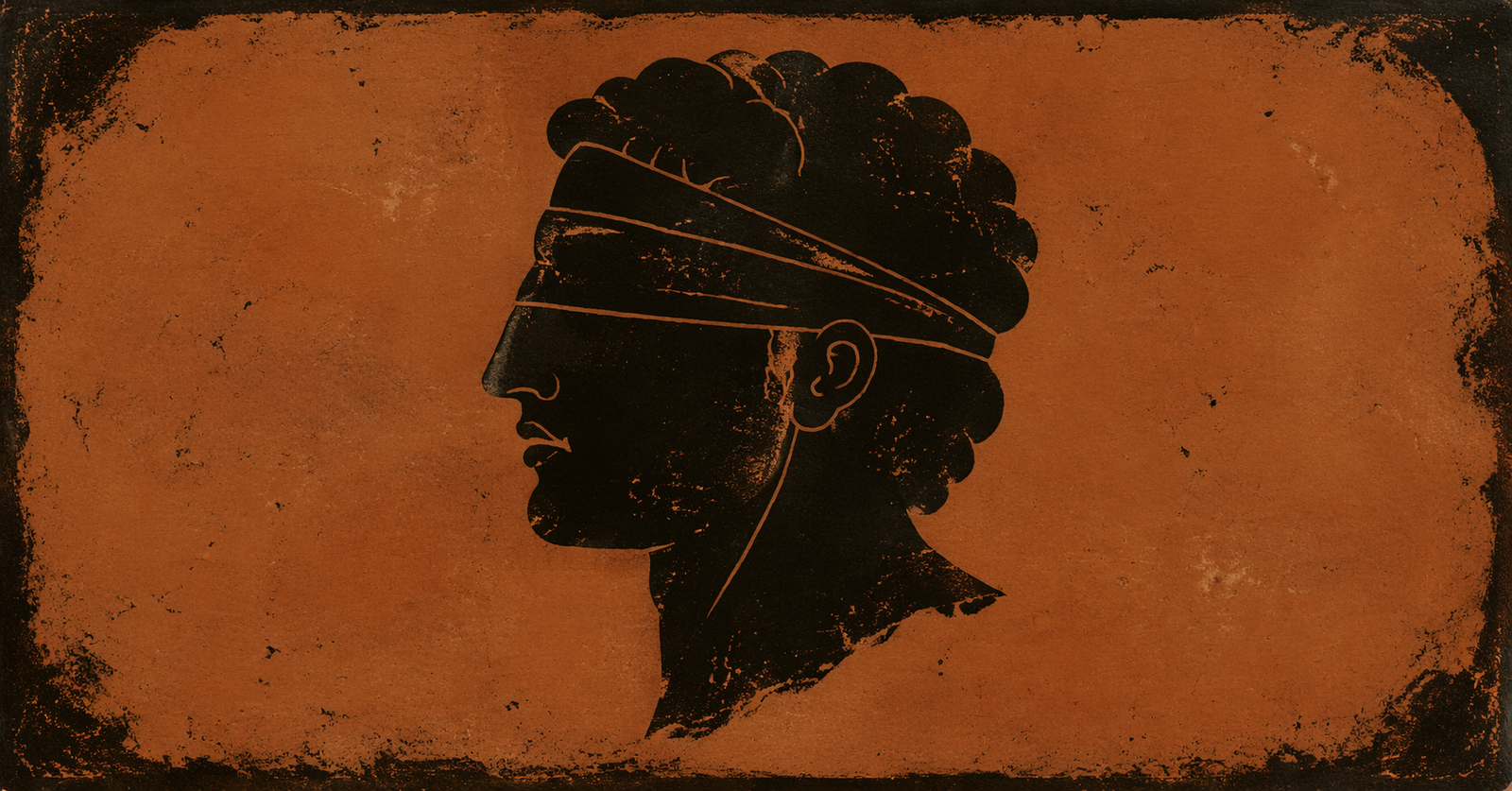

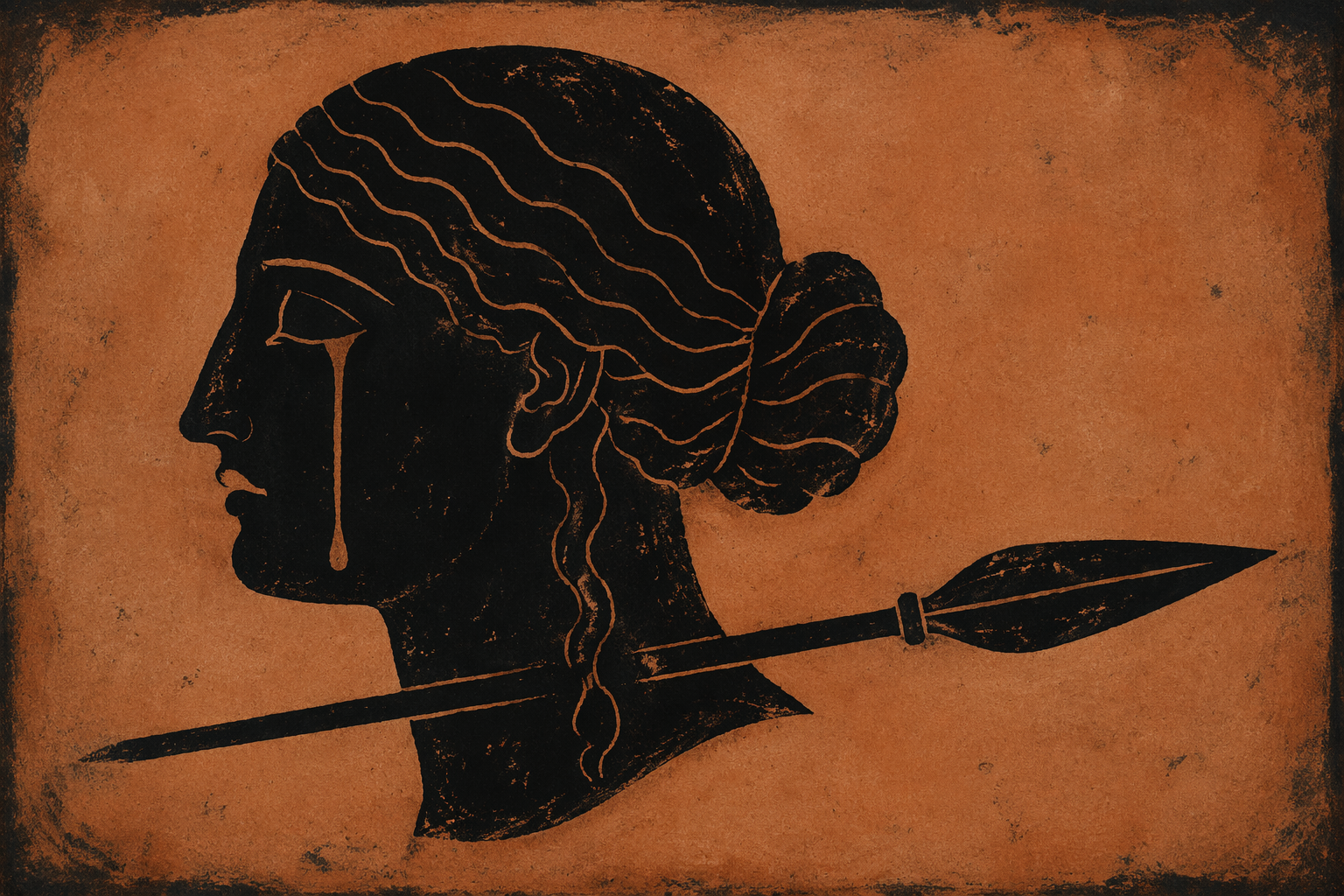

Narcissus and Echo
Echo is left with speech but stripped of beginning. Narcissus is brought before an image that answers every look and yields nothing. This First World retelling returns the old myth to its harsher structure: voice without origin, reflection without crossing, and metamorphosis without consolation.
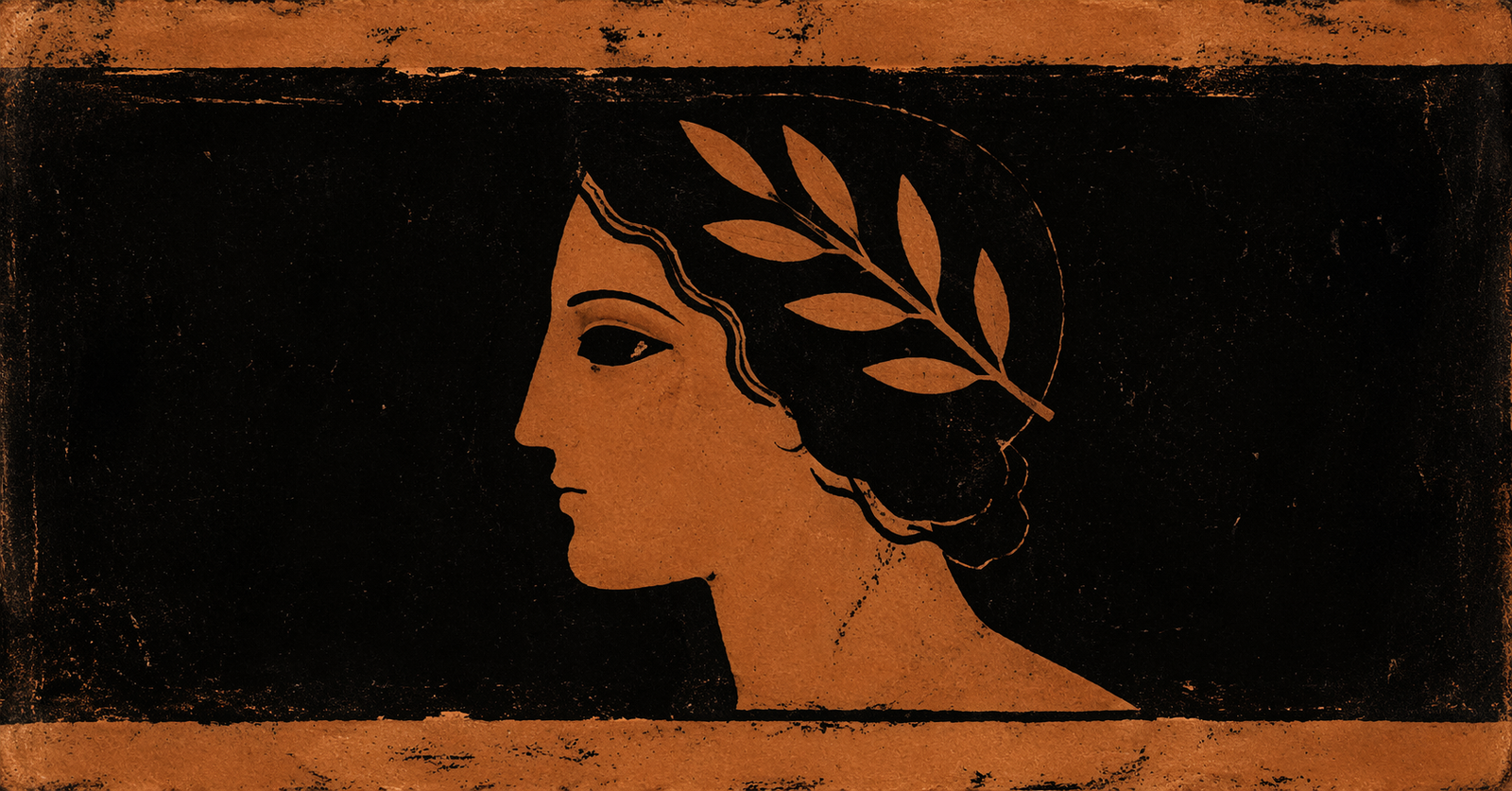

Orpheus — The Weight of Turning
Orpheus enters the underworld already divided. In this House of Cadmus retelling, the command not to turn is not a test, but a law of passage: Eurydice may follow only while he does not demand proof. The tragedy begins where love, uncertainty, and the body’s hunger for confirmation meet.
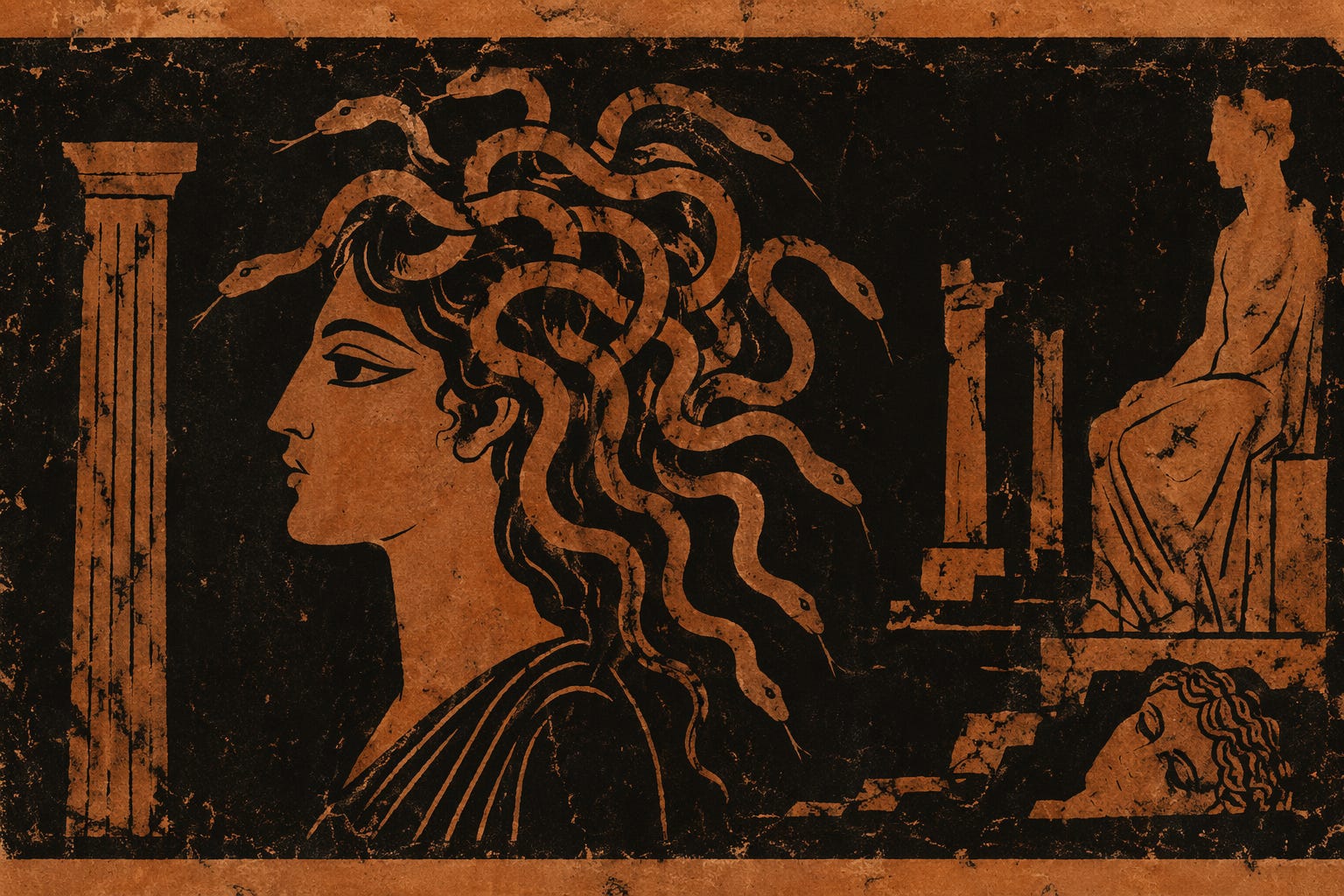

Medusa — The Mirror of Silence
Medusa speaks from the broken sanctuary: not as ornament of horror, but as witness. This House of Cadmus retelling returns to the silence before the name monster, where holiness fails, false naming begins, and the gaze becomes the place where others can no longer endure what looks back.