
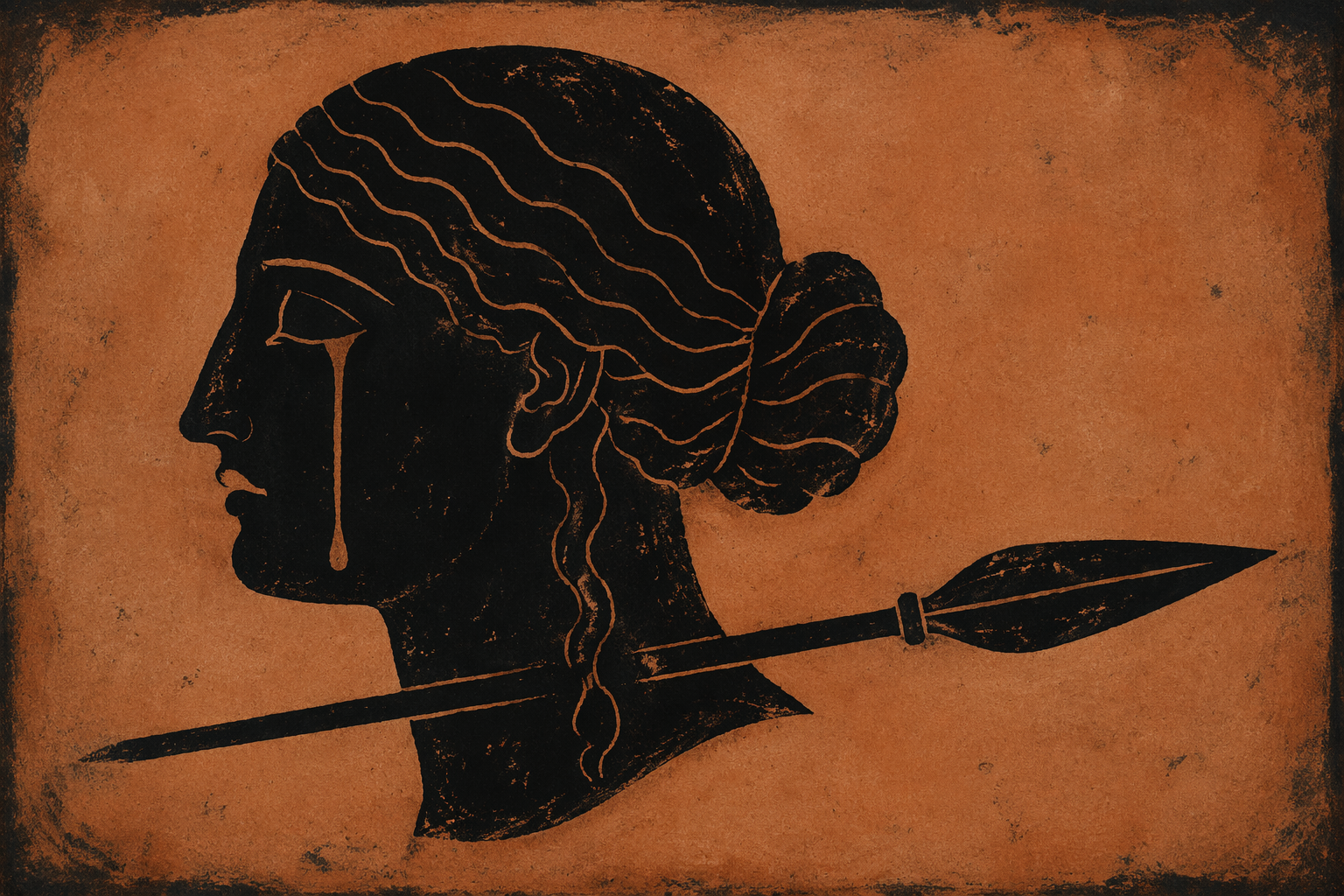

Narcissus and Echo
In this First World retelling, Narcissus and Echo are not merely figures of vanity and unreturned love. They are bound by a harsher law of failed reciprocity: Echo can answer but cannot begin; Narcissus can behold but cannot cross. Between them the world sets voice, image, stone, and water, and from those materials makes a sentence neither body can survive.
There are forms of ruin that begin long before the body knows it has entered them.
Echo learned hers in the mountains, where sound is never alone. A call leaves the mouth, strikes stone, and returns altered by distance, cliff, hollow, and height. The ridges above her kept more voices than they should have been able to hold. A laugh could live there for a moment after the mouth that gave it had closed. A name could come back thinner, delayed, made strange by the rock that received it.
The nymph knew these returns intimately. She belonged to slopes, glens, and broken ground. Her feet were sure on shale. Her body moved easily among fir, scrub oak, and pale stone that kept the sun’s heat long after noon had passed. She had the quickness of mountain things: not hidden, not displayed, only difficult to catch at rest.
She spoke often.
That was first merely true of her.
Then it became useful.
When Zeus crossed those upper regions in pursuit of what pleased him, he did not always move alone, and he did not always wish to be found. Hera, who missed little and forgave less, came more than once seeking what had already shifted beyond her reach. At such times Echo met her with abundance. She met her with speech itself — stories, turns, diversions, little roads of sound laid one after another so the goddess’s attention followed language while bodies elsewhere escaped it.
She did not oppose Hera by force. She delayed her by continuity. She kept words arriving. She made one sentence lean into the next. By the time the chain broke, the thing sought had withdrawn beyond recovery.
It was not deceit of a high order, but it was enough.
When Hera understood what had been done, she did not tear Echo apart, nor strike her mute. Either would have been crude. The punishment was narrower and therefore harder.
She left the nymph speech, but she took from it beginning.
From that hour Echo could not shape first utterance. No word could rise from her of its own force. She could not call, warn, answer before being addressed, plead from herself, or lay language into the air as one lays a hand upon water. She had only the ends of others. When a voice came near her, the final word or phrase might still be taken up and sent back.
But nothing commenced in her now.
Speech no longer opened outward from the body.
It arrived from elsewhere and returned.
This was not silence. Silence can still belong to the one who keeps it.
This was occupation.
At first she tried to test the edges of it. She stood in narrow places where a goat-path cut along a ridge and opened her mouth against the sky. Nothing came. She knelt beside a stream and watched her own lips shape effort without sound. Then a woodcutter passed below and called to his mule in irritation. The last word of the curse struck her like a thrown object and left her again before she knew she had taken it.
She flinched at the sound of her own voice, which now no longer answered to intention.
So the mountains acquired her differently. Once she had moved through them as a creature among them. Now she dwelt there like a property of their acoustics. The hollows loved her better than the open. Ravines held her. Cliffs gave her back to herself in fragments. If a hunter cried out, she returned the end of him. If shepherd boys shouted across distance, she broke their noises against each other and gave them back thinner, stranger, harder to place.
Those who did not know her thought the hills were answering.
In a sense they were.
Continue reading: Narcissus and Echo at The House of Cadmus on Substack.
Also in House of Cadmus
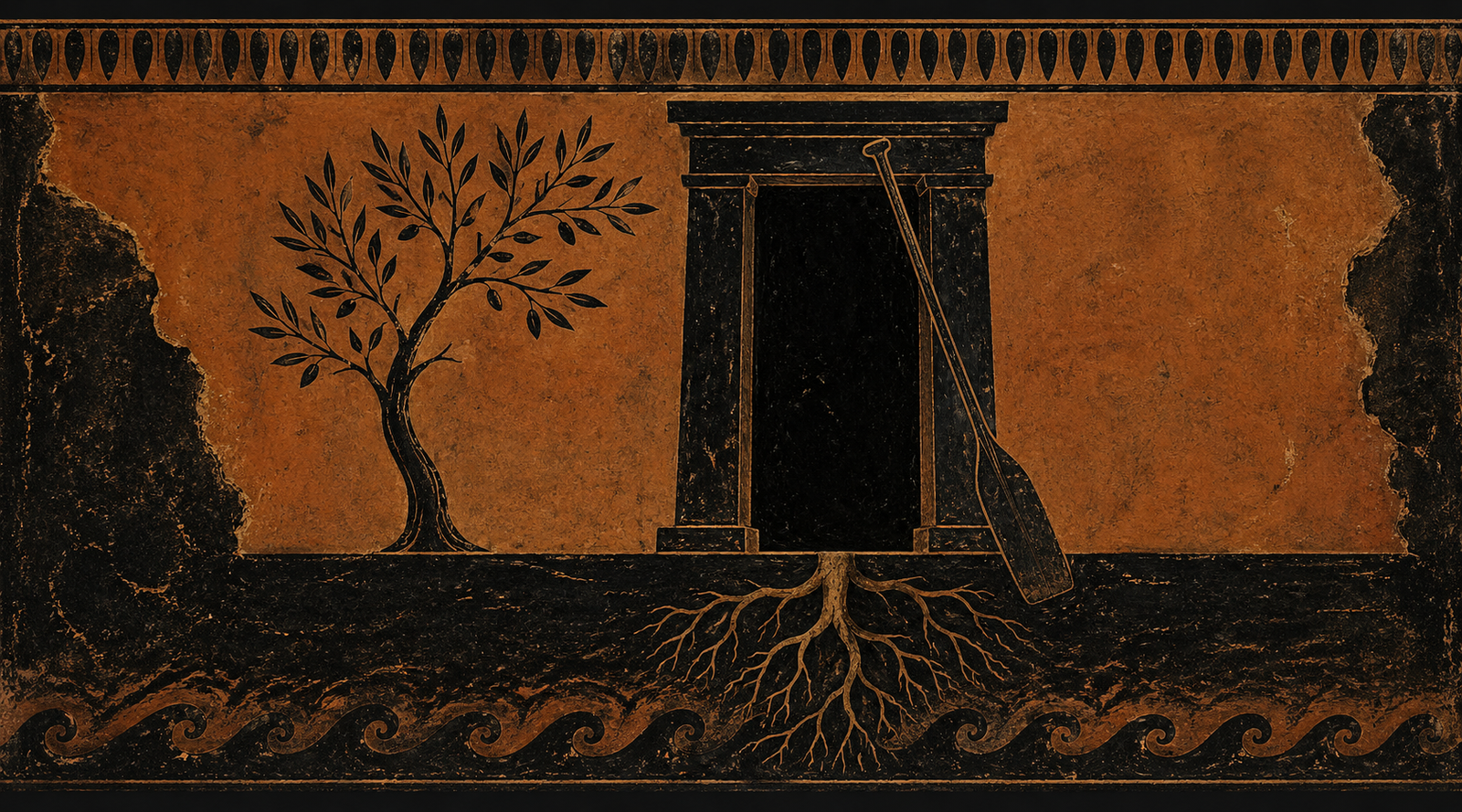

No Man Comes Home VI — The Oar That Could Not Belong
A grave Odyssey retelling from No Man Comes Home: Tiresias gives Odysseus a prophecy stranger than return itself. After Ithaca, after the suitors, after the bed and the bow, he must carry an oar inland until the sea’s own instrument is mistaken for something else.

No Man Comes Home V — The Name Inside the Cave
In this fifth canto of No Man Comes Home, Odysseus enters the cave of Polyphemus with no need to be there. What follows is not only a famous Greek myth of cunning and escape, but a severe study of curiosity, leadership, hospitality, and the danger of needing one’s name to be known.

No Man Comes Home IV — The Stranger Washed Ashore
Odysseus has survived the sea, but survival is not yet return. Washed ashore on Scheria, naked and nameless, he must enter the human world again through restraint, supplication, Nausicaa’s courage, and the dangerous mercy of a house that does not yet know whom it has received.
Continue Reading
If this piece found something in you, you may wish to continue the journey elsewhere.
On The Lantern Chronicles, I gather writings from Angkor, myth and legend, contemplative essays, and poetry — works shaped by silence, beauty, wonder, memory, and the deeper questions that follow us through the world.
It is a place for stone and story, reflection and vow, shadow and revelation.
You would be most welcome there.