
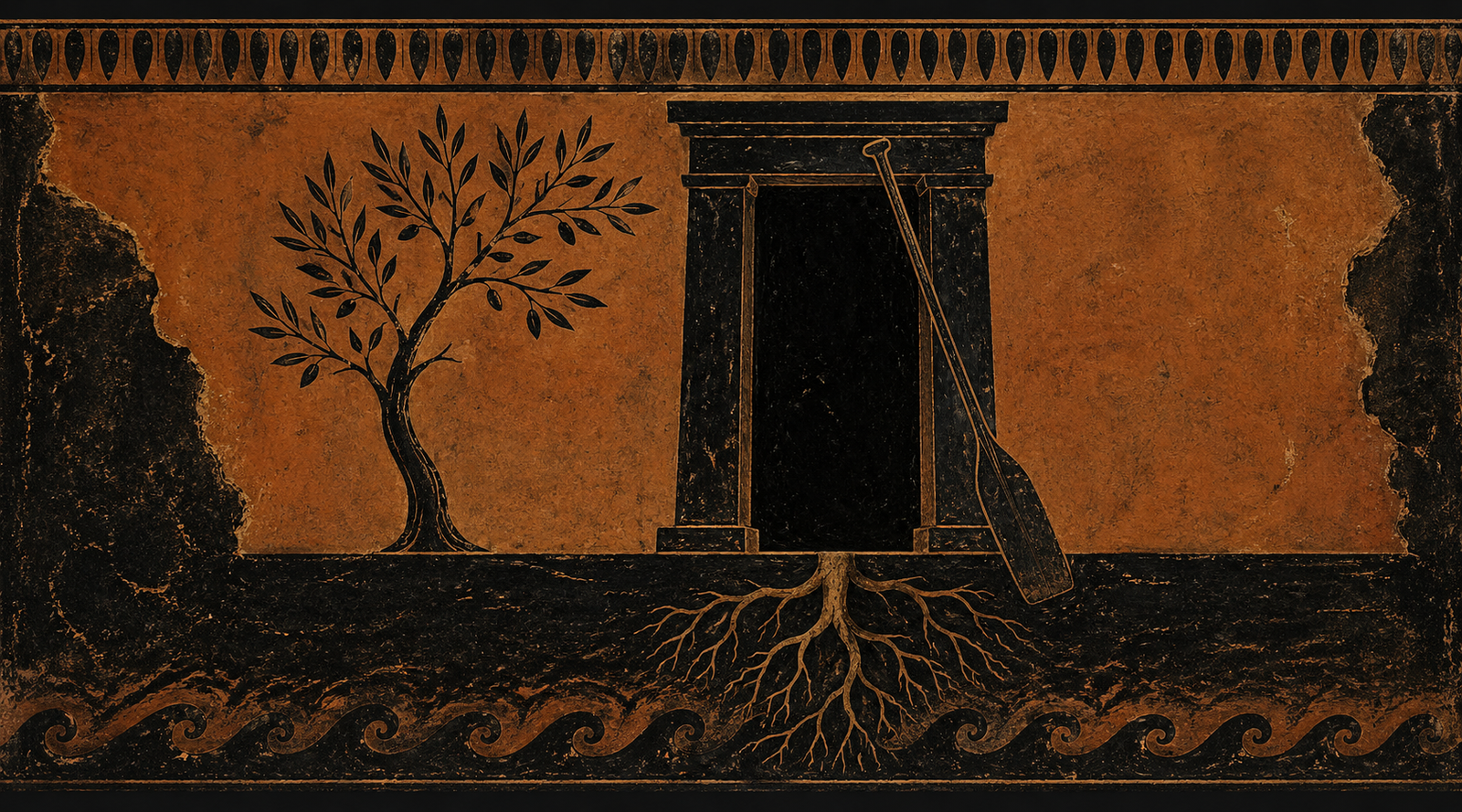

No Man Comes Home IV — The Stranger Washed Ashore
In the fourth canto of No Man Comes Home, Odysseus has survived the sea. But survival is not yet return. Washed ashore on Scheria, naked, nameless, and reduced to need, he must re-enter the human world without terrifying it.
Girls came laughing into the morning.
That was how the human world returned to him.
Not with trumpets, not with armed men, not with a king’s summons or a wife’s cry from the threshold, but with bright voices near water, the slap of wet cloth against stone, mule-bells, baskets, sunlight, the small disorder of youth set loose from the house for necessary work and pleasure disguised as duty.
A ball rose into the air.
For one breath, no one on the shore was thinking of kings, wars, suitors, shipwrecks, gods, or the long infection of absence.
The ball fell wide.
A cry followed it.
The girls’ voices struck the leaves.
Odysseus woke.
He did not know where he was.
This is one of the cruellest mercies of sleep: it returns the body before it returns the life. For a moment there is only breath, light, ache, the mouth dry with salt, the limbs heavy under leaves. Then memory comes back not as story, but as impact. Island. Raft. Storm. Water. Prayer. River. Dark. Leaves.
Still alive.
The knowledge hurt.
Survival often does.
He lay under the branches and listened.
Women’s voices.
Young.
Near.
The body understood danger before the mind arranged it. A naked man near young women is not yet a supplicant. He is first a threat. Rank cannot be seen beneath salt and leaves. Suffering is not innocence to those who must fear the body that carries it.
He needed clothing.
He needed food.
He needed passage.
He needed not to terrify those from whom he must ask mercy.
There was no dignity available to him. Only the choice of how to lose it.
He broke a branch thick with leaves and held it before his body. The gesture did not restore honour. It acknowledged the terms under which honour might someday return.
The girls screamed and fled.
All but one.
Nausicaa stood.
Athena had put courage in her, but courage does not cancel fear. It only gives fear a body that does not immediately obey it.
A man who has commanded armies and spoken before kings must learn, in one instant, how not to use the powers that once preserved him. Force would ruin him. Command would shame him. Complaint would lower him. Desperation would frighten her. Flattery would be visible if badly used. Truth would be too large if offered whole.
Speech must find a form that need does not corrupt.
He did not approach.
That was his first act of intelligence.
The full canto continues from this first act of restraint into Nausicaa’s mercy, Arete’s judgement, and the dangerous hospitality of the Phaeacians.
Continue reading: No Man Comes Home IV — The Stranger Washed Ashore at House of Cadmus on Substack.
Also in House of Cadmus
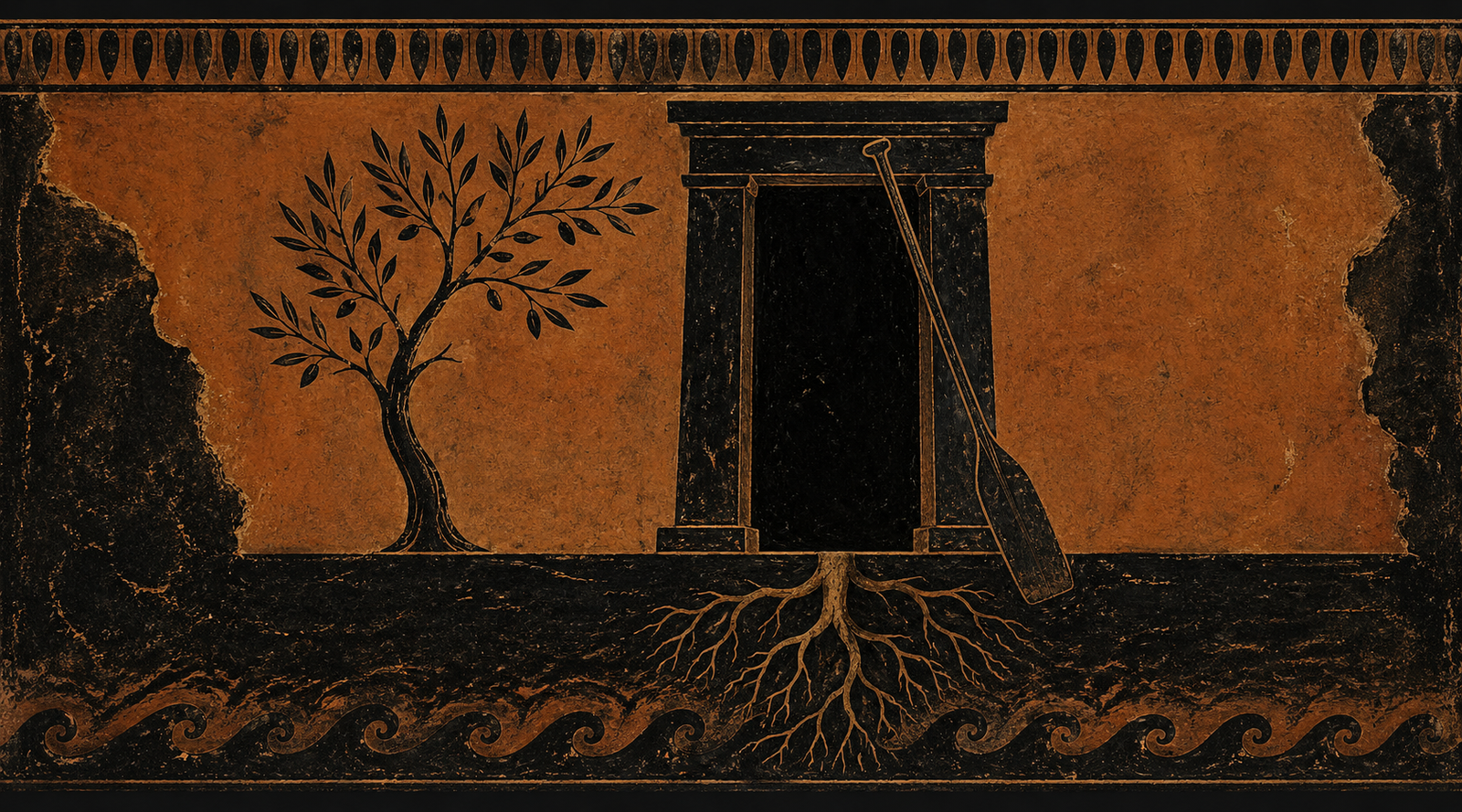

No Man Comes Home VI — The Oar That Could Not Belong
A grave Odyssey retelling from No Man Comes Home: Tiresias gives Odysseus a prophecy stranger than return itself. After Ithaca, after the suitors, after the bed and the bow, he must carry an oar inland until the sea’s own instrument is mistaken for something else.
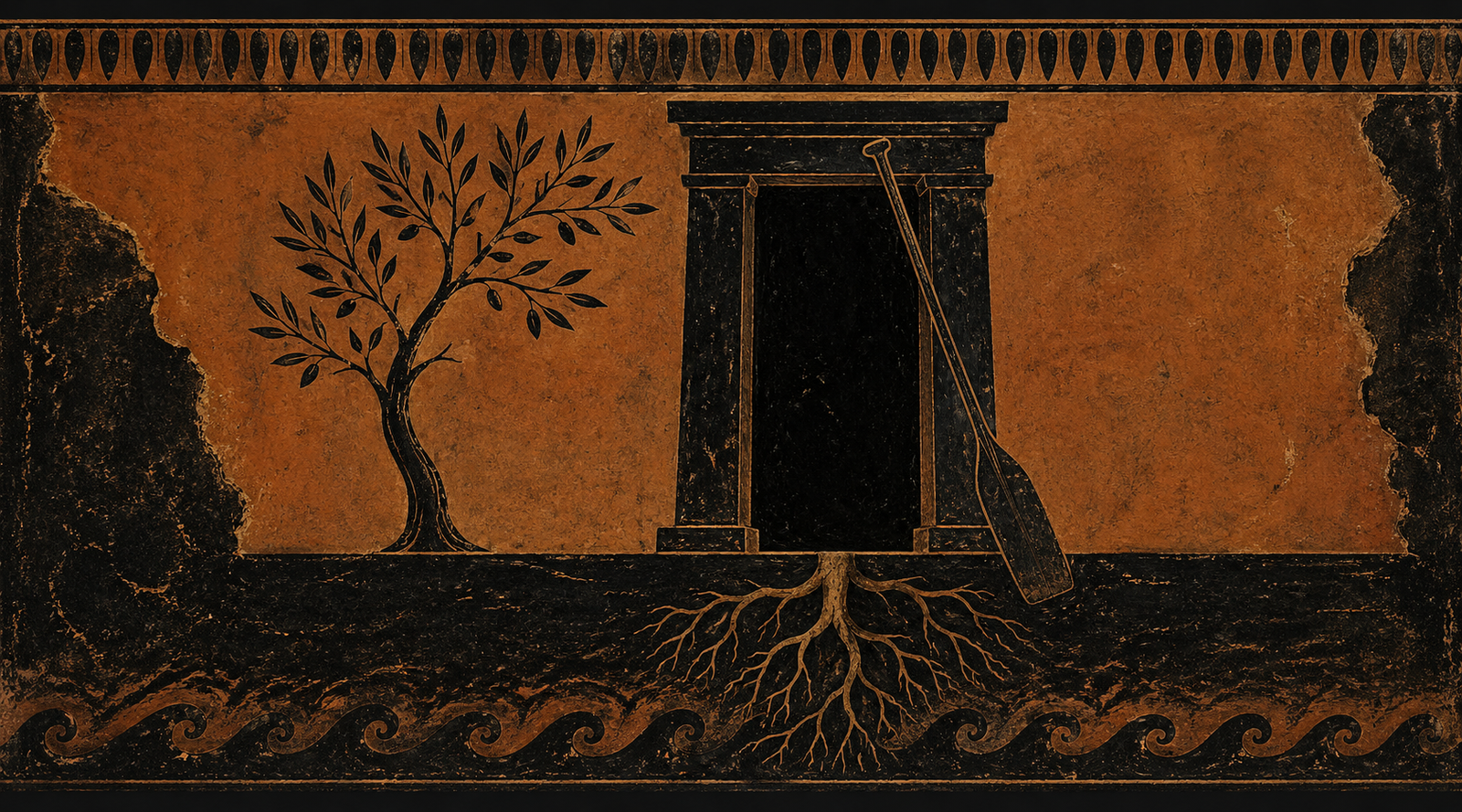

No Man Comes Home V — The Name Inside the Cave
In this fifth canto of No Man Comes Home, Odysseus enters the cave of Polyphemus with no need to be there. What follows is not only a famous Greek myth of cunning and escape, but a severe study of curiosity, leadership, hospitality, and the danger of needing one’s name to be known.
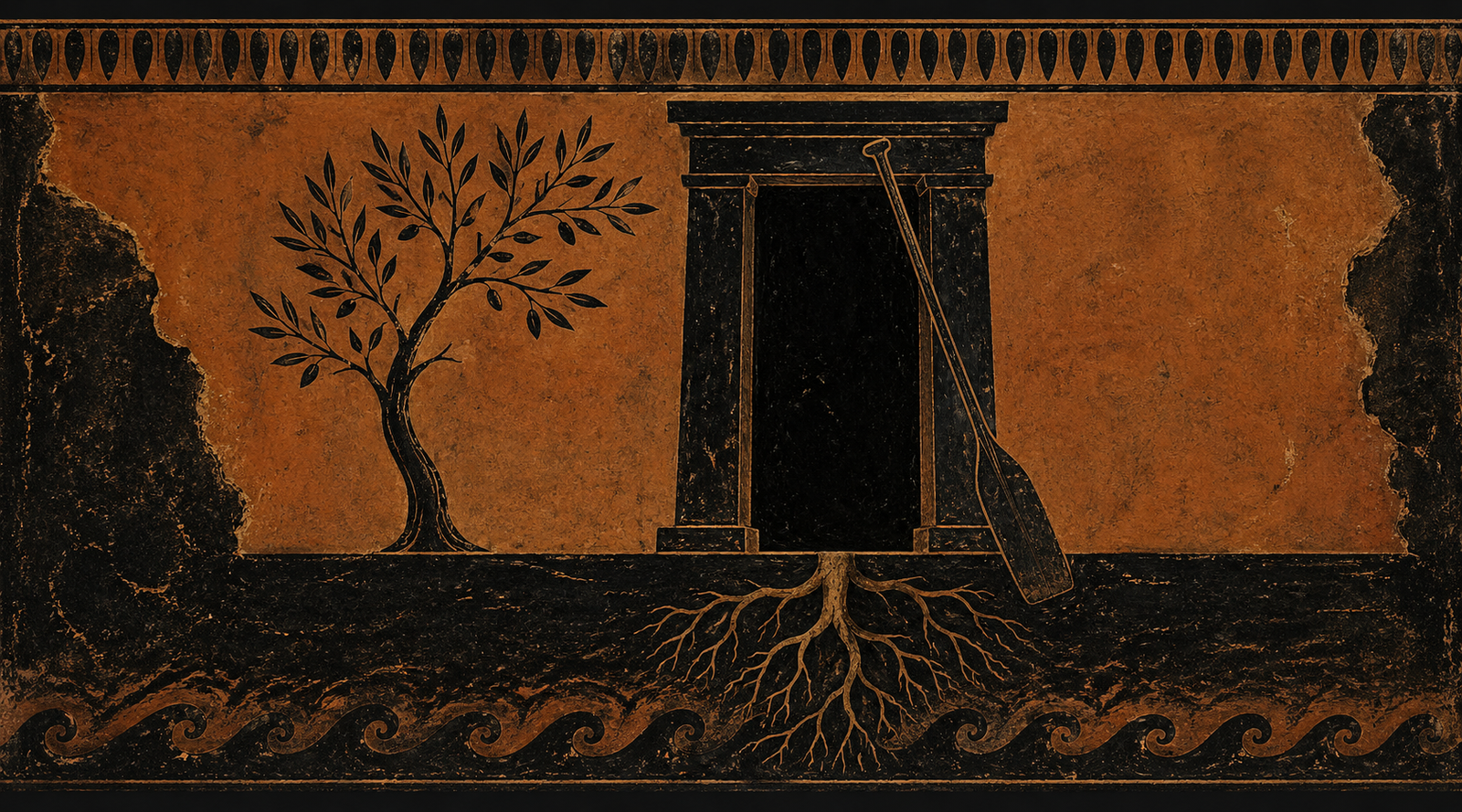

No Man Comes Home III — The Island of the Kept Man
Calypso’s island saves Odysseus, then begins to steal him. In the third canto of No Man Comes Home, immortality is not offered as thunder or command, but as tenderness becoming law. To return, Odysseus must choose mortality, consequence, and the road that may kill him.
Continue Reading
If this piece found something in you, you may wish to continue the journey elsewhere.
On The Lantern Chronicles, I gather writings from Angkor, myth and legend, contemplative essays, and poetry — works shaped by silence, beauty, wonder, memory, and the deeper questions that follow us through the world.
It is a place for stone and story, reflection and vow, shadow and revelation.
You would be most welcome there.