
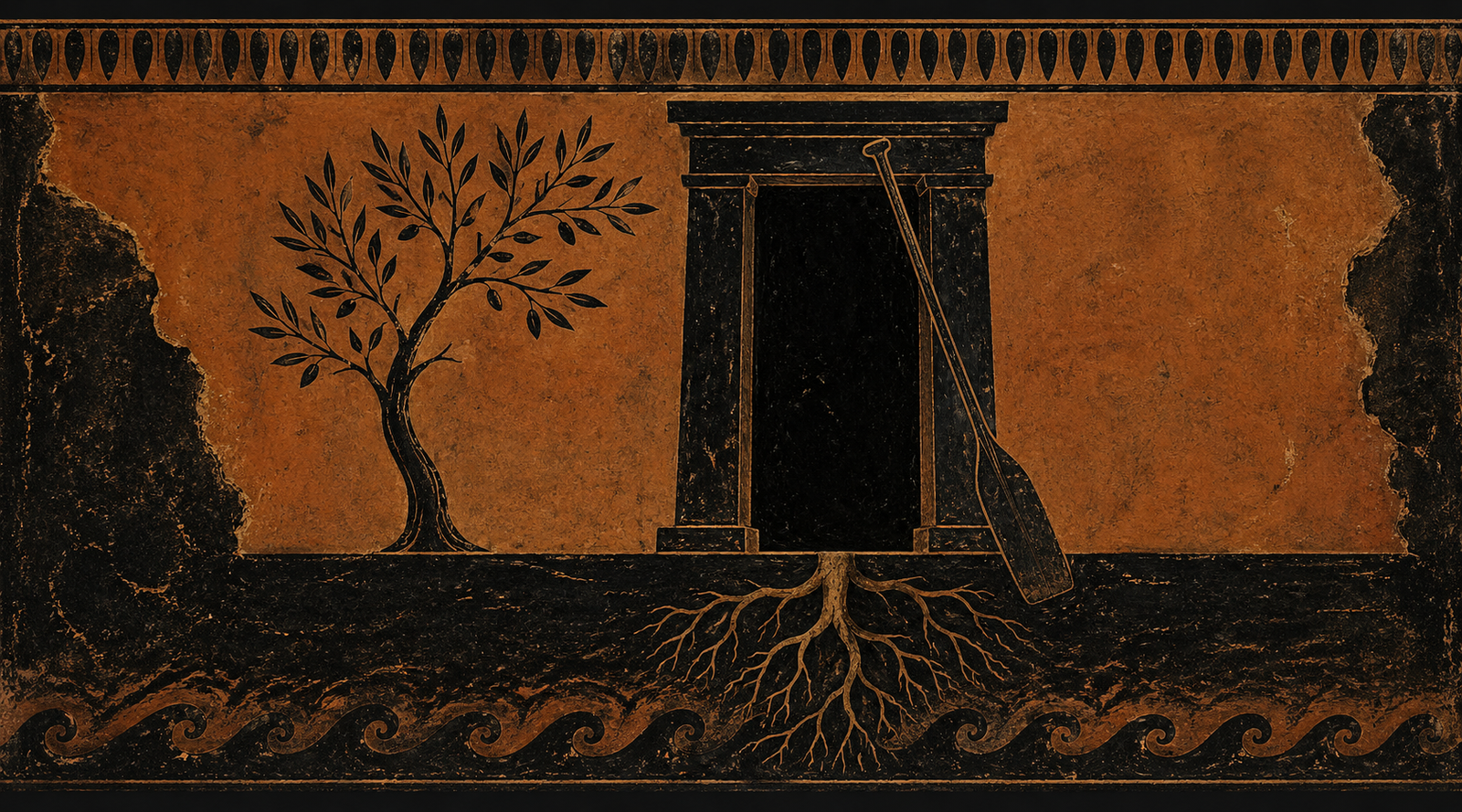

No Man Comes Home VI — The Oar That Could Not Belong
In the sixth canto of No Man Comes Home, Odysseus receives one of the strangest prophecies in The Odyssey: not simply that he must return home, but that even after home he must leave again, carrying an oar inland until the sea itself becomes unintelligible.
The oar had known water all its life.
That was the first thing.
Before prophecy touched it, before a dead man gave it a future stranger than any sea-road, before it was lifted from shipboard use into the burden of omen, it had belonged to hands, benches, rhythm, salt. It knew the pull of men rowing under command. It knew storm-light, harbour-shadow, the dull ache of repetition, the creak of wood against wood, the moment when many bodies become one motion because survival has narrowed them into obedience.
An oar is not an emblem to the man who rows.
It is labour.
It is the long bone of passage.
Odysseus had carried many things from Troy: scars, stratagems, losses, names of the dead, habits of command, the memory of cities made breakable by cunning. But the oar belonged to another order. It was not spoil. It was not glory. It had no song of its own. It did not dazzle. It did not ask to be hung in a hall.
It moved men across what would otherwise drown them.
That was enough.
Yet in the mouth of Tiresias, the oar became destiny.
The dead man spoke in the dark beneath the world, where every word had already passed through loss and therefore came without ornament. He told Odysseus what remained to be suffered: the cattle of the Sun, the anger of gods, the ruin of companions, the late return, the house in disorder, the men consuming his goods, the reckoning, the bed, the wife, the violence required before rest could even be imagined.
Then, after home, another journey.
That was the cruelty.
A man may endure the sea by believing that land will end it. Tiresias denied him that mercy. Even after Ithaca, even after the suitors, even after the bow and the bed and the old father’s tears, there would be one more road. Odysseus must take an oar and walk inland until he came among people who did not know the sea.
He must walk until someone met him and mistook the oar for a winnowing fan.
Then he would know.
Not home.
Not peace.
A sign.
The oar would have to become unrecognisable before the sea would release him.
Continue reading: No Man Comes Home VI — The Oar That Could Not Belong at The House of Cadmus on Substack.
Also in House of Cadmus
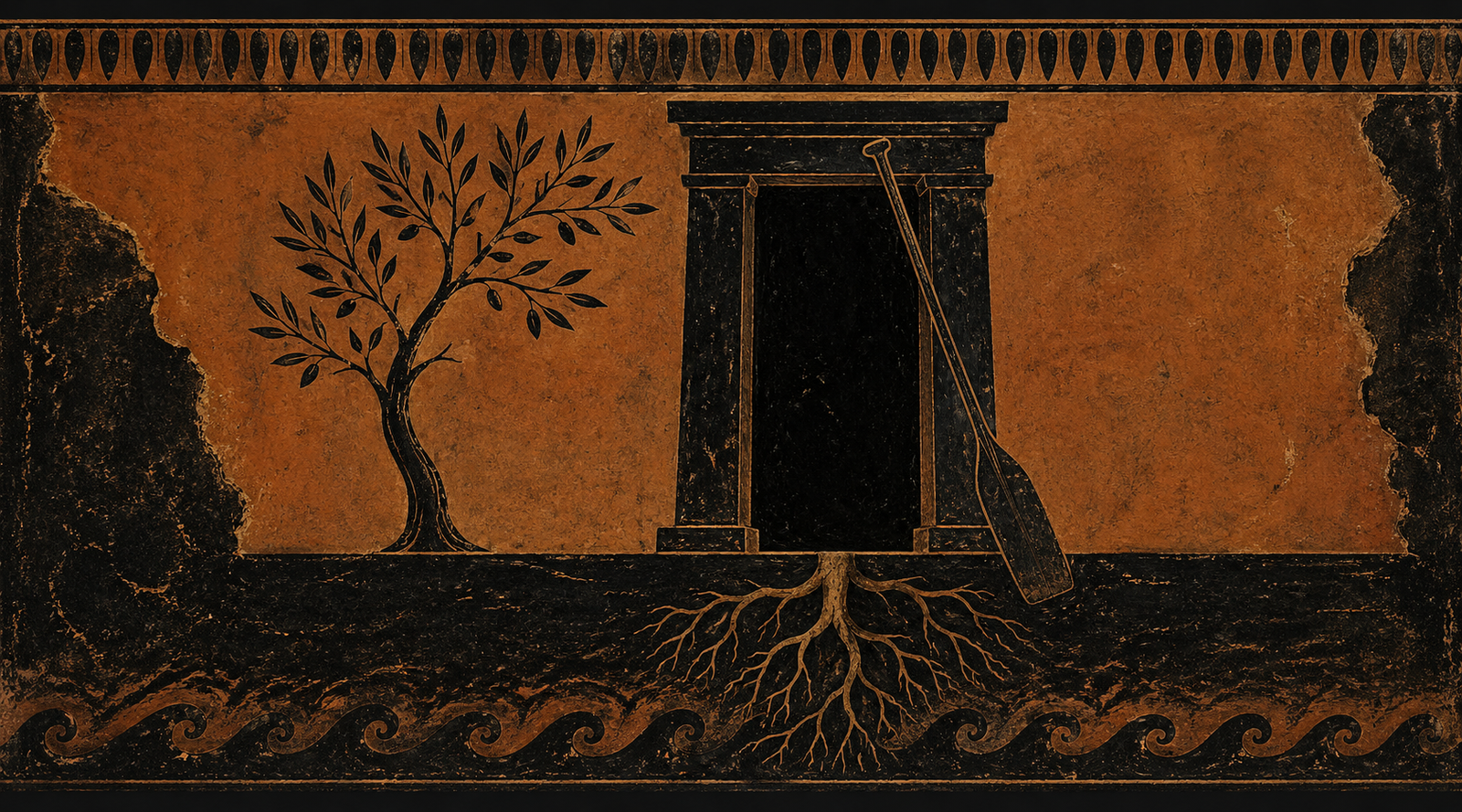

No Man Comes Home V — The Name Inside the Cave
In this fifth canto of No Man Comes Home, Odysseus enters the cave of Polyphemus with no need to be there. What follows is not only a famous Greek myth of cunning and escape, but a severe study of curiosity, leadership, hospitality, and the danger of needing one’s name to be known.
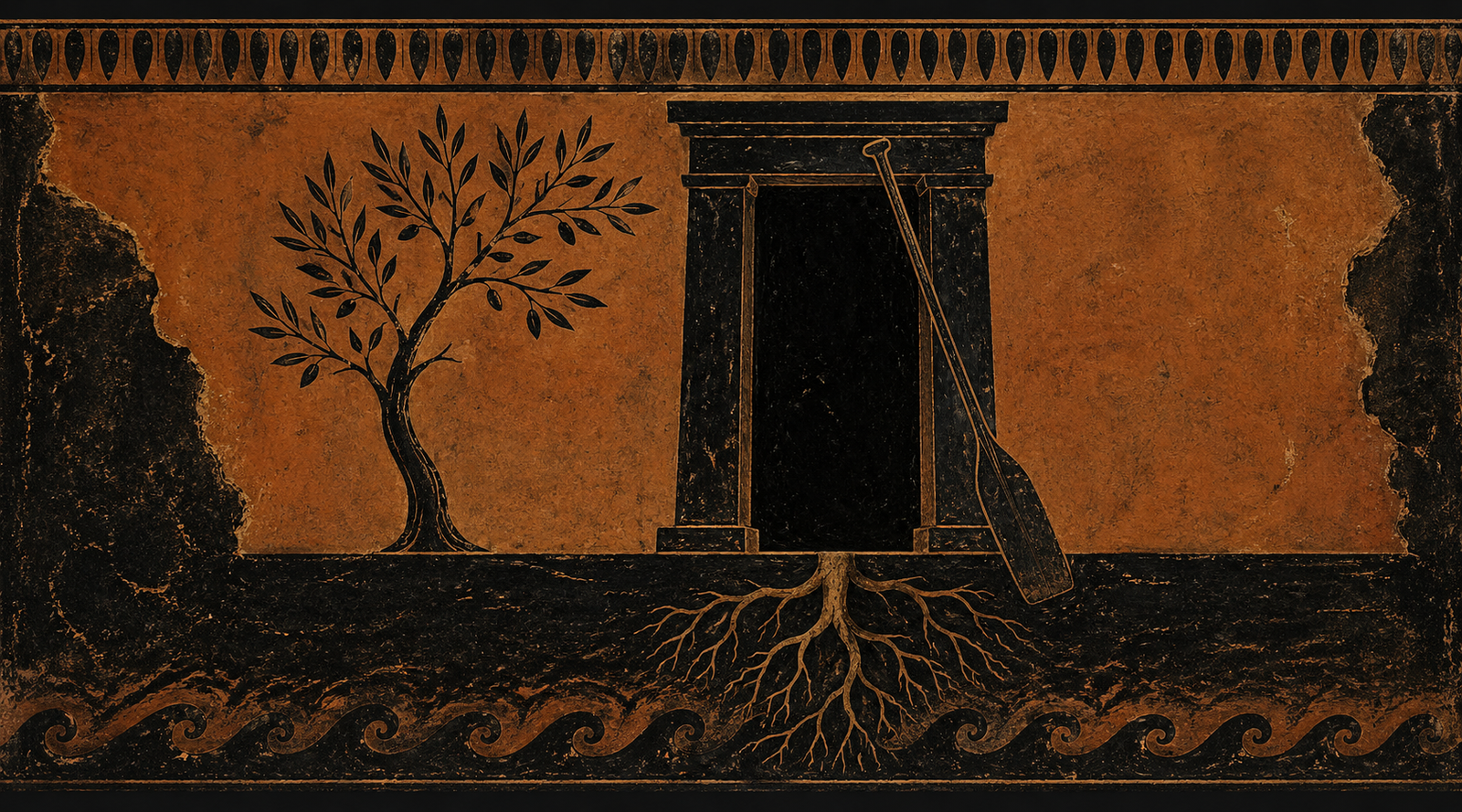

No Man Comes Home IV — The Stranger Washed Ashore
Odysseus has survived the sea, but survival is not yet return. Washed ashore on Scheria, naked and nameless, he must enter the human world again through restraint, supplication, Nausicaa’s courage, and the dangerous mercy of a house that does not yet know whom it has received.
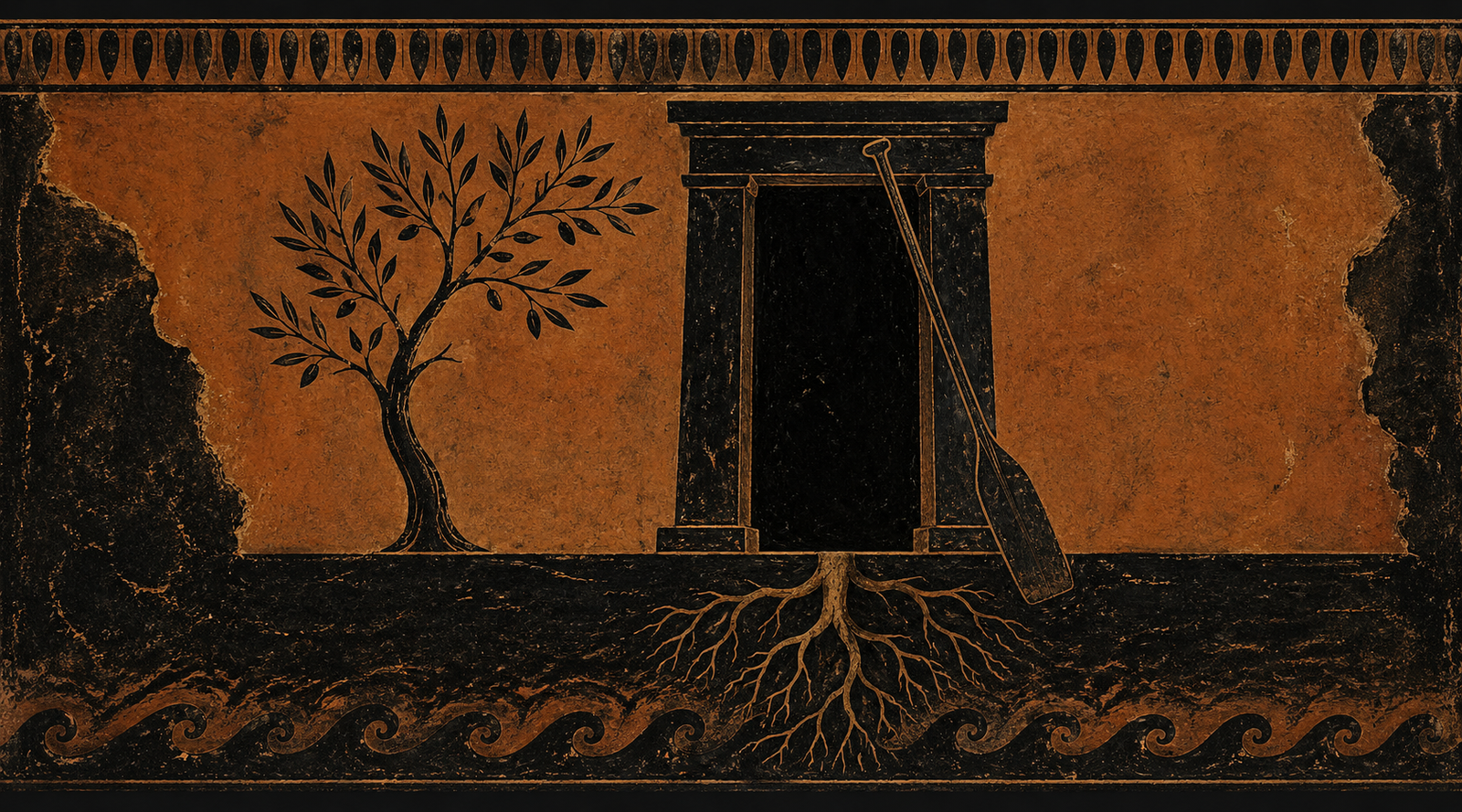

No Man Comes Home III — The Island of the Kept Man
Calypso’s island saves Odysseus, then begins to steal him. In the third canto of No Man Comes Home, immortality is not offered as thunder or command, but as tenderness becoming law. To return, Odysseus must choose mortality, consequence, and the road that may kill him.
Continue Reading
If this piece found something in you, you may wish to continue the journey elsewhere.
On The Lantern Chronicles, I gather writings from Angkor, myth and legend, contemplative essays, and poetry — works shaped by silence, beauty, wonder, memory, and the deeper questions that follow us through the world.
It is a place for stone and story, reflection and vow, shadow and revelation.
You would be most welcome there.