
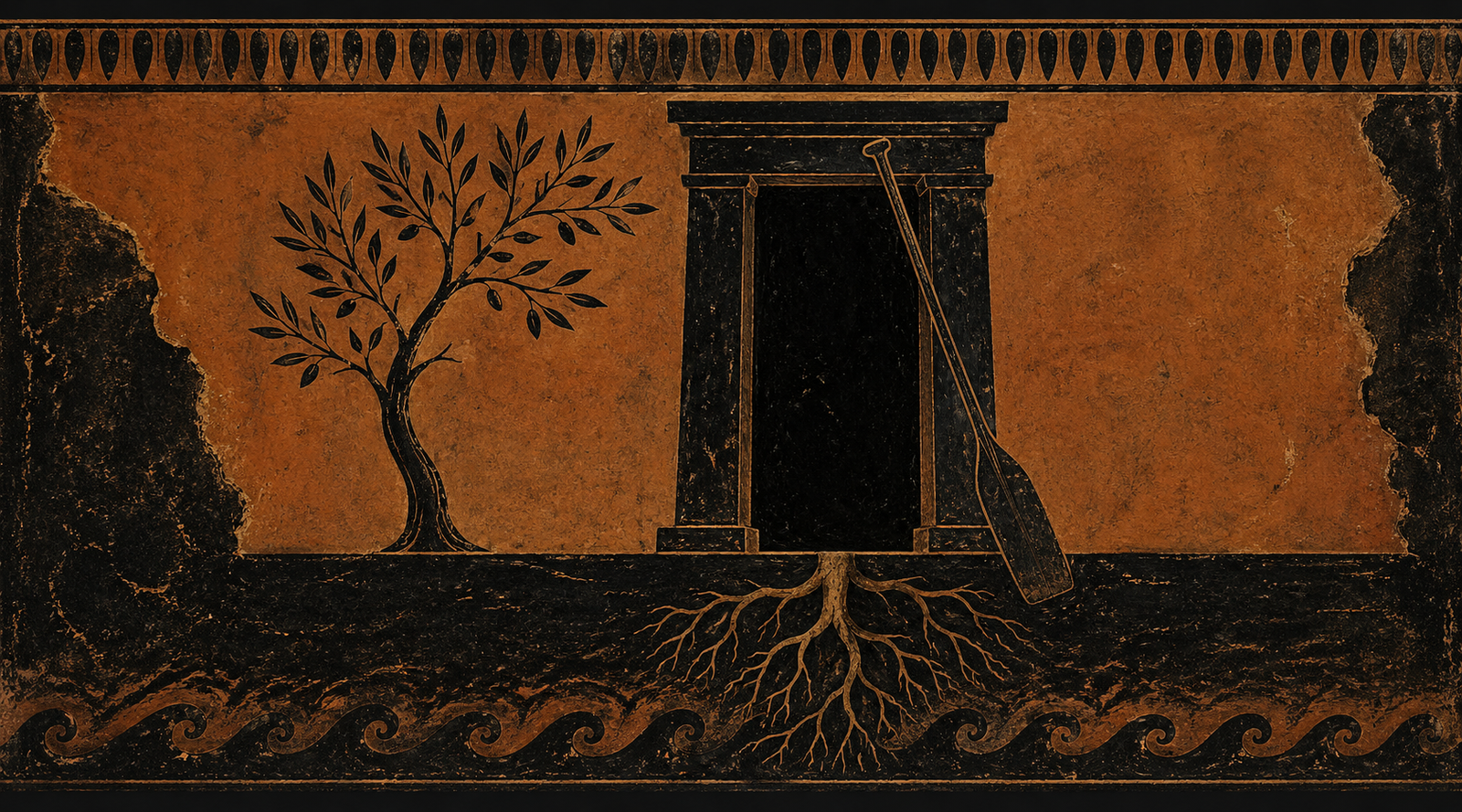

No Man Comes Home III — The Island of the Kept Man
The island did not age.
That was its cruelty.
Every morning came clean over the same trees, the same bright water, the same cave-mouth breathing sweetness into the air. Birds crossed and returned. Vines hung heavy. The spring ran clear. The grass accepted light as if light had never fallen on a battlefield, never flashed along bronze, never entered the eyes of men who died calling for mothers no god returned to them.
Calypso’s island was beautiful in the way a thing can be beautiful when history has been refused.
It held him.
Not with chains.
Chains would have been easier. A chained man can understand his dignity. He can show his wounds, measure his confinement, make honour out of resistance. Iron grants clarity to the prisoner. It tells him where captivity begins.
Odysseus had no iron.
He had fruit, shade, fragrance, a goddess’s bed, a shore from which the sea could be watched but not crossed. He had no gaoler with a whip, no wall with a gate, no soldiers at the path. He had immortality offered not as thunder, not as command, but as tenderness becoming law.
This was the danger.
Captivity can learn the language of gift.
Calypso loved him, if love is the name for wanting a mortal man to remain where mortality cannot complete him. She had taken him from wreckage. She had washed salt from him. She had given food to the body the sea had almost reclaimed. She had laid him in the hidden place of the island and said, in all the languages a goddess may say it, Stay.
For a while he had stayed.
There is no use making him purer than men are.
A man washed ashore after ruin does not first become faithful. He becomes alive. Breath returns. Hunger returns. Skin remembers warmth before duty finds its voice again. The body accepts what saves it before the mind can accuse the gift. Odysseus lived because the island received him.
That truth remained.
So did the other.
The island that saved him had become the place where return was delayed without violence and therefore almost without blame.
This is one of the gods’ refinements: to make the wound resemble mercy.
Each day Calypso gave him what men cross seas to desire. No work was required of him that would make him king. No assembly called his name. No son stood under mockery because of him, not visibly. No wife undid the day’s labour by lamplight. No servants shifted under corrupt power. No cattle diminished. No suitors laughed beneath his roof.
The island concealed all this from his eyes.
But not from the part of him that would not die.
He went often to the shore.
The shore was the one place the island failed to persuade him.
There he sat, looking out at the water that had taken his ships, his men, his years, his certainty, and still remained the only road home. The sea did not console him. It did not remember for his sake. It moved under the sun with the inhuman patience of something that has destroyed many men without becoming cruel.
Odysseus watched it.
Some days he wept.
The tears did not make him innocent.
They made him human.
Continue reading No Man Comes Home III — The Island of the Kept Man on The House of Cadmus.
No Man Comes Home is a twelve-canto literary retelling of The Odyssey from The House of Cadmus: a work of return, concealment, recognition, and the cost of surviving long enough to come home.
Also in House of Cadmus
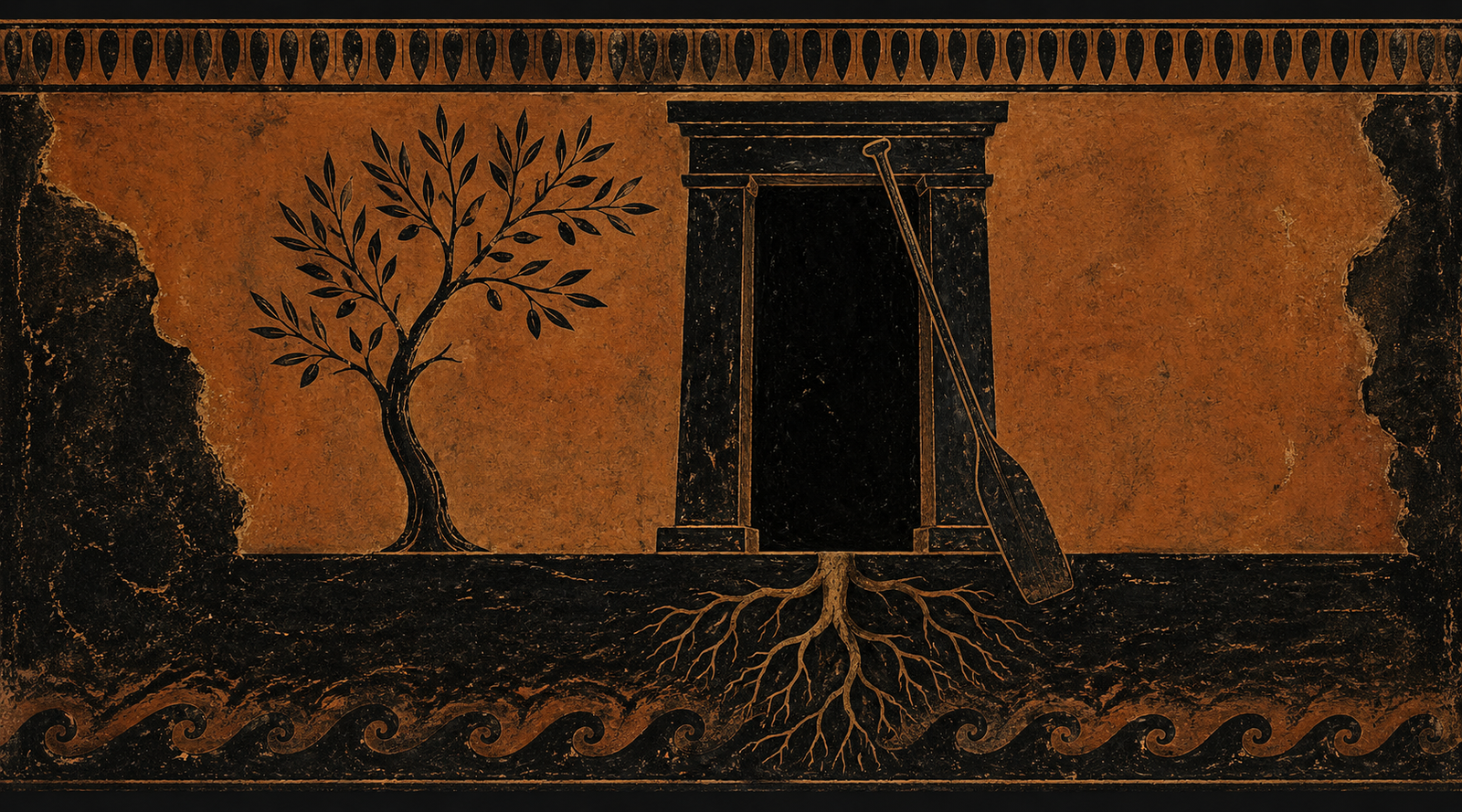

No Man Comes Home X — The Hall Reveals Itself
Odysseus returns to Ithaca disguised as a beggar, but the first creature to recognise him is the neglected dog Argos. In this severe literary retelling of The Odyssey, the king enters his own hall as need, and every act of hospitality, contempt and blindness becomes part of the house’s final testimony.
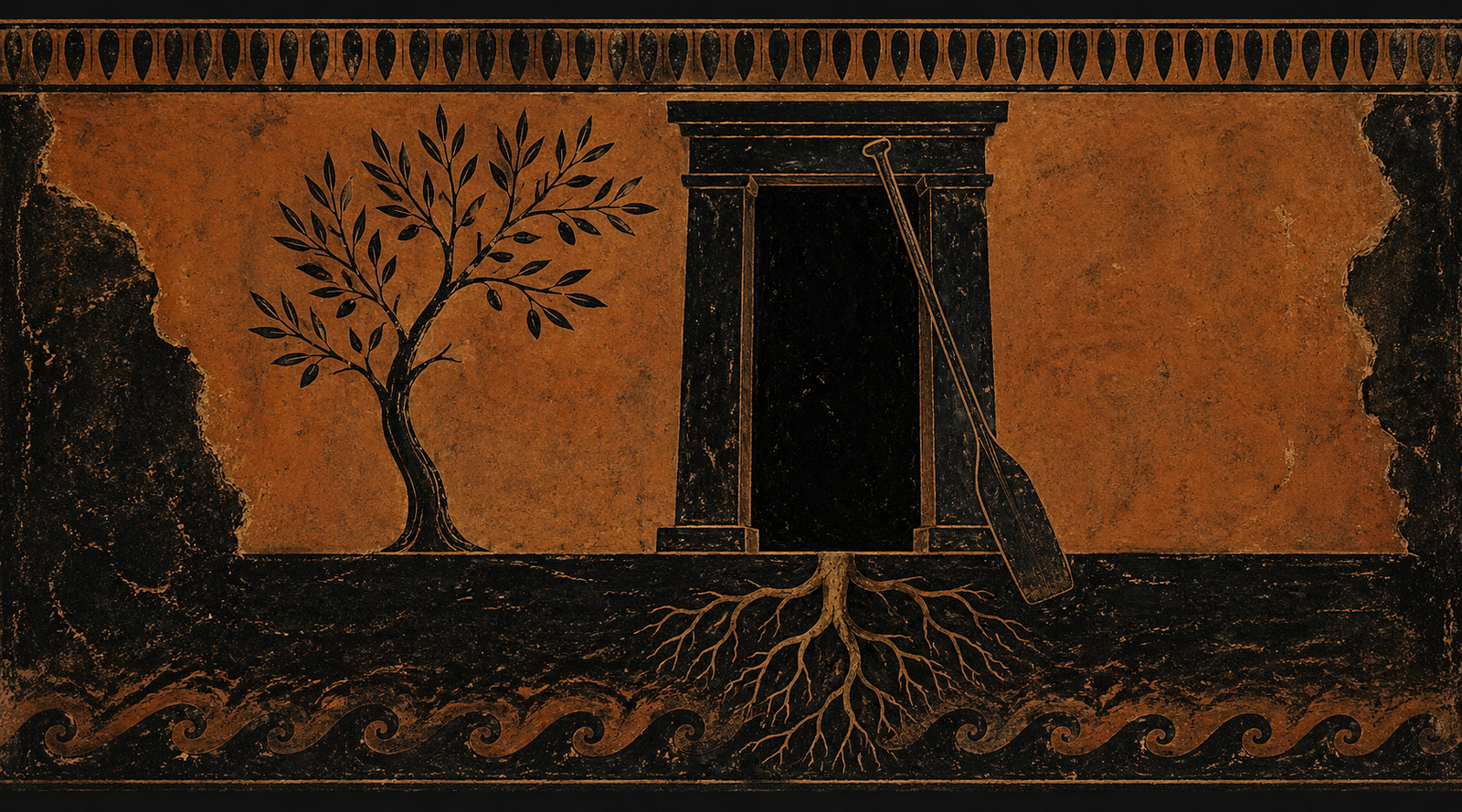

No Man Comes Home IX — The Beggar at His Own Door
Odysseus reaches Ithaca at last, but return does not grant him recognition, reunion, or peace. Disguised by Athena as a beggar, he must enter his own kingdom without name or power and allow the house to reveal what it has become. The ninth canto of No Man Comes Home turns homecoming into a test of loyalty, restraint, and concealed violence.
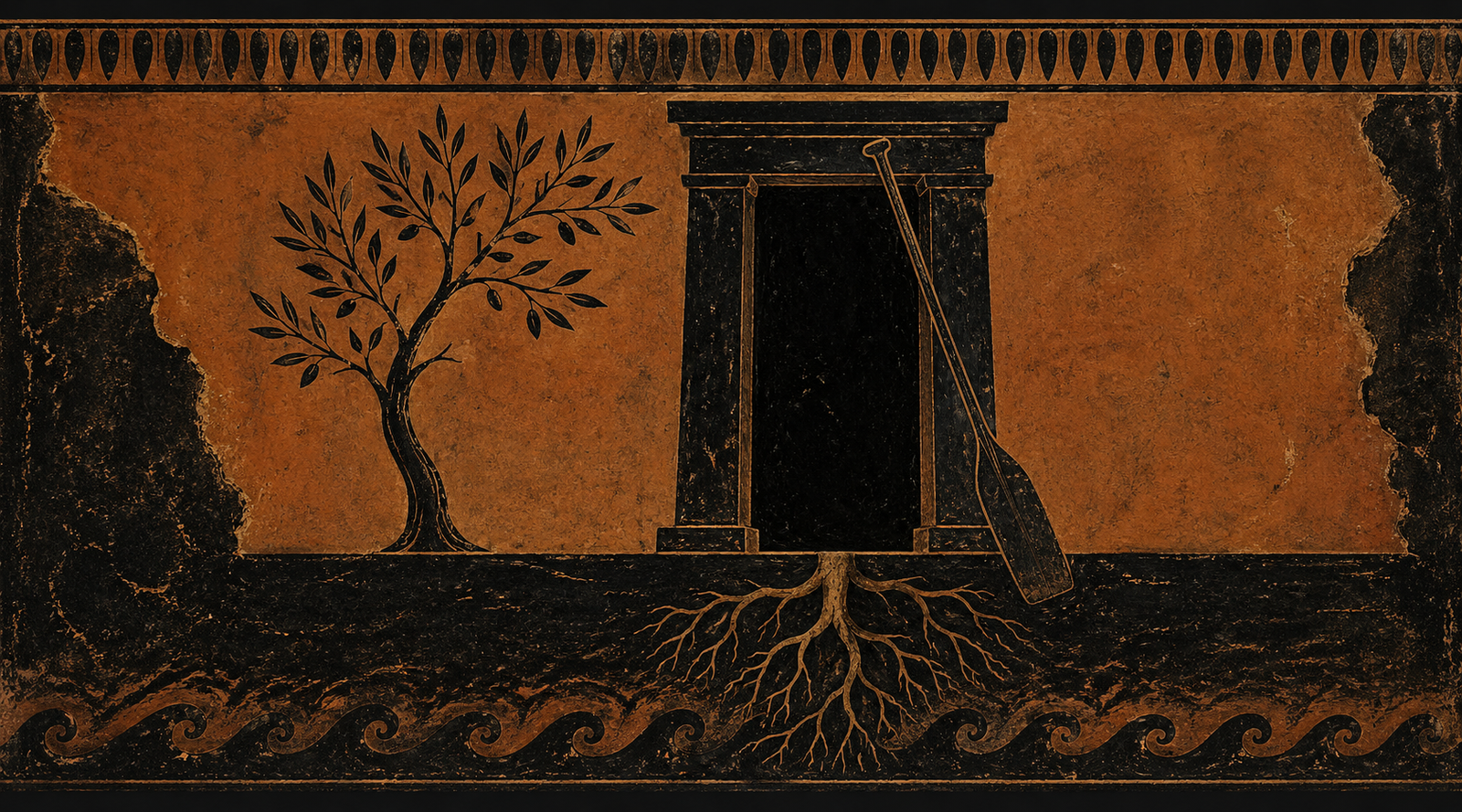

The Objects That Know Him
Name, oar, wax, scar, bow, bed, door: ordinary things carry a quieter authority beneath the marvels of The Odyssey. This House of Cadmus essay considers how objects recognise Odysseus, judge the concealments that preserved him, and make return more difficult than merely reaching Ithaca.
Continue Reading
If this piece found something in you, you may wish to continue the journey elsewhere.
On The Lantern Chronicles, I gather writings from Angkor, myth and legend, contemplative essays, and poetry — works shaped by silence, beauty, wonder, memory, and the deeper questions that follow us through the world.
It is a place for stone and story, reflection and vow, shadow and revelation.
You would be most welcome there.