
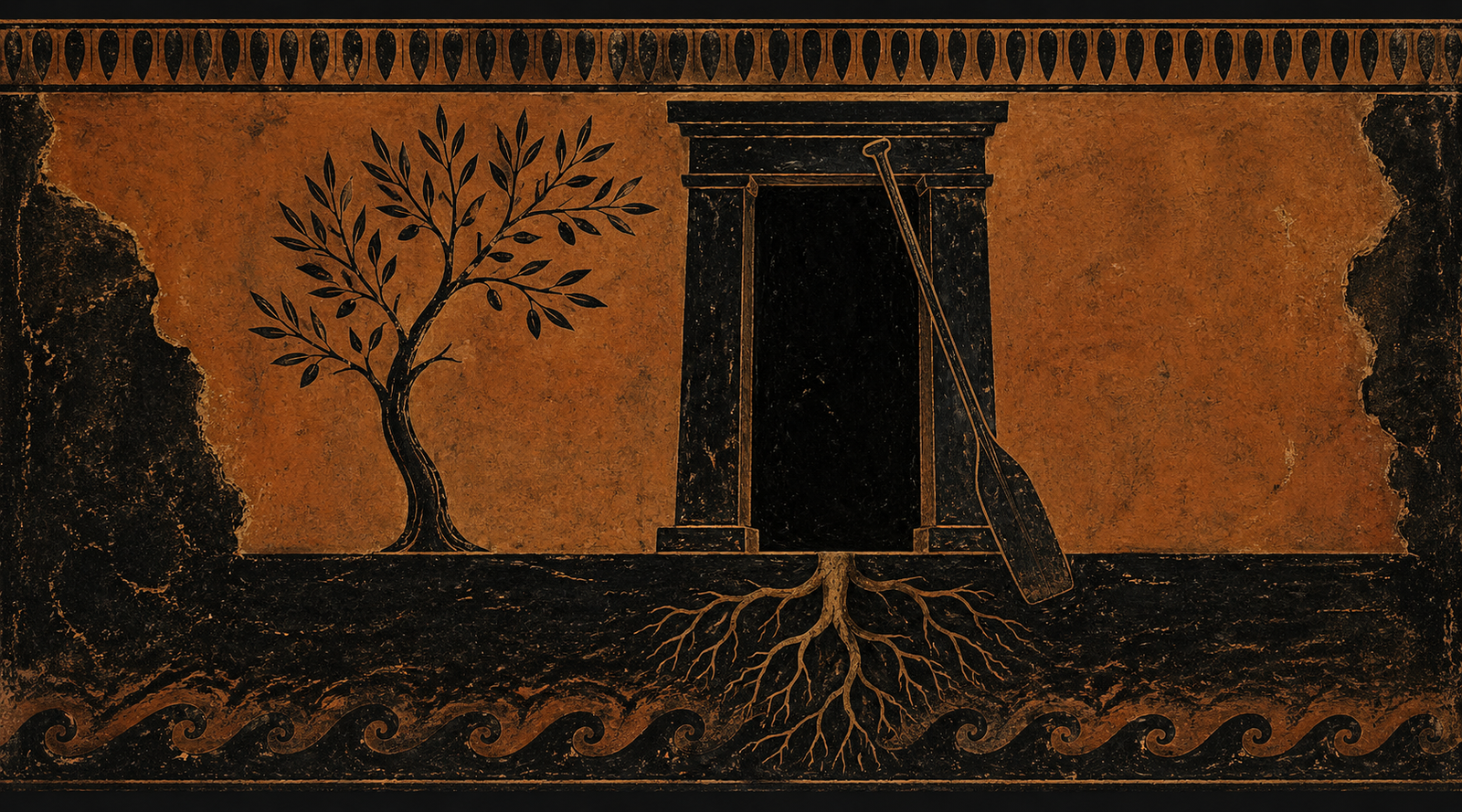

No Man Comes Home X — The Hall Reveals Itself
In the tenth canto of No Man Comes Home, Odysseus enters his own palace disguised as a beggar. Before the bow, before the reckoning, the house is given one final opportunity to reveal what it has become.
The dog knew first.
That was the judgement.
Before the hall, before the wife, before the old nurse’s hand found the scar, before the bow remembered its master in the silence of men who could not string it, Argos lifted his head from the place where neglect had laid him down.
He had been a swift dog once.
Men had praised him. Boys had followed him. His body had known the old joy of pursuit, the sudden law of scent, the leap, the turn, the mastery of ground beneath the feet. Before Troy, before the long absence, before suitors ate under another man’s roof, Argos had belonged to motion.
Now he lay outside the palace on refuse.
No one had kept him as a sign of the house. No one had said: this creature knew the king before fame made him large. No one had honoured the old body because it had once run in the fields of a man now spoken of as rumour. Servants passed. Men laughed. Waste gathered. Time did what time does when love is not renewed by care.
Then the beggar came.
Argos smelled what the house had not yet seen.
The disguise meant nothing to him. Rags did not matter. Bent back, altered skin, greyed hair, poverty’s garment, the lowered shape of power waiting to rise: none of these could persuade the old witness. Scent went beneath strategy. The body knew the body.
His ears moved.
His tail answered as far as death allowed.
Odysseus saw.
He could not go to him.
This was the cruelty of the hour: to be recognised truly and be forbidden tenderness. The dog had done what men and women, servants and suitors, wife and son, palace and island could not yet safely do. He had received the returning man without proof.
Odysseus turned his face away.
A tear is sometimes all strategy permits the heart.
Argos died.
No speech followed him.
That was mercy.
The beggar went on to his own door.
Inside, the hall had not improved.
It had only continued long enough for wrong to imagine itself permanent. The benches stood where men had made leisure into trespass. Tables bore the evidence of appetite. Cups moved from hand to hand. Flesh, wine, smoke, laughter, song: the same abundance that should have declared a living house now declared a house being consumed.
Odysseus entered as need.
That was the test.
A king at the threshold produces caution. A beggar produces truth. Men reveal themselves most clearly before those from whom they expect no consequence.
Eumaeus led him in.
The faithful servant had brought his lord home without knowing it. That ignorance preserved the purity of the act. He did not guide Odysseus because the man was Odysseus. He guided him because a stranger required passage through a dangerous house. Fidelity, at its highest, does not need recognition before it acts.
Odysseus moved through the room.
Some men looked.
Some did not.
The ones who did not were revealing themselves too. A beggar can be refused by contempt or by not being seen. The second is often the more perfect violence. It allows the comfortable to remain innocent in their own account, because they have not struck what they have not admitted exists.
He stretched out his hand.
The gesture was small.
That made it larger.
A man who has crossed storm, resisted song, entered death, escaped the cave, refused immortality, and returned through divine concealment now held out his palm for scraps beneath his own roof.
This was not degradation alone.
It was measurement.
Each gift, each refusal, each insult, each glance became part of the house’s final testimony.
Then Antinous spoke.
Continue reading: No Man Comes Home X — The Hall Reveals Itself at The House of Cadmus on Substack.
Also in House of Cadmus
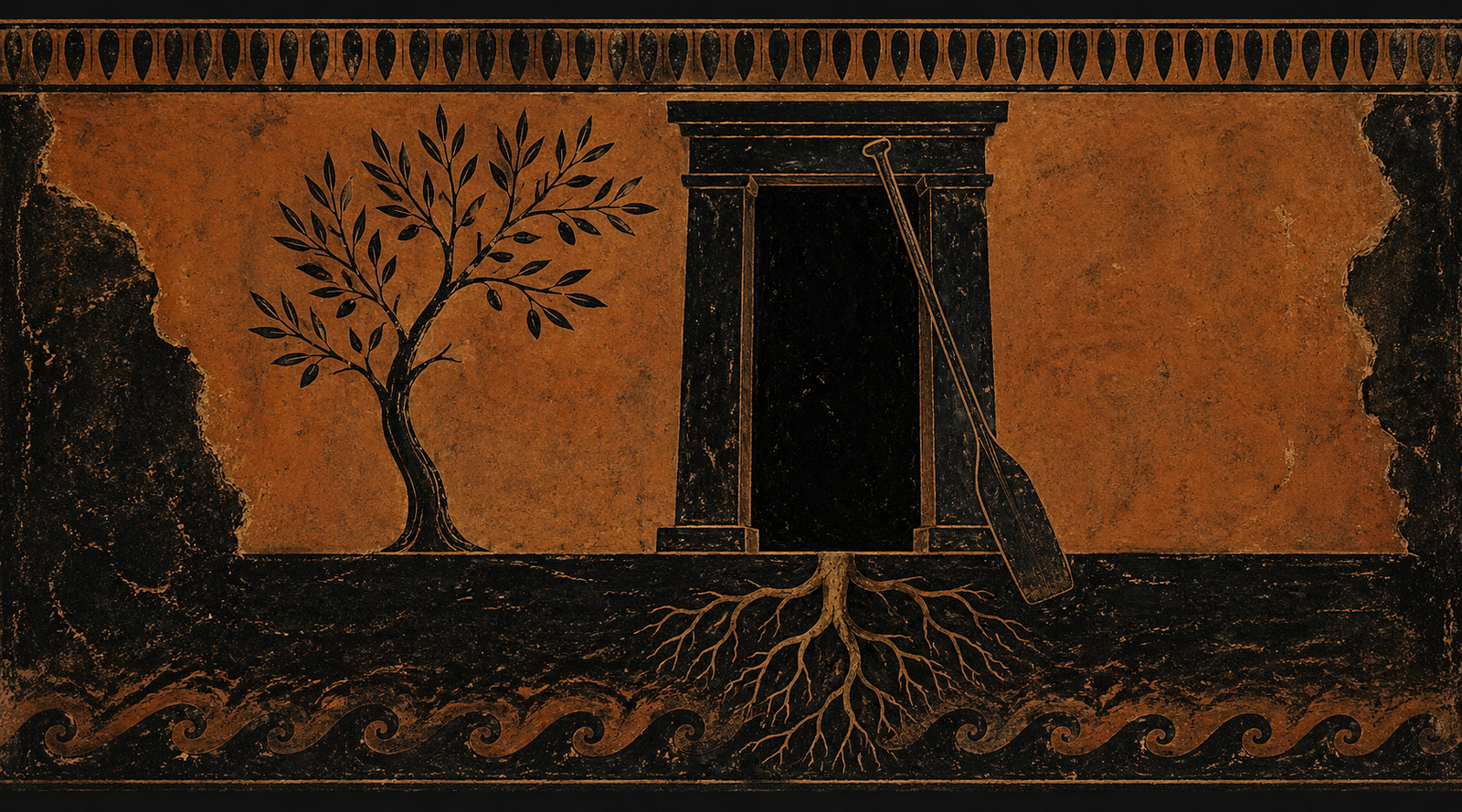

No Man Comes Home IX — The Beggar at His Own Door
Odysseus reaches Ithaca at last, but return does not grant him recognition, reunion, or peace. Disguised by Athena as a beggar, he must enter his own kingdom without name or power and allow the house to reveal what it has become. The ninth canto of No Man Comes Home turns homecoming into a test of loyalty, restraint, and concealed violence.
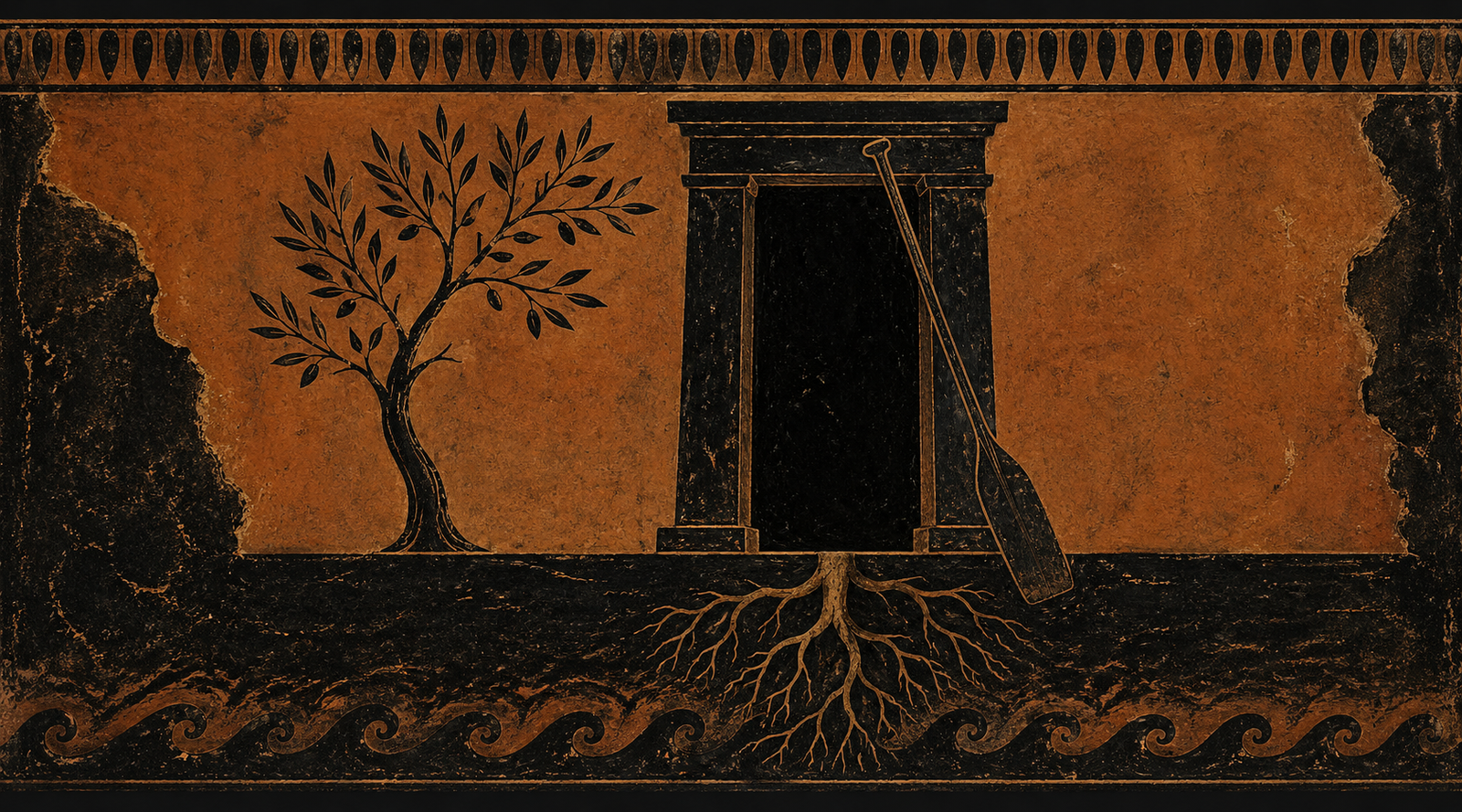

The Objects That Know Him
Name, oar, wax, scar, bow, bed, door: ordinary things carry a quieter authority beneath the marvels of The Odyssey. This House of Cadmus essay considers how objects recognise Odysseus, judge the concealments that preserved him, and make return more difficult than merely reaching Ithaca.
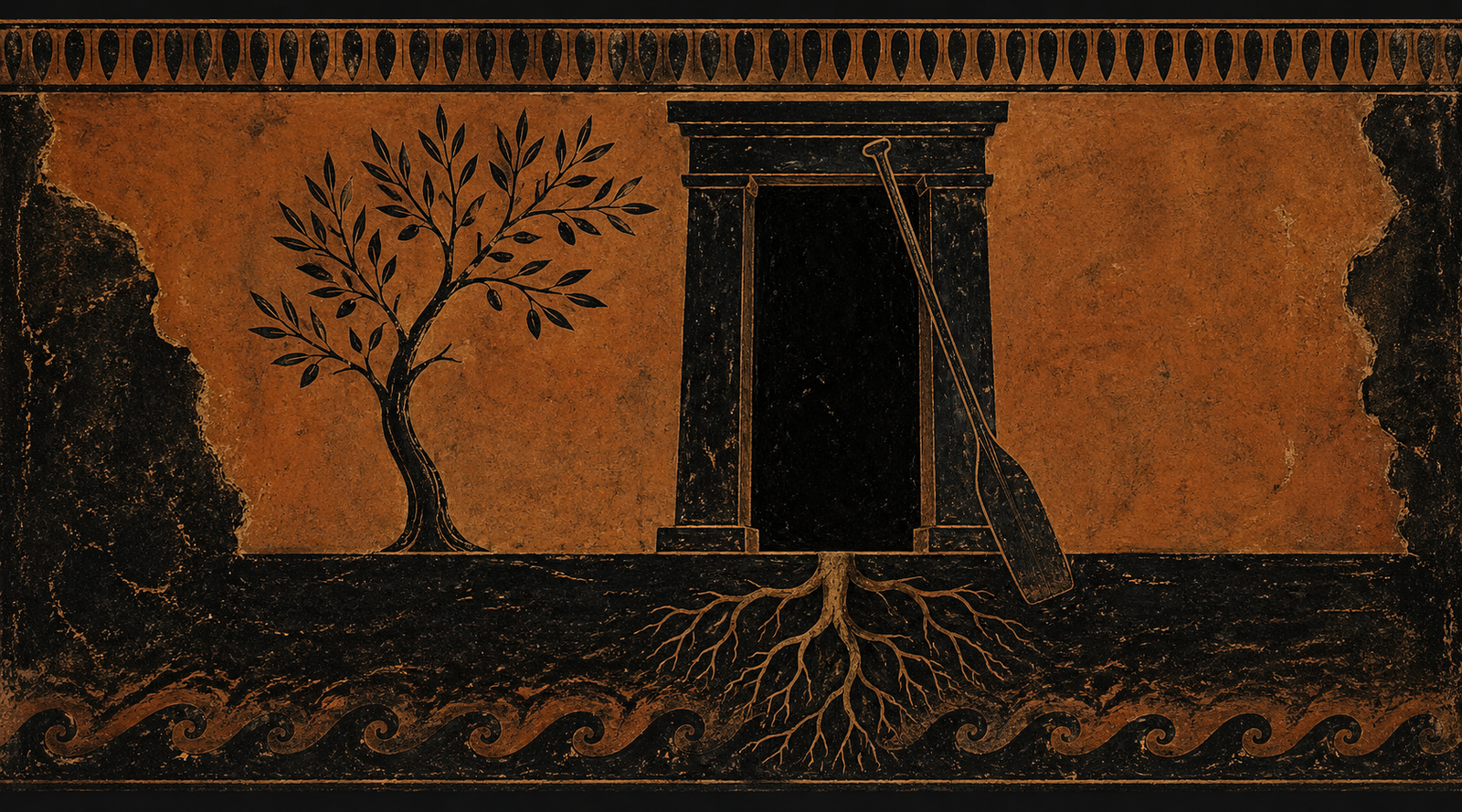

No Man Comes Home VIII — What the Oarsmen Did Not Hear
Odysseus seals his oarsmen’s ears with wax and orders them to bind him to the mast. In this severe literary retelling of the Sirens episode from The Odyssey, knowledge becomes privilege, obedience becomes rescue, and command begins to reveal its hidden cost. The men will row through what they cannot hear. Their captain must live with what he alone receives.
Continue Reading
If this piece found something in you, you may wish to continue the journey elsewhere.
On The Lantern Chronicles, I gather writings from Angkor, myth and legend, contemplative essays, and poetry — works shaped by silence, beauty, wonder, memory, and the deeper questions that follow us through the world.
It is a place for stone and story, reflection and vow, shadow and revelation.
You would be most welcome there.