
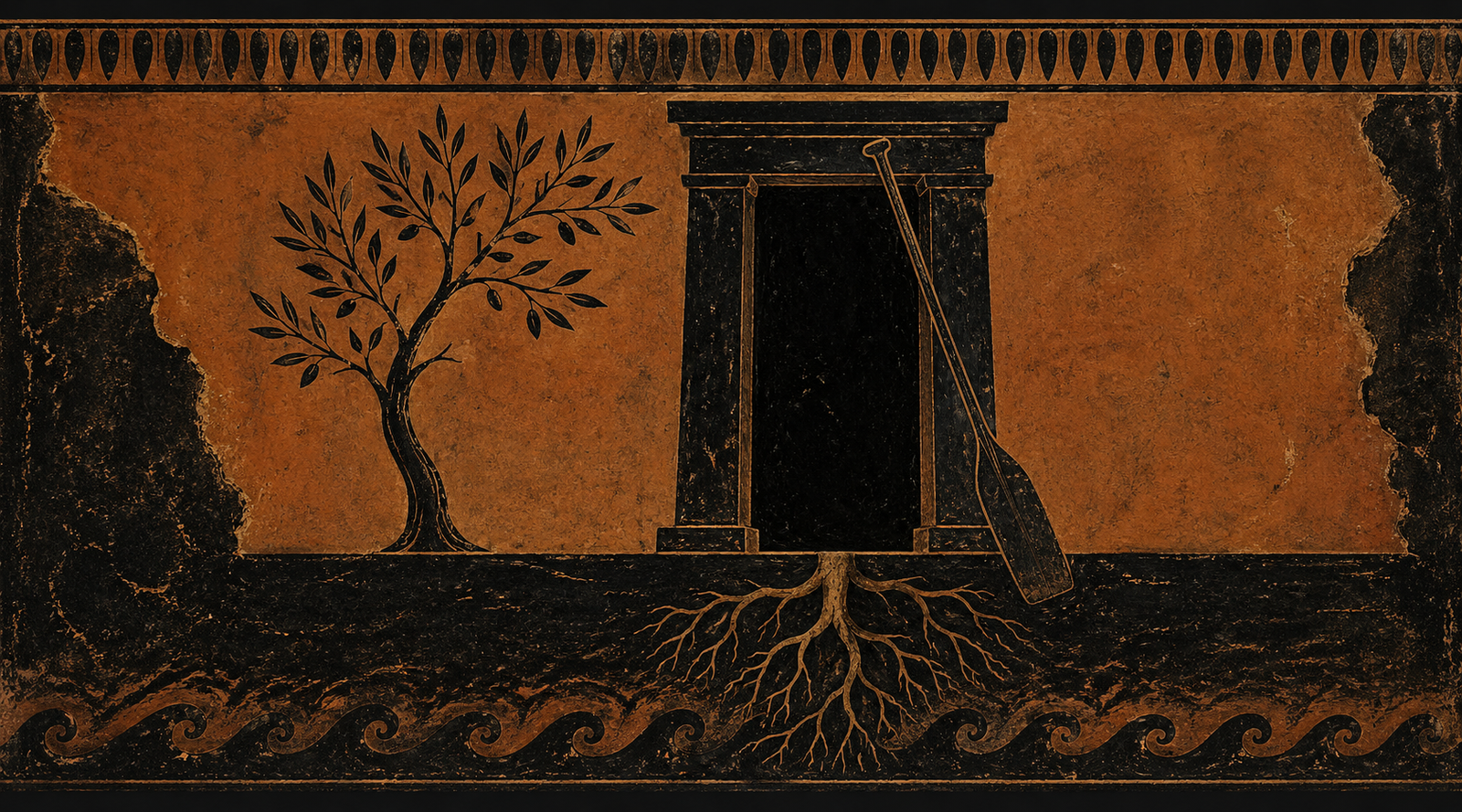

The Objects That Know Him
In No Man Comes Home, Odysseus is not recognised first by declarations, kinship, or divine favour. He is measured by ordinary things that remember use more faithfully than people remember a man.
Odysseus has not yet reached Ithaca.
But the things that will judge him are already waiting.
Not men first.
Not speeches.
Not even the gods.
Things.
Name. Oar. Wax. Scar. Bow. Bed. Door.
The old story is crowded with marvels: the Cyclops, the enchantress, the dead, the Sirens, Scylla, Charybdis, gods moving through mist and command. But beneath those marvels runs a quieter authority. Objects keep knowledge differently from people. They do not admire. They do not forgive. They do not explain themselves into mercy. They answer only to use, touch, weight, memory, pressure, root.
In No Man Comes Home, the objects know Odysseus before the house can receive him.
This matters because the man approaching Ithaca is not simply lost.
He is concealed.
Survival has taught him the arts of withholding. He lowers the voice. He measures the listener. He gives one truth and hides another beneath it. He accepts disguise not as costume, but as shelter. He has learned that a revealed name may call down storm, that shared knowledge may break the rhythm of men at the oars, that tenderness offered too early may open the wrong door.
He is not merely a man who lies.
He is a man whom danger has educated into concealment.
That distinction is the moral chamber of the poem.
A lie may be vice, weapon, mercy, strategy, cowardice, intelligence, or delay. Concealment is larger. It is not only what speech hides. It is what the body learns when too much has depended on not being seen too quickly.
The name is the first great danger.
Inside the cave, Nobody is perfect. Nobody can slip through the grammar of the Cyclops’ world. Nobody can be harmed without calling help. Nobody can make truth useless in the mouths of those who hear it. It is not absence merely. It is absence sharpened into survival.
But the name will not remain buried.
Odysseus cries it from the ship because the self, saved too long by disappearance, hungers for witness. The cry is understandable. That does not make it innocent. It gives the sea a target. It teaches wrath where to find him.
Already the poem has made its bargain visible.
To be unnamed is safety.
To be known is danger.
The oar carries another law.
An oar is not heroic in the ordinary sense. It does not glitter in the hand. It is not carried into single combat. It belongs to repetition, to shoulders, to benches, to the long obedience by which men cross what would drown them.
The oar knows Odysseus not as king, husband, or hero, but as the source of rhythm in other bodies. It knows the cost of command before command has confessed itself. Someone rows. Someone bends. Someone bleeds at the hand. Someone obeys a knowledge he may never be given.
Then comes the wax.
It is ordinary, almost tender: bee-labour, softened by the hand, pressed carefully into the ears of men who trust him. Its smallness makes it severe. The wax is the substance by which knowledge is divided.
The men row.
The captain hears.
The men are spared.
The captain is marked.
This is command at its most intimate and most troubling. He cares for them by excluding them. He stands bound above them, receiving the Sirens’ knowledge while their bodies keep the ship moving through what they cannot hear.
When Odysseus reaches Ithaca, the tests will become more intimate. The scar, the bow, the bed and the door will each ask whether arrival can become recognition—and whether a man trained to survive by concealment can become answerable to the life he wanted back.
Continue reading: The Objects That Know Him at The House of Cadmus on Substack.
Also in House of Cadmus
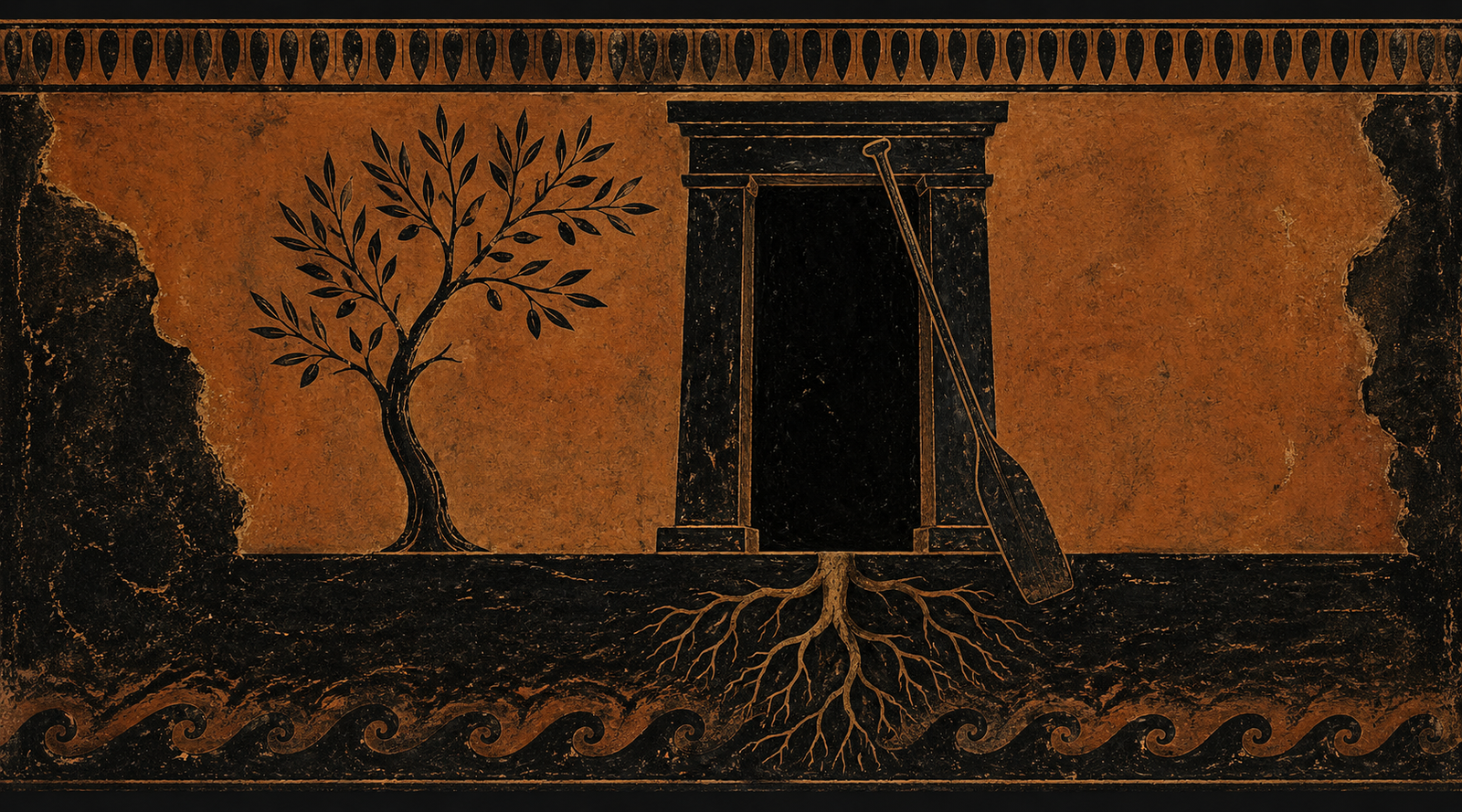

No Man Comes Home X — The Hall Reveals Itself
Odysseus returns to Ithaca disguised as a beggar, but the first creature to recognise him is the neglected dog Argos. In this severe literary retelling of The Odyssey, the king enters his own hall as need, and every act of hospitality, contempt and blindness becomes part of the house’s final testimony.
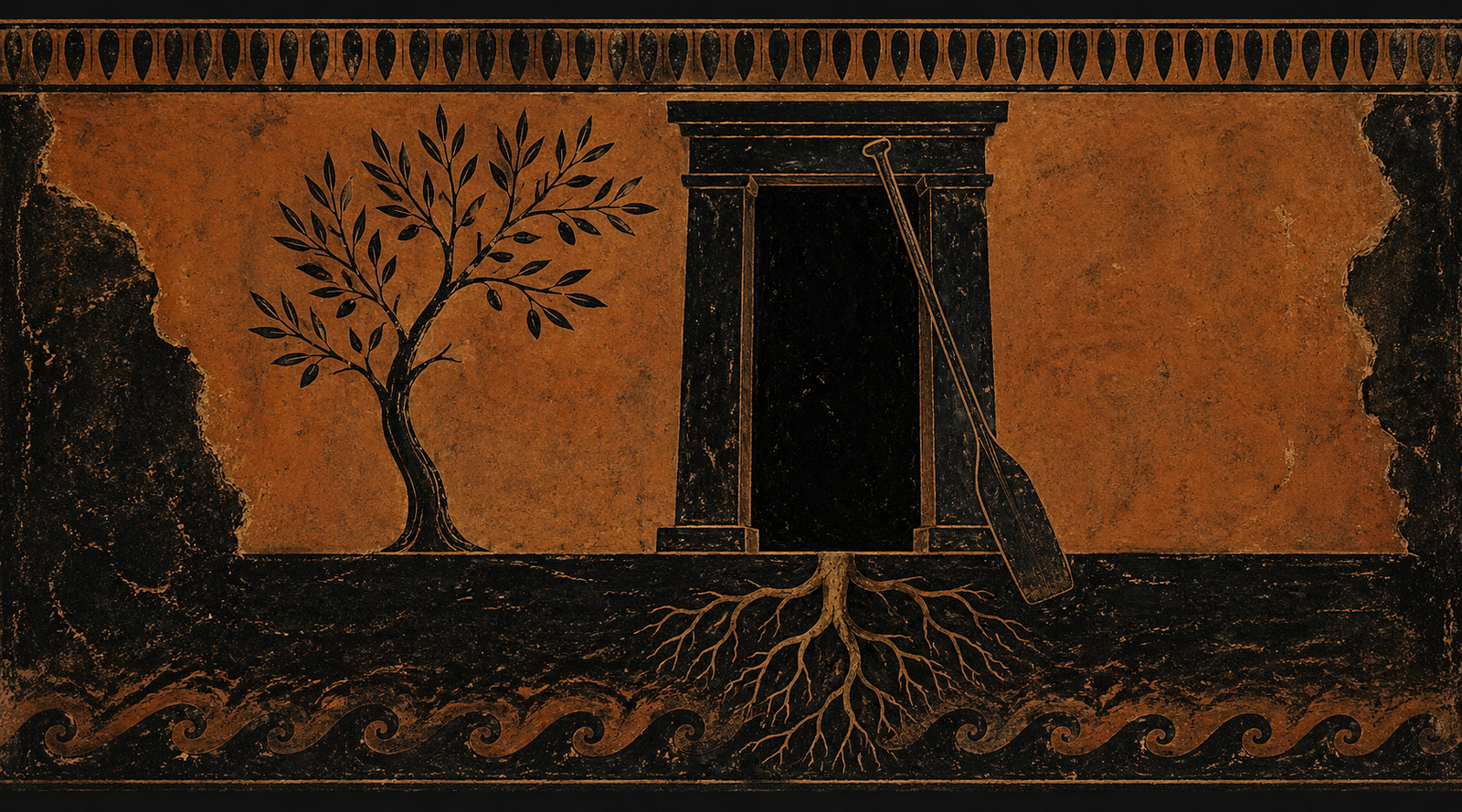

No Man Comes Home IX — The Beggar at His Own Door
Odysseus reaches Ithaca at last, but return does not grant him recognition, reunion, or peace. Disguised by Athena as a beggar, he must enter his own kingdom without name or power and allow the house to reveal what it has become. The ninth canto of No Man Comes Home turns homecoming into a test of loyalty, restraint, and concealed violence.
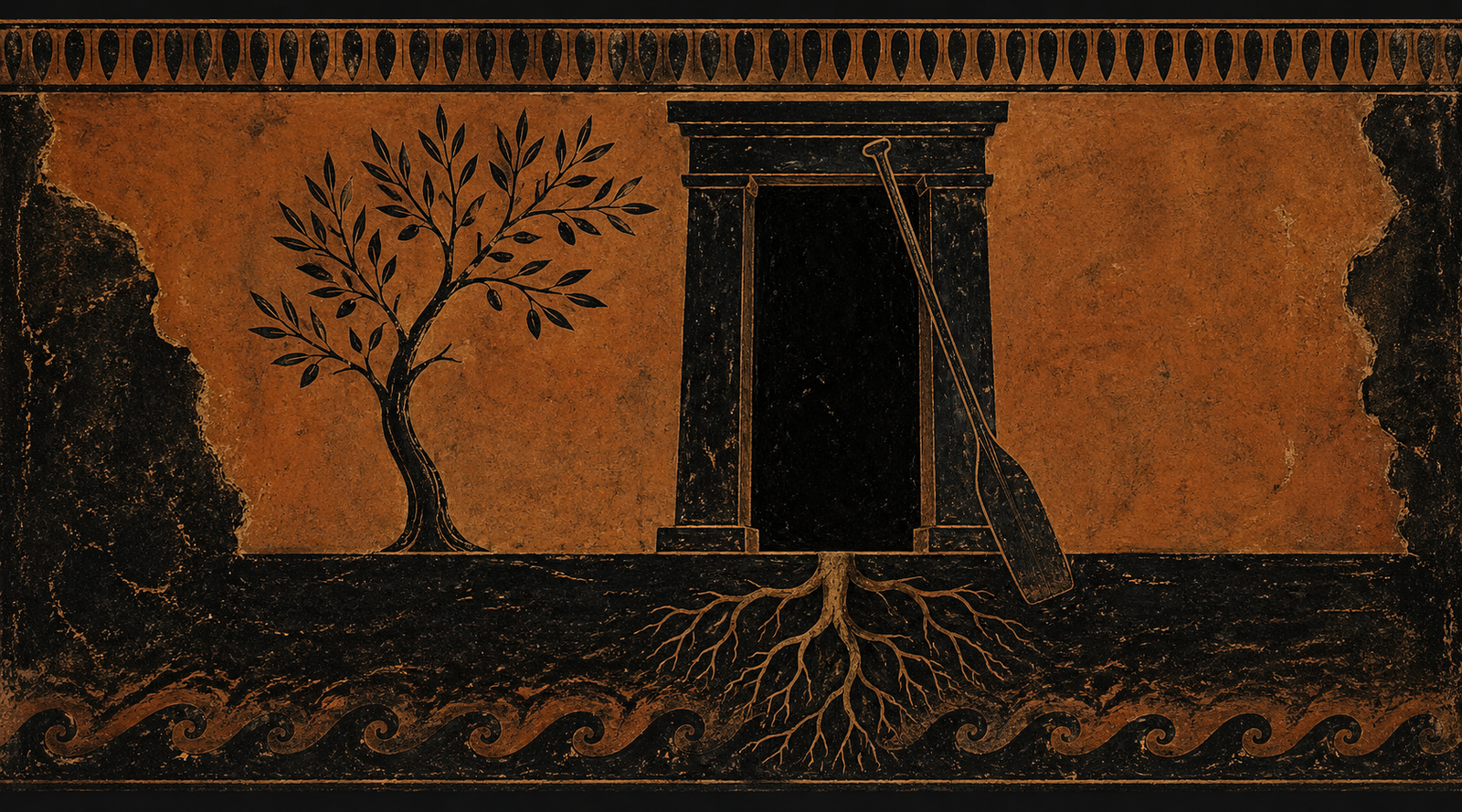

No Man Comes Home VIII — What the Oarsmen Did Not Hear
Odysseus seals his oarsmen’s ears with wax and orders them to bind him to the mast. In this severe literary retelling of the Sirens episode from The Odyssey, knowledge becomes privilege, obedience becomes rescue, and command begins to reveal its hidden cost. The men will row through what they cannot hear. Their captain must live with what he alone receives.
Continue Reading
If this piece found something in you, you may wish to continue the journey elsewhere.
On The Lantern Chronicles, I gather writings from Angkor, myth and legend, contemplative essays, and poetry — works shaped by silence, beauty, wonder, memory, and the deeper questions that follow us through the world.
It is a place for stone and story, reflection and vow, shadow and revelation.
You would be most welcome there.