
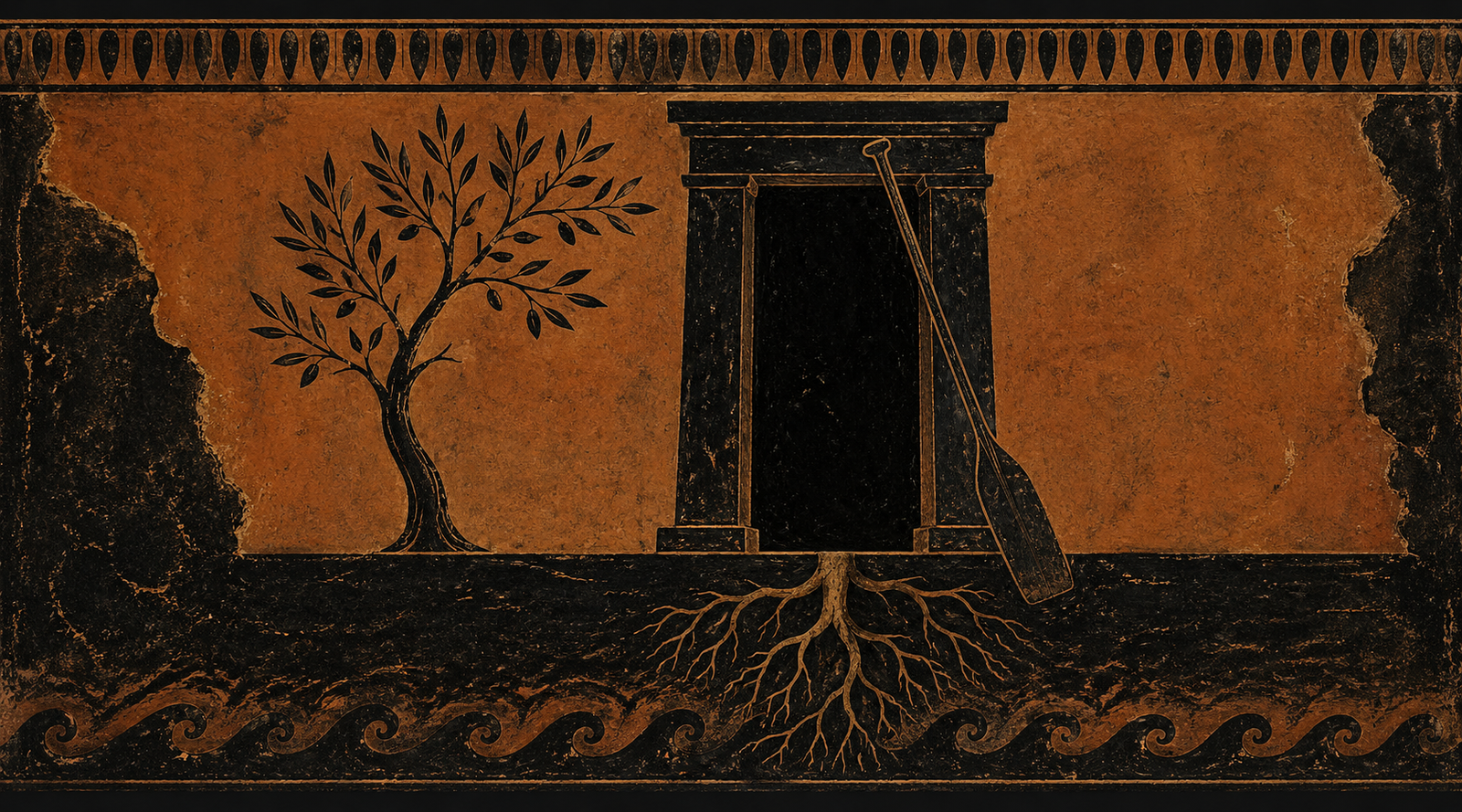

No Man Comes Home II — The Son Sent Out
In the second canto of No Man Comes Home, Telemachus leaves Ithaca not as a hero, but as a son forced into motion by a house that will not correct itself.
He had crossed the sea to discover that absence had a body.
That was almost worse.
That night, in the shining house of another king, Telemachus lay awake and understood that news is not restoration. The world beyond Ithaca had honoured his father, enlarged him, confirmed him, preserved him in story, and still none of it placed a hand on the son’s shoulder. He had wanted certainty. He had received scale.
Scale is a cold gift.
—
Read the full canto on Substack:
Also in House of Cadmus
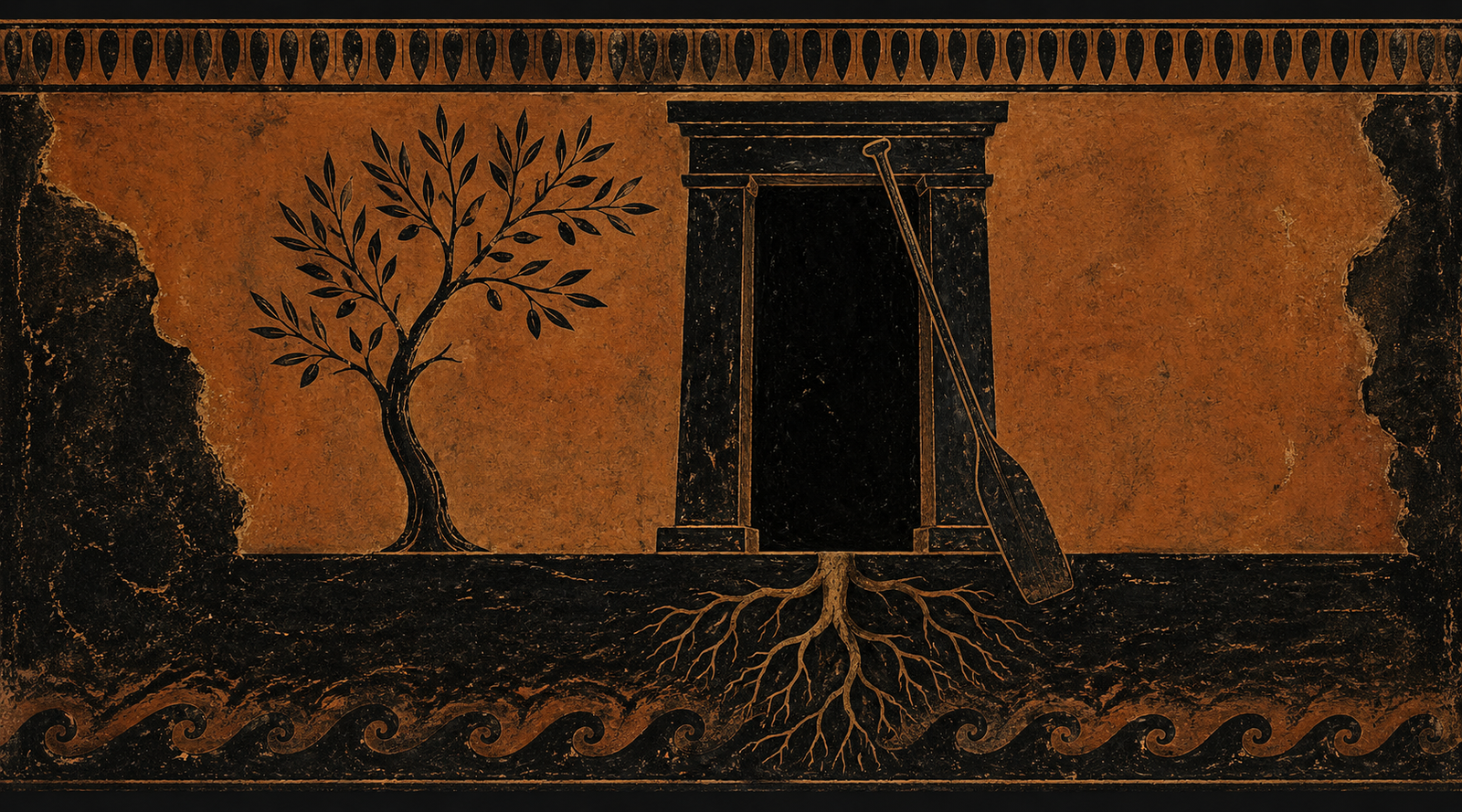

No Man Comes Home X — The Hall Reveals Itself
Odysseus returns to Ithaca disguised as a beggar, but the first creature to recognise him is the neglected dog Argos. In this severe literary retelling of The Odyssey, the king enters his own hall as need, and every act of hospitality, contempt and blindness becomes part of the house’s final testimony.
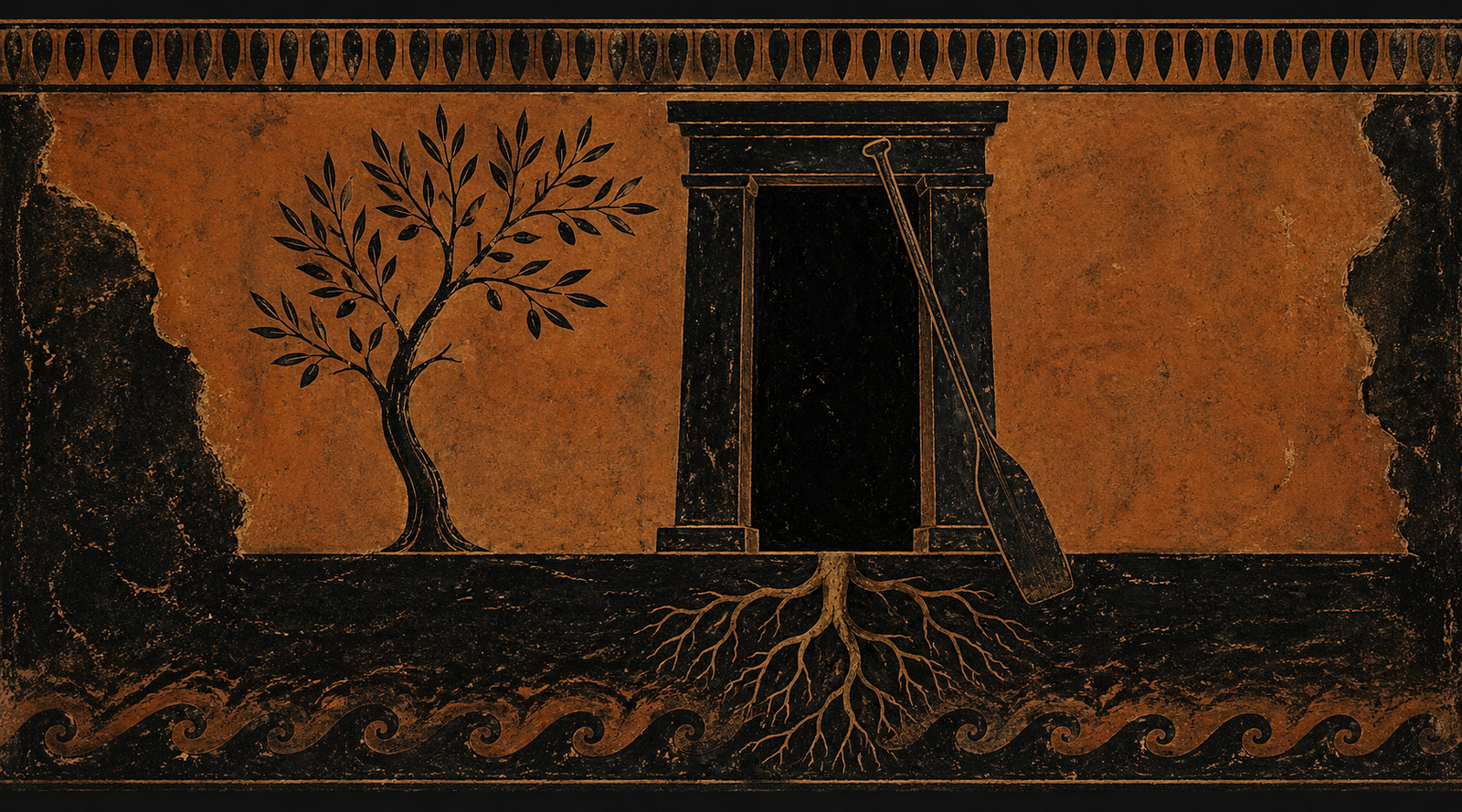

No Man Comes Home IX — The Beggar at His Own Door
Odysseus reaches Ithaca at last, but return does not grant him recognition, reunion, or peace. Disguised by Athena as a beggar, he must enter his own kingdom without name or power and allow the house to reveal what it has become. The ninth canto of No Man Comes Home turns homecoming into a test of loyalty, restraint, and concealed violence.
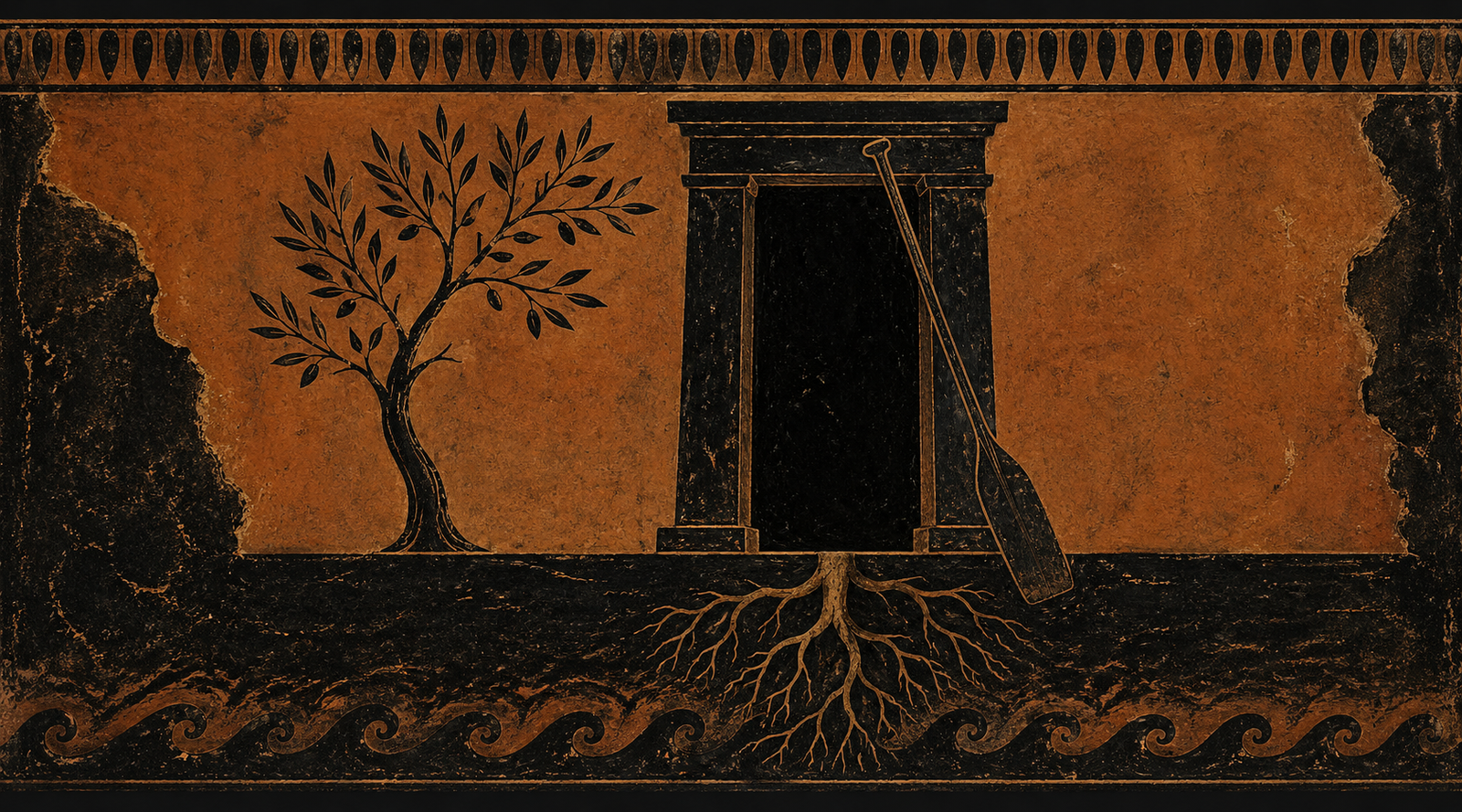

The Objects That Know Him
Name, oar, wax, scar, bow, bed, door: ordinary things carry a quieter authority beneath the marvels of The Odyssey. This House of Cadmus essay considers how objects recognise Odysseus, judge the concealments that preserved him, and make return more difficult than merely reaching Ithaca.
Continue Reading
If this piece found something in you, you may wish to continue the journey elsewhere.
On The Lantern Chronicles, I gather writings from Angkor, myth and legend, contemplative essays, and poetry — works shaped by silence, beauty, wonder, memory, and the deeper questions that follow us through the world.
It is a place for stone and story, reflection and vow, shadow and revelation.
You would be most welcome there.