
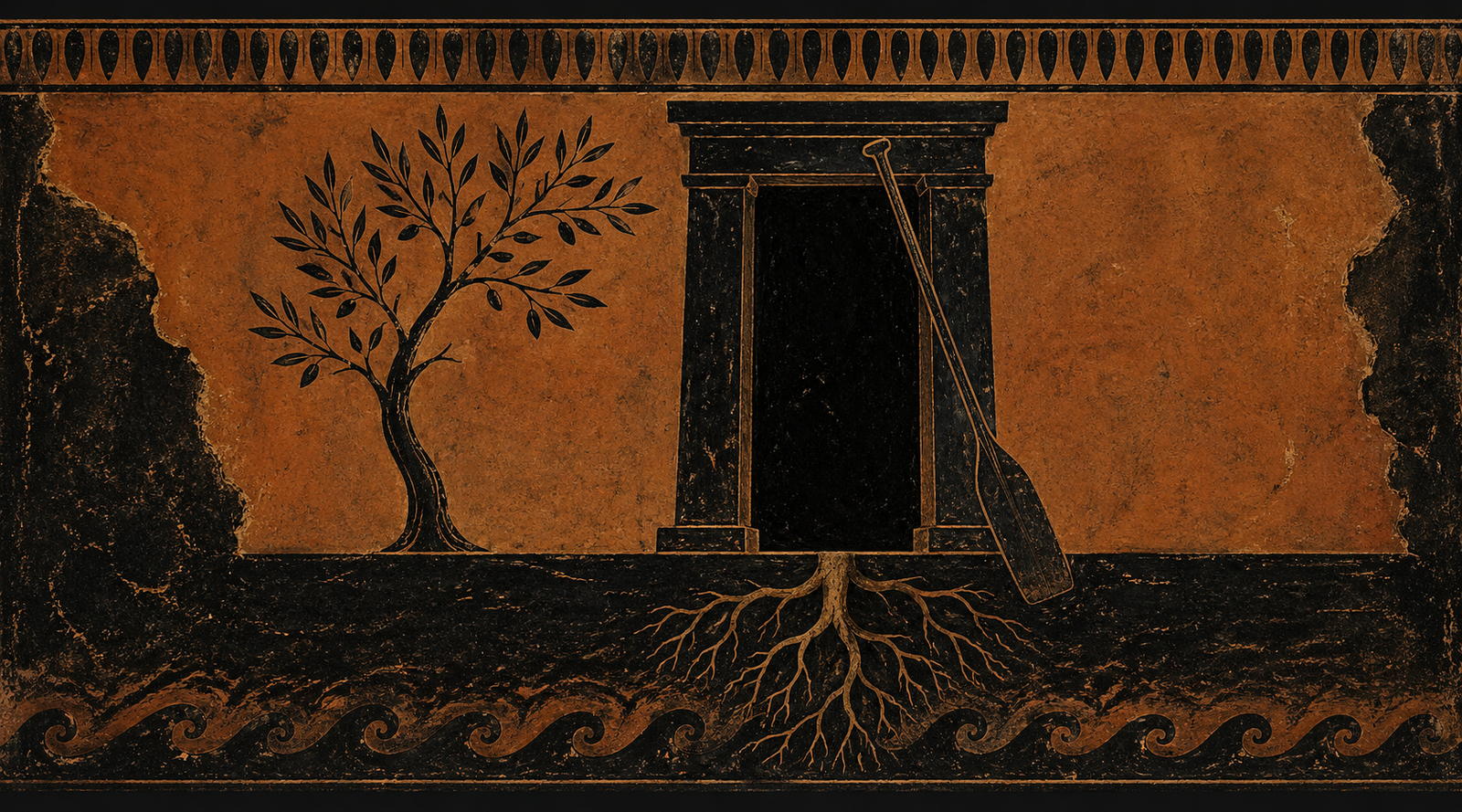

No Man Comes Home I — The House Without the Man
Troy has ended.
Odysseus has not.
Before the famous return, before the scar, the bow, the bed, and the door, Ithaca has already become a battlefield. Not because an army has breached its walls, but because absence has taught appetite how to sit at another man’s table and call itself custom.
In The House Without the Man, the first canto of No Man Comes Home, the story begins where most retellings hurry past: inside the damage left behind. Penelope rules by delay. Telemachus grows beneath the weight of a father who is both rumour and wound. The suitors do not invade. They remain. They eat. They wait. They corrupt hospitality by stretching it into entitlement.
This is an Odyssey of return, concealment, recognition, and consequence. But return does not begin with sails on the horizon.
It begins with a house learning how much absence can cost.
It begins with the son standing a little differently among the men who have mistaken delay for victory.
Continue reading No Man Comes Home I — The House Without the Man on Substack, where the twelve-canto Odyssey begins in the occupied house, before the returning man appears.
Continue reading on Substack →
Also in House of Cadmus
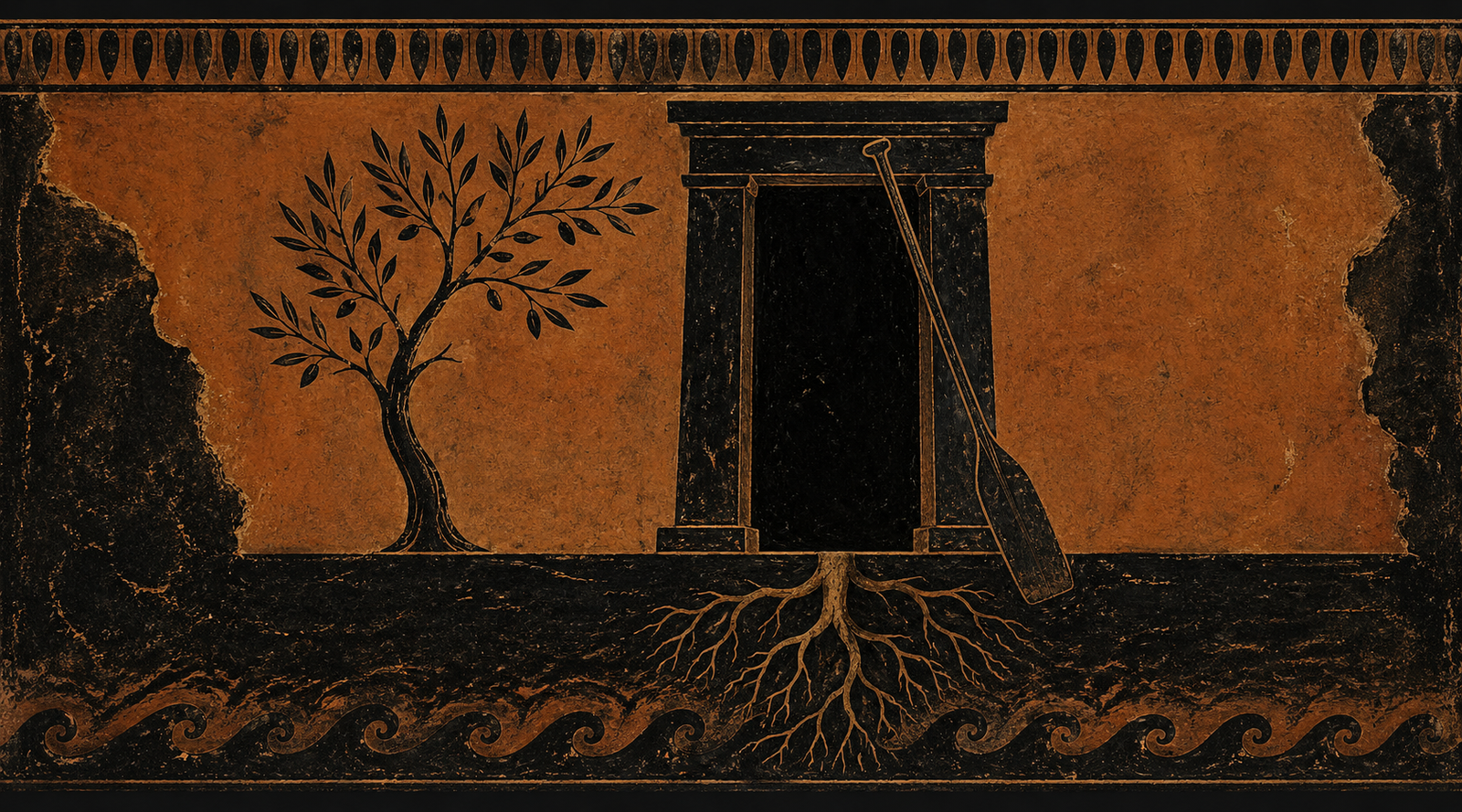

No Man Comes Home VI — The Oar That Could Not Belong
A grave Odyssey retelling from No Man Comes Home: Tiresias gives Odysseus a prophecy stranger than return itself. After Ithaca, after the suitors, after the bed and the bow, he must carry an oar inland until the sea’s own instrument is mistaken for something else.
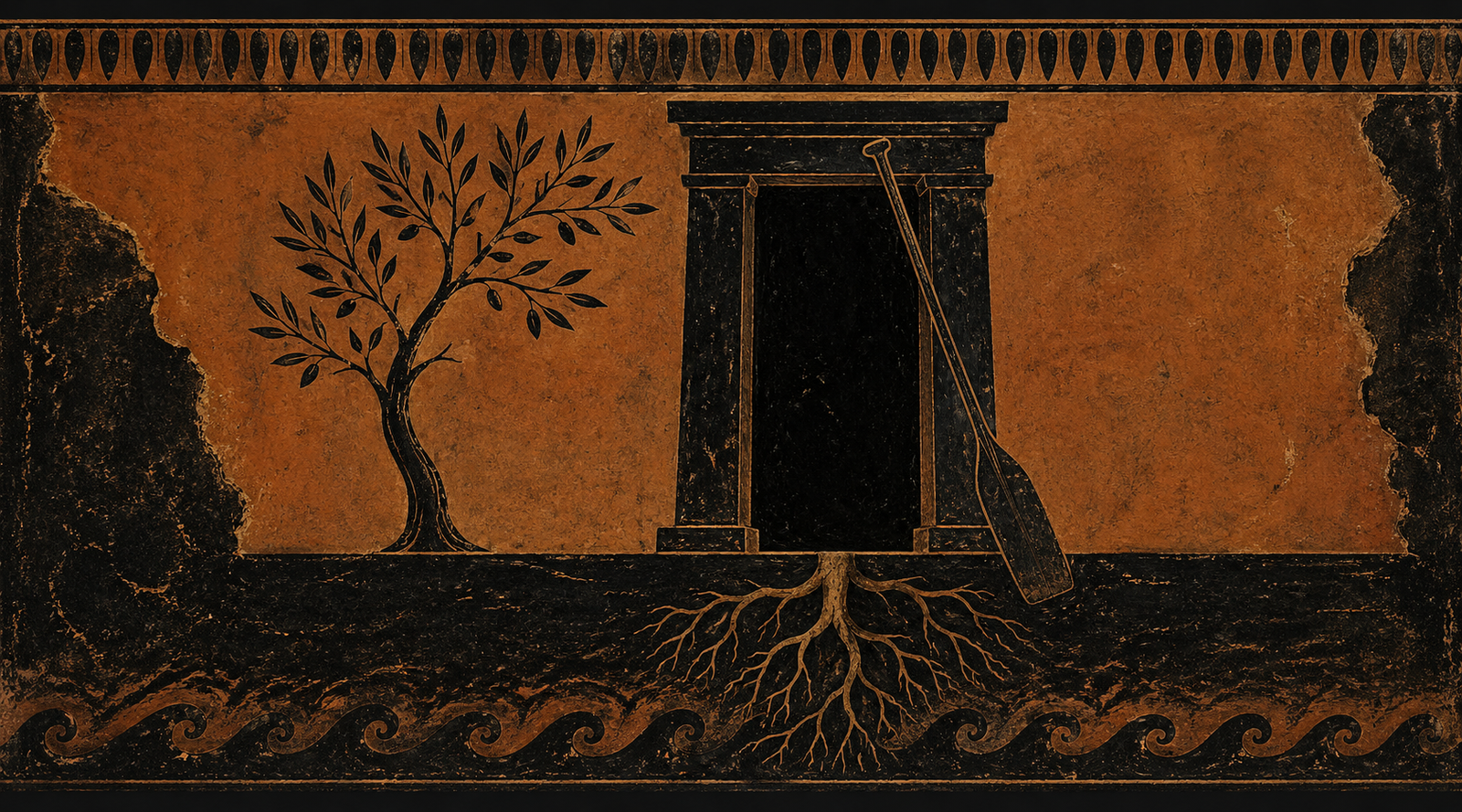

No Man Comes Home V — The Name Inside the Cave
In this fifth canto of No Man Comes Home, Odysseus enters the cave of Polyphemus with no need to be there. What follows is not only a famous Greek myth of cunning and escape, but a severe study of curiosity, leadership, hospitality, and the danger of needing one’s name to be known.
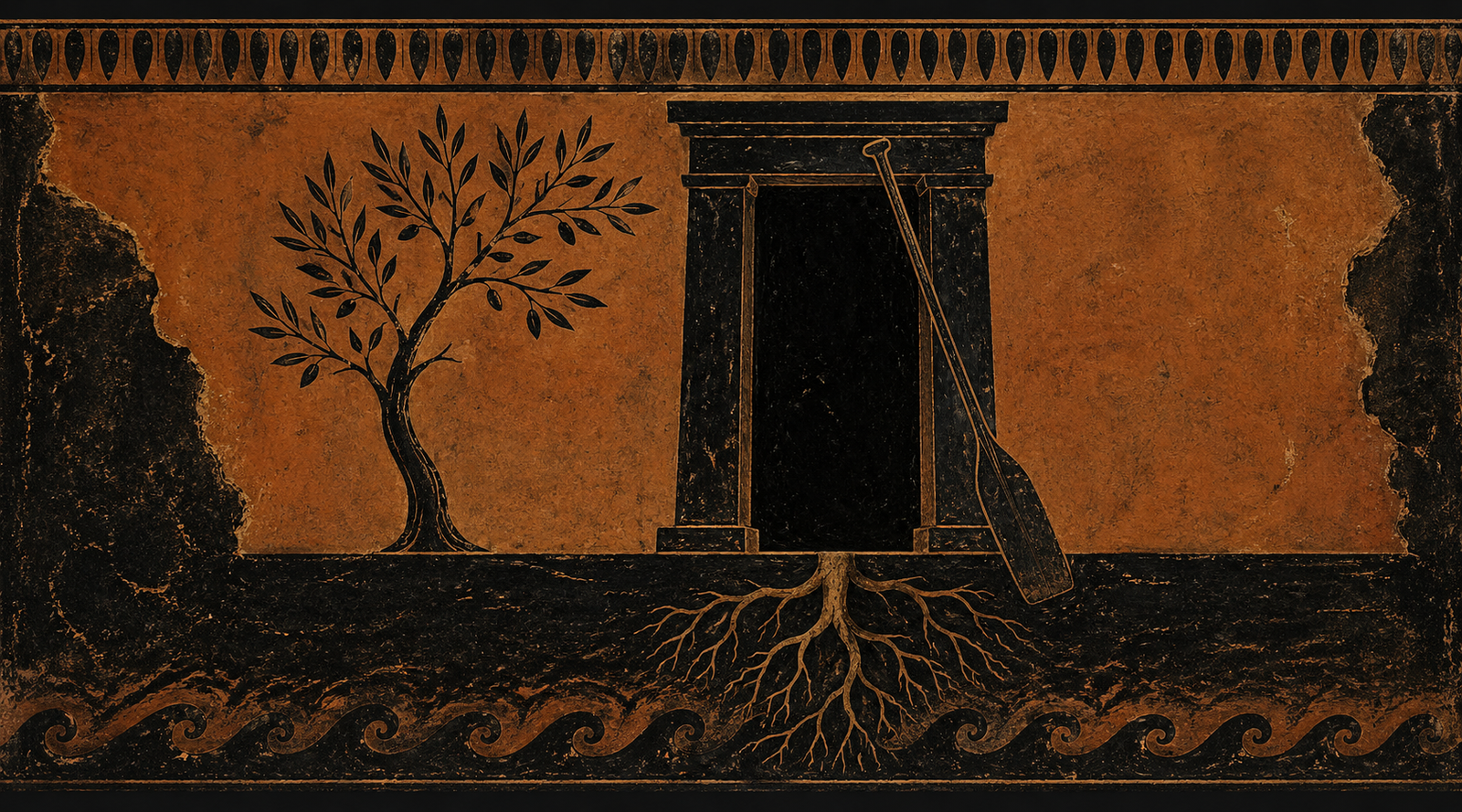

No Man Comes Home IV — The Stranger Washed Ashore
Odysseus has survived the sea, but survival is not yet return. Washed ashore on Scheria, naked and nameless, he must enter the human world again through restraint, supplication, Nausicaa’s courage, and the dangerous mercy of a house that does not yet know whom it has received.
Continue Reading
If this piece found something in you, you may wish to continue the journey elsewhere.
On The Lantern Chronicles, I gather writings from Angkor, myth and legend, contemplative essays, and poetry — works shaped by silence, beauty, wonder, memory, and the deeper questions that follow us through the world.
It is a place for stone and story, reflection and vow, shadow and revelation.
You would be most welcome there.