
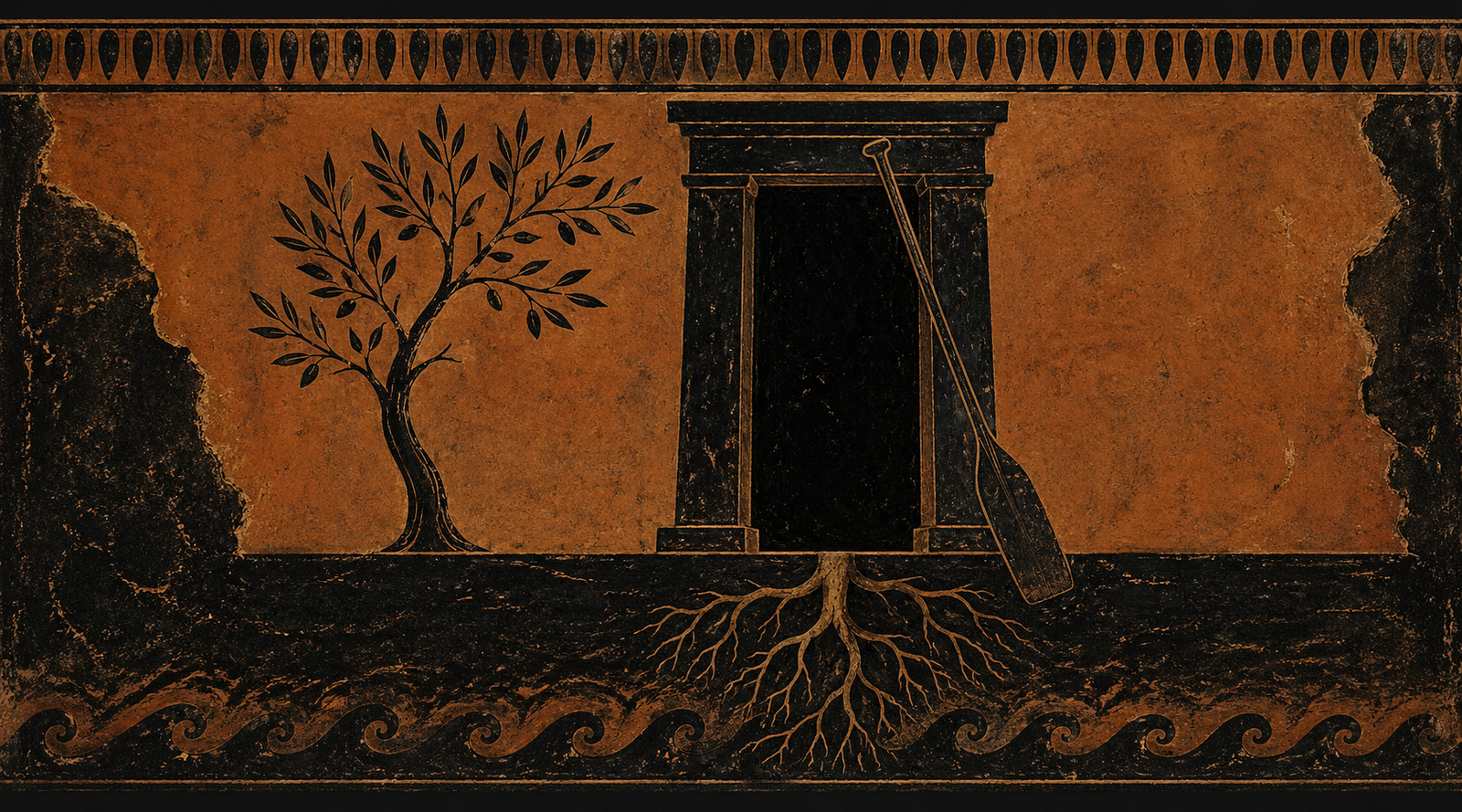

Before the Door: On No Man Comes Home
There are stories that appear to move towards home.
And there are stories that discover, very late, that home is the severest place of all.
No Man Comes Home is a twelve-canto literary retelling of The Odyssey from The House of Cadmus: a poem of concealment, recognition, return, and the cost of surviving long enough to come home.
The Odyssey is often remembered as a tale of wandering: islands, monsters, enchantresses, storms, songs, shipwreck, disguise, vengeance, bed, reunion. It contains all these things. It is generous enough to hold adventure, marvel, danger, humour, grief, cunning, recognition, and the dark intelligence of household law. It has crossed centuries because it can be read by children as a tale of return and by adults as a study in what return requires from those who have survived too much.
But beneath the voyage lies a harder wound.
Odysseus survives by concealment.
He lies, brilliantly. He hides, patiently. He becomes Nobody and escapes death. He listens while others are sealed against hearing. He enters his own island as a stranger, his own house as a beggar, his own marriage by way of a test. He withholds in order to continue. He survives because he can make himself difficult to know.
Yet home asks another thing.
A house cannot be restored by a man who remains only strategy. A wife cannot receive a legend in place of a husband. A son cannot be healed by a name. A father cannot embrace a method. A dog knows by scent what a hall refuses to see. A scar speaks before speech is safe. A bow remembers the hand. A bed proves what fame cannot.
Into this world Odysseus must return.
Not as a simple hero.
Not as a restored king.
Not as a man whose sufferings cancel the sufferings caused by his absence.
He returns as someone who has survived by arts that intimacy cannot wholly trust.
The twelve cantos are not episodes arranged for ornament. They are twelve surfaces on which return becomes visible and less simple: absence, sonship, captivity, nakedness, naming, displacement, the dead, command, disguise, recognition, marriage, morning.
Each canto advances the story.
More importantly, each canto advances the reader’s capacity to feel the final silence correctly.
For this is not a poem of easy restoration.
Continue reading: Before the Door: On No Man Comes Home at The House of Cadmus on Substack.
Also in House of Cadmus
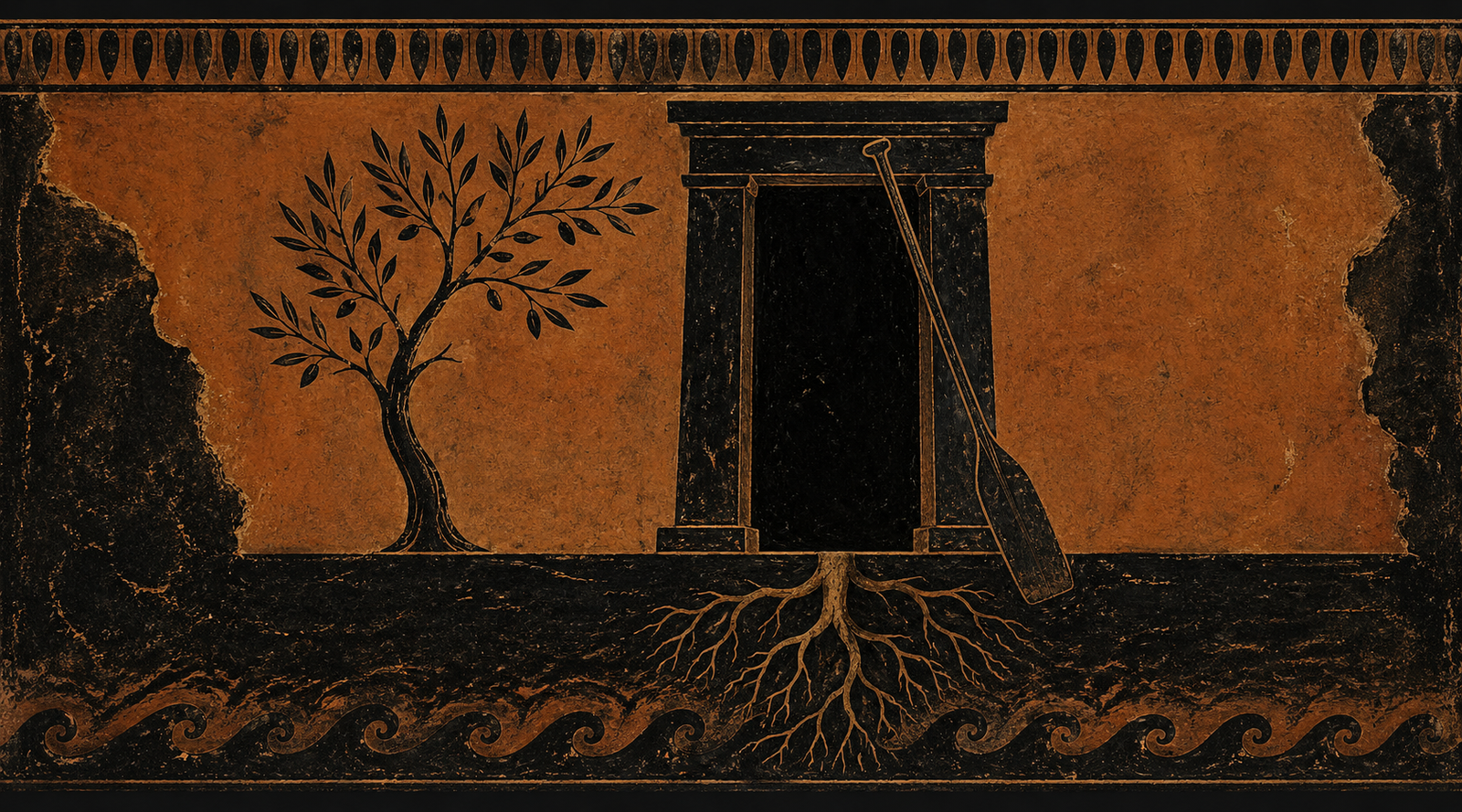

No Man Comes Home VI — The Oar That Could Not Belong
A grave Odyssey retelling from No Man Comes Home: Tiresias gives Odysseus a prophecy stranger than return itself. After Ithaca, after the suitors, after the bed and the bow, he must carry an oar inland until the sea’s own instrument is mistaken for something else.
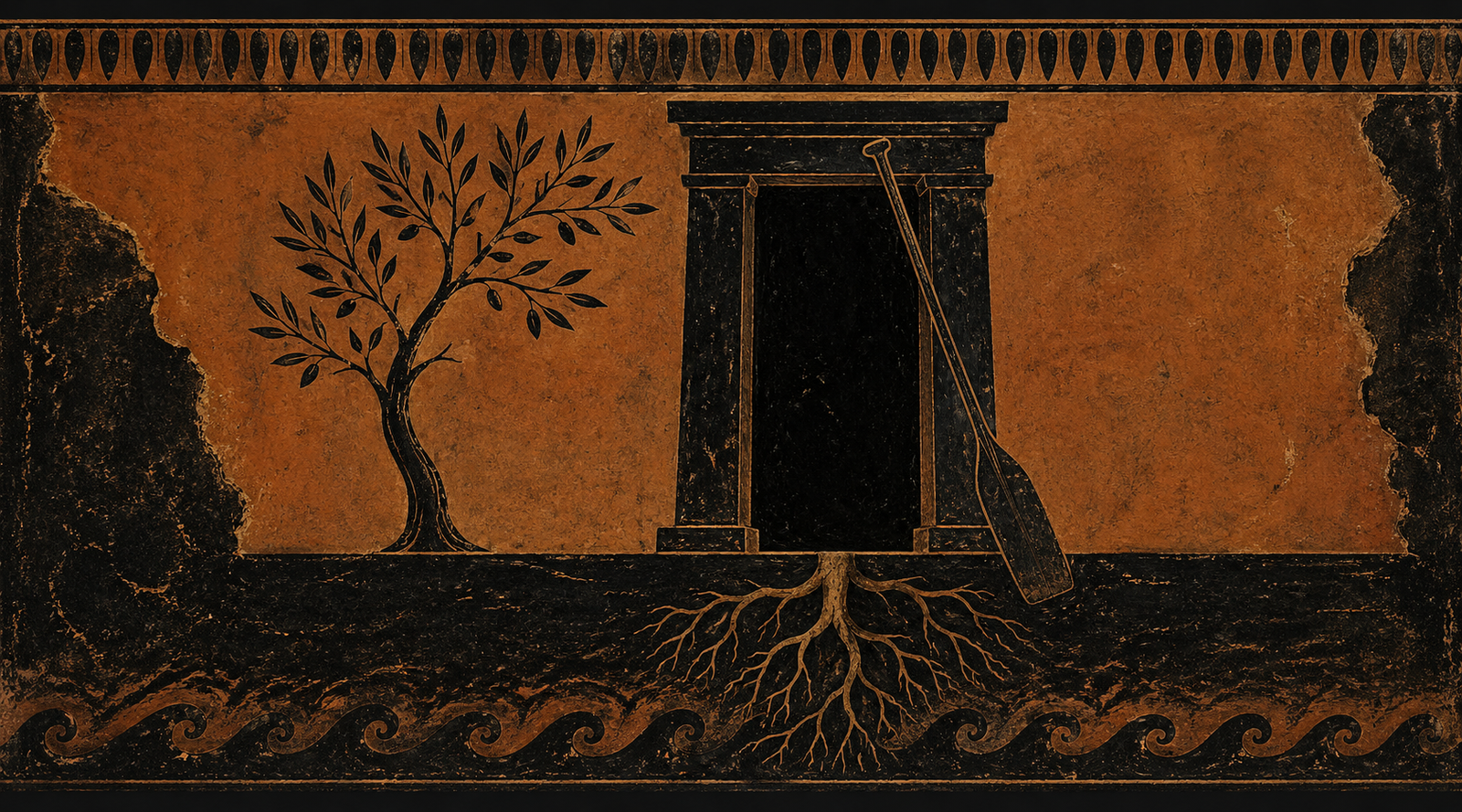

No Man Comes Home V — The Name Inside the Cave
In this fifth canto of No Man Comes Home, Odysseus enters the cave of Polyphemus with no need to be there. What follows is not only a famous Greek myth of cunning and escape, but a severe study of curiosity, leadership, hospitality, and the danger of needing one’s name to be known.
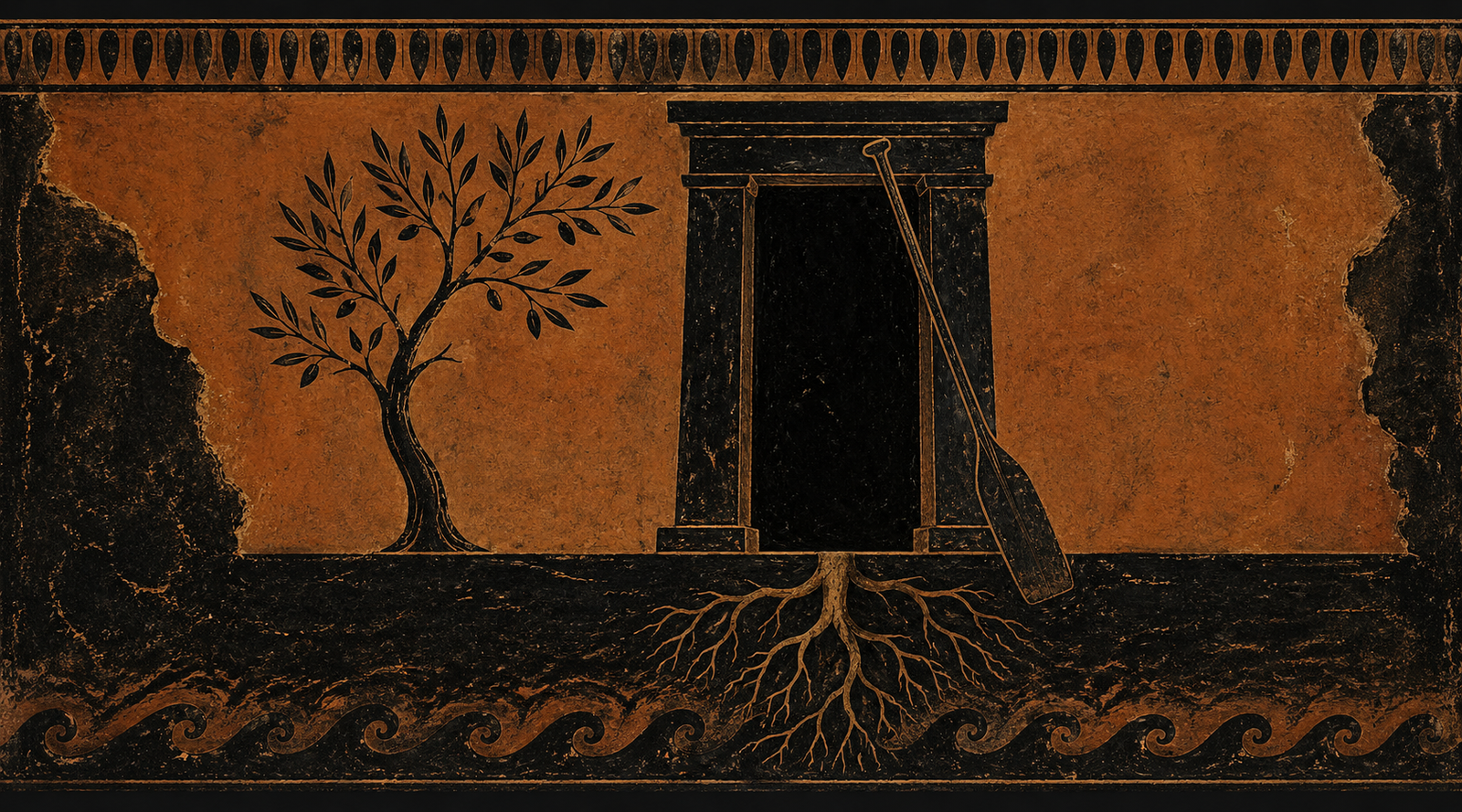

No Man Comes Home IV — The Stranger Washed Ashore
Odysseus has survived the sea, but survival is not yet return. Washed ashore on Scheria, naked and nameless, he must enter the human world again through restraint, supplication, Nausicaa’s courage, and the dangerous mercy of a house that does not yet know whom it has received.
Continue Reading
If this piece found something in you, you may wish to continue the journey elsewhere.
On The Lantern Chronicles, I gather writings from Angkor, myth and legend, contemplative essays, and poetry — works shaped by silence, beauty, wonder, memory, and the deeper questions that follow us through the world.
It is a place for stone and story, reflection and vow, shadow and revelation.
You would be most welcome there.