
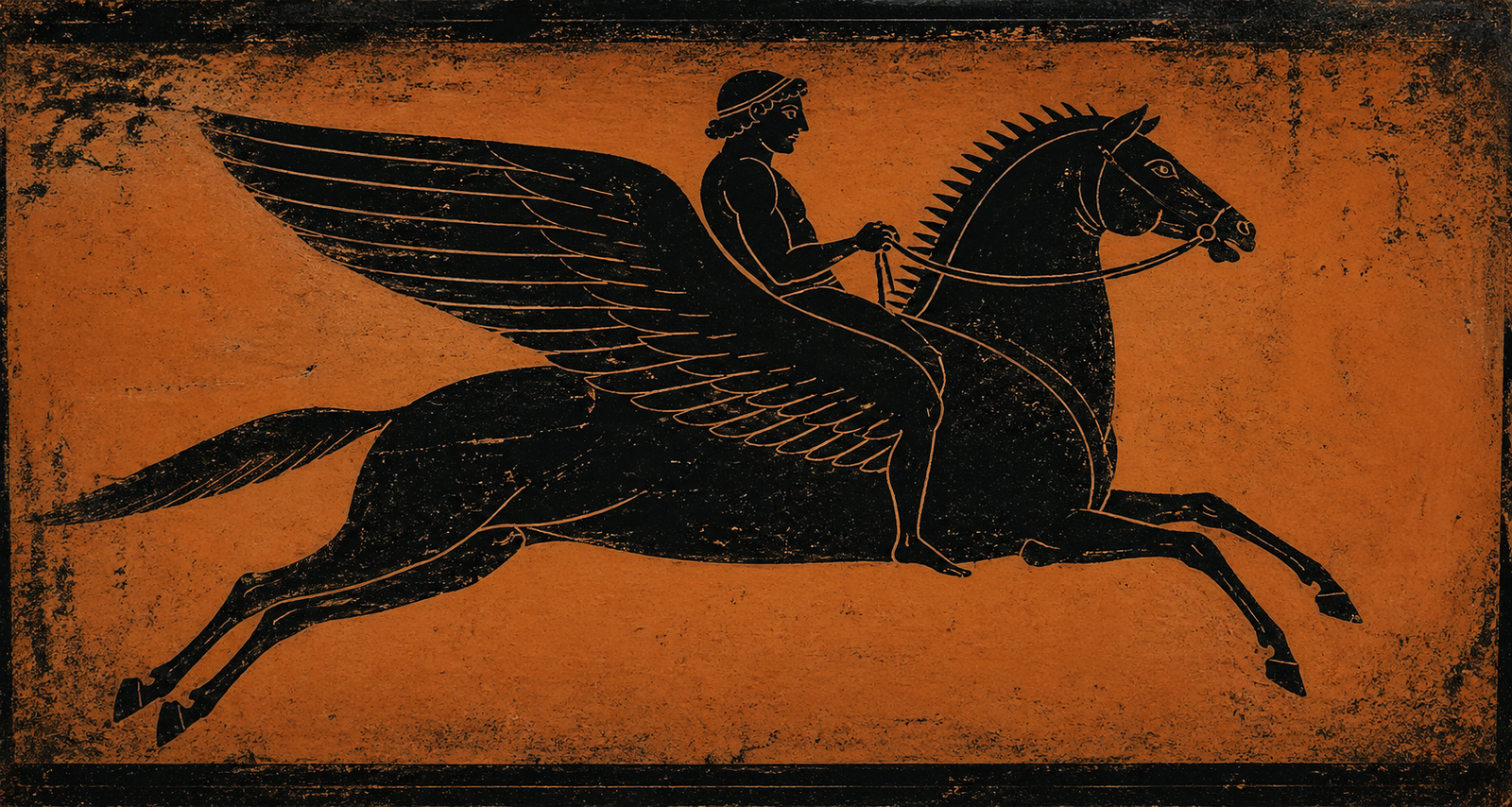

Bellerophon and the Borrowed Height
In this House of Cadmus retelling, Bellerophon does not begin as a hero ascending toward glory. He begins as a man already marked: renamed by violence, purified under guest-law, and sent east carrying a sealed letter that commands his own death. Before Pegasus, before the Chimera, before the fatal ascent, there is this first pressure — a life being moved by laws that protect and endanger at once.
He had not always been called Bellerophon.
Names came after acts. They did not descend cleanly from the father’s house, or rest harmlessly on the tongue. A name could arrive from blood. It could fasten itself to a man and make every later road narrower.
In Corinth he had been Hipponous.
Then a man died.
The traditions do not keep the dead man’s name steady. Some call him Belleros. Some give another name. It hardly matters to the living body that has to carry the consequence. One man had fallen. Another had been remade.
After that, Hipponous was gone.
Bellerophon went out from Corinth with death behind him and pollution on him. He came to Proetus, king of Tiryns, for cleansing. The king received him. Water was given. Blood was answered by rite. A place was made for him beneath the roof.
That was the first danger.
A man purified is not a man made simple. A guest is not merely a guest. Once received, he stands beneath a law that protects him and binds the house that has taken him in. He eats where he may not be struck. He sleeps where the roof itself has become witness.
Proetus knew this.
So did the house.
The woman saw him there.
Anteia, some said. Stheneboea, others. The name shifted, but the pressure did not. She watched the young man who had come stained and been made clean enough to remain. She saw the strange brightness that follows a body not yet settled after violence.
Perhaps she desired him.
Perhaps desire had already become a form of accusation.
He refused her.
No god cried out. No omen blackened the lintel. No sword was drawn.
Only speech moved.
That was enough.
She went to Proetus and placed another shape upon the guest. She said he had reached toward her in violation. She made his refusal into an injury against the house. She put a charge where desire had failed.
Proetus listened.
He had taken the man in. He had purified him. He could not kill him at the table, nor in the chamber, nor beneath the protection he himself had granted. To murder a guest outright would stain the hand too visibly. It would make the king’s own roof accuse him.
So Proetus chose the cleaner evil.
He wrote.
The signs were sealed. The message was made for another king’s eyes. Bellerophon was summoned, and the folded thing was placed into his hand.
“Go to Lycia,” Proetus said. “Carry this to Iobates.”
Bellerophon took it.
He did not open it. Perhaps he could not read the marks. Perhaps he honoured the seal. Perhaps the law of kings required him to carry what he was given.
So he went east with his own death against his body.
The road did not announce it. Dust rose. Light struck the backs of stones. The land opened and closed beneath him. He ate. He slept. He crossed thresholds. At his side, or under his cloak, or in the keeping of his hand, the sealed signs travelled with him.
Behind him, Proetus’s house remained clean of direct blood.
Ahead of him, Lycia waited.
Continue reading: Bellerophon and the Borrowed Height at The House of Cadmus on Substack.
Also in House of Cadmus
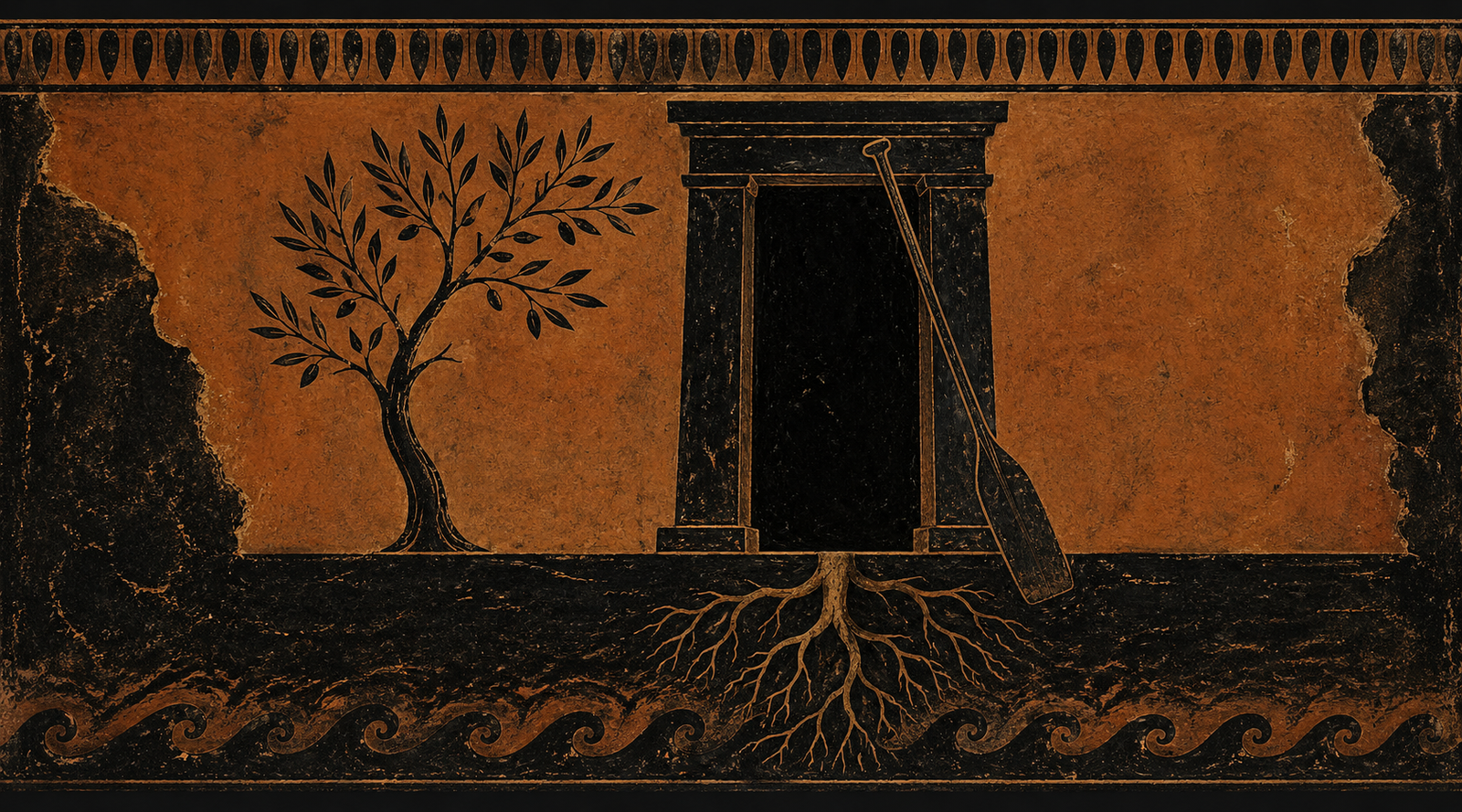

No Man Comes Home VI — The Oar That Could Not Belong
A grave Odyssey retelling from No Man Comes Home: Tiresias gives Odysseus a prophecy stranger than return itself. After Ithaca, after the suitors, after the bed and the bow, he must carry an oar inland until the sea’s own instrument is mistaken for something else.
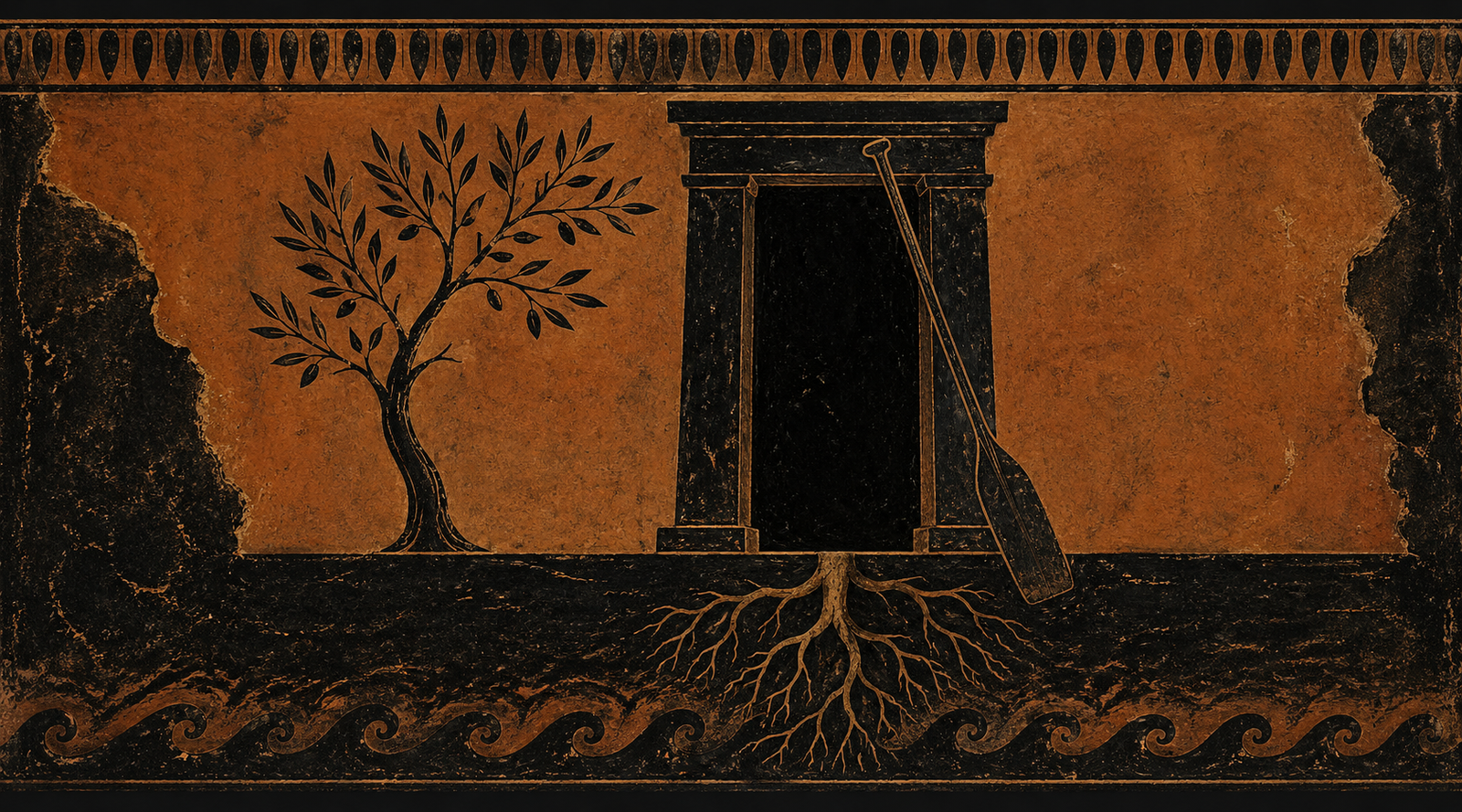

No Man Comes Home V — The Name Inside the Cave
In this fifth canto of No Man Comes Home, Odysseus enters the cave of Polyphemus with no need to be there. What follows is not only a famous Greek myth of cunning and escape, but a severe study of curiosity, leadership, hospitality, and the danger of needing one’s name to be known.
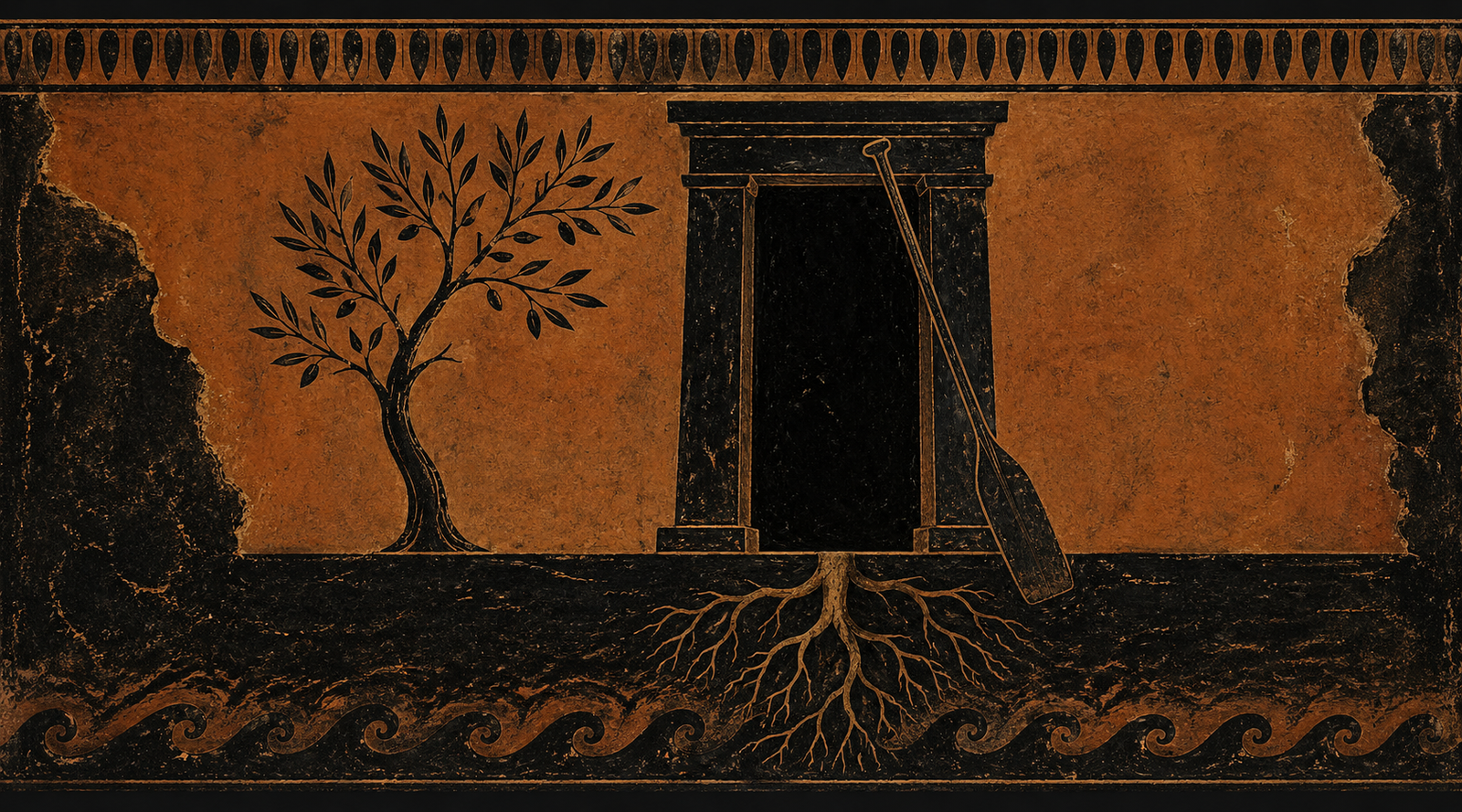

No Man Comes Home IV — The Stranger Washed Ashore
Odysseus has survived the sea, but survival is not yet return. Washed ashore on Scheria, naked and nameless, he must enter the human world again through restraint, supplication, Nausicaa’s courage, and the dangerous mercy of a house that does not yet know whom it has received.
Continue Reading
If this piece found something in you, you may wish to continue the journey elsewhere.
On The Lantern Chronicles, I gather writings from Angkor, myth and legend, contemplative essays, and poetry — works shaped by silence, beauty, wonder, memory, and the deeper questions that follow us through the world.
It is a place for stone and story, reflection and vow, shadow and revelation.
You would be most welcome there.