
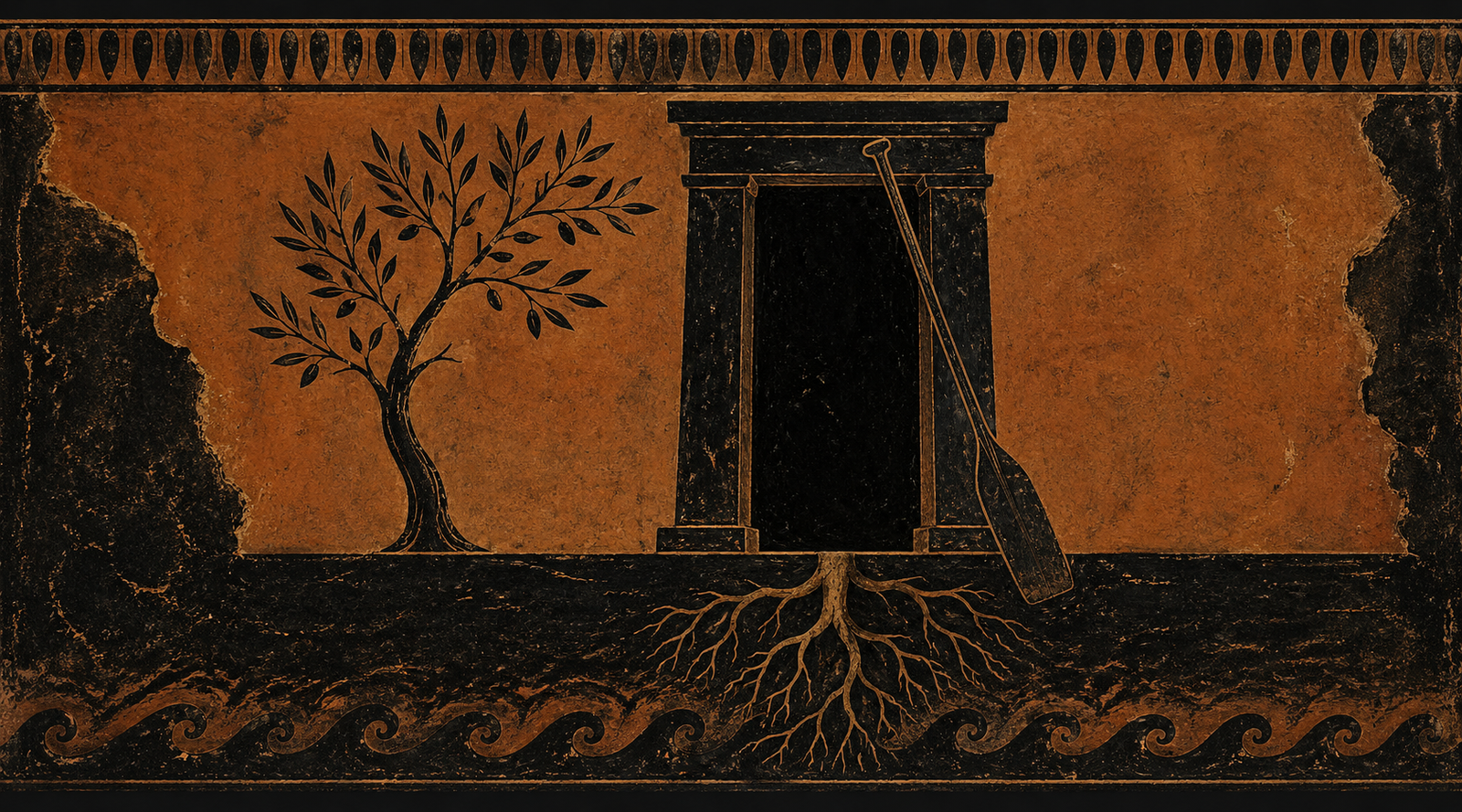

No Man Comes Home V — The Name Inside the Cave
In the fifth canto of No Man Comes Home, Odysseus enters one of the most famous chambers in Greek myth: the cave of Polyphemus. But the danger is not only the Cyclops. The danger is the human hunger to know, to test, to enter, to be named — and then, too late, to survive what knowledge has opened.
This is an excerpt from The Name Inside the Cave, published at The House of Cadmus.
Then he told of the island of goats, the harbour, the neighbouring land where smoke rose from the homes of beings unlike men. He had ships. He had companions. He had no need to enter the cave.
That is important.
Not every danger comes to meet a man. Some are approached under the name of inquiry.
Odysseus wanted to know.
Curiosity is not innocence in a leader.
He took selected men and crossed towards the smoke. Perhaps he expected gifts. Perhaps he expected savage men who could be measured by Greek custom and found lacking. Perhaps he expected a story worth carrying. Perhaps he expected the world to reward the courage of approach.
The cave stood open.
That was its first deception.
An open cave is not an open house. Doorlessness does not mean welcome. The distinction should have been clear. It was not. Inside they found order of a kind: pens, lambs, kids, cheeses set in rows, vessels of milk, the signs of labour without the laws of hospitality. His men urged him to take what could be taken and leave.
They were right.
Odysseus refused.
He wanted to see the owner.
That desire killed them.
No lightning announced the error. No god cried warning from the mouth of the cave. There was only a choice made under the respectable cover of knowledge. They lit a fire. They ate some of the cheese. They waited where they had not been invited, trusting that the law of guests would follow them even into a place that had never promised law.
Then Polyphemus came home.
He was not first a monster.
He was a fact too large for the room.
The cave altered around him as a shore alters when the sea rises suddenly. He drove his flock inside, set the mothers apart, milked with heavy competence, ordered his own world according to his own brutal sufficiency. Then he lifted a stone to close the cave-mouth, and the day ended.
The men understood then.
Some truths arrive as darkness.
Continue reading: No Man Comes Home V — The Name Inside the Cave at The House of Cadmus on Substack.
Also in House of Cadmus
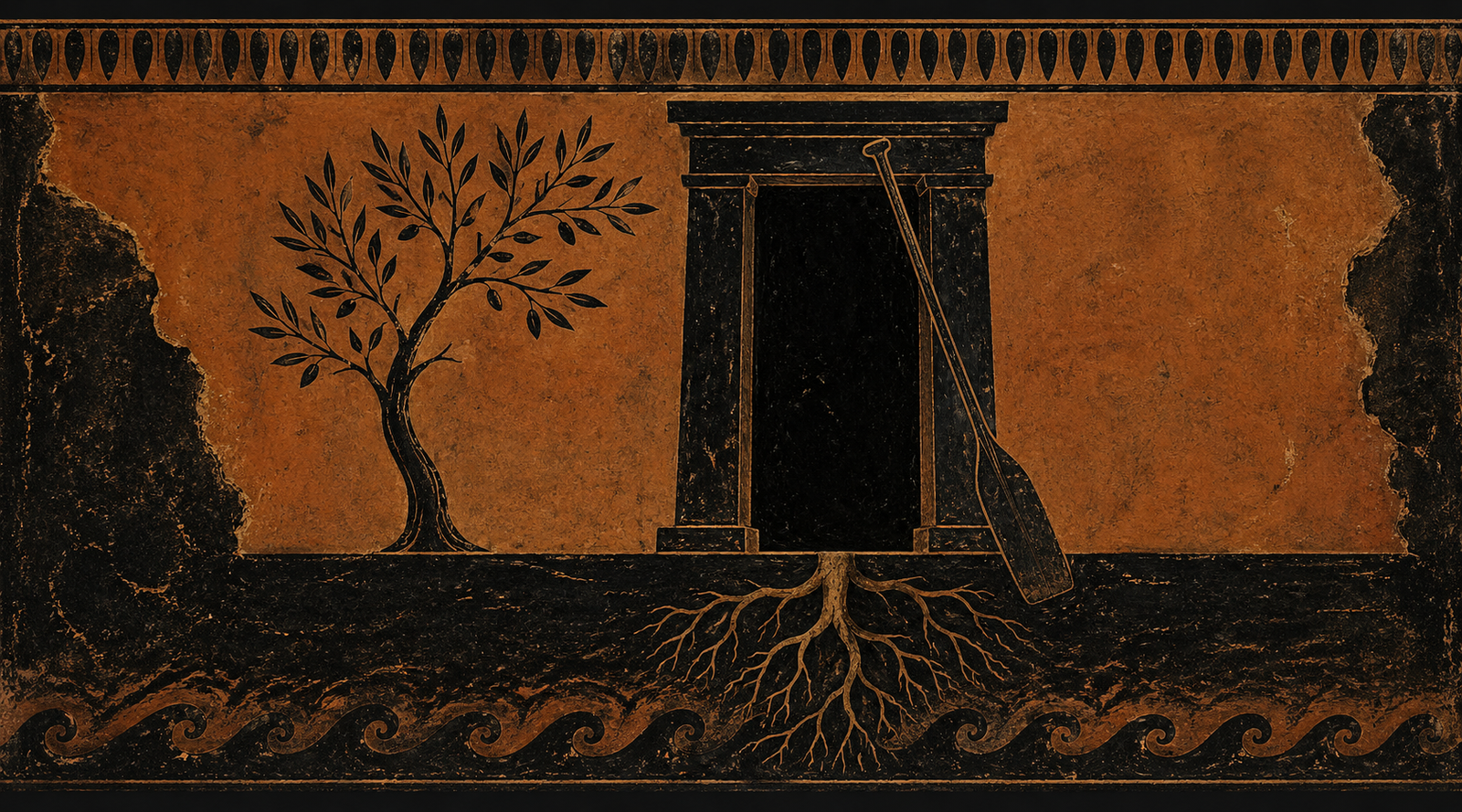

No Man Comes Home VI — The Oar That Could Not Belong
A grave Odyssey retelling from No Man Comes Home: Tiresias gives Odysseus a prophecy stranger than return itself. After Ithaca, after the suitors, after the bed and the bow, he must carry an oar inland until the sea’s own instrument is mistaken for something else.
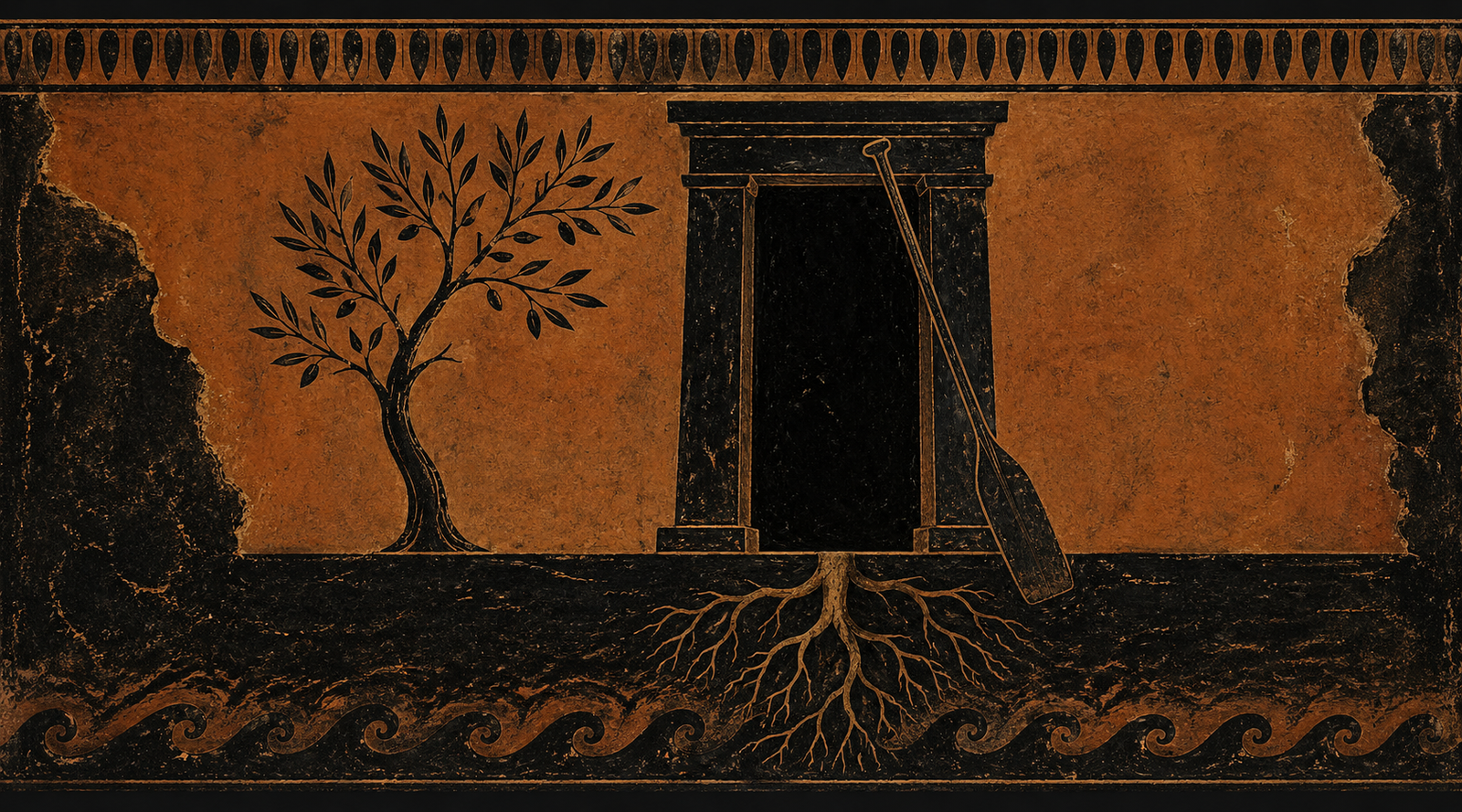

No Man Comes Home IV — The Stranger Washed Ashore
Odysseus has survived the sea, but survival is not yet return. Washed ashore on Scheria, naked and nameless, he must enter the human world again through restraint, supplication, Nausicaa’s courage, and the dangerous mercy of a house that does not yet know whom it has received.
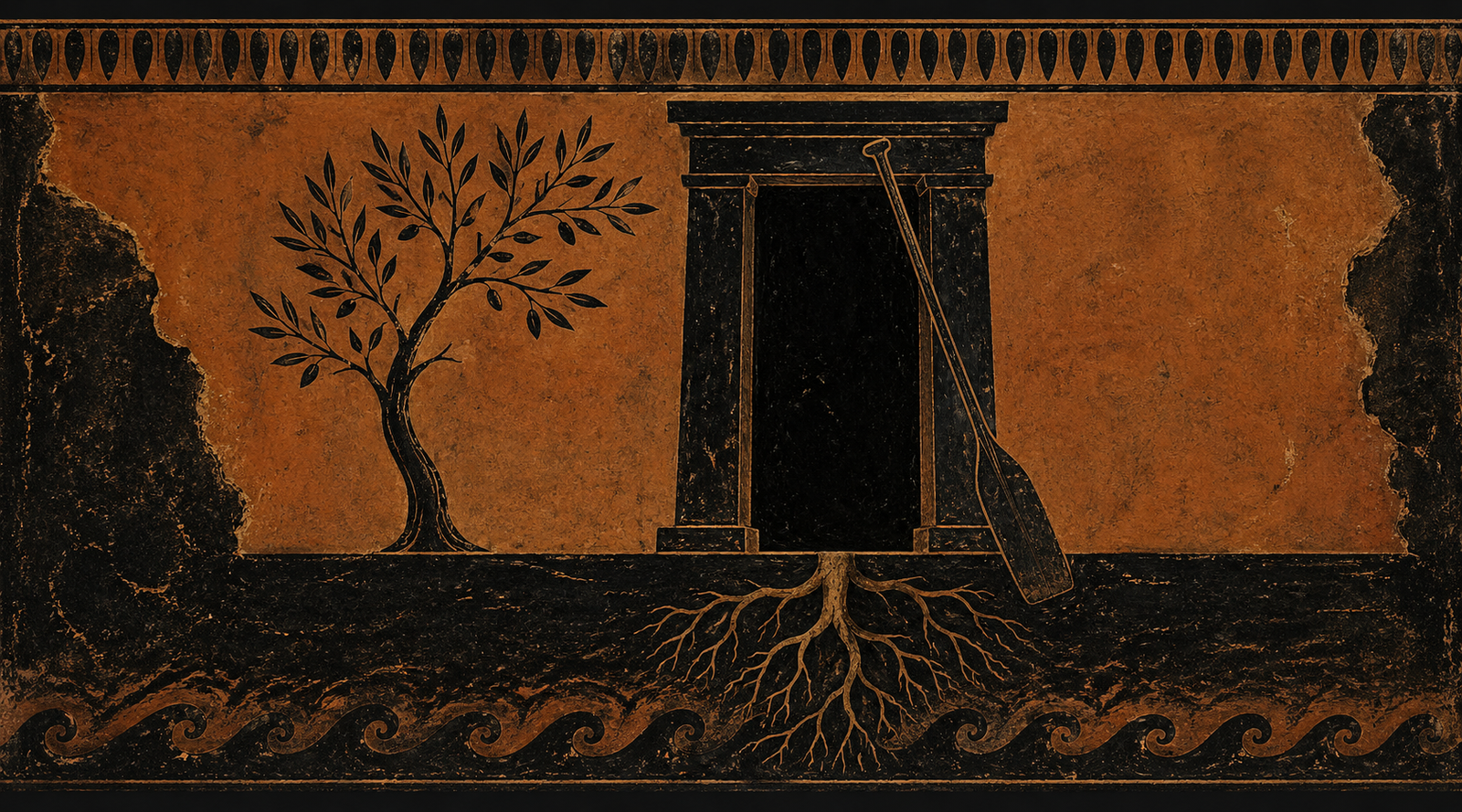

No Man Comes Home III — The Island of the Kept Man
Calypso’s island saves Odysseus, then begins to steal him. In the third canto of No Man Comes Home, immortality is not offered as thunder or command, but as tenderness becoming law. To return, Odysseus must choose mortality, consequence, and the road that may kill him.
Continue Reading
If this piece found something in you, you may wish to continue the journey elsewhere.
On The Lantern Chronicles, I gather writings from Angkor, myth and legend, contemplative essays, and poetry — works shaped by silence, beauty, wonder, memory, and the deeper questions that follow us through the world.
It is a place for stone and story, reflection and vow, shadow and revelation.
You would be most welcome there.