
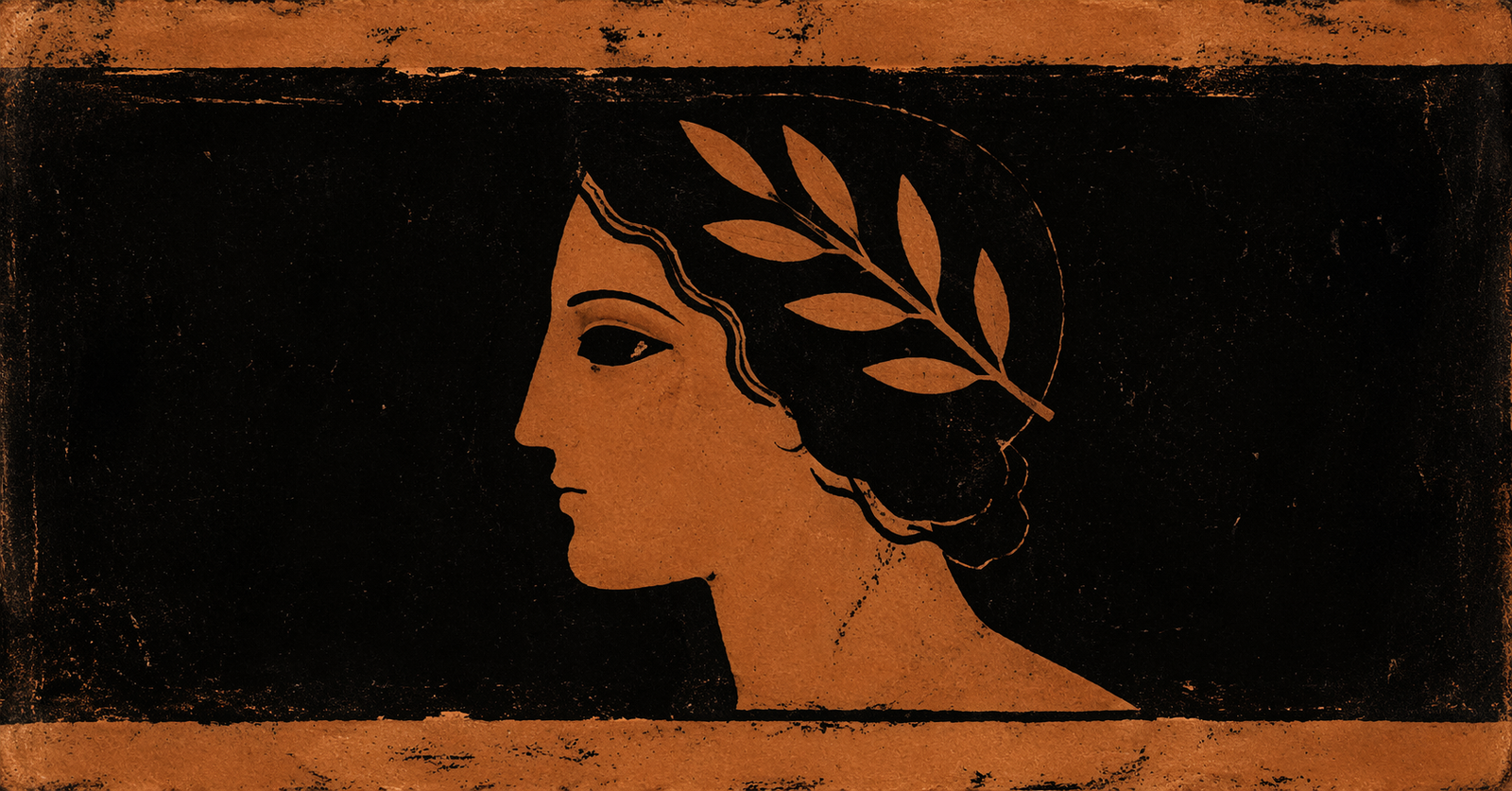

Orpheus — The Weight of Turning
In this House of Cadmus retelling, Orpheus enters the underworld not as a singer conquering death, but as a man already divided by loss. Eurydice’s absence has not merely removed the beloved. It has altered the measure by which nearness, answer, sound, and relation once made the world complete. The command not to turn is not presented as a test of obedience, but as a law of passage: the dead may follow the living only while the living does not demand proof.
I entered the underworld already divided.
Not in flesh. Not yet.
But in the measure by which I had known the world: sound sent outward, sound returned; step answered by step; breath finding its companion and settling into a shared time. When she died, that measure altered. The answer came later than it should. Rooms seemed to close too quickly after I had crossed them. My own name, spoken aloud, no longer came back with the same shape.
I did not understand this as grief.
I understood it first as misalignment.
Listen.
Some losses take away the beloved. Others take away the interval in which the beloved had lived beside you and made the world complete. Her death did not merely empty the place she had occupied. It altered the law by which nearness had once been known.
That was the first turning.
The body followed afterwards.
The descent was not a path but a subtraction.
Light withdrew by degrees, not into darkness, but into refusal. First colour loosened. Then edge. Then the small continuities by which one surface offers itself to the next. Stone no longer carried shape forward. Air no longer promised distance. Each step entered a space that did not prepare itself to receive the next.
I had brought the lyre because the hands require their old devotions when the world begins to thin. The fingers found the strings. The strings answered. But the answer travelled nowhere. The notes did not ring out and diminish. They did not hang. They did not search for wall or vault or passage. They ended where they were born, as though sound itself had been denied extension.
That was when I first understood the country below.
It was not a place of torment, as the living like to imagine. Torment still requires duration. It was not even a place of punishment. Punishment implies address. It was something colder and more exact. A realm in which relation failed to carry. A realm in which nothing was obliged to answer what touched it.
I went on.
Not because music led me. Here, nothing led. Things either continued or ceased.
I continued.
There are presences below that do not appear. They revise.
You feel them first as corrections in your own body: the shortening of breath, the quiet refusal of the joints, the way the spine begins to behave as though standing before a height or edge, though no height and no edge have yet declared themselves. The body knows when it has entered a jurisdiction that preceded it.
I came at last before those who govern the terms by which ending remains ending.
Before them, appeal lost its usual order. Argument presumes sequence. Sequence had been pared thin here. One thing did not lead naturally to another. Cause no longer approached result by a road the mind could follow. All that remained intact was condition.
So I did not plead as men plead above, by piling one grief upon another, by naming love and hoping love might soften law.
I held.
That is the nearest word.
Not hope. Hope is too bright and moves too quickly towards the future. Not defiance. Defiance still imagines itself opposed by something that can be forced to recognise it. What remained in me had neither brightness nor pride. It was only a direction kept under pressure. A refusal to release the measure in which she had once answered me.
I held, and because I held, the world below altered by a degree too fine for triumph.
Nothing was granted.
A condition was extended.
She would follow.
That was the term.
I was not to turn.
This was not spoken as warning. It was not laid before me as trial, or proof, or bargain weighted towards failure. It belonged to the structure itself, as the bank belongs to the river and the hinge belongs to the door.
Continue reading: Orpheus — The Weight of Turning at The House of Cadmus on Substack.
Also in House of Cadmus
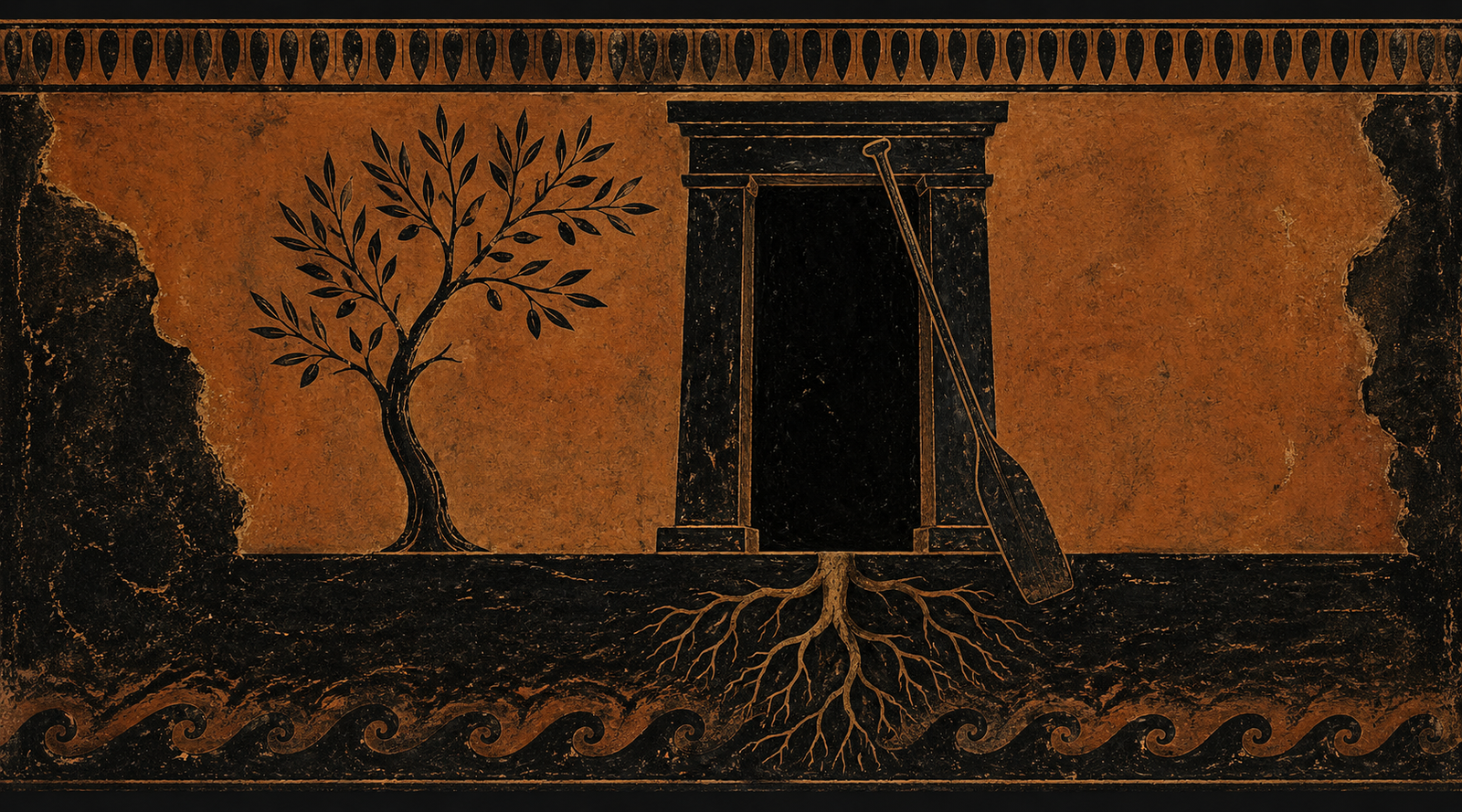

No Man Comes Home X — The Hall Reveals Itself
Odysseus returns to Ithaca disguised as a beggar, but the first creature to recognise him is the neglected dog Argos. In this severe literary retelling of The Odyssey, the king enters his own hall as need, and every act of hospitality, contempt and blindness becomes part of the house’s final testimony.
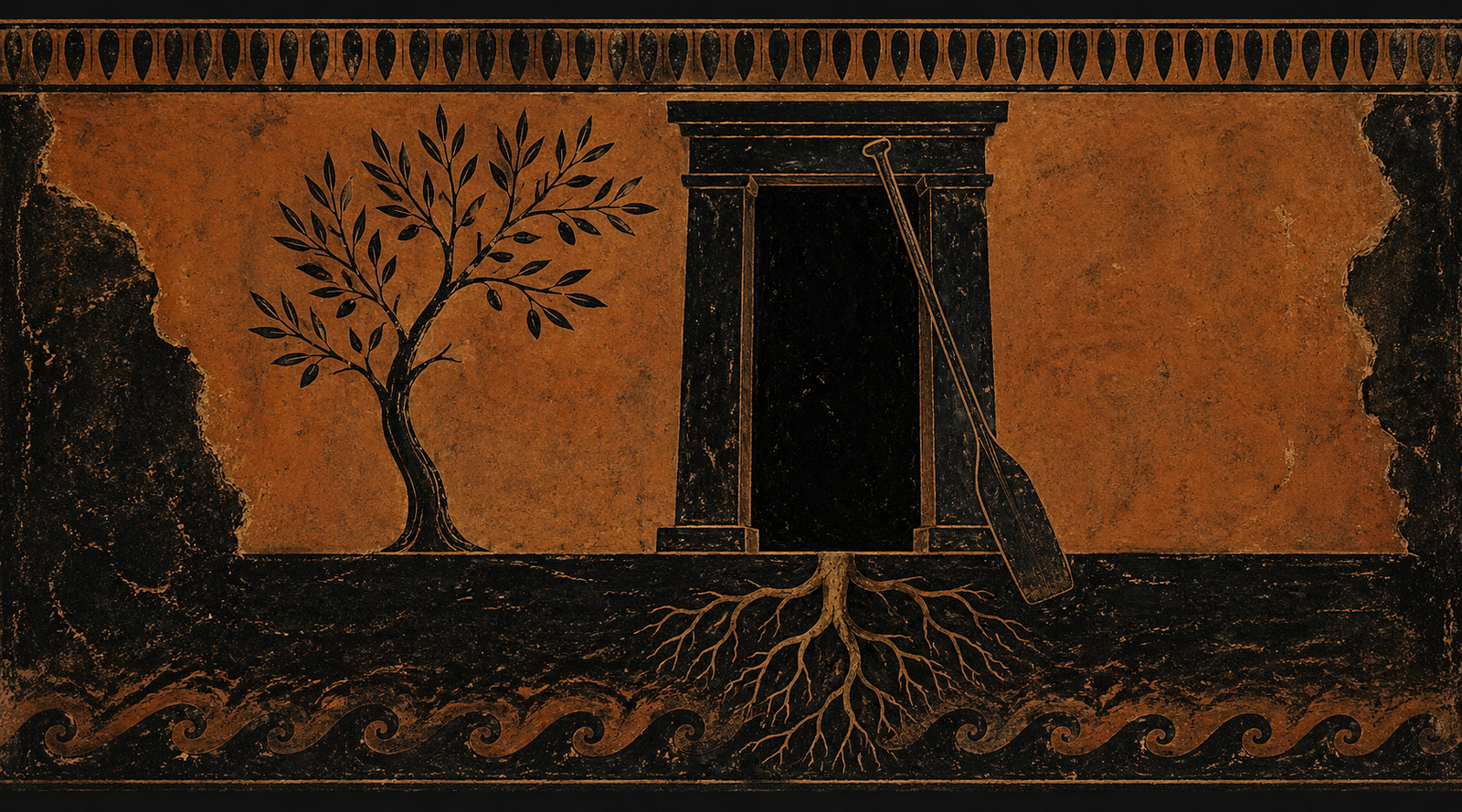

No Man Comes Home IX — The Beggar at His Own Door
Odysseus reaches Ithaca at last, but return does not grant him recognition, reunion, or peace. Disguised by Athena as a beggar, he must enter his own kingdom without name or power and allow the house to reveal what it has become. The ninth canto of No Man Comes Home turns homecoming into a test of loyalty, restraint, and concealed violence.
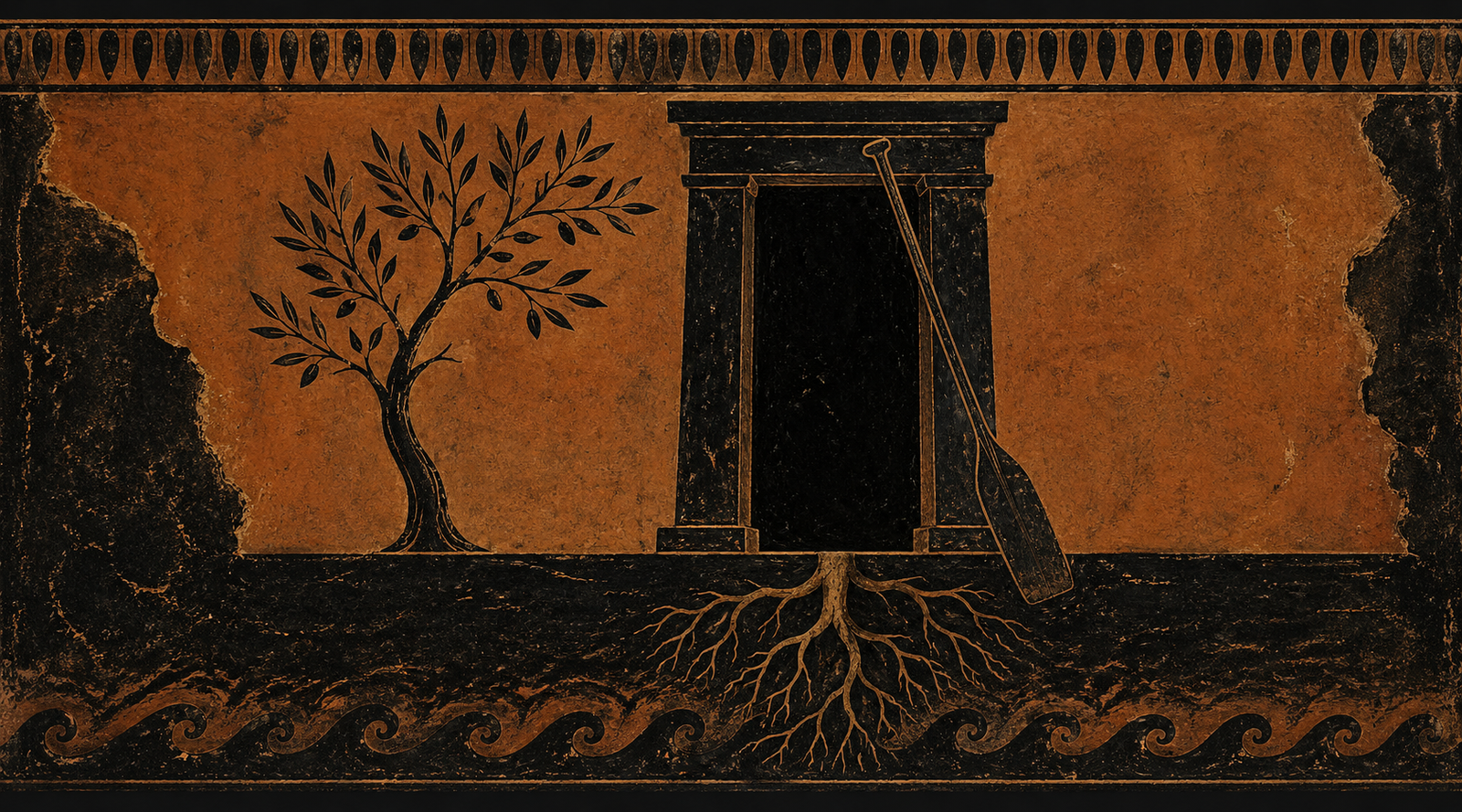

The Objects That Know Him
Name, oar, wax, scar, bow, bed, door: ordinary things carry a quieter authority beneath the marvels of The Odyssey. This House of Cadmus essay considers how objects recognise Odysseus, judge the concealments that preserved him, and make return more difficult than merely reaching Ithaca.
Continue Reading
If this piece found something in you, you may wish to continue the journey elsewhere.
On The Lantern Chronicles, I gather writings from Angkor, myth and legend, contemplative essays, and poetry — works shaped by silence, beauty, wonder, memory, and the deeper questions that follow us through the world.
It is a place for stone and story, reflection and vow, shadow and revelation.
You would be most welcome there.