
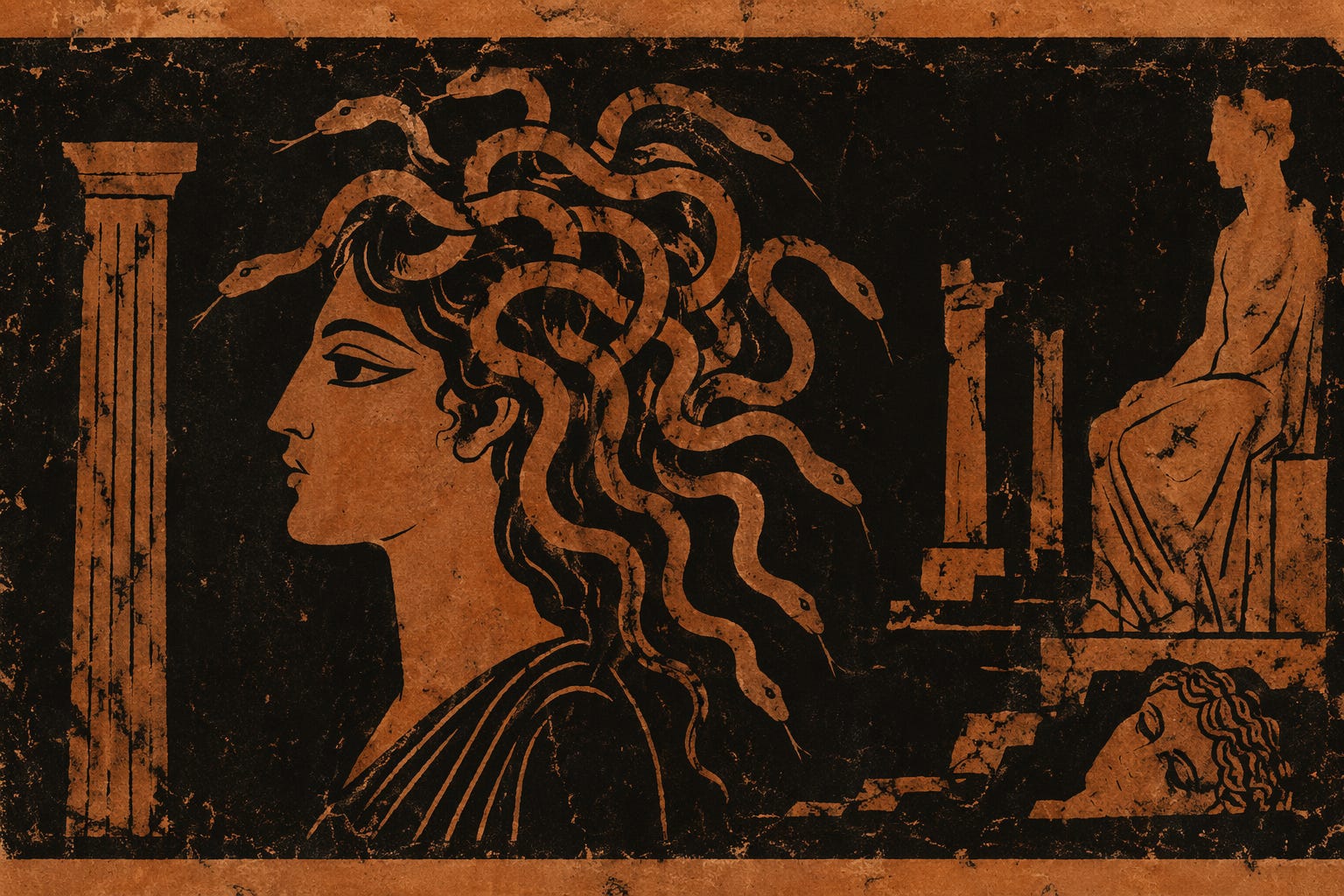

Medusa — The Mirror of Silence
In this House of Cadmus retelling, Medusa speaks before the name monster has sealed around her. She begins not as terror, but as a keeper of order: tending flame, bronze, water, cloth, and silence within a sanctuary that will not protect her. What follows is not spectacle, but witness — the grave transformation of a body made to carry what the sacred place refused to answer.
Before they named me otherwise, I kept order.
I knew the floor by its veins, the altar by its chipped edge, the bronze basin by the way it answered water with a dim, patient light. Morning began before dawn had fully entered the sanctuary. Oil first. Then wick. Then flame coaxed upward until the dark gave back the shape of column, lintel, wall. Smoke rose in a line so fine it seemed less a thing than a correction made to air.
I learned to move without waste.
The cloths were folded and refolded. The vessels were rinsed and set mouth-down on stone. Ash was gathered before it could scatter. Water was carried in both hands. If I crossed the hall while others prayed, they did not turn. I was glad of that. Reverence lives by not drawing itself forward. I thought holiness a matter of exactness: a swept floor, a steady lamp, a body taught to kneel before it is taught to speak.
There was bronze enough in the sanctuary to hold a face, if one cared to look. I did not often look. A mirror is only useful when it returns what is needed: whether the lamp-smoke has marked the cheek, whether the hair has come loose, whether the goddess’s image in polished metal still stands clear and undisturbed. I kept my own face as I kept the vessels—clean, serviceable, unremarked.
So I believed.
The goddess looked past me, which I took for favour. Stone need not turn toward the hand that tends it. It is enough that the hand does not fail. I learned the grammar of service in silence: lift, pour, polish, bow. Knees to floor. Cloth to bronze. Flame to wick. Every motion repeated until repetition became a kind of peace.
If there was beauty in me then, it arrived as weather arrives on water: seen more by others than by the surface itself. I felt it only in the slight pause before men spoke, in the way eyes lingered too long and then withdrew as though burned by their own staying. I did not mistake that for power. Attention is not power. Attention is a hand extended from the dark. It can bless. It can take.
The sanctuary held both possibilities and called itself pure.
I knew the smell of myrrh, cedar smoke, olive oil. I knew how cold the marble ran before sunrise, how quickly the basin clouded if not dried, how the first light entered from the eastern side and touched the floor before it touched the altar. I knew the weight of the bronze mirror and the shallow bowl used for washing. I knew how long a flame may gutter before it fails.
I did not yet know how long silence can hold after holiness has been broken.
Continue reading: Medusa — The Mirror of Silence at The House of Cadmus on Substack.
Also in House of Cadmus
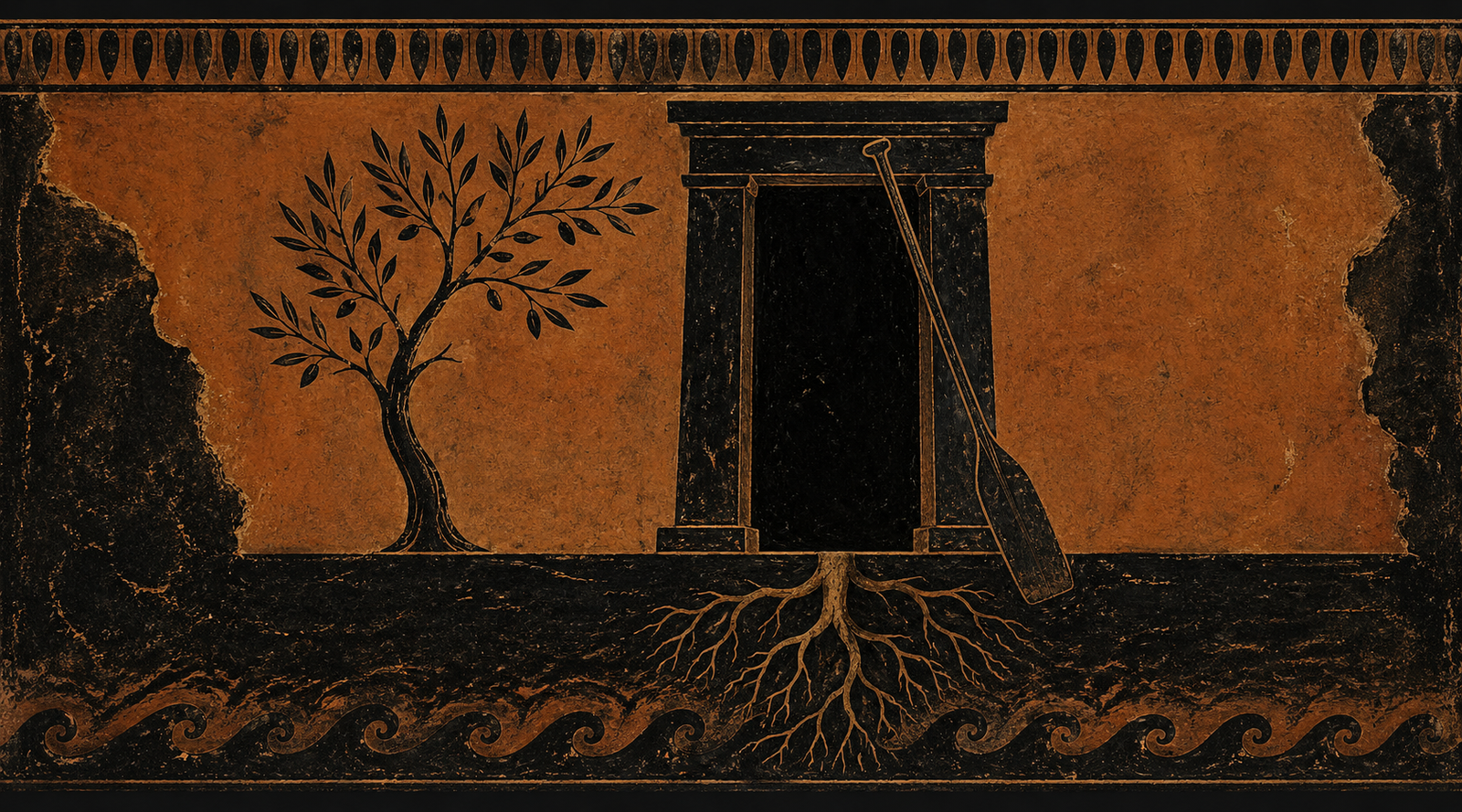

No Man Comes Home VI — The Oar That Could Not Belong
A grave Odyssey retelling from No Man Comes Home: Tiresias gives Odysseus a prophecy stranger than return itself. After Ithaca, after the suitors, after the bed and the bow, he must carry an oar inland until the sea’s own instrument is mistaken for something else.
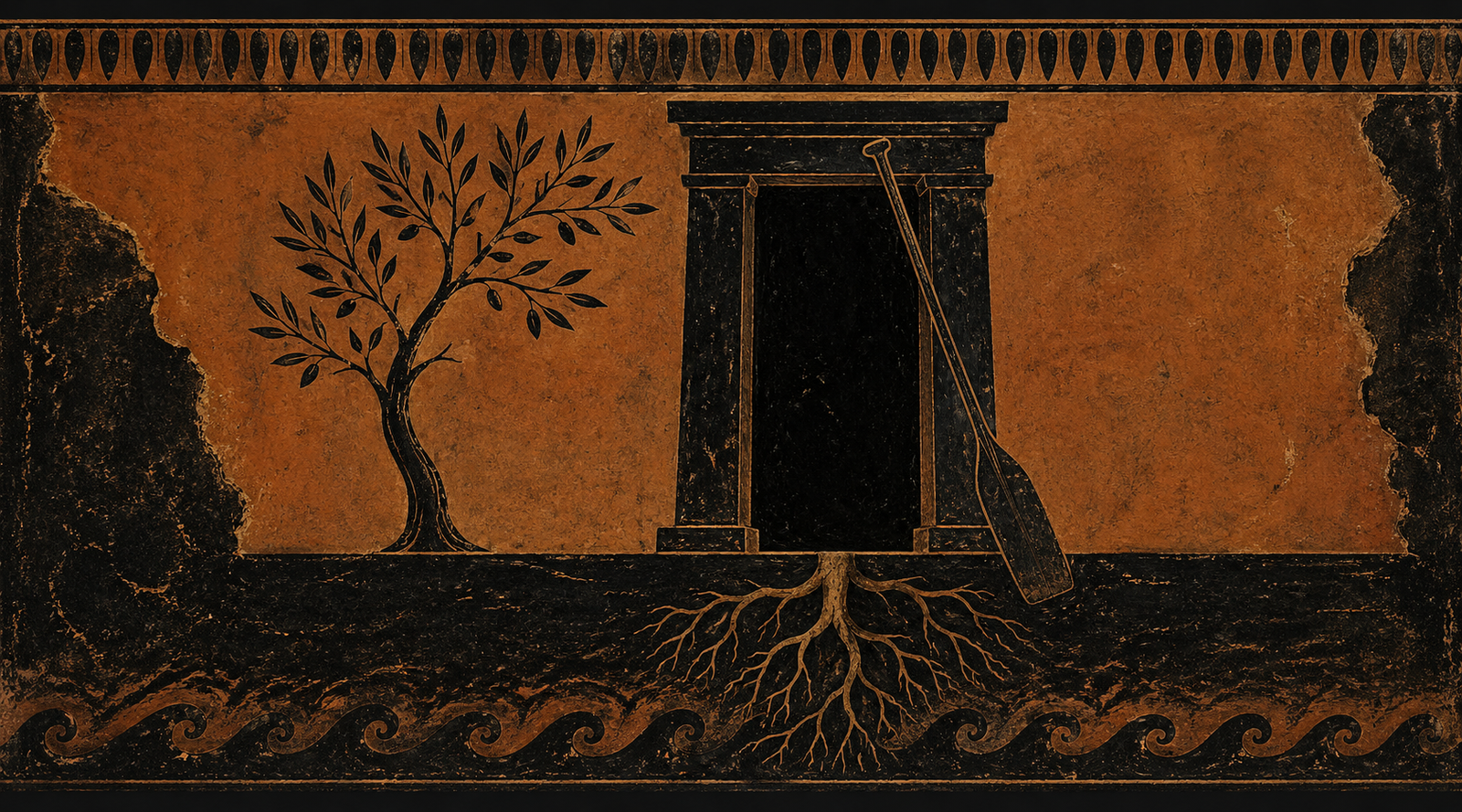

No Man Comes Home V — The Name Inside the Cave
In this fifth canto of No Man Comes Home, Odysseus enters the cave of Polyphemus with no need to be there. What follows is not only a famous Greek myth of cunning and escape, but a severe study of curiosity, leadership, hospitality, and the danger of needing one’s name to be known.
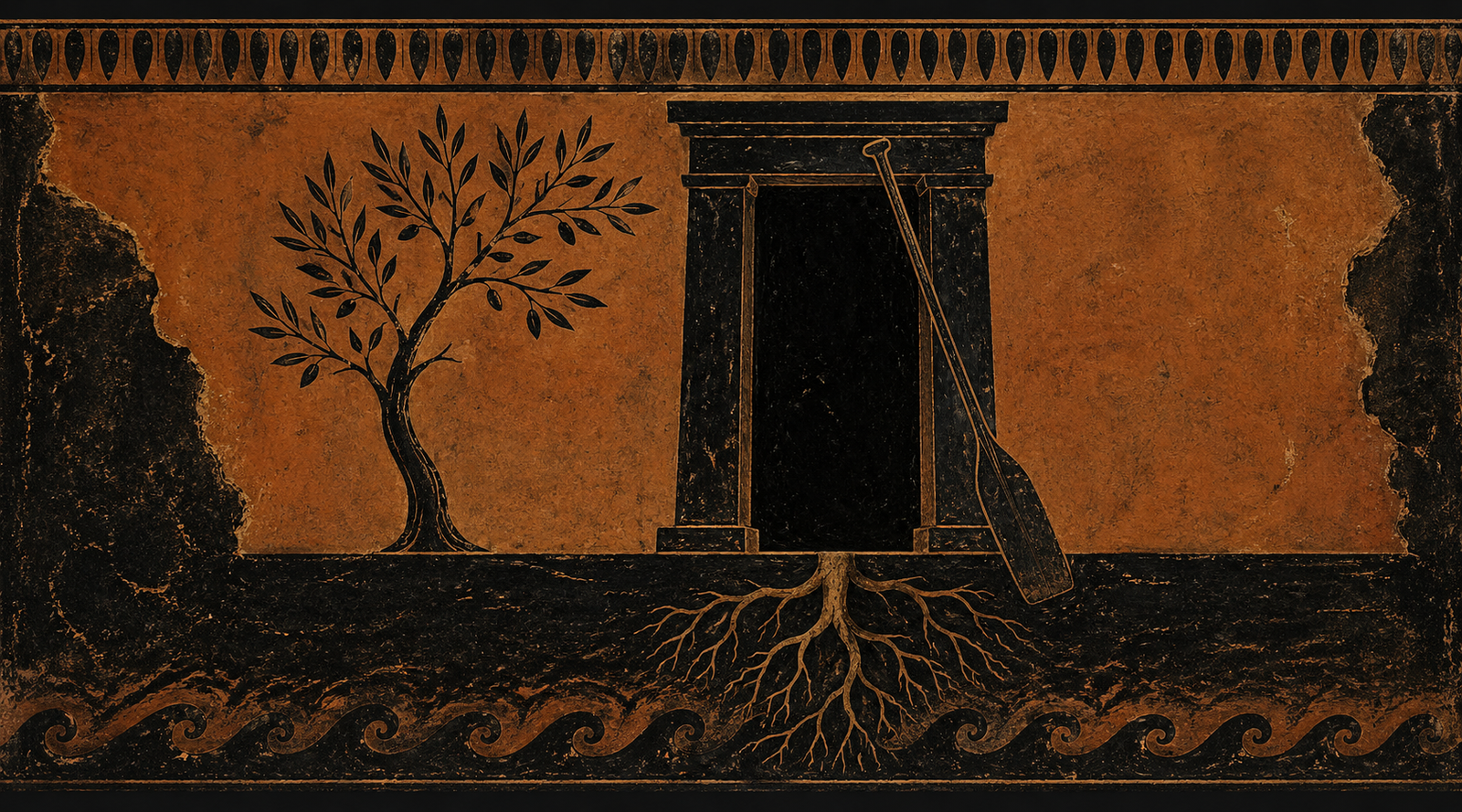

No Man Comes Home IV — The Stranger Washed Ashore
Odysseus has survived the sea, but survival is not yet return. Washed ashore on Scheria, naked and nameless, he must enter the human world again through restraint, supplication, Nausicaa’s courage, and the dangerous mercy of a house that does not yet know whom it has received.
Continue Reading
If this piece found something in you, you may wish to continue the journey elsewhere.
On The Lantern Chronicles, I gather writings from Angkor, myth and legend, contemplative essays, and poetry — works shaped by silence, beauty, wonder, memory, and the deeper questions that follow us through the world.
It is a place for stone and story, reflection and vow, shadow and revelation.
You would be most welcome there.