
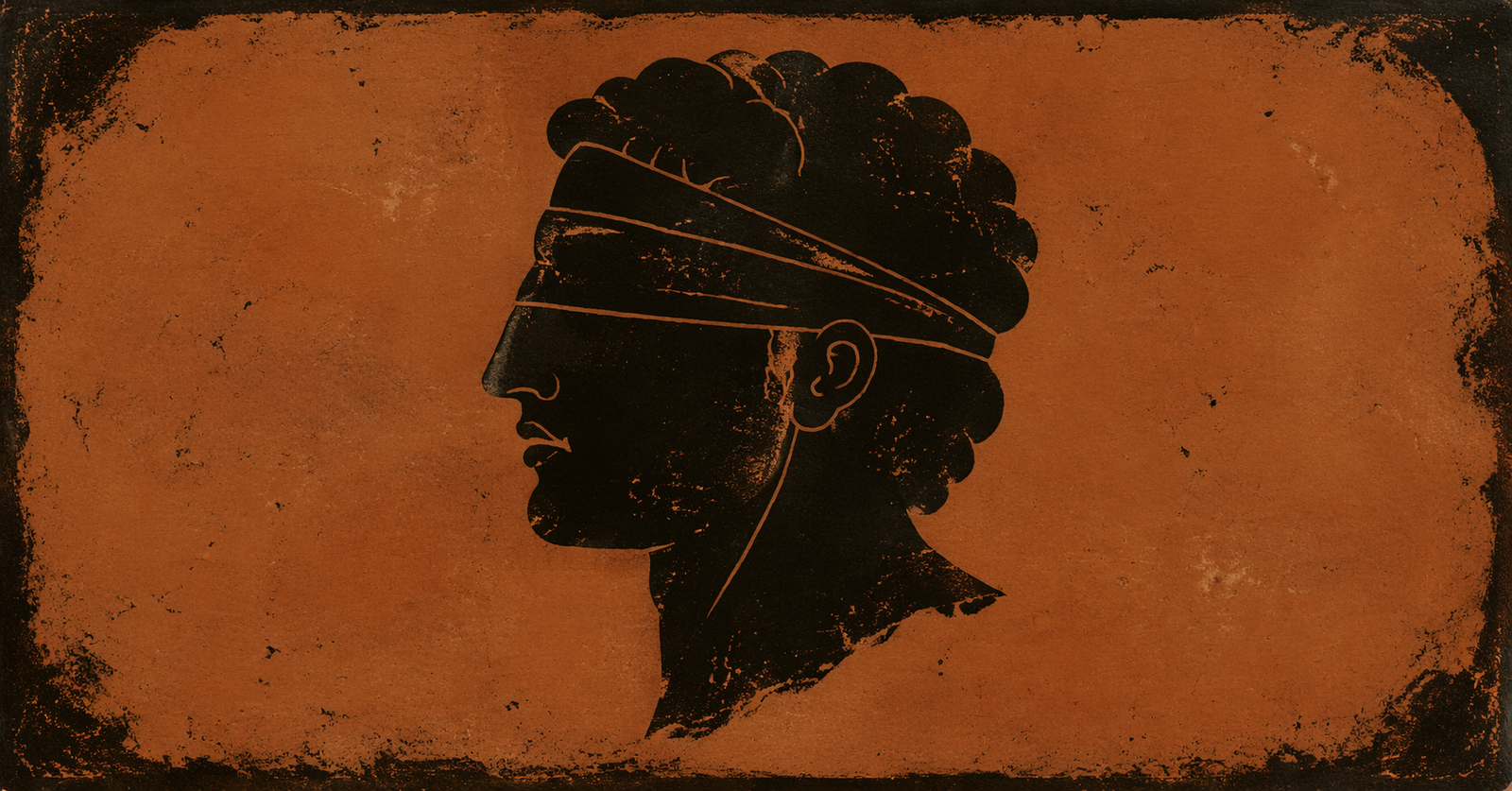

Persephone — The Divided Crown
In this First World retelling, Persephone does not move from innocence to darkness in a simple arc of loss. She begins as Kore, undivided in the meadow, and is taken across a threshold the world closes too quickly behind her. What follows is not rescue, romance, or symbolic seasonal consolation, but the making of a divided sovereignty: a being claimed by incompatible worlds, altered by the seed, and forced into a crown shaped by partition.
The meadow did not yet know division.
Grass leaned under a mild wind. Light lay evenly across the field. The flowers rose where they had risen before: crocus, violet, hyacinth, soft-headed and open to the day. Nothing in the air announced jurisdiction. Nothing declared that one ground might conceal another. A girl moved there among her companions and the world received her without remainder.
She was called Kore.
Not because she lacked a name beyond it, but because no other title had yet become necessary. Maiden: not merely young, but undivided. She belonged wholly to one order. What she touched remained in daylight. What she gathered entered her hands and stayed there. Her motion altered nothing beyond the measure of her passing. The field did not resist her. The earth did not answer.
She bent to the flowers with the concentration of one for whom nearness is simple. Stem, petal, fragrance, the brief sound of breaking as each bloom was taken into the hand. The basket at her arm grew heavy with colour. Around her the daughters of Oceanus moved in the same ease, their speech unweighted, their feet leaving no impression that mattered. Above them the sky held.
Then she saw the narcissus.
It stood a little apart from the others. Not brighter, precisely. Not larger by any law the eye could state. But the field had arranged itself around it in a way the body noticed before the mind did. Space had thinned there. The flower had opened at the point where invitation becomes command.
She moved toward it.
That movement was small. Later tellings would enlarge the meadow, adorn the bloom, lay omen upon omen through the scene as though warning had been absent only through carelessness. But the truth of such moments is narrower. The body goes where the world has made a place. She reached because reaching had not yet learned danger.
Her hand closed toward the stem.
The earth opened.
Not cracked. Not trembled. Opened.
The ground beneath the flower parted with a force too clean to resemble accident. Soil gave way to depth. Daylight broke against a new darkness and did not enter it. The chariot rose in that breach with the directness of a thing long waiting below the threshold of sight: black horses driven hard, the reins drawn in a hand that governed descent and ascent alike, wheels striking the torn edges of the world as though the world itself were no impediment.
Hades seized her before the field understood what had been taken. One hand at her waist, one motion sufficient. The flowers fell from her grasp. Their scattered heads lay across the grass in a pattern that would have looked ceremonial from above. She cried out once. Not with the later voice of queen or judge, but with the first sound made by a being who has discovered that the world contains another world beneath consent.
The companions fled backward.
The field withdrew into witness.
The chariot turned.
For a moment the upper air and the lower passage touched at the edges of the wound. Horses, dark flanks straining. Gold harness struck with light from a sun not meant for them. The driver’s face remained fixed in its own law. He did not look upward for permission. That had already been obtained elsewhere.
Then the breach took them.
The earth closed with the speed of obedience.
The meadow remained.
Grass resumed its leaning. The basket lay on its side. The gathered flowers had begun already to lose the tension they had carried in the hand. Nothing visible had altered enough to equal the subtraction. That is the cruelty of thresholds: they do not keep the shape of what they admit.
Continue reading: Persephone — The Divided Crown at The House of Cadmus on Substack.
Also in House of Cadmus
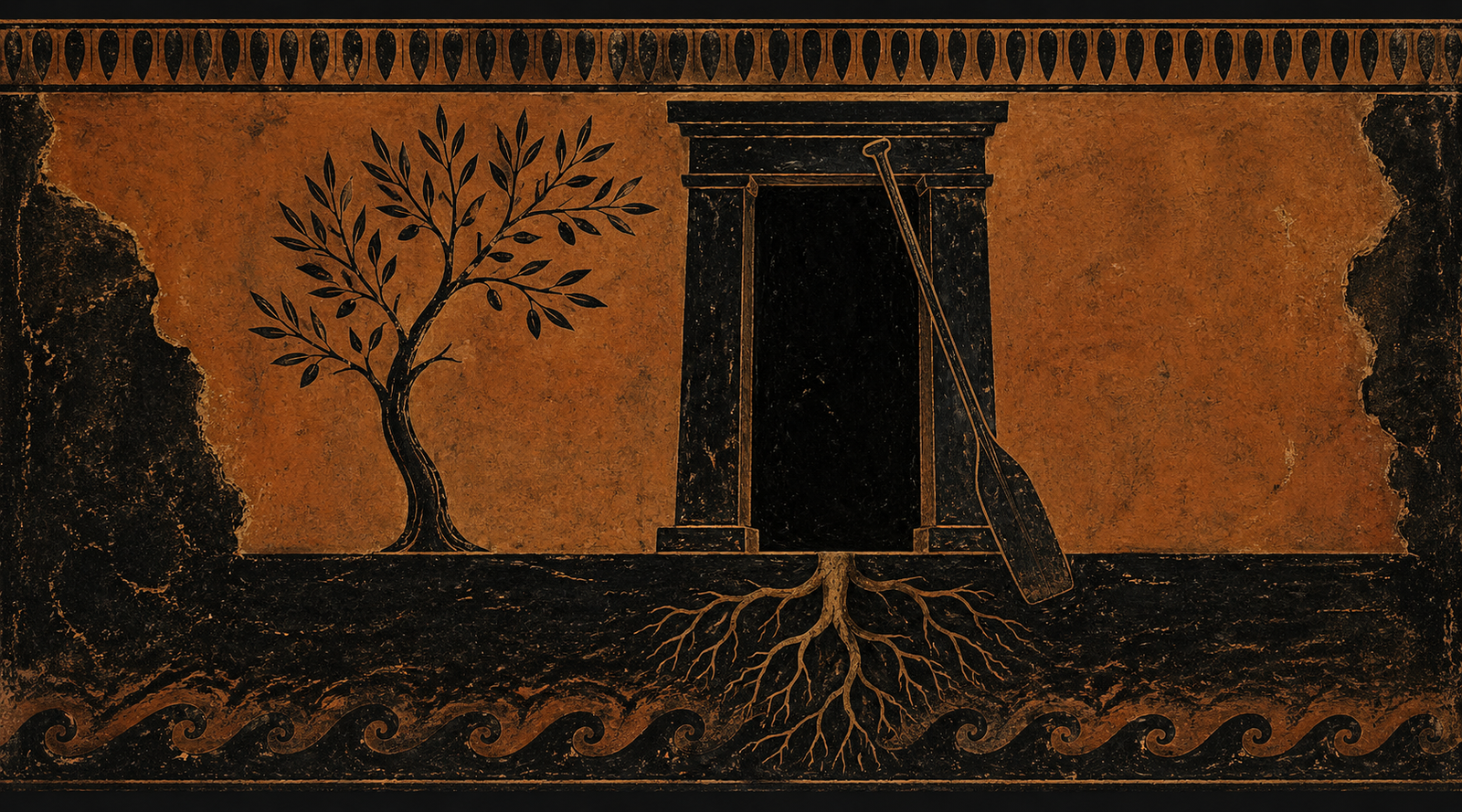

No Man Comes Home X — The Hall Reveals Itself
Odysseus returns to Ithaca disguised as a beggar, but the first creature to recognise him is the neglected dog Argos. In this severe literary retelling of The Odyssey, the king enters his own hall as need, and every act of hospitality, contempt and blindness becomes part of the house’s final testimony.
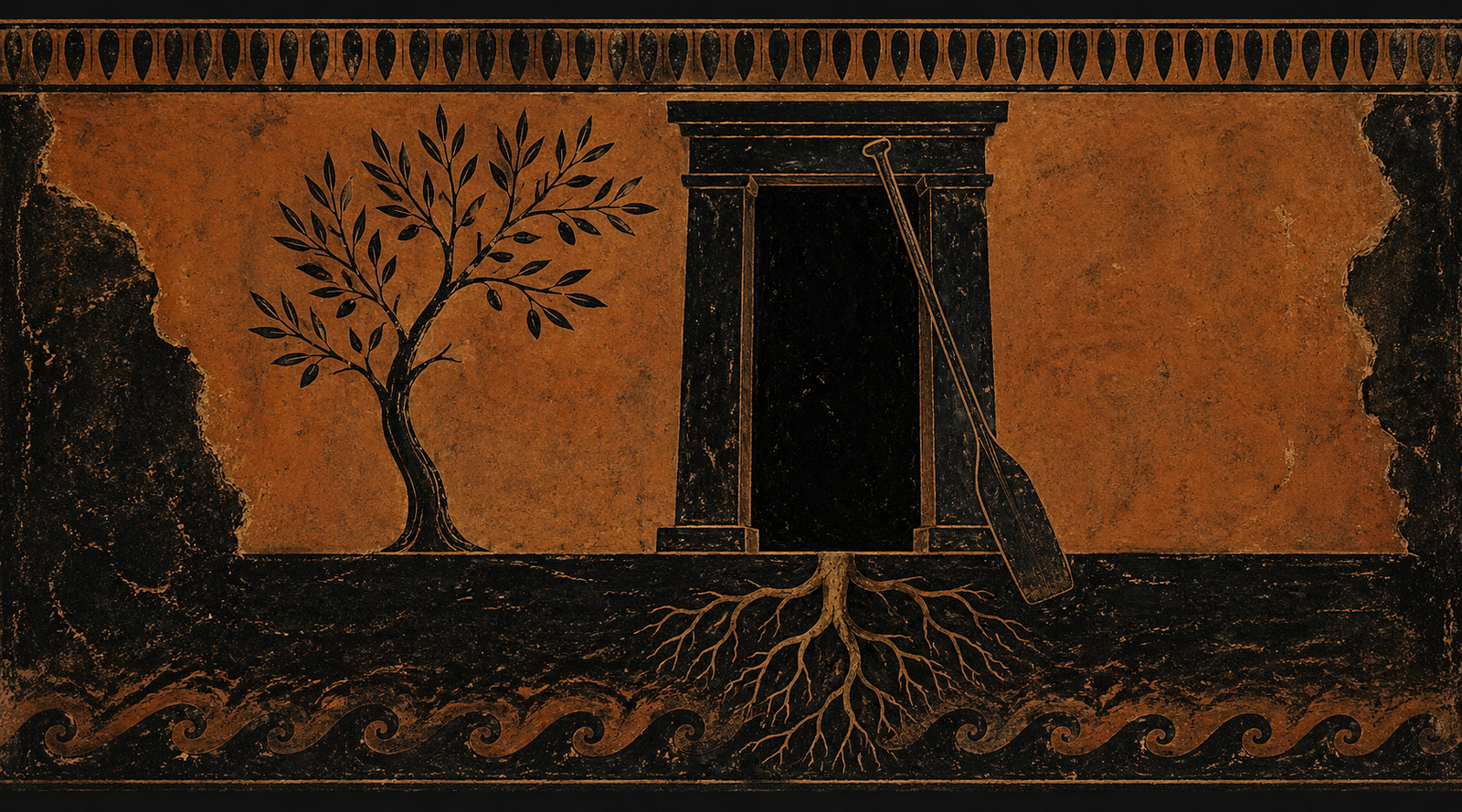

No Man Comes Home IX — The Beggar at His Own Door
Odysseus reaches Ithaca at last, but return does not grant him recognition, reunion, or peace. Disguised by Athena as a beggar, he must enter his own kingdom without name or power and allow the house to reveal what it has become. The ninth canto of No Man Comes Home turns homecoming into a test of loyalty, restraint, and concealed violence.
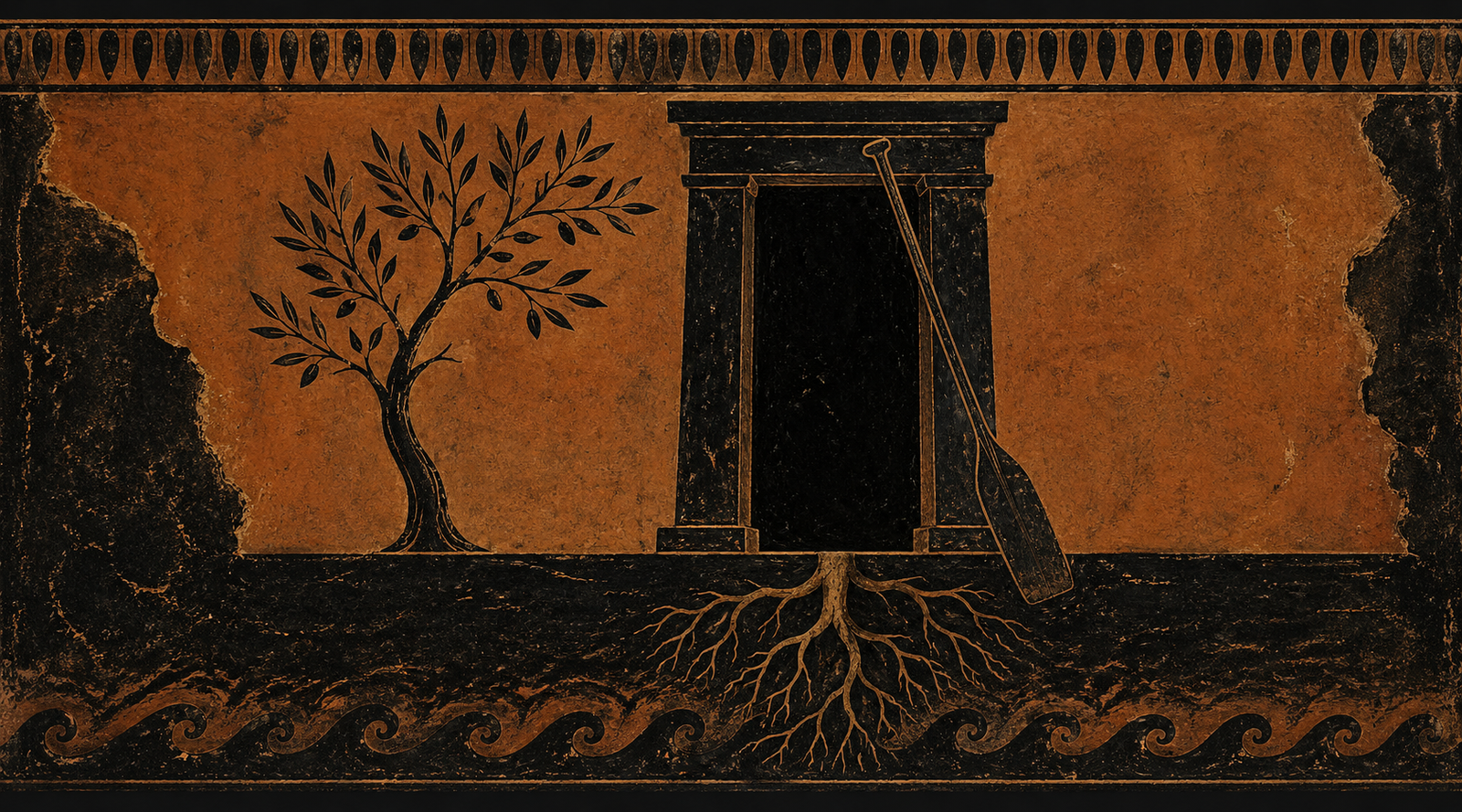

The Objects That Know Him
Name, oar, wax, scar, bow, bed, door: ordinary things carry a quieter authority beneath the marvels of The Odyssey. This House of Cadmus essay considers how objects recognise Odysseus, judge the concealments that preserved him, and make return more difficult than merely reaching Ithaca.
Continue Reading
If this piece found something in you, you may wish to continue the journey elsewhere.
On The Lantern Chronicles, I gather writings from Angkor, myth and legend, contemplative essays, and poetry — works shaped by silence, beauty, wonder, memory, and the deeper questions that follow us through the world.
It is a place for stone and story, reflection and vow, shadow and revelation.
You would be most welcome there.