
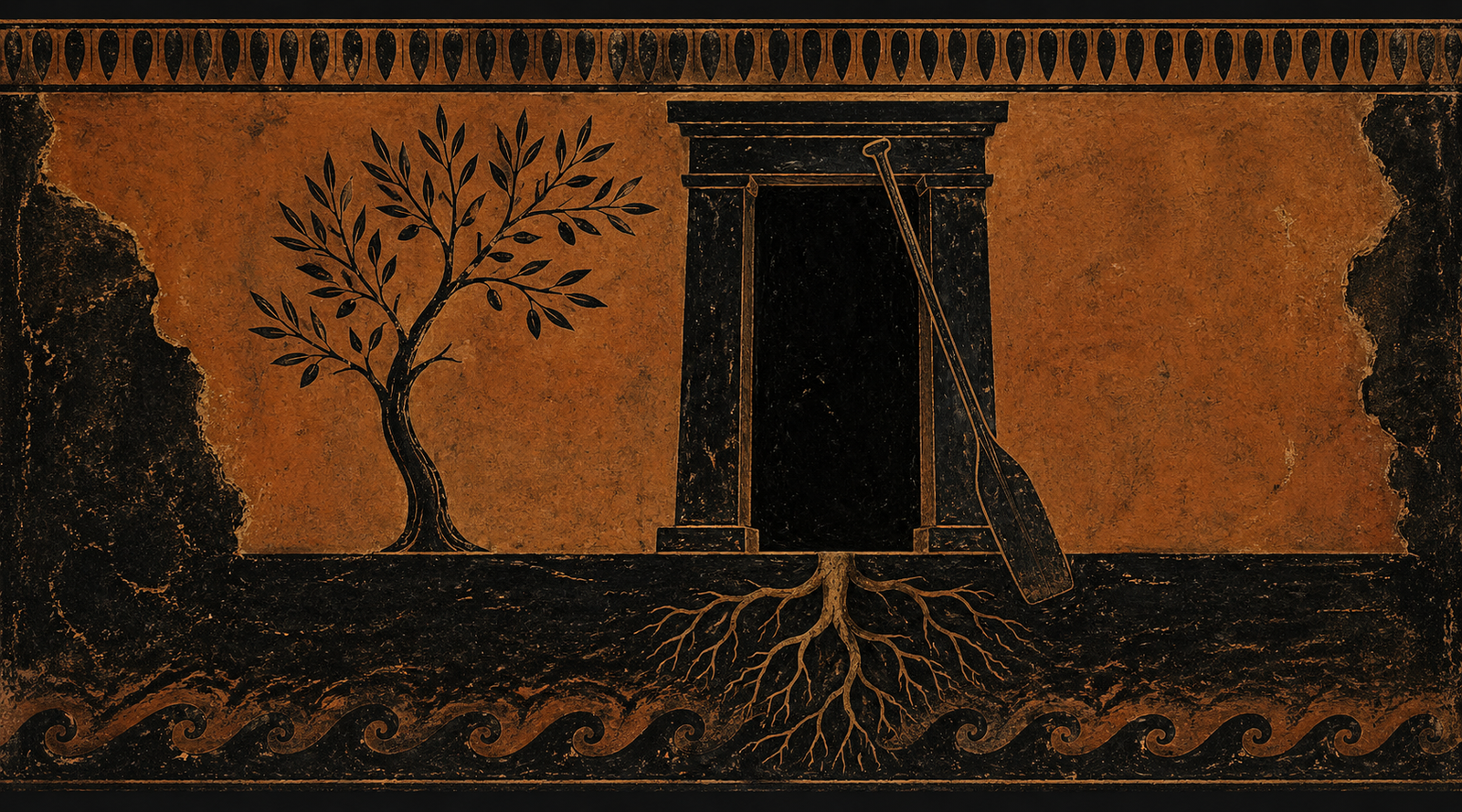

No Man Comes Home VII — The Dead Know the Way Home
In the seventh canto of No Man Comes Home, Odysseus reaches the margin of the living world. He enters the underworld seeking the road to Ithaca, only to discover that the dead do not make homecoming simpler. They reveal what every return has already cost.
The dead did not come because he called.
That should be understood.
No living man summons the dead as one summons servants, sailors, witnesses, men owing favour, women under household law. The dead are not commanded. They are approached through cost. Blood opens the border, but it does not make the living sovereign there.
Odysseus went to them because the road home had become too dark for the living.
That was the shame of it.
A man may cross seas, deceive monsters, refuse goddesses, command men, survive storms, and still reach a point where the next instruction must come from those who can no longer act. The living know how to desire. The dead know what desire becomes when it has spent the body.
Circe had sent him there.
The enchantress who had once turned men into the shapes of appetite became, after delay and bed and difficult release, the one who gave him the road beneath all roads. She did not merely tell him to sail. She told him how far downward the desire for home must go.
To reach Ithaca, he must first go where no homecoming is possible.
So the ships went to the edge.
Not an island in the ordinary sense. Not harbour, not market, not palace, not field. A margin of the world where light weakens before it has finished its work. The air thinned. The sea changed its voice. Even the men felt it, though they did not all have words for what their bodies knew.
There are places where courage becomes quiet because noise would offend the threshold.
They landed.
Odysseus dug the pit.
A king digging for the dead is no less a king. He is only less protected from the truth of his need. The earth opened under his hands. He poured milk and honey, sweet wine, water, barley meal, the gifts owed to those who no longer eat as the living eat.
Then came the animals, the knife, the blood.
The blood darkened the hollow.
That was the door.
The dead gathered.
Not as men gather in assembly. Not with footsteps, not with clear rank, not with the old shape of public life. They came as thirst, as memory without weight, as names loosened from breath.
Odysseus drew his sword and held them back from the blood. Tiresias must drink first. Prophecy must precede grief. Knowledge before longing.
That was the instruction.
Then Elpenor came.
Not the prophet.
Not a king.
Not a hero.
A young man badly lost.
He had fallen from Circe’s roof in the confusion after sleep and wine and had gone unburied. His death had been almost too small for epic attention. No battlefield, no monster, no god’s visible anger, no famous wound. Only a body mishandled by forgetfulness, a companion absent from the count until absence itself found a voice.
This was the first accusation.
Odysseus had descended seeking knowledge of the future. Before the prophet could speak, the dead placed before him what the living had neglected in the recent past.
The road home could not continue until the forgotten man had been remembered.
Continue reading: No Man Comes Home VII — The Dead Know the Way Home at The House of Cadmus on Substack.
Also in House of Cadmus

No Man Comes Home X — The Hall Reveals Itself
Odysseus returns to Ithaca disguised as a beggar, but the first creature to recognise him is the neglected dog Argos. In this severe literary retelling of The Odyssey, the king enters his own hall as need, and every act of hospitality, contempt and blindness becomes part of the house’s final testimony.

No Man Comes Home IX — The Beggar at His Own Door
Odysseus reaches Ithaca at last, but return does not grant him recognition, reunion, or peace. Disguised by Athena as a beggar, he must enter his own kingdom without name or power and allow the house to reveal what it has become. The ninth canto of No Man Comes Home turns homecoming into a test of loyalty, restraint, and concealed violence.
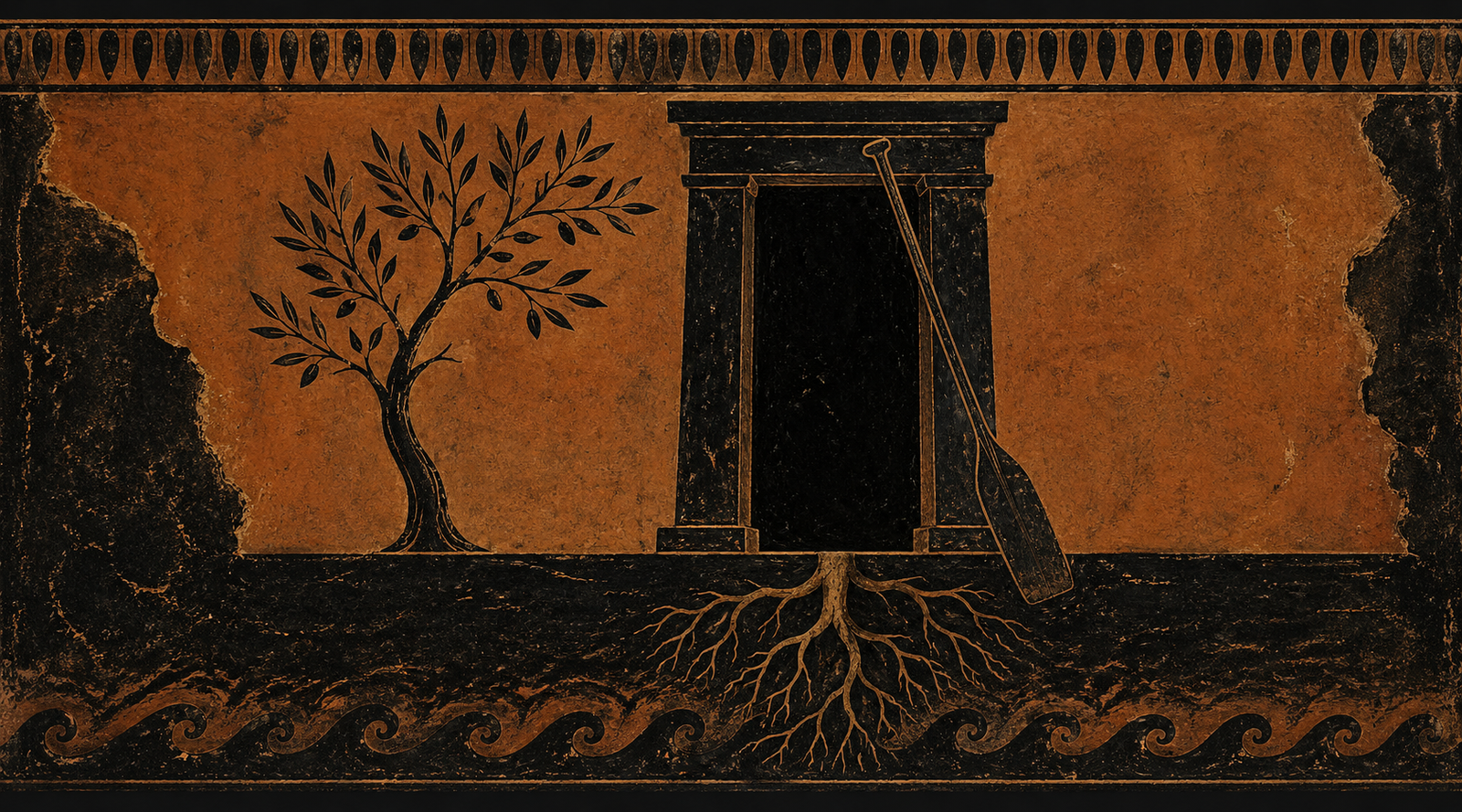

The Objects That Know Him
Name, oar, wax, scar, bow, bed, door: ordinary things carry a quieter authority beneath the marvels of The Odyssey. This House of Cadmus essay considers how objects recognise Odysseus, judge the concealments that preserved him, and make return more difficult than merely reaching Ithaca.
Continue Reading
If this piece found something in you, you may wish to continue the journey elsewhere.
On The Lantern Chronicles, I gather writings from Angkor, myth and legend, contemplative essays, and poetry — works shaped by silence, beauty, wonder, memory, and the deeper questions that follow us through the world.
It is a place for stone and story, reflection and vow, shadow and revelation.
You would be most welcome there.