
The Library gathers the written works of Lucas Varro — journals of the temples, mythic retellings, contemplative essays, poems, and volumes shaped by shadow, silence, and wonder. Here, words stand beside images as offerings: field notes from Angkor, meditations on sacred stone, old stories rekindled, and reflections carried beyond the visible world.
Within these shelves you will find many rooms: Angkor journals, myth and legend, apsara meditations, contemplative essays, poems, children’s mythic wonder, literary retellings, and quieter devotions of the page. Wander chronologically, enter by theme, or pass through one of the dedicated publication houses now gathered within the wider Library.
For those who wish to follow these paths further, several of these writings continue on Substack and in dedicated archive blogs: The Lantern Chronicles , where myth, legend, contemplative essays, poetry, and other imaginative works are carried onward; The House of Cadmus , where Greek myth and tragedy are reopened through inheritance, violence, fate, and recurrence; The Mytharium , where myth, Tolkien, fairy stories, and old literature are read and retold with seriousness; The Alexander Series , where A. M. Sharp retells Greek myths for children who want to be trusted by stories; and The Hospitable Dark , where A. M. Sharp offers literary myth retellings shaped by darkness, shelter, endurance, and return.
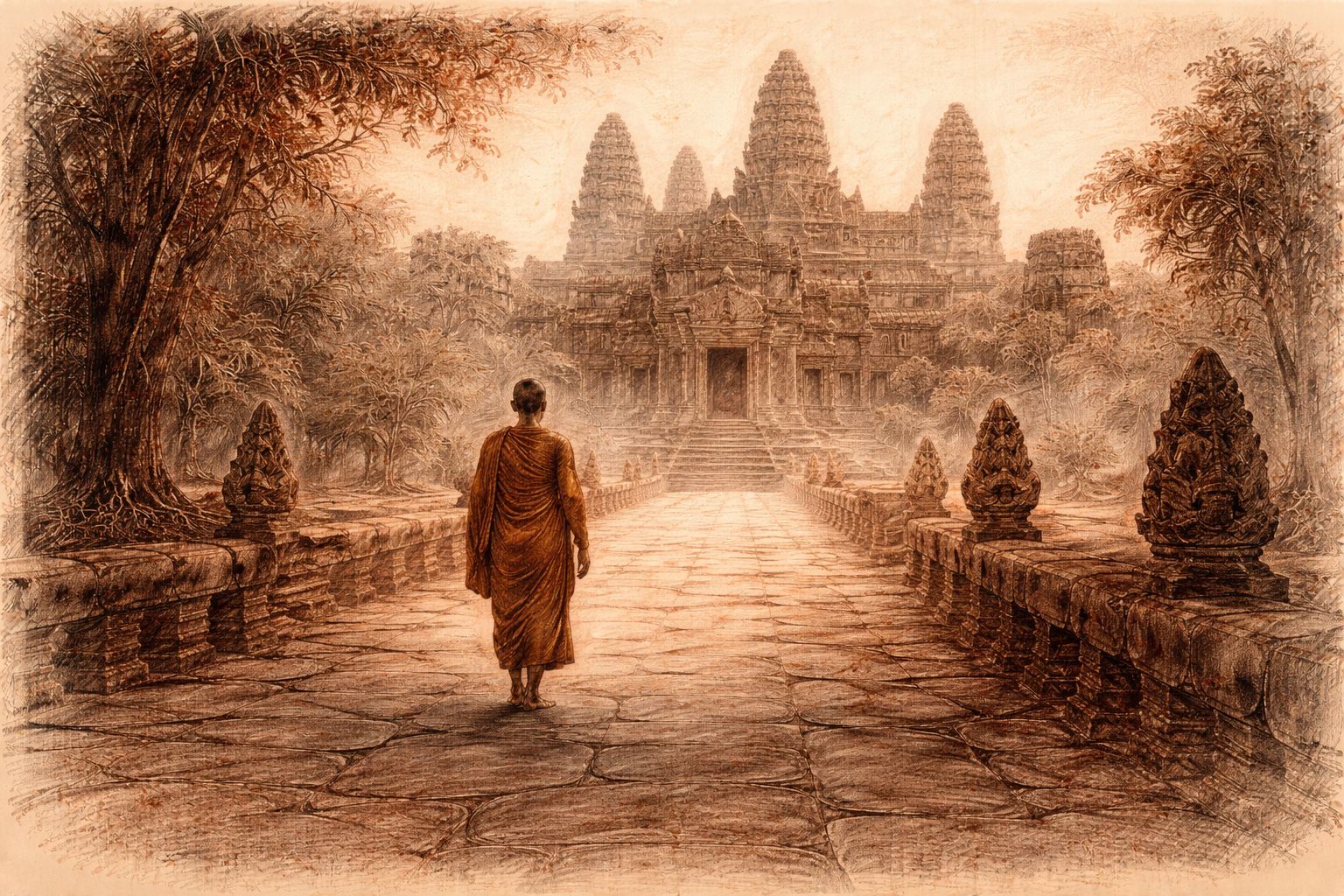

From Mountain to Monastery
Angkor Wat survived by learning to change its posture. Built as a summit for gods and kings, it became a place of dwelling for monks and pilgrims. As belief shifted from ascent to practice, stone yielded to routine—and the mountain learned how to remain inhabited.
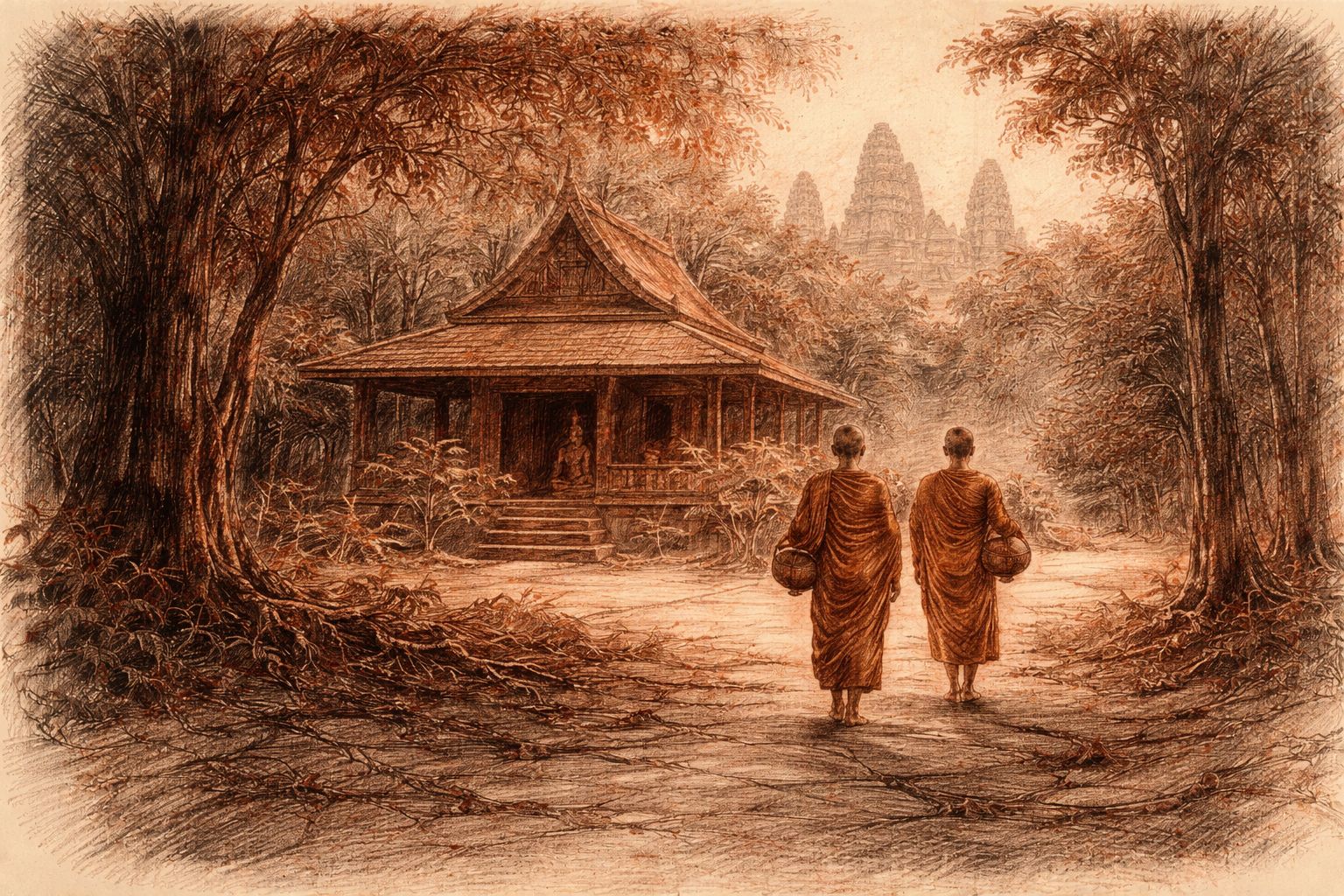

Why Theravada Could Outlast Stone
Theravada endured by refusing monumentality. It shifted belief from stone to practice, from kings to villages, from permanence to repetition. What it preserved was not form but rhythm—robes, bowls, chants, and lives lived close together—allowing faith to travel when capitals fell and temples emptied.
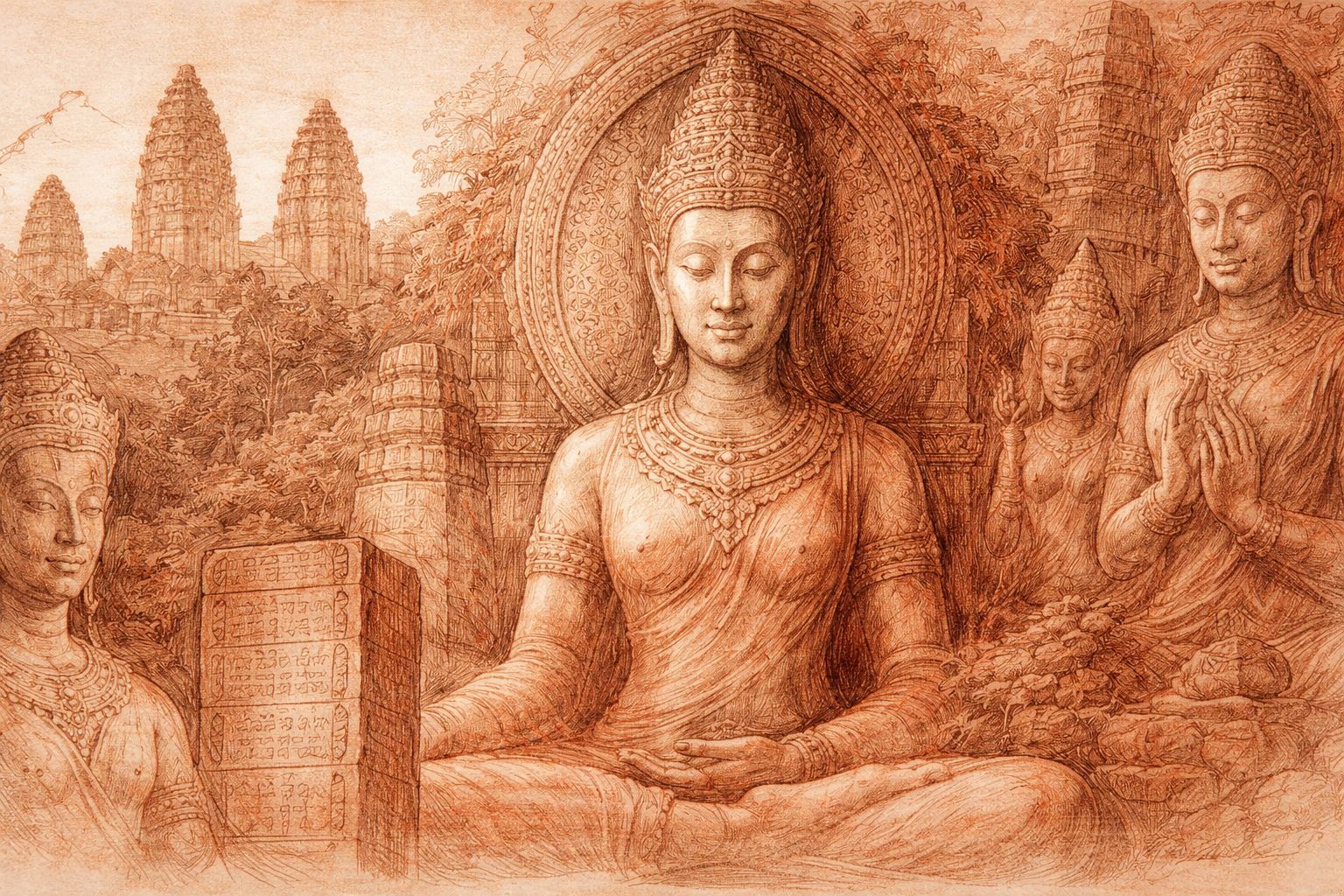

Vrah Rupa — Identity Without a Face
At Angkor, identity is not found in faces. The vrah rupa system replaced portraiture with essence, binding human souls to divine forms through ritual, name, and care. Calm, repeated statues are not anonymous—they are precise vessels, holding memory steady beyond death.
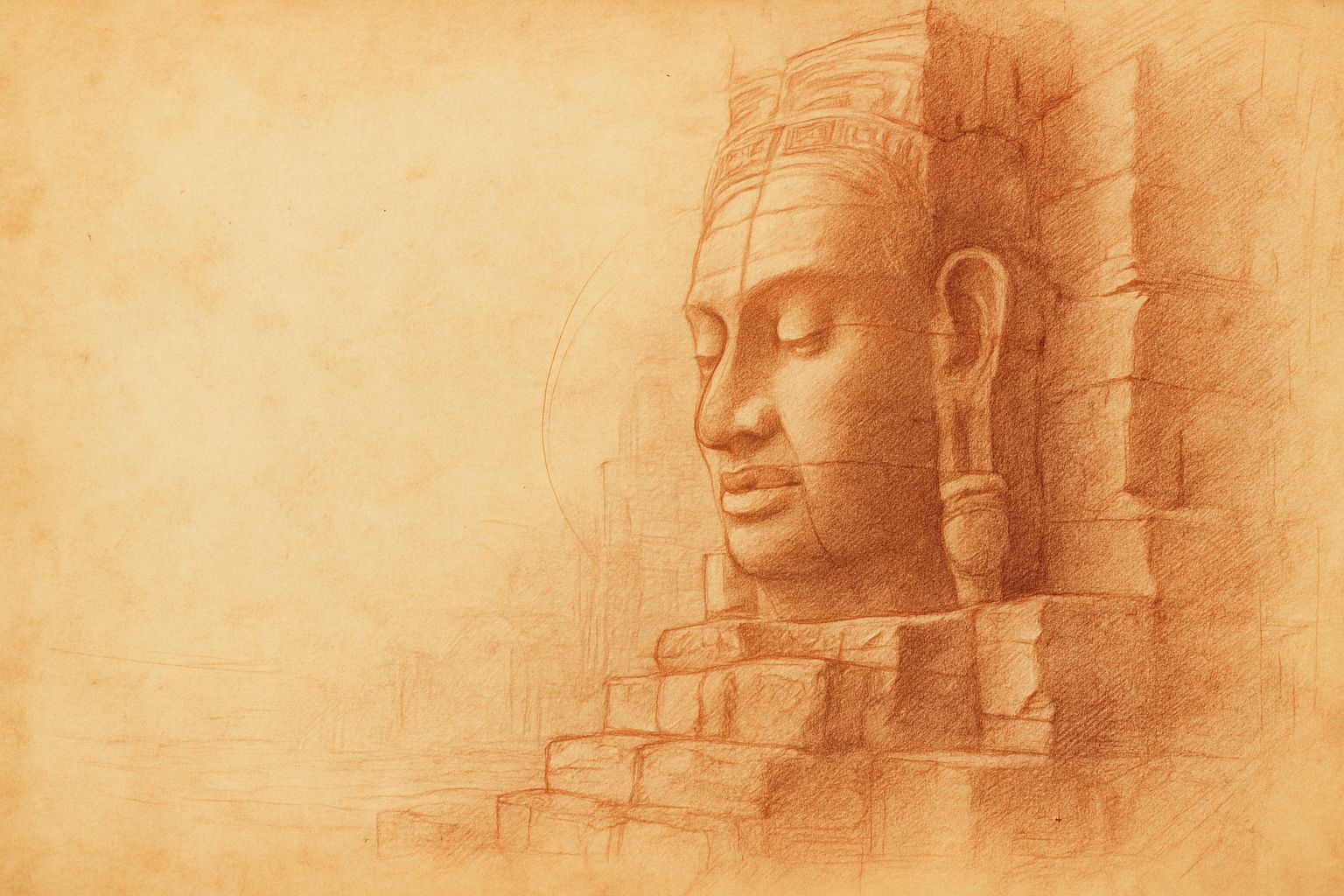

Multiplicity and Mercy — The Face Towers of Jayavarman VII
A new vision of kingship rises at the Bayon: serene faces turned to every horizon, shaping a world where authority is expressed as care. Moving through the terraces, one enters a field of steady, compassionate presence — a landscape where stone, light, and time teach through quiet attention.
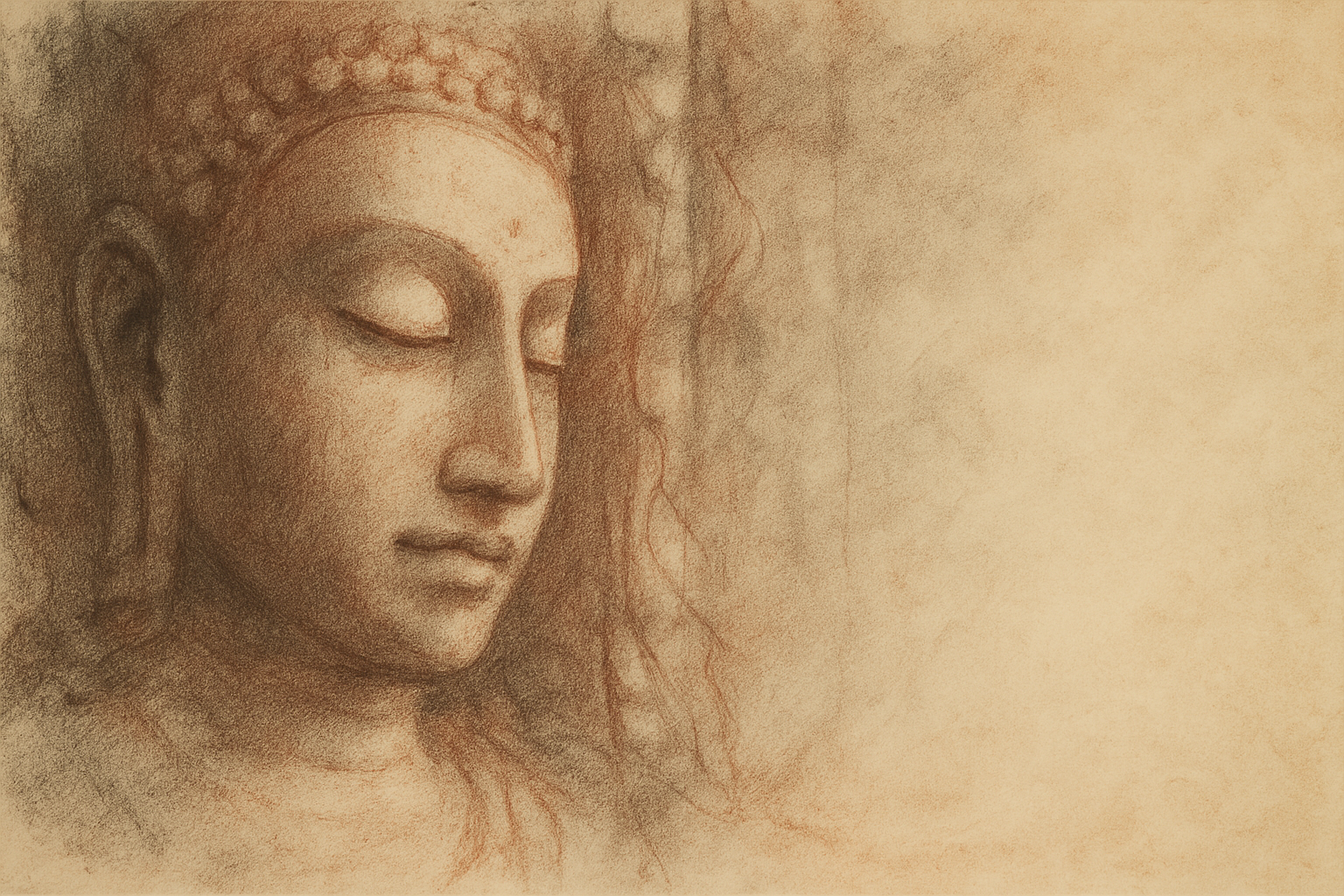

The Stillness That Looks Back at You
The Buddha’s image is more than art—it is presence. From Gandhara to Angkor, each face holds a different silence. In this meditative essay, I walk among the stone Buddhas of Cambodia and trace the mystery of a form that reveals nothing—and everything—by how it looks back at you.
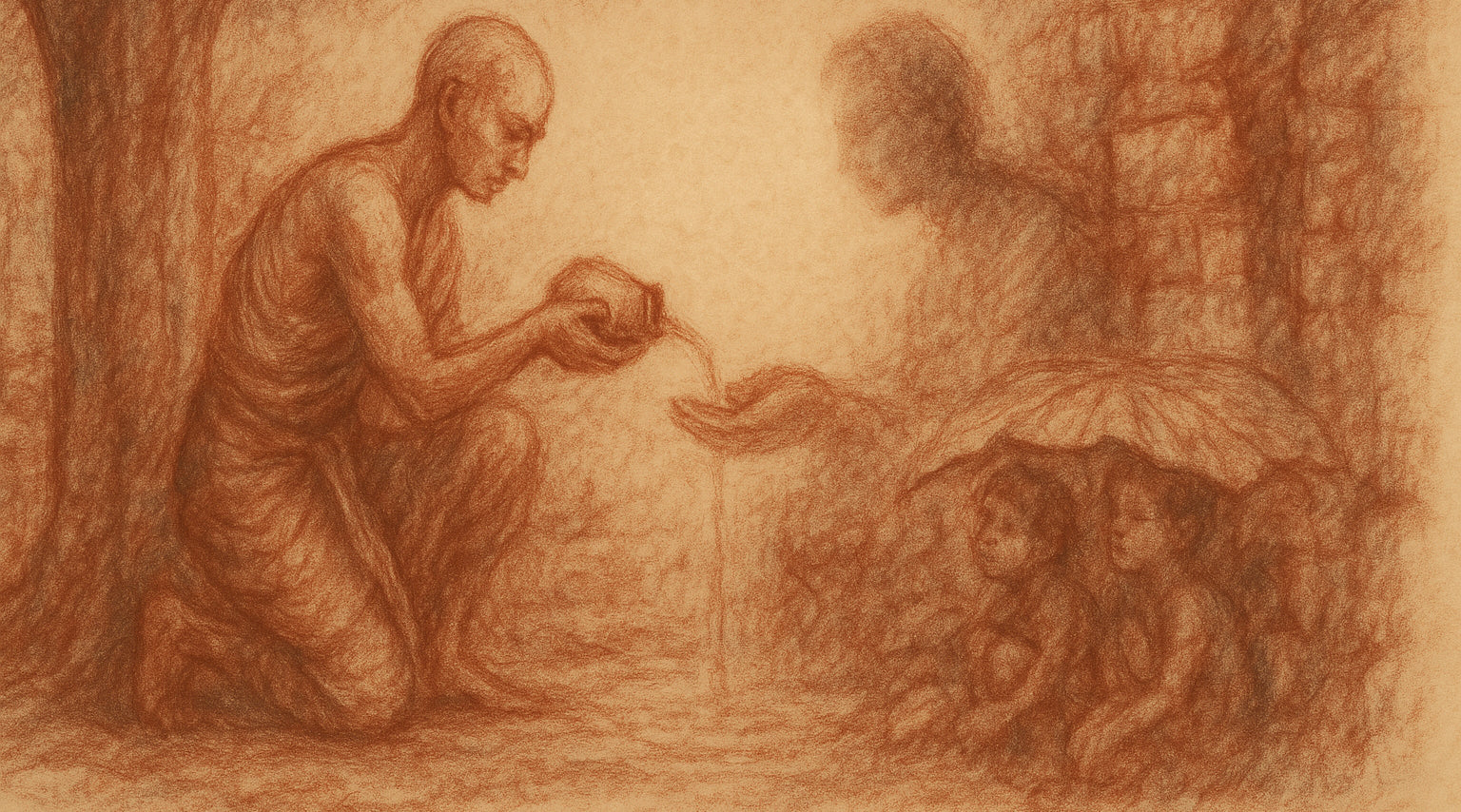

The Gift That Shook the Earth: Cambodia’s Sacred Tale of Giving
The Moha Chinok tells of a prince who gives away his children, his wife, and finally his silence—until even the gods bow. This sacred Cambodian tale is not one of perfection, but of a vow that burns through sorrow into compassion. A gift so complete, it shook the earth.
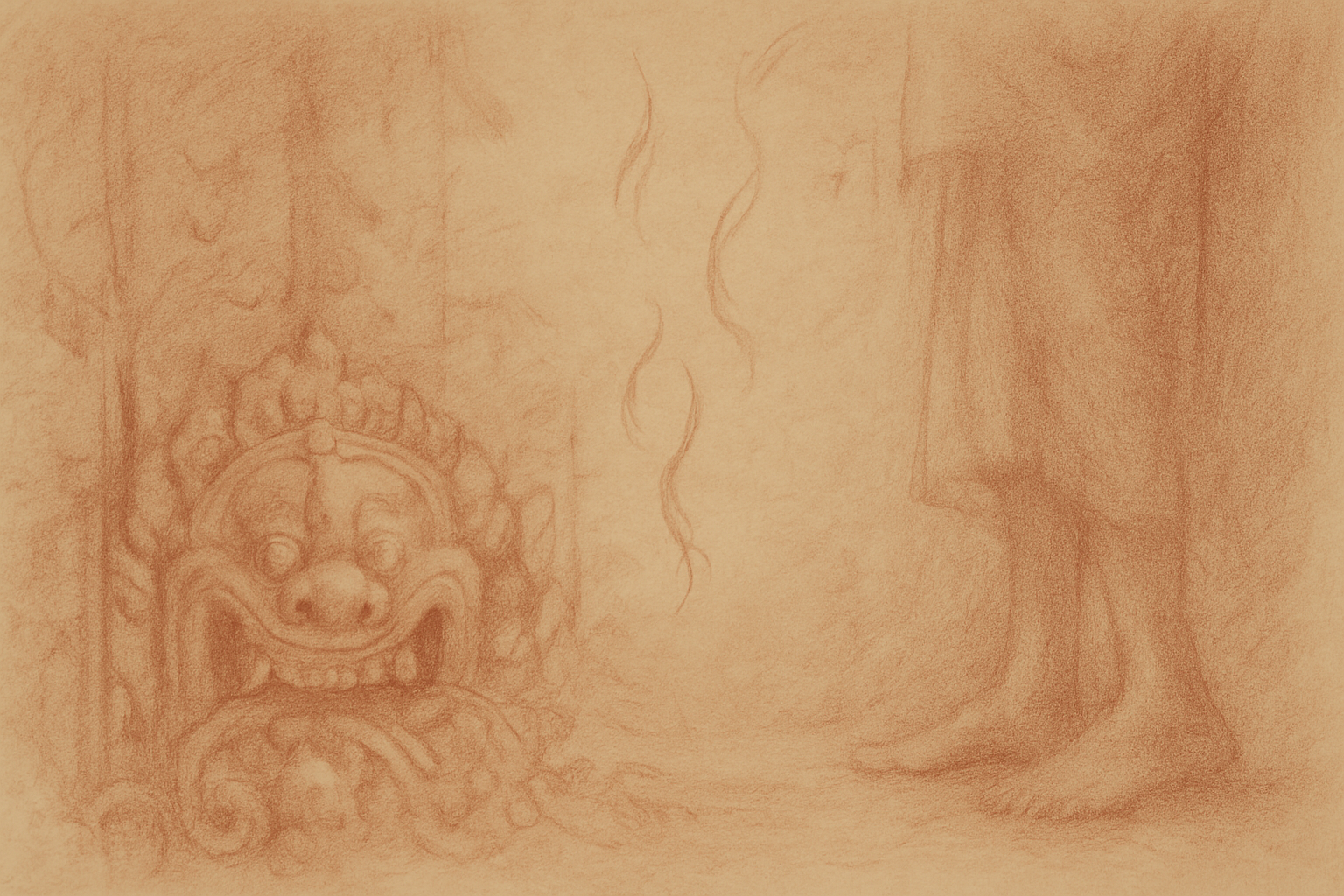

When the Scissors Fell: The Buddha’s Renunciation in Stone
He lifts the blade, and the world holds its breath.
Stone bears witness. The past dissolves.
At Preah Khan, renunciation is not an ending,
but the soft beginning of the path to stillness.
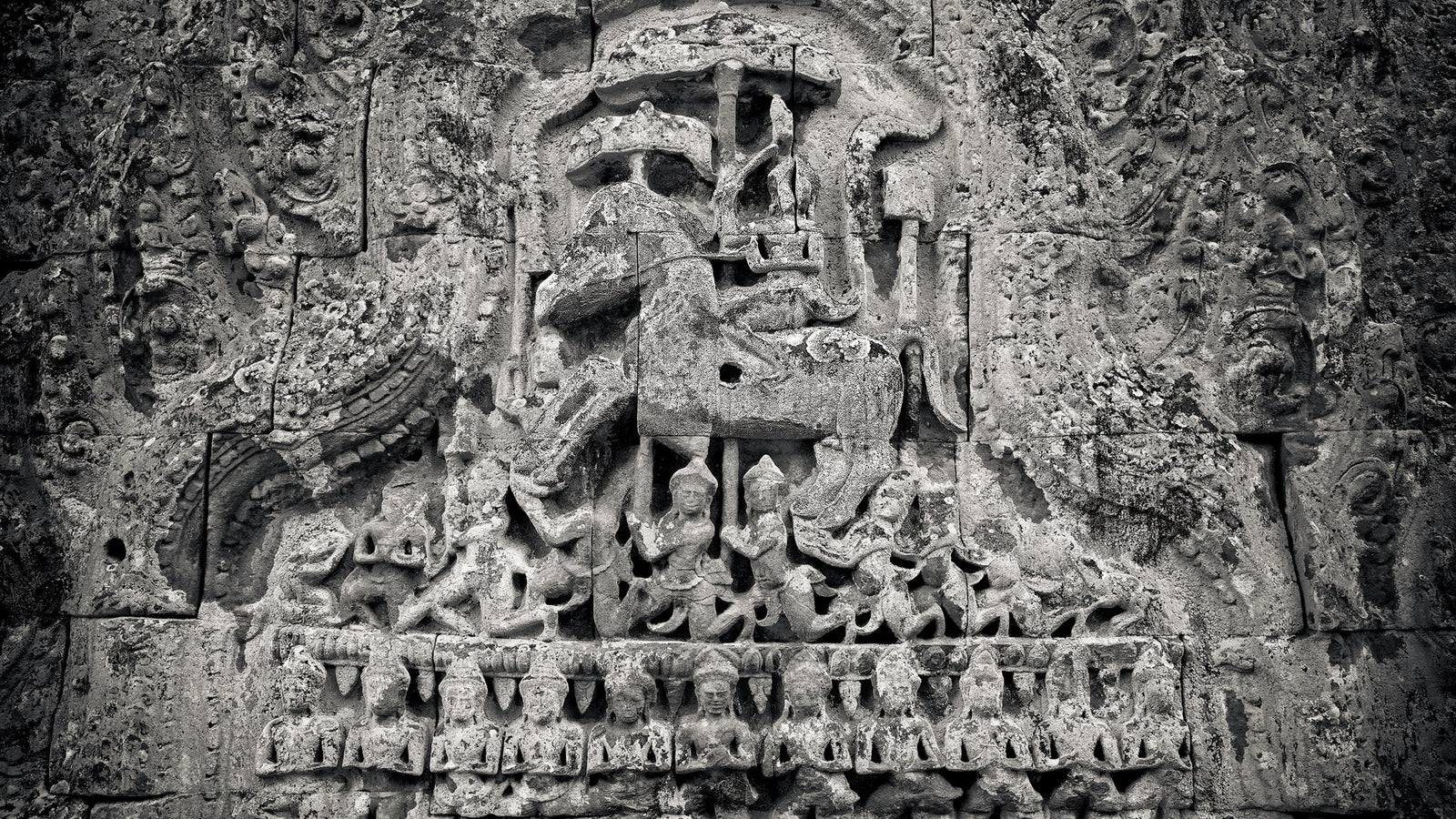

The Silent Gate of Awakening: The Buddha’s Great Departure
A prince steps into silence beneath the hands of gods.
Stone softens. Mist lingers. The world holds its breath.
At Ta Prohm, renunciation becomes a doorway—
not of loss, but of luminous becoming.
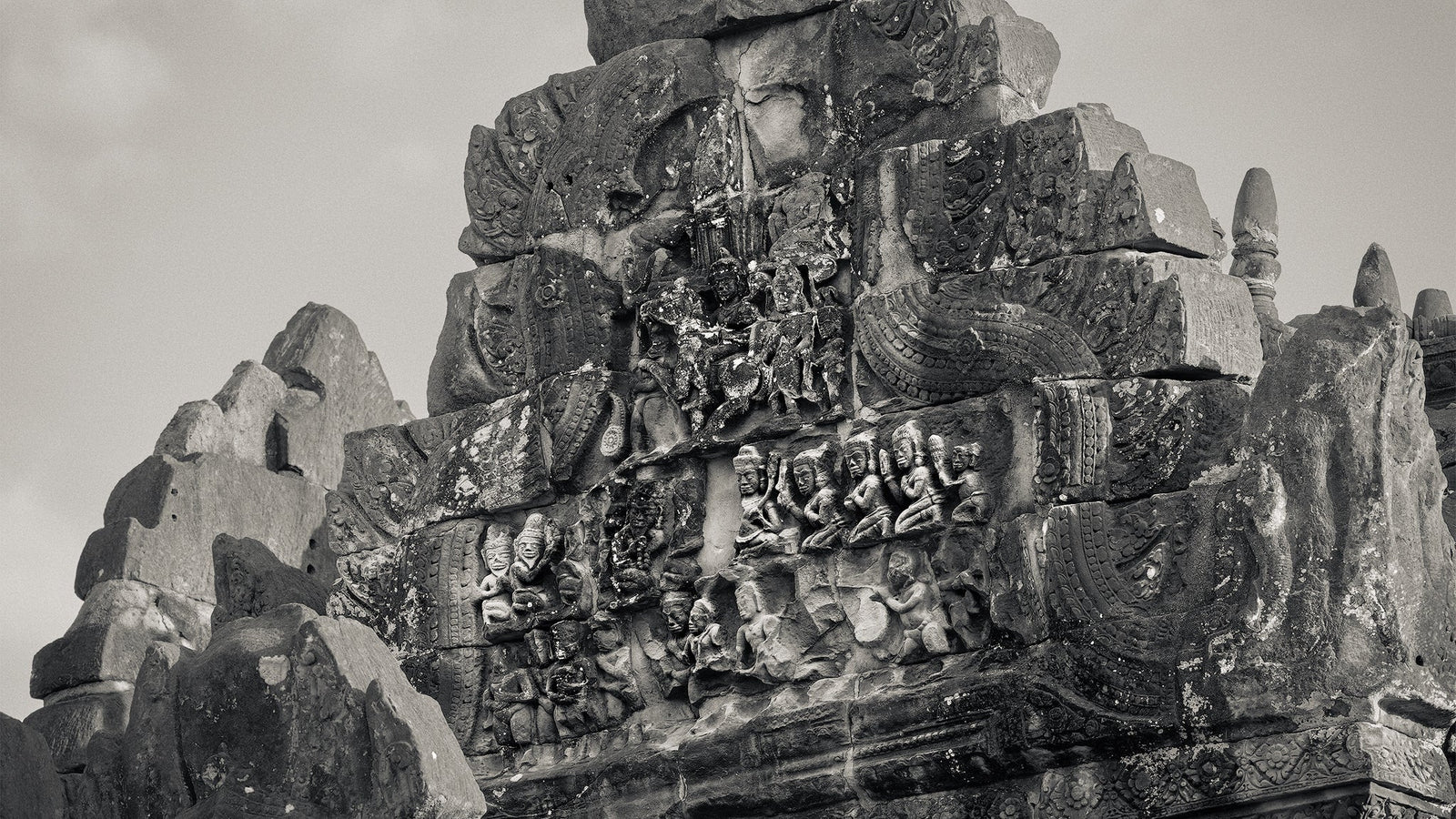

The Four That Opened the Gate
A prince sees age, sickness, death—and then serenity.
Stone holds what memory cannot: the hush of becoming, the moment before renunciation, the gate just beginning to open.
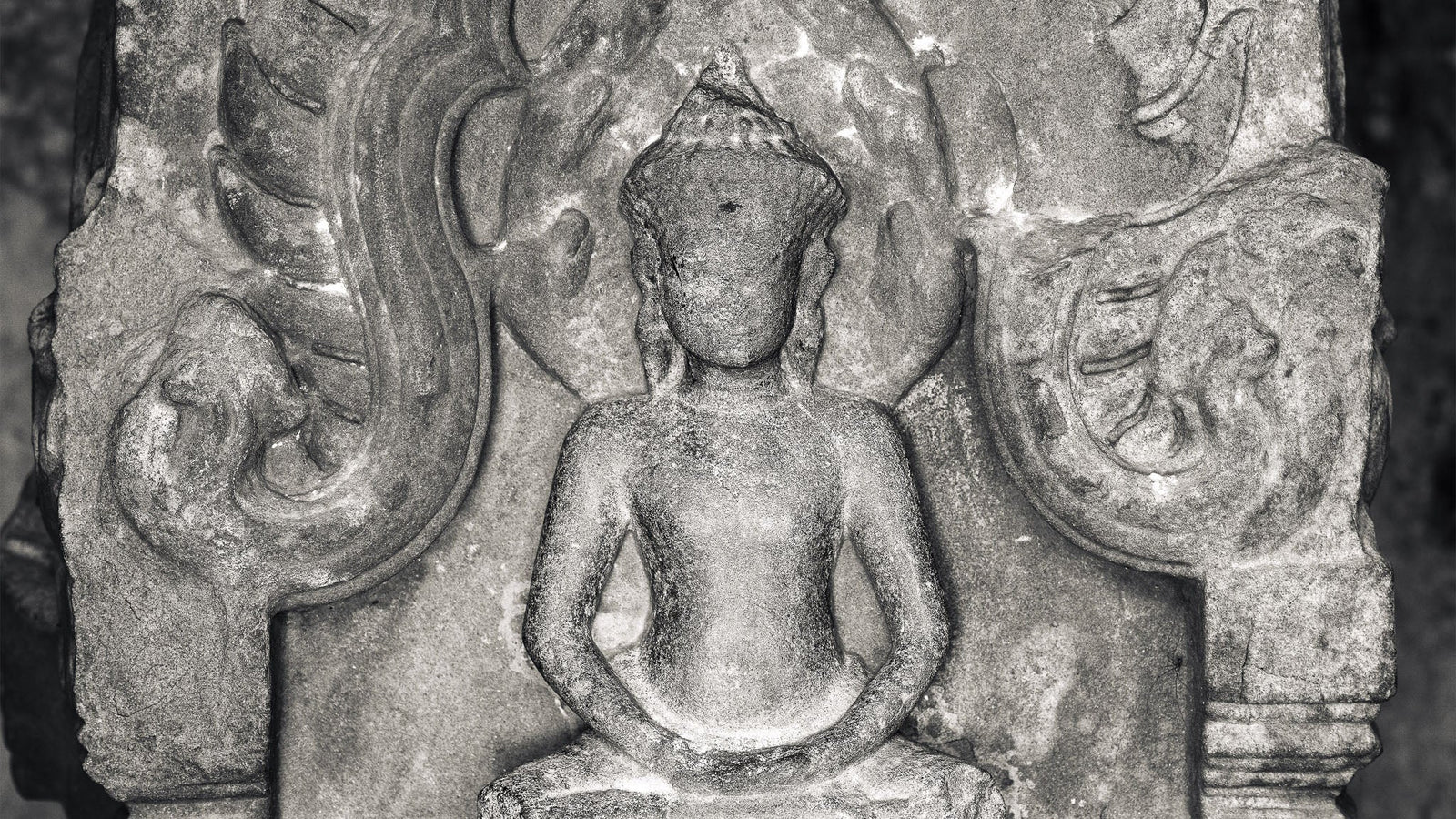

The Light Before the Path: Buddha’s Uncarved Beginnings
Walk the hush between stories—where lotus blooms unfurl, and the child who would awaken steps through heaven unseen. In the stillness of uncarved stone, memory glows.
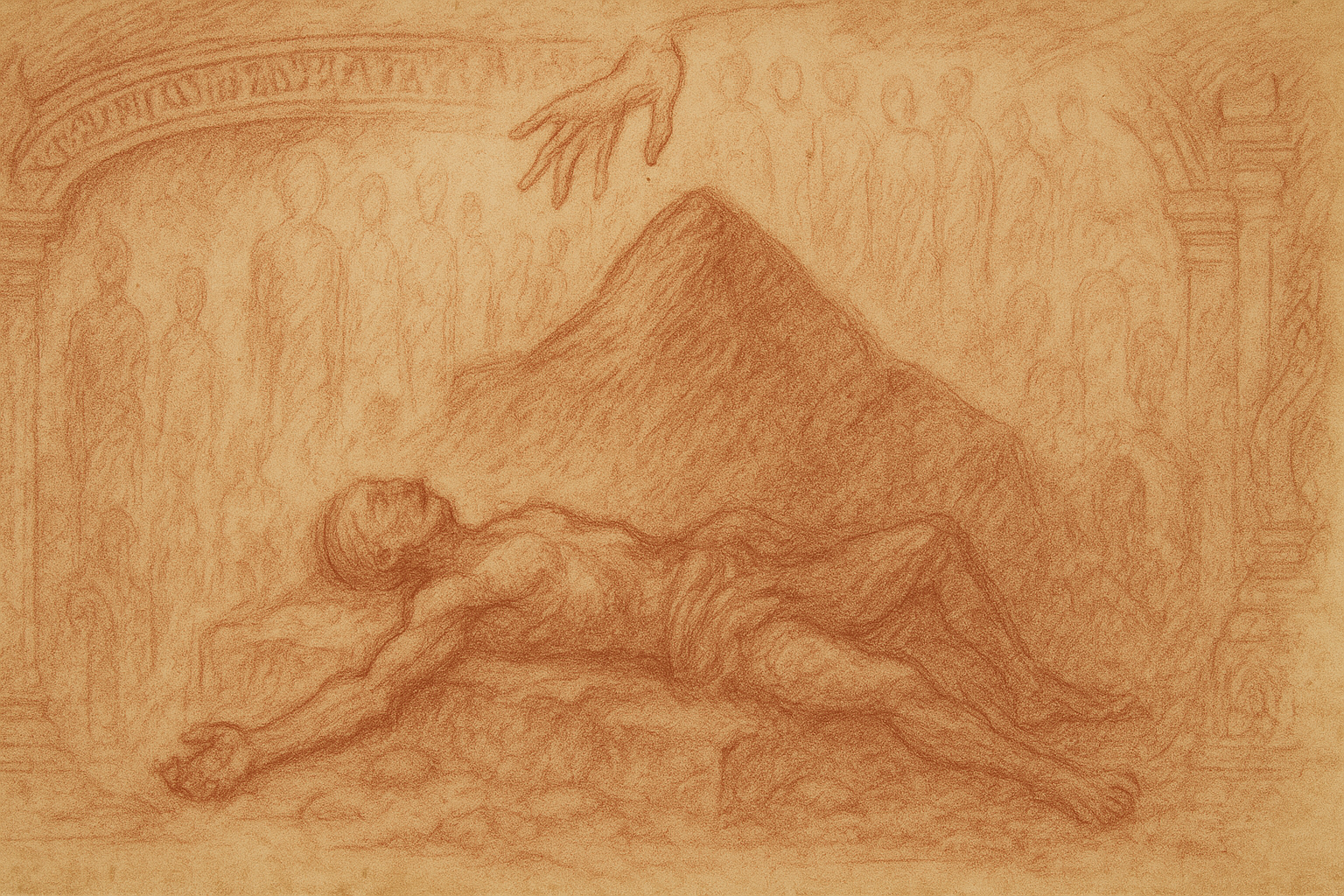

The Hell Without Rest: On the Avīci Realm at Angkor Wat
Beneath the stone cries of Angkor’s gallery, the condemned fall—not into eternal fire, but into memory and reckoning. Step into the shadows of Avīci, where judgement carves silence, and even the darkest soul still waits for light.
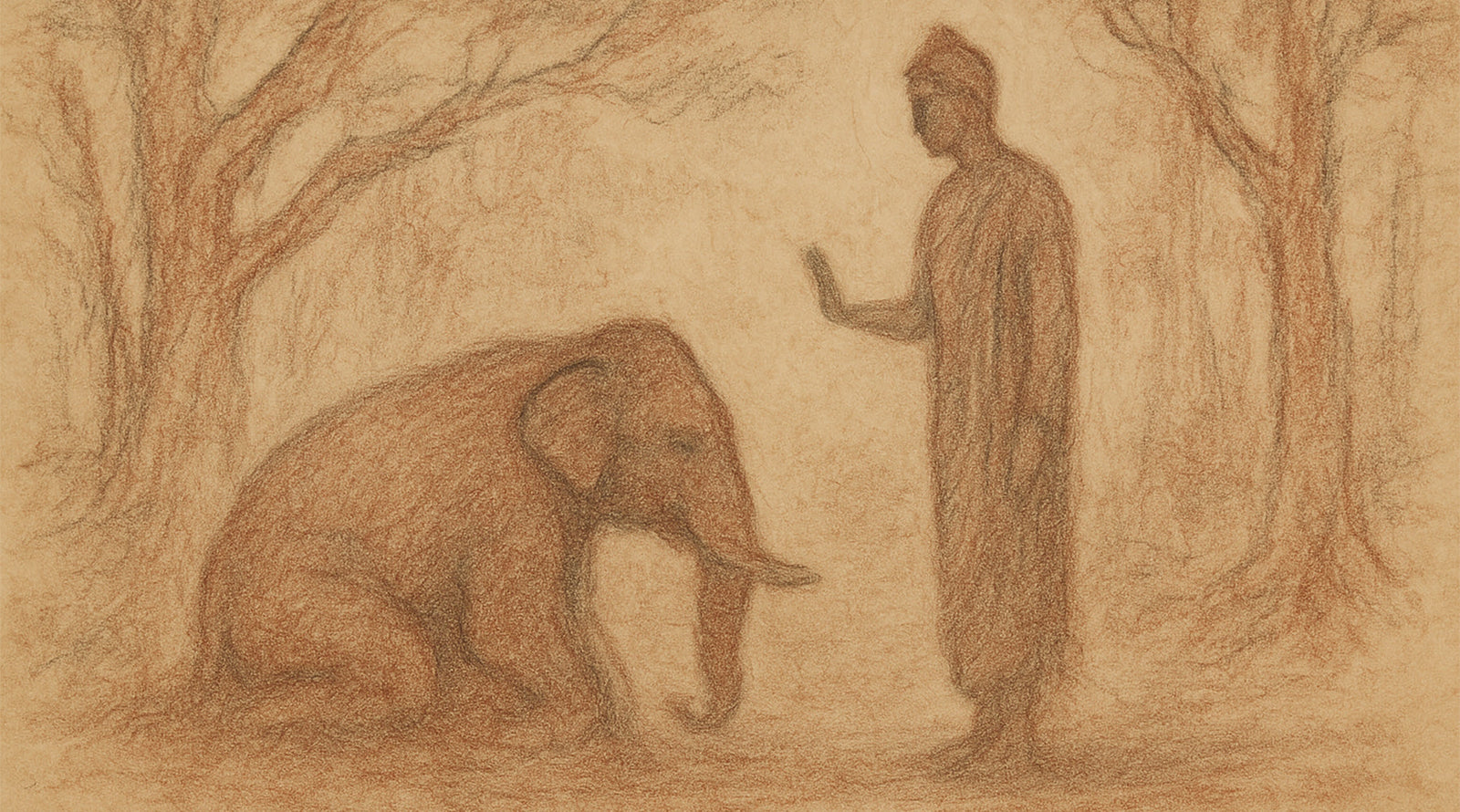

The Elephant Who Bowed to Silence
In a forest temple rarely visited, a fierce elephant kneels beneath the Buddha’s hand—carved in stone and veiled by time. This luminous meditation reflects on Theravāda resilience, the Hindu Reaction, and the miracle of wrath transfigured by stillness.
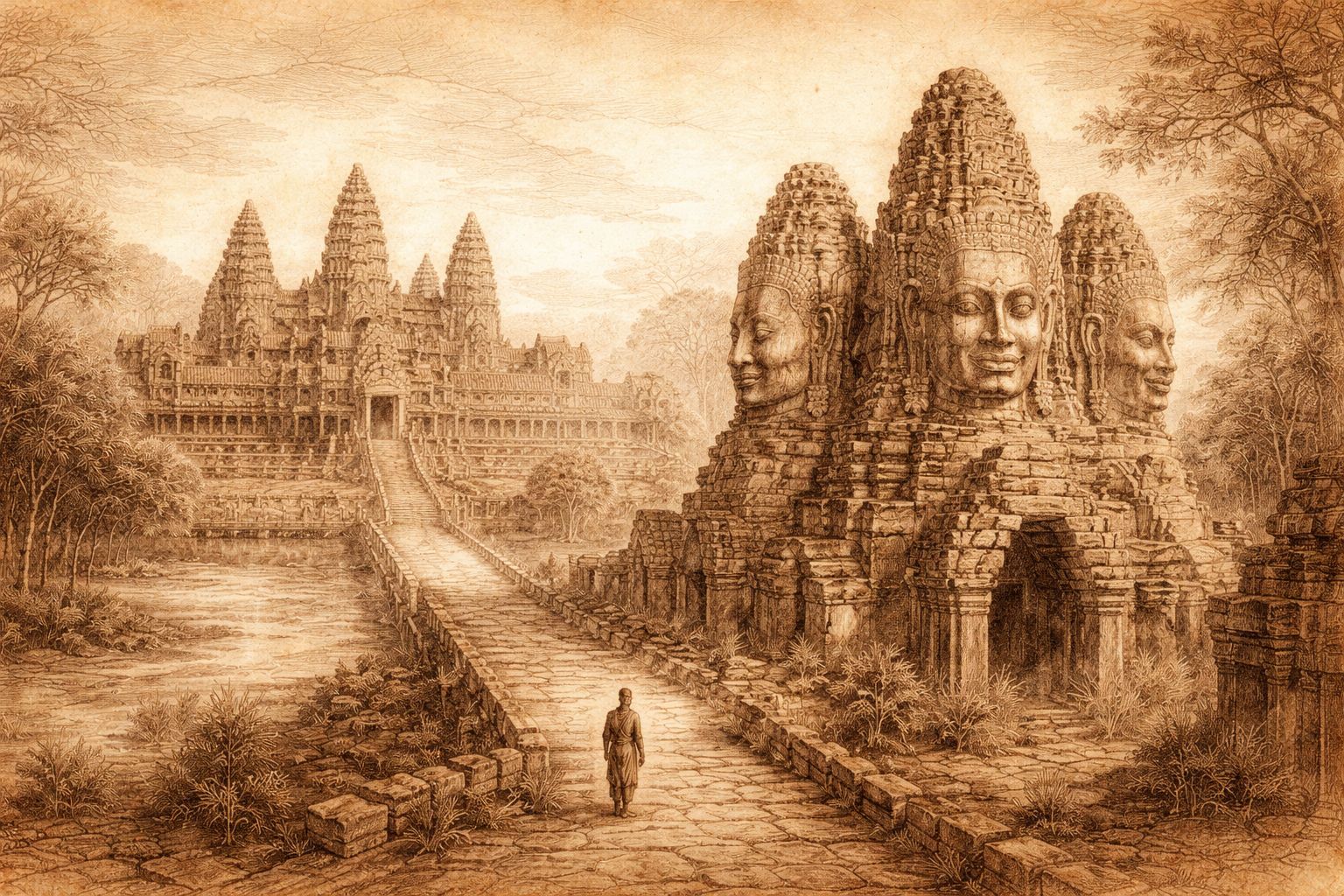

From Order to Presence — Angkor Wat and the Bayon
Angkor Wat perfects the universe as law: measured, aligned, and complete. The Bayon answers with presence—faces turned outward, meeting suffering where it stands. Between them, the Khmer mandala does not break; it turns inside out, discovering that order alone is insufficient without compassion.
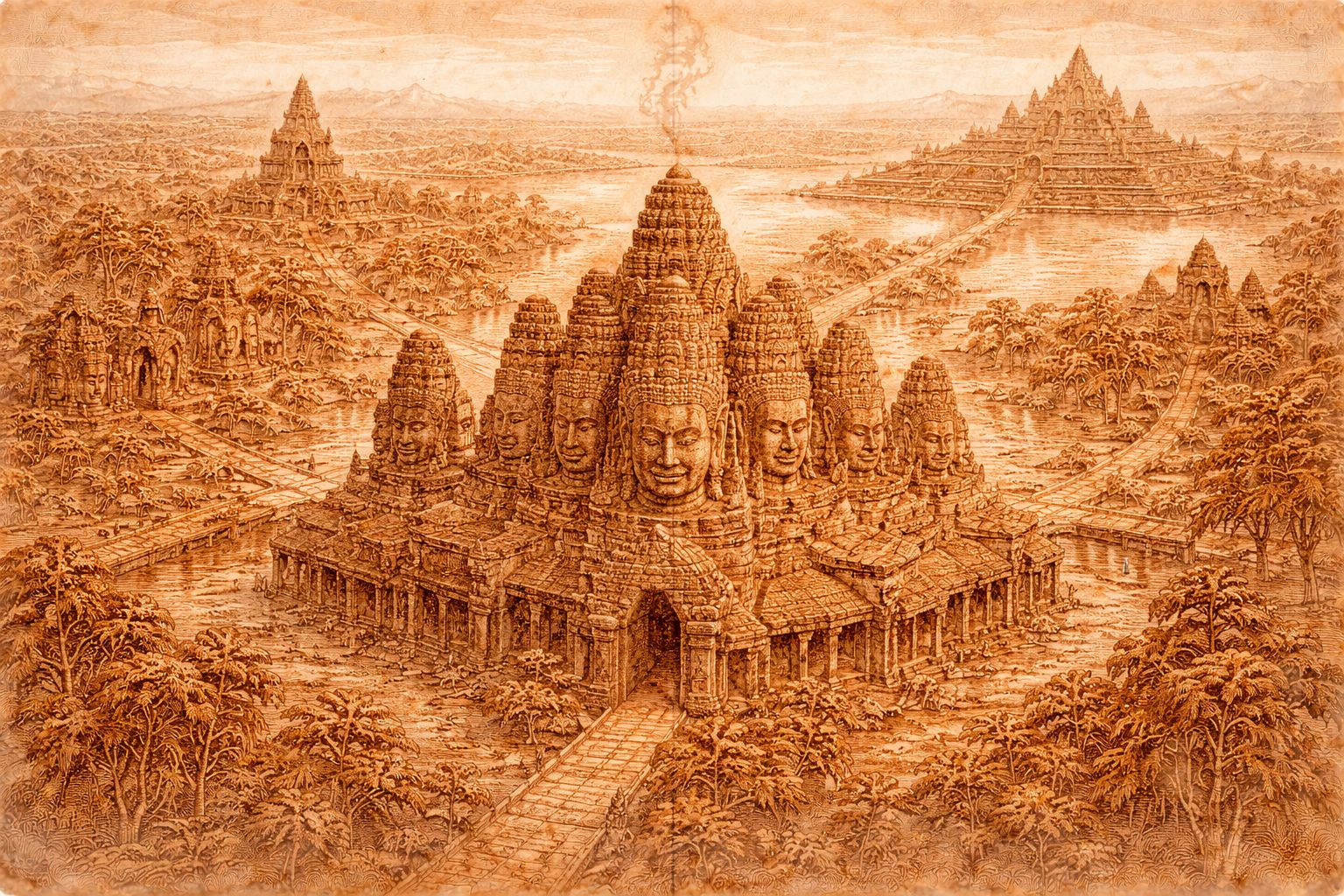

The Mandala Broken Open — Mahayana Buddhism and the Remaking of Angkor
When Angkor fell, the mandala did not shatter—it opened. Under Jayavarman VII, the rigid cosmic square fractured into a living network of faces, roads, and care. Geometry gave way to compassion, and the centre learned to move toward suffering rather than rule from above.
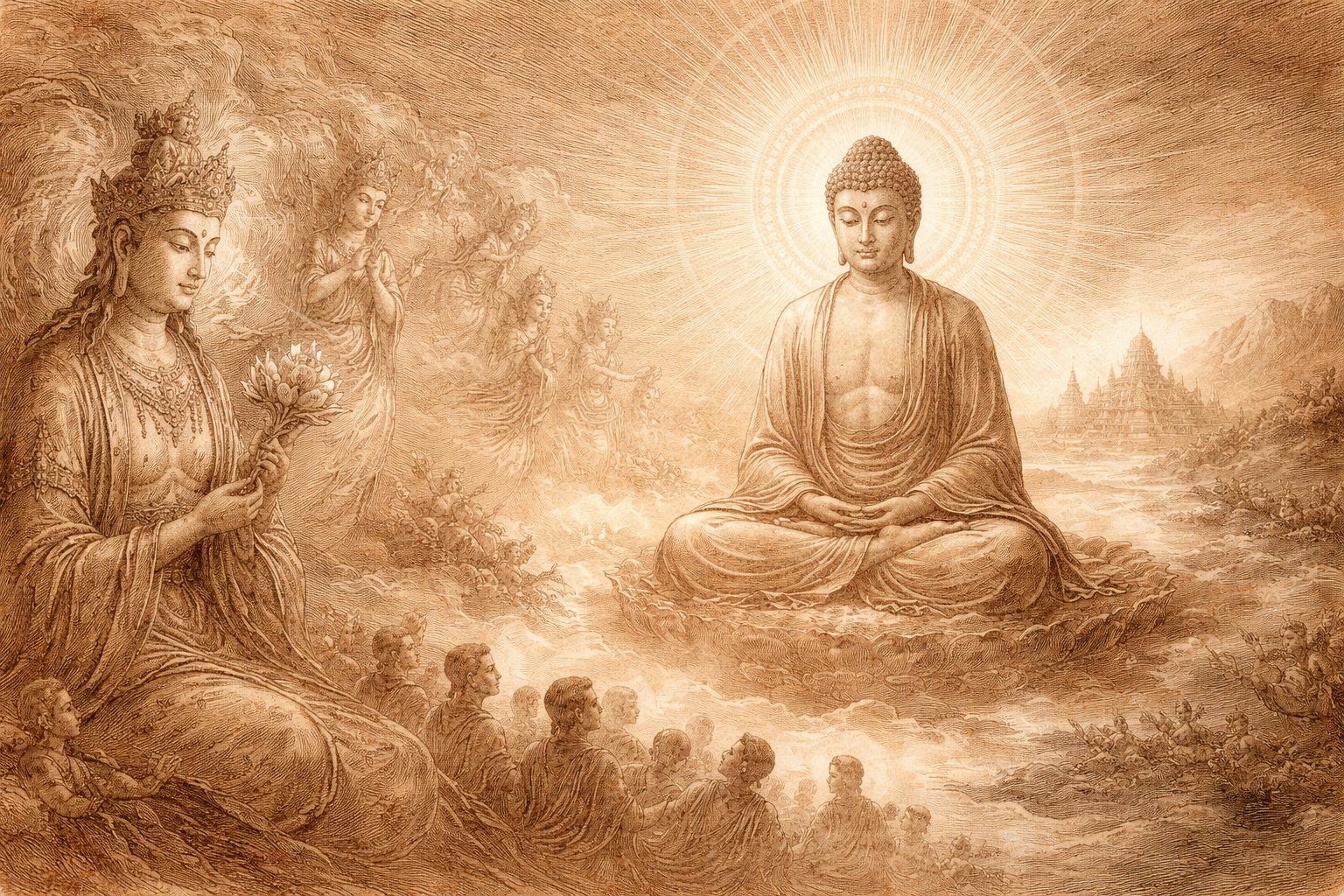

Amitabha — The Measureless Light That Waits
Amitabha does not rush to save the world. He waits, radiant and unmoving, while compassion travels outward on his behalf. For those who falter, who cannot finish the path by effort alone, his western light remains—quiet, measureless, and endlessly receptive.
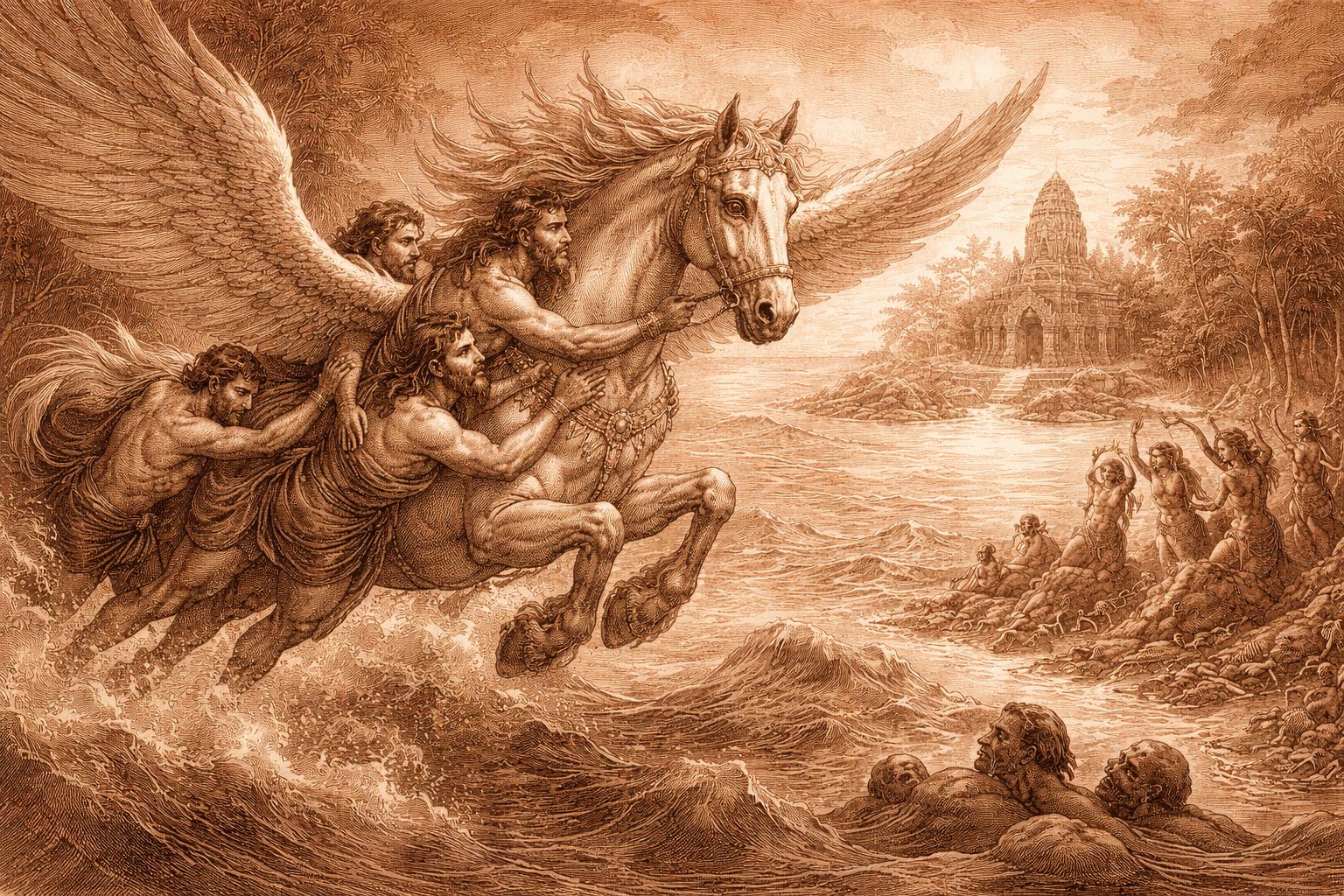

Balaha — The Horse Who Carries Across
Balaha is compassion in motion. Appearing as a flying horse, Lokeshvara becomes the vessel that carries beings across the ocean of existence. Rescue is offered—but only to those who do not look back. In Angkor, this vow was carved into water, stone, and flight.
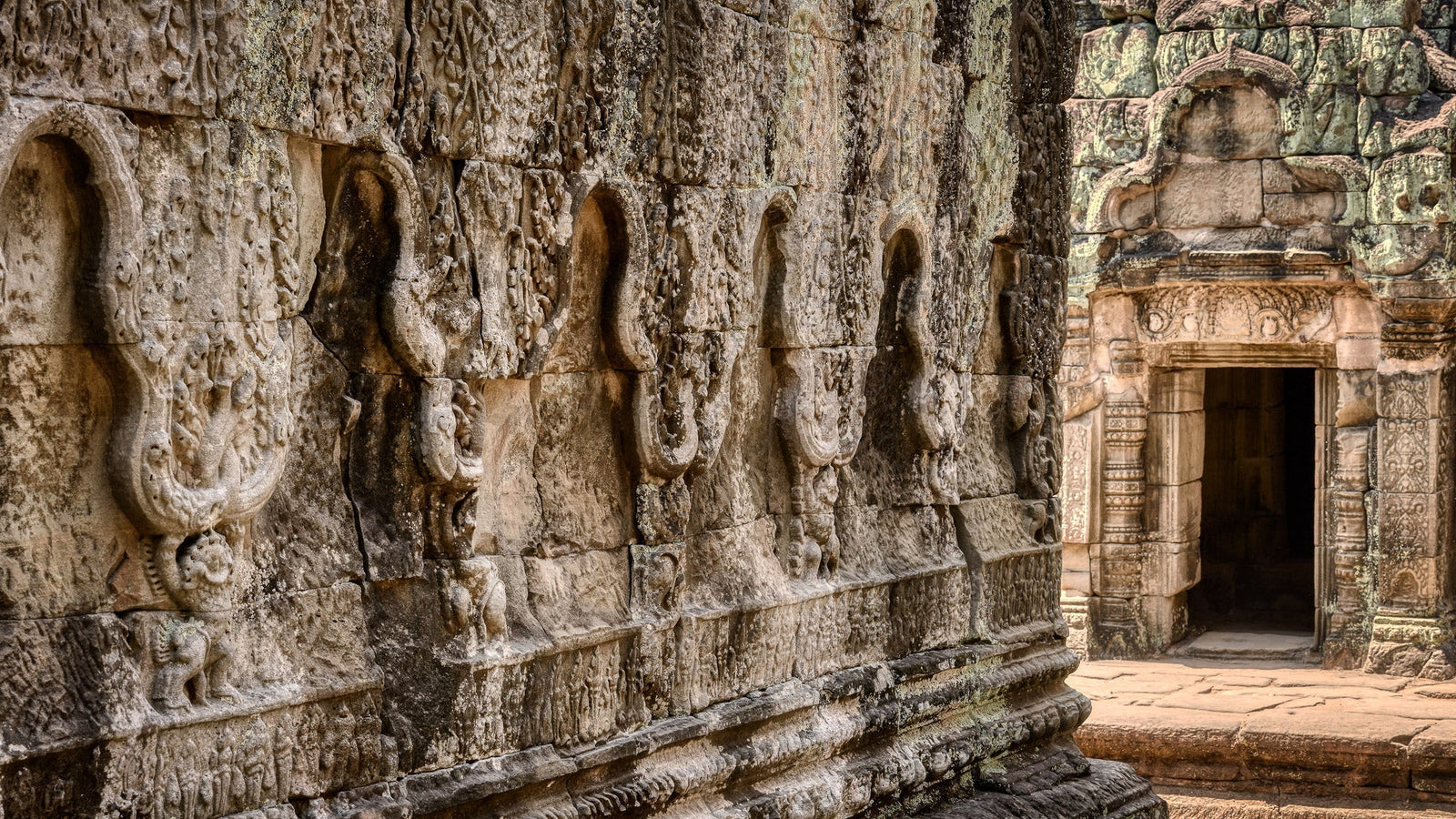

The Vanishing Buddha: A Silence Carved in Stone
There are wounds in the stone that no rain can wash away.
Walk slowly among the vanished Buddhas—
where silence remembers what belief once tried to forget,
and the soul still bows before what is no longer seen.
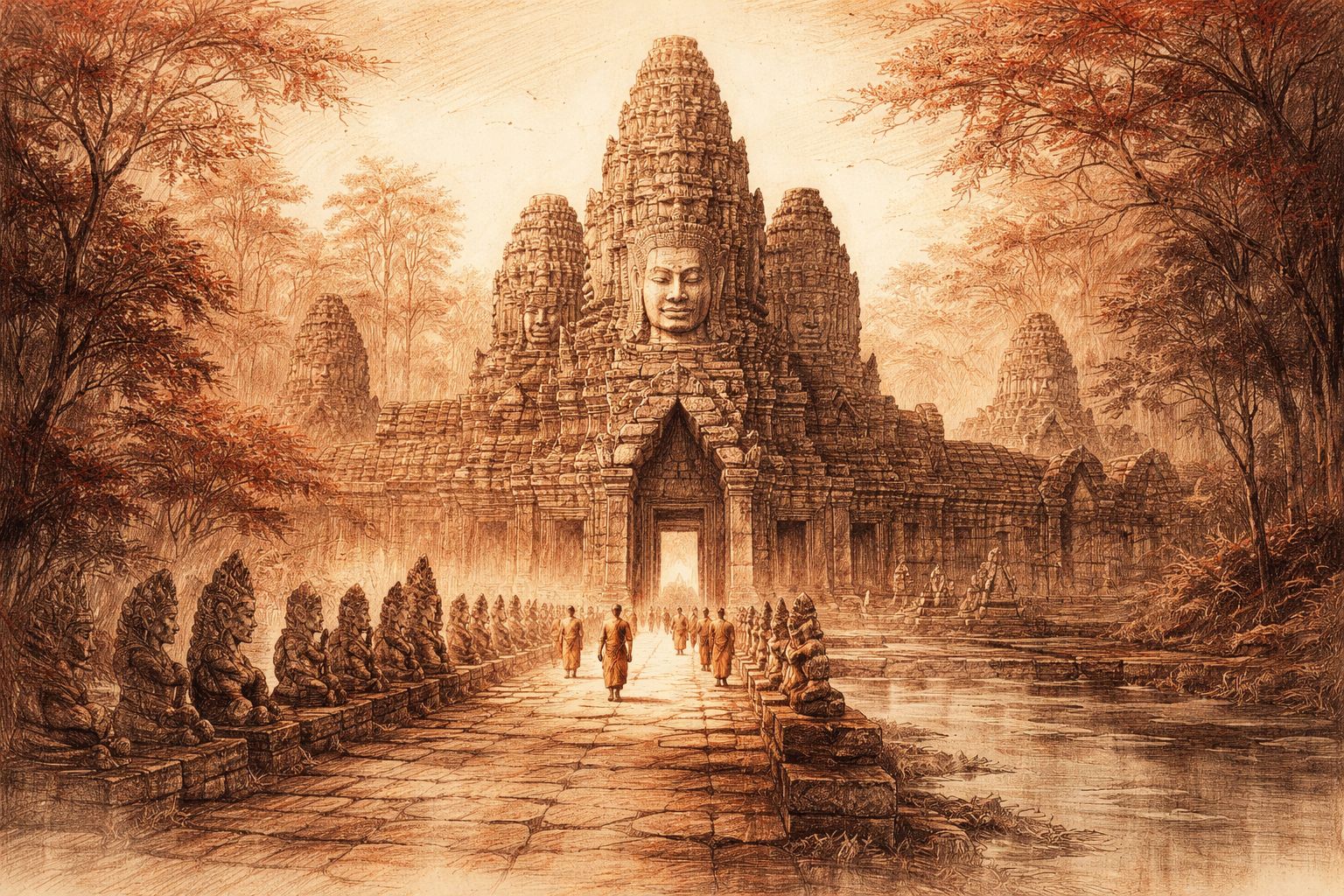

Jayavarman VII — The King Who Chose Compassion as Power
Jayavarman VII ruled not as a god demanding order, but as a bodhisattva absorbing pain. Roads, hospitals, and temples became instruments of care. His reign burned with compassion at imperial scale—brilliant, costly, and unforgettable—leaving Angkor forever marked by the possibility that power might heal.
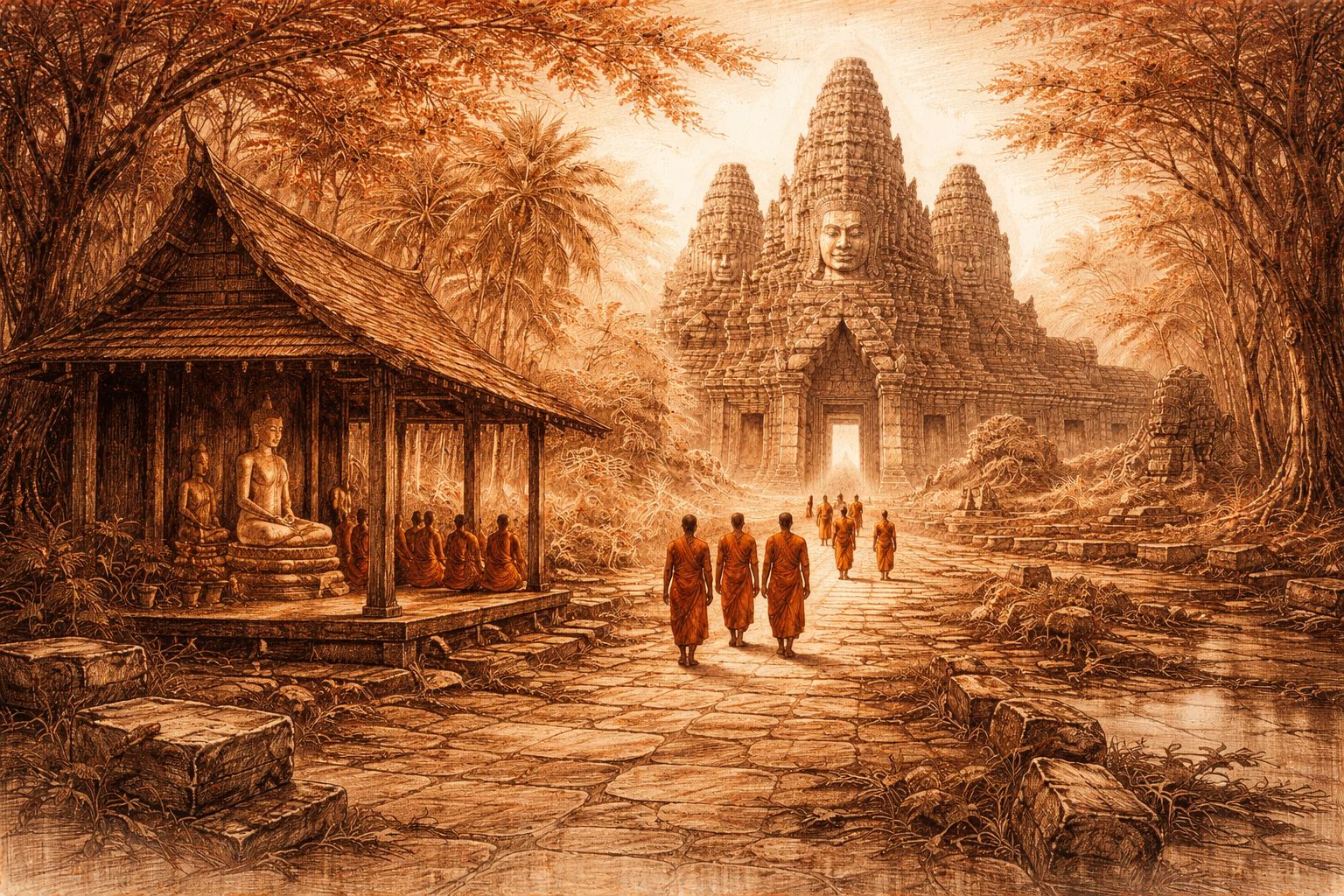

Jayavarman IX — The Last Candle and the Morning Light
Jayavarman IX stands at the threshold between stone and breath—the last Sanskrit voice of Angkor ruling as Theravada Buddhism quietly became the faith of the people. His reign marks not collapse, but release: from divine kingship to lived practice, from monument to monastery, from cosmic order to moral attention.
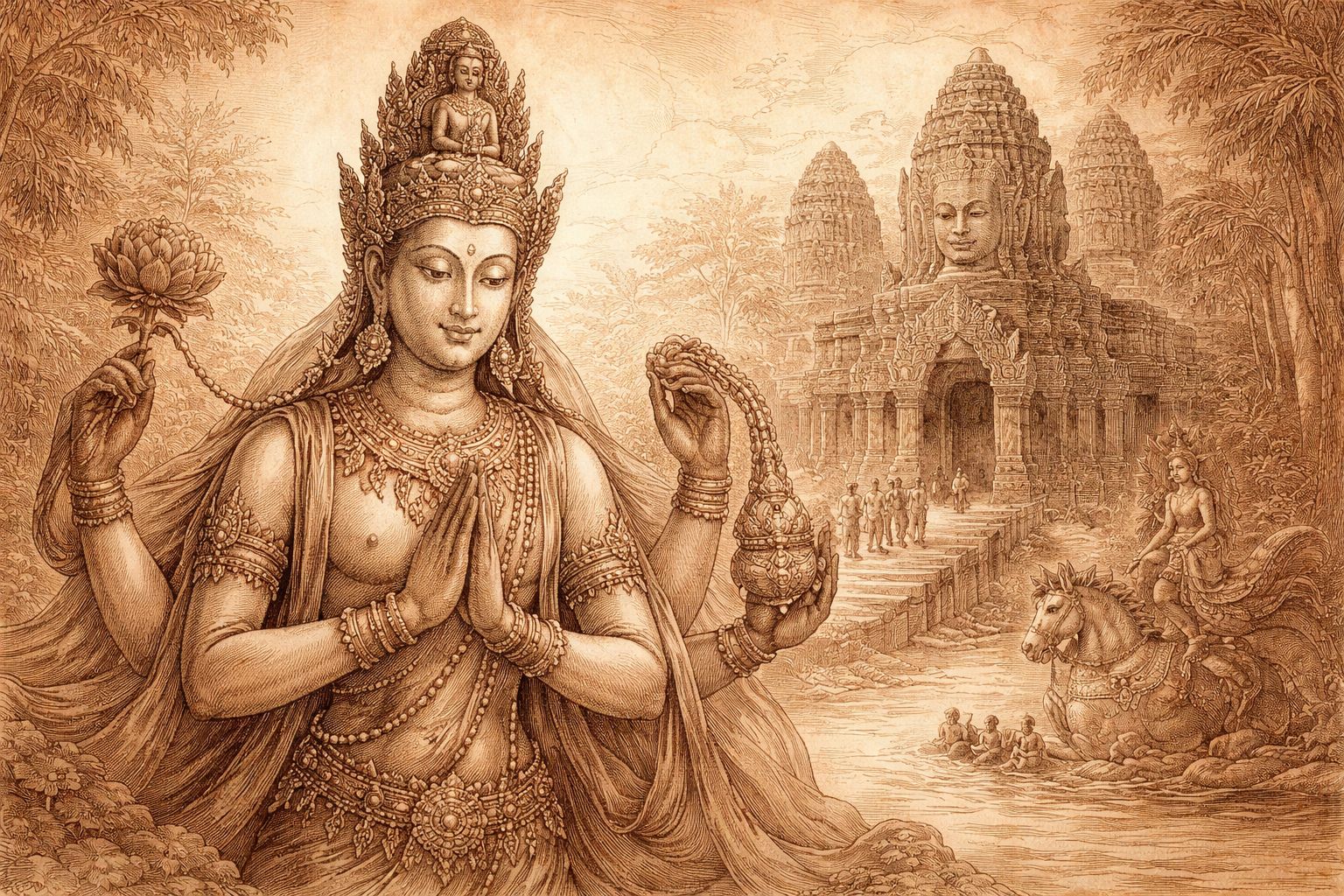

Lokeshvara — The One Who Hears the World
Lokeshvara stands at the edge of release and chooses to remain. With a thousand hands and many listening heads, he does not save the world from afar—he stays within it, bearing its cries. In Angkor, compassion became architecture, policy, and vow, carved into stone and water.