

Why Theravada Could Outlast Stone
Stone taught Angkor how to endure, but it also taught it how to exhaust itself. The great temples remain precise and commanding, yet they are heavy with the memory of what they required—labour organised at a scale only kings could sustain, devotion expressed through permanence, belief bound to architecture that could not bend.
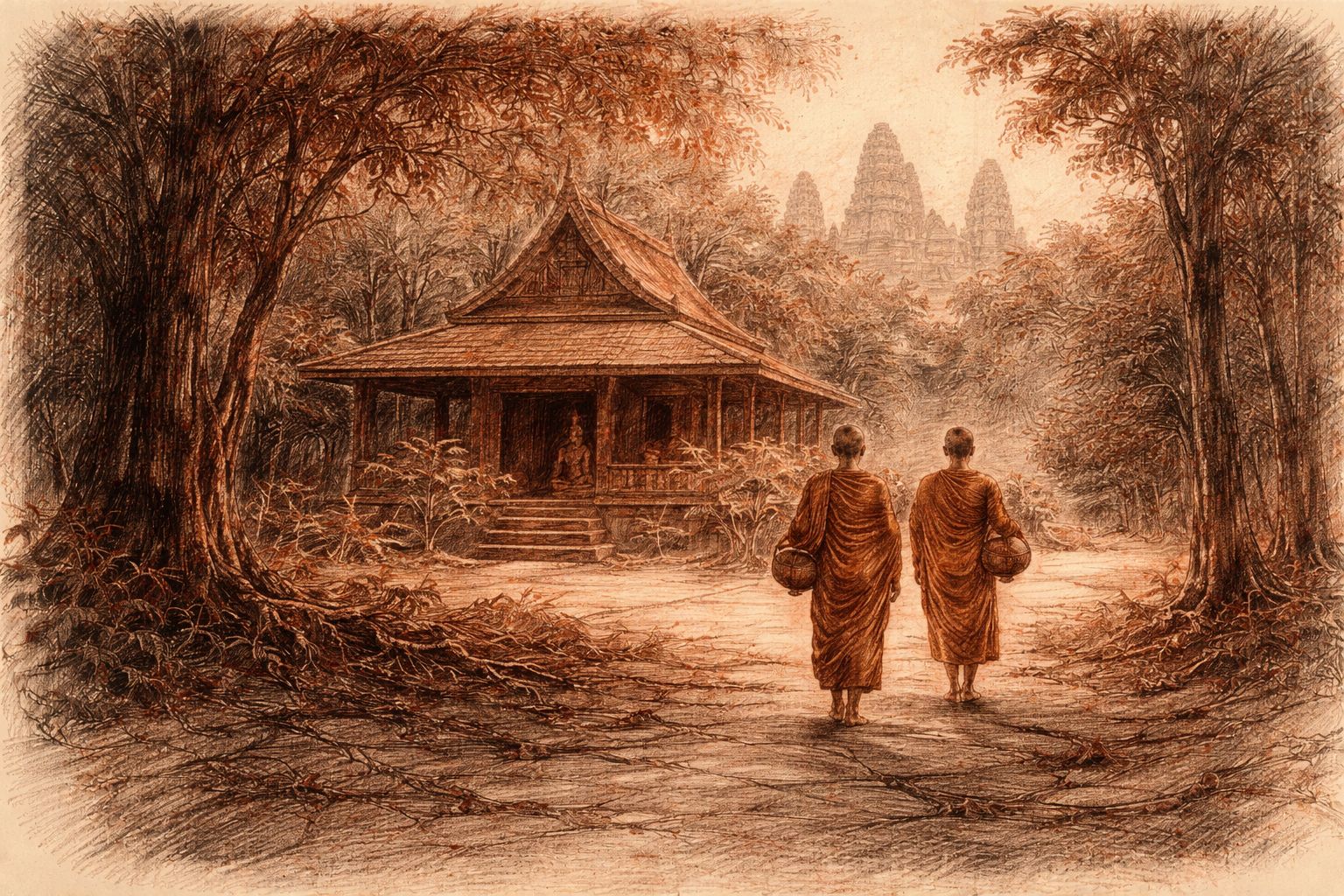
Theravada arrived without that weight. It did not ask to be carried by towers or sealed into relief. It asked instead for repetition: a robe washed and rewashed, a bowl carried each morning, a body trained to sit still. What it preserved was not form, but rhythm.
The earlier religious worlds of Angkor were magnificent, but they were vertical. Meaning descended from the king, from the shrine, from the summit of stone. When the centre weakened, the system could not redistribute itself. Faith had been monumentalised, and monuments do not migrate.
Theravada moved laterally. It spread along paths and rice bunds, through villages, through speech. Its authority rested not in spectacle but in proximity. The monk lived close enough to be corrected, questioned, known. The teaching did not require intermediaries of stone; it required attention.
This shift altered how belief inhabited time. Instead of concentrating merit in a single act of building, it dispersed it across a lifetime of small, repeatable gestures. Alms given. Precepts observed. Stories remembered. The dharma did not need to be carved to persist; it needed to be practised.
The village monastery became the unit of continuity. It could be rebuilt after fire, moved after flood, repaired without decree. Education, ritual, and memory were housed together, lightly. When capitals fell, the wat remained. When scripts changed, the chants adapted. The religion endured because it had learned how to be ordinary.
Theravada did not oppose the old world; it outlasted it by declining its scale. It made peace with impermanence rather than attempting to defeat it. Where stone resisted time, practice accompanied it.
What survives in Cambodia today is not the system that built Angkor, but the one that learned how to live after it. Theravada persisted because it accepted limits—of body, of labour, of rule—and organised meaning within them. In doing so, it became portable, repairable, and shared.
Stone remains as witness. Practice remains as life. One teaches us how power once stood. The other explains how a people continued.
—
Receive the next work
Subscribe free to receive new work from the Lucas Varro Library by email.
More from the Library


See Also
A concise and impartial dictionary of absence, promises, quarrels, ordinary objects, and the troublesome instability of words.

The City of Service
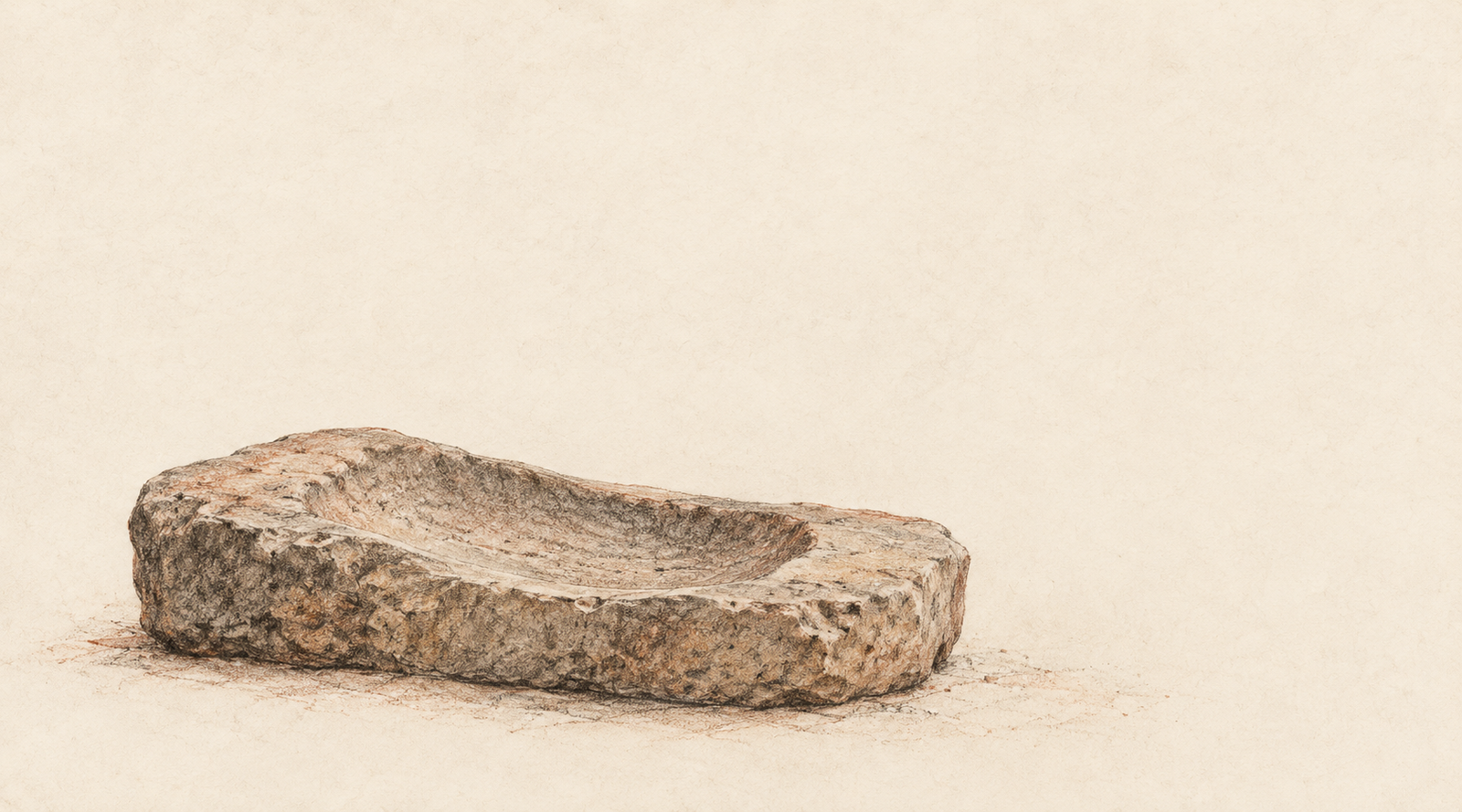
The temple we inherit is a building from which almost all necessity has been removed. Nothing must be brought for it to continue being what we call a temple. The sanctuary asks nothing of us. Stone is good at this kind of independence.
A living temple was otherwise.
Water had to come in. So did grain, cloth, oil, aromatic substances, fuel. The things required for worship arrived because someone carried them across a threshold.

Houses of Wood, Light, and Smoke
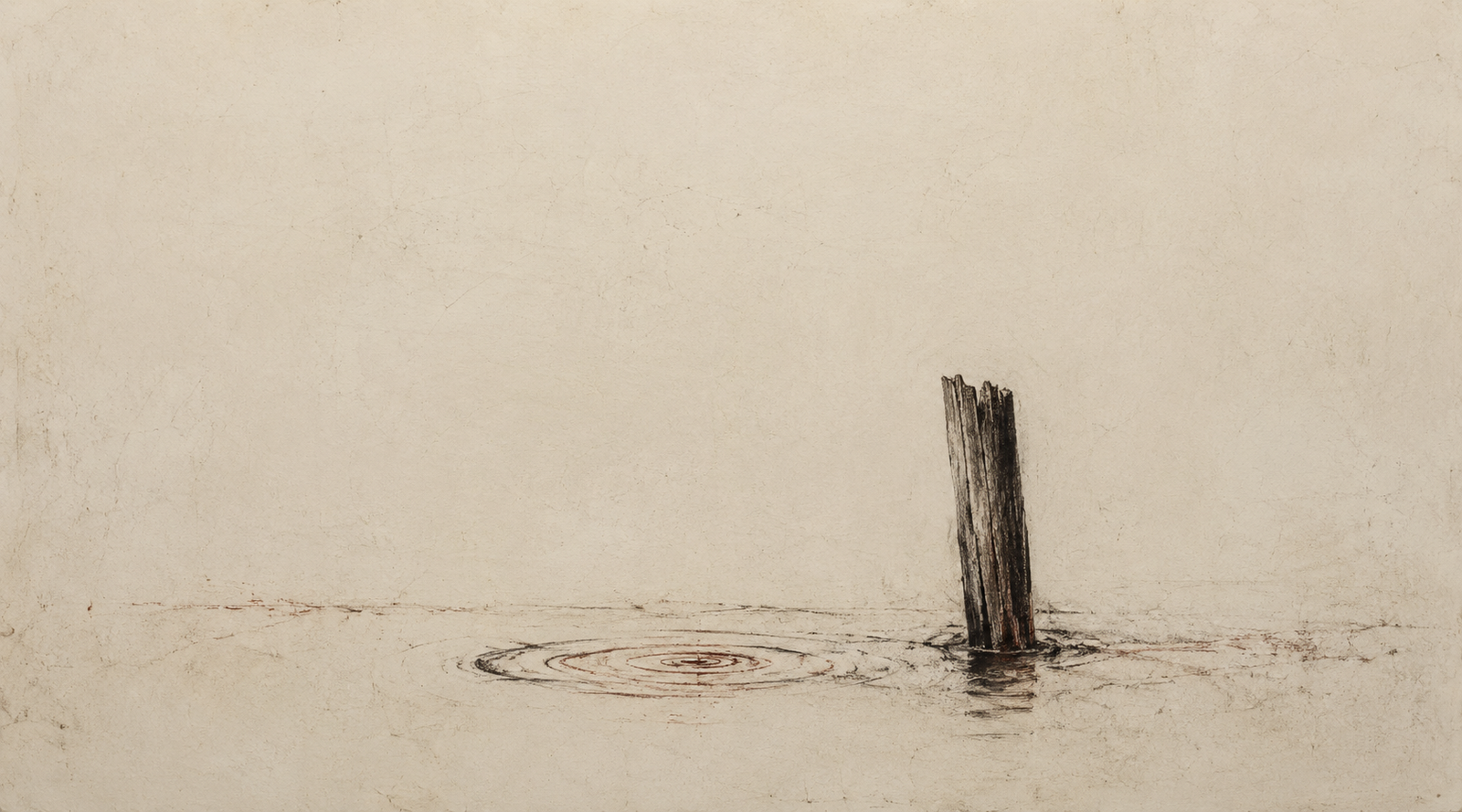
Some of Angkor’s most intimate ruins do not rise above the ground at all. They are postholes, low mounds, hearths and ponds: durable traces of a domestic city built largely from things that decay. To restore that city is to see Angkor not only as stone, but as wood, smoke, water, repair, and people living within calling distance.