

The End of Sanskrit at Angkor
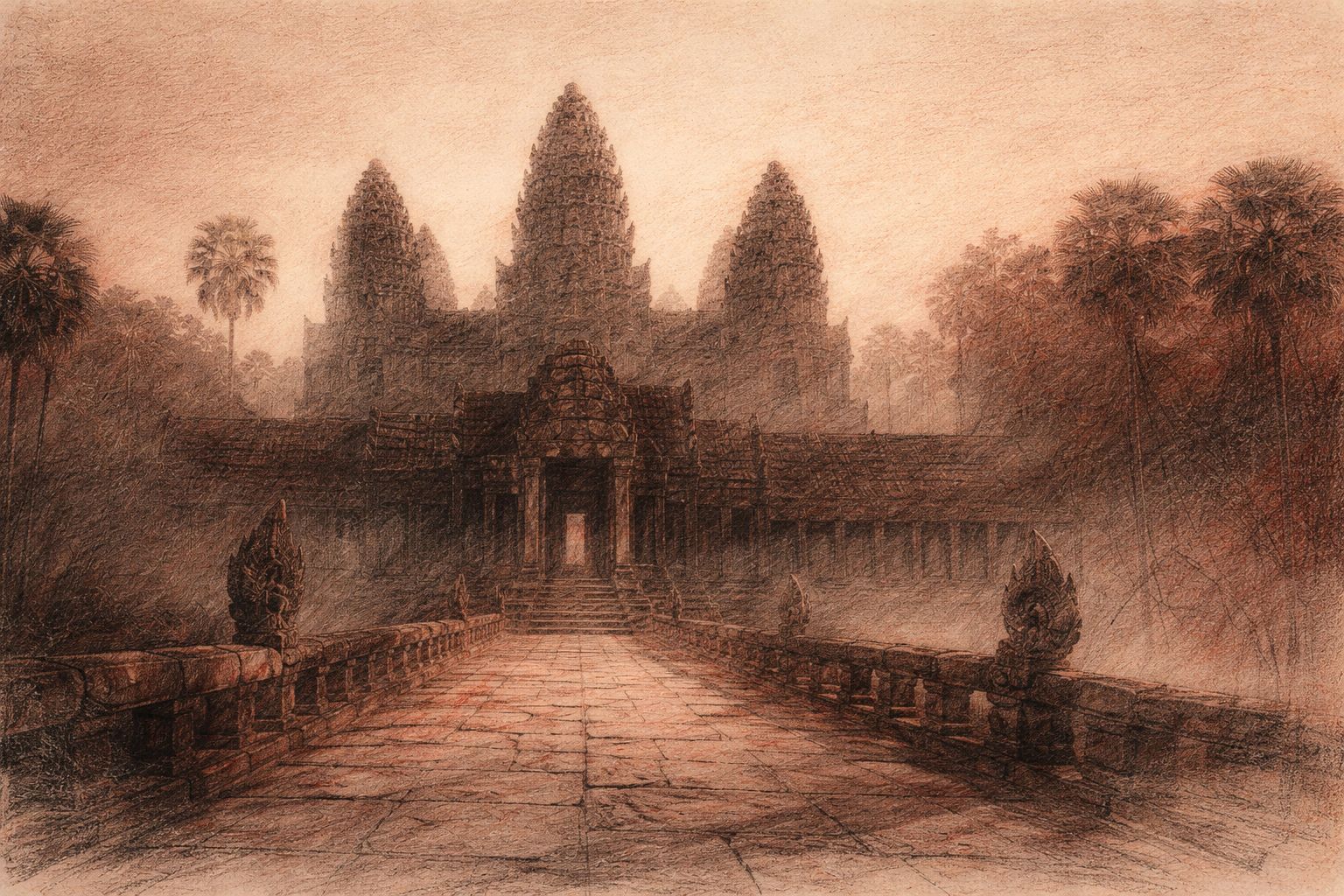
There is a point at Angkor where language ceases to sound like proclamation and begins to register as residue. Not silence exactly, but something quieter than command. The stone still stands, the galleries still breathe shadow and rain, yet the voice that once addressed gods directly withdraws, leaving the syllables unfinished in the ear.
For centuries, Sanskrit had spoken here with assurance. It named kings, tethered lineages to the heavens, bound the work of masons and priests into a single grammatical order. Its cadence was not conversational; it did not persuade or invite. It declared. To carve in Sanskrit was to assume continuity—of rule, of cosmology, of the gods’ attention. Each inscription was a gesture of permanence, a wager that stone and metre could outlast time.
But permanence is never neutral. It demands upkeep: ritual precision, learned custody, an unbroken chain of listening. By the early fourteenth century, that chain had thinned. The final Sanskrit inscription, dated 1327, does not announce an ending. It does not mourn itself. It simply appears—polished, exact, composed as if nothing had changed—already an anachronism in its own moment. A voice still capable of eloquence, speaking into a world that had begun to listen differently.
Around it, the spiritual climate had shifted. The slow diffusion of Theravada Buddhism altered not only doctrine but scale. Instruction moved from court to cloister, from genealogy to conduct, from cosmic architecture to the discipline of the body and the mind. Pali entered the region not as a rival language but as a more permeable one. It did not require elevation. It could be carried, memorised, repeated aloud. Its authority rested not in ornament but in use.
With this shift came a reorientation of material devotion. The great stone programmes ceased—not through collapse or decree, but through irrelevance. The temple-mountain no longer served the primary work of awakening. Wooden vihara rose instead, vulnerable to rot and renewal, aligned with a teaching that did not insist on endurance. Memory moved off stone and onto palm leaf, breath, gesture. What could not be preserved was no longer automatically worth preserving.
Sanskrit, in this context, did not fail. It completed its work. Its withdrawal marks not a loss of intellect, but a redistribution of attention. The language of cosmic address gave way to one concerned with suffering, impermanence, and release. The gods receded from architectural centre stage, and the human path—walked, repeated, corrected—took precedence over monumental proof.
Today, the absence is palpable only if one listens for it. The walls do not complain. They accept moss, water, and the passing of feet. Yet embedded in their silence is the memory of a voice that once assumed it would always be heard. The end of Sanskrit at Angkor is not a rupture in history so much as a soft relinquishment: the moment when the civilisation stopped asking stone to speak forever, and allowed meaning to travel by more fragile means.
—
Receive the next work
Subscribe free to receive new work from the Lucas Varro Library by email.
More from the Library

The Leaf and the Pencil
A leaf holds my attention. Then I remember that I can draw. The pencil reveals things I had never noticed, but introduces its own demands: proportion, shading, the desire to make something beautiful. When I try to describe the encounter, language presents another difficulty. An essay about the uncertain distance between looking at something, understanding it, and being present with it.

The Work We Return To
We have become very good at measuring persistence, and less good at asking what deserves it.
A musician begins the same passage again. A writer returns to an unfinished sentence. Someone stands before a familiar face carved in stone, with nothing new to photograph.
What brings us back when enthusiasm has gone? And how do we distinguish devotion from the demands that quietly consume the rest of our lives?

Under the Gallery
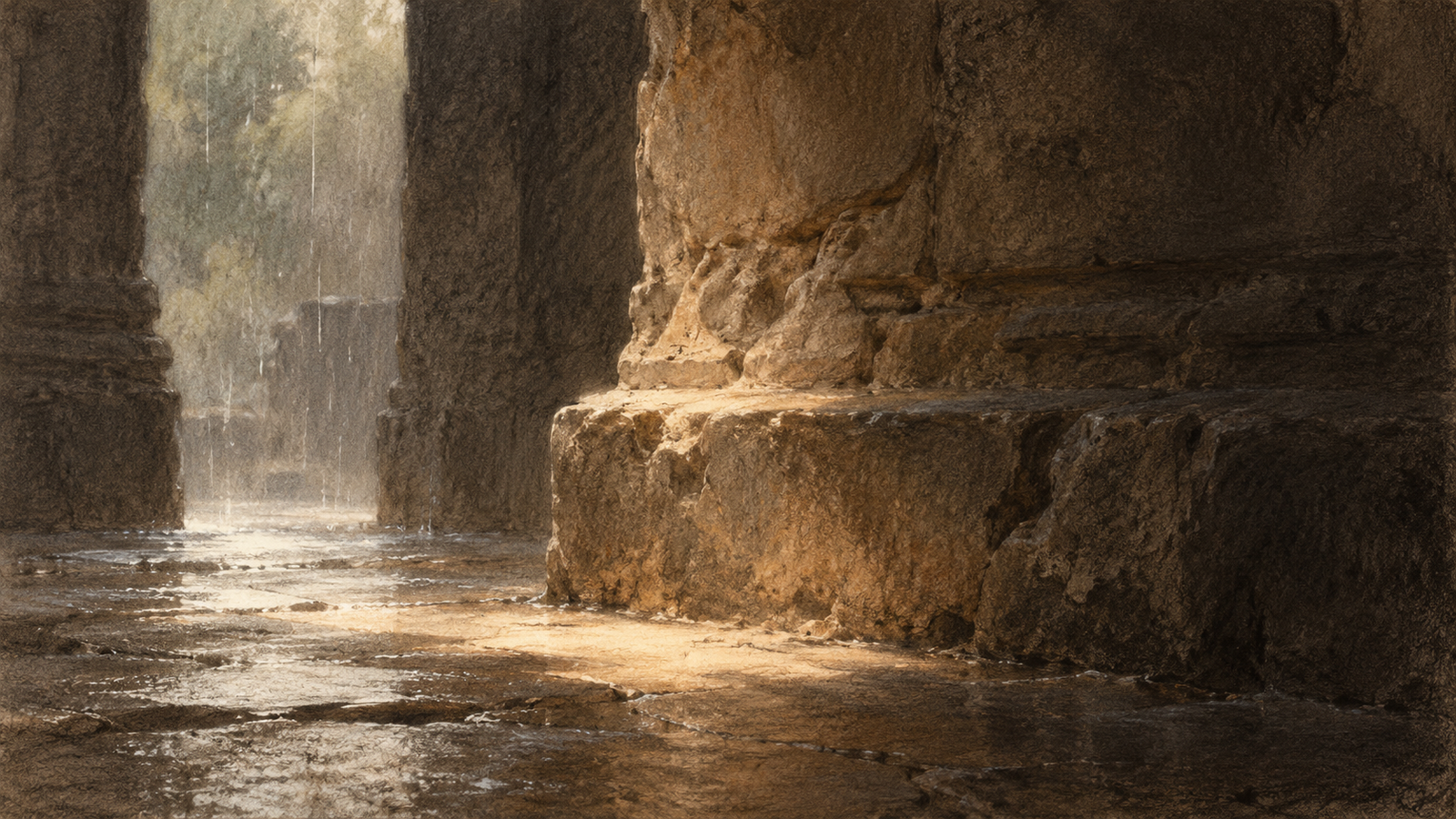
Rain, a carved hand, and the small movements of lives separated by centuries. A new literary piece from The Vow.