
The Library gathers the written works of Lucas Varro — journals of the temples, mythic retellings, contemplative essays, poems, and volumes shaped by shadow, silence, and wonder. Here, words stand beside images as offerings: field notes from Angkor, meditations on sacred stone, old stories rekindled, and reflections carried beyond the visible world.
Within these shelves you will find many rooms: Angkor journals, myth and legend, apsara meditations, contemplative essays, poems, children’s mythic wonder, literary retellings, and quieter devotions of the page. Wander chronologically, enter by theme, or pass through one of the dedicated publication houses now gathered within the wider Library.
For those who wish to follow these paths further, several of these writings continue on Substack and in dedicated archive blogs: The Lantern Chronicles , where myth, legend, contemplative essays, poetry, and other imaginative works are carried onward; The House of Cadmus , where Greek myth and tragedy are reopened through inheritance, violence, fate, and recurrence; The Mytharium , where myth, Tolkien, fairy stories, and old literature are read and retold with seriousness; The Alexander Series , where A. M. Sharp retells Greek myths for children who want to be trusted by stories; and The Hospitable Dark , where A. M. Sharp offers literary myth retellings shaped by darkness, shelter, endurance, and return.
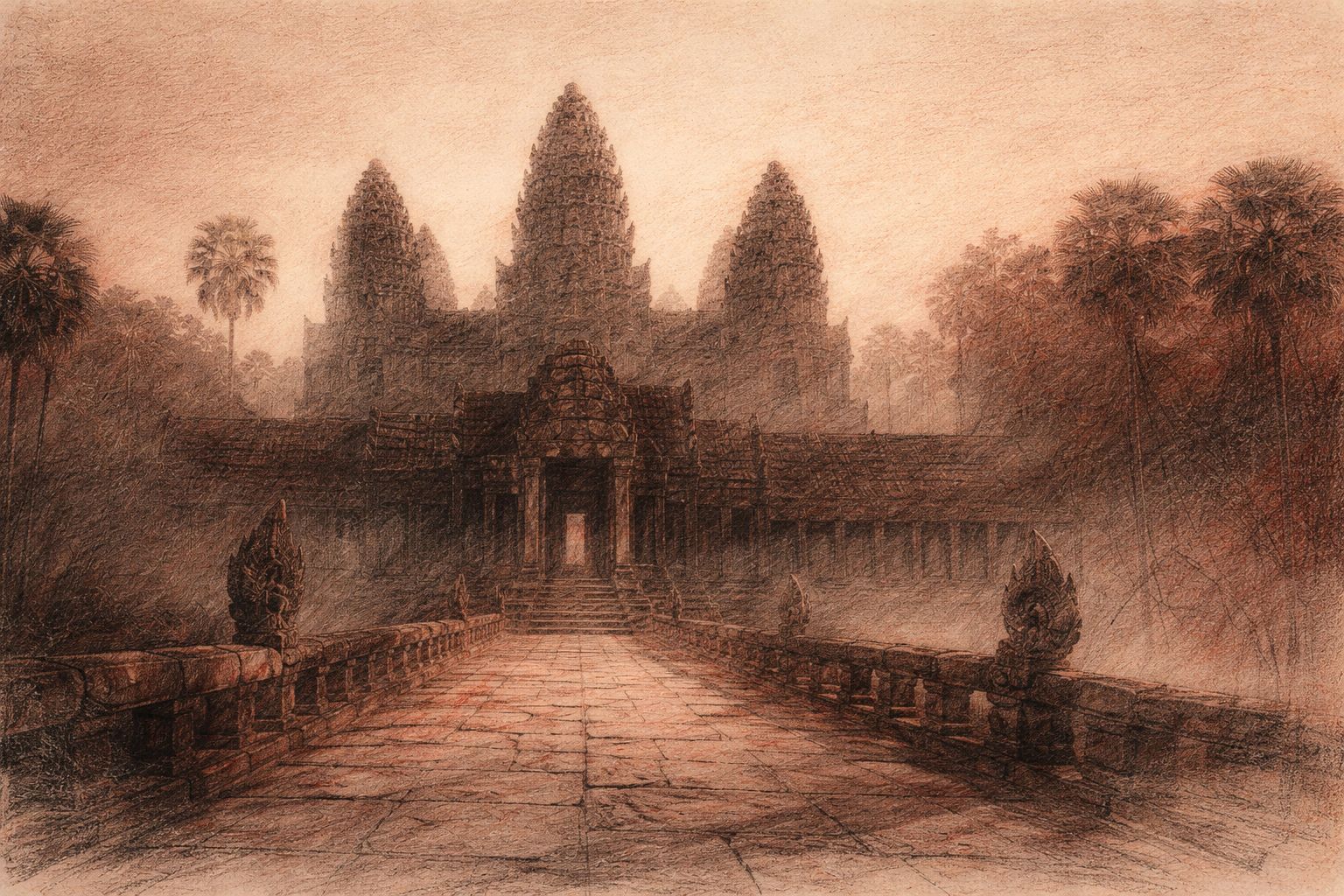

The End of Sanskrit at Angkor
The final Sanskrit inscription at Angkor does not announce an ending. It simply speaks once more, with elegance and certainty, into a world that had begun to listen differently. Its silence afterward marks not collapse, but a quiet transfer of meaning—from stone and proclamation to practice, breath, and impermanence.
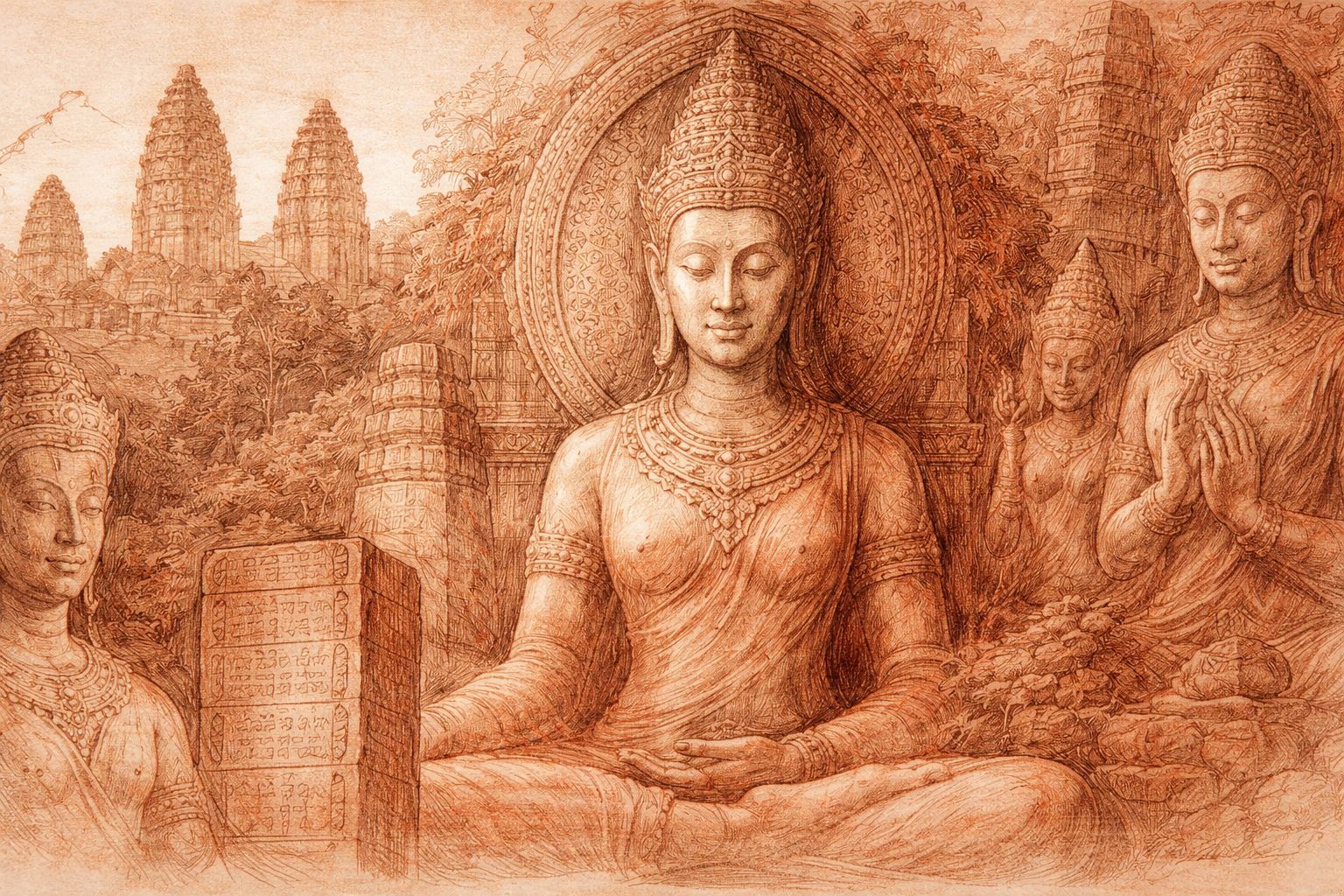

Vrah Rupa — Identity Without a Face
At Angkor, identity is not found in faces. The vrah rupa system replaced portraiture with essence, binding human souls to divine forms through ritual, name, and care. Calm, repeated statues are not anonymous—they are precise vessels, holding memory steady beyond death.
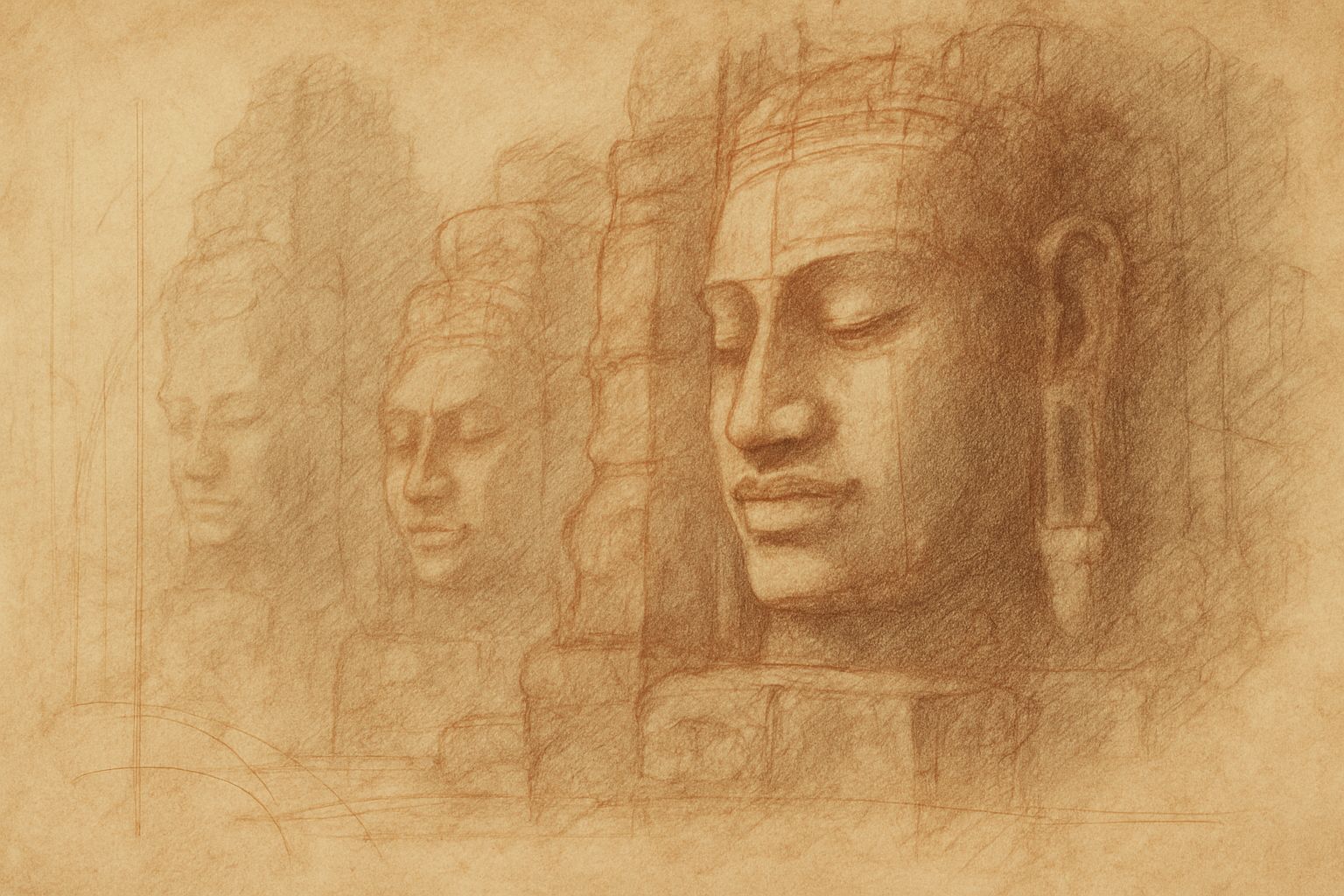

Stone That Dreams
Bayon wakes like a mind emerging from shadow. Its many faces shift with light and breath, teaching that perception—and the self—is never singular. In walking this forest of towers, the pilgrim discovers a quiet multiplicity within, held together by a calm that feels both ancient and newly understood.
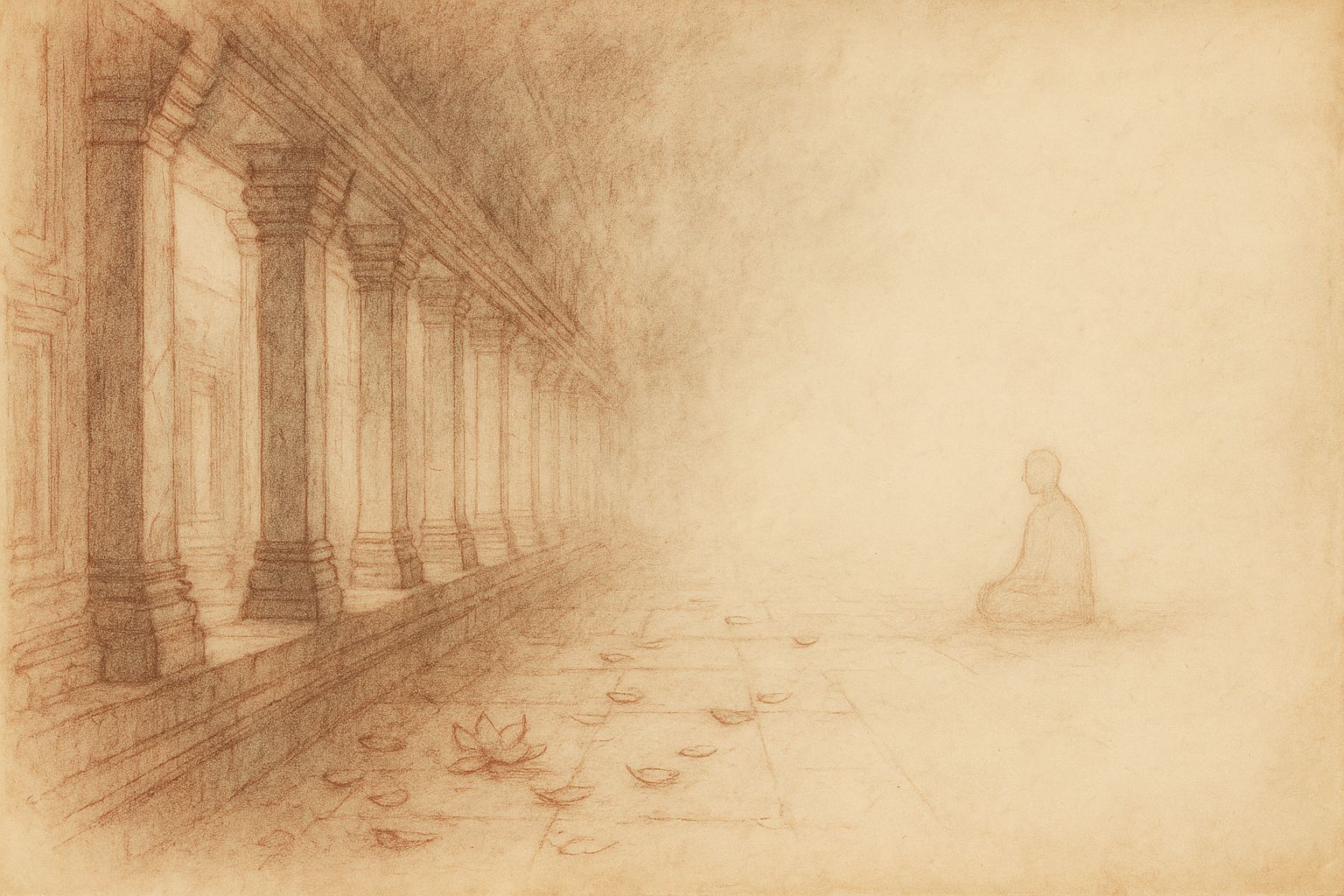

The Silence Between Temples
Between one breath and the next, the world holds its pulse in silence.
Here, between temples, devotion hums without voice—light becoming memory, memory becoming air.
Step softly into the space where sound has already bowed,
and feel the sacred linger in what remains unspoken.
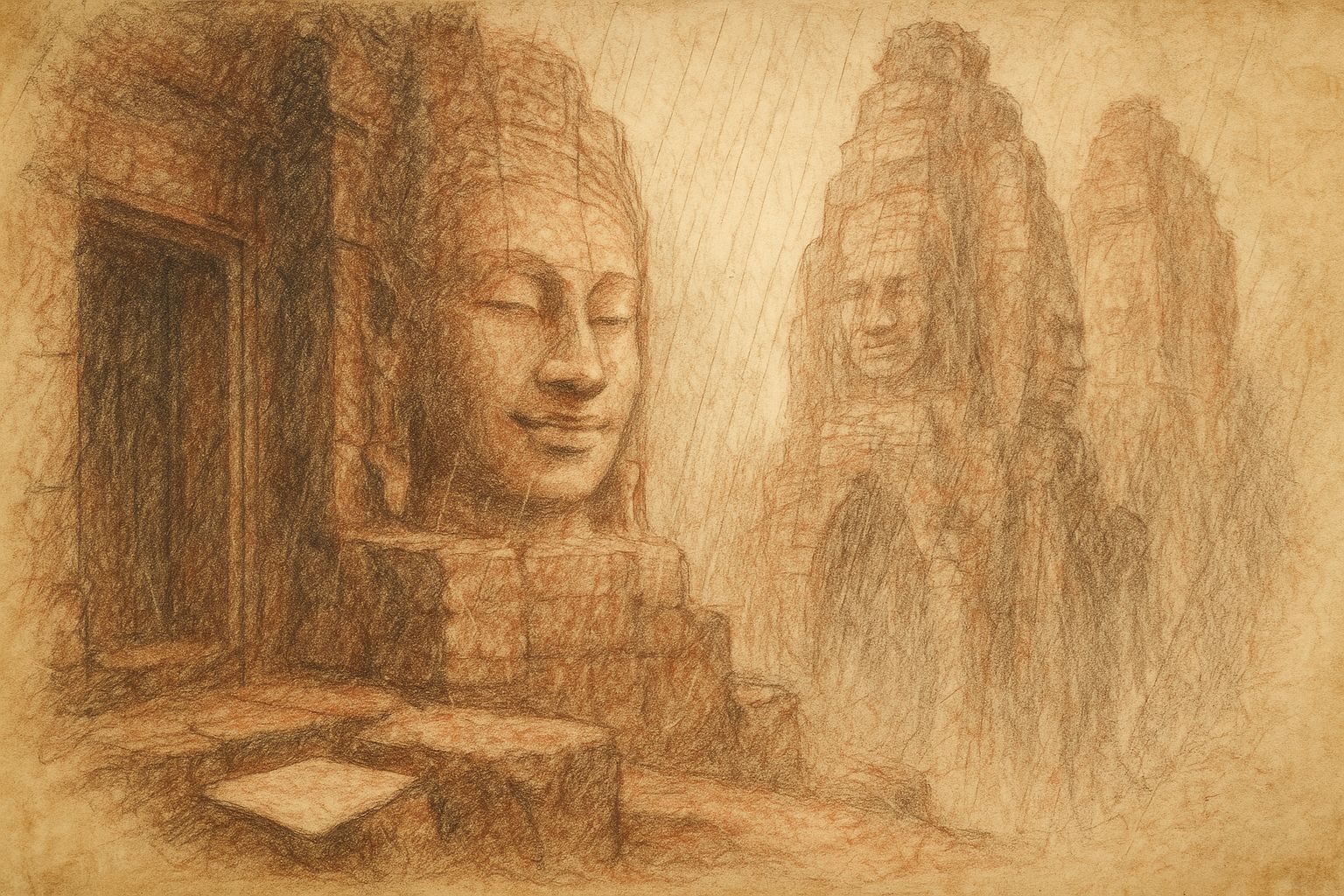

The Bayon: Faces at the Threshold of Silence
Rain gathers on the lips of the Bayon’s faces, falling into silence. Within this temple of shifting faiths and scarred kingship, stone itself remembers. Each tower smiles with tender defiance, teaching that impermanence is not loss but presence—whispered across centuries through weathered thresholds of light and shadow.
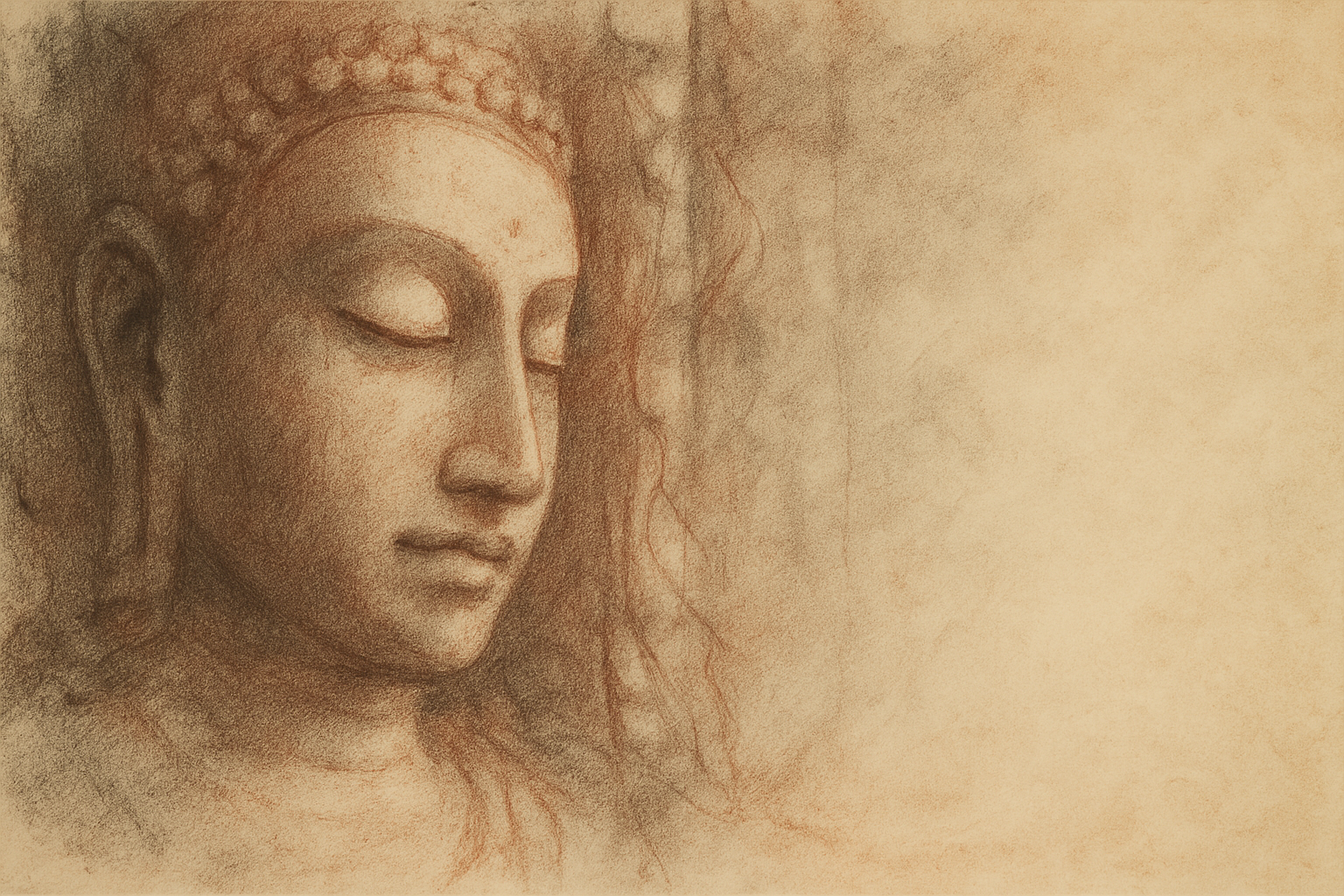

The Stillness That Looks Back at You
The Buddha’s image is more than art—it is presence. From Gandhara to Angkor, each face holds a different silence. In this meditative essay, I walk among the stone Buddhas of Cambodia and trace the mystery of a form that reveals nothing—and everything—by how it looks back at you.
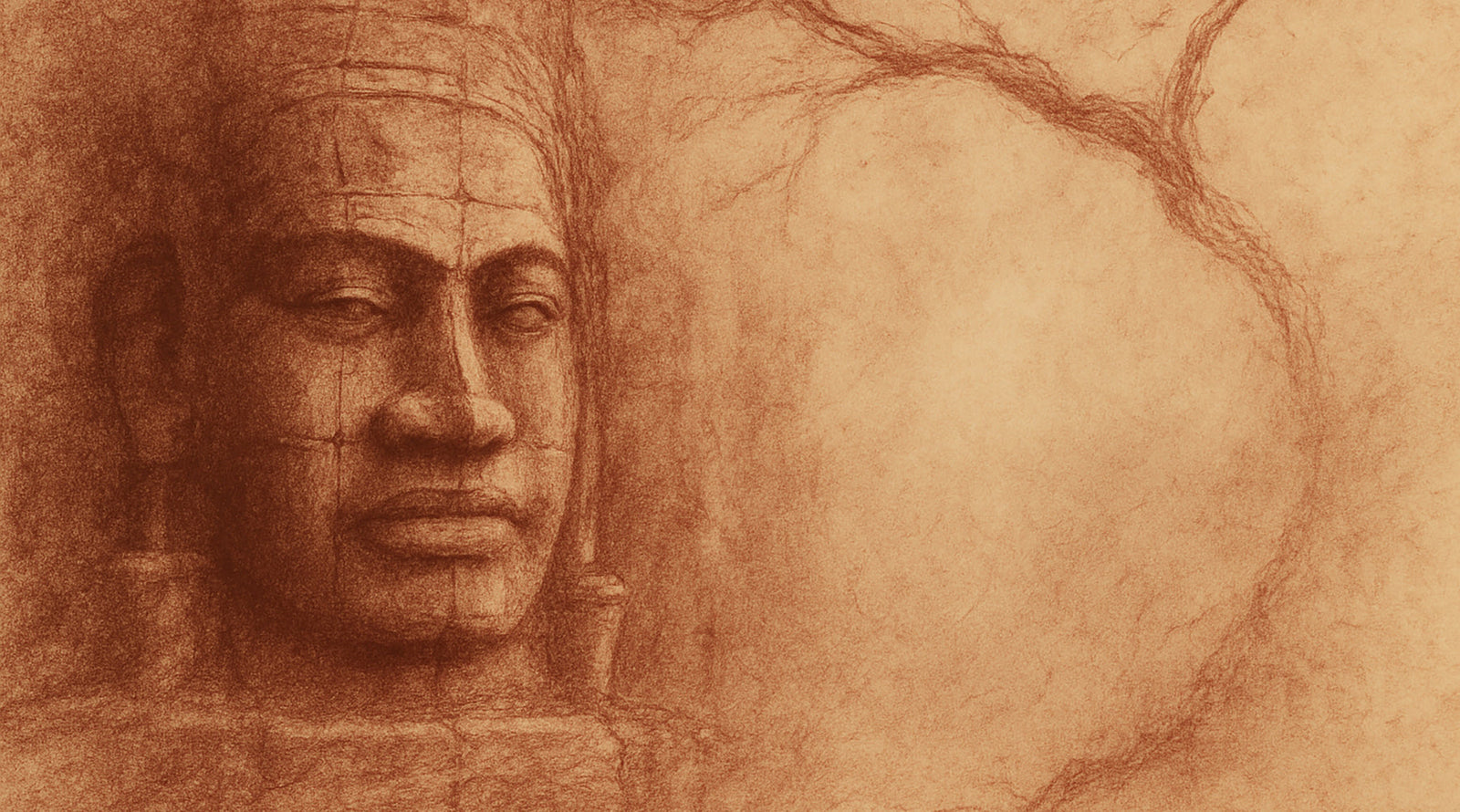

The Silent Gaze of the God Beyond Names
A mountain of stone stares outward in silence.
Two hundred faces. No name. Only presence.
Enter the Bayon, where the sacred does not speak—
it watches.
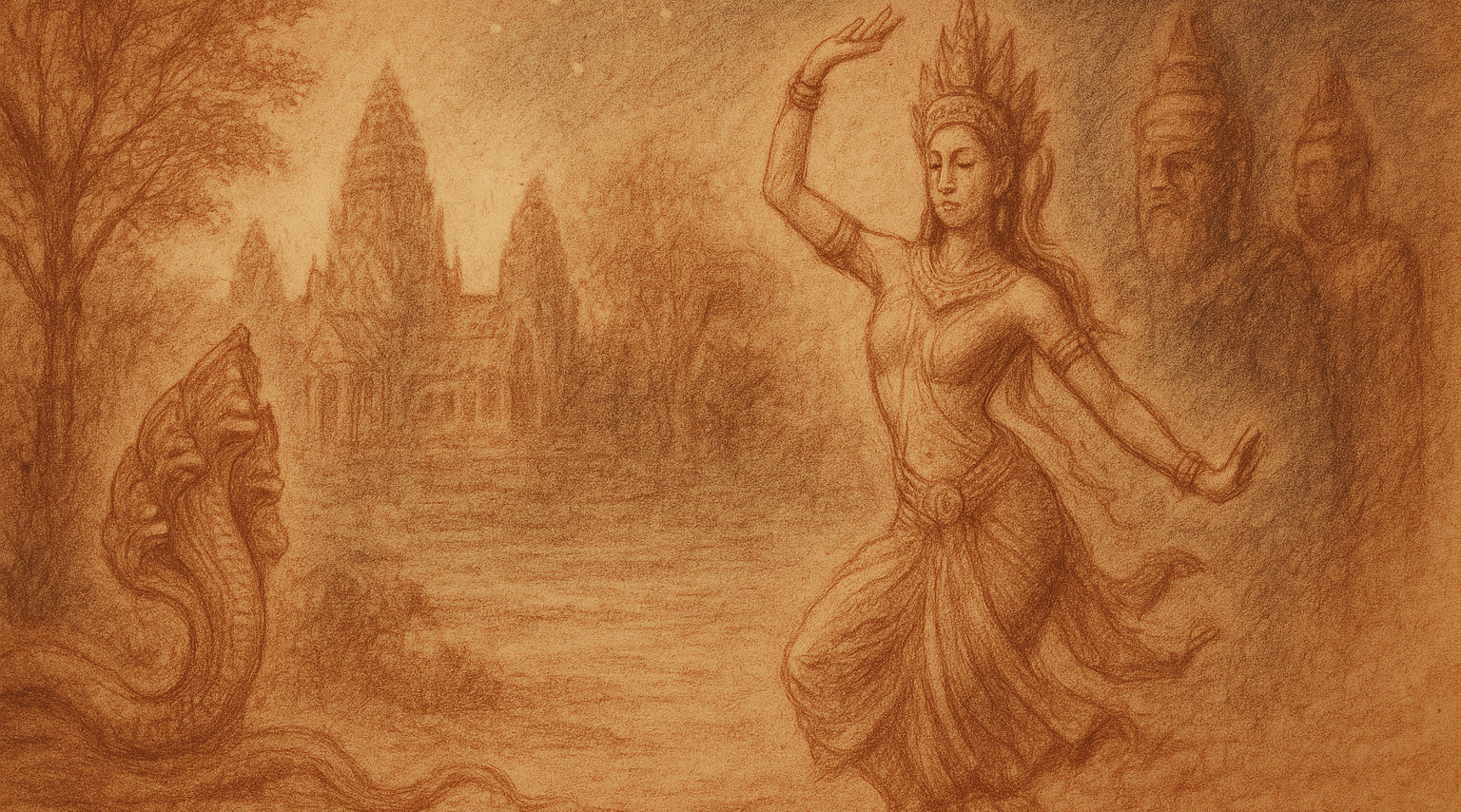

Where Gods and Stones Whisper as One
Step barefoot into the hush of Angkor, where carved stone remembers the shape of prayer, and the breath between gods and kings still lingers in the light. Here, myth and devotion flow like hidden rivers beneath the ancient ground, inviting the soul to listen where language ends.
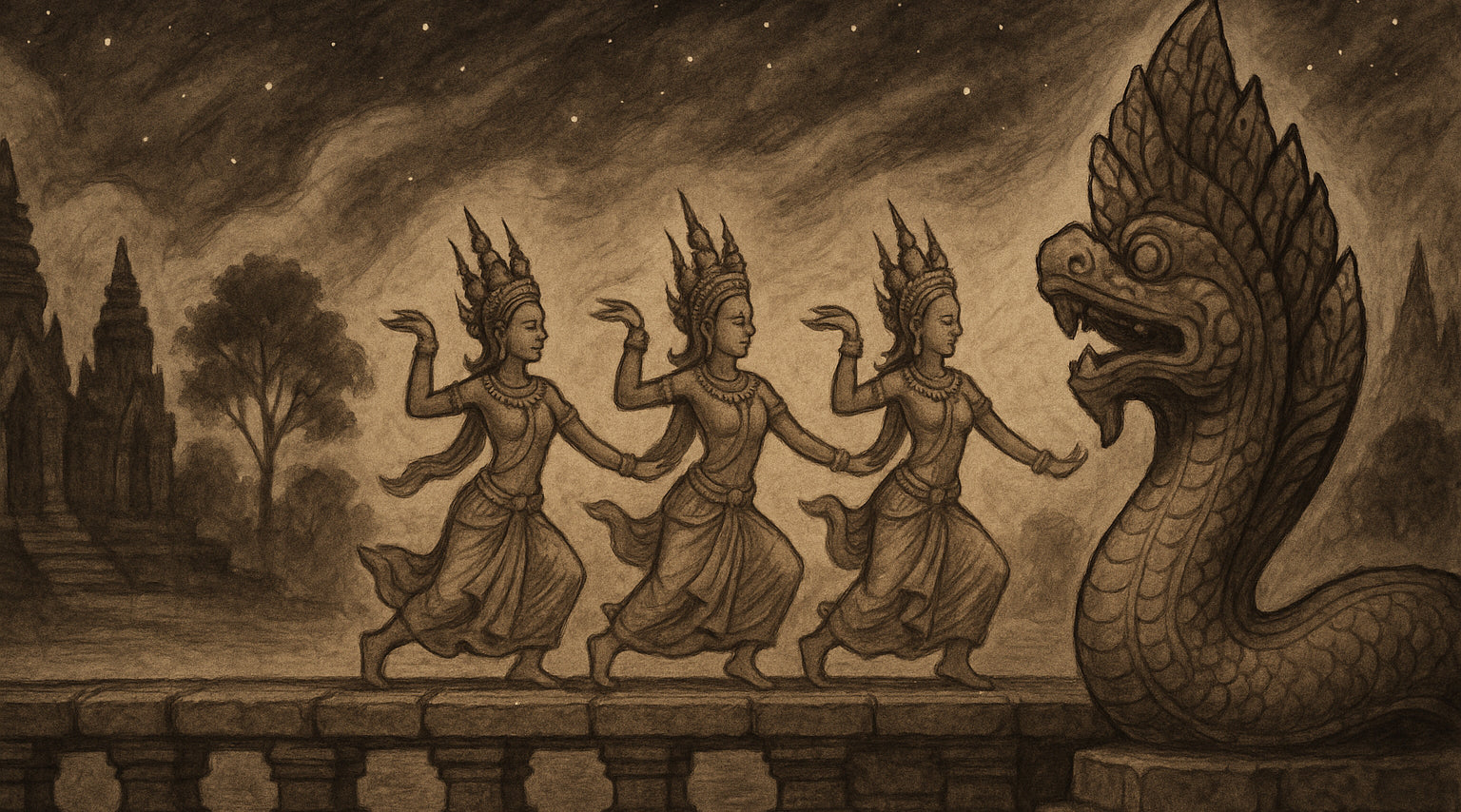

When Stone Breathes the Name of Gods
In still corridors of Angkor, where the breath of gods once passed through stone, silence lingers with memory. Step softly—each carved figure still listens, each pillar still prays. In their shadows, devotion flickers like incense, and time kneels before the sacred form of longing made visible.
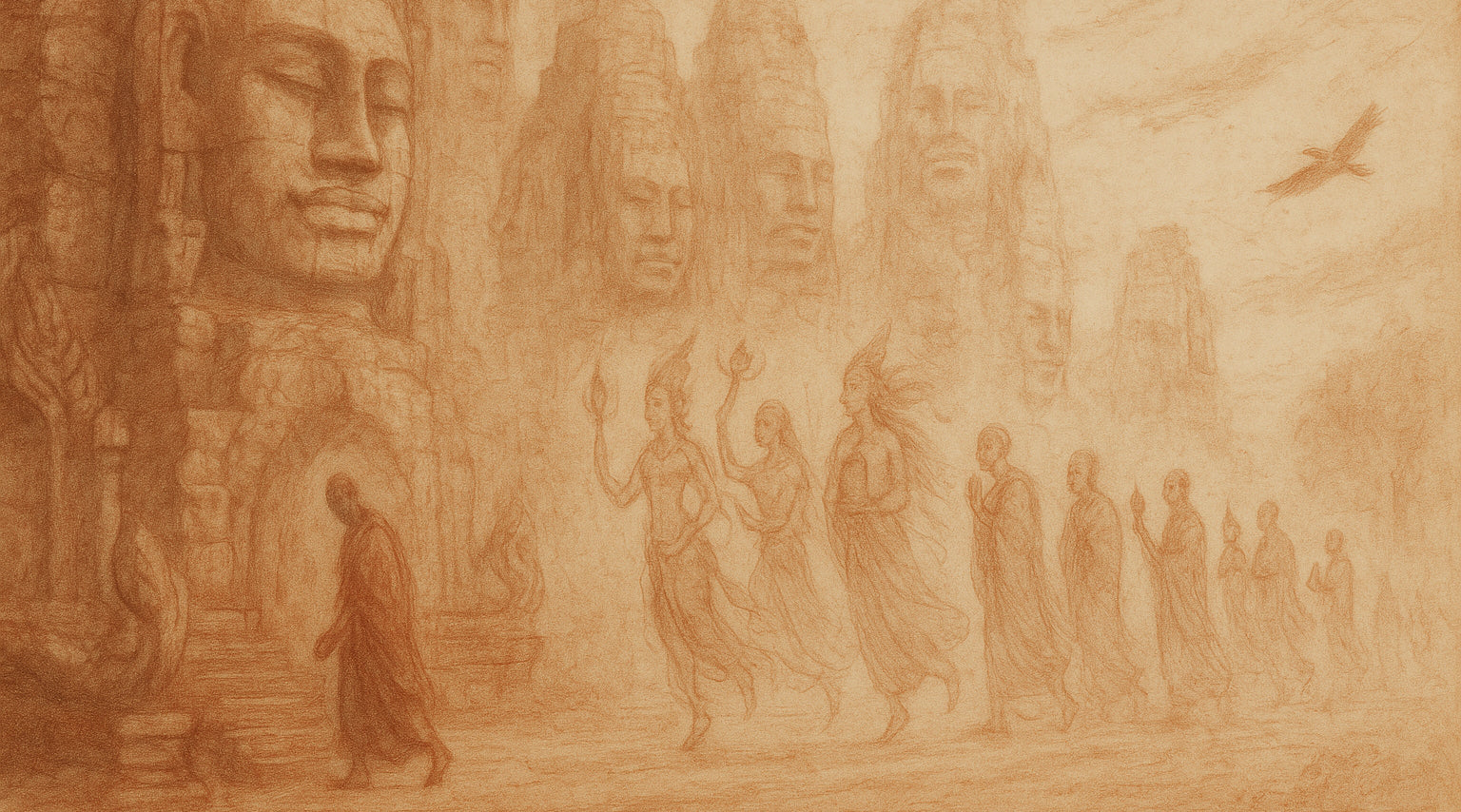

A Sanctuary Where Faces Keep Their Secrets
Veiled in morning mist, the faces gaze from stone—serene, nameless, and infinite. Step quietly through shadowed corridors where silence listens, and memory breathes. Let mystery lead you, not to answers, but to presence.
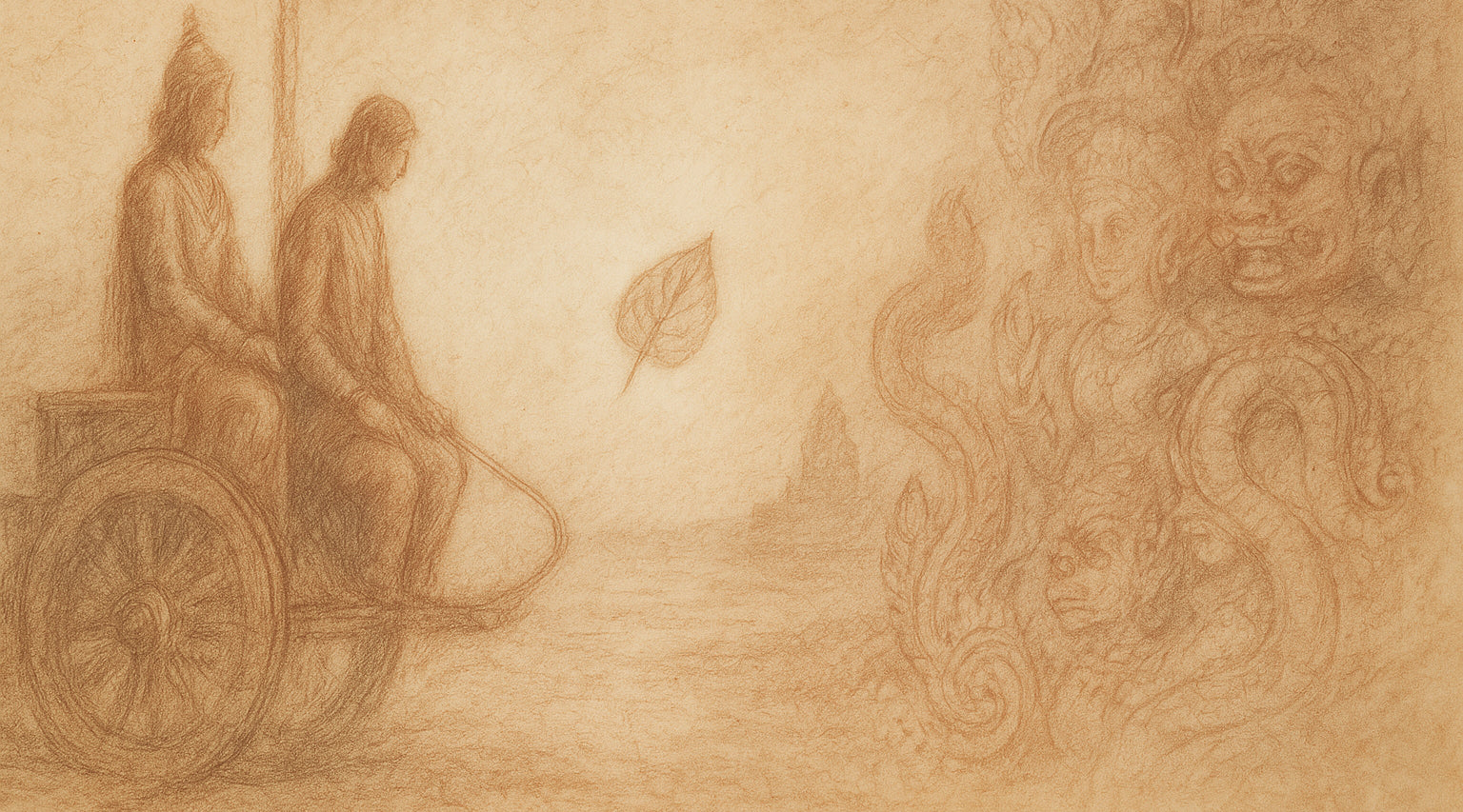

The Sacred Art of Abridgement: Khmer Myths in Stone
A single moment carved in stone may speak the whole.
Step where epics are distilled to breath and flame—
where gods whisper through fractured scenes,
and the soul of Angkor gathers in what was left unsaid.
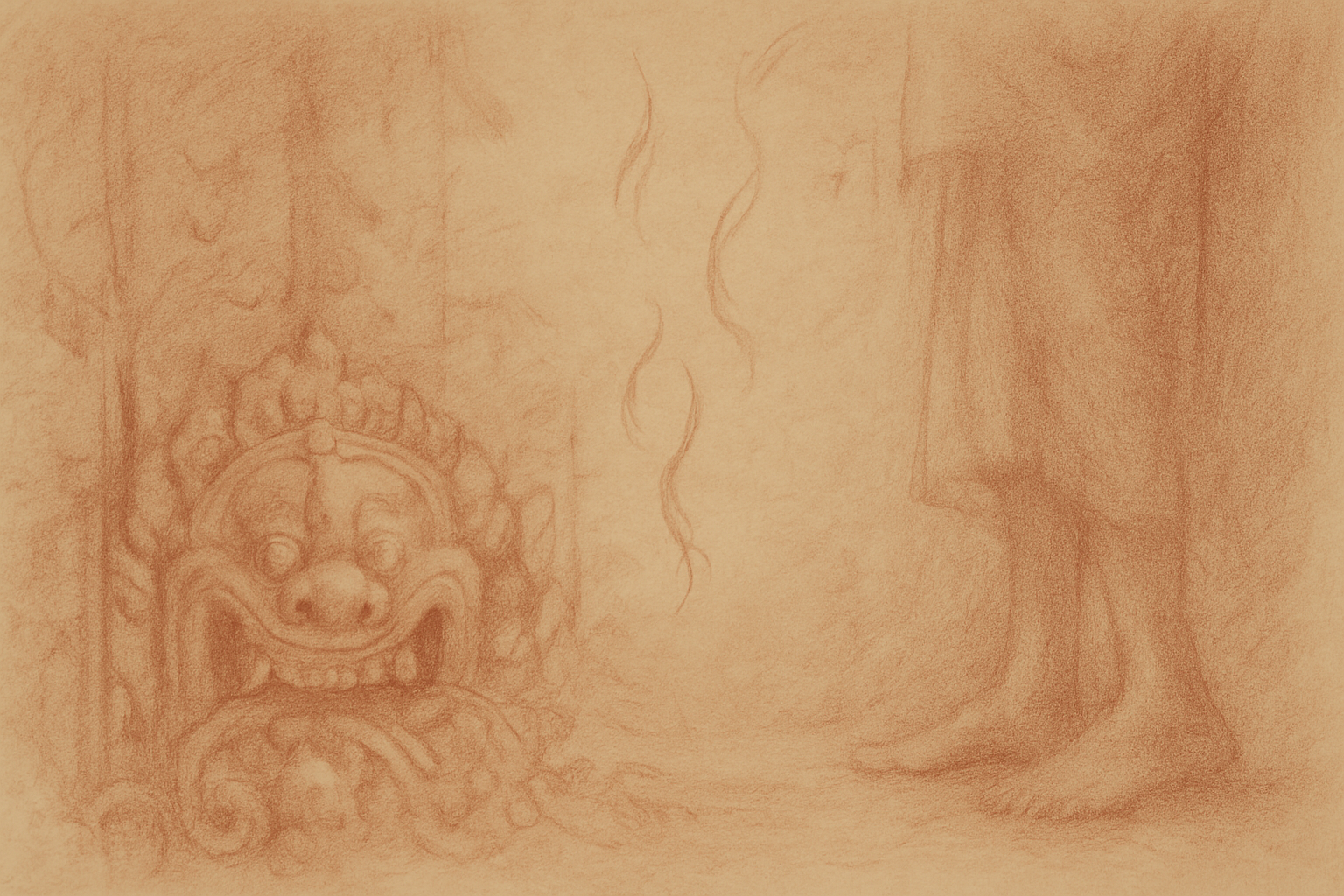

When the Scissors Fell: The Buddha’s Renunciation in Stone
He lifts the blade, and the world holds its breath.
Stone bears witness. The past dissolves.
At Preah Khan, renunciation is not an ending,
but the soft beginning of the path to stillness.
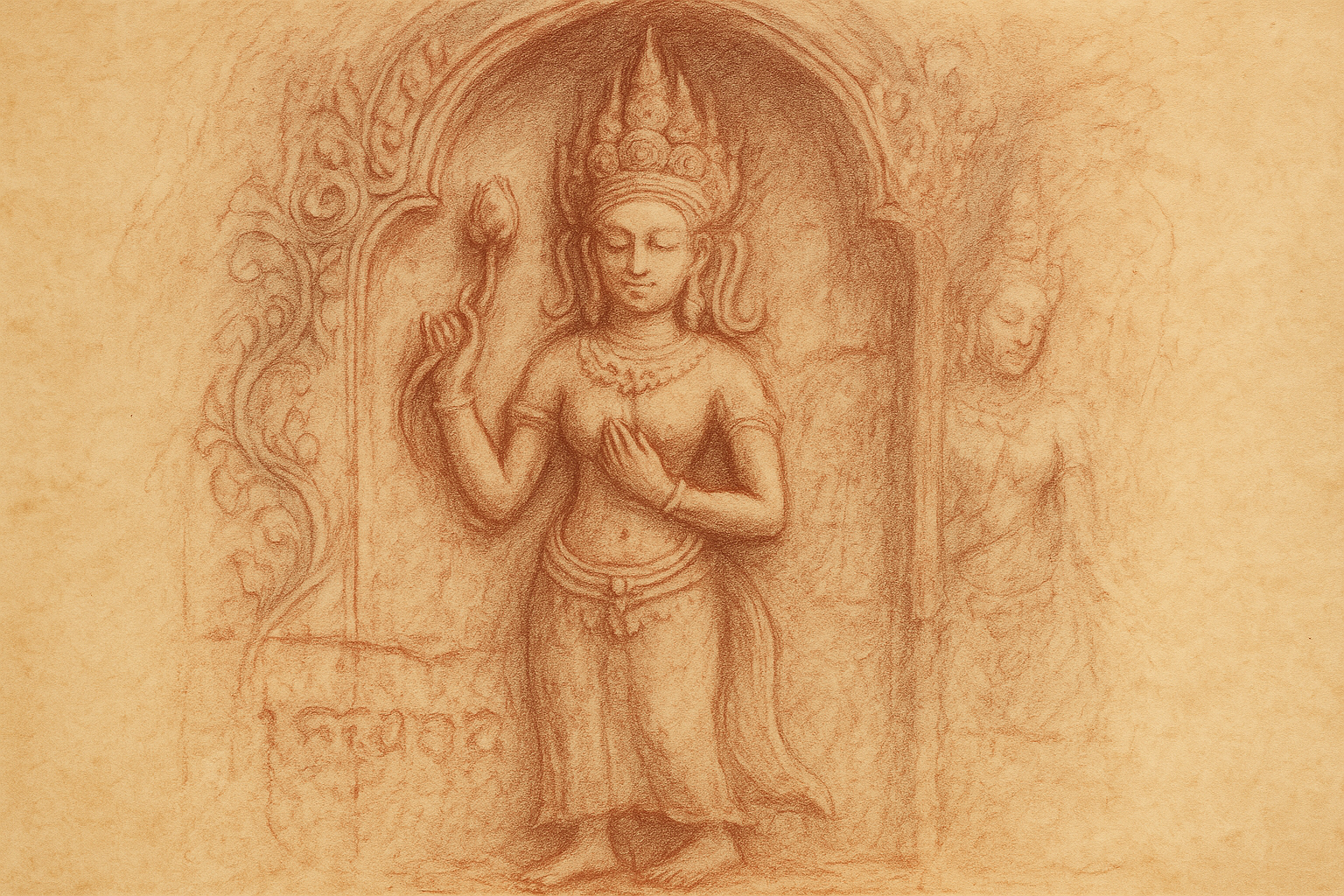

What the Celestial Ladies Are Called
They do not ask to be named.
Carved into temple stone with smiles that cross worlds, they invite us to let go of labels—
and simply kneel
in wonder.
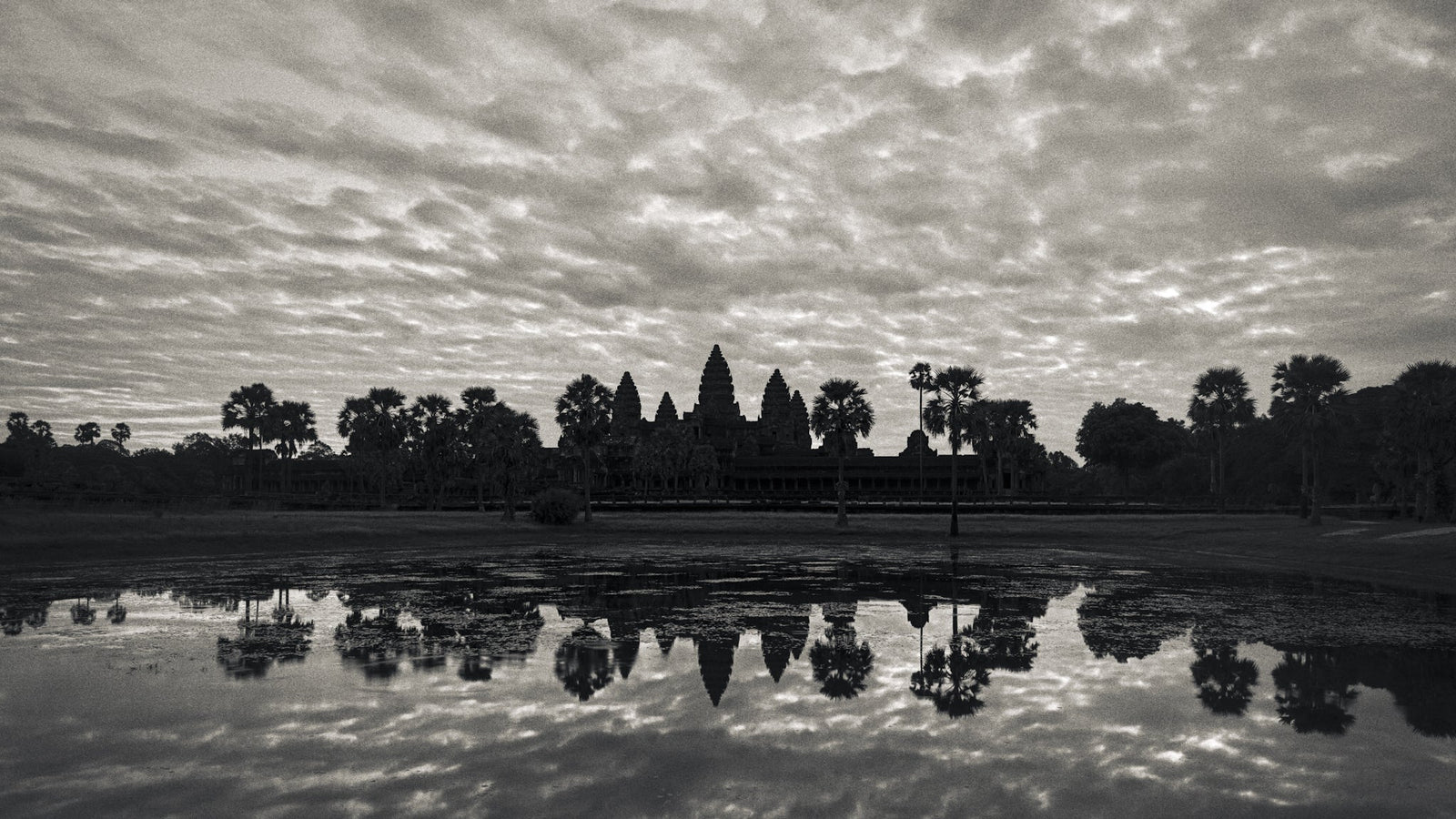

The Construction of Sacredness at Angkor Wat
Step beyond stone and shadow into a place where silence was carved with devotion. A temple not only built for gods—but made sacred by centuries of offering, story, and light. Let each breath lead you deeper into the mystery of how sacredness is born.
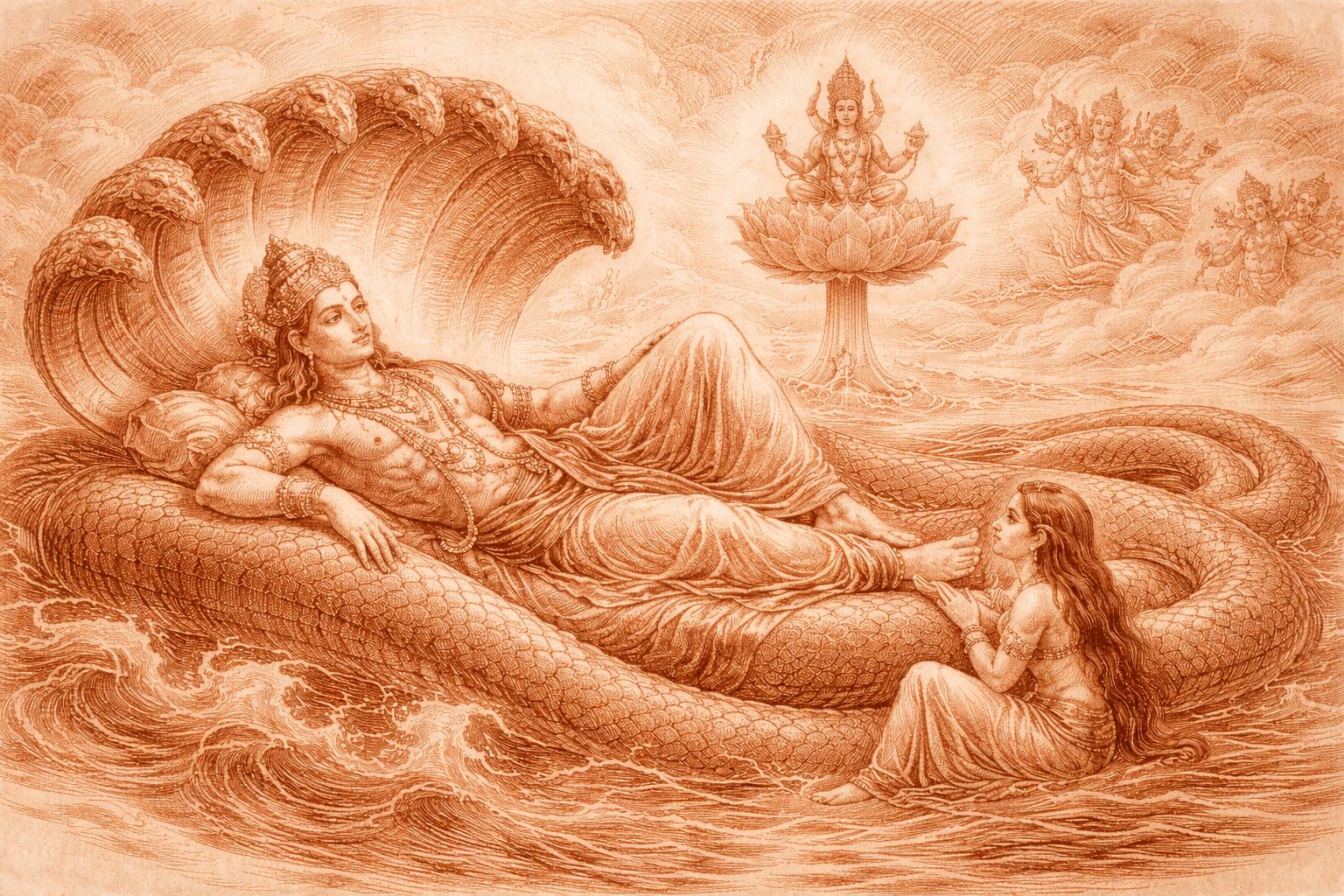

Anantasayin — Where the World Pauses to Be Remembered
Anantasayin depicts the universe at rest. Vishnu reclines upon the endless serpent Ananta, suspended on the Ocean of Milk between one world and the next. It is not sleep as absence, but as memory—creation held intact while time loosens and prepares to begin again.
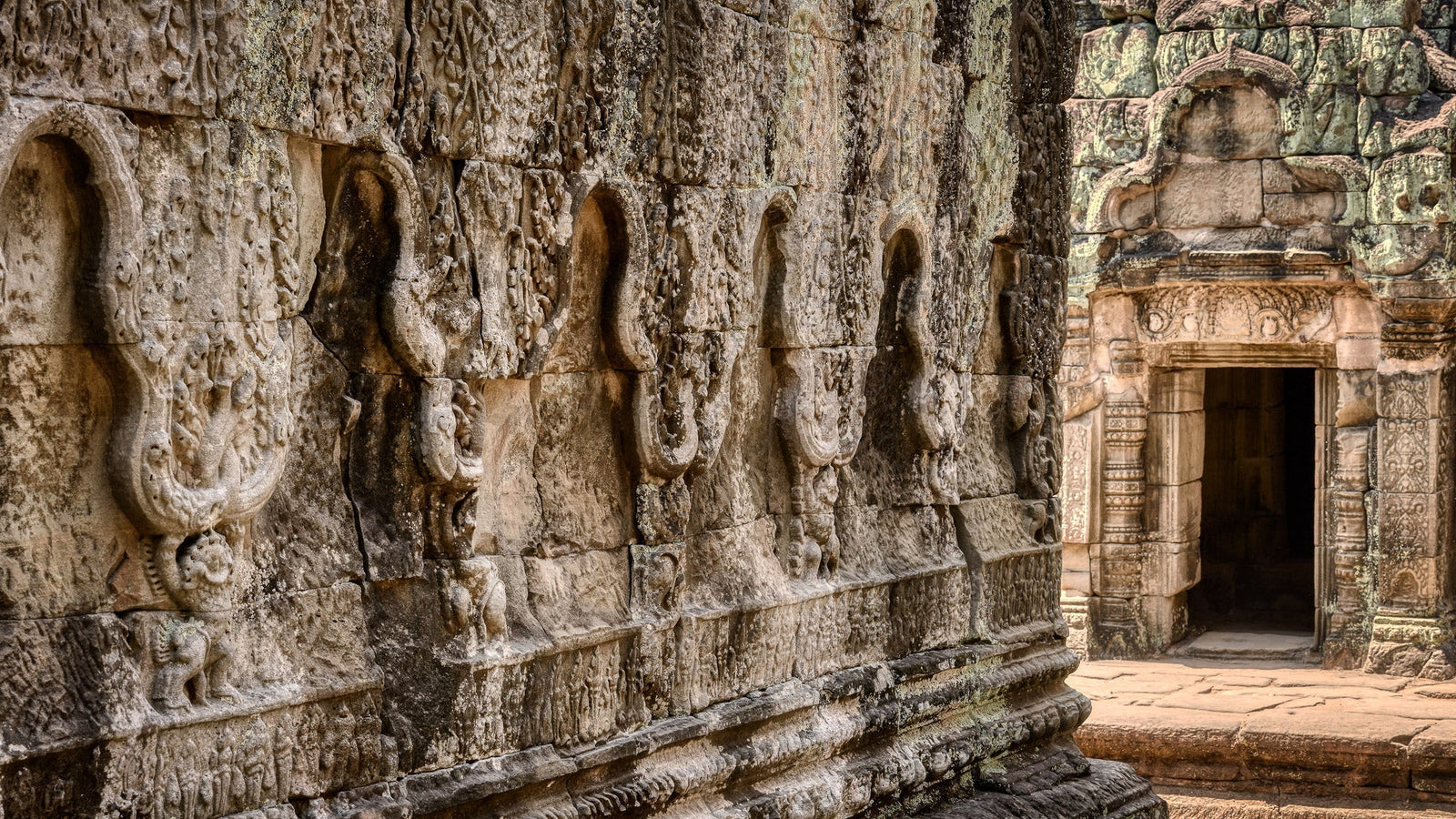

The Vanishing Buddha: A Silence Carved in Stone
There are wounds in the stone that no rain can wash away.
Walk slowly among the vanished Buddhas—
where silence remembers what belief once tried to forget,
and the soul still bows before what is no longer seen.
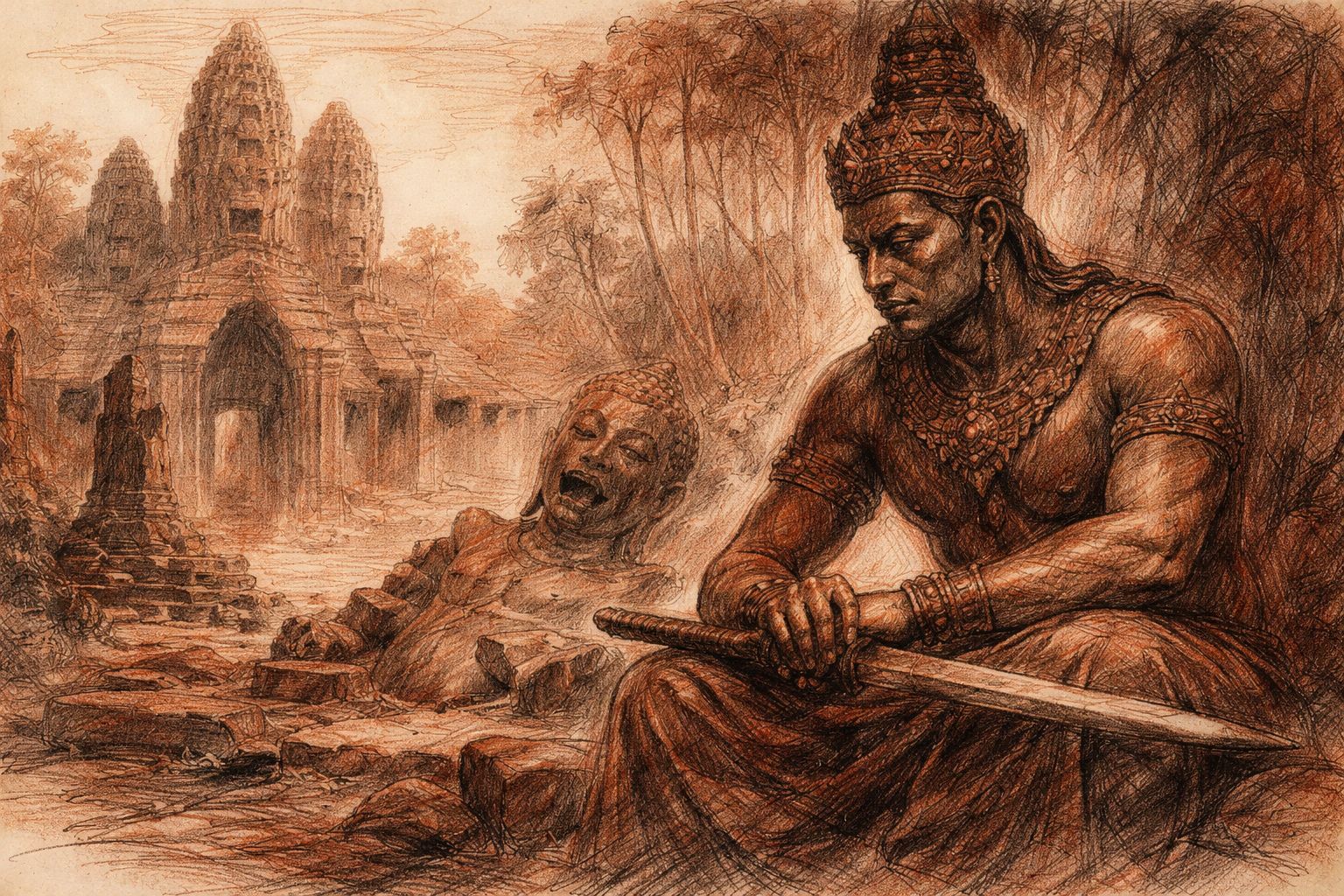

Jayavarman VIII — The King Who Refused Silence
Jayavarman VIII ruled at the moment Angkor hesitated between contraction and release. He erased not from cruelty alone, but from fear of a world growing too plural to command. His final temple stands like a full stop in stone—quiet, deliberate, and already listening for silence.
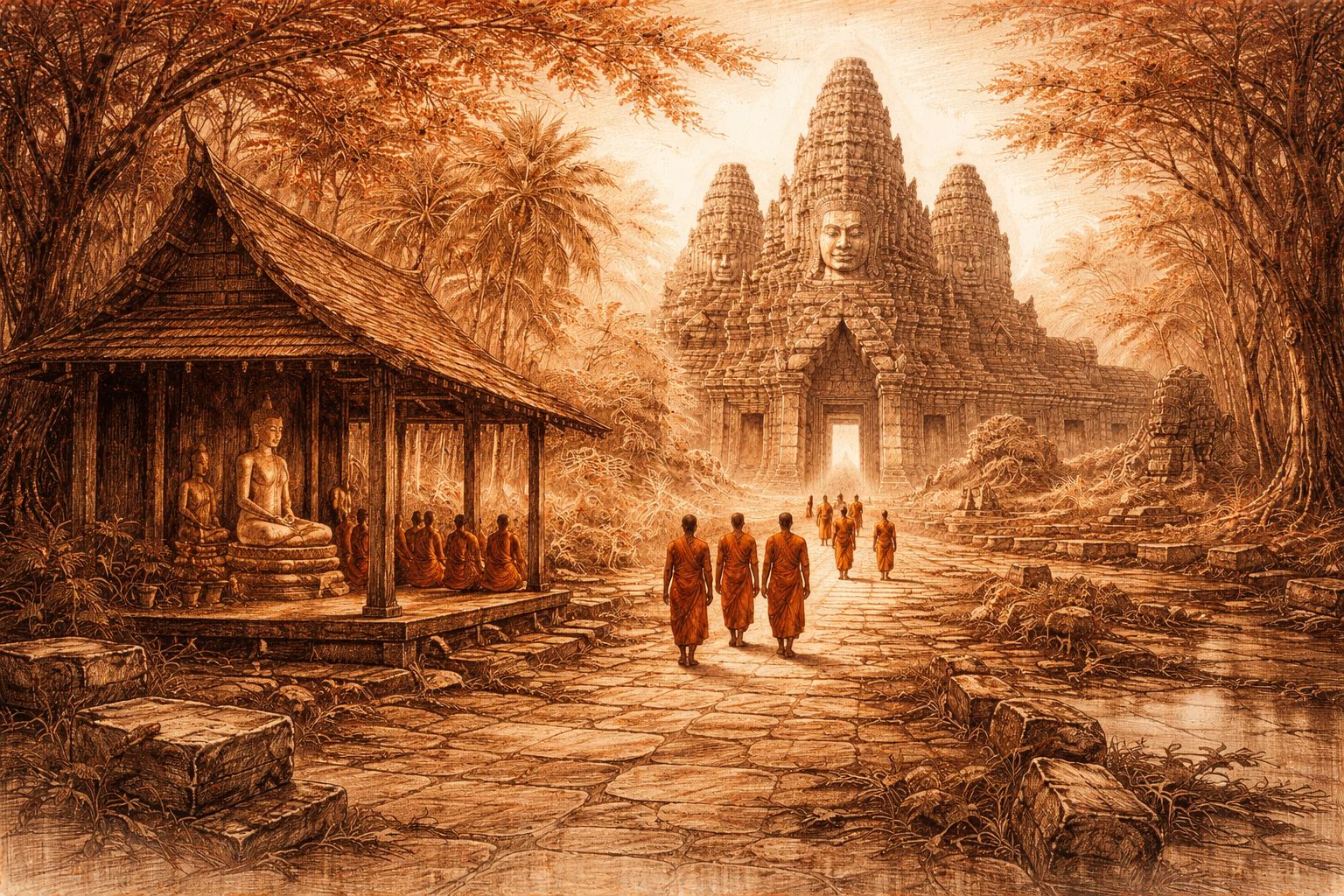

Jayavarman IX — The Last Candle and the Morning Light
Jayavarman IX stands at the threshold between stone and breath—the last Sanskrit voice of Angkor ruling as Theravada Buddhism quietly became the faith of the people. His reign marks not collapse, but release: from divine kingship to lived practice, from monument to monastery, from cosmic order to moral attention.
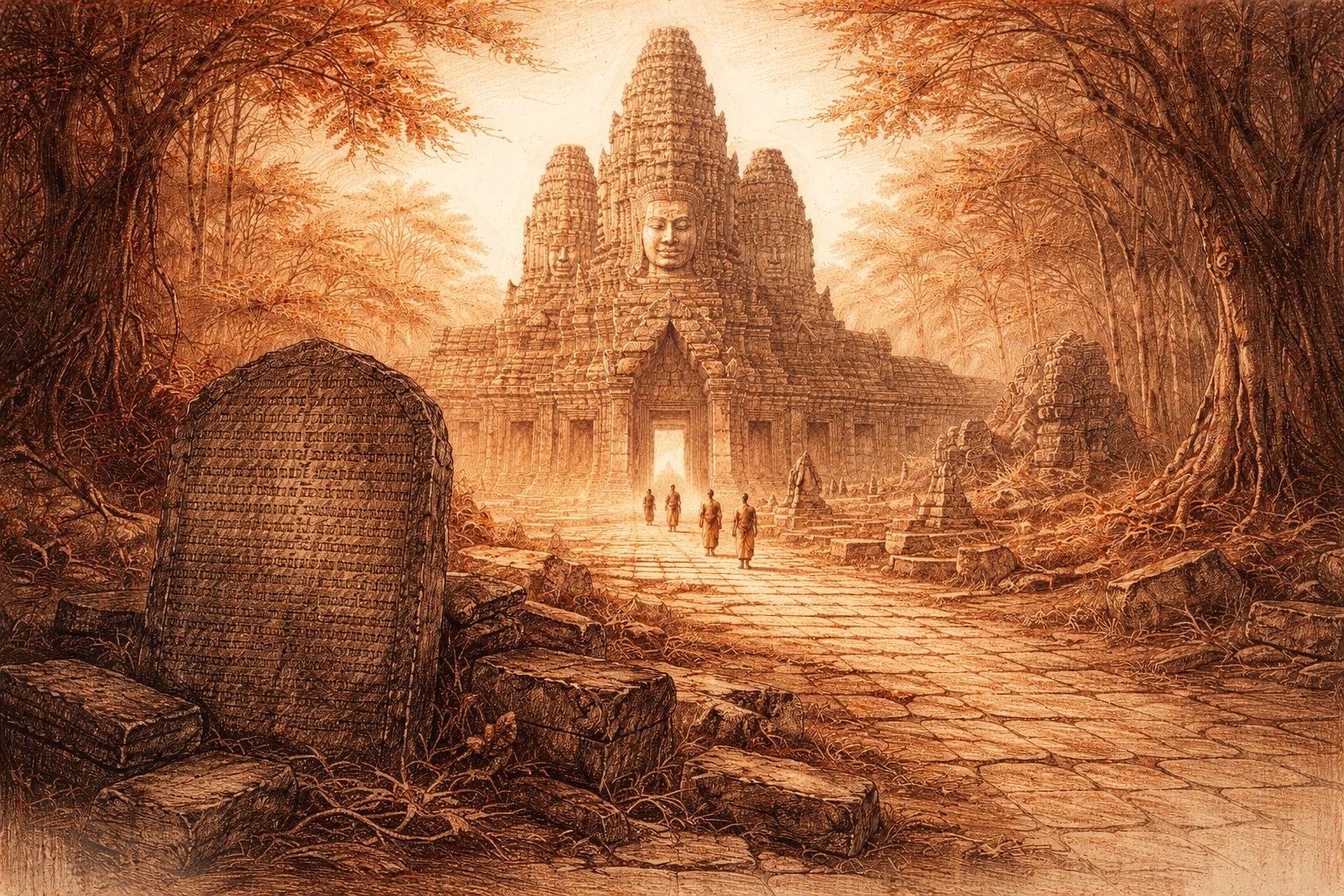

Jayavarman IX — The Last Inscription
Jayavarman IX rules at the edge of Angkor’s silence—the last king to speak in Sanskrit, the final voice cut into stone. His reign marks not collapse, but transition: from cosmic kingship to human continuity, from monument to monastery, from divine proclamation to quiet survival.
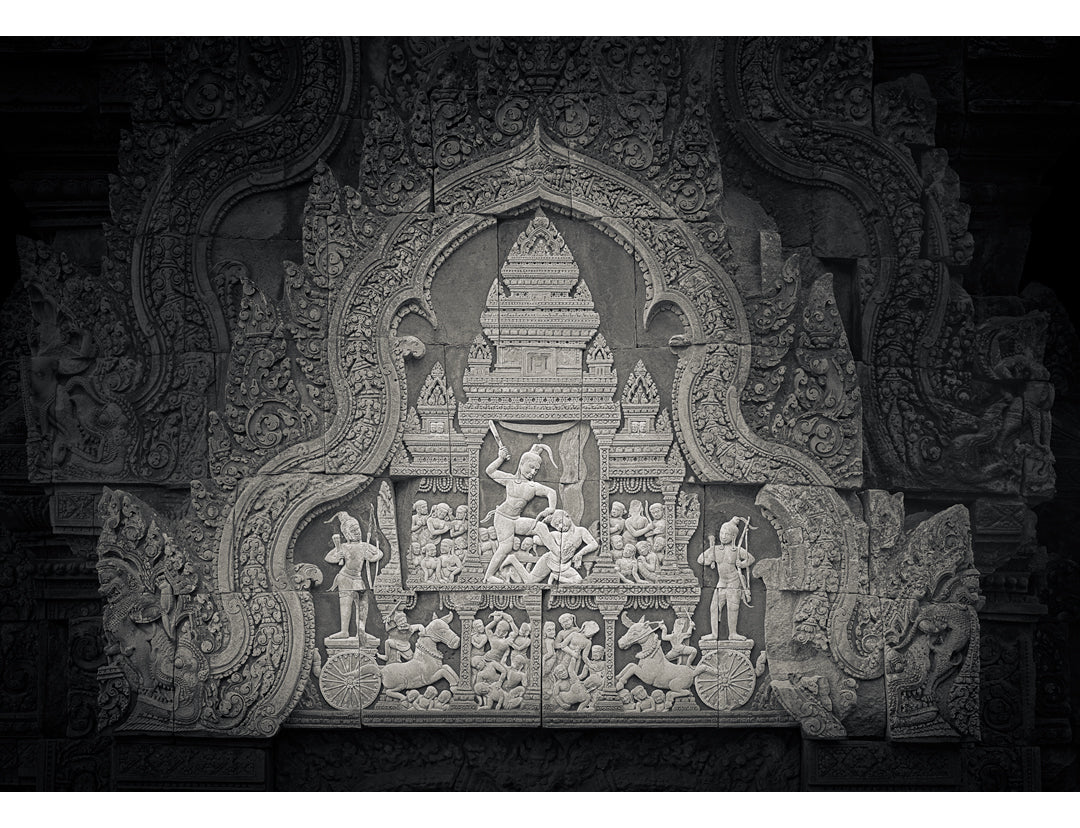

Tympanum
A tympanum is a pause in stone—a held breath above the doorway where meaning gathers before entry. This essay reflects on how sacred architecture uses this charged surface to train posture and attention, turning thresholds into moments of orientation where image, myth, and belief quietly converge.
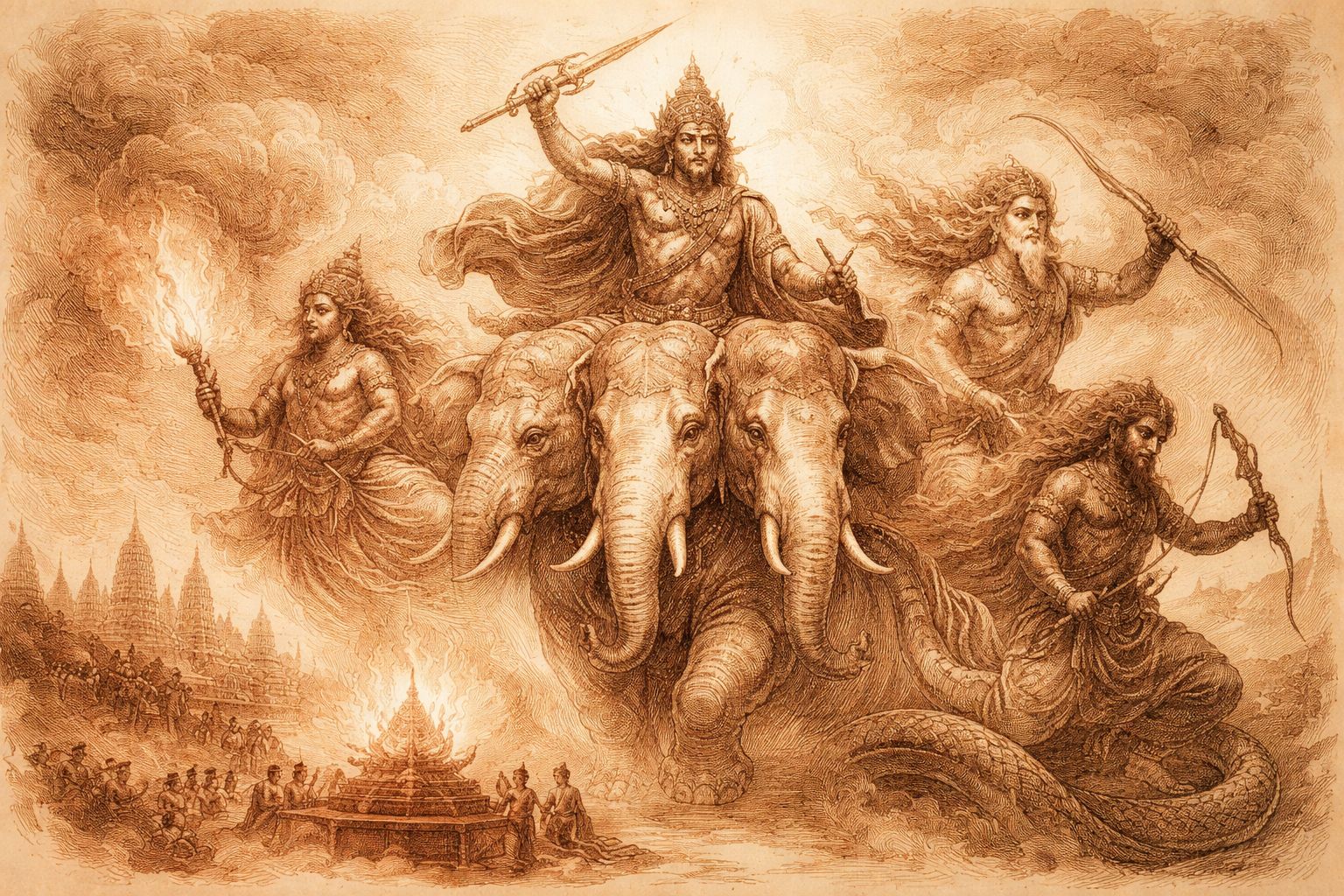

The Vedic Gods — Voices Before Stone
Before temples learned to hold silence, the gods arrived as weather. Fire carried prayer. Storms ruled kingship. In the Vedic world, divinity was not housed but invoked—spoken into wind, flame, and rain. These ancient gods did not vanish at Angkor; they were reorganised, disciplined, and set to guard space itself.