
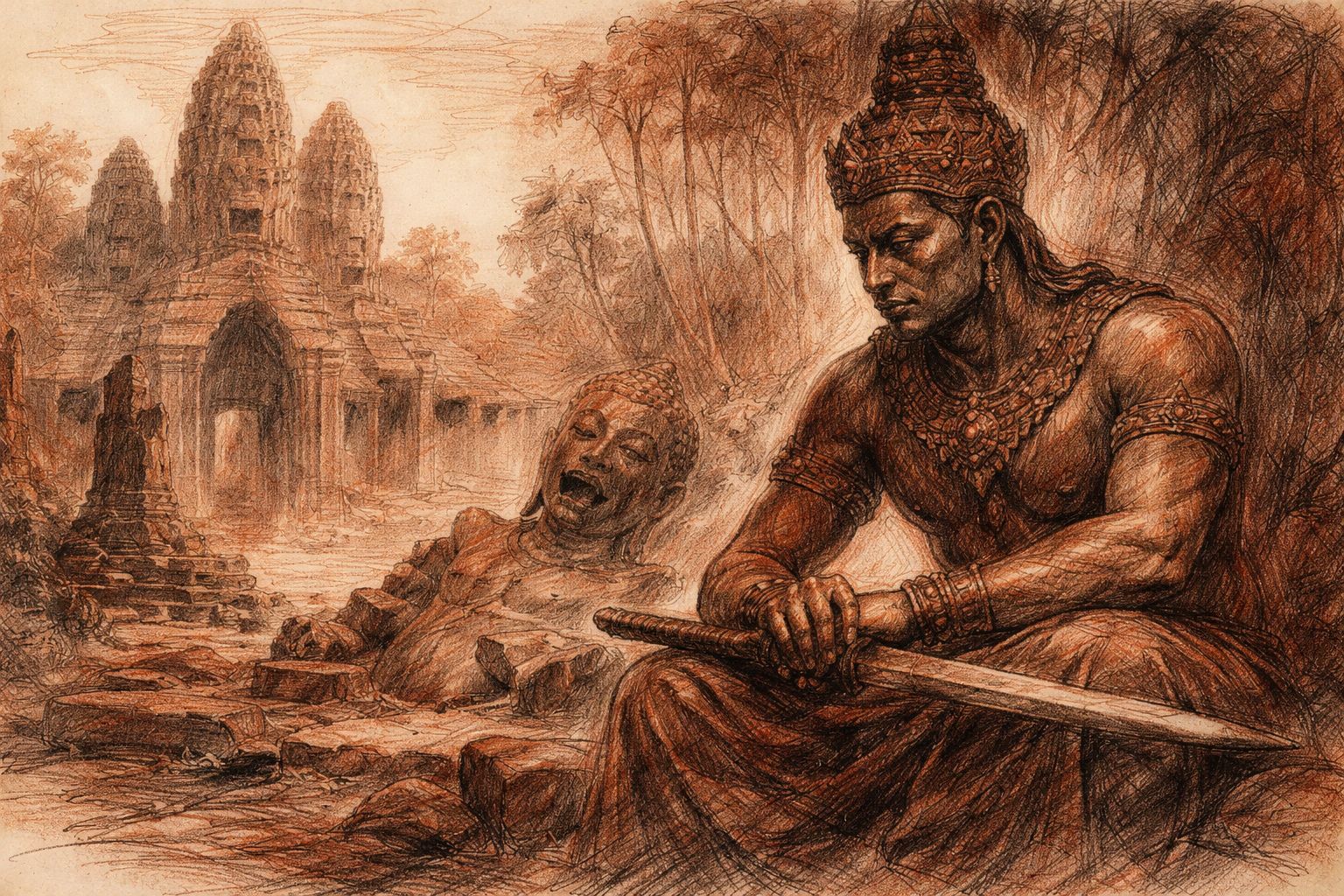

Jayavarman VIII — The King Who Refused Silence
Angkor had learned to breathe with the Buddha.
Under the long, compassionate reign of Jayavarman VII, stone had softened. Faces multiplied, roads reached outward like veins, hospitals and rest houses gathered the vulnerable into the body of the state. The empire had learned a new grammar: kingship as care, power as listening, the mandala loosened into human scale.
Jayavarman VIII inherited this world—and recoiled.
He was a Shaivite in a Buddhist city, a king whose inner compass pointed not toward diffusion but toward contraction. Where his predecessors had allowed the empire’s sacred centre to fracture and reform around compassion, Jayavarman VIII sought to draw it back inward, toward the vertical axis of Shiva, toward the mountain that does not bend.
History remembers him as an iconoclast. Stone Buddhas were defaced, bodhisattvas stripped of their serenity, serene faces chiselled into anonymity. Yet iconoclasm alone is too simple a word. What unfolded was not merely destruction, but refusal: a refusal to allow Angkor’s sacred language to complete its transformation.
To see only violence here is to miss the deeper tension. Jayavarman VIII ruled at a moment when Angkor stood exposed—politically, militarily, cosmologically. From the east and north came the distant thunder of the Mongols, the armies of Kublai Khan rolling through neighbouring lands. From the west, the pressure of emerging Thai polities pressed against the empire’s old borders. This was not an age of confidence; it was an age of narrowing choices.
Jayavarman VIII did not meet the Mongols with war. He chose tribute instead—gold, ivory, measured submission. It was a quiet decision, pragmatic and deeply unheroic, yet it preserved Angkor from annihilation. Power, here, took the form of restraint.
Within the capital, however, restraint was harder to maintain.
The Buddhist images that had softened Angkor’s gaze were altered, removed, or erased. At the Bayon, the Buddha of the central sanctuary was broken and cast down. Yet even this act feels less like rage than anxiety: a ruler attempting to reassert coherence over a world that had grown too plural, too fluid, too compassionate to obey a single axis.
Jayavarman VIII was not merely undoing his predecessors; he was trying to re-tighten the mandala.
His building works tell the same story. The expansions of the Terrace of the Leper King, the continued use of older Hindu sites, the dedication of East Top Temple—also known as Mangalartha—in 1295: these were not gestures of ambition, but punctuation marks. Mangalartha stands as the final dated stone temple of Angkor, a modest shrine at the edge of an ending.
Stone, by then, had begun to fall silent.
Beyond Angkor’s walls, war with Sukhothai bled the empire. Inside the palace, legitimacy thinned. In 1295, Jayavarman VIII was overthrown by his son-in-law, Indravarman III, a Theravada Buddhist. The Golden Sword—the sacred palladium of kingship—changed hands not through ceremony, but through quiet theft. Power slipped rather than shattered.
Jayavarman VIII received the posthumous name Paramesvarapada—“he who has attained the supreme state.” It is a strangely serene title for a king remembered in fragments and erasures. Perhaps it gestures toward something history rarely records: not victory, not wisdom, but exhaustion.
Soon after his fall, Zhou Daguan arrived in Angkor. His account captures a city still magnificent, still ordered, yet already hollowing from within. Monks walked freely. Markets thrived. The great stone city remained—but its centre of gravity had shifted away from kings and monuments toward villages, monasteries, and rice fields.
Jayavarman VIII was not the end of Angkor. But he was the last king to believe that stone alone could hold the world together.
After him, Angkor would learn a quieter faith—one that did not need faces carved in stone, or kings carved into history. The empire did not collapse; it exhaled, and began to live elsewhere.
—
Receive the next work
Subscribe free to receive new work from the Lucas Varro Library by email.
More from the Library


See Also
A concise and impartial dictionary of absence, promises, quarrels, ordinary objects, and the troublesome instability of words.
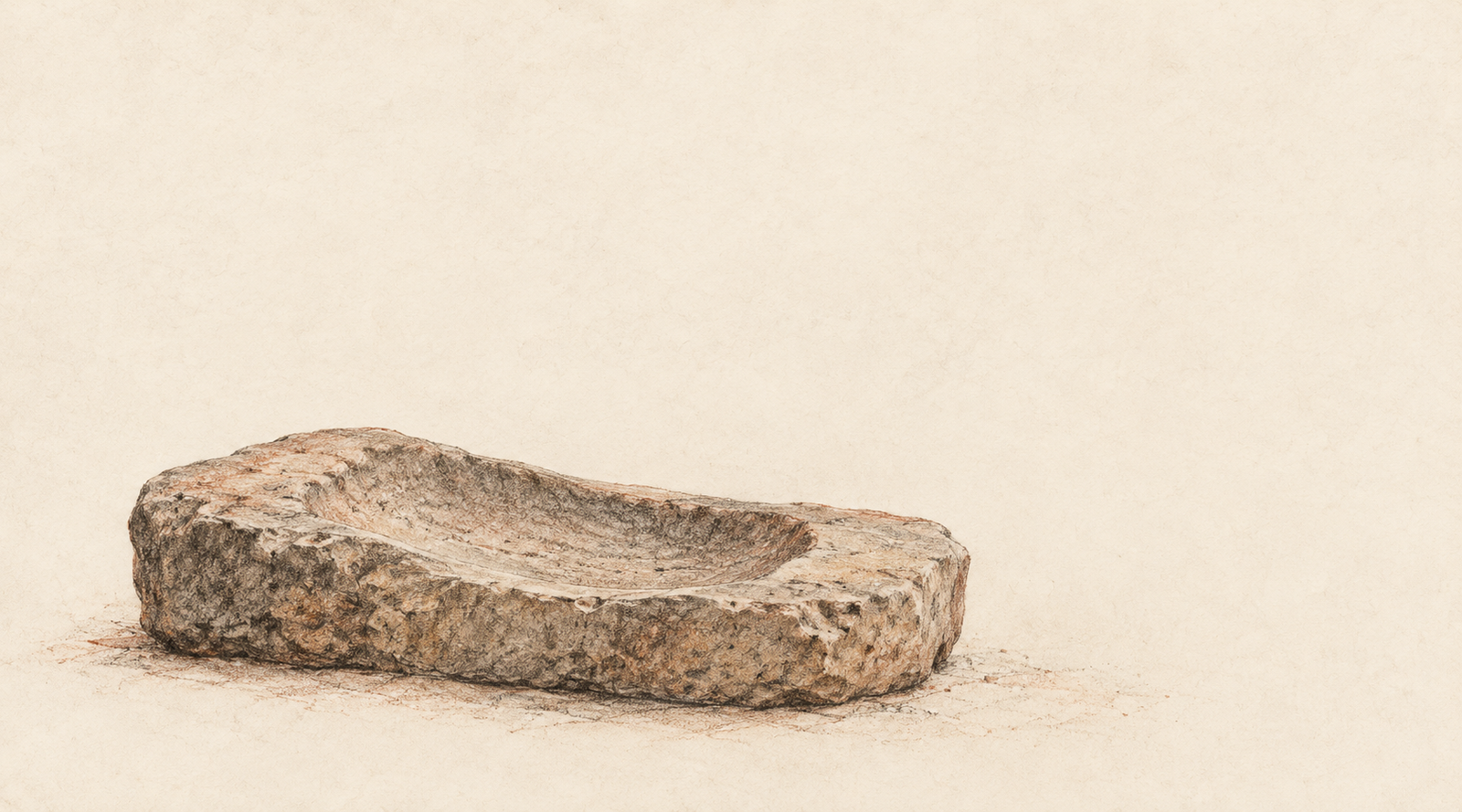

The City of Service
The temple we inherit is a building from which almost all necessity has been removed. Nothing must be brought for it to continue being what we call a temple. The sanctuary asks nothing of us. Stone is good at this kind of independence.
A living temple was otherwise.
Water had to come in. So did grain, cloth, oil, aromatic substances, fuel. The things required for worship arrived because someone carried them across a threshold.
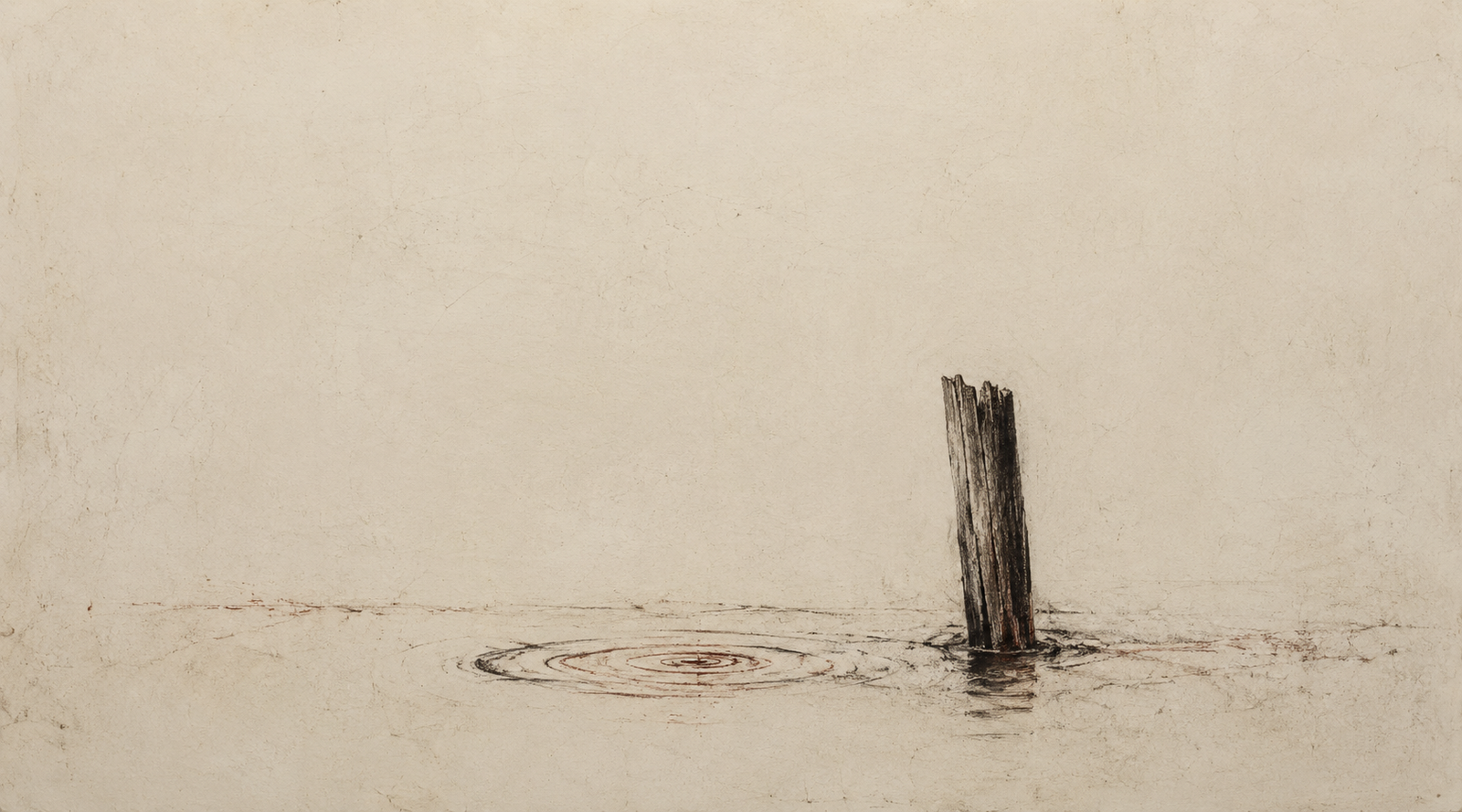

Houses of Wood, Light, and Smoke
Some of Angkor’s most intimate ruins do not rise above the ground at all. They are postholes, low mounds, hearths and ponds: durable traces of a domestic city built largely from things that decay. To restore that city is to see Angkor not only as stone, but as wood, smoke, water, repair, and people living within calling distance.