
The Library gathers the written works of Lucas Varro — journals of the temples, mythic retellings, contemplative essays, poems, and volumes shaped by shadow, silence, and wonder. Here, words stand beside images as offerings: field notes from Angkor, meditations on sacred stone, old stories rekindled, and reflections carried beyond the visible world.
Within these shelves you will find many rooms: Angkor journals, myth and legend, apsara meditations, contemplative essays, poems, children’s mythic wonder, literary retellings, and quieter devotions of the page. Wander chronologically, enter by theme, or pass through one of the dedicated publication houses now gathered within the wider Library.
For those who wish to follow these paths further, several of these writings continue on Substack and in dedicated archive blogs: The Lantern Chronicles , where myth, legend, contemplative essays, poetry, and other imaginative works are carried onward; The House of Cadmus , where Greek myth and tragedy are reopened through inheritance, violence, fate, and recurrence; The Mytharium , where myth, Tolkien, fairy stories, and old literature are read and retold with seriousness; The Alexander Series , where A. M. Sharp retells Greek myths for children who want to be trusted by stories; and The Hospitable Dark , where A. M. Sharp offers literary myth retellings shaped by darkness, shelter, endurance, and return.
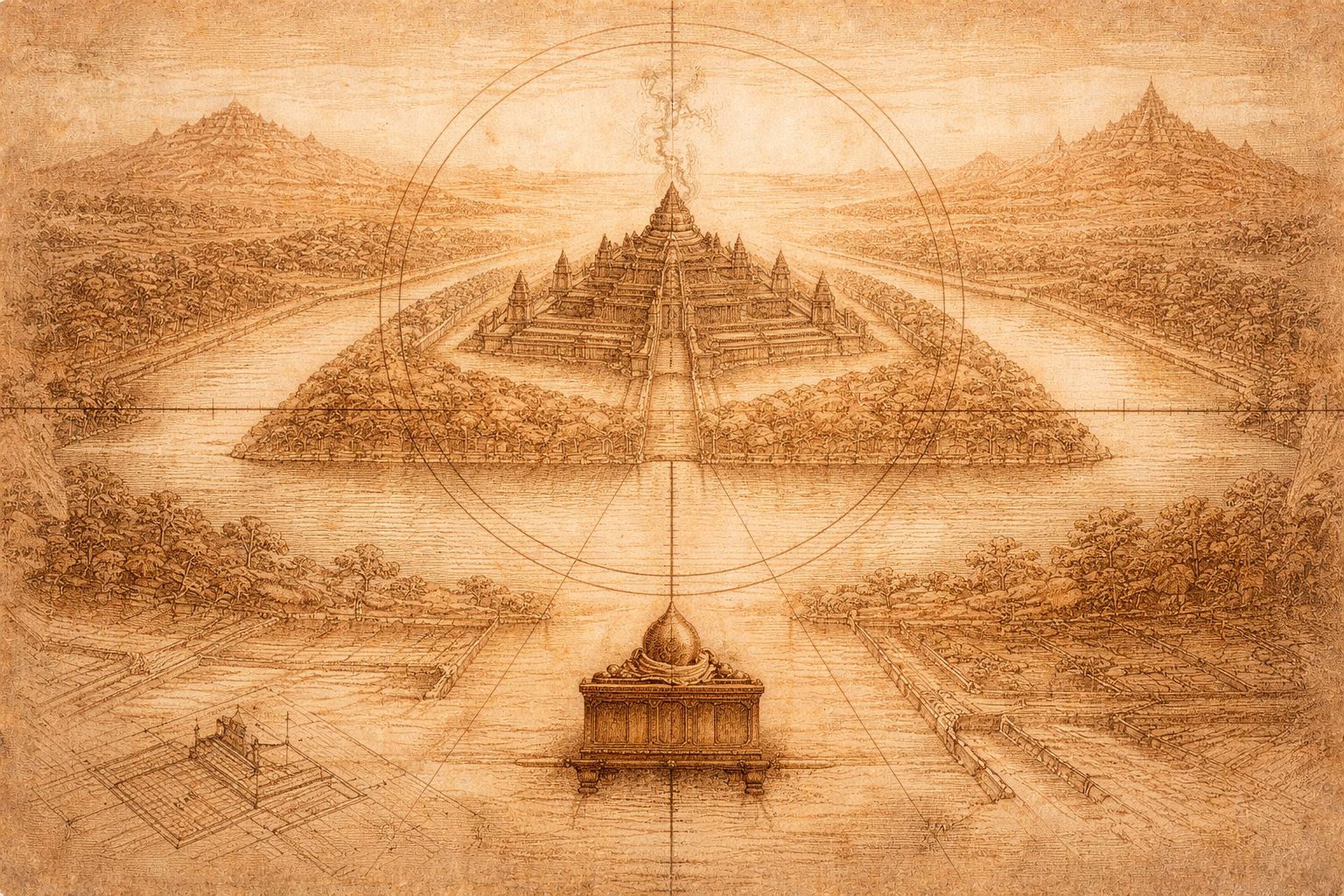

Axis, Mountain, Water — The Architecture That Held the World
At Angkor, sovereignty was built as a system. The Devarāja fixed the unseen centre, the temple-mountain raised the world’s axis in stone, and the baray extended that order into water and rice. Power endured because it was aligned—repeated, measured, and made legible to the land itself.
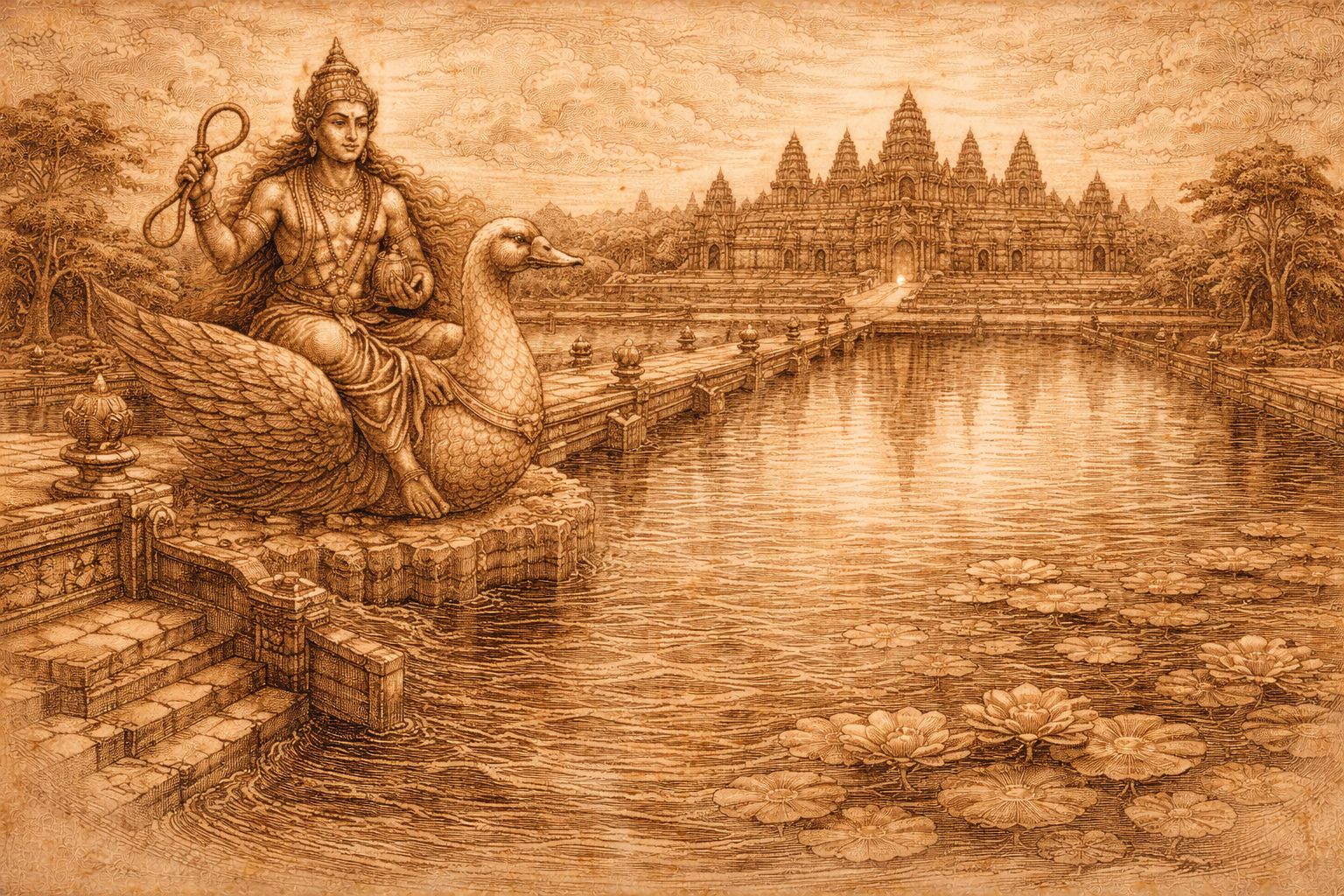

Water as Measure: Varuna and the Discipline of Flow
Angkor’s water was never about abundance. It was about restraint. This essay traces how moats, reservoirs, and reflections embody Varuna’s ethic of measured flow—where water becomes moral substance, time is held rather than spent, and hydraulic mastery reveals disciplined listening rather than control.
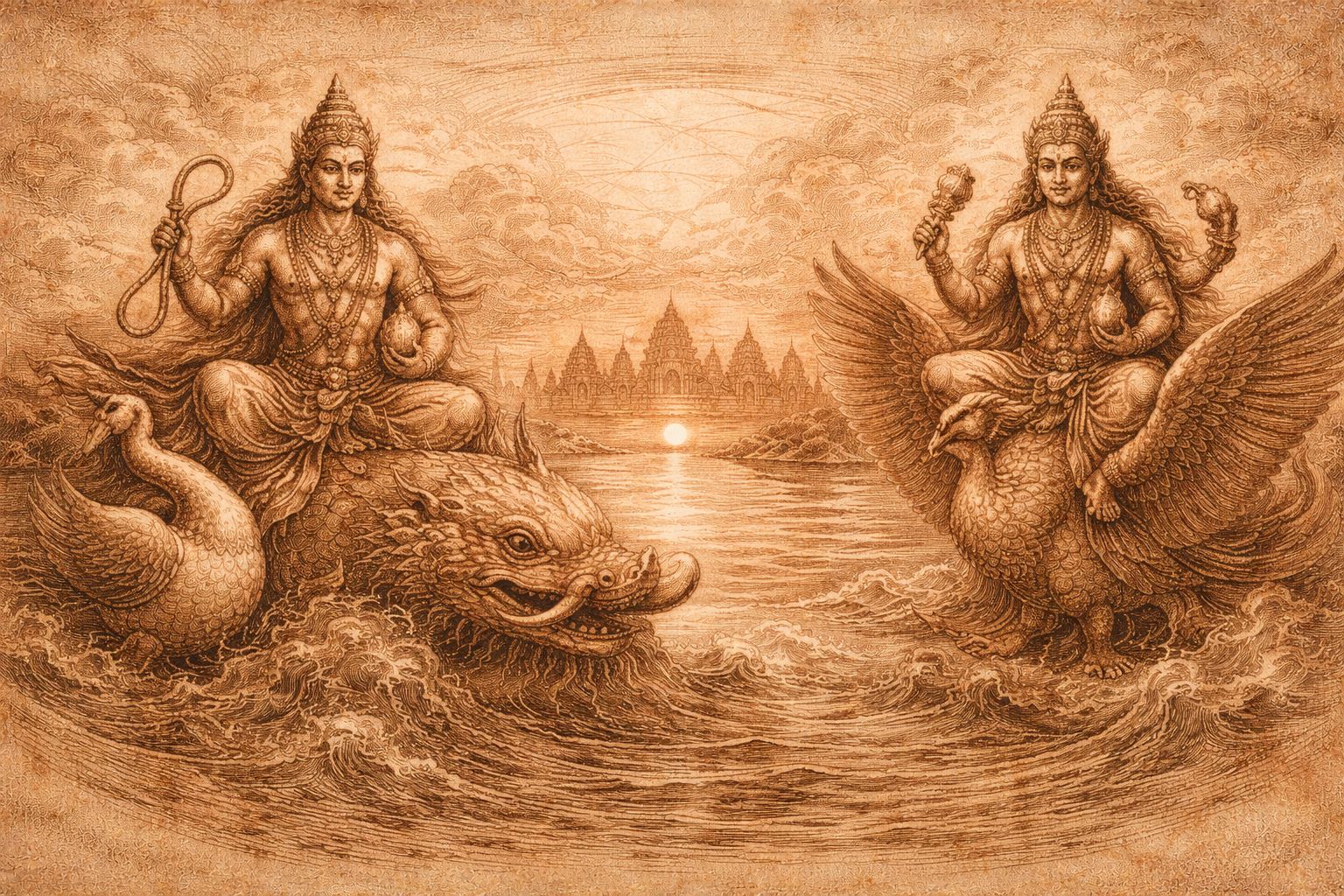

Varuna and Vishnu: The Western Guardians
This essay traces the quiet handover of the western quarter from Varuna to Vishnu—revealing how judgement became preservation, restraint became endurance, and Angkor’s westward temples embodied not rupture, but a continuous moral horizon carved into stone.
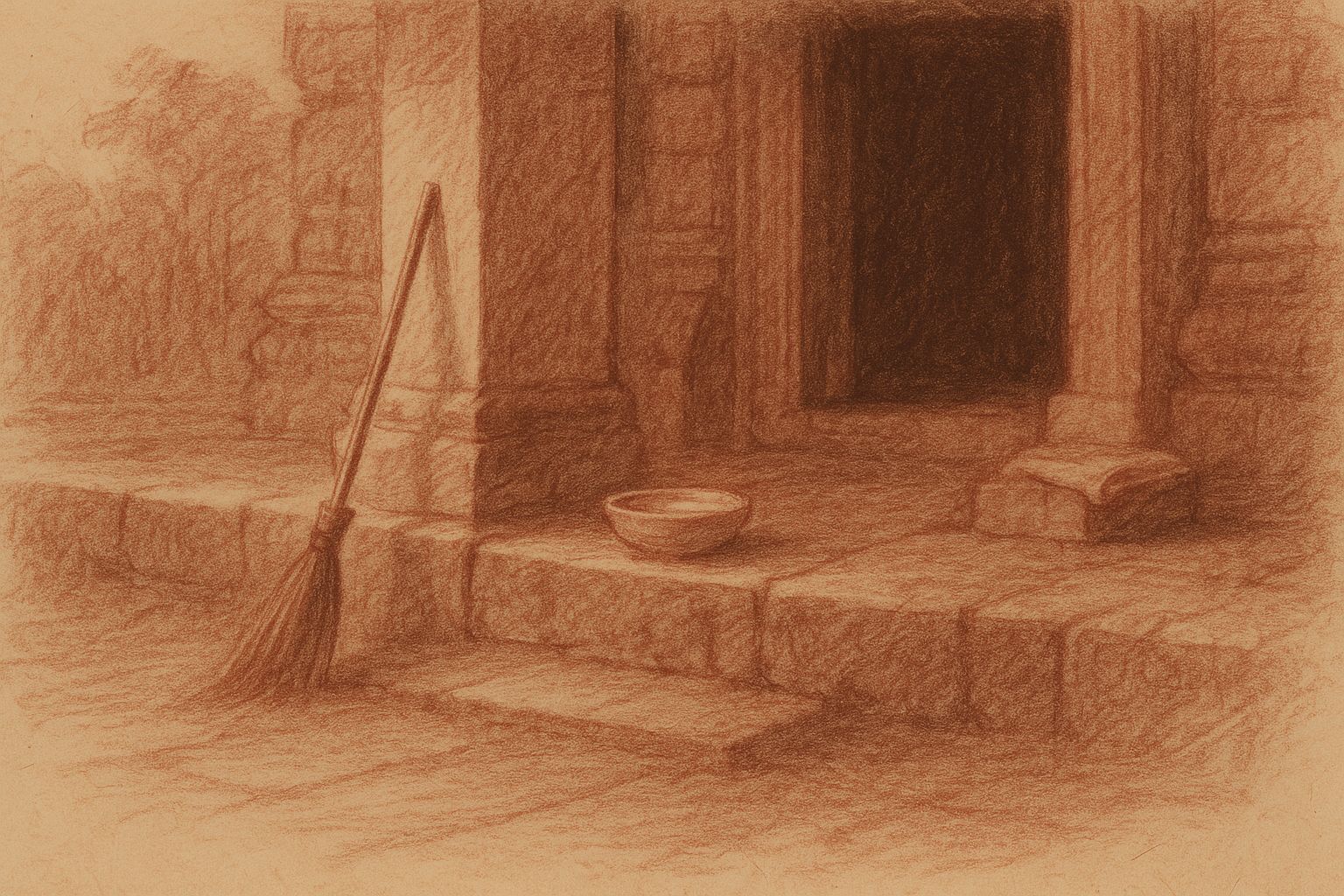

Those Who Keep the Way Open — On the Quiet Guardians of Angkor’s Thresholds
Quiet gestures shape the way into Angkor — a swept stone, a refilled bowl, a hand steadying a guardian lion. This essay reflects on the unseen custodians whose daily care keeps the thresholds open, revealing how sacredness endures not through stone alone, but through those who tend its meaning.
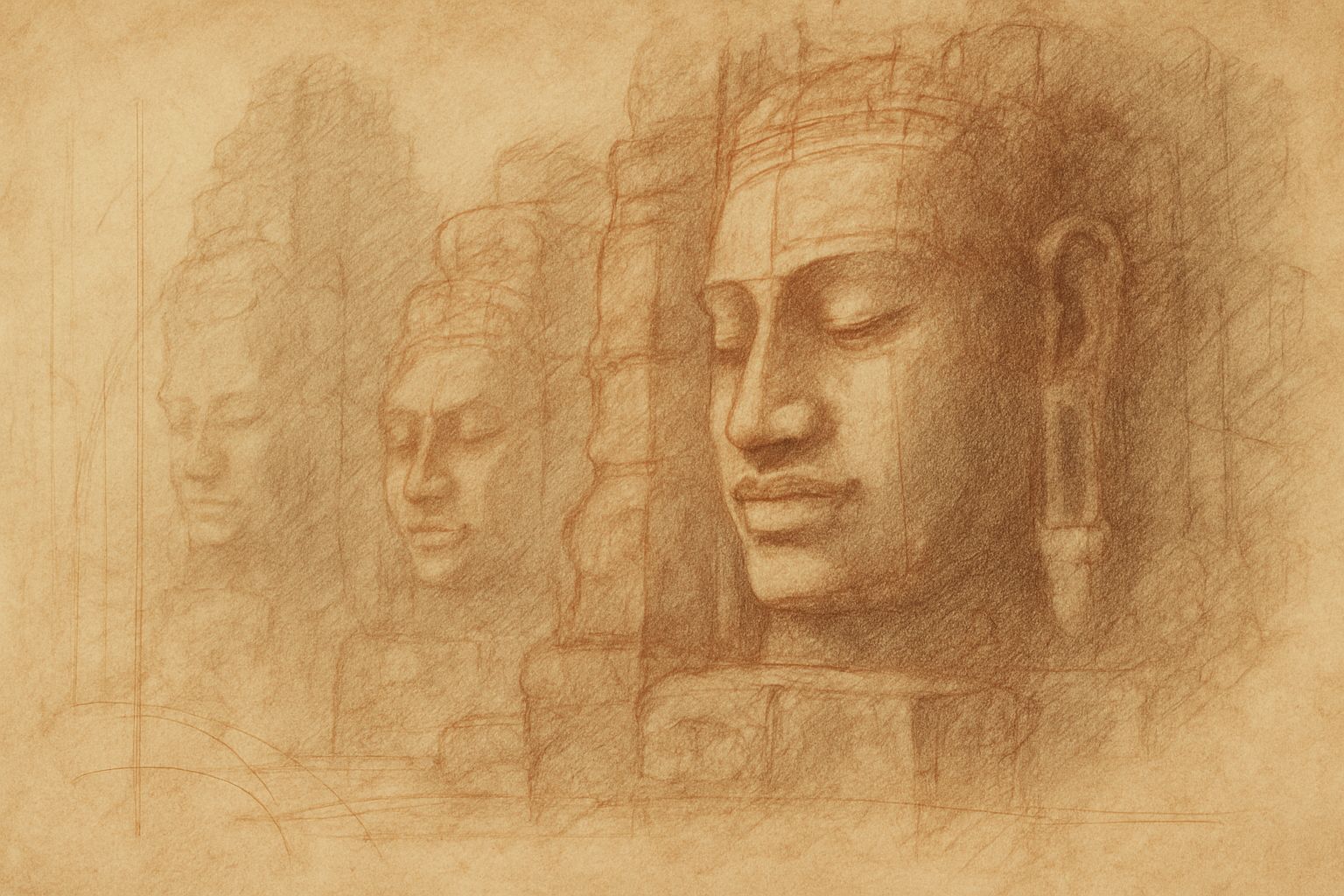

Stone That Dreams
Bayon wakes like a mind emerging from shadow. Its many faces shift with light and breath, teaching that perception—and the self—is never singular. In walking this forest of towers, the pilgrim discovers a quiet multiplicity within, held together by a calm that feels both ancient and newly understood.
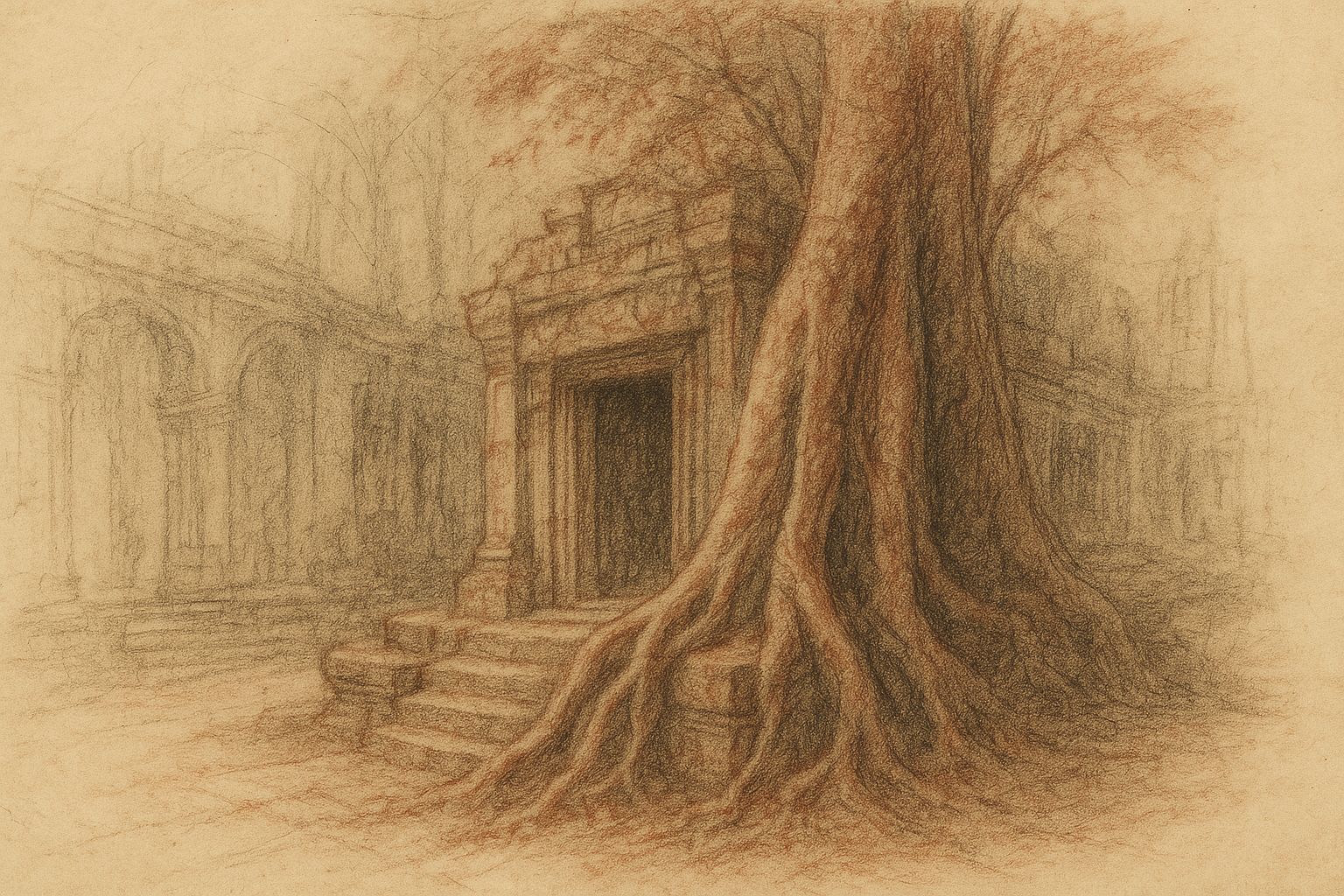

Roots That Remember — Ta Prohm and the Patience of Trees
Beneath the silk-cotton roots of Ta Prohm, stone and forest remember one another.
Here, patience is architecture — each root a gesture of mercy, each shadow a breath of memory.
Listen long enough, and the silence begins to bloom.
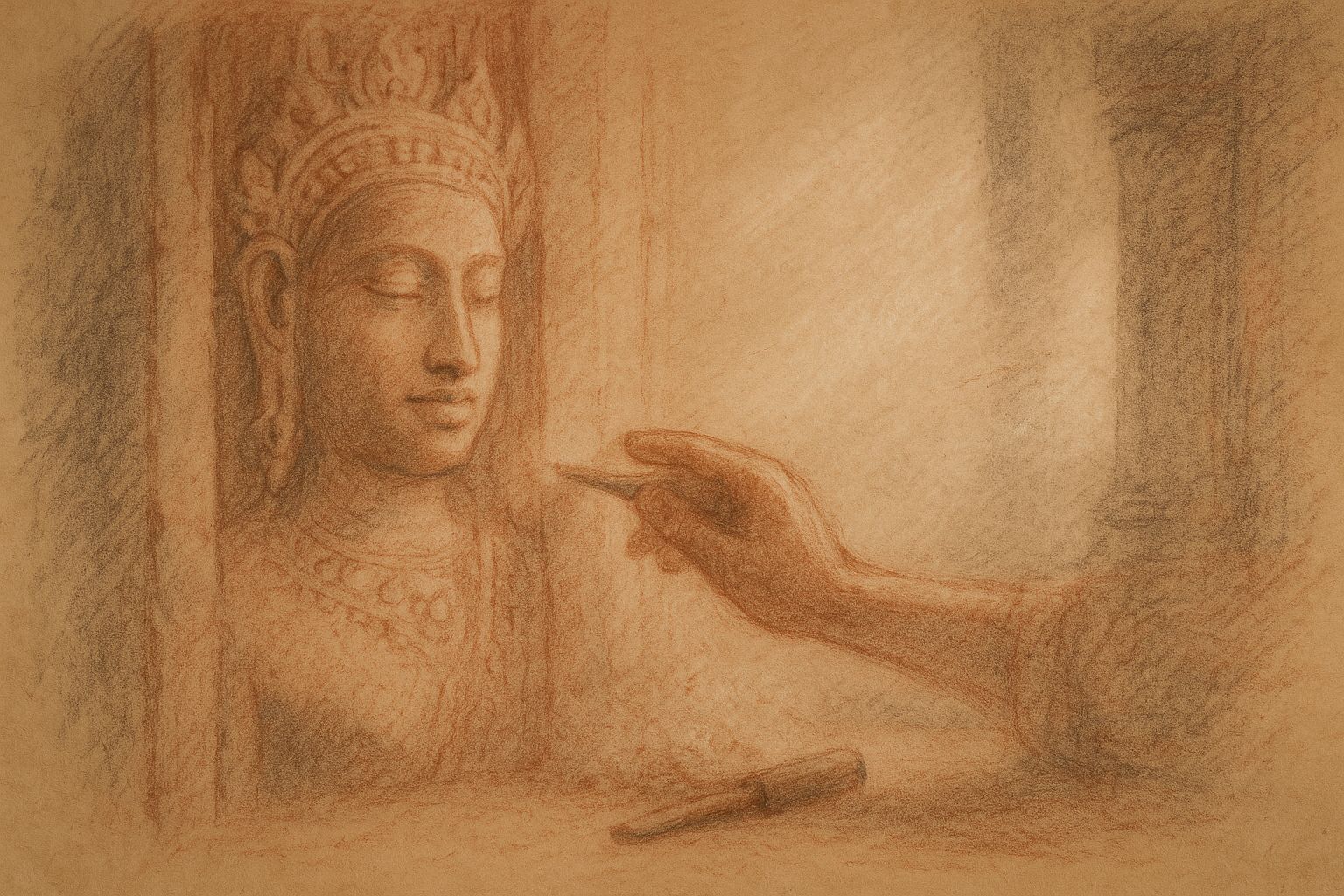

Hands of the Sculptor — The Craft as Meditation
In the hush of the galleries, the sculptor listens rather than strikes.
Each breath, each measured blow, opens silence a little further.
Unfinished reliefs reveal the moment when mastery becomes meditation—
when patience itself is carved into being,
and the dust that falls at a mason’s feet becomes the residue of prayer.
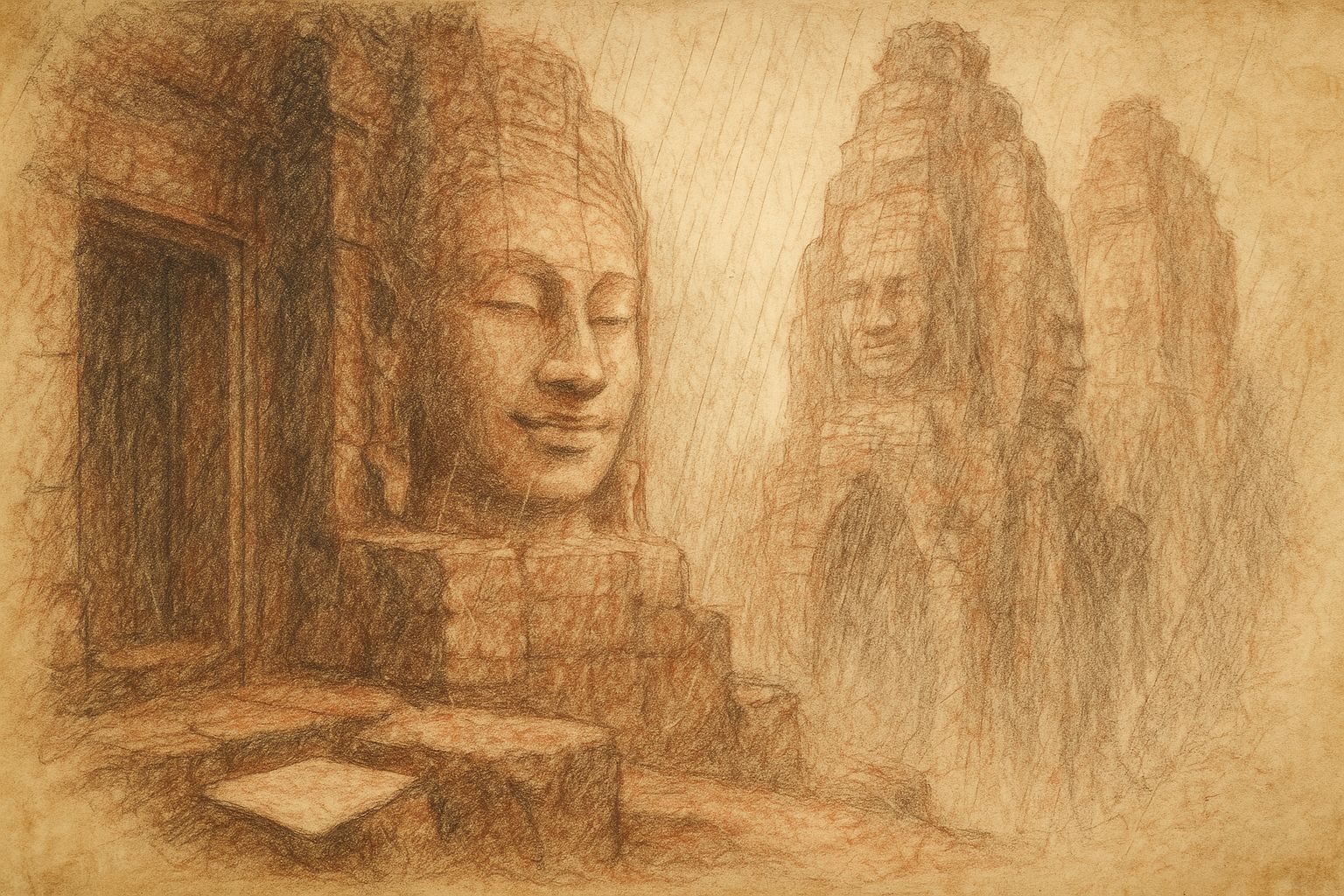

The Bayon: Faces at the Threshold of Silence
Rain gathers on the lips of the Bayon’s faces, falling into silence. Within this temple of shifting faiths and scarred kingship, stone itself remembers. Each tower smiles with tender defiance, teaching that impermanence is not loss but presence—whispered across centuries through weathered thresholds of light and shadow.
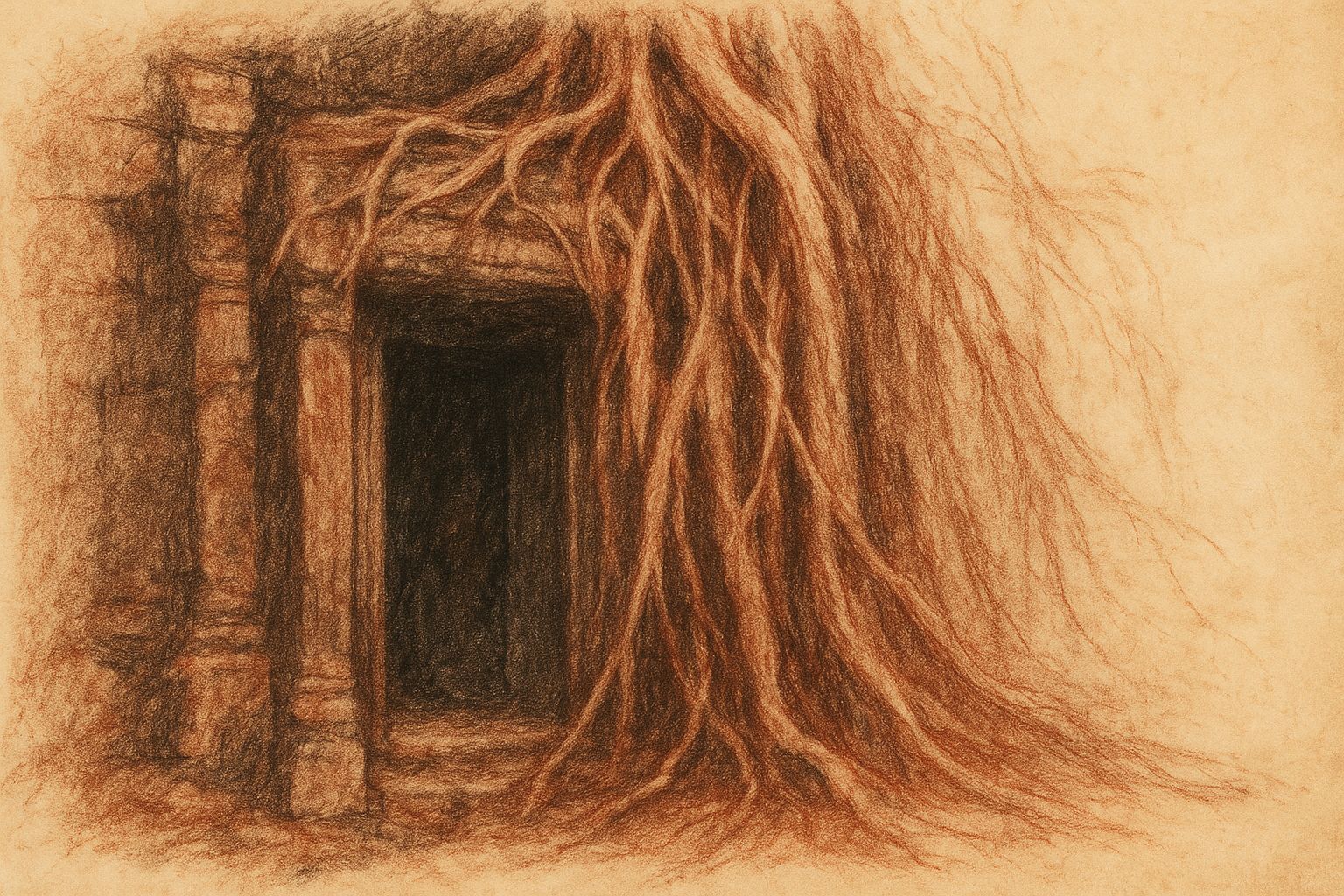

Roots Over Stone
At Ta Prohm, roots do not erase the temple but bind it, stone and tree locked in a covenant of endurance. What appears as ruin reveals itself as reciprocity — permanence carried through entanglement, silence carried through breath. To stand before these veils is to witness survival made sacred.
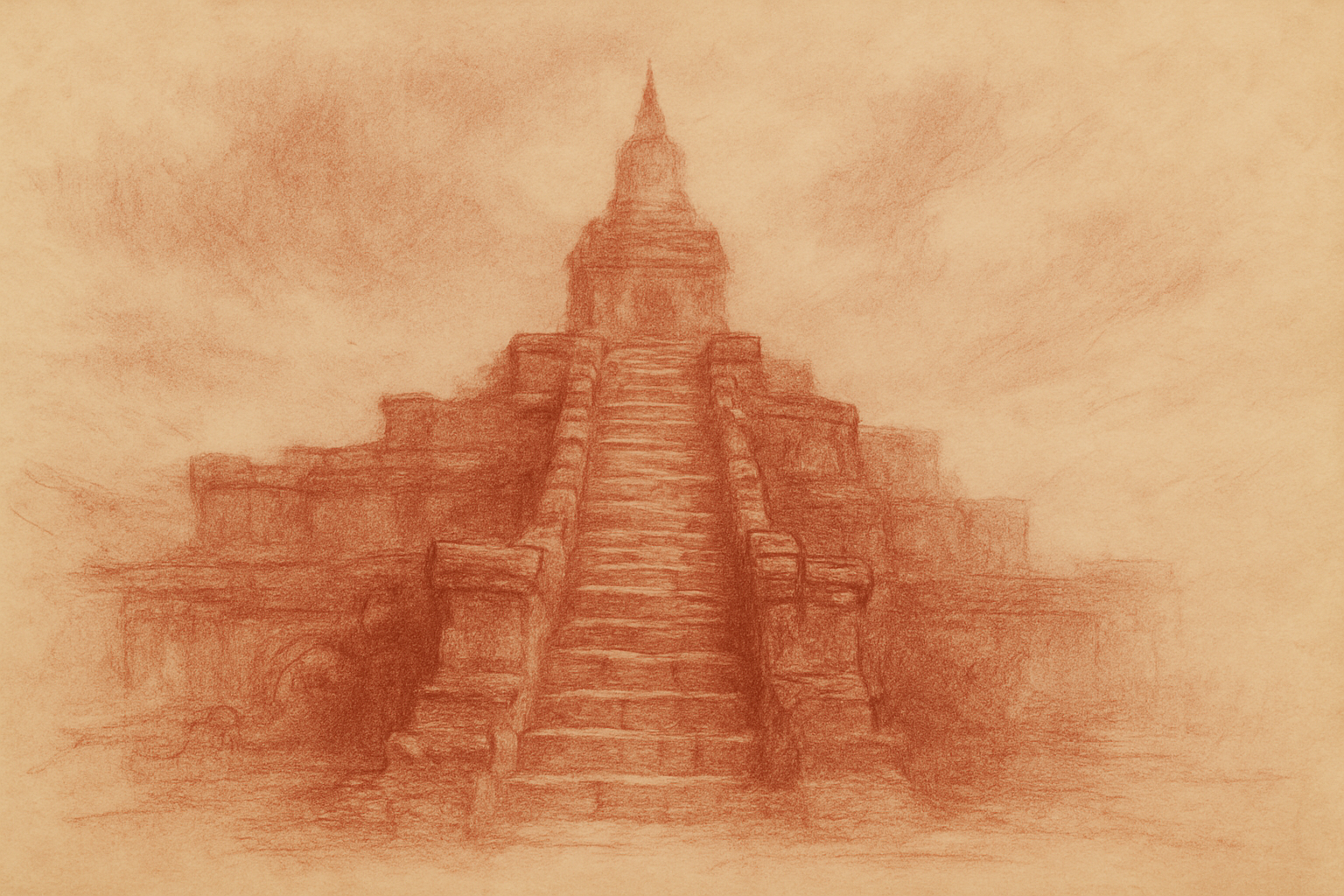

Phimeanakas and the Goddess of Sovereignty
Within the Royal Enclosure of Angkor Thom stands Phimeanakas—the Celestial Palace. More than a monument, it is a myth made stone: where kings bowed to the goddess of the land, and sovereignty meant surrender. A contemplative meditation on sacred architecture, divine right, and the quiet power that still lives between the stones.
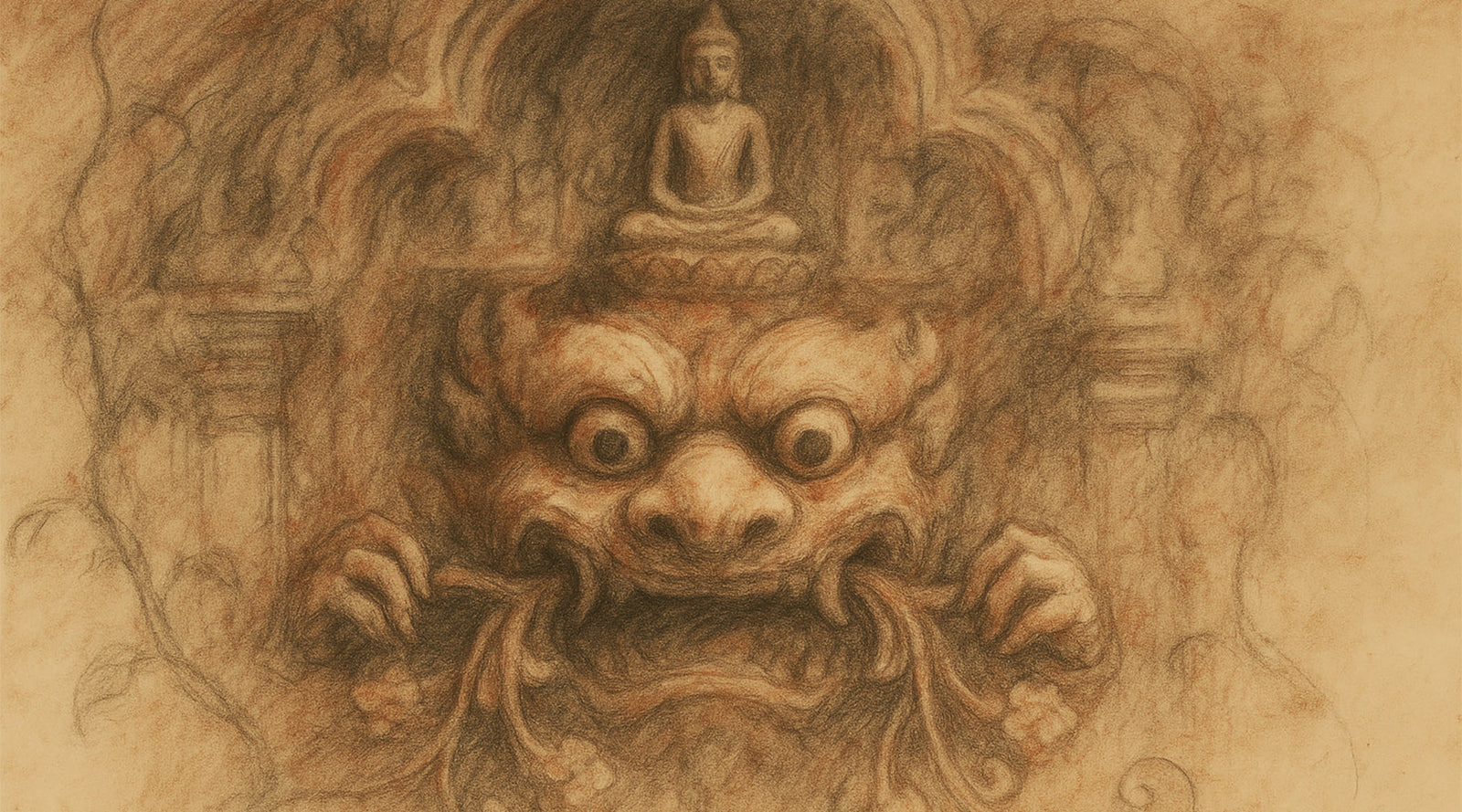

The Mouth of Time: On the Kala at Angkor
Above the temple thresholds of Angkor, the kala watches with round, unblinking eyes. Jawless, eternal, and fierce, this devouring guardian marks the passage into sacred space. In this luminous reflection, Lucas Varro explores the kala’s mythic presence, sculptural mystery, and its place as both protector and gate of transformation.
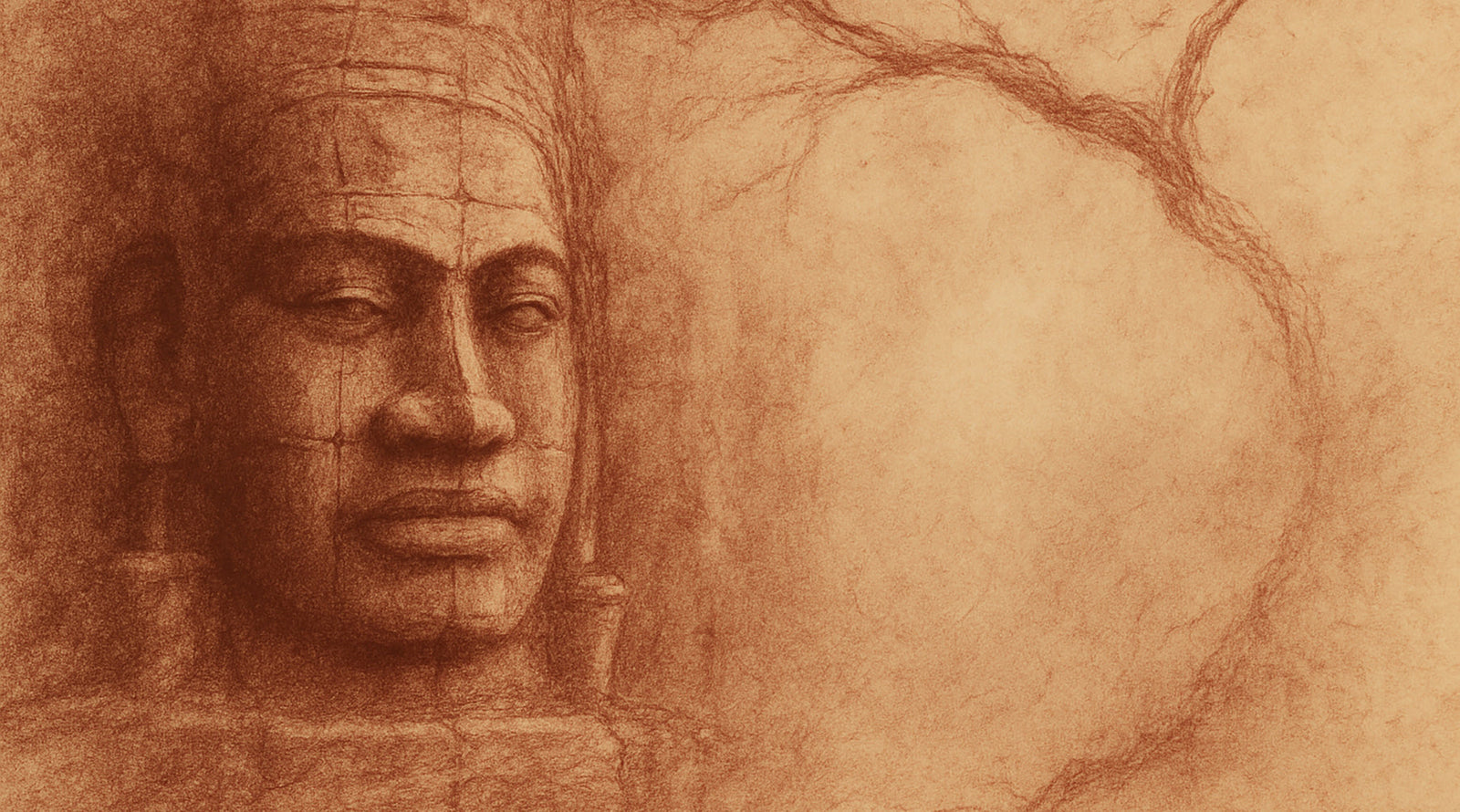

The Silent Gaze of the God Beyond Names
A mountain of stone stares outward in silence.
Two hundred faces. No name. Only presence.
Enter the Bayon, where the sacred does not speak—
it watches.
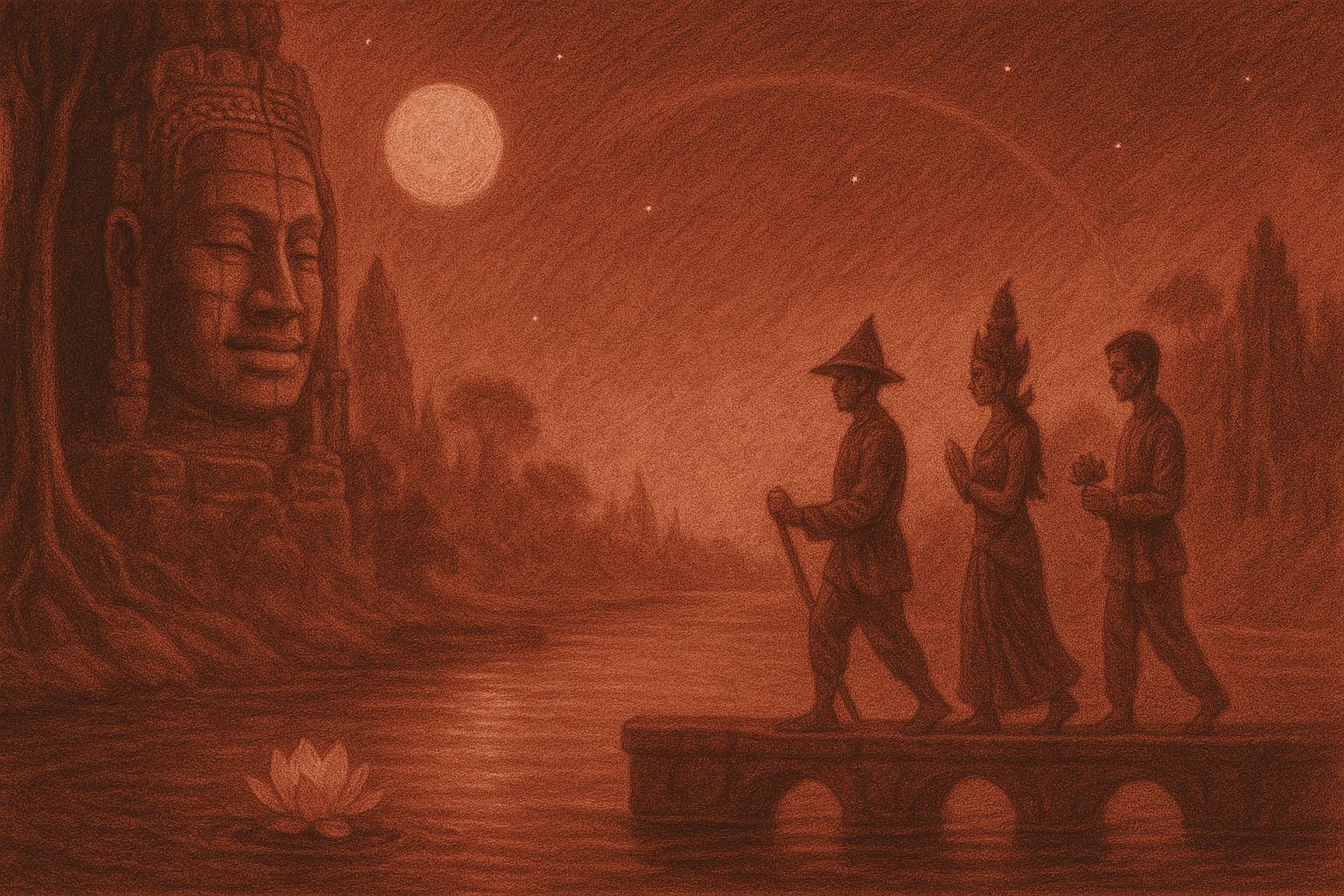

When Two Rivers Become One: The Secret of the Bayon
Beneath the gaze of silent stone, two destinies entwine—Khmer and Cham, land and sea, kingship and yearning. Step softly into the Bayon’s breath, where unity flickers like moonlight on water and the ancient dream still waits, murmuring through corridors carved in shadow and light.
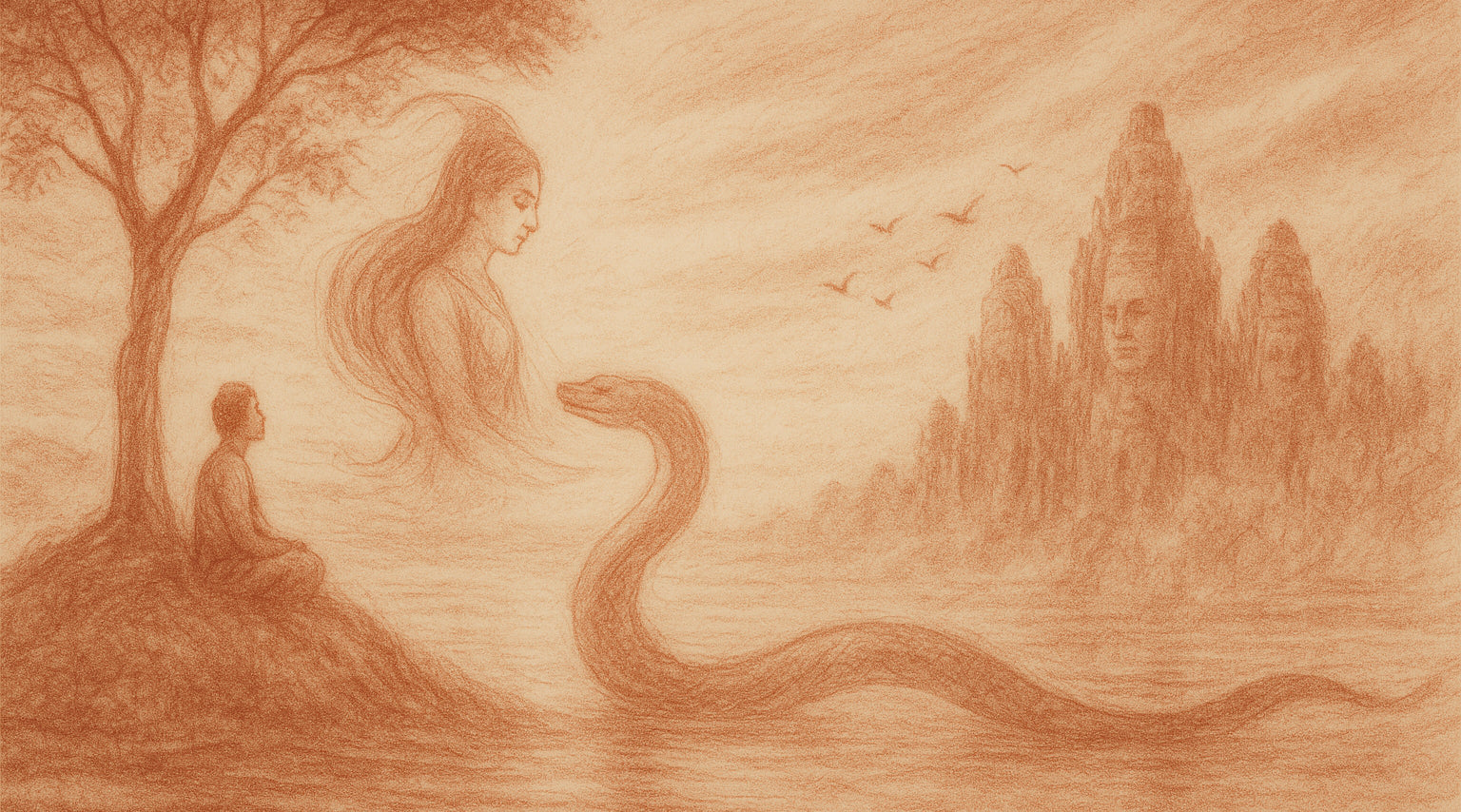

In the Beginning Was the Bayon
Beneath faces carved in ancient light, the Bayon dreams of oceans swallowed and kingdoms born. A whisper rises from the well of myth—calling not to be understood, but remembered. Step gently, where the world began in silence and stone.
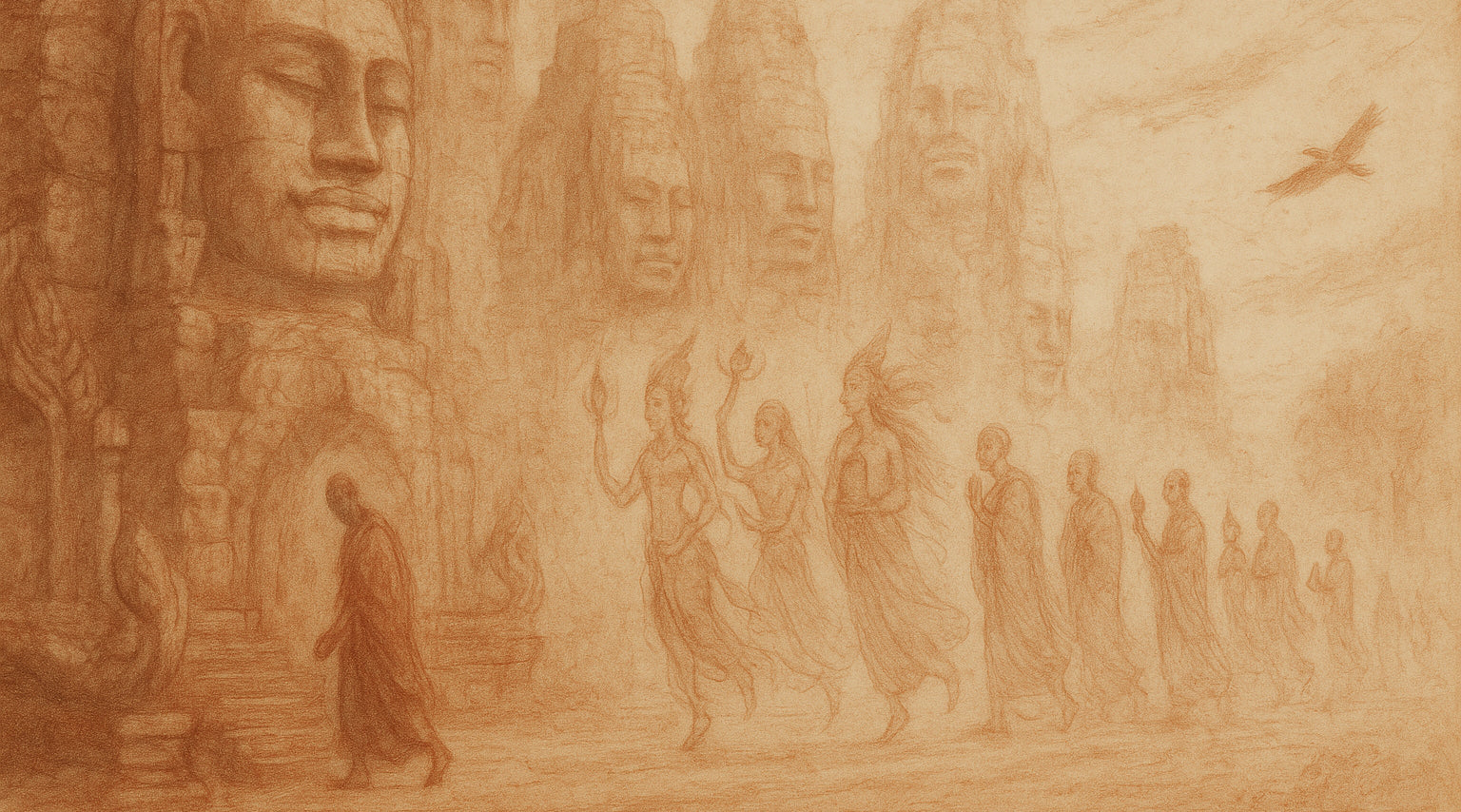

A Sanctuary Where Faces Keep Their Secrets
Veiled in morning mist, the faces gaze from stone—serene, nameless, and infinite. Step quietly through shadowed corridors where silence listens, and memory breathes. Let mystery lead you, not to answers, but to presence.
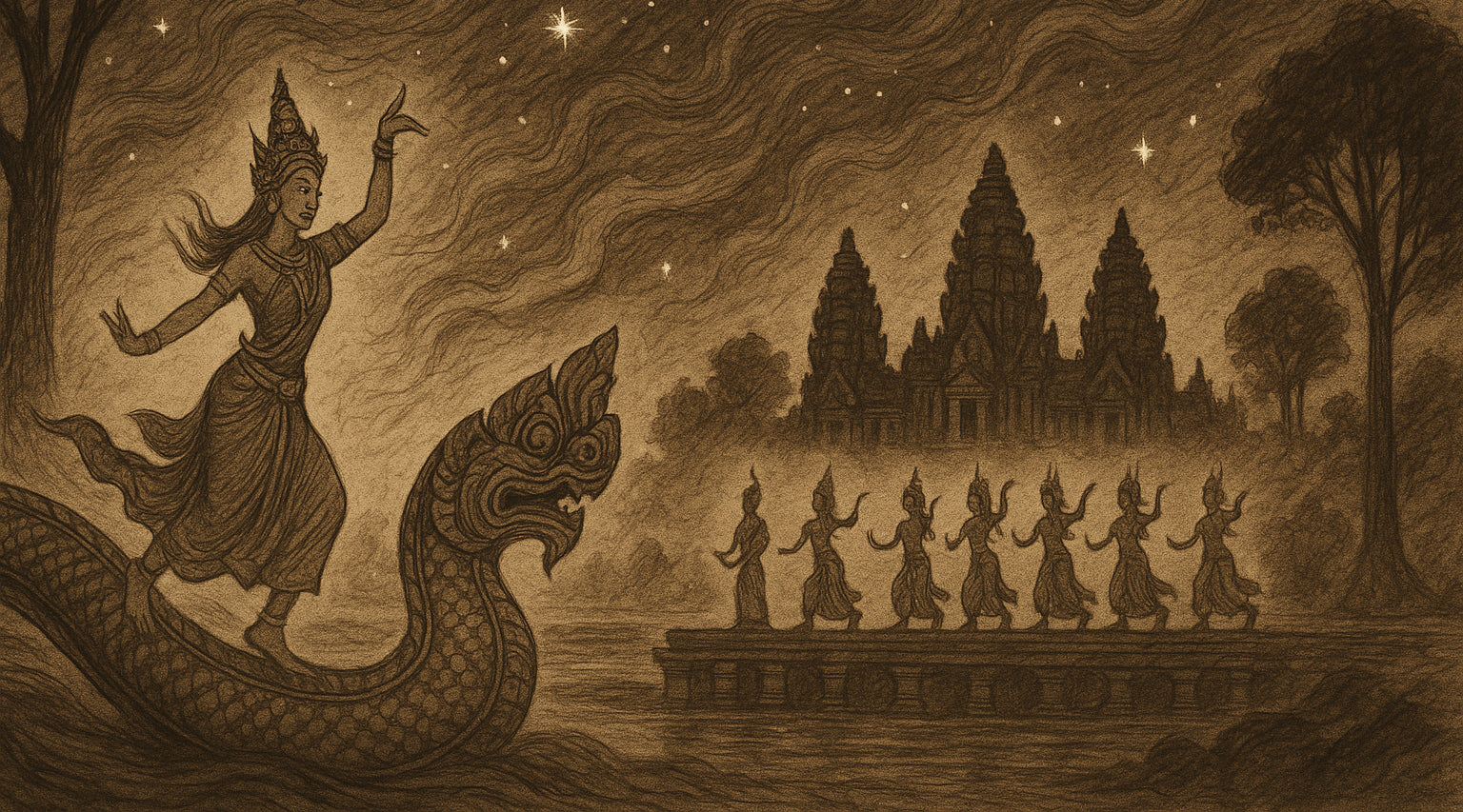

A Threshold of Stone and Soul: Entering the Sanctuary of Meaning
Some temples are not meant to be visited, but entered inwardly. Let these pages guide you across thresholds carved in shadow, into realms where stone and silence conspire to reveal what endures. Here, myth breathes, meaning ripens, and the soul remembers.
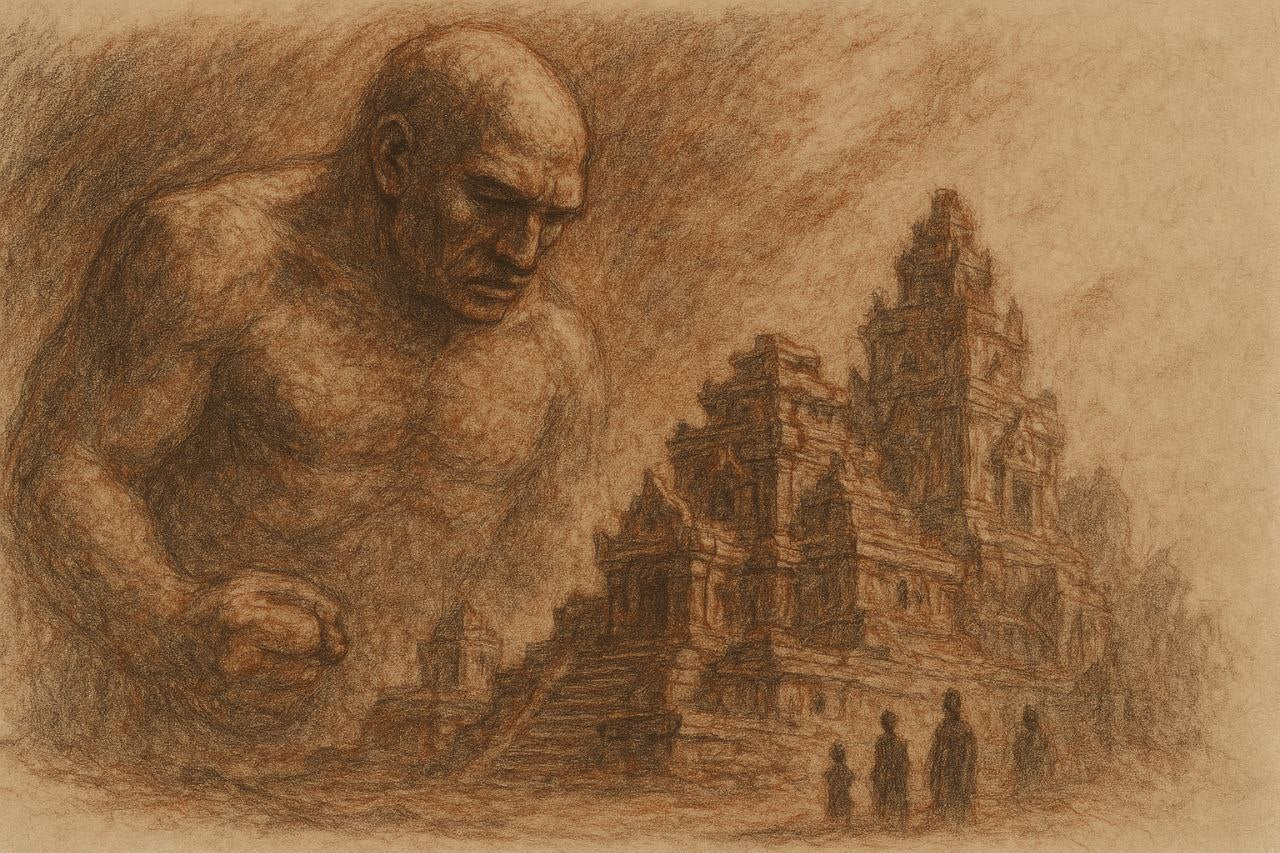

The Giant of Phnom Bakheng: A Legend in Stone and Shadow
High above the jungle canopy, where stone meets sky, a giant stirs beneath Phnom Bakheng. Born of earth and legend, he rises not in fury—but in sorrow—his towering form a silent witness to the ambitions of kings and the turning of stars. Step into the myth where temples breathe and the ancient still remembers.
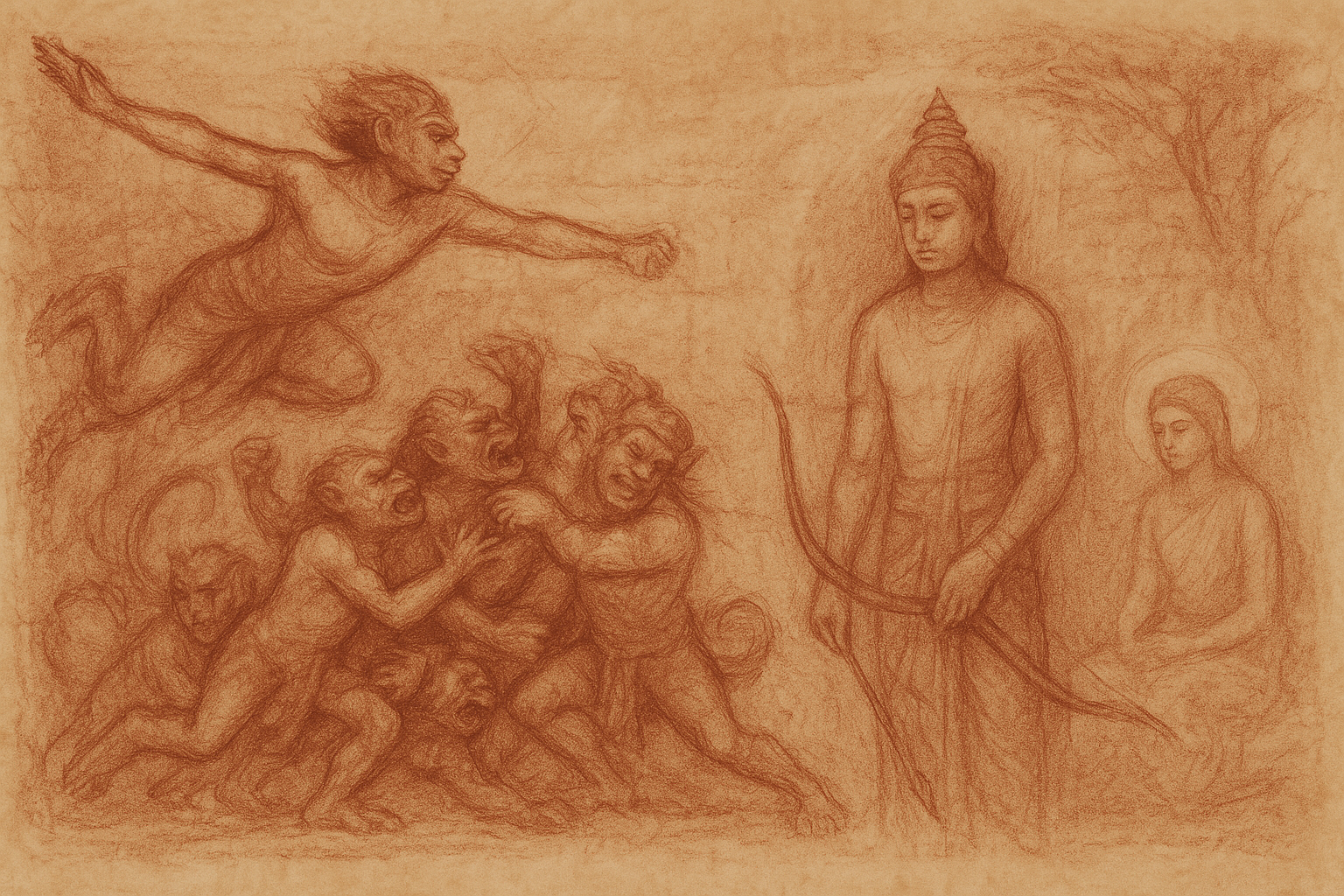

When the Ramayana Was Carved in Stone
The Ramayana unfolds in stone—where monkey warriors fly, Sita weeps beneath the acacia, and Rama returns not to triumph, but to restore cosmic order. In Angkor, these are not carvings. They are offerings—etched by sculptors who knew that mythology is not story, but the soul’s invisible design.
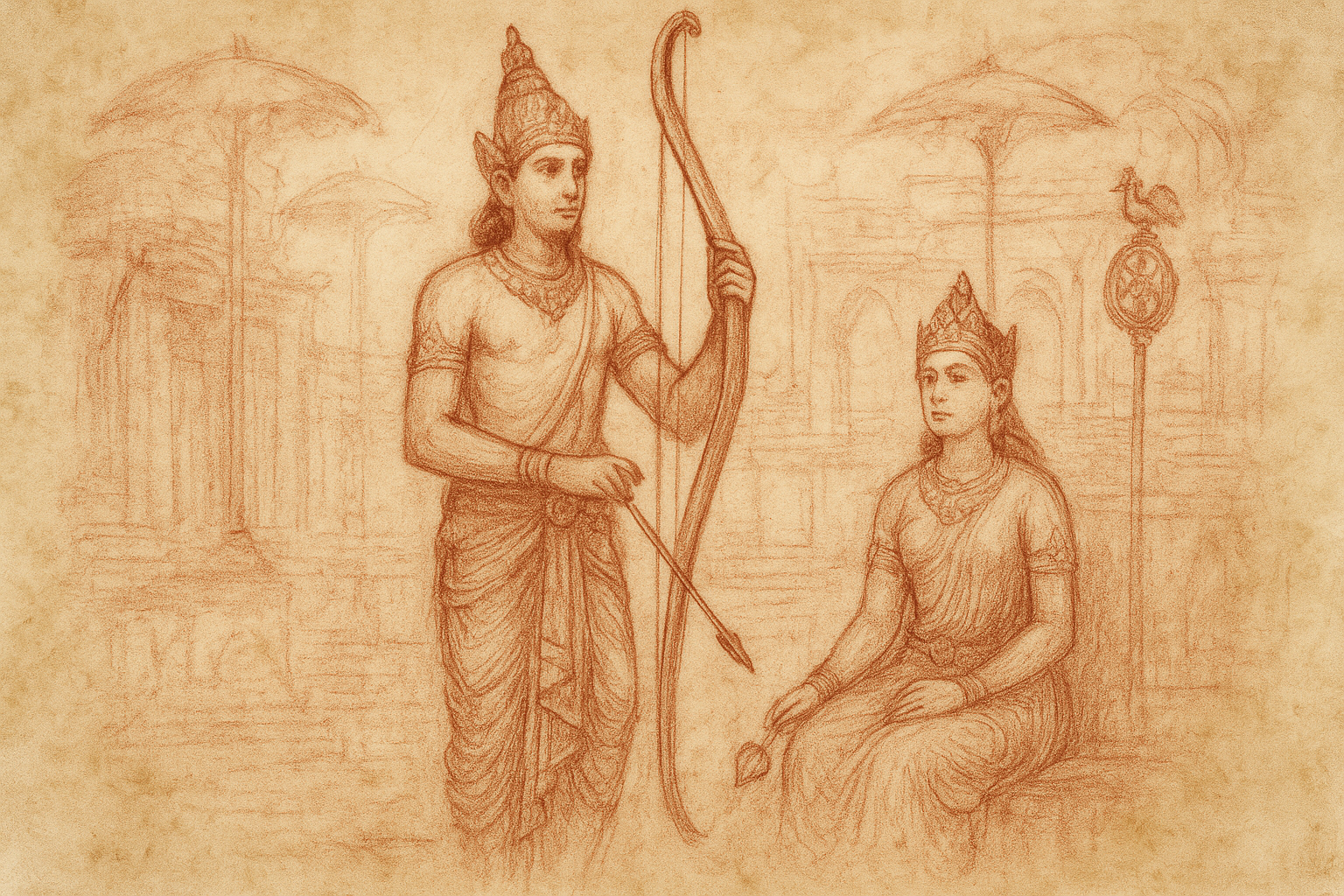

The Bow That Thundered
In the northwestern gallery of Angkor Wat, five tiers of sacred stillness recall the day a bow once thundered. Rama stands calm. Sita, composed. A svayamvara not of conquest, but of vow returned. In silence, the stone remembers what sound once revealed.
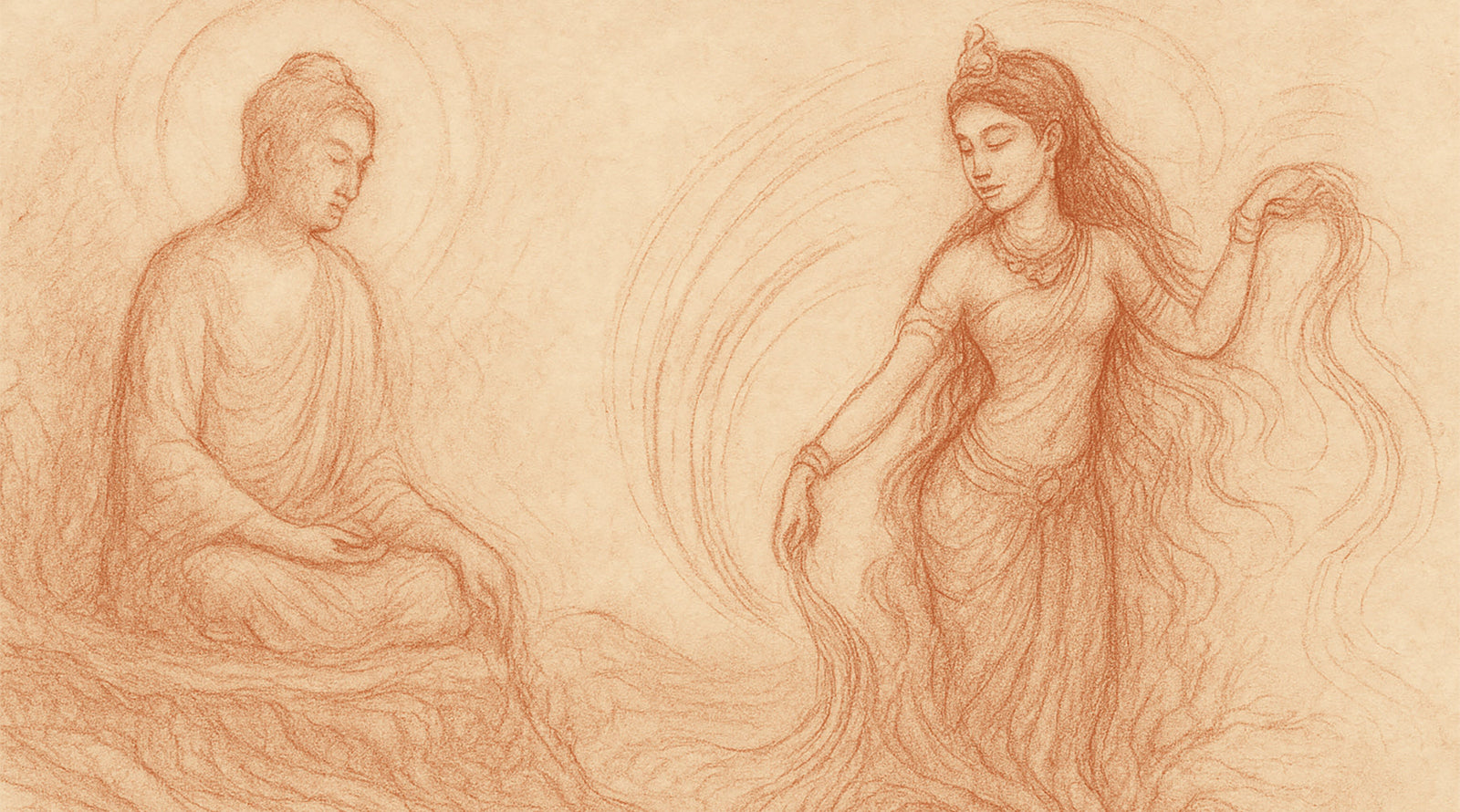

The Goddess Who Twisted Her Hair
Beneath the carvings of Ta Prohm, a goddess wrings her hair and the world is cleansed. Follow the silence where stone remembers, and the flood of truth flows not from force, but from presence. A meditation on earth, witness, and the sacred gesture that washed death away.
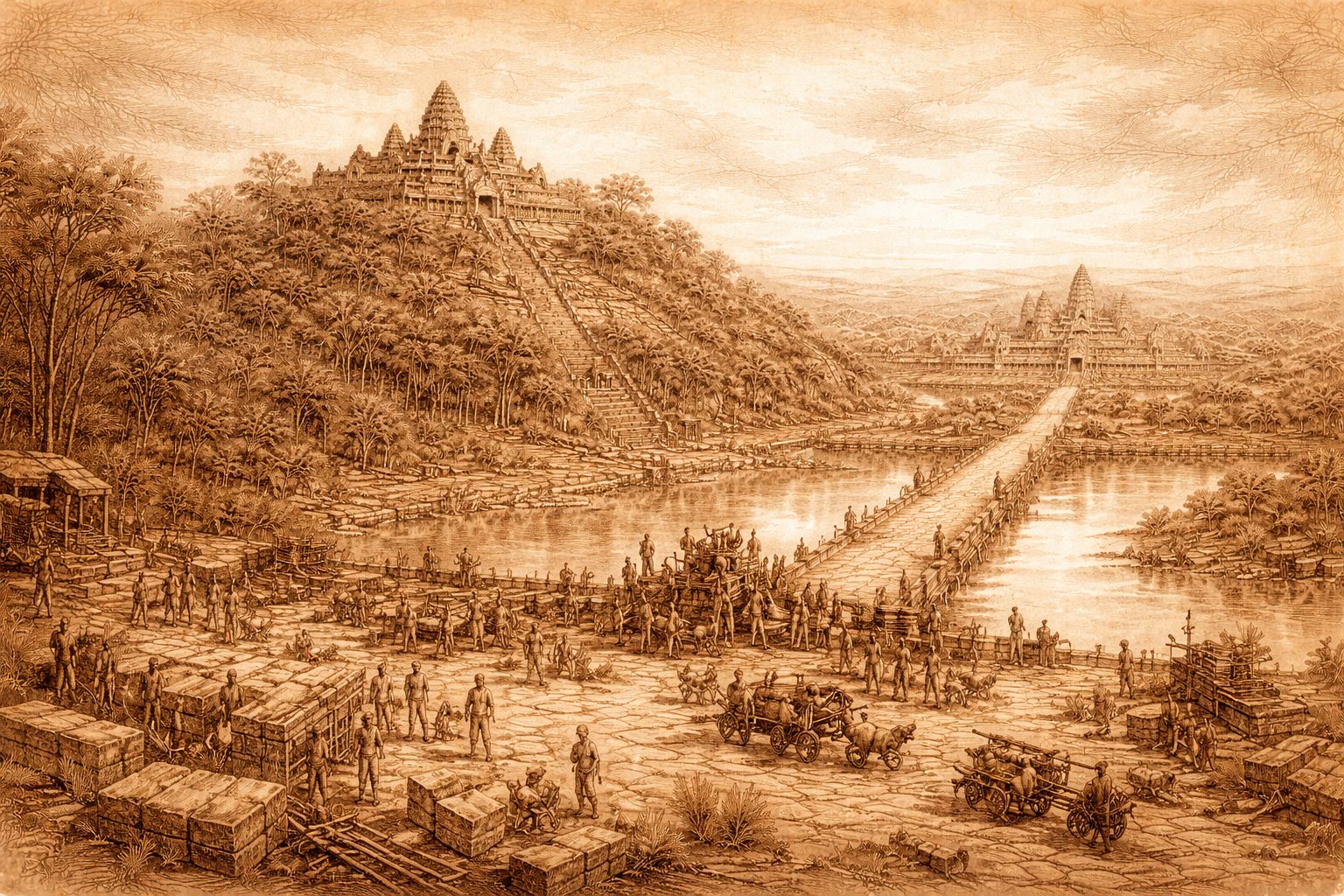

From Template to Territory — Yaśovarman I and the Birth of Angkor Proper
Yaśovarman I completes Angkor’s first cycle by lifting the royal triad from Roluos and fixing it at Angkor proper. With Lolei, the East Baray, and Phnom Bakheng, the Khmer cosmos becomes a city—measured, aligned, and no longer provisional.
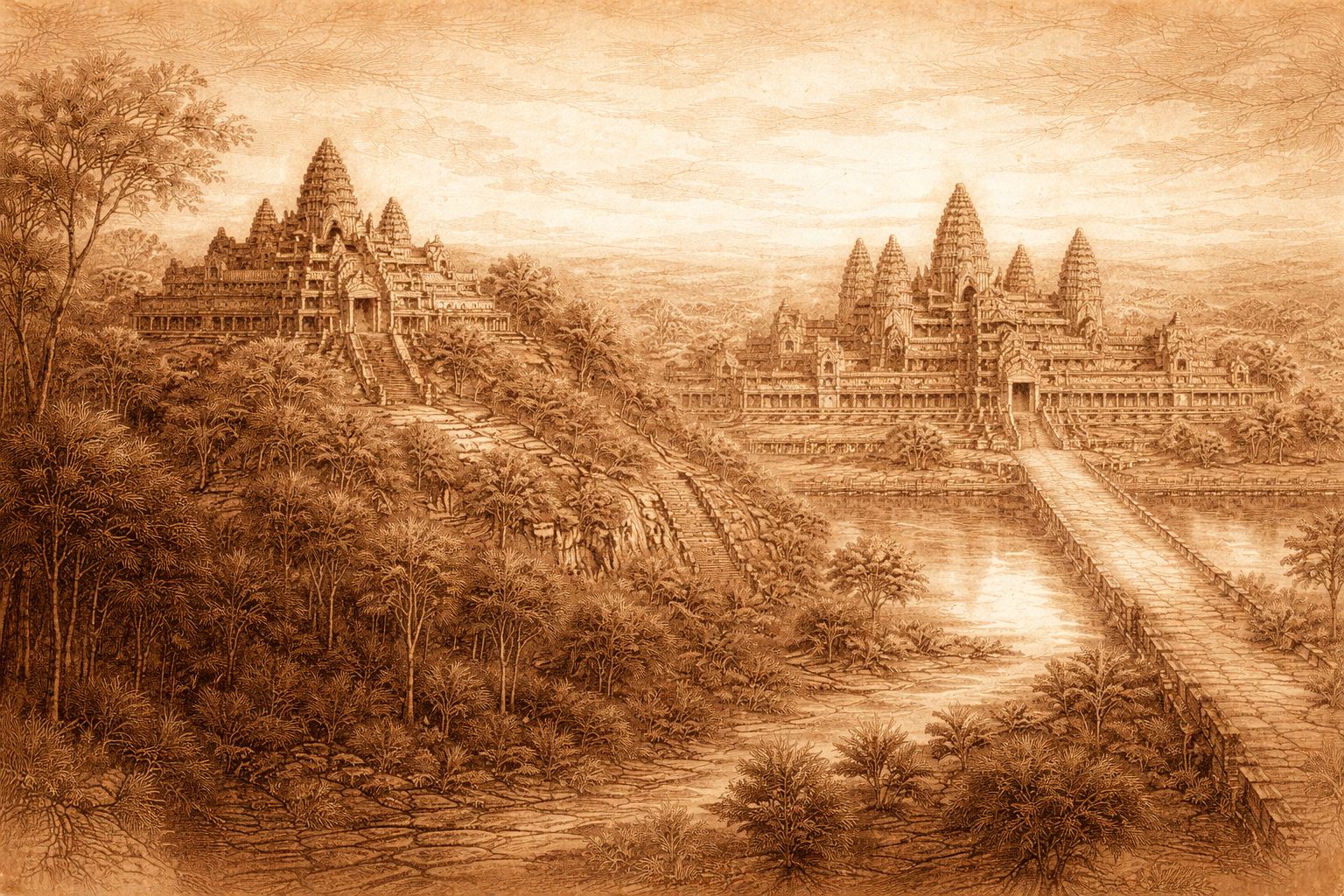

From Hill to Mandala — Phnom Bakheng and Angkor Wat
From Phnom Bakheng’s crowned hill to Angkor Wat’s perfected mandala, the Khmer state temple evolves from reliance on nature to total architectural control. What begins as ascent upon a given mountain culminates in a man-made cosmos, measured, timed, and held in stone.
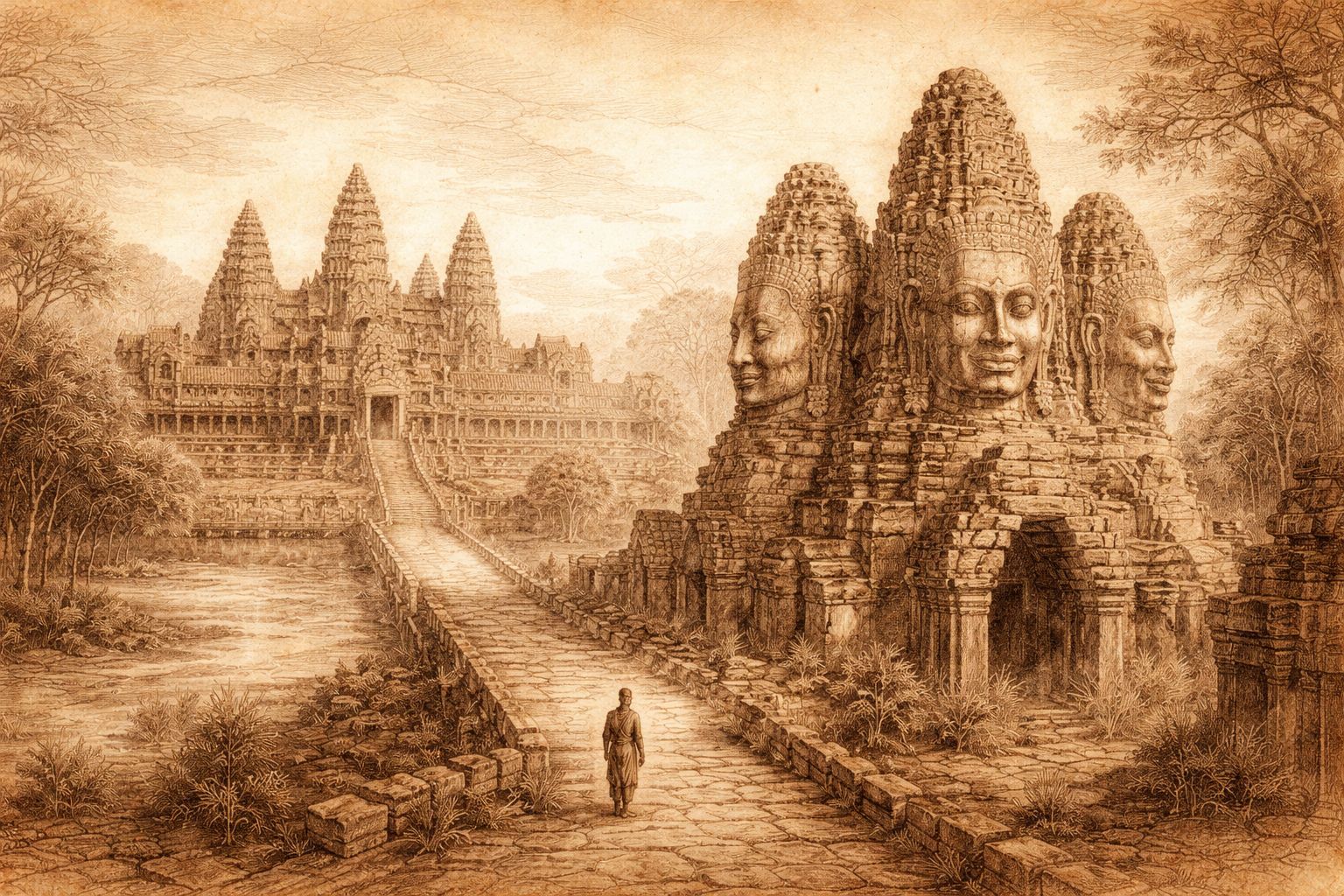

From Order to Presence — Angkor Wat and the Bayon
Angkor Wat perfects the universe as law: measured, aligned, and complete. The Bayon answers with presence—faces turned outward, meeting suffering where it stands. Between them, the Khmer mandala does not break; it turns inside out, discovering that order alone is insufficient without compassion.
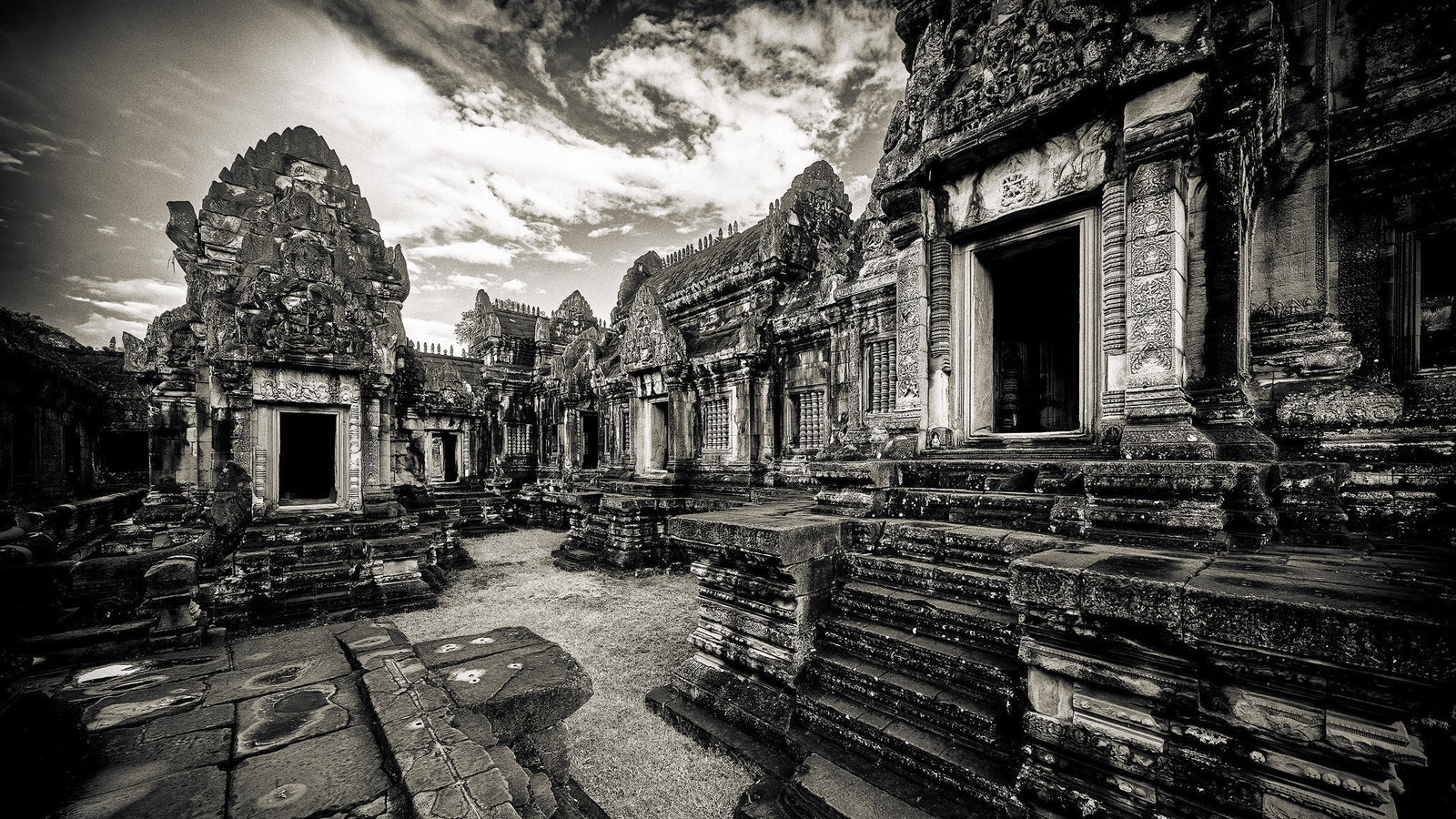

The Spirit of Banteay Samre Temple
Step within the quiet walls of Banteay Samre, where time softens and the gods dwell in stillness. Not a place to marvel—but to remember, to kneel, and to be received by silence older than the stone.
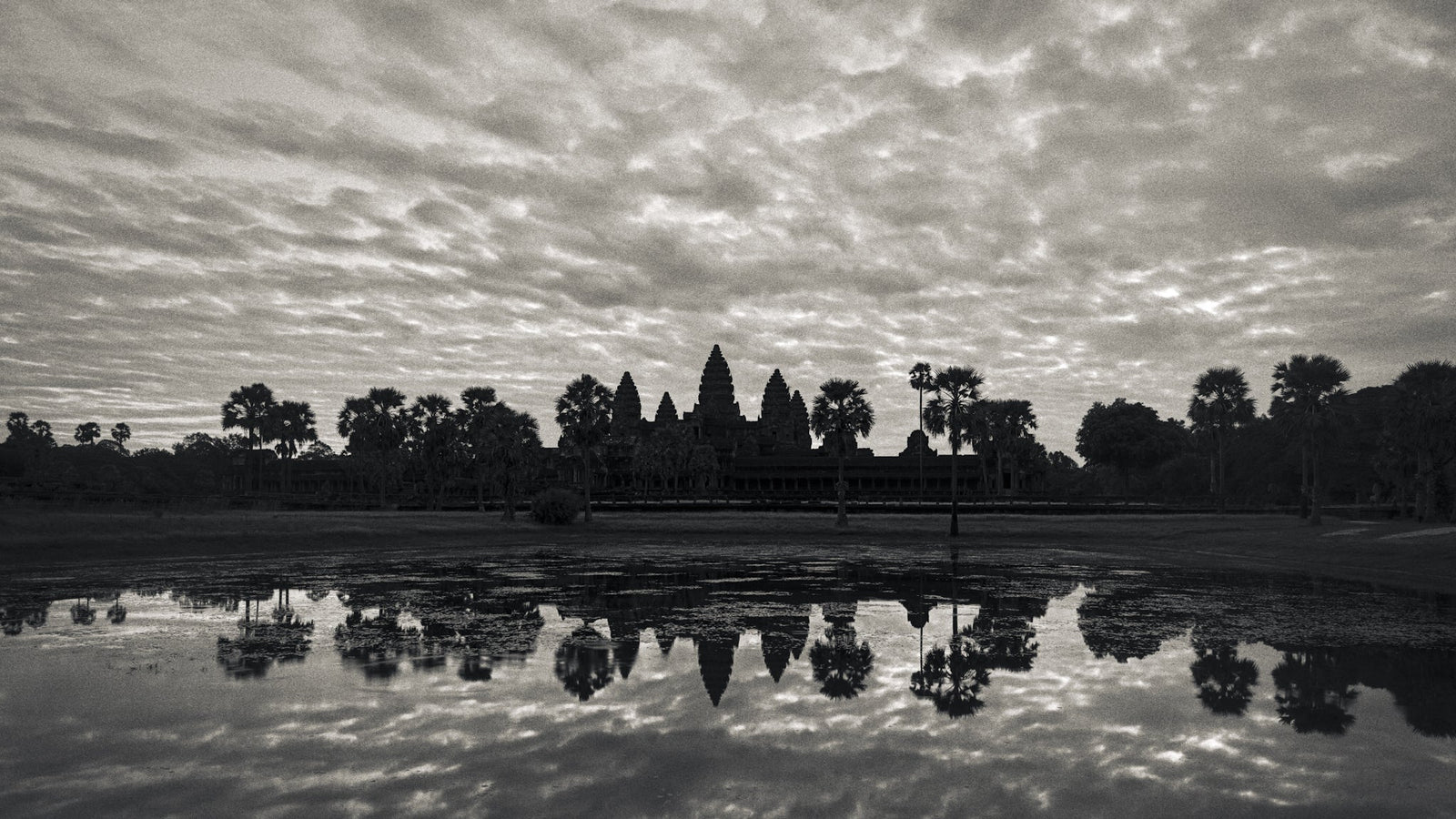

The Construction of Sacredness at Angkor Wat
Step beyond stone and shadow into a place where silence was carved with devotion. A temple not only built for gods—but made sacred by centuries of offering, story, and light. Let each breath lead you deeper into the mystery of how sacredness is born.
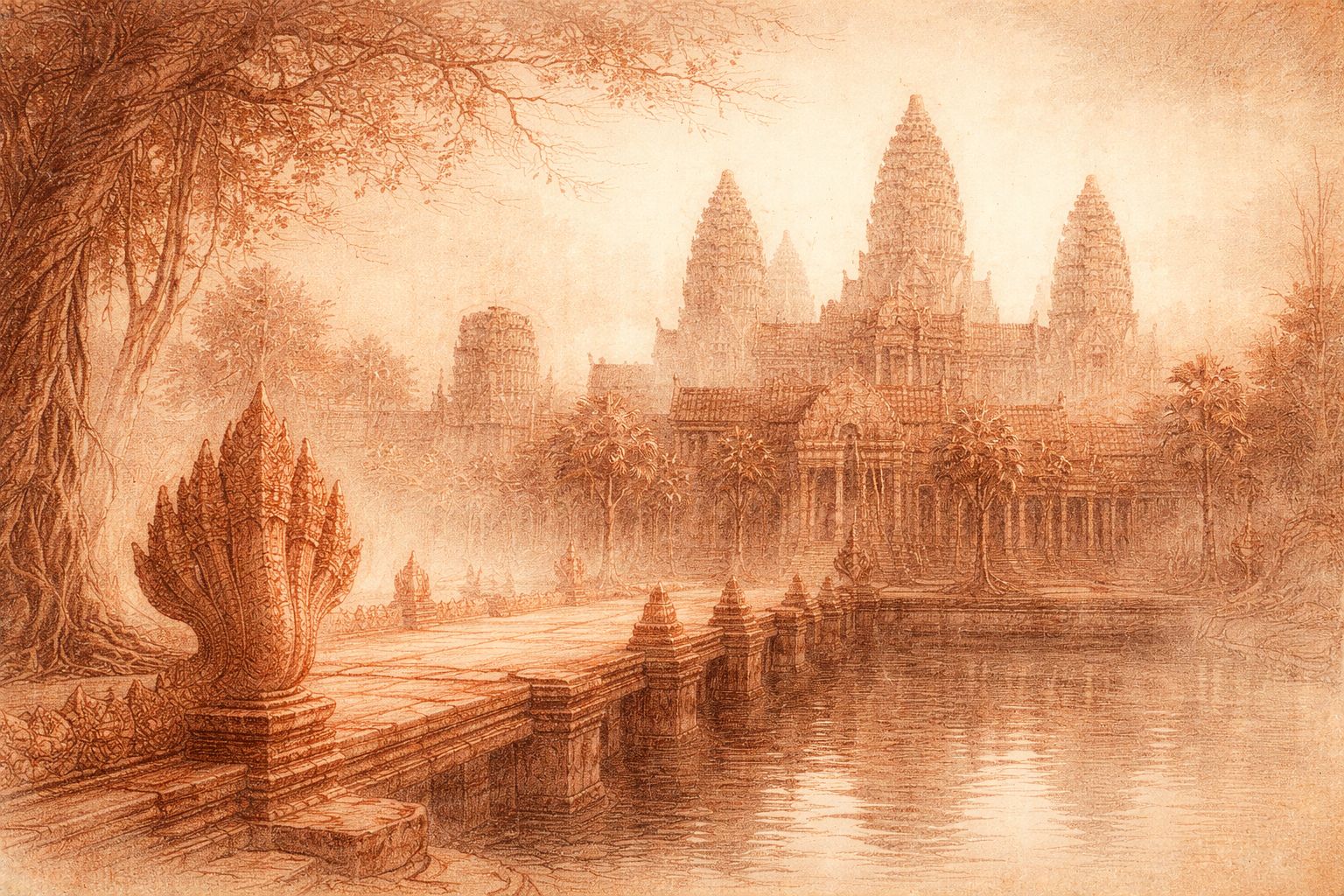

Angkor — A City That Learned to Listen
Angkor means city, but it grew into something rarer: a place where stone, water, and belief were tuned together for five centuries. Its temples are not ruins of power, but records of attention—an experiment in alignment that still listens, long after the court has gone.
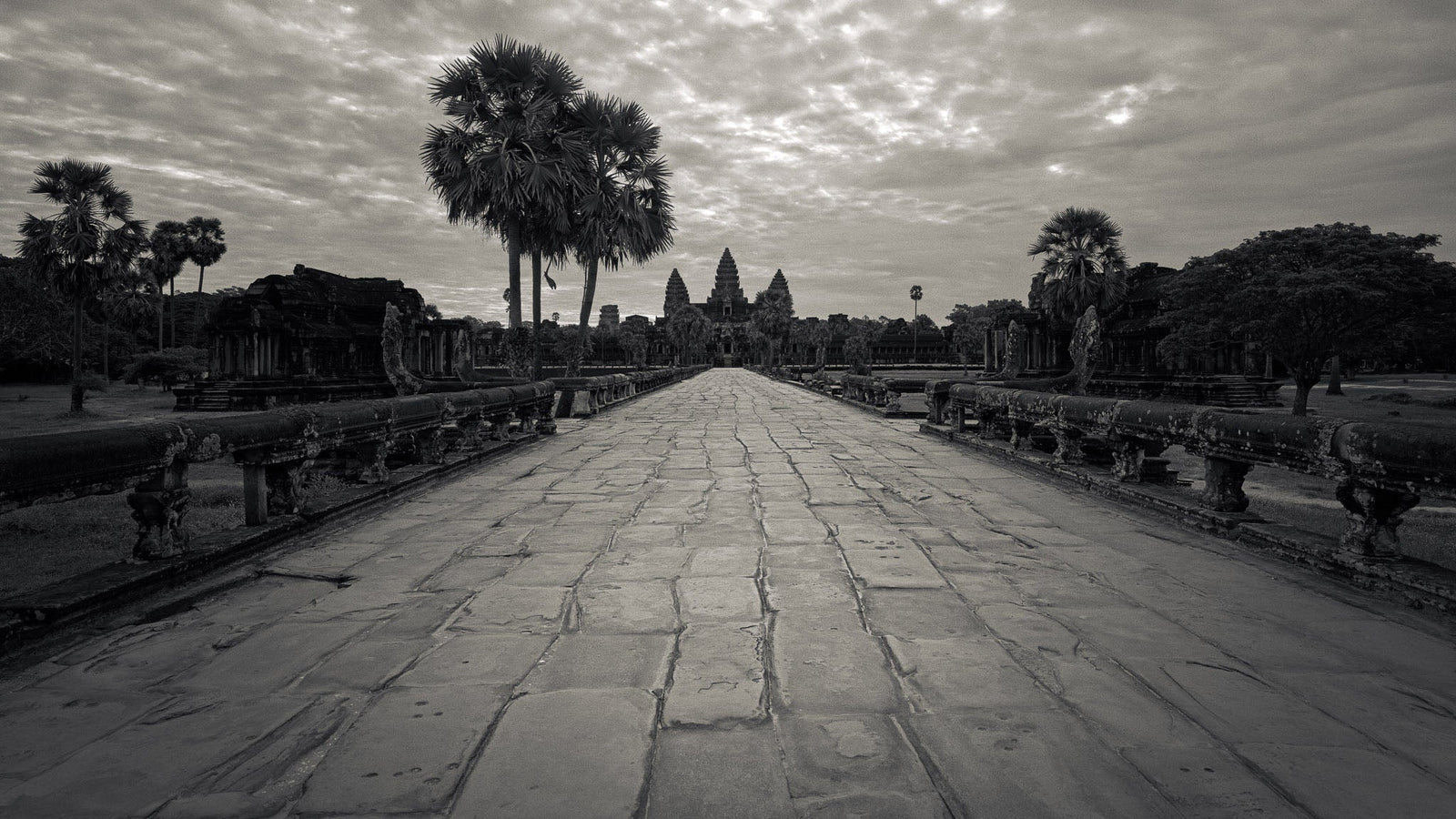

Angkor Wat Temple
Angkor Wat is encountered not as a monument, but as a measure of order made stone. This essay reflects on horizon, proportion, and endurance—how architecture, myth, and kingship were disciplined into a single coherent world that continues to stand, complete and unresolved, across centuries.
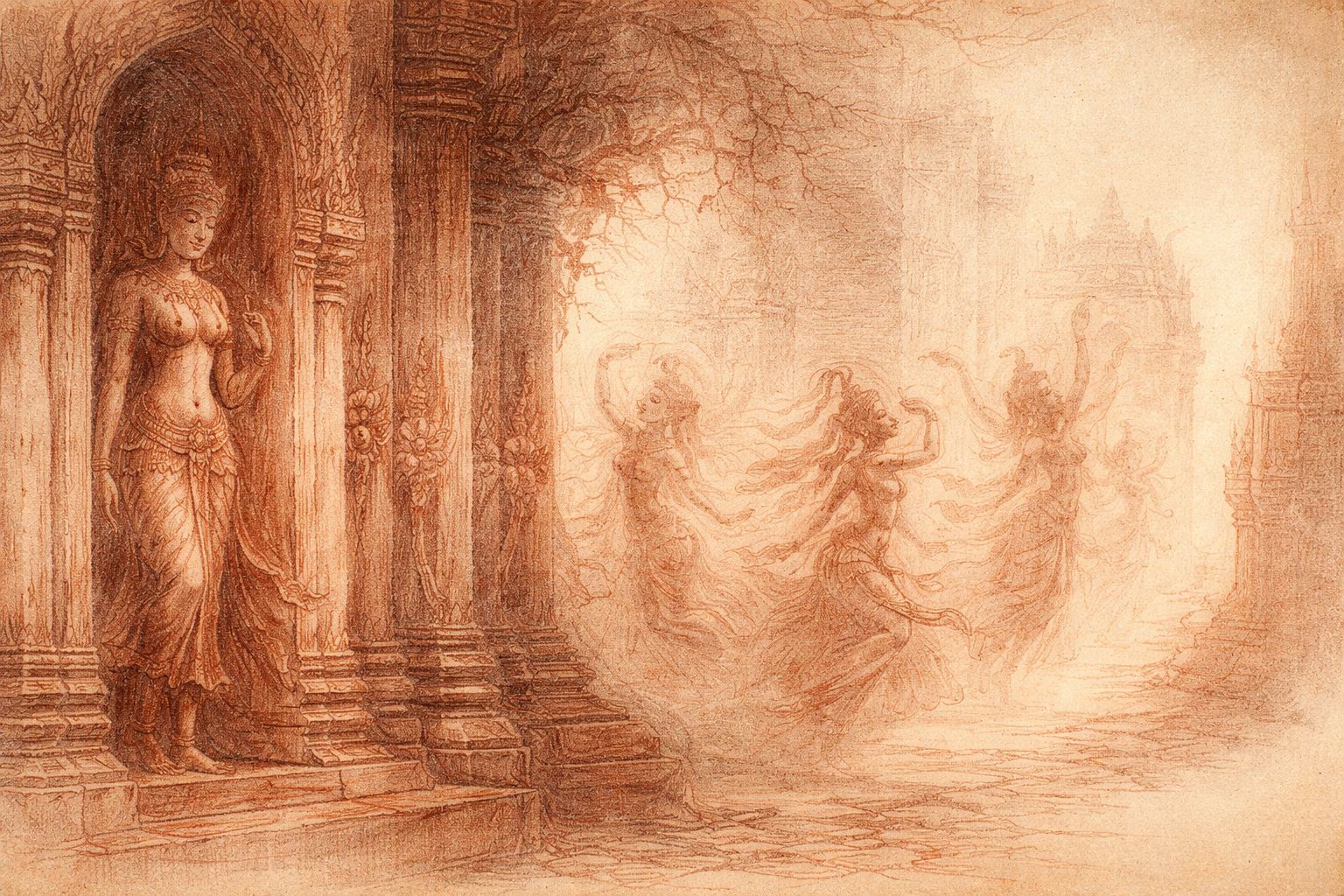

Apsaras & Devatas — The Stillness That Dances
Thousands of women in stone line the temples of Angkor, some standing, some forever mid-dance. They are not ornaments. They are structure, rhythm, and protection—stillness holding the walls, movement animating the heavens, each figure a prayer cut patiently into time.
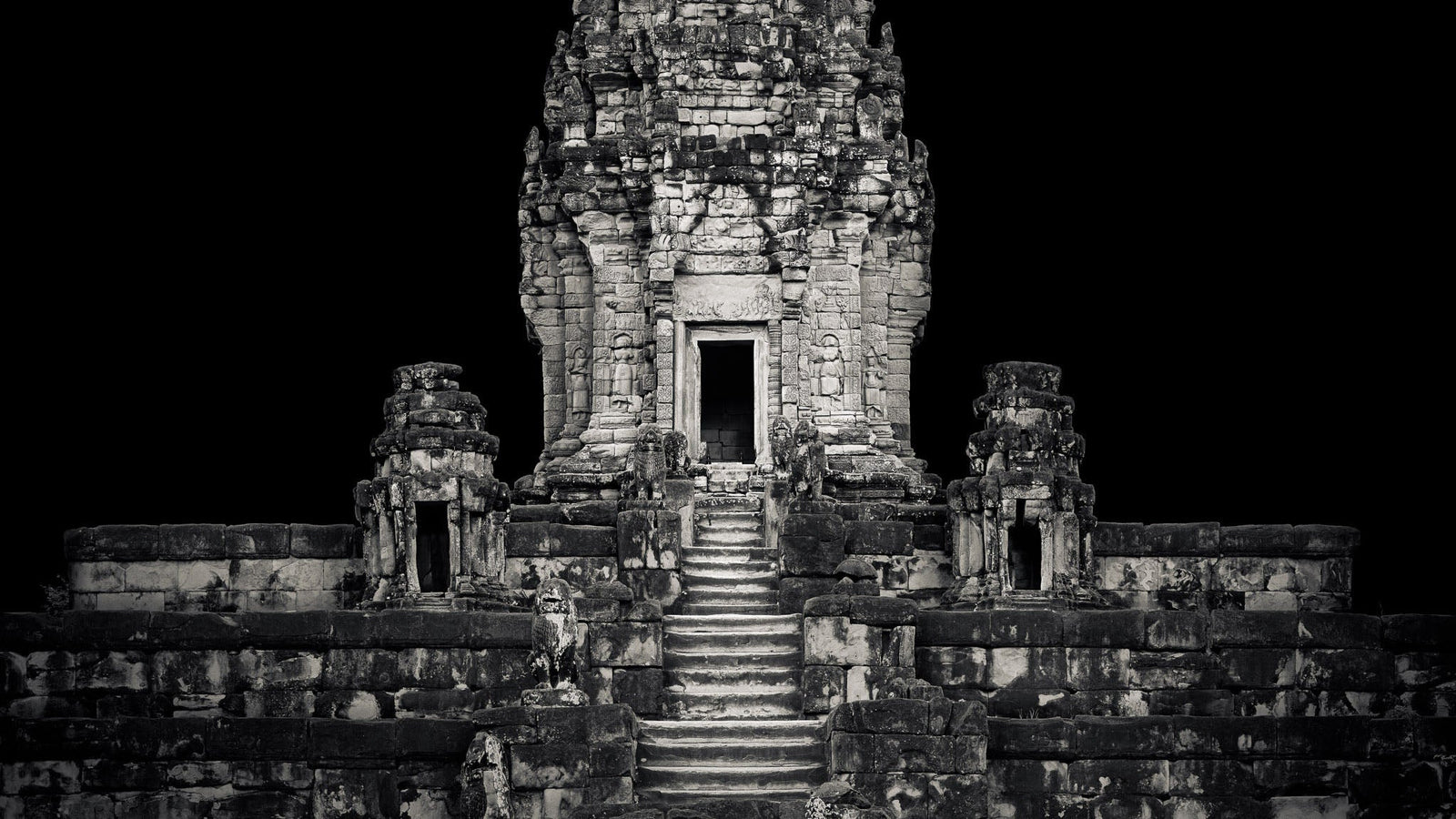

Bakong Temple
Bakong is where Angkor makes its first irreversible choice: to raise stone into a mountain and bind kingship to the cosmos. This sanctuary essay explores Bakong as the Khmer empire’s foundational act—severe, resolved, and essential—where Mount Meru first took permanent form on the Cambodian plain.
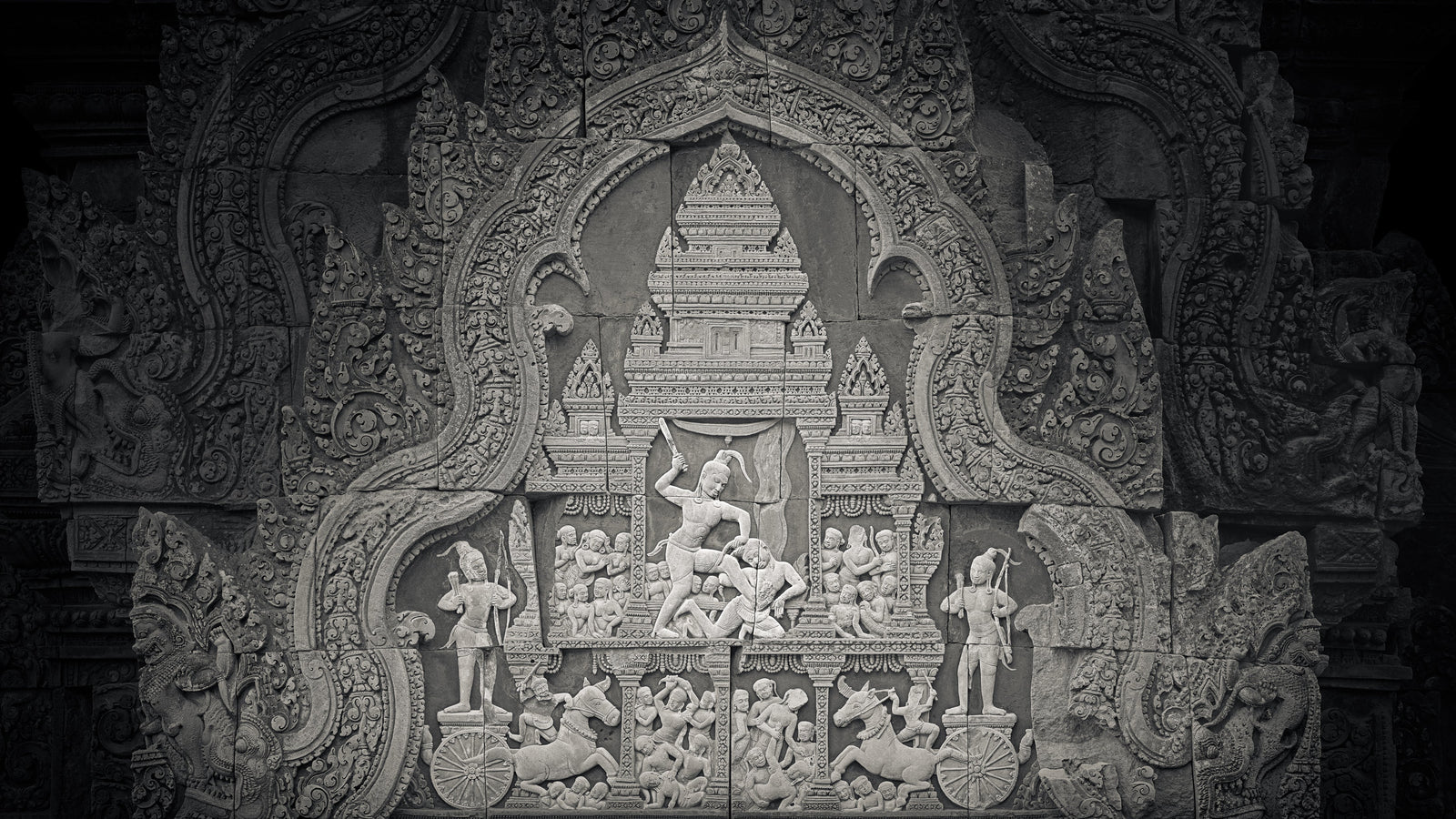

Banteay Srei Temple
Banteay Srei teaches attention rather than awe. This essay reflects on intimacy, craftsmanship, and devotion at Angkor’s most refined temple, where pink sandstone, lowered thresholds, and lingering reliefs invite closeness, patience, and a quieter form of reverence shaped by care rather than scale.
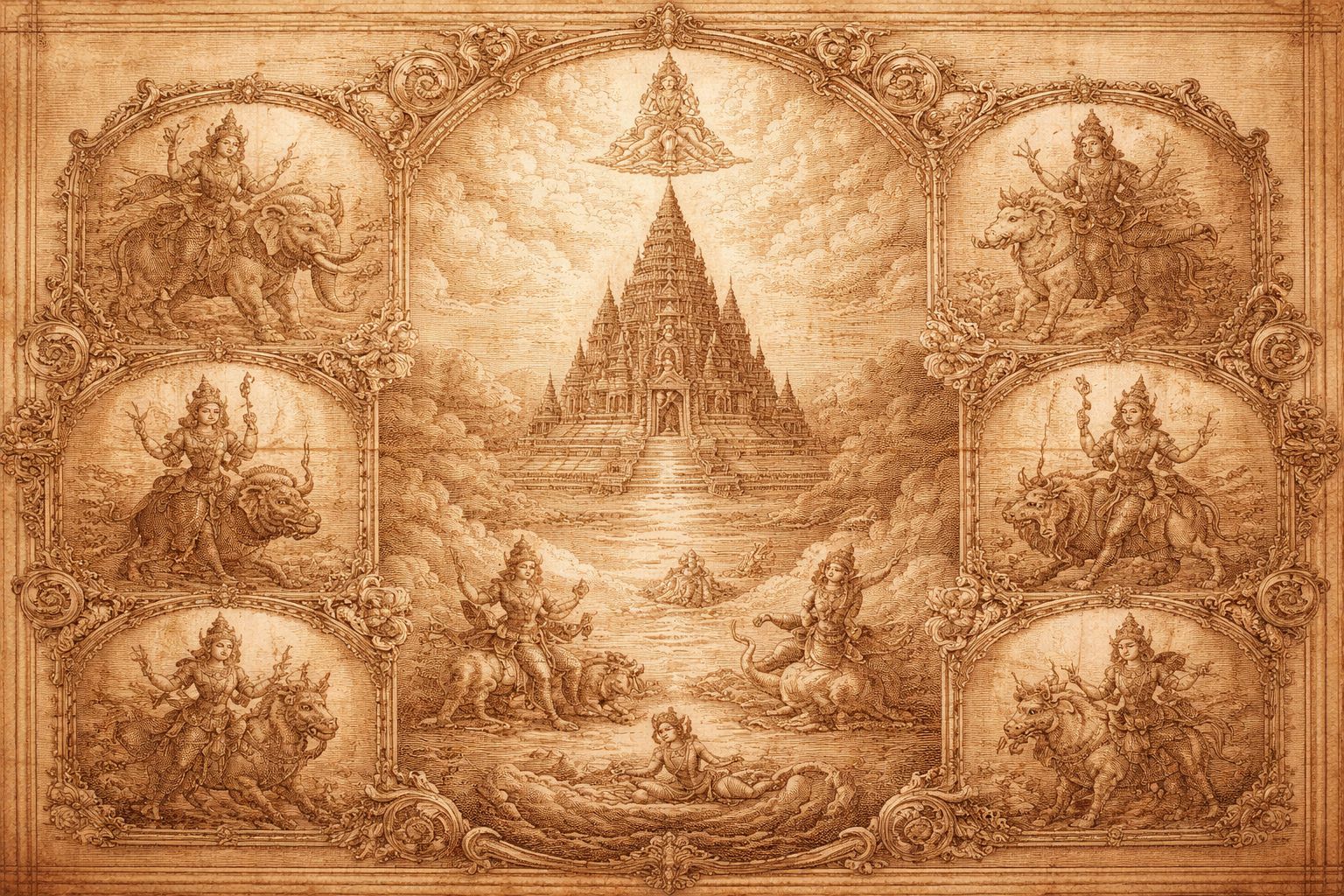

The Dikpalas — Holding the World in Place
The Dikpalas do not defend temples from enemies. They defend them from confusion. By fixing north, south, east, and west into stone, the Khmers ensured that power remained measured, water restrained, death contained, and wealth bounded. A temple endures only when the world around it is held in place.
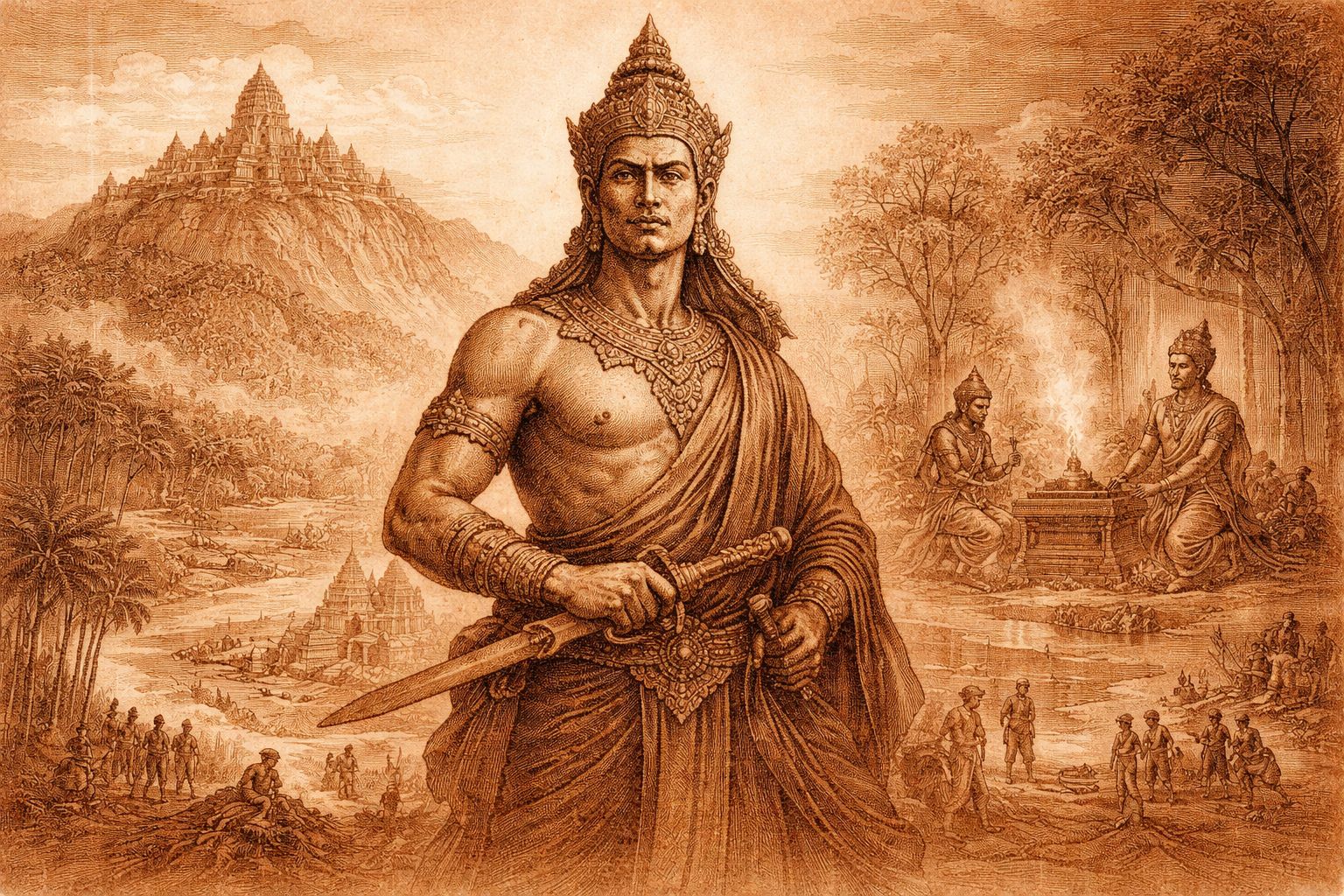

Jayavarman II — The Mountain That Remembered His Name
Jayavarman II did not found Angkor with monuments, but with alignment. On a sacred mountain, he declared a centre strong enough to outlast him. From ritual, sovereignty was born; from measure, empire followed. The towers of Angkor rise because one king first taught the land how to stand.
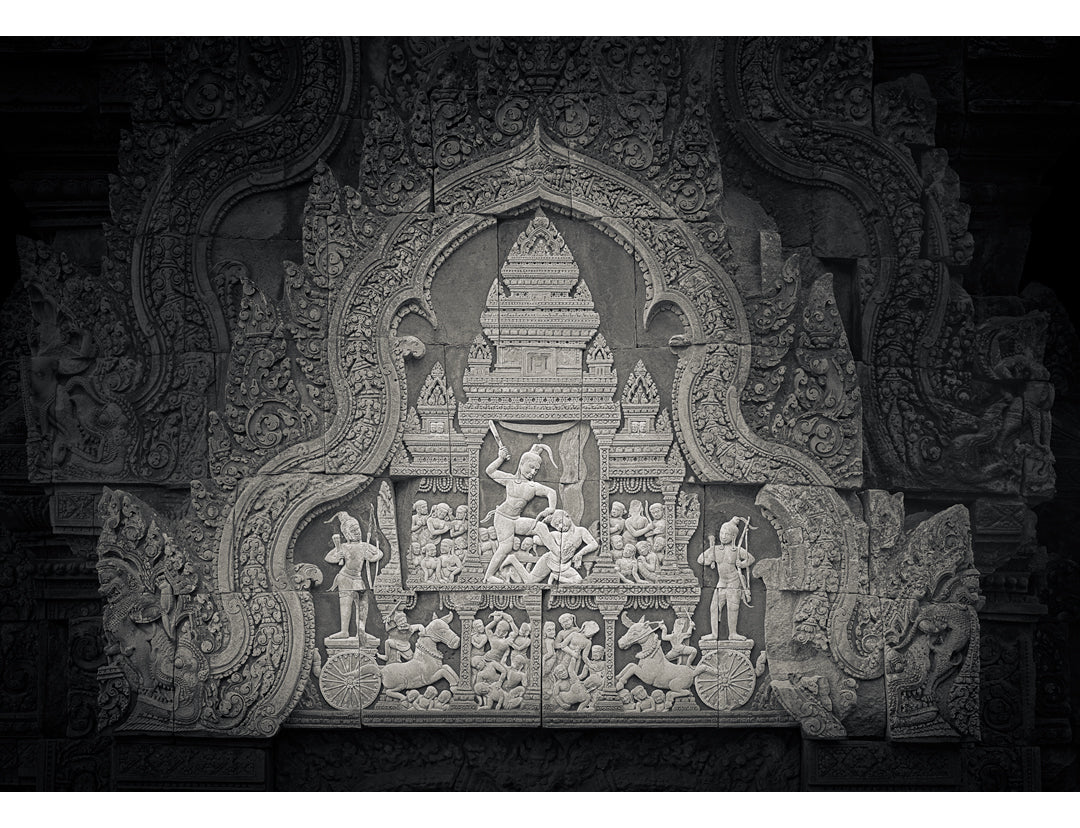

Tympanum
A tympanum is a pause in stone—a held breath above the doorway where meaning gathers before entry. This essay reflects on how sacred architecture uses this charged surface to train posture and attention, turning thresholds into moments of orientation where image, myth, and belief quietly converge.
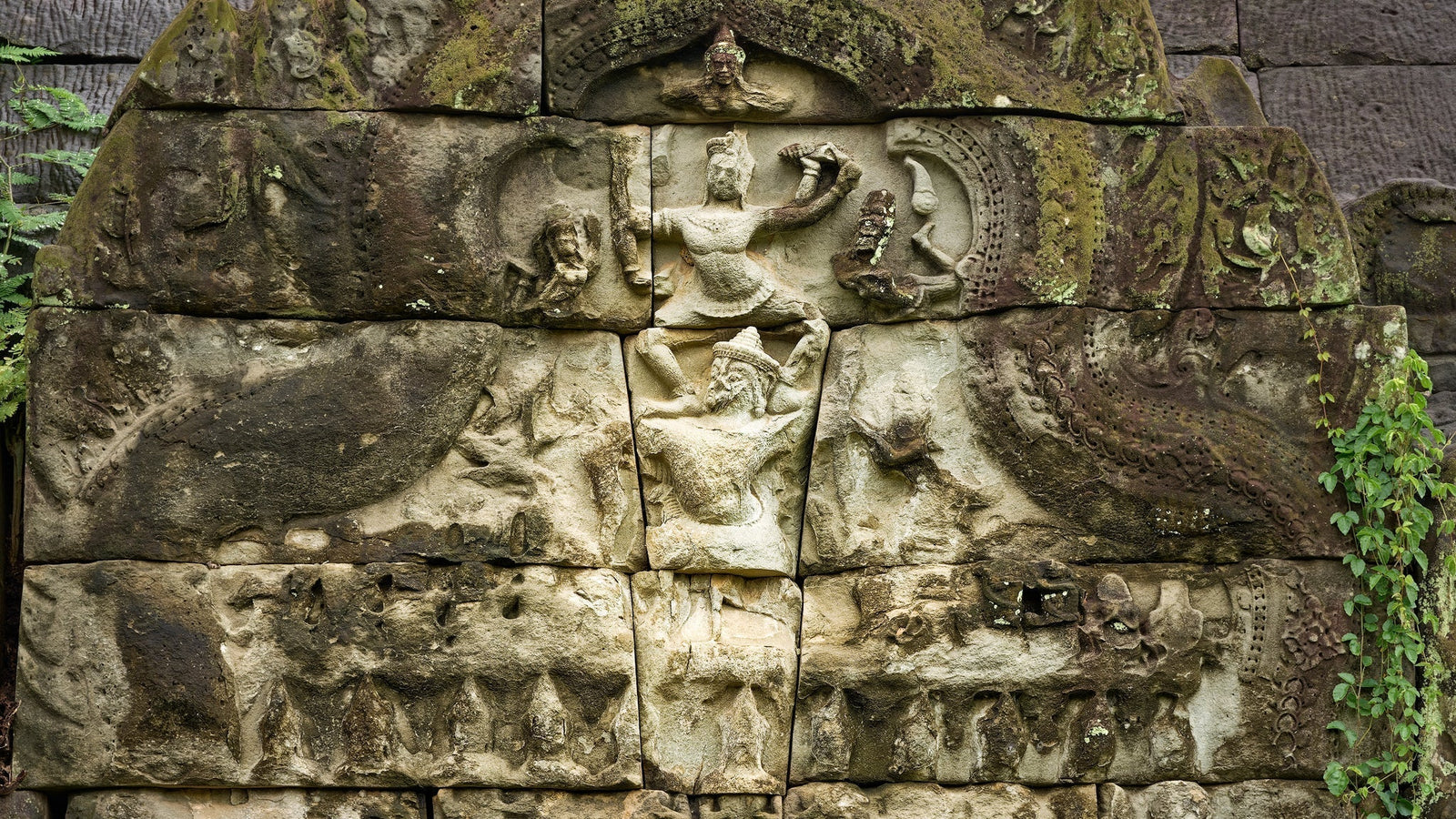

Vahanas — When the Gods Learned to Walk
At Angkor, the gods do not arrive alone. Beneath their thrones, animals wait—alert, grounded, precise. Vahanas are not symbols but translations: divine force rendered into claw, wing, and weight. Even broken statues speak clearly when the animal remains, holding identity steady against time.