
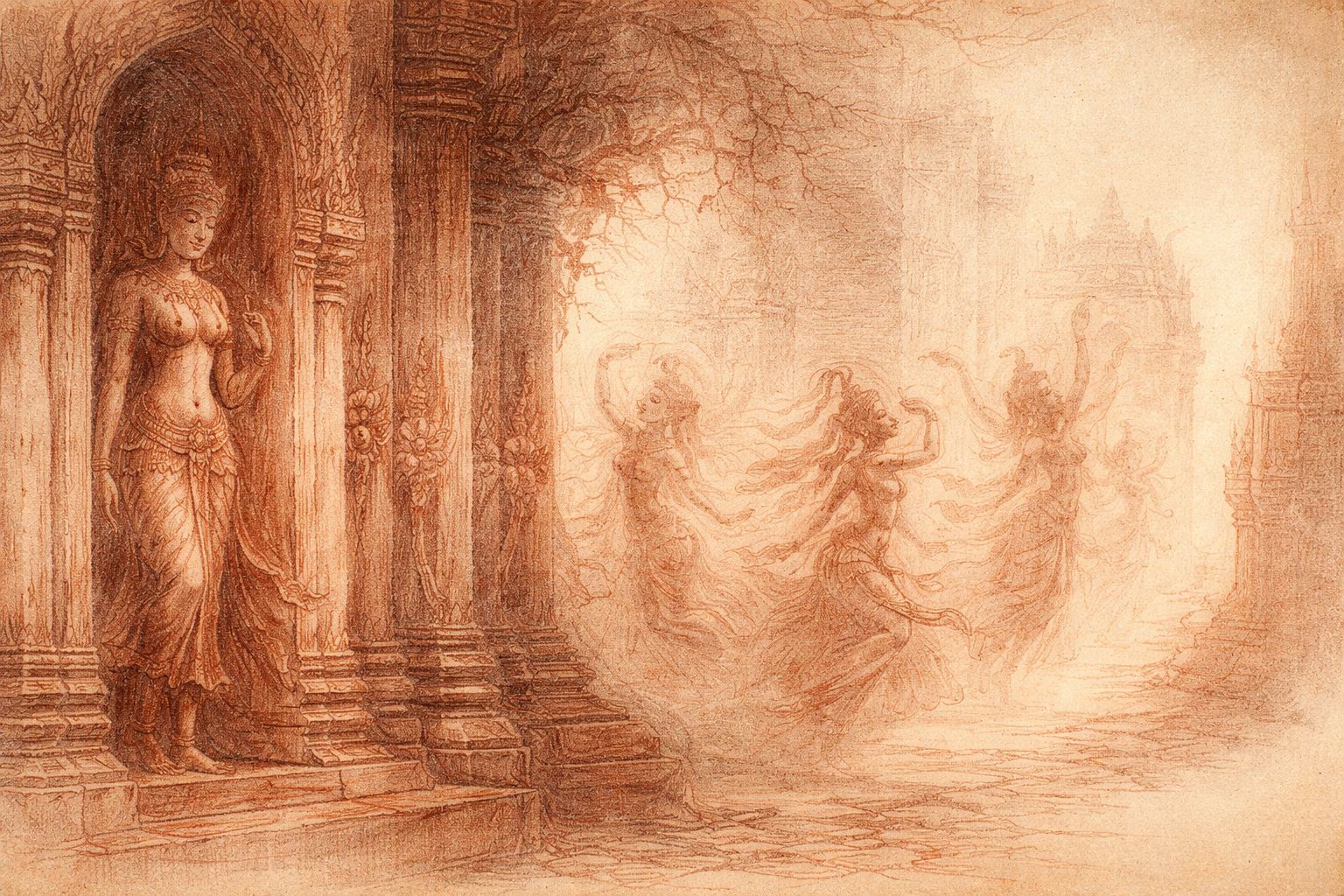

Apsaras & Devatas — The Stillness That Dances
They appear everywhere at Angkor, yet they do not ask to be seen quickly.
Women in stone, repeated by the thousand. Some stand. Some move. Some seem to breathe only when light crosses them. To walk the galleries of the temples is to pass continually beneath their watch—stillness and motion held in the same register of devotion.
Modern language often collapses them into a single word: apsaras. Yet the stone itself insists on a finer distinction. The Khmer carvers did not repeat themselves casually. They differentiated posture, scale, gesture, and placement with deliberate care. Two orders of celestial being emerge—related, but not interchangeable.
The first are what scholars commonly call devatas: semi-divine women who guard the architecture itself. The second are apsaras proper: celestial dancers whose bodies carry the rhythm of heaven.
The devatas do not dance.
They stand.
Life-sized or nearly so, they occupy recessed niches along walls, pillars, and doorways. They face outward, frontal, hieratic, composed. Their torsos are bare, their bodies adorned with layered jewellery, their hair gathered into complex crowns or flowering arrangements. Most hold a lotus bud or stem, not as an offering, but as a sign of continuity—life held in reserve.
Their function is not narrative. It is architectural.
The devata sanctifies space. Her presence transforms masonry into residence, stone into palace. In Khmer thought, the female form was inherently auspicious, a vessel of fertility, prosperity, and continuity. To place her upon the walls was to seal the temple against decay, to anchor divine favour in matter. She is not an object of desire. She is a guarantee.
Her stillness is intentional. She does not sway or turn. She does not beckon. She watches. She holds.
Across the great temples—most famously at Angkor Wat—these guardians multiply into an unbroken procession, each carved differently, no two identical. Hairstyles vary. Jewellery shifts. Faces soften or harden by degrees. Individuality is permitted, but movement is not. The effect is cumulative: a silent female chorus holding the temple in equilibrium.
The apsaras, by contrast, belong to the sky.
Born from the foam of the Churning of the Ocean of Milk, they are celestial nymphs whose role is joy without consequence, delight without loss. In Hindu mythology they dance in the heavens of Indra, accompanied by the music of the Gandharvas. They are the reward of kings and heroes who die with merit intact—the beauty granted after endurance.
In Khmer sculpture, however, something remarkable occurs.
The orchestra disappears.
The apsaras are elevated alone.
Freed from musical accompaniment, they become the primary bearers of movement in stone. Their bodies bend and lift. One leg rises. Hands curve backwards with deliberate articulation. The postures are not decorative inventions; they correspond precisely to gestures preserved in classical Khmer dance to this day. Stone and body remember one another.
Unlike devatas, apsaras are rarely singular. They appear in friezes, in bands, in celestial registers above mythological scenes. They fly. They dance. They witness. Their scale is often smaller, their repetition rhythmic rather than monumental. Where the devata stabilises, the apsara animates.
Together, they create a cosmology in relief: walls that stand because the heavens move.
The Khmer imagination pushed this vision further than its Indian sources. At Angkor, apsaras are not marginal embellishments; they saturate the architecture. Entire galleries become fields of movement. At Angkor Wat alone, nearly two thousand figures populate the stone, each one carved with obsessive care. The temple becomes less a monument than a held breath—stillness structured around perpetual dance.
Under the reign of Jayavarman VII, the boundary between guardian and dancer begins to soften. In temples such as the Bayon, dancing female figures appear on pillars and thresholds in ways that suggest something more esoteric. Some scholars read them as Tantric yoginis—figures no longer merely decorative or auspicious, but initiatory, aligned with specific meditational paths.
Here, movement itself becomes a form of devotion.
Yet even at their most fluid, Khmer figures retain restraint. Unlike Indian sculpture, which often embraces overt eroticism, Khmer art disciplines the body. Hips do not exaggerate. Gazes do not seduce. Nudity is moderated, contained, abstracted. Sensuality is present, but it has been ritually neutralised.
These women were not carved for the human gaze.
They were carved for the gods.
Their beauty does not invite possession; it guarantees order. Their repetition does not exhaust meaning; it stabilises it. In this way, the apsaras and devatas together accomplish something subtle and enduring: they transform architecture into a living cosmogram, a place where joy and protection, movement and stillness, pleasure and discipline coexist without contradiction.
To stand among them is to realise that Angkor was never meant to be silent stone.
It was meant to be inhabited—by measure, by rhythm, and by an unending, disciplined grace.
—
Receive the next work
Subscribe free to receive new work from the Lucas Varro Library by email.
More from the Library
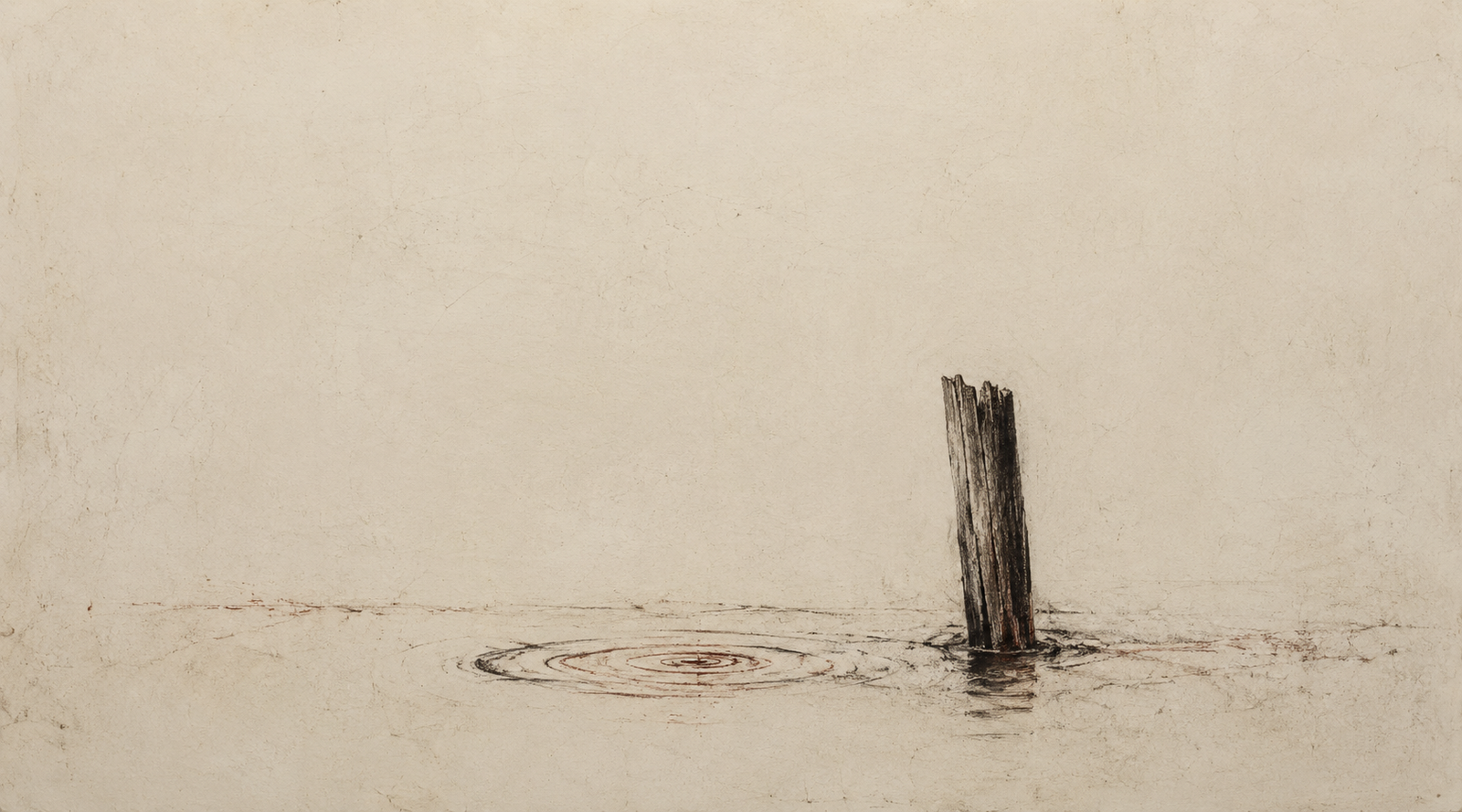

Houses of Wood, Light, and Smoke
Some of Angkor’s most intimate ruins do not rise above the ground at all. They are postholes, low mounds, hearths and ponds: durable traces of a domestic city built largely from things that decay. To restore that city is to see Angkor not only as stone, but as wood, smoke, water, repair, and people living within calling distance.
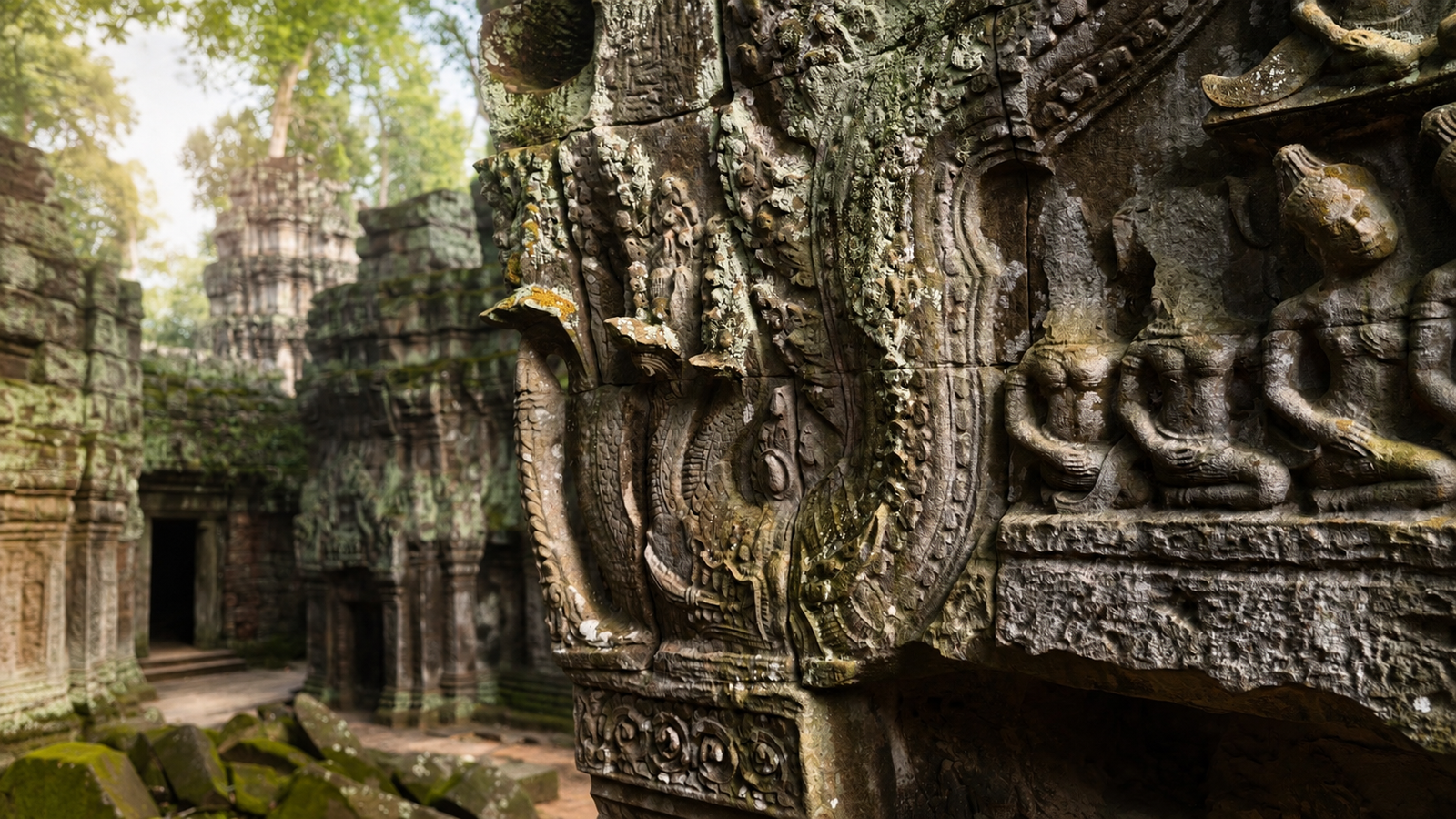

What Stone Brings Forth
I had mistaken a gift for something being expelled.
Beneath the nāga's mouth, a stone garland descended bead by bead. Nearby, a makara opened its jaws and another form emerged. Looking closer, the whole temple began to change: serpent became ornament, ornament became architecture, architecture became foliage.
The forest did not introduce this language.
It answered it.
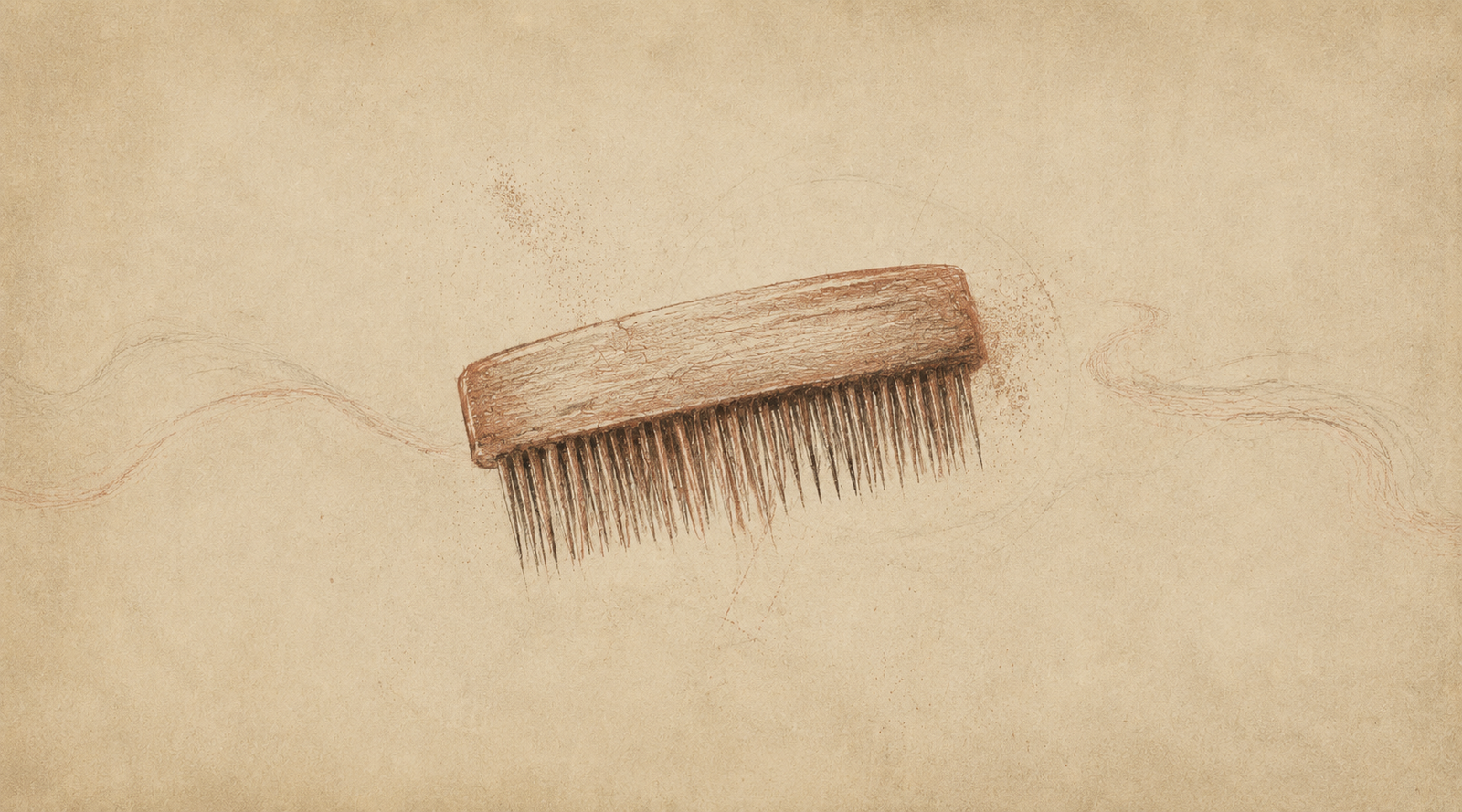

The Eighth Daughter
Seven daughters have already been taken by Yamata-no-Orochi when Susanoo reaches the River Hi. Only Kushinada-hime remains. The Eighth Daughter retells the Kojiki episode through a family’s waiting, a girl transformed into a comb, and the patient preparation for the serpent’s return.