

The Ledger, the Verdict, and the Breath
What is recorded must be read.
What is read must be released.
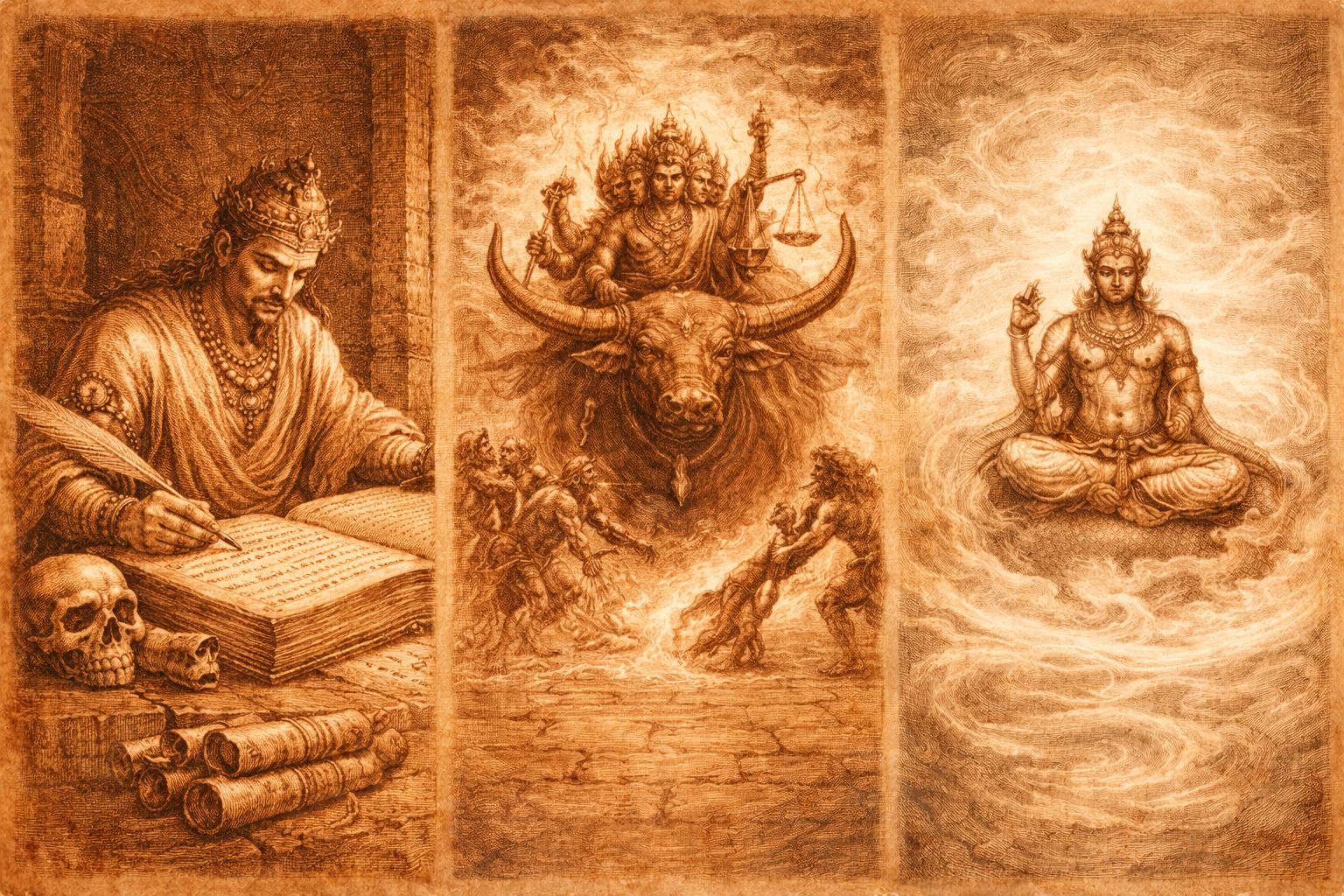
I. Citragupta — Record
Before the soul is addressed, it is measured.
Nothing arrives empty-handed.
Every life brings with it a weight—not of flesh, but of accumulation. Thought by thought, act by act, the days have already written themselves into form. This is the domain of Citragupta, the keeper of duration, the one who ensures that nothing lived is lost to vagueness.
He does not watch while life unfolds.
He waits until it is complete.
In his ledger, time is flattened. Youth and age sit side by side. Intention and consequence occupy the same line. The smallest kindness and the most careless harm share the same ink. There is no emphasis, no commentary, no erasure. The record does not accuse. It simply exists.
Here, memory is not recollection but structure.
The universe remembers because it must remain coherent.
Citragupta’s task is finished the moment the book is closed. What has been written no longer belongs to the living. It is ready to be read.
II. Yama — Judgement
Judgement does not begin with anger.
It begins with order.
When the record is opened before Yama, nothing new is introduced. The soul is not surprised. It recognises itself in what is read. Justice, here, is not an external force imposed upon a life, but the final alignment between what was done and what must follow.
Yama does not deliberate.
He assigns.
He is not the author of consequence, only its guarantor. The paths that open—to light or to correction—are not rewards or punishments, but destinations already implied by the record itself. Every imbalance seeks its corresponding field of adjustment.
In this moment, power is entirely still.
No weapon is raised.
No voice is lifted.
The judgement is complete when movement resumes.
And yet—this, too, is not the end.
III. Wind / Breath — Release
After fire,
after water,
after storm,
after death—
there is no image.
What remains cannot be seated, enthroned, or inscribed. It cannot be weighed or pointed toward. It has no ledger, no tribunal, no direction. It is known only by its passage.
Breath enters.
Breath leaves.
Here, the soul is no longer addressed as a subject. It is no longer corrected or retained. It is received. Wind does not judge. Wind does not remember. Wind does not decide.
It releases.
In this silence, all distinctions fall away: merit and fault, ascent and descent, even identity itself. What was once held as form returns to what can carry everything without strain.
This is not disappearance.
It is rest.
From here, the cycle may begin again.
Or not.
The wind does not insist.
Closing Silence
No instruction follows this sequence.
No conclusion is required.
If the reader pauses here,
breath will already be doing the rest.
—
Receive the next work
Subscribe free to receive new work from the Lucas Varro Library by email.
More from the Library

See Also
A concise and impartial dictionary of absence, promises, quarrels, ordinary objects, and the troublesome instability of words.

The City of Service
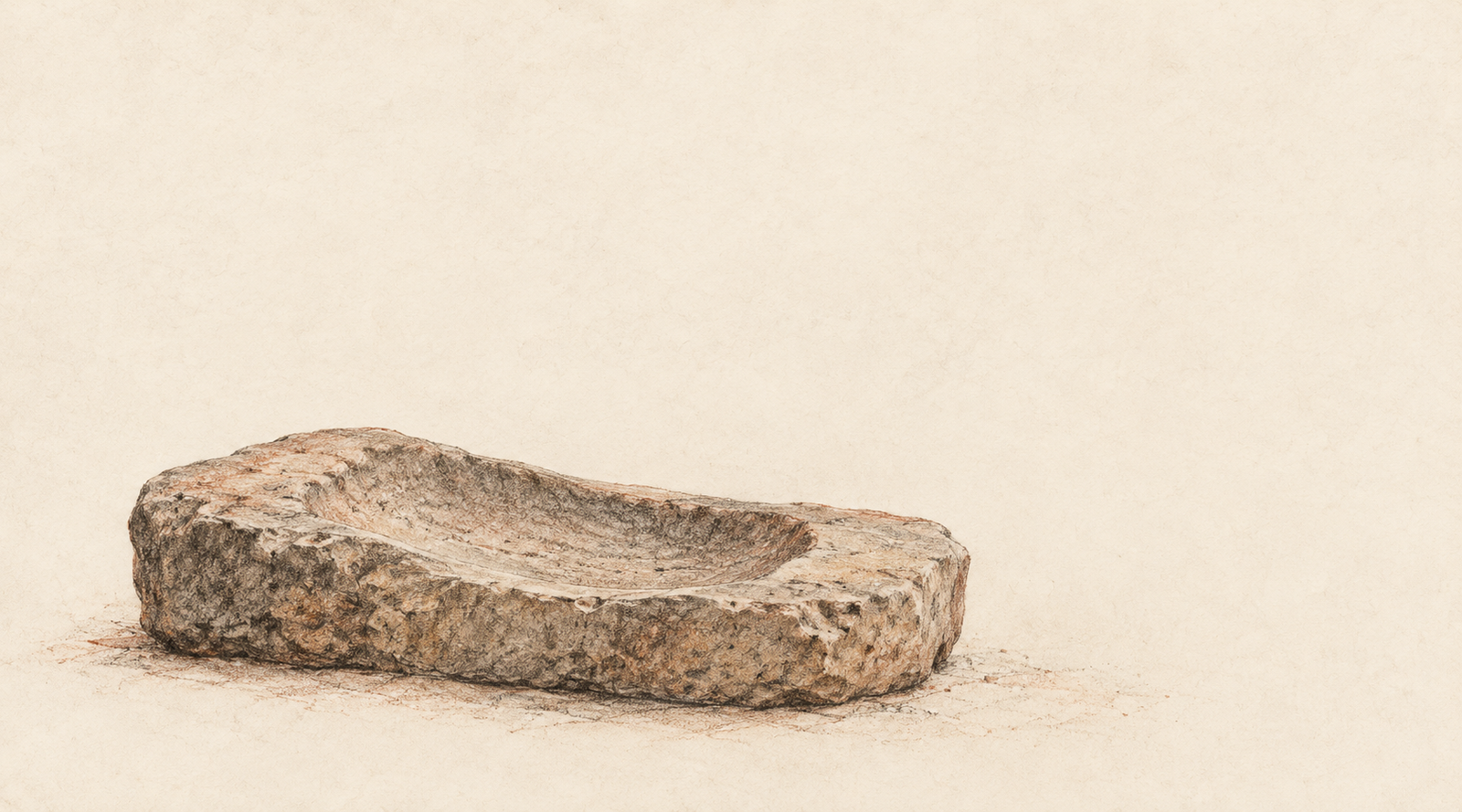
The temple we inherit is a building from which almost all necessity has been removed. Nothing must be brought for it to continue being what we call a temple. The sanctuary asks nothing of us. Stone is good at this kind of independence.
A living temple was otherwise.
Water had to come in. So did grain, cloth, oil, aromatic substances, fuel. The things required for worship arrived because someone carried them across a threshold.

Houses of Wood, Light, and Smoke
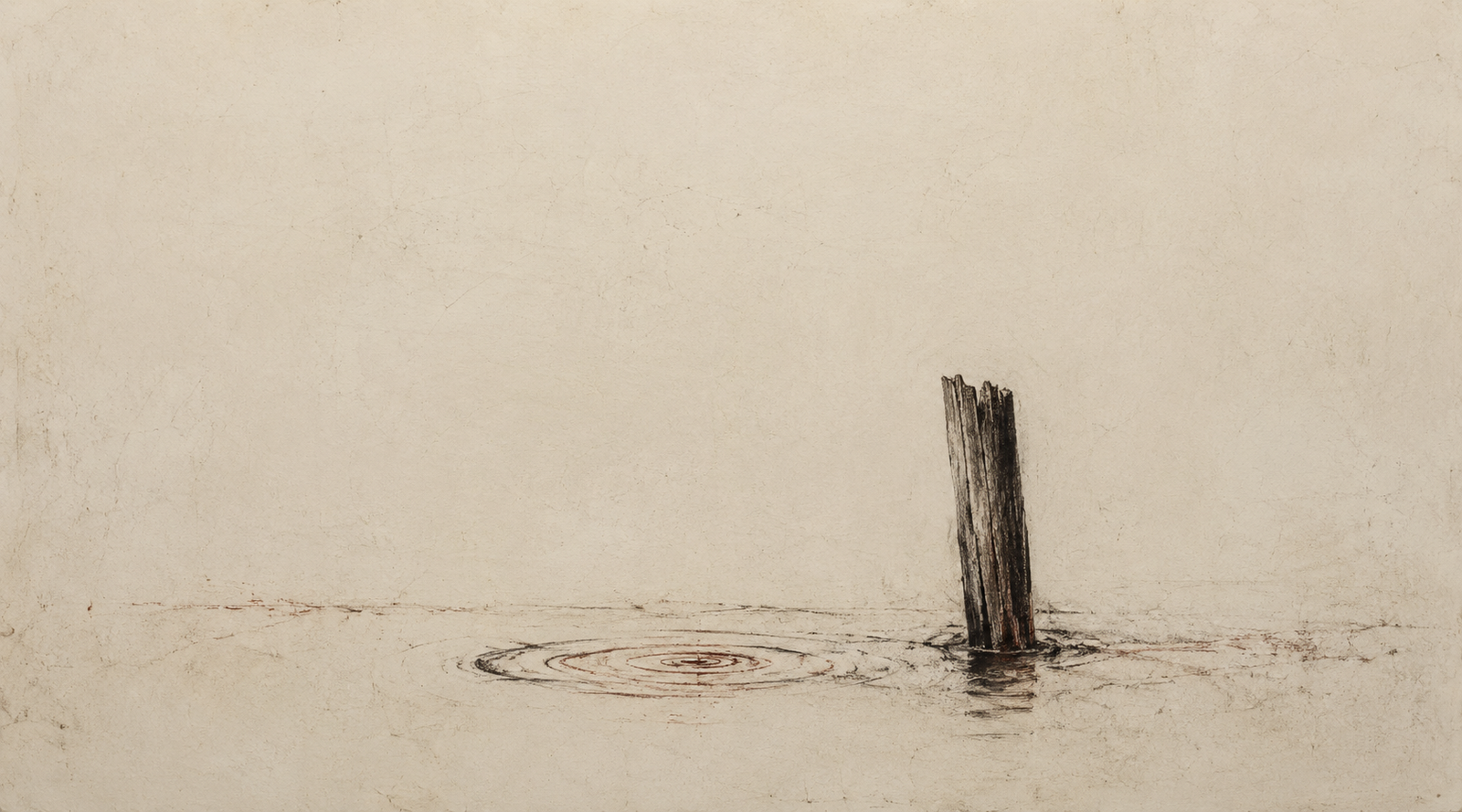
Some of Angkor’s most intimate ruins do not rise above the ground at all. They are postholes, low mounds, hearths and ponds: durable traces of a domestic city built largely from things that decay. To restore that city is to see Angkor not only as stone, but as wood, smoke, water, repair, and people living within calling distance.