
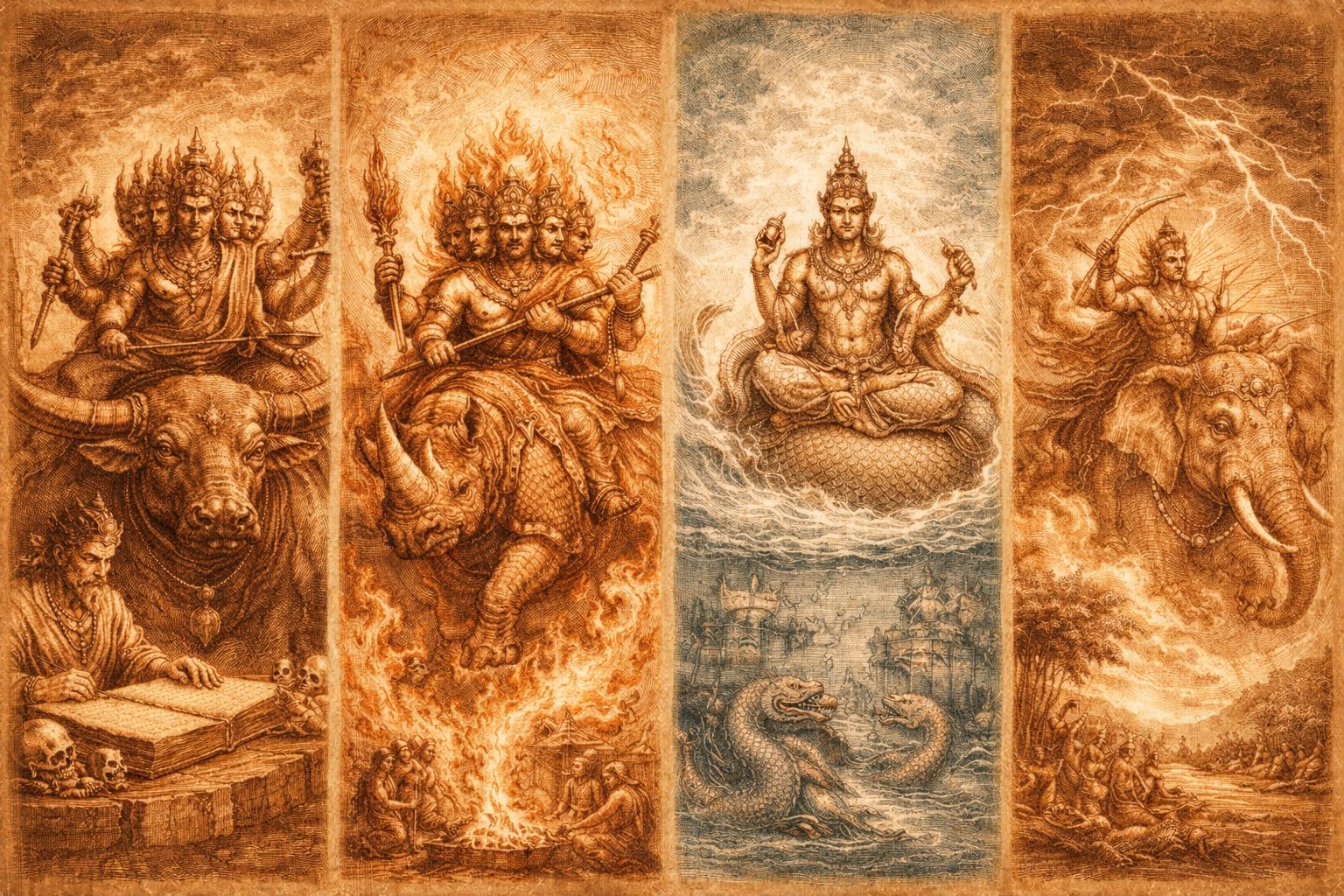

The Circle of Return — Yama, Agni, Varuna, Indra
Angkor was not built to defy death.
It was built to place it.
The Khmer vision of the cosmos is cyclical, not redemptive. Nothing is erased; everything is concealed, transformed, and released again. At the heart of this vision stands a fourfold order—Yama, Agni, Varuna, and Indra—not as separate gods competing for dominion, but as a single cycle of consequence that governs both worlds and souls.
This cycle is formalised in the ancient rite known as the Dying round the Holy Power (brahmanaḥ parimaraḥ), a metaphysical grammar describing how all visible forces pass into concealment and are reborn without loss. Death, here, is not annihilation. It is disappearance into a finer state.
The downward path begins in the sky.
Lightning flashes and dies into rain. Indra’s brilliance—violent, brief, catalytic—cannot endure in isolation. Its purpose is release. Storm breaks what is held, and in doing so yields the waters to Varuna. Rain is lightning slowed into nourishment.
Water, in turn, does not remain on the earth. It gathers, ascends, and dies again—this time into the moon, the vessel of life-sap and cosmic measure. Varuna governs this passage. His law is circulation, not abundance. What is held too long stagnates; what is released too quickly is lost.
From the moon, the waters pass into the sun. And when the sun sets, it too “dies,” its light and heat no longer visible, drawn inward and preserved within Agni. Fire becomes the night-keeper of the sun’s power. While the world sleeps, the sacrificial flame holds what daylight has withdrawn. Agni is not merely the fire of consumption; he is the fire of custody.
Finally, even fire must disappear. Agni breathes forth into the wind—the highest and subtlest power, beyond form and visibility. In this last dissolution, the cycle reaches the domain of Yama. What has entered the wind has left the world of perception entirely. This is death: not destruction, but total concealment.
Yama presides here not as executioner, but as guarantor. He ensures that every passage is correct, that nothing is lost between states. His justice is cosmic bookkeeping. When fire vanishes into breath, when a soul vanishes into the unseen, the transition is recorded, not erased.
But the cycle does not end.
From the wind, the elements are reborn in reverse. Breath kindles fire. From fire the sun is born; from the sun the moon; from the moon the rain; and from rain, once again, lightning appears in the sky. Indra’s flash signals not rupture, but renewal. The storm is the announcement that the circuit is complete.
Within the human body, the same law holds. Breath conceals and releases. Heat digests and transforms. Fluids sustain and circulate. At death, these forces withdraw in order, returning to invisibility. Yama does not intervene; he observes. Nothing occurs out of sequence.
Khmer architecture renders this cycle with remarkable restraint. Fire is housed, never unleashed. Water is measured, never allowed to overwhelm. Storm is awaited, never summoned. Death is acknowledged, never denied. The temples do not promise escape from consequence; they teach correct passage through it.
This is why Angkor endures. It does not cling to permanence. It accepts disappearance as necessary for return.
In this cosmology, judgement is not punishment.
It is alignment.
To live rightly is to move in rhythm with this fourfold order—to burn when burning is required, to hold when holding is demanded, to release when the storm arrives, and finally, to vanish without resistance when the wind calls all things back into silence.
—
Receive the next work
Subscribe free to receive new work from the Lucas Varro Library by email.
More from the Library


See Also
A concise and impartial dictionary of absence, promises, quarrels, ordinary objects, and the troublesome instability of words.
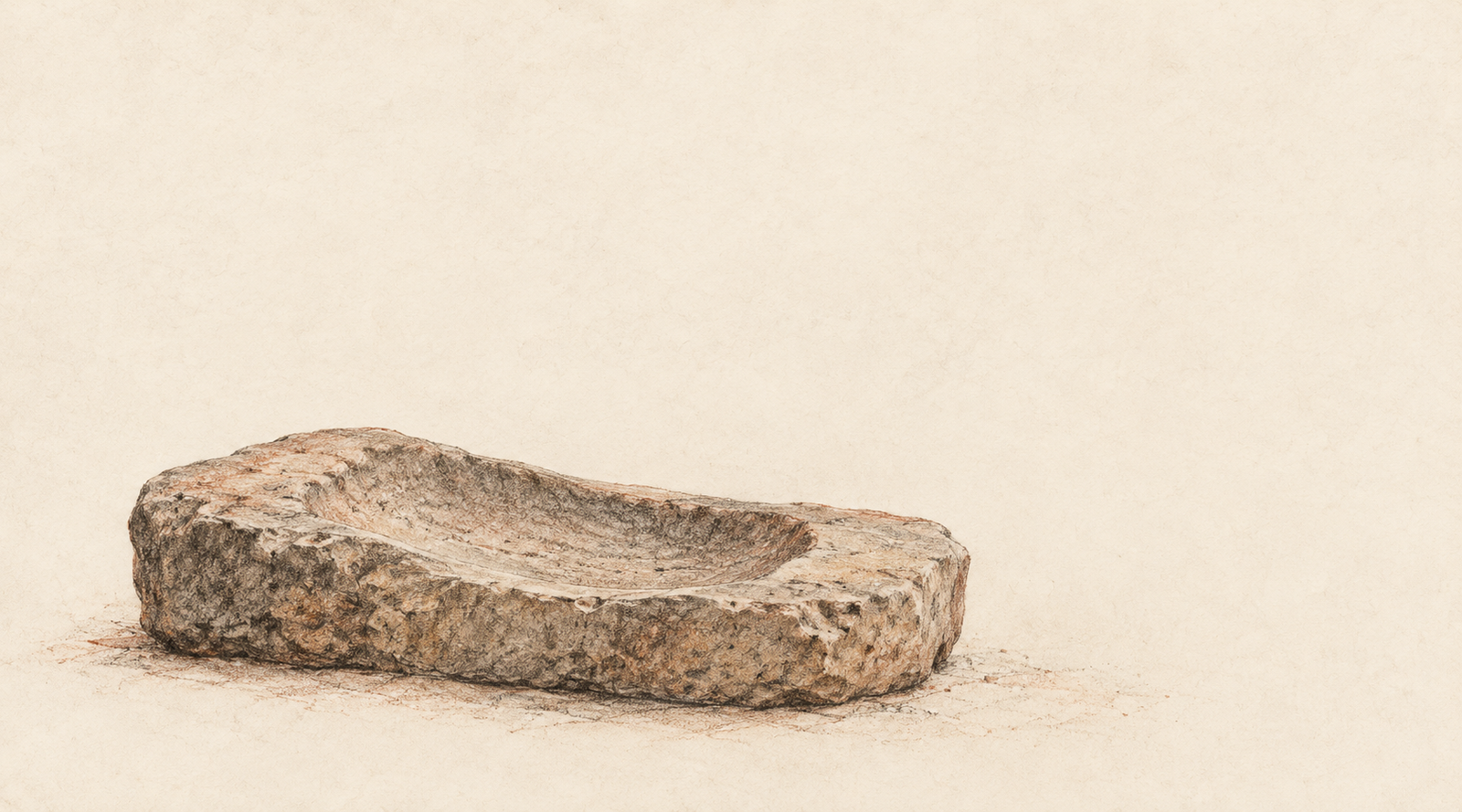

The City of Service
The temple we inherit is a building from which almost all necessity has been removed. Nothing must be brought for it to continue being what we call a temple. The sanctuary asks nothing of us. Stone is good at this kind of independence.
A living temple was otherwise.
Water had to come in. So did grain, cloth, oil, aromatic substances, fuel. The things required for worship arrived because someone carried them across a threshold.
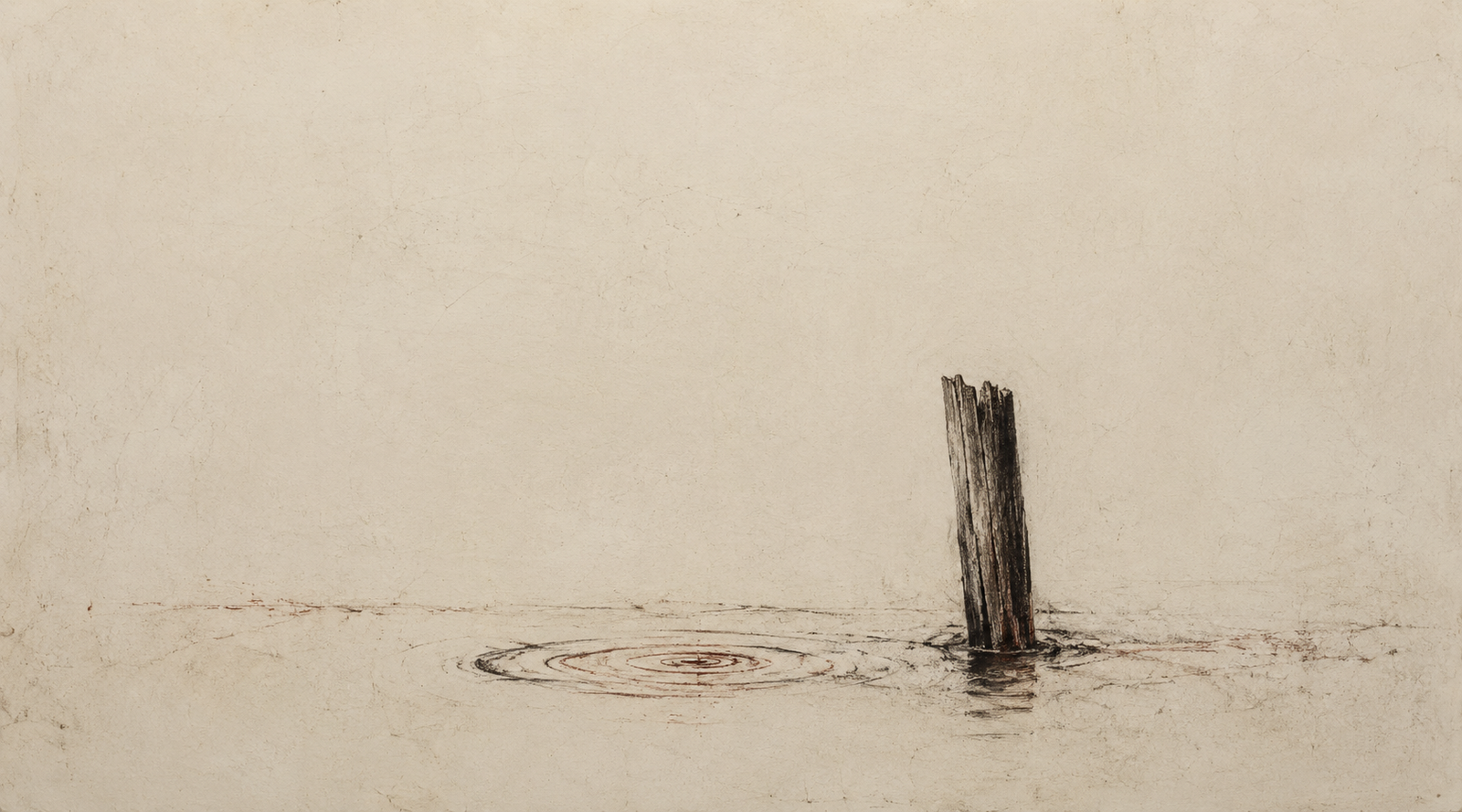

Houses of Wood, Light, and Smoke
Some of Angkor’s most intimate ruins do not rise above the ground at all. They are postholes, low mounds, hearths and ponds: durable traces of a domestic city built largely from things that decay. To restore that city is to see Angkor not only as stone, but as wood, smoke, water, repair, and people living within calling distance.