
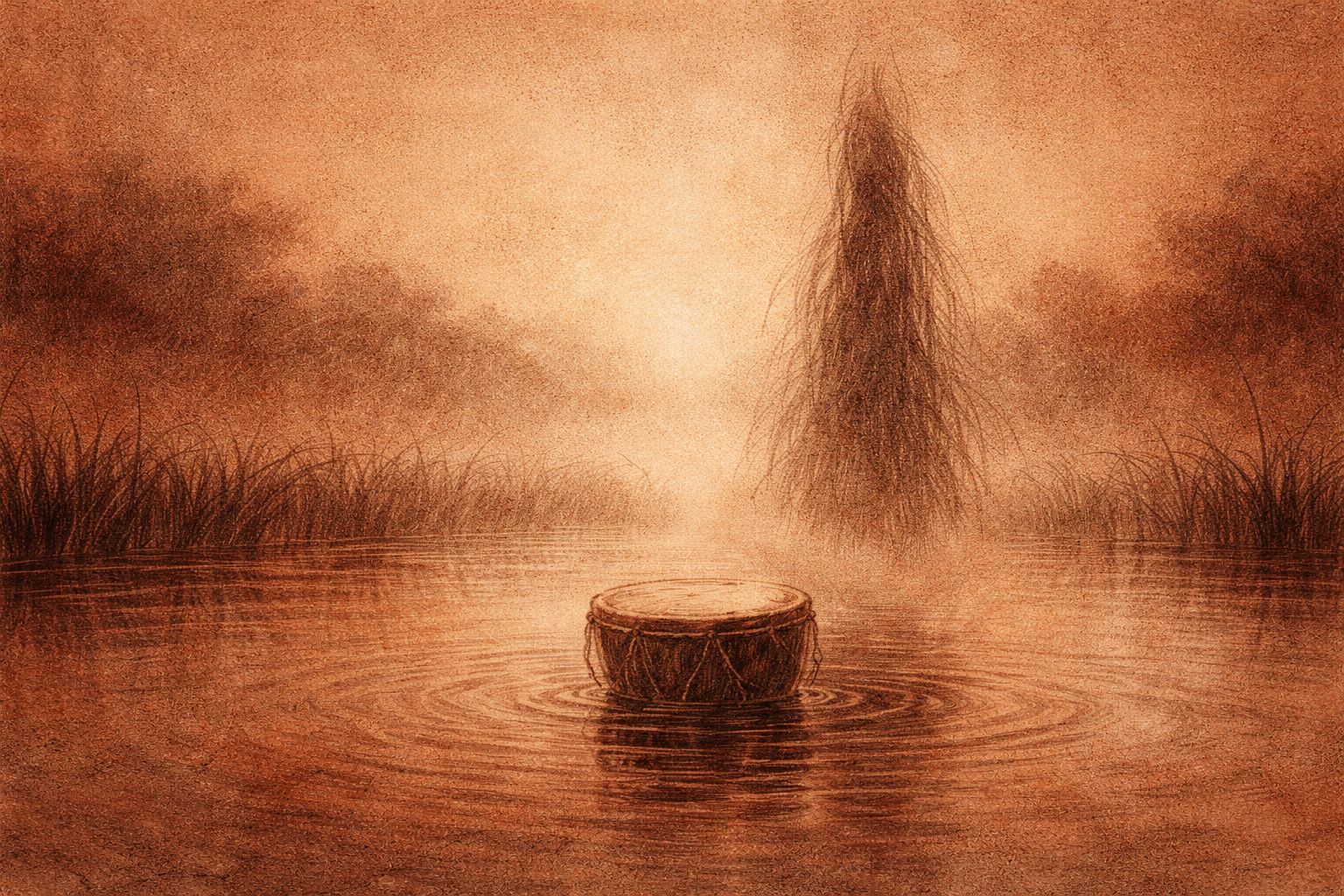

Rice-Ghost and the Seven Drums
(A harvest pact)
When the paddies were still mirrors and the cranes walked them like thoughts, the people of Kandal Plain kept a promise they did not write down.
Each year, at the first cut of rice, seven drums were struck at dusk. They were struck slowly, open-handed, with space between each sound. The drums were not for calling rain or driving anything away. They were for listening. They said to the land: We remember what feeds us.
The elders taught the rhythm before they taught the names of the winds.
That year the rice came heavy. The stalks bowed until their tips brushed the water. The men sharpened their sickles. The women counted jars and planned weddings. The children ran ahead of the harvest line and flattened the paddies with their feet, pretending to be oxen.
At dusk, when the first bundle was tied, a boy named Dara carried the smallest drum to the edge of the field. He was thin and quick, with wrists like reeds. He knew the rhythm. He always did.
But the light was thick, and the air smelled of cooked grain. Someone laughed. Someone said, Tomorrow we will beat them louder, to thank the year.
So the drums were not struck.
That night the fields went dark.
In the morning the paddies were wrong. The water lay too still. The rice stood where it should, but it had lost its shine, as if breath had been taken from it. When the sickles touched the stalks, the sound was dull. Like cutting wet cloth.
By noon the birds would not land.
That evening a woman saw something standing among the sheaves. It was the height of a man, but narrow. Its shoulders sloped like bent grain. Its face was pale, all angles and shadow. The mouth was a seam. When she called out, it did not turn. When she looked again, it was gone.
The elders argued. One said it was hunger wearing a shape. One said it was heat. One said nothing and went to fetch the drums.
They struck them at dusk—hard, without spacing. Seven skins sounded and rang across the fields. The noise ran outward and did not settle.
That night rice spoiled in the jars. In the morning a child woke with chaff in his hair. At the irrigation gate, footprints appeared where no one had walked: narrow, pressed deep, as if something light had learned weight.
On the third day, Dara followed the footprints into the paddies. He did not tell anyone where he was going. He tied the smallest drum at his hip the way his grandmother tied offerings—not to show it, only to remember.
He found the thing where the water thinned.
Up close it was not frightening. It was empty in the way bowls are empty. Rice grains clung to it. They did not grow or fall. They only held.
Dara stood for a long time. Then he untied the drum.
He set it on the water. It floated. He struck it once, too quickly. The sound jumped and broke. The water did nothing.
He waited. He struck it again. He waited longer. The sound spread and thinned. The water stirred, only slightly.
He struck the drum seven times. He did not keep count with numbers. He counted with breath. Between the strikes he listened.
When the last sound faded, the thing bent. Not as a bow. As grain bends when it is ready.
It reached into itself and drew out a handful of rice. The grains were not new and not old. They were neither white nor gold. It scattered them back into the water.
The sound it made was the sound rice makes when you pour it into a sack.
Dara did not understand it then. He only stood until the water went still again.
At dawn the paddies breathed. The birds returned and landed carefully. The rice cut clean. The jars kept.
That evening the elders struck the seven drums properly. They did not strike louder. They did not add words. They left the spaces wide.
Later, when people spoke of that year, an elder would sometimes say, It is not the year that is thanked. Another would answer, It is the taking. No one said where the words came from. They were not spoken often.
From that year on, when the first cut is made, a child carries the smallest drum. If the year is generous, the rhythm is the same. If the year is thin, the rhythm is the same.
Sometimes, when the water is still and the light thickens at dusk, a narrow figure stands among the sheaves and listens.
It does not count the harvest.
It counts the space between the sounds.
—
Receive the next work
Subscribe free to receive new work from the Lucas Varro Library by email.
More from the Library


See Also
A concise and impartial dictionary of absence, promises, quarrels, ordinary objects, and the troublesome instability of words.

The City of Service
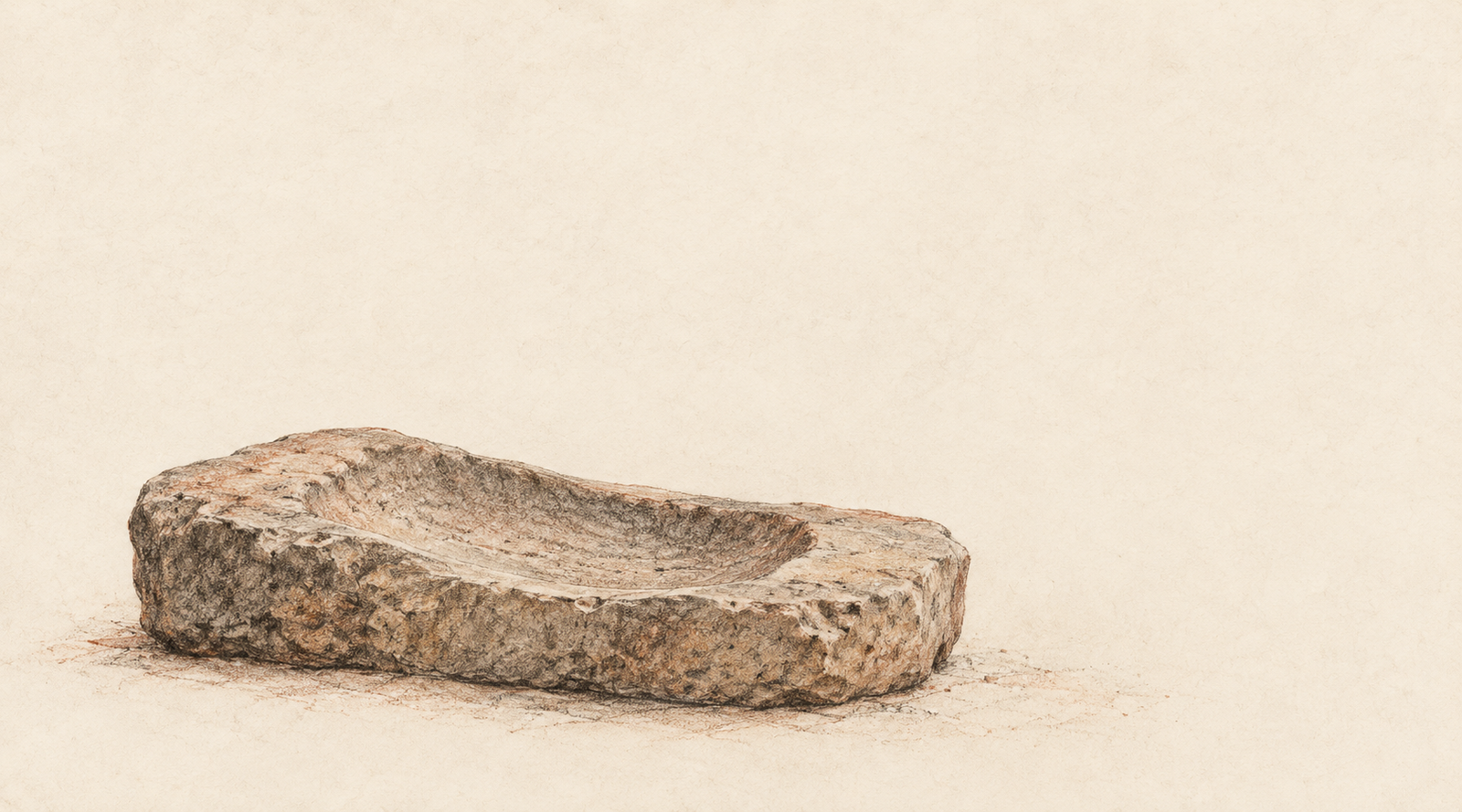
The temple we inherit is a building from which almost all necessity has been removed. Nothing must be brought for it to continue being what we call a temple. The sanctuary asks nothing of us. Stone is good at this kind of independence.
A living temple was otherwise.
Water had to come in. So did grain, cloth, oil, aromatic substances, fuel. The things required for worship arrived because someone carried them across a threshold.

Houses of Wood, Light, and Smoke
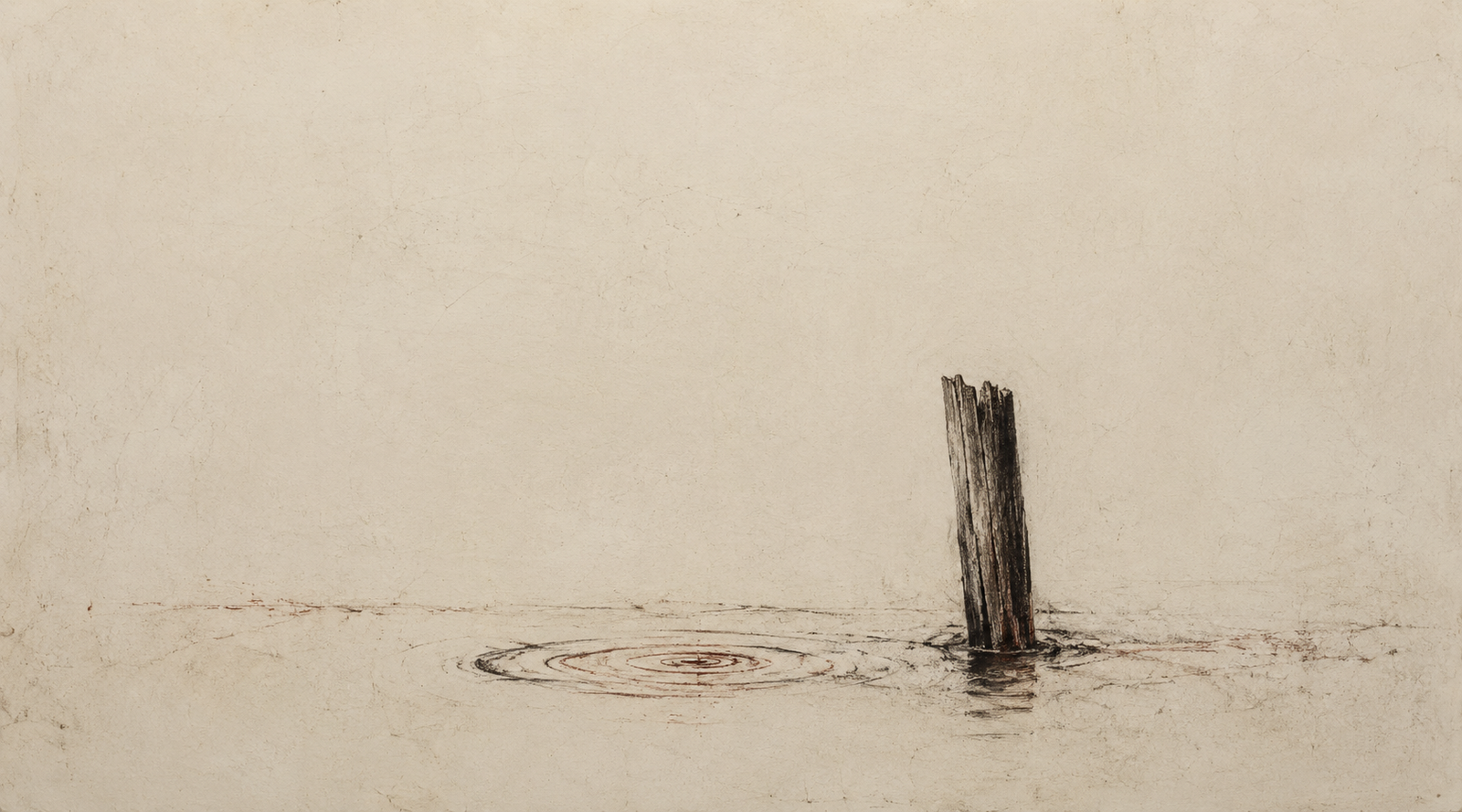
Some of Angkor’s most intimate ruins do not rise above the ground at all. They are postholes, low mounds, hearths and ponds: durable traces of a domestic city built largely from things that decay. To restore that city is to see Angkor not only as stone, but as wood, smoke, water, repair, and people living within calling distance.