
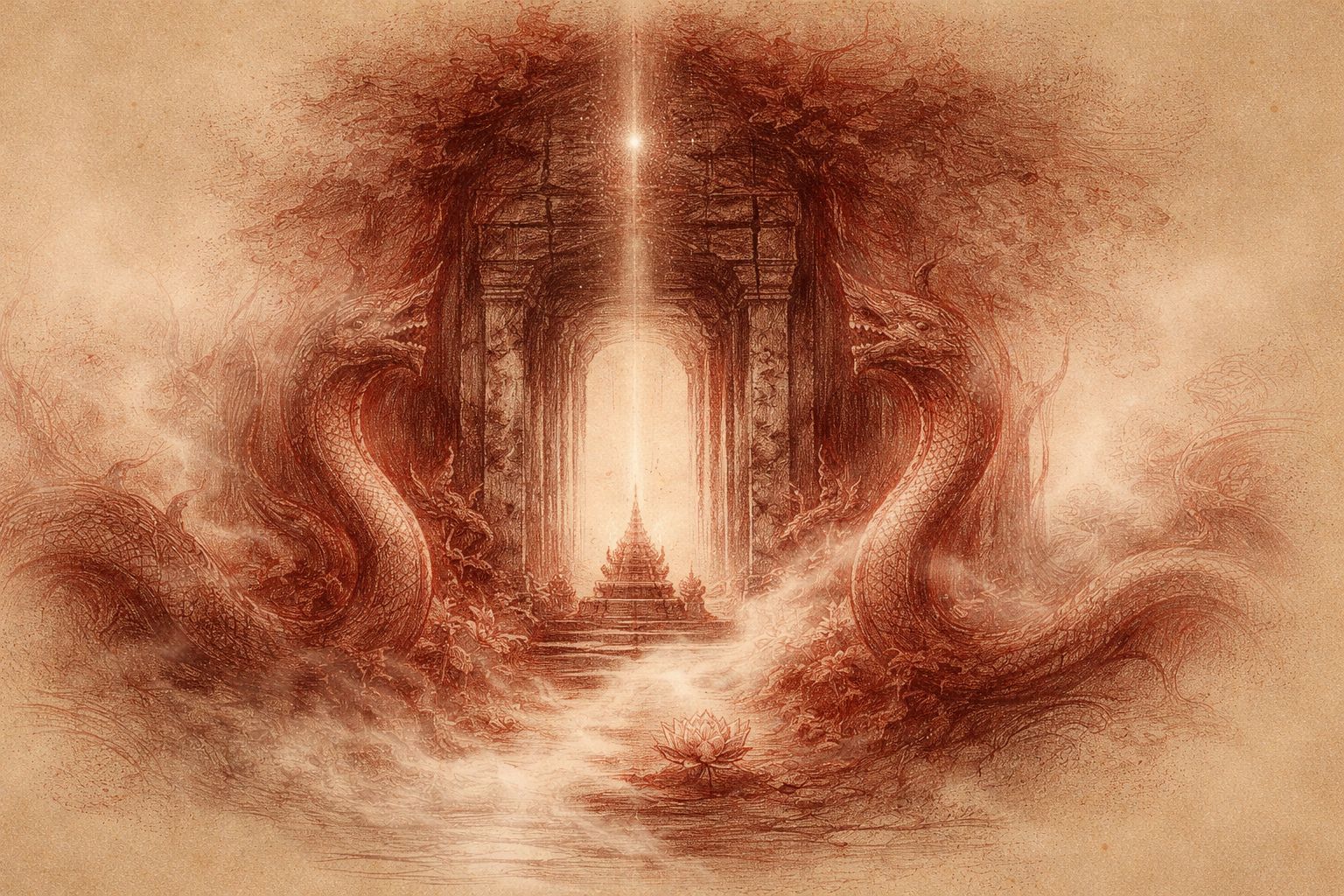

Stone That Remembers the Sky
When kingdoms loosen their grip on time
and crowns fall quiet into names,
stone learns another grammar.
Here, towers lift the memory of mountains
back into the air.
Here, corridors rehearse the walk of gods
until the feet of farmers, monks, and rain
inherit the rhythm.
Angkor—
not a ruin,
but a sentence still being spoken.
The centuries did not end you.
They only changed the mouth.
Moss learned the syllables of sandstone.
Roots signed their names slowly.
Light returned each dawn
to read what had not been erased.
Empires fell elsewhere—
with fire, with forgetting.
But here, devotion stayed behind,
quiet as a held breath,
waiting for the world to remember
how to kneel.
Bas-reliefs keep the long memory:
armies becoming waves,
waves becoming prayer.
The apsaras do not look at us.
But the space around them tightens,
as if movement has just passed through.
I stepped back
without deciding to.
Listen:
the galleries are full of listening.
The poem was never only on palm leaf.
It was always written in proportion,
in the distance between tower and tower,
in the way shadow bows
before light enters the sanctuary.
What was lost was never gone.
What endured was never loud.
Glory did not die here—
it learned to stand
without witnesses.
—
Receive the next work
Subscribe free to receive new work from the Lucas Varro Library by email.
More from the Library


See Also
A concise and impartial dictionary of absence, promises, quarrels, ordinary objects, and the troublesome instability of words.
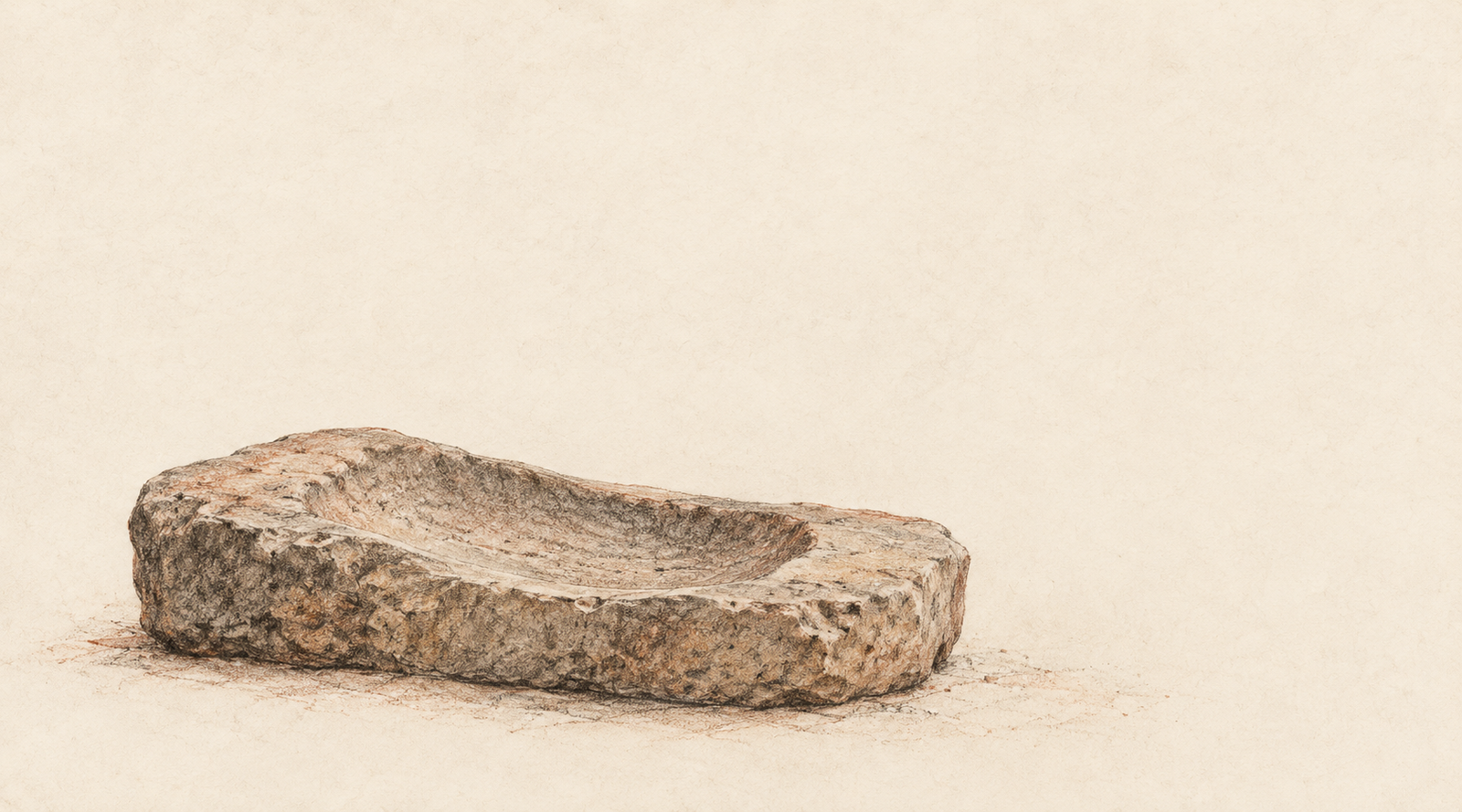

The City of Service
The temple we inherit is a building from which almost all necessity has been removed. Nothing must be brought for it to continue being what we call a temple. The sanctuary asks nothing of us. Stone is good at this kind of independence.
A living temple was otherwise.
Water had to come in. So did grain, cloth, oil, aromatic substances, fuel. The things required for worship arrived because someone carried them across a threshold.


Houses of Wood, Light, and Smoke
Some of Angkor’s most intimate ruins do not rise above the ground at all. They are postholes, low mounds, hearths and ponds: durable traces of a domestic city built largely from things that decay. To restore that city is to see Angkor not only as stone, but as wood, smoke, water, repair, and people living within calling distance.