
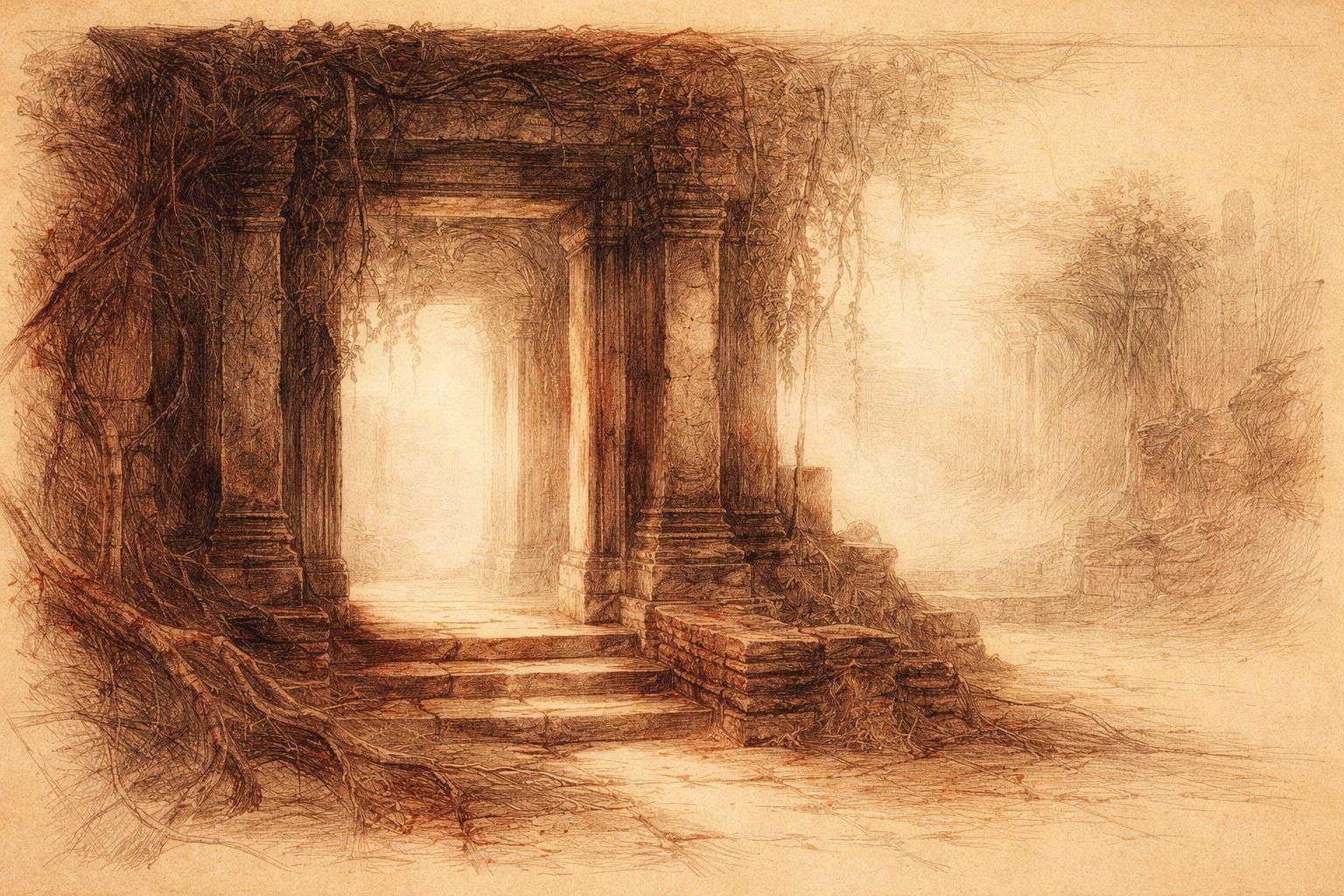

On Photographing Angkor
To enter a temple is already to begin a pilgrimage.
You do not simply arrive. You pass inward — water, causeways, terraces, gates, shadow, enclosure after enclosure — the body admitted by degrees into another order of space. At Angkor, architecture is not merely architecture. It is cosmology made stone. Movement becomes meaning. Distance becomes devotion.
With each threshold crossed, something in the mind grows quieter.
Over time I have come to suspect that the pilgrim and the artist share the same condition of soul. Both must learn how to attend. Both must approach with humility. Neither comes to master what stands before him. He comes to receive it.
When I sit quietly inside a temple, I do not feel that I am surrounded by ruins. I feel that I am seated inside a text vast enough to be read for a lifetime.
A cracked lintel; a weathered devata; moss gripping a shaded wall; a root pressing patiently through an ancient seam; a relief softened by centuries of rain; even the scars where later hands struck the stone. No surface is mute — every fragment belongs to a long sentence still being written by weather, gravity, roots, and time.
To love Angkor is to love that sentence in its brokenness.
Time has not merely damaged these temples. Time has collaborated with them. Edges soften. Stone darkens. Lichen arrives. Trees lean in. The temple passes beyond design into something more human — something closer to life itself.
This is one of the quiet lessons of wabi-sabi. Beauty does not live only in symmetry, polish, or completion. It ripens in weathering. It breathes through impermanence.
A flawless surface can feel strangely closed. But a wall streaked by monsoon water, a carving half claimed by moss, a stair worn hollow by centuries of feet — these invite the imagination in. They allow us to feel that we, too, belong to the same law of passing and becoming.
Photography, at its best, belongs to that same recognition.
I have made more than a hundred thousand negatives in these temples. Nowhere in my travels has instructed me more deeply in the discipline of attention. Yet the greatest lesson Angkor has taught me is not how to make photographs.
It is how to see.
Before a photograph is made, something quieter must occur. One must pause long enough for the place to reach the senses — the warmth of sandstone beneath the hand, the smell of wet stone after rain, the slow gathering of shadow in a corridor, the cry of birds crossing an open court.
A photograph should not be invented. It should be felt. Often the image not taken remains with us longest.
Seeing, in its fullest sense, is never purely visual. It is the meeting of the senses, the imagination, the emotions, and something deeper than intellect. It is the willingness to encounter a place before we flatten it with recognition.
Too often we arrive already carrying the photograph we expect to take — the famous view, the sanctioned angle, the image reproduced a thousand times. Expectation narrows the world. We search for the picture we know instead of seeing the place that is actually there.
The artist must attempt something more difficult. Technique must be learned and then allowed to fall quiet, absorbed into the body so that, in the moment of encounter, one responds without calculation.
When I work well, I am not imposing anything upon the world. I am listening. I wander without fixed destination but with a readiness for the unexpected detail — a damp wall, a darkened corner, the way a root grips a fallen block.
One morning in the north gallery I waited nearly forty minutes while a tour group passed through in a wave of voices and cameras. When the corridor emptied, the temple returned almost immediately to silence. A single square of light moved slowly across the stone floor and stopped at the feet of a devata whose face had long since vanished. I stood there for some time before realising that I had not raised the camera at all.
Something in the world says quietly: I am here. And if I am receptive enough, I answer: yes.
The mind that continually judges — good or bad, interesting or dull — rarely sees deeply. It seizes what flatters it and rejects what unsettles it. But the world is not arranged according to our preferences. To see creatively is to let the mind clear, to respond with the immediacy of an echo.
Photography then becomes less a document than a meeting.
I have returned to the same motifs in Angkor thousands of times and never found them identical. Light revises everything. Rain revises everything. Moss advances. Leaves fall. The self that arrives is also different each time.
The world is endlessly revising itself. If we remain attentive, we do not need to force novelty upon it.
A fallen leaf may hold as much wonder as a celebrated tower. The ordinary, truly seen, ceases to be ordinary.
To photograph well requires a kind of play. Seriousness matters, but heaviness kills perception. One walks, watches, waits. Light shifts. Shadows lengthen. For a moment things arrange themselves with quiet inevitability, and the task is simply not to break the spell.
The temples teach patience in this as in everything else. Crowds pass like weather. Wait long enough and the place returns — a ledge in the shade, a quiet corridor, a court suddenly empty — and in that patience the temple reveals itself again.
Beauty exceeds explanation.
There are truths that intellect can approach only by admitting its limits. One must learn to see with the inner eye — with imagination, with feeling, with that part of ourselves that recognises significance before it can name it.
This is why pilgrimage matters. It is not tourism slowed down. It is transformation enacted through attention. One begins the path as one person and arrives as another.
The breeze speaks in a language understood without translation. A reflection in a pond appears as beautiful as the sun itself. A broken branch, weathered and leafless, becomes an emblem of endurance. Nothing has been solved, and yet something has been answered.
The artist is only a more deliberate pilgrim.
Art does not explain the world. It allows us to dwell more deeply within its mystery.
To photograph Angkor, then, is not primarily to record temples. It is to enter into relation with impermanence, silence, weather, sacredness, and the endless transformation of the visible world. It is to become quiet enough, humble enough, receptive enough that the place may reveal one of its innumerable faces.
Sometimes a negative is made. Sometimes not. Sometimes the greater gift is simply the lived moment itself: wet sandstone glowing in evening light, crows calling from the branches above a ruined court, the hush after rain, the quiet recognition that nothing more is required.
That may be the deepest kinship between the pilgrim and the artist, neither finally seeking possession but a form of surrender so complete that the world may enter them without obstruction.
—
Receive the next work
Subscribe free to receive new work from the Lucas Varro Library by email.
More from the Library


See Also
A concise and impartial dictionary of absence, promises, quarrels, ordinary objects, and the troublesome instability of words.
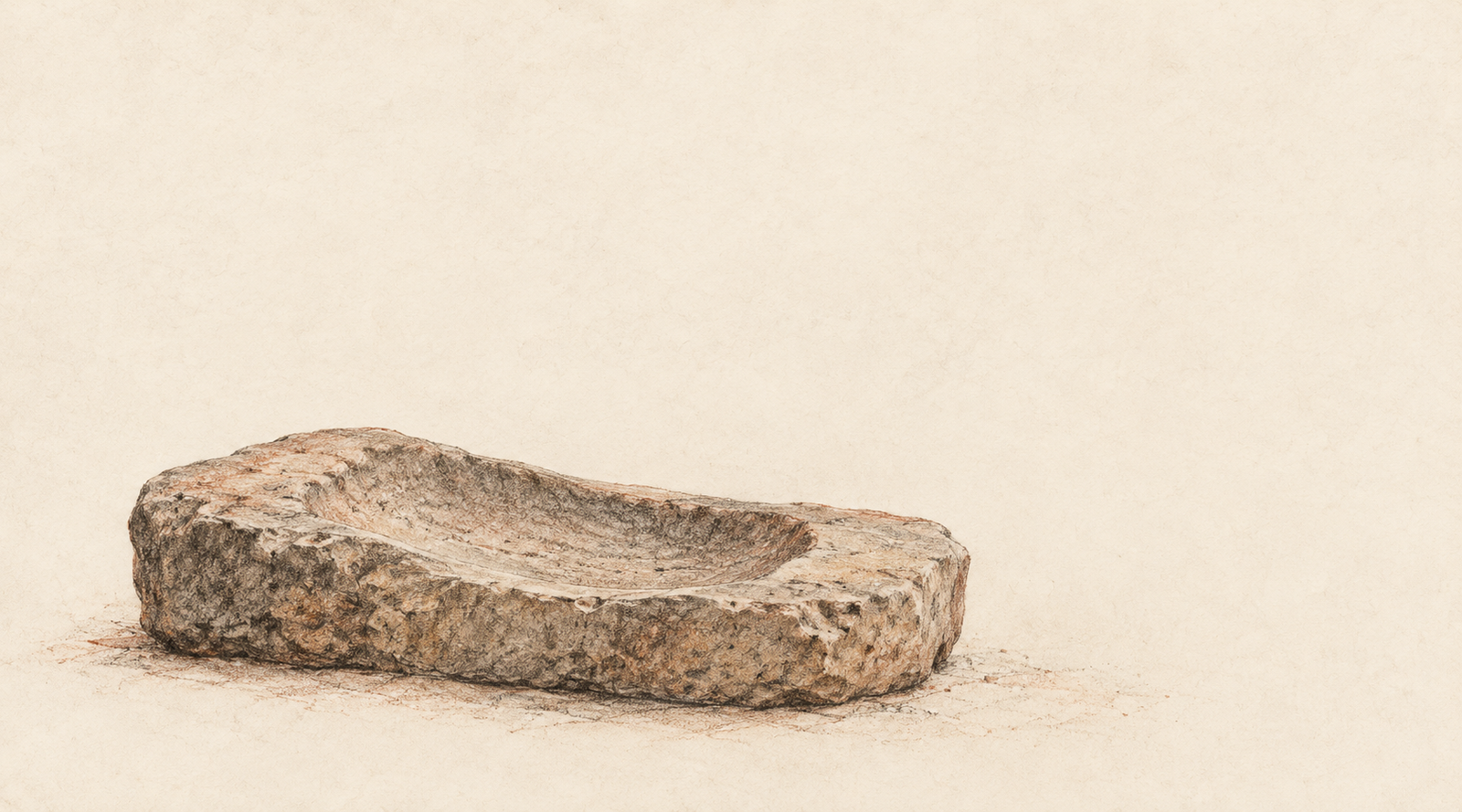

The City of Service
The temple we inherit is a building from which almost all necessity has been removed. Nothing must be brought for it to continue being what we call a temple. The sanctuary asks nothing of us. Stone is good at this kind of independence.
A living temple was otherwise.
Water had to come in. So did grain, cloth, oil, aromatic substances, fuel. The things required for worship arrived because someone carried them across a threshold.
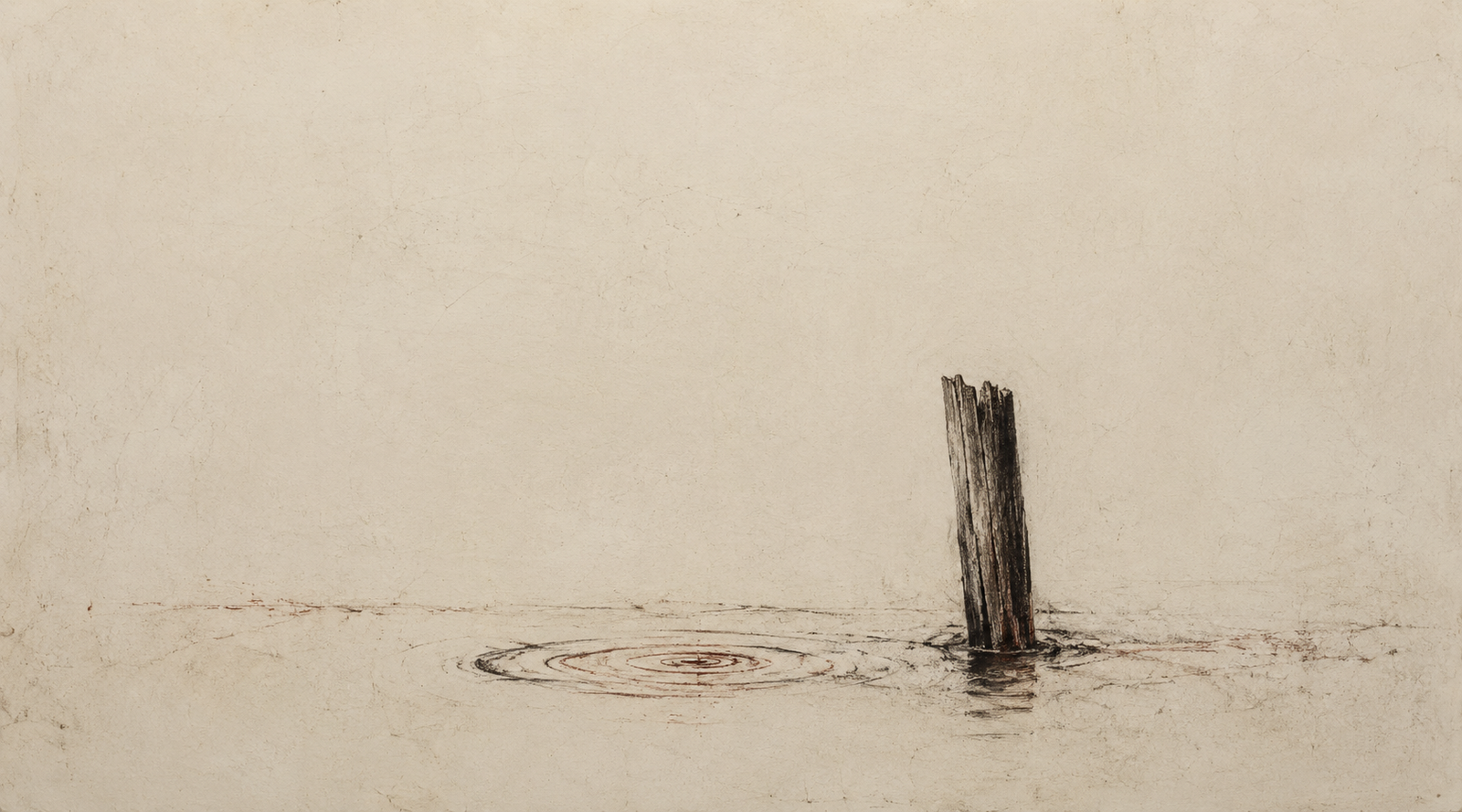

Houses of Wood, Light, and Smoke
Some of Angkor’s most intimate ruins do not rise above the ground at all. They are postholes, low mounds, hearths and ponds: durable traces of a domestic city built largely from things that decay. To restore that city is to see Angkor not only as stone, but as wood, smoke, water, repair, and people living within calling distance.