
The Library gathers the written works of Lucas Varro — journals of the temples, mythic retellings, contemplative essays, poems, and volumes shaped by shadow, silence, and wonder. Here, words stand beside images as offerings: field notes from Angkor, meditations on sacred stone, old stories rekindled, and reflections carried beyond the visible world.
Within these shelves you will find many rooms: Angkor journals, myth and legend, apsara meditations, contemplative essays, poems, children’s mythic wonder, literary retellings, and quieter devotions of the page. Wander chronologically, enter by theme, or pass through one of the dedicated publication houses now gathered within the wider Library.
For those who wish to follow these paths further, several of these writings continue on Substack and in dedicated archive blogs: The Lantern Chronicles , where myth, legend, contemplative essays, poetry, and other imaginative works are carried onward; The House of Cadmus , where Greek myth and tragedy are reopened through inheritance, violence, fate, and recurrence; The Mytharium , where myth, Tolkien, fairy stories, and old literature are read and retold with seriousness; The Alexander Series , where A. M. Sharp retells Greek myths for children who want to be trusted by stories; and The Hospitable Dark , where A. M. Sharp offers literary myth retellings shaped by darkness, shelter, endurance, and return.
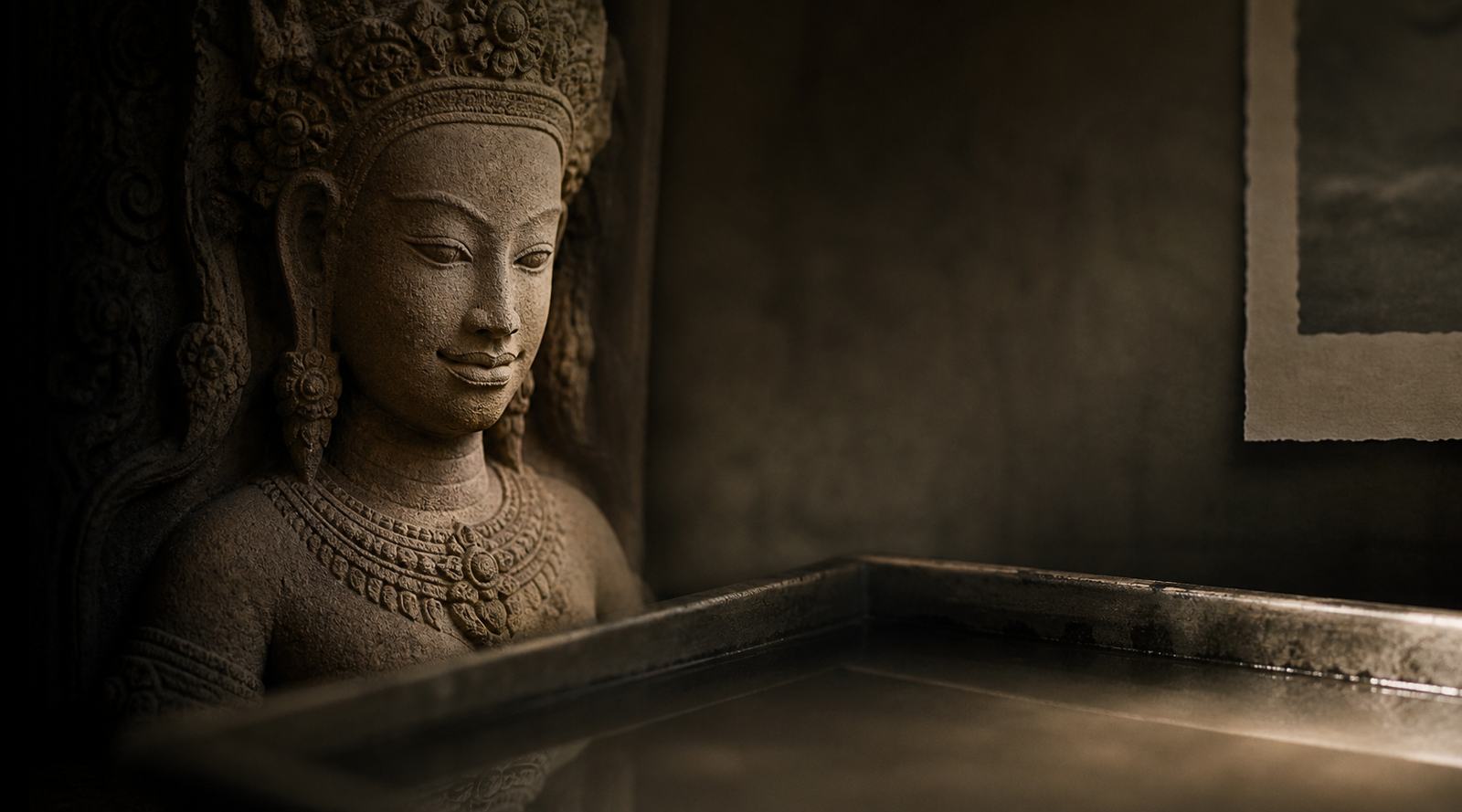

The Apsara Against the Assembly Line
In the darkroom, the print rises slowly from the tray: silver darkening into shadow, stone gathering itself from blankness. At Angkor, the apsaras offer the same lesson. Though repeated in their thousands, each waits to be seen. Against the assembly line of speed and sameness, slowness restores the soul’s signature.
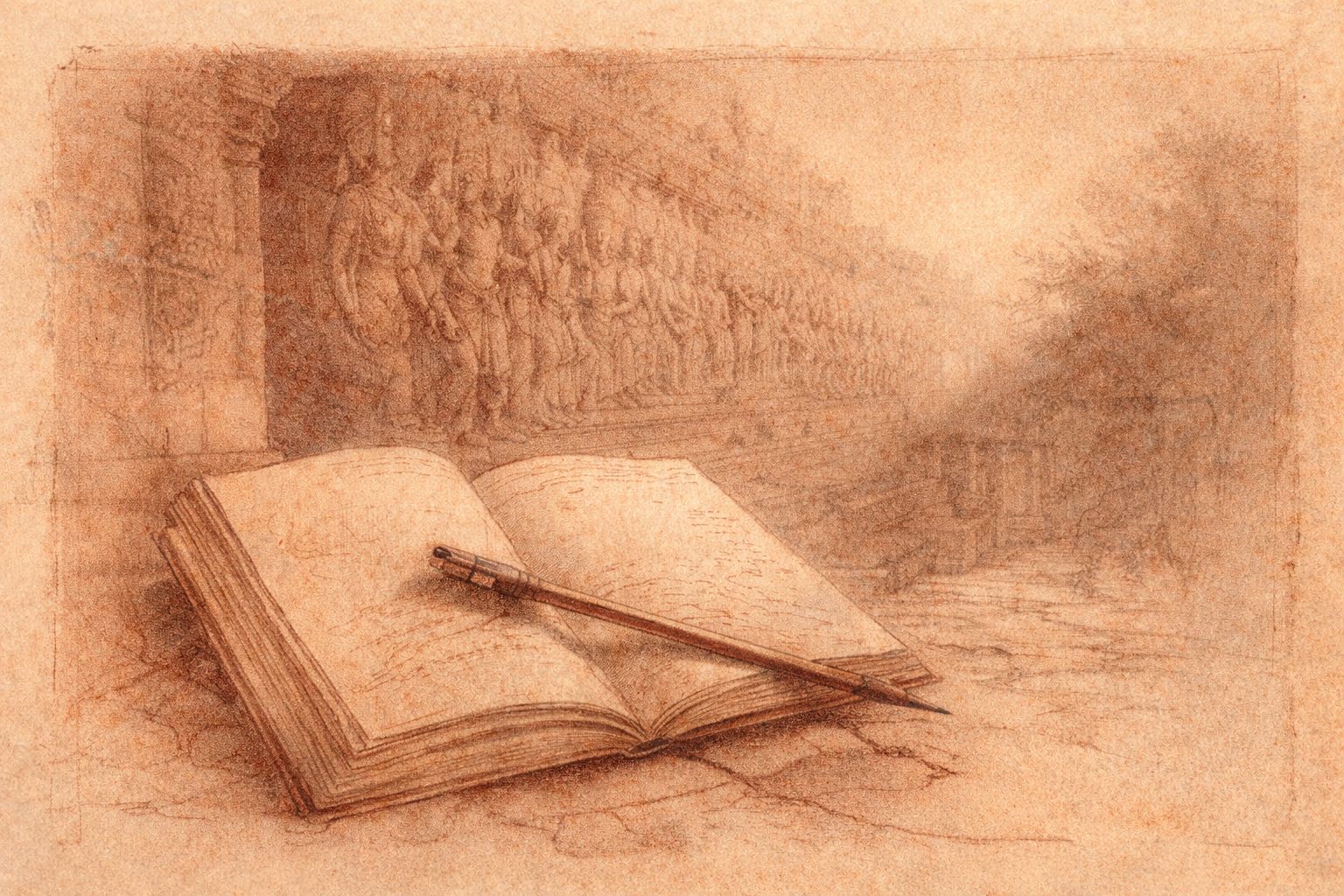

On Writing Angkor
Leaving the temple is not the end of the pilgrimage. What was seen must pass through memory and language, and something inevitably changes along the way. Writing about Angkor becomes an act of translation—from stone and silence into sentences—where something is always lost, and something unexpectedly revealed.
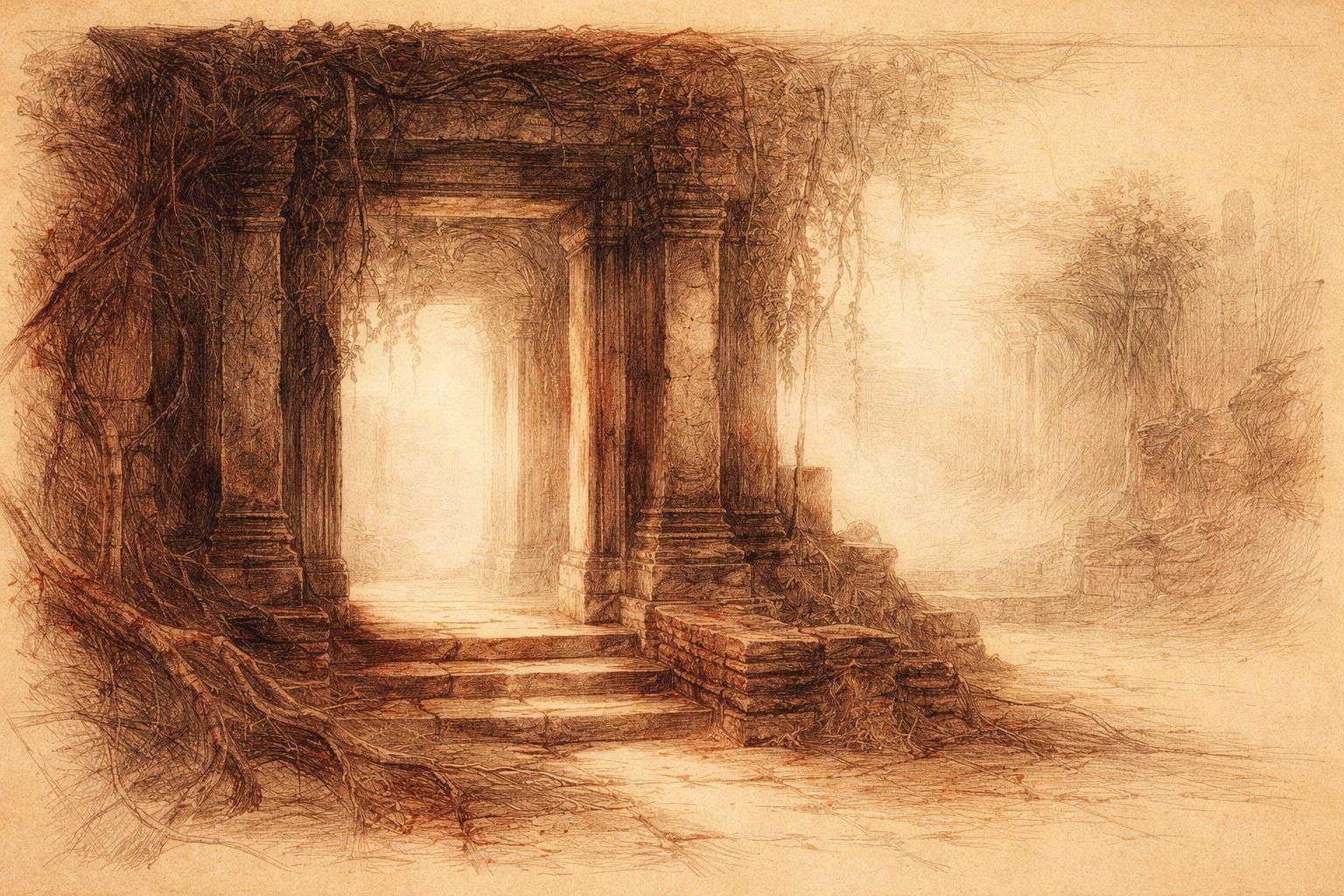

On Photographing Angkor
To photograph Angkor is not simply to make images of stone. It is a form of pilgrimage — a discipline of attention shaped by patience, silence, and light. One morning in a deserted gallery, I realised the most meaningful photograph I had encountered was the one I never took.
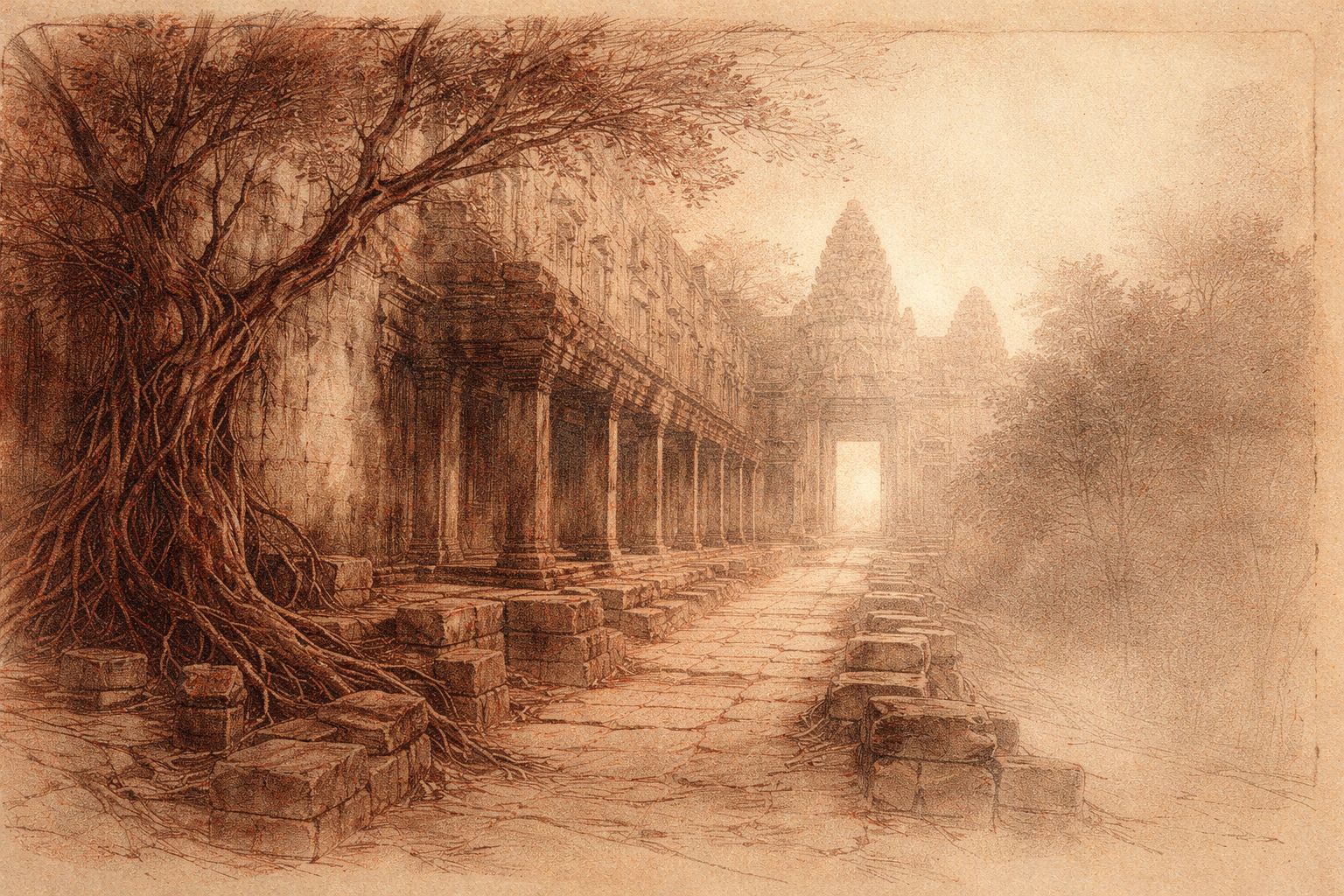

On Seeing Angkor
Most visitors believe they have seen Angkor the moment they arrive. The towers rise, the famous view appears, and recognition feels like understanding. Yet seeing begins only when expectation loosens its hold and attention slows. The temples reveal themselves gradually, rewarding those who linger long enough for perception to deepen.
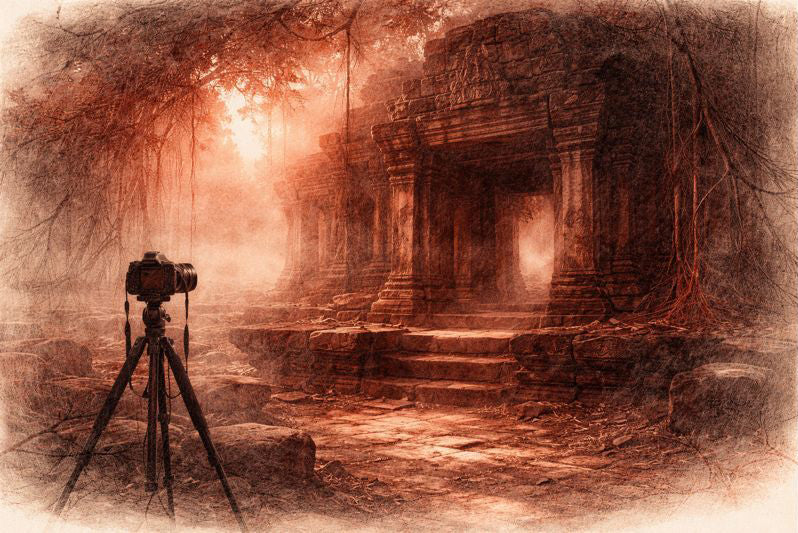

Before the Shutter Falls
Before the shutter falls, fear sharpens and doubt measures the cost of waiting. In the quiet hours before dawn, the act of not-yet-beginning becomes a discipline of attention. This essay reflects on patience, restraint, and the quiet mercy that arrives when outcome loosens its hold.
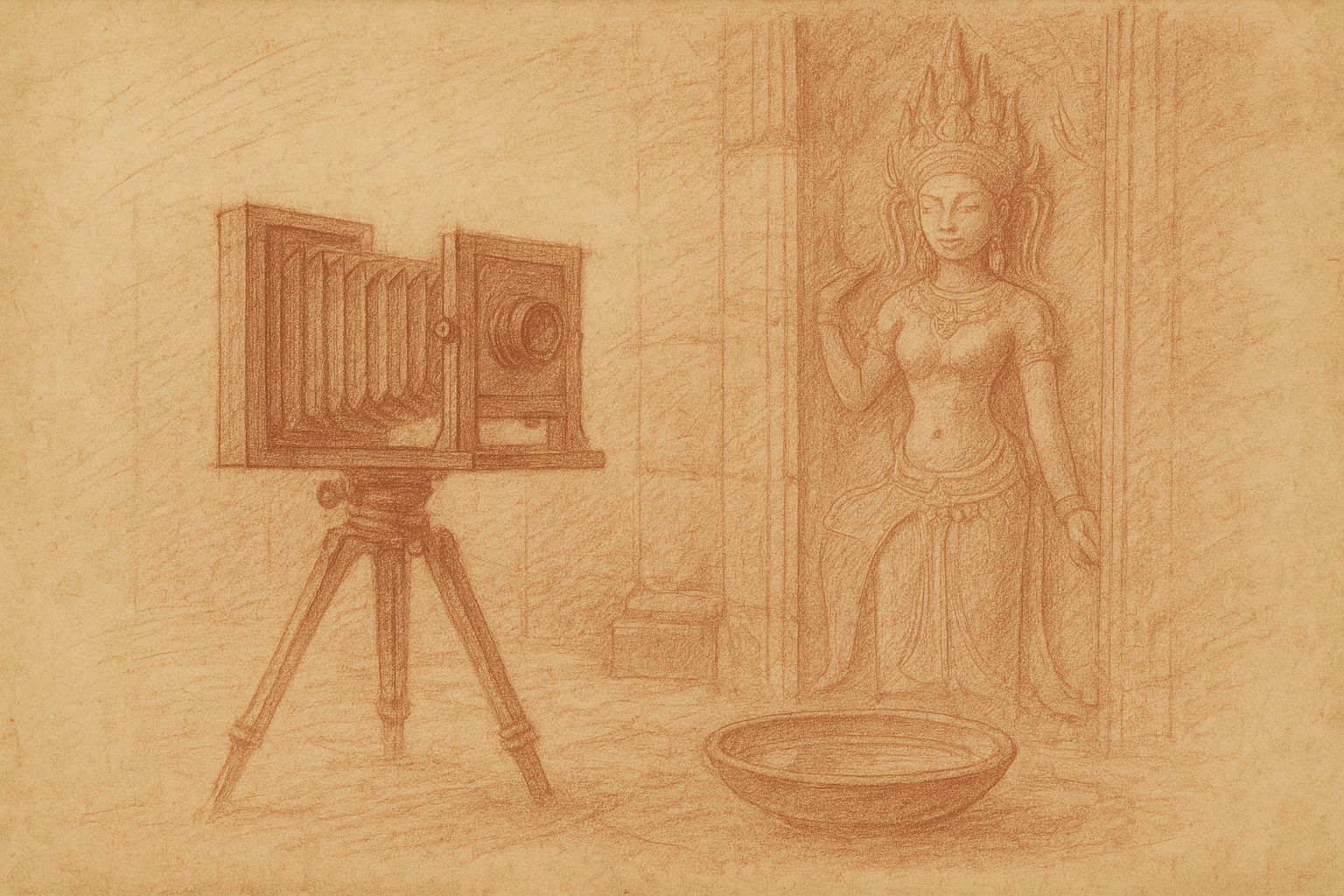

The Still Eye — Craft, Meditation, and the Listening Camera
In the darkroom, silver begins to breathe—and a morning at Bayon returns. The essay moves from tray to temple and back, tightening its centre around a single vow: consent, not capture. A butterfly’s tremor, a lintel at dawn, a print clearing in water. Craft becomes meditation; the camera, a quiet bowl for light.
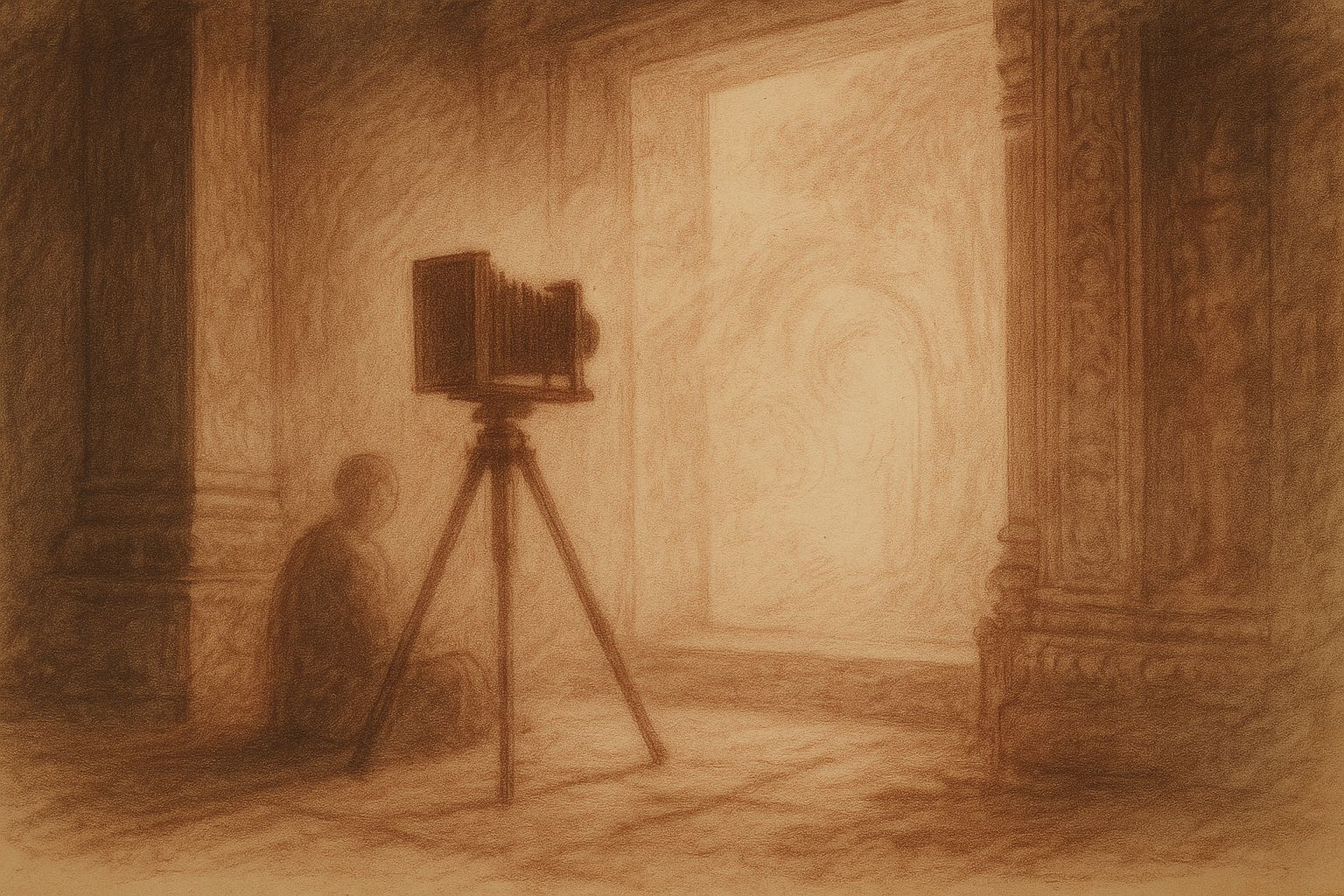

The Weight of Light
In the hush before dawn, light gathers until waiting becomes prayer.
Long exposure teaches surrender — to breathe with time, to let the unseen complete the image.
What remains on film is not possession, but trust made visible.
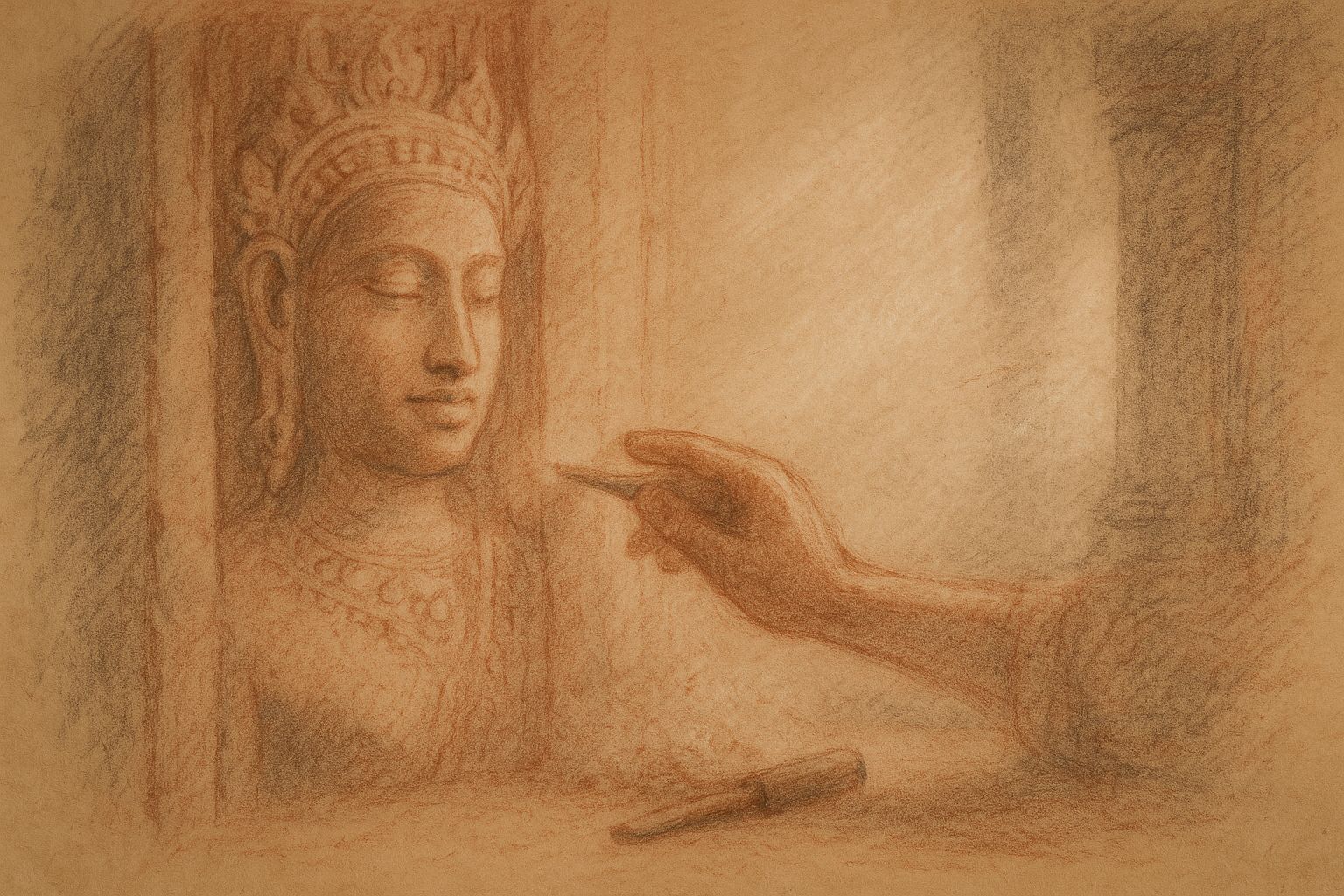

Hands of the Sculptor — The Craft as Meditation
In the hush of the galleries, the sculptor listens rather than strikes.
Each breath, each measured blow, opens silence a little further.
Unfinished reliefs reveal the moment when mastery becomes meditation—
when patience itself is carved into being,
and the dust that falls at a mason’s feet becomes the residue of prayer.