

The Pact of the Last Sheaf
(a harvest restraint)
In the years before anyone remembered beginning, the people of the Plain learned how to stop.
They did not learn it from famine.
They learned it from fullness.
One season the rice stood so thick the paddies could not hold the sky. Stalk pressed against stalk until the field seemed woven. Sickles moved from dawn. Bundles rose. Laughter travelled ahead of the cutting line.
They finished one field before noon.
The youngest ran to the edge and cried, It is done. The word lifted like a bird.
An elder answered, Not yet.
But the sickles kept moving.
By dusk every stalk lay tied. The earth showed through in wet squares where roots had been. The water reflected only light.
The jars filled. The beams bowed. They ate that night with relief.
The bread was warm.
It broke too cleanly.
No one spoke of it.
In the morning the grain poured easily, but it did not sound the same in the bowl. When chewed, it softened quickly, as though it wished to be swallowed without staying. The children ate and did not grow quiet.
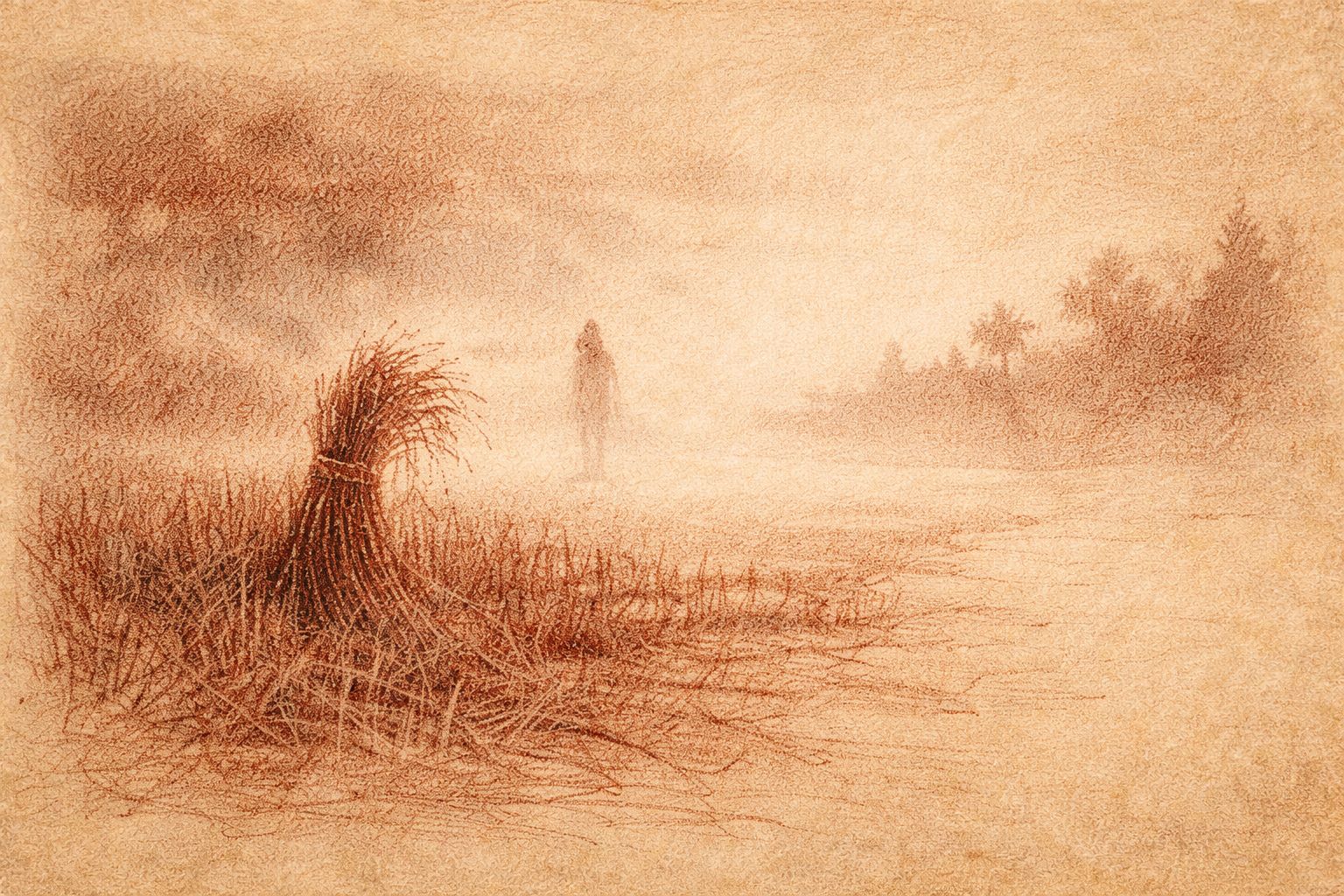
On the third evening a woman crossing the stubble saw a single sheaf standing at the far edge. It was not tall. It leaned slightly, as though something had passed beside it and not through.
She called her husband. He lifted his sickle.
She touched his wrist.
They stood until the light thinned. Wind crossed the cut earth and lifted the husks into a brief whisper. The standing sheaf did not move.
That night the bread held.
The elders walked the fields at dawn. They said little. They did not count what remained. They only marked the place where the cut had narrowed to nothing.
From that year on, when the harvest line thins and the field grows small, the sickles slow. Eyes meet and look away. Somewhere—at a corner, at a boundary, where the water once turned—one sheaf is left standing.
It is not named.
It is not guarded.
It is not offered.
It is only not taken.
If a year comes when the last sheaf falls—out of haste, or pride, or because the field is small and nothing must be wasted—the harvest does not fail. The jars keep. The roof does not sag.
But bread dries at the edges before it is eaten.
Stories reach their endings and stop.
Children ask again for what they have just received.
The land does not strike.
It grows harder to hear.
Sometimes, at the hour when cut meets uncut and the light lowers along the stubble, a narrow figure stands beside the final sheaf. It does not touch it.
It listens for the hand that can pass by without closing.
—
Receive the next work
Subscribe free to receive new work from the Lucas Varro Library by email.
More from the Library

See Also
A concise and impartial dictionary of absence, promises, quarrels, ordinary objects, and the troublesome instability of words.

The City of Service
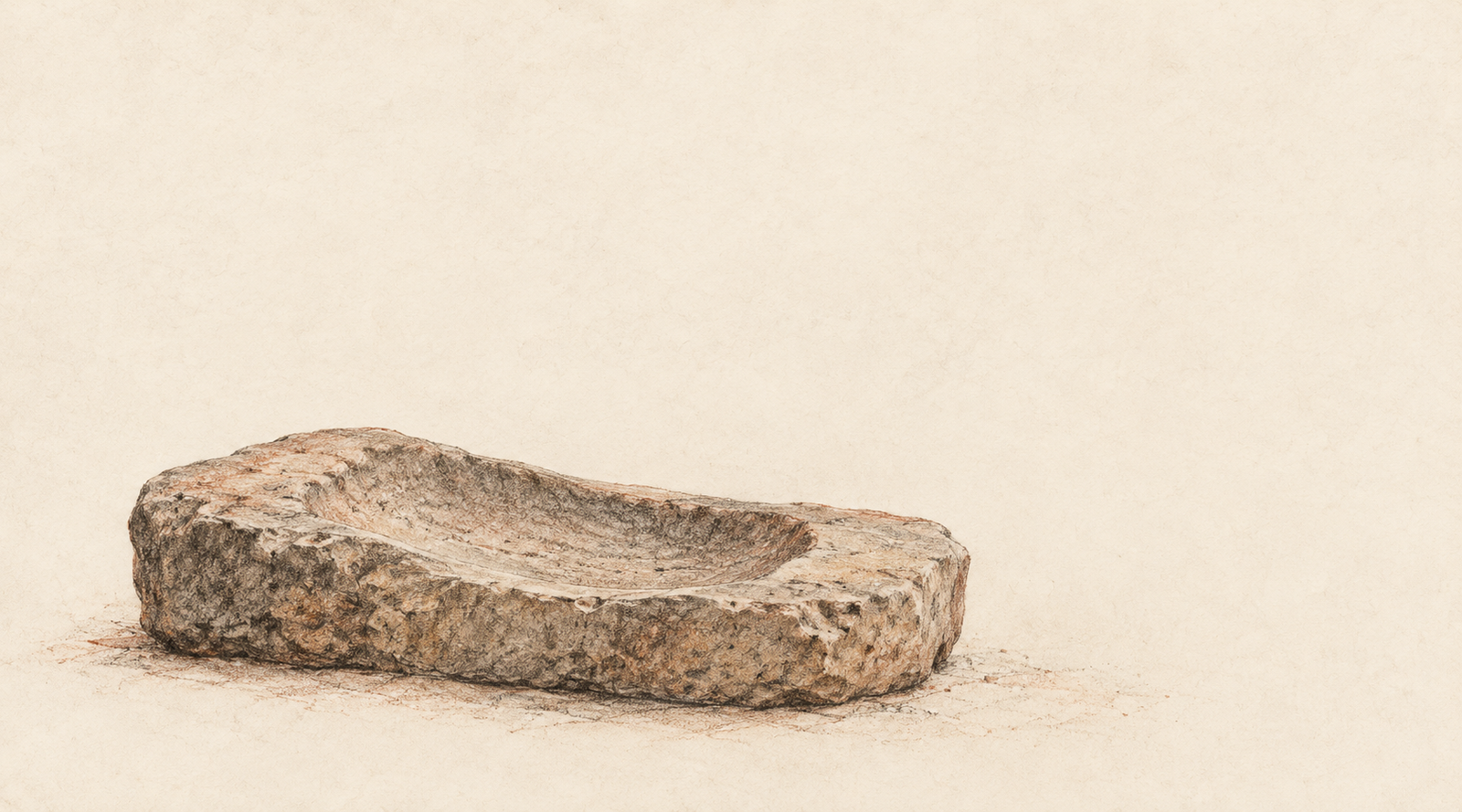
The temple we inherit is a building from which almost all necessity has been removed. Nothing must be brought for it to continue being what we call a temple. The sanctuary asks nothing of us. Stone is good at this kind of independence.
A living temple was otherwise.
Water had to come in. So did grain, cloth, oil, aromatic substances, fuel. The things required for worship arrived because someone carried them across a threshold.

Houses of Wood, Light, and Smoke
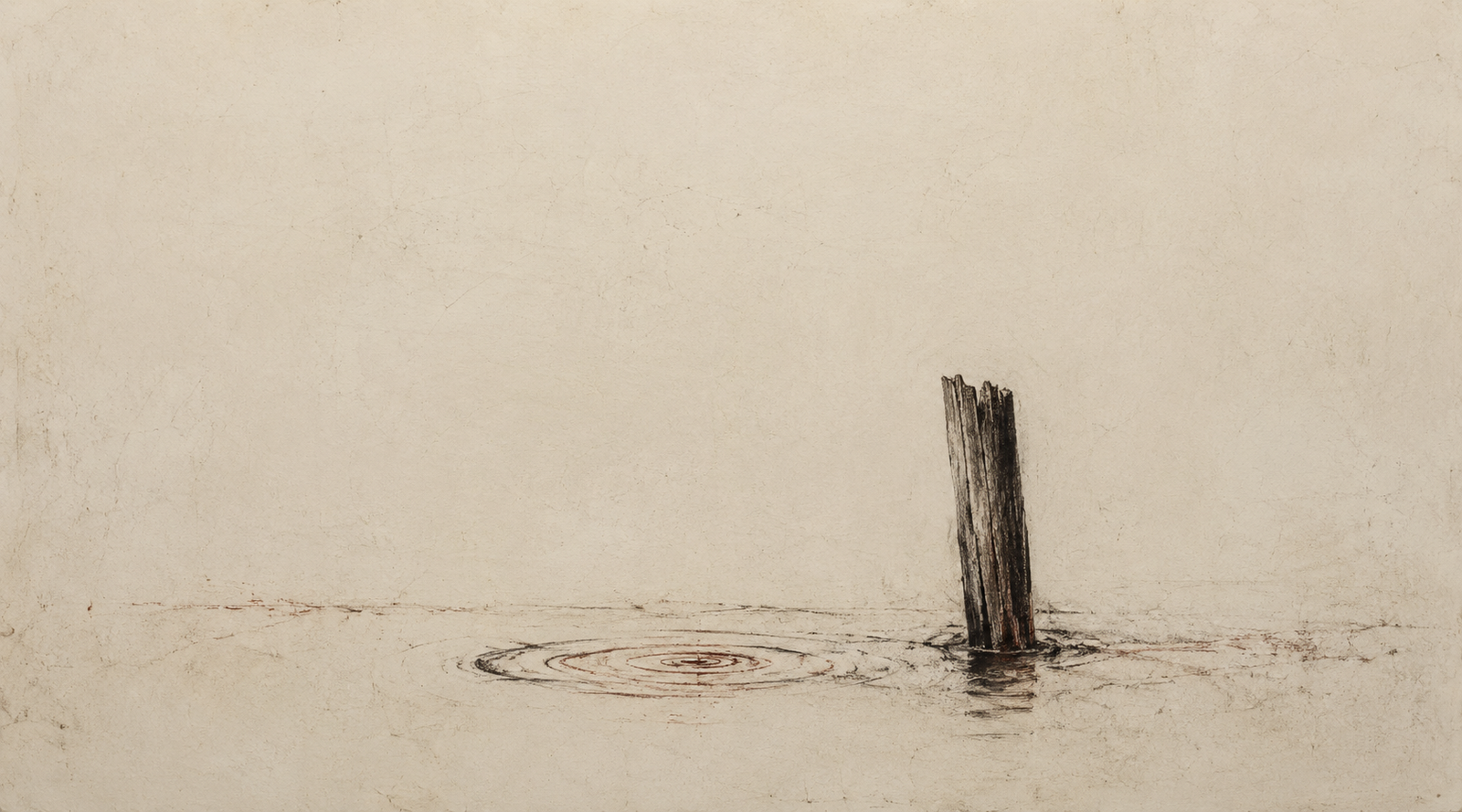
Some of Angkor’s most intimate ruins do not rise above the ground at all. They are postholes, low mounds, hearths and ponds: durable traces of a domestic city built largely from things that decay. To restore that city is to see Angkor not only as stone, but as wood, smoke, water, repair, and people living within calling distance.