
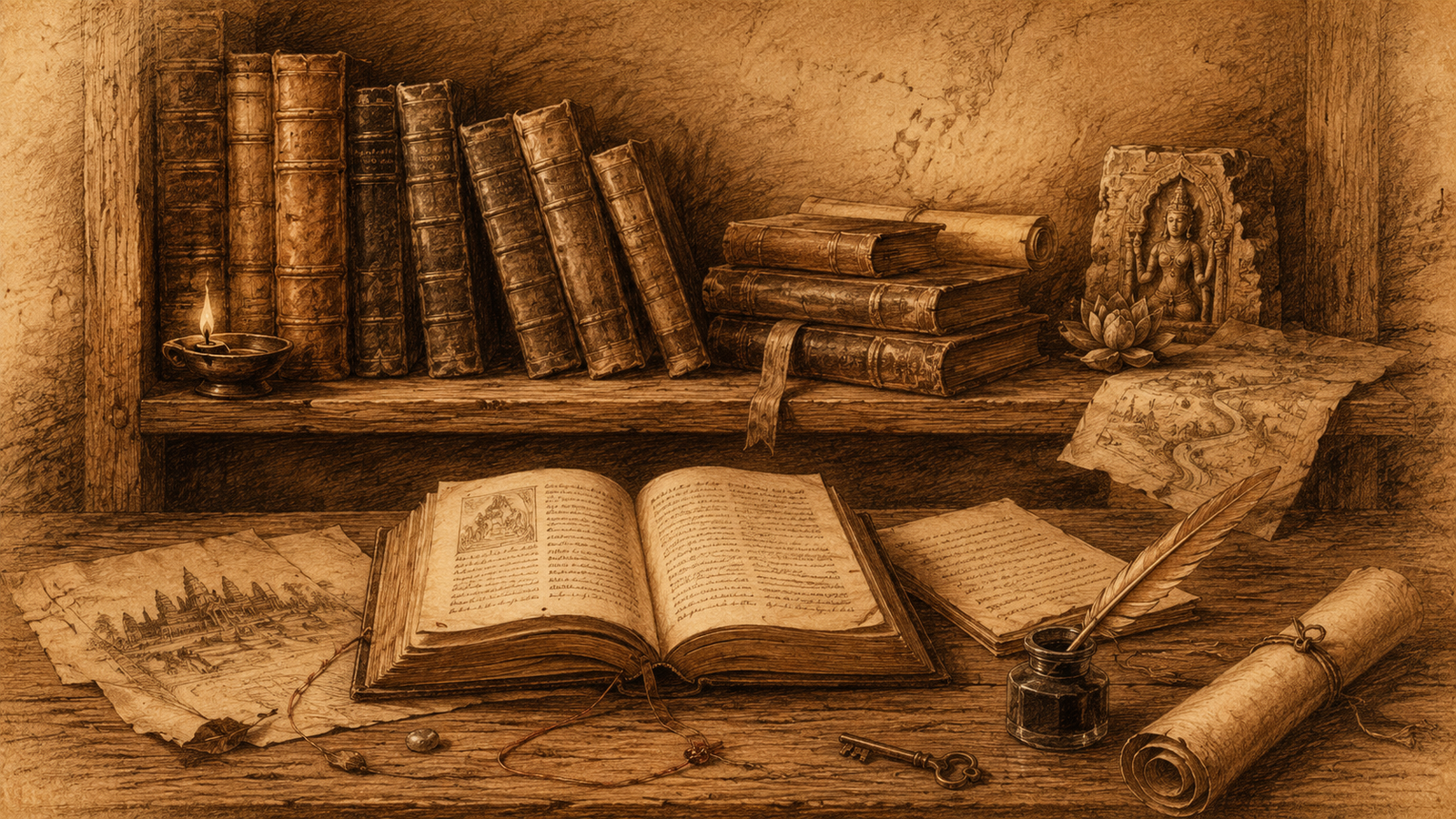

May 2026 in the Varro Library: Wells, Gates, Rivers, and Wings
May was a month of thresholds.
Again and again, the work moved towards a door, a gate, a river, a well, a house, a labyrinth, or a hidden chamber. The old stories did not appear as decorations from the past. They arrived as tests of attention. They asked what wisdom costs, what sight permits, what a house must protect, what a name can carry, and what remains after power has made the world legible but not whole.
This was also a month in which the wider shape of the Library became clearer. The Mytharium opened as a chamber for the old stories themselves. The Lantern Chronicles, the first of these publications and still the clearest bearer of the Varro house identity, continued to gather Angkor, poetry, myth, and contemplative seeing. The Administration of Reality continued its quiet examination of language, systems, and custody. The House of Cadmus entered the Greek inheritance through city, house, return, and recurrence. Alongside these, Annie, writing as A. M. Sharp, continued The Hospitable Dark and The Alexander Series, carrying the Greek material into darker adult readings and clearer forms for younger readers.
The month’s movement was not simply from one publication to another. It was from surface to depth.
The old stories opened their doors
The Mytharium began with a declaration: the old stories are not finished with us. In The Old Stories Are Not Finished With Us, myth was not treated as a vanished inheritance, but as a living form of speech — something still able to summon, correct, and reawaken the reader.
That opening widened quickly. Tolkien entered through “On Fairy-Stories” as the Key to Everything, not as an ornament to fantasy, but as a serious account of why invented worlds matter. In If Gandalf Took the Ring, the danger of power became most terrible precisely when it offered itself to goodness. The Ring’s temptation was not merely domination. It was the offer to do good without waiting for love.
The month then moved deeper into cost. In Odin at the Well and The Eye in the Well, wisdom required the surrender of sight. In Inanna Goes Down Naked and The Seven Gates, descent stripped the goddess of the signs by which the upper world had known her. Crown, beads, splendour, authority — all had to be taken away before the underworld could be entered.
By the end of the month, The Music of the Ainur and the Problem of Discord had moved the same question into Tolkien’s first cosmology. Before the world is seen, it is heard. Discord is not only rebellion. It is the attempt of one note to become its own song.
Across these pieces, The Mytharium found its first governing pressure: myth begins where control fails.
Houses, fathers, and the difficult return
The Greek work of May was haunted by houses.
In The House of Cadmus, The Cadmean Line opened with dragon, city, teeth, and recurrence: a founding myth in which violence does not disappear once the city rises. It remains in the soil. From there, Before the Door: On No Man Comes Home and No Man Comes Home I — The House Without the Man turned towards Ithaca, asking what happens when a house remains standing but its governing presence has gone.
The Hospitable Dark developed that pressure through the early Odyssey. The Long Return I — The Boy and the Goddess began not with Odysseus himself, but with Telemachus inside the absence his father has left behind. Why The Odyssey Begins Without Odysseus made that absence legible: the epic starts with the damage before it gives us the hero. In The Long Return II — The Debate in Ithaca and What Happens When a House Stops Protecting Its Own, private disorder became public failure. The suitors’ occupation of the house was not only an insult to one family. It was a collapse of the moral order around them.
By The Long Return III — An Old King Remembers and Memory, Fathers, and the Education of Telemachus, the month had found one of its deepest questions: what does a child inherit when the father is absent but the stories remain?
Other Greek pieces sharpened the same concern from another direction. Arachne — The Weaver and the Goddess and When Skill Becomes Dangerous asked what happens when human skill becomes too truthful to be safely praised. Actaeon — The Stag in the Clearing and When Sight Becomes Trespass turned seeing itself into danger. Actaeon does not set out to violate the sacred; he arrives at the wrong clearing, at the wrong moment, with eyes that cannot undo what they have seen.
In Why Psyche Raises the Lamp, sight became intimate rather than violent. Psyche raises the lamp because love has asked her to trust what she has never been allowed to see.
May’s Greek work therefore circled the same moral territory from several sides: houses need guardians, skill needs measure, sight needs reverence, and return is never only a journey home.
Angkor, rivers, language, and the discipline of attention
In The Lantern Chronicles, the threshold often appeared as stone, river, light, or road.
The Apsara Against the Assembly Line set one of the month’s central standards: slow attention as resistance. Angkor’s apsaras, analogue darkroom craft, and the patience of looking were held against a world that wants images to become consumable too quickly.
That discipline continued in On Photographing Angkor, where photography became less a method of capture than a form of pilgrimage. The Place Where Light Arrives offered the same attention in poetic form: light does not redeem the hidden place; it simply finds it.
Other Lantern pieces widened the frame. The Courage to Stand Alone asked what it means to speak from oneself in an age of constant speech. The Astonishment of Being considered meaning under the pressure of an indifferent universe. Spring Sea and Leviathan — The Coiling Deep gave the month its marine depth: sea as repetition, danger, body, horizon, and mystery.
The mythic current continued with Fires of the Old World XIV — The Fallen Trees and Fires of the Old World XV — The Serpent-River Dance. In the first, a bound child dragging a mortar through dust becomes the agent of release. In the second, Krishna enters the poisoned river and dances upon the serpent’s heads until terror is transformed into departure.
The Angkor Library also grew. The Serpent and the Star opened a new chamber. The Wind That Carried Me to Zhenla brought Zhou Daguan’s journey into Angkor into fuller imaginative form. Where a Name Could Not Follow, Where the River Outlasts Us, and On Writing Angkor deepened the month’s Angkorian pressure: stone, river, memory, and the difficulty of writing about a place without reducing it.
Meanwhile, The Living Way entered the month through The Problem of Access, a philosophical work on mediation, form, and the conditions of contact. This belonged naturally to the month’s larger pattern. May kept asking not only what is seen, but how anything becomes available to sight at all.
The Administration of Reality made the same question sharper and colder. The Administration Of Reality began with the spell-word “Evidence.” Words As Sanctuary asked how refusal of translation can become custody. The File showed what happens when a person is kept by system, number, spelling, and reference, but not held whole.
Together, these pieces formed one of May’s strongest hidden threads: attention is a moral act because reality can be flattened by the very systems that claim to preserve it.
Old stories for young hands
The Alexander Series carried the old stories into a clearer, child-readable form without making them thin.
The month opened with The Minotaur, where the monster was not merely a monster, but the visible consequence of shame, punishment, and concealment. Theseus and the Thread and Ariadne’s Thread followed the faithful line through the dark. Then came the sea and the cave: Poseidon, Odysseus in the Cave of the Cyclops, and Cyclopes gave young readers gods, monsters, courage, danger, and intelligence under pressure.
Mid-month turned towards the wild. Artemis, Atalanta Runs for Her Freedom, and The Calydonian Boar Hunt moved through forest, bow, speed, and the animal force that civilisation cannot simply command.
The final movement was architectural and aerial. The Labyrinth returned to the house of turns. Daedalus and the Wings gave us the maker watching birds because the sea was visible but unreachable. Hephaestus carried the making impulse into the divine workshop.
Old Stories, Young Hands also introduced a hands-on companion: twelve Greek myths, colouring pages, symbols to notice, and gentle questions to discuss. It made explicit what the series had already been doing: placing ancient stories into the hands of younger readers without removing their seriousness.
Begin here
Begin with The Old Stories Are Not Finished With Us if you want the doorway into The Mytharium and the month’s governing belief: myth is still speaking.
Begin with Inanna Goes Down Naked if you want the month’s descent in its most concentrated form: a goddess stripped of every sign by which the upper world knew her.
Begin with On Photographing Angkor if you want the clearest entrance into the contemplative Angkor work: patience, pilgrimage, and the art of seeing.
Begin with No Man Comes Home I — The House Without the Man if you want the Greek theme of May in narrative form: the house still standing, the man absent, and appetite taking the place of order.
Begin with The File if you want the month’s coldest and most modern threshold: the point at which a person becomes administratively legible and spiritually diminished.
Begin with Daedalus and the Wings if you are reading with a younger person, or want one of the month’s most graceful entrances into the old Greek stories.
Closing
May was not only a month of many publications. It was a month in which the Library found several of its doors.
Some opened downward, through gates and wells. Some opened inward, into houses, files, names, and memory. Some opened outward, towards rivers, sea, sky, and stone. Some opened for children, through thread, cave, forest, and wing.
The old stories kept returning, but not as escape. They returned as instruments of attention.
They asked us to notice what power does to goodness, what systems do to persons, what absence does to houses, what seeing does to the sacred, and what patience allows the world to reveal.
That was the shape of May: a month of thresholds, and of the courage required to cross them slowly.
—
Receive the next work
Subscribe free to receive new work from the Lucas Varro Library by email.
More from the Library
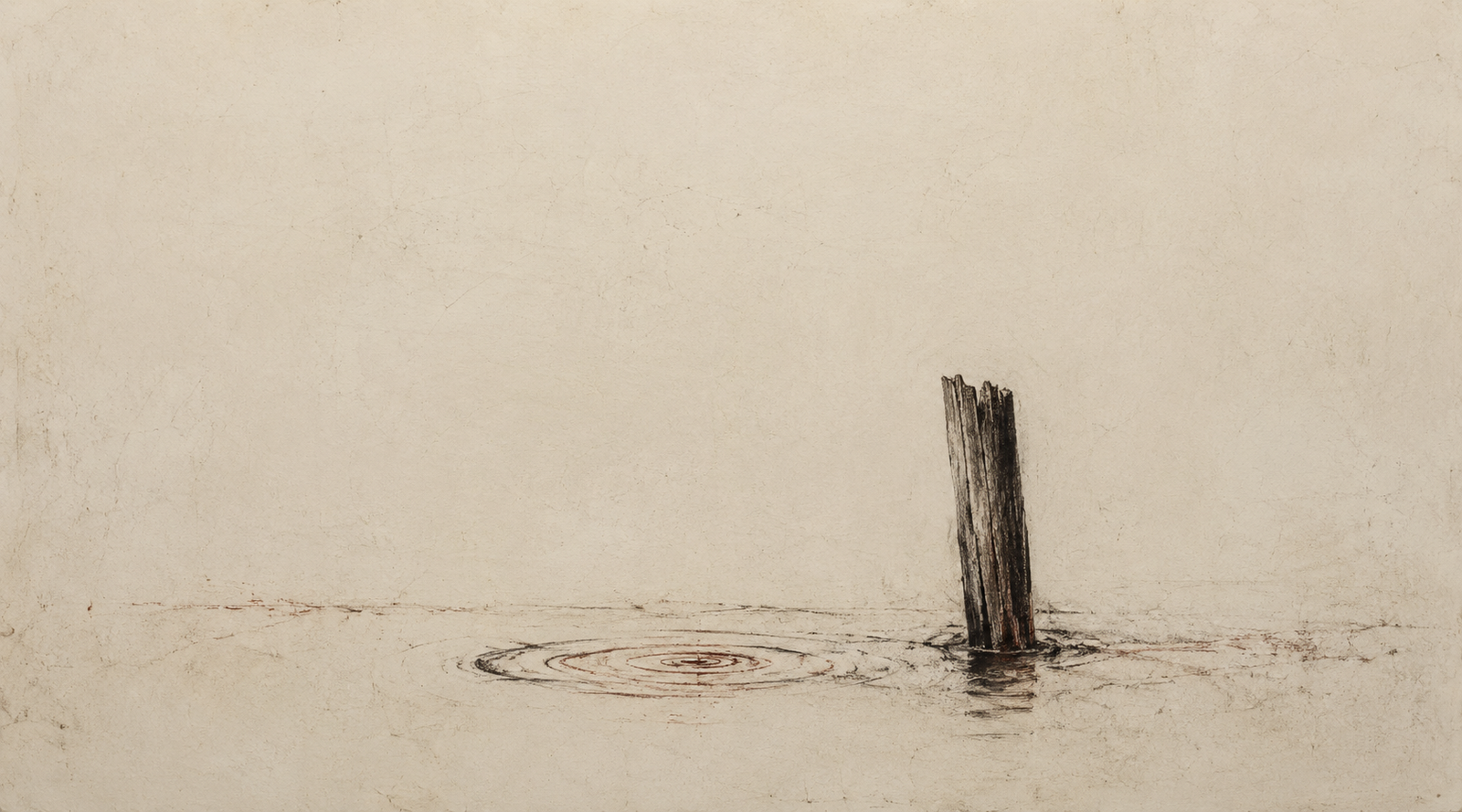

Houses of Wood, Light, and Smoke
Some of Angkor’s most intimate ruins do not rise above the ground at all. They are postholes, low mounds, hearths and ponds: durable traces of a domestic city built largely from things that decay. To restore that city is to see Angkor not only as stone, but as wood, smoke, water, repair, and people living within calling distance.
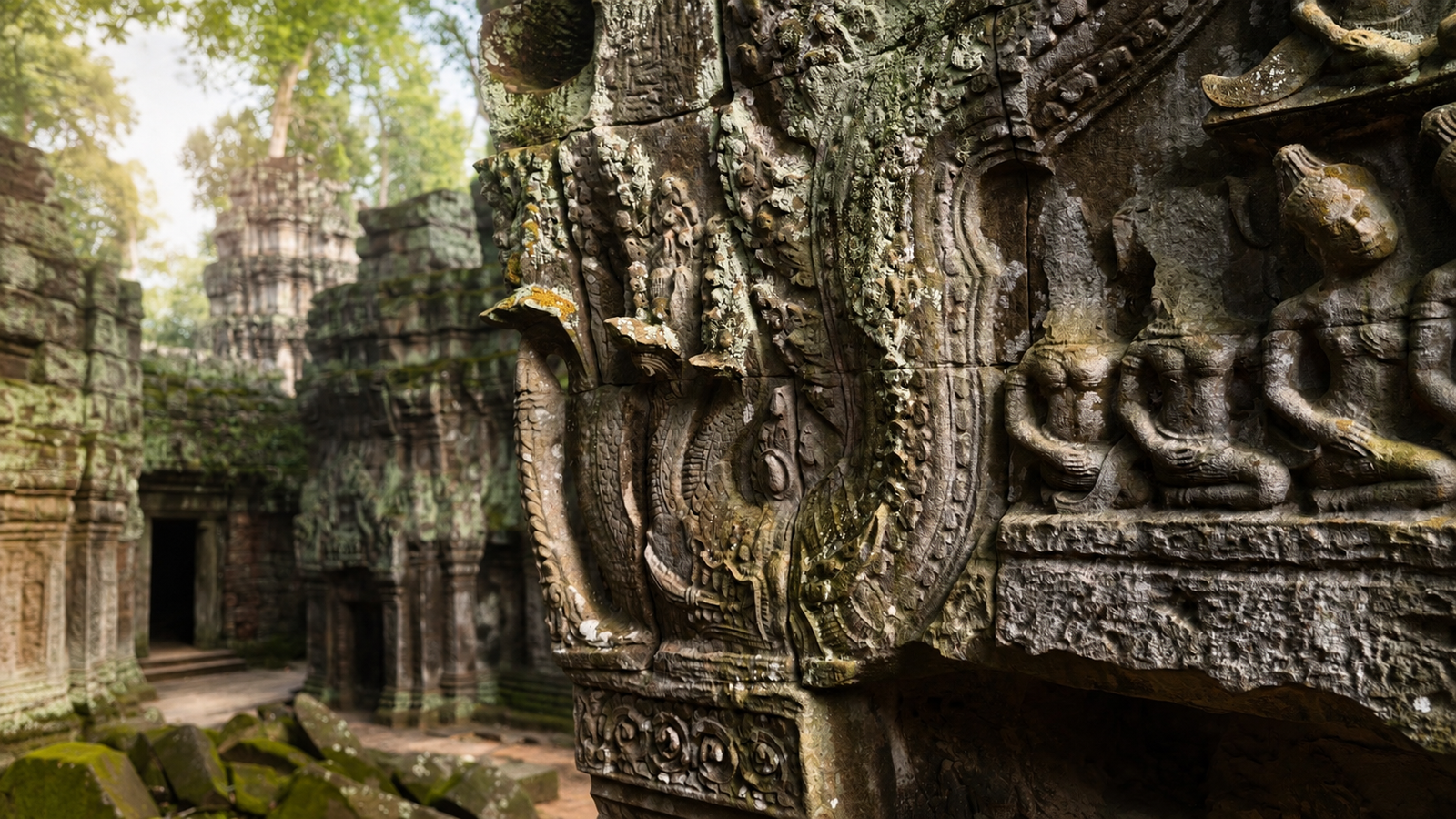

What Stone Brings Forth
I had mistaken a gift for something being expelled.
Beneath the nāga's mouth, a stone garland descended bead by bead. Nearby, a makara opened its jaws and another form emerged. Looking closer, the whole temple began to change: serpent became ornament, ornament became architecture, architecture became foliage.
The forest did not introduce this language.
It answered it.
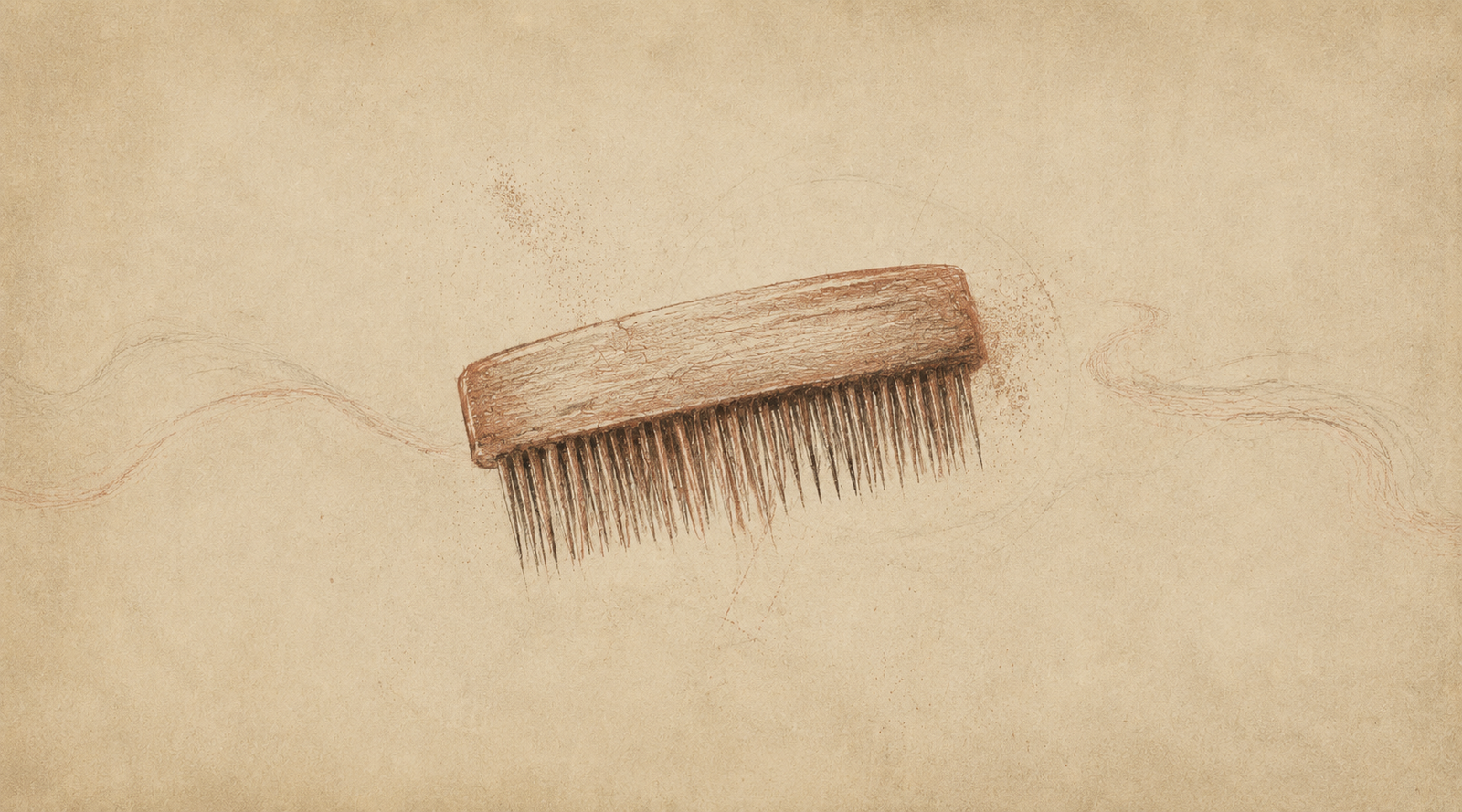

The Eighth Daughter
Seven daughters have already been taken by Yamata-no-Orochi when Susanoo reaches the River Hi. Only Kushinada-hime remains. The Eighth Daughter retells the Kojiki episode through a family’s waiting, a girl transformed into a comb, and the patient preparation for the serpent’s return.