
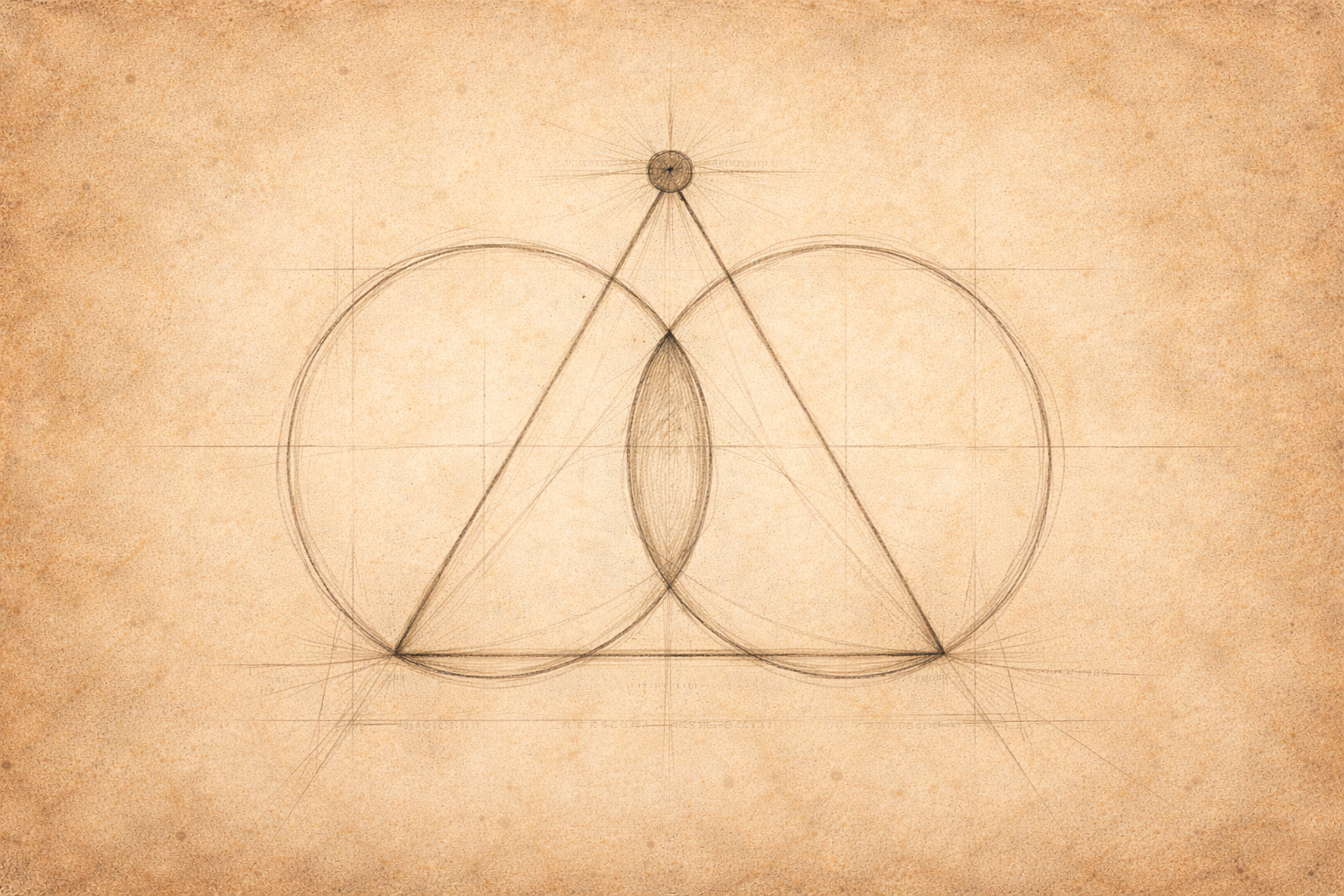

What It Means to Be Equal to a Place
There are places one does not truly meet the first time. One reaches them, looks at them, perhaps even admires them, but the deeper encounter does not yet occur. Something in oneself is still arriving too noisily, too quickly, too much arranged around recognition, coverage, impression. Then one returns months later, or years, and finds not that the place has changed, but that one’s earlier presence there had been thinner than one knew.
This has happened to me at Angkor more than once. I have gone back to a corridor I thought I knew, or stood again in a courtyard that had once seemed merely impressive, and felt with unusual force that the temple was not simply waiting to be seen. It was also, in some quieter way, exposing the terms on which I had come before it. Not judging. Not conferring approval or withholding it. Simply making plain whether I possessed the inward proportion required to stand before such a place without haste, vanity, or reduction.
A great place does not ask whether one has visited it. It reveals whether one is equal to it.
That phrase can sound wrong at first, perhaps even arrogant, as though the task were to rise to some height from which the place might finally be mastered. But that is not the meaning. To be equal to a place is not to exhaust it, decode it, deserve it, or stand over it in the posture of expertise. It is something both humbler and more demanding than that. It is to possess enough inward steadiness that the place does not have to be diminished in order to be bearable. Enough patience that it need not yield at once. Enough humility that beauty does not become ornament for the self. Enough silence that what is greater than oneself can remain greater.
One might call this fitness of soul.
We know, in other regions of life, that equality is not always a matter of rights or rank. One can be unequal to grief. Unequal to love. Unequal to responsibility. Unequal to truth. Not because these things are unfairly withheld, but because they require some width of being one does not yet possess. A person may sincerely wish to love and still be too vain, too frightened, too unformed to bear the reality of another person without turning them into need, fantasy, or function. A person may sincerely wish to know the truth and still be too defensive to admit what would unsettle the arrangement of the self. So too with place. One may arrive sincerely and still be inadequate.
That, perhaps, is the more difficult thing to admit. The failure is not always vulgarity. Often it is disproportion.
Angkor makes this visible because it exceeds us in more than size. Its greatness is not merely monumental. It carries time differently. It carries silence differently. It gathers devotion, ambition, ruin, patience, memory, survivance, and a scale of intention no hurried gaze can comfortably contain. One feels almost at once that the place does not exist to meet one halfway. It does not shorten itself to suit impatience. It does not simplify its reality in order to protect one from being outmatched.
What it exposes is whether one can bear reality without turning it at once into something easier to manage. Scale is quickly converted into spectacle; silence into atmosphere; beauty into acquisition; mystery into explanation. Even incompletion becomes difficult to endure. We want the thing to finish itself inside our own terms. We want what is greater than us to become quickly commensurate with appetite. That is why the issue is not really tourism, though tourism may reveal it. It is stature.
A person may know, in principle, that haste is unworthy. A person may even practise patience for a while. Yet if the deeper organisation of the self remains ruled by appetite, display, self-confirmation, fear of mystery, and the need to convert encounter into possession, then greatness will still be translated downward into something manageable.
The deepest question is not whether a place is worthy of admiration, but whether one is capable of standing before it without reducing it to one’s own size.
Once that is seen, the matter widens almost at once beyond place. We are measured continually by realities greater than ourselves. Another person’s depth measures us. A work of art measures us. Suffering measures us. A sacred tradition, if it is still alive, measures us. Responsibility measures us. Time measures us. Mortality measures us most of all. The issue, in each case, is not merely whether these realities are present. It is whether we are inwardly proportioned to meet them without mutilating them into forms more convenient to ourselves.
This is why reduction is never as innocent as it sounds. We often treat it as a mere intellectual error, a limitation of nuance, a failure of aesthetic sensitivity. But there is sometimes a concealed cowardice in it. To explain too quickly is to shrink a thing to a size one can govern. To aestheticise too quickly is to prevent beauty from making any genuine demand. To classify too quickly is to avoid the vulnerability of being outmatched. Much of what passes for command is really a refusal to remain in the presence of what might alter us.
That refusal appears in every domain. Another person is hurried into type before they can disturb the picture one has of them. Grief is managed before it has fully spoken. Art is judged on first yield, as though impatience were a mark of seriousness rather than a confession of its absence. Truth is admitted only where it leaves the preferred arrangement of the self intact. Mortality is handled by diversion, chatter, productivity, anything that keeps one from standing still before the fact of finitude. In each case, reality is not denied outright. It is reduced to a scale at which one need not be changed by it.
This should not be misunderstood as a plea for grand personalities, spiritual theatrics, or the cultivation of impressive depth. The soul equal to a place is rarely the soul most eager to appear deep. It may be a very quiet soul indeed. What makes it adequate is not force, but proportion. Not charisma, but self-limitation rightly borne. Not interpretive aggression, but the ability to let what is before one remain real even when it exceeds convenience, comfort, or comprehension.
A great place exposes this gently. It does not accuse. It does not need to. It remains what it is. Against that calm, one begins to feel the agitation of one’s own inadequacy. The tremor is instructive.
Yet if the essay ended there, it would end too coldly. For the truth is not that great places exist to humiliate us. It is that they may educate us. If one is not equal to a place, the answer is not shame. It is apprenticeship.
A place like Angkor can enlarge proportion in us, if we let it. Not by delivering lessons in the ordinary sense, but by correcting pace, appetite, and stance. One returns. One remains longer. One relinquishes the need to finish. One permits earlier shallowness to become visible without converting that recognition into self-contempt. One discovers, perhaps slowly, that reverence is not merely a feeling one brings to a place. It is a capacity one acquires by being corrected under its presence.
This is not self-improvement in the contemporary sense. It is not optimisation, refinement as status, or the acquisition of subtler tastes. It is moral and spiritual maturation, though even that phrase risks sounding too deliberate for what is often a very quiet process. The self becomes less hurried. Less appropriative. Less theatrically central. Less offended by what will not yield. Less insistent that the world collapse at once into use.
One does not become equal to a place by becoming large in one’s own imagination. One becomes equal by becoming less small in the ways that matter.
That may be one of the deepest things a place can teach. Not information, however valuable. Not even meaning, in the thinner sense in which we often use that word. But proportion. A re-education of the self in the presence of what does not exist for its consumption. The greatest places are not merely destinations, nor only sources of wonder. They are schools of inward stature. They show us, without malice, the scale of our impatience, the narrowness of our habits, the small violences by which we reduce what is greater than ourselves to something manageable. But they show us something else as well: that we need not remain as we are.
By return, by steadiness, by relinquishment, by the slow correction of pace and appetite, one may become less unequal than before. Not because the place has been taken in, but because something in oneself has widened into better measure.
Perhaps that is one of the purest gifts Angkor can give. Not the illusion that one has seen it completely, but the quieter grace of finding oneself, over time, made a little more capable of standing before it. One does not become equal to a place by taking possession of its mystery, but by becoming, gradually, less unwilling to be changed by it.
—
Receive the next work
Subscribe free to receive new work from the Lucas Varro Library by email.
More from the Library

See Also
A concise and impartial dictionary of absence, promises, quarrels, ordinary objects, and the troublesome instability of words.
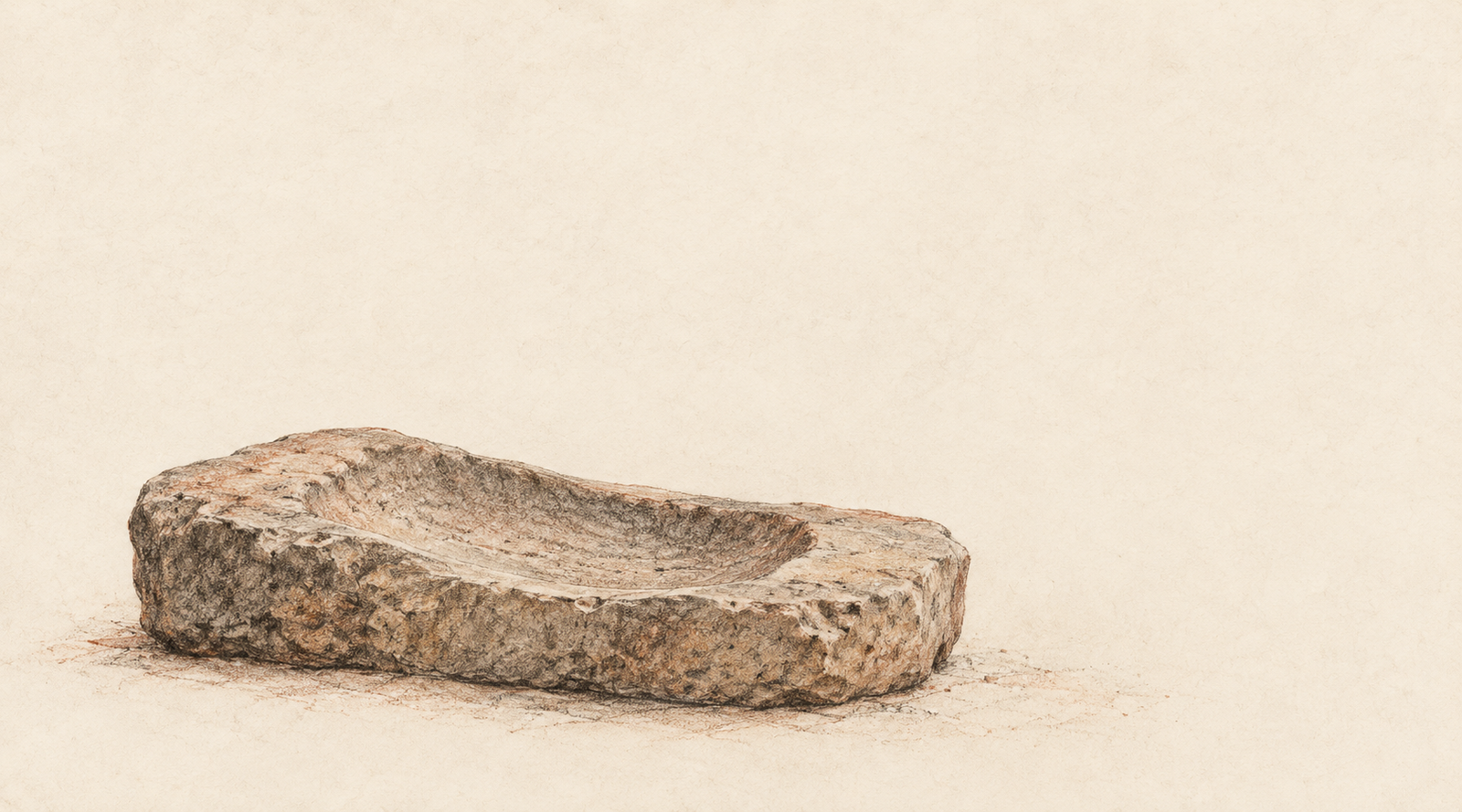

The City of Service
The temple we inherit is a building from which almost all necessity has been removed. Nothing must be brought for it to continue being what we call a temple. The sanctuary asks nothing of us. Stone is good at this kind of independence.
A living temple was otherwise.
Water had to come in. So did grain, cloth, oil, aromatic substances, fuel. The things required for worship arrived because someone carried them across a threshold.
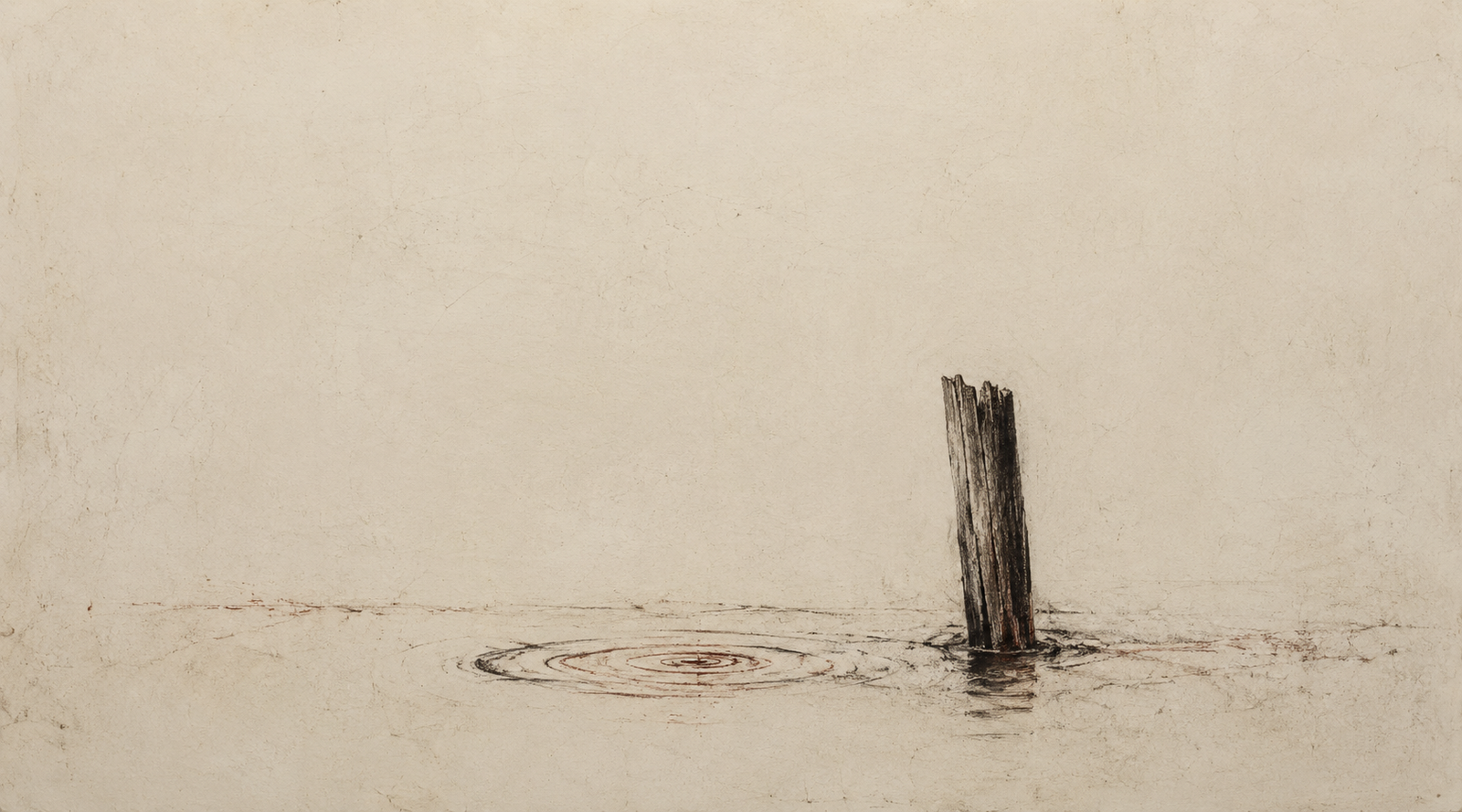

Houses of Wood, Light, and Smoke
Some of Angkor’s most intimate ruins do not rise above the ground at all. They are postholes, low mounds, hearths and ponds: durable traces of a domestic city built largely from things that decay. To restore that city is to see Angkor not only as stone, but as wood, smoke, water, repair, and people living within calling distance.